Why Is Protein Important for Athletes and How Much Do You Need
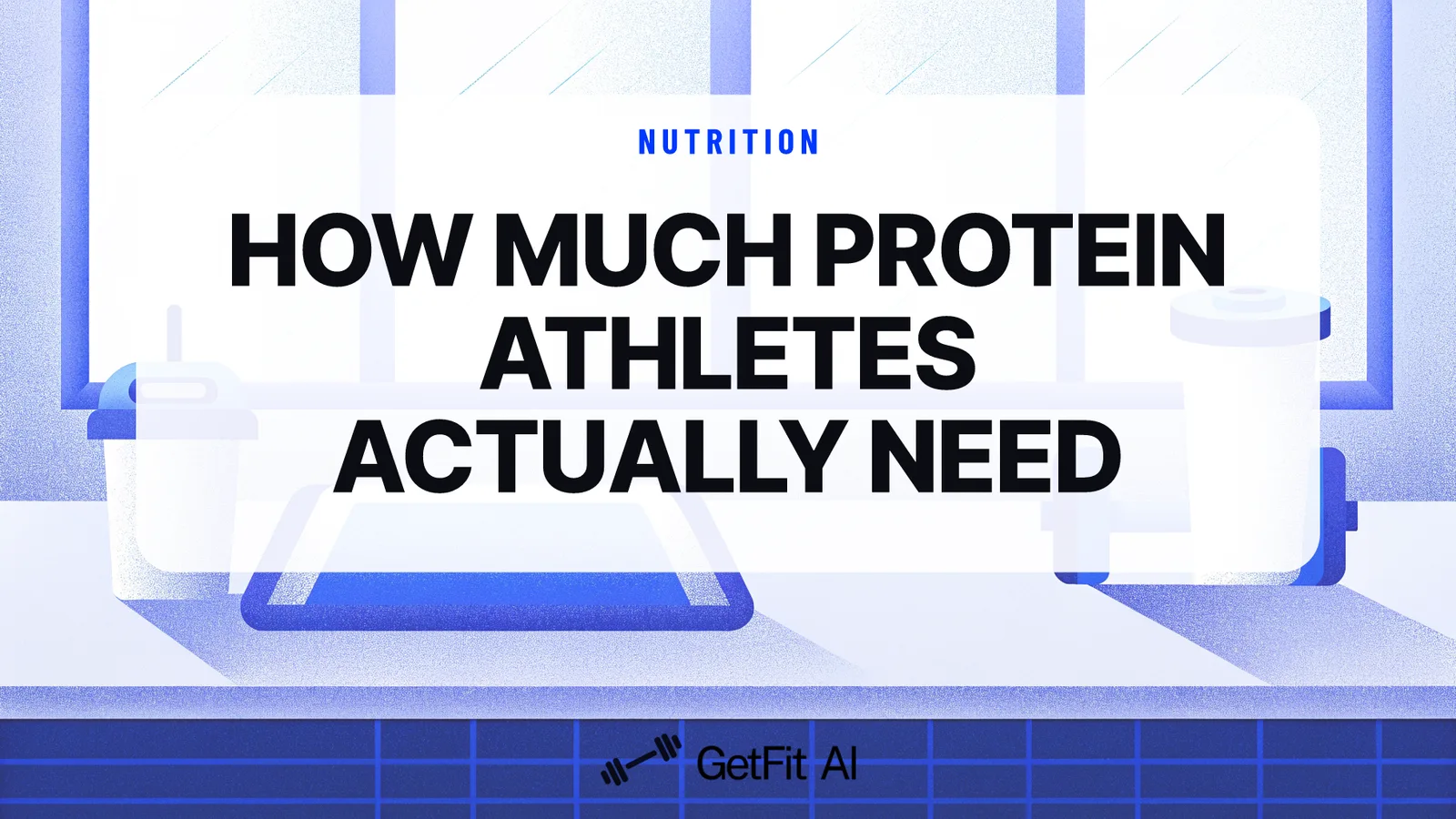
You can train four days a week and still go nowhere. Here is why the missing variable is never your workout, and always your protein.
The common assumption among beginner lifters is that they just need to train harder or more often and the results will eventually come. So they show up four days a week, push through the burn, log session after session, and then stand in front of the mirror two months later looking exactly the same. That frustration is real, and it is far more common than most beginners realize. The problem almost never lives in the gym. It lives in the kitchen, specifically in how little attention gets paid to protein. See our AI fitness app for how this works in practice.
“Athletes or active individuals who are not mindful of their food habits (eating randomly) gain unwanted weight despite starting to train. I gained 6 kgs in 2 months due to a sedentary lifestyle and poor eating habits.”
— what we hear from active individuals and athletes
Training creates a demand signal. Your muscles get stressed, fibers get damaged, and your body sends out a repair request. But that request only gets answered if the raw material is there. According to Science for Sport, athletes require between 1.2 and 2.0 g of protein per kg of body weight daily, significantly above the general population’s 0.8 g/kg RDA, contradicting the belief that training volume alone drives adaptation. Most beginners eating randomly land nowhere near that target, often without knowing it.
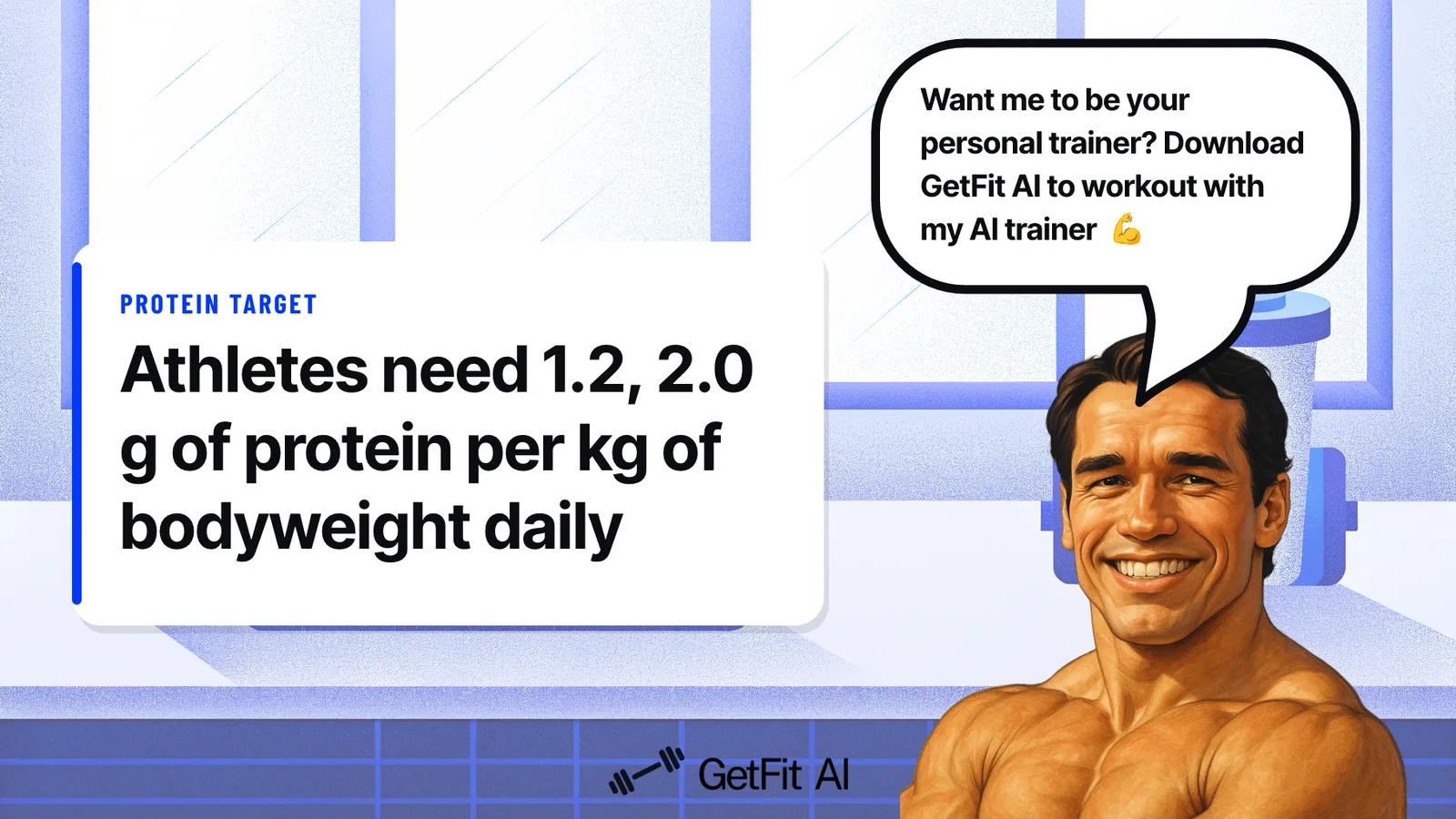
Hard training tears things down. Protein builds them back up. Without it, the body cannot achieve net positive muscle protein balance after a session, meaning breakdown exceeds rebuilding. The adaptation signal fires perfectly. Nothing gets constructed.
Hard training tears things down. Protein builds them back up.
What makes this so easy to miss is that the effort feels real. Soreness, fatigue, sweat, all of it registers as progress. But soreness is damage, not growth.
Growth is what happens after, and only when protein supplies the amino acids that muscle protein synthesis needs to complete the repair cycle. Each session with inadequate protein leaves a small repair deficit. The body, short on dietary protein, begins pulling amino acids from existing muscle tissue to meet basic energy demands instead of using them for repair.
The athlete is effectively borrowing from the very tissue they are trying to build. The frustration is not a training problem. It is a supply problem.
Key takeaways
- Muscle tissue breaks during a training session, it does not grow during one. Protein is what triggers the repair cycle that makes the session count.
- Athletes who train four days a week and eat randomly often look the same two months later. The missing variable is almost never effort.
- Protein needs shift by sport, intensity, and frequency, a marathoner and a powerlifter chasing the same daily gram target are almost certainly one over-fueled and one under-recovered.
- Most beginners quietly fall 40 to 60 grams short of their daily protein target because they eat one or two sources on repeat and never do the math.
- Post-workout protein timing matters, but the 30-minute window obsession is overblown, muscle protein synthesis stays elevated for hours after training.
- A fixed protein number pulled from a generic article becomes wrong the moment your training load changes. Solo athletes with no coach are the most exposed to this problem.
- GetFit AI's Nutrition feature closes the loop: it tells you what to eat to hit your specific goal, then lets you log every meal against it, food search, barcode scanning, custom foods, and weekly macro charts included.
Why Muscle Damage Occurs During Exercise and How Protein Fixes It
Muscle tissue does not grow during a session; it breaks during one. Growth happens in the recovery window that follows.
What Actually Tears Inside Your Muscle When You Train Hard
When your muscles lengthen under load, lowering a barbell during a squat, the downstroke of a long run, those are eccentric contractions. Across the broader body of exercise research, eccentric contractions produce microscopic structural damage to muscle fibers, including disruption of the contractile filaments and surrounding connective tissue, and that damage is the actual stimulus for adaptation.
This is also why delayed-onset muscle soreness peaks 24 to 48 hours after training rather than immediately. The structural disruption triggers an inflammatory response that takes time to peak, so the soreness you feel the next morning is a sign that repair is underway.
How Amino Acids Act as the Repair Crew, Not Just Fuel
Dietary protein provides the literal raw material the body uses to rebuild torn muscle tissue. Sports science research consistently reports that the repair and remodeling process requires an adequate supply of amino acids to synthesize new contractile proteins through muscle protein synthesis (MPS).
Amino acids re-thread each frayed strand before your next session. Without enough of them, the repair process stalls.
What Happens When Protein Supply Runs Short
The principle is straightforward: without successful repair of micro-tears, damaged tissue does not fully recover, and repeated training on under-repaired muscle compounds structural weakness rather than producing adaptation. The result is negative nitrogen balance, the body breaking down more muscle protein than it builds, borrowing from itself rather than building anything new.
Related Reading
- Why Am I Not Getting Faster at Running
- Does Masturbation Affect Athletic Performance
- Biomechanics in Sports
- What is Speed and Agility Training
- How to Be a Better Athlete
- How Does Sports Psychology Help Athletes
- Why is Hydration Important for Athletes
- Why Do Athletes Train at High Altitudes
- Why Do Athletes Stretch Before a Game?
- IV Therapy for Athletic Performance and Recovery
- Yoga and Athletic Performance
- Red Light Therapy for Athletic Performance
How Protein Speeds Up Recovery and Cuts Muscle Soreness
Recovery does not happen randomly. It follows a pattern, and that pattern is almost always tied to one variable: how quickly your body can complete the muscle protein remodeling cycle.
Pros and cons at a glance
| ✓ Pros | ✗ Cons |
|---|---|
| Supports muscle protein synthesis and hypertrophy | Diminishing returns above 2.0 g/kg, extra protein adds cost without muscle gain |
| Range of 1.6-2.0 g/kg meets strength athlete repair demands | Eating beyond upper bound adds digestive load with no meaningful benefit |
| 1.2-1.4 g/kg adequately fuels endurance athlete recovery | Endurance range assumes adequate total calorie intake, deficit athletes must push higher |
| Upper end acts as protective floor during calorie deficits | Irregular travel and meal access make hitting precise daily targets hard for team sport athletes |
Protein Closes the Repair Window That Determines When You Can Train Again
Broader industry trends confirm that accelerating muscle protein remodeling through adequate protein consumption helps resolve DOMS more quickly, shortening the gap between when you finish a session and when you are genuinely ready for the next one.
The higher-protein athlete is not just building more muscle; they are available to train again sooner, because the repair cycle has the raw material to close. That availability compounds over weeks and months of consistent training, and it depends on a second pressure layered underneath DOMS: the muscle protein synthesis window itself only stays elevated for roughly 24 to 48 hours after a training stimulus. GetFit AI’s Athlete-Style Custom Workout Plans are built with this constraint in mind, structuring training frequency so that sessions arrive while the synthesis window is still open, not after it has already closed.
Why Athletes Need More Protein Than Non-Athletes: a Frequency Problem, Not a Size Problem
Across the market, the mechanism is well established: repeated bouts of exercise create a higher and more frequent demand for muscle protein synthesis and tissue repair, pushing active adults well above standard dietary recommendations. Strength athletes typically require 1.6 to 2.0 g per kg, not because bigger muscles need more protein to exist, but because the repair cycle fires more often, and each firing needs amino acids to complete.
For a 100 kg athlete, that translates to a daily protein target that most standard meal plans are not designed to deliver. Hitting 160 to 200 g of protein on a high-training day is a genuine metabolic and digestive load, and it becomes harder on low-hunger days that often follow the most demanding sessions. GetFit AI answers that directly. The platform offers 1,480 exercises, each with a video guide, step-by-step instructions, form tips and common mistakes, plus muscle maps and free calculators on the website.
The Hidden Recovery Jobs Protein Does Beyond Muscle Repair
Muscle repair is only part of what protein is doing during a heavy training block. What research across the field consistently shows is that dietary protein supports immune function and hormone production, both essential for sustaining athletic performance across repeated training loads. Athletes in heavy training blocks who under-eat protein tend to see upper respiratory infections cluster right when training load peaks. A randomized clinical trial reinforces this picture, demonstrating in a controlled clinical setting that protein supplementation produces measurable improvements in recovery markers beyond muscle mass alone.
Those gains compound when training consistency is maintained, which is where GetFit AI’s friends, challenges, and leaderboards features are most effective once you have connected with at least one friend in the app, and they become the retention layer that keeps users training past week three, the point at which unsupported programs most commonly stall. GetFit AI’s Premium plans, available at $1.99 per week, $4.99 per month, or $49.99 per year, put that calculation, and the structured plan built around it, in your hands from session one.
Daily Protein Intake Recommendations for Different Types of Athletes
The protein rule most repeated in fitness circles is one of the least accurate for anyone who actually plays a sport. Protein needs shift based on what your body is being asked to do, how often, and at what intensity. A marathoner and a powerlifter eating the same daily gram target are almost certainly one over-fueled and one under-recovered, because the science assigns each a different range for a reason.
Harder training demands a moving protein target. According to Springer Medizin’s analysis of protein intake and athletic performance, the optimal intake range shifts with training volume, sport type, and energy availability. An athlete who increases session frequency without recalibrating protein intake widens the gap between actual recovery capacity and what the harder schedule physiologically requires, so more sessions become less productive.
One of the most persistent miscalculations among beginners, particularly multi-sport athletes juggling running, cycling, swimming, and weightlifting, is defaulting to the general activity guideline of roughly 1 g/kg and treating it as sport-specific guidance. It is not. That default almost always undershoots the recovery demands of mixed training blocks, and the result is chronic under-recovery that athletes tend to misread as a training plateau or a sleep problem. The second point of confusion is whether to calculate off total body weight or lean body mass. For most non-professional athletes, total body weight at the sport-specific ranges below is the practical starting point, though leaner athletes will find the two numbers converge anyway.
Here is what the evidence actually recommends, broken down by sport type.
1. Endurance Athletes: 1.2-1.4 g per kg of Body Weight Daily
Endurance athletes need 1.2-1.4 g of protein per kg of body weight daily. A 70 kg runner, for example, lands at roughly 84-98 g per day, far above the general population RDA of 0.8 g/kg. The tradeoff here is that this range assumes adequate total calorie intake. Runners and cyclists in a calorie deficit during heavy training blocks need to push toward the upper end, because the body will cannibalize muscle protein for fuel when energy is short, making the target a floor.
2. Strength and Power Athletes: 1.6-2.0 g per kg of Body Weight Daily
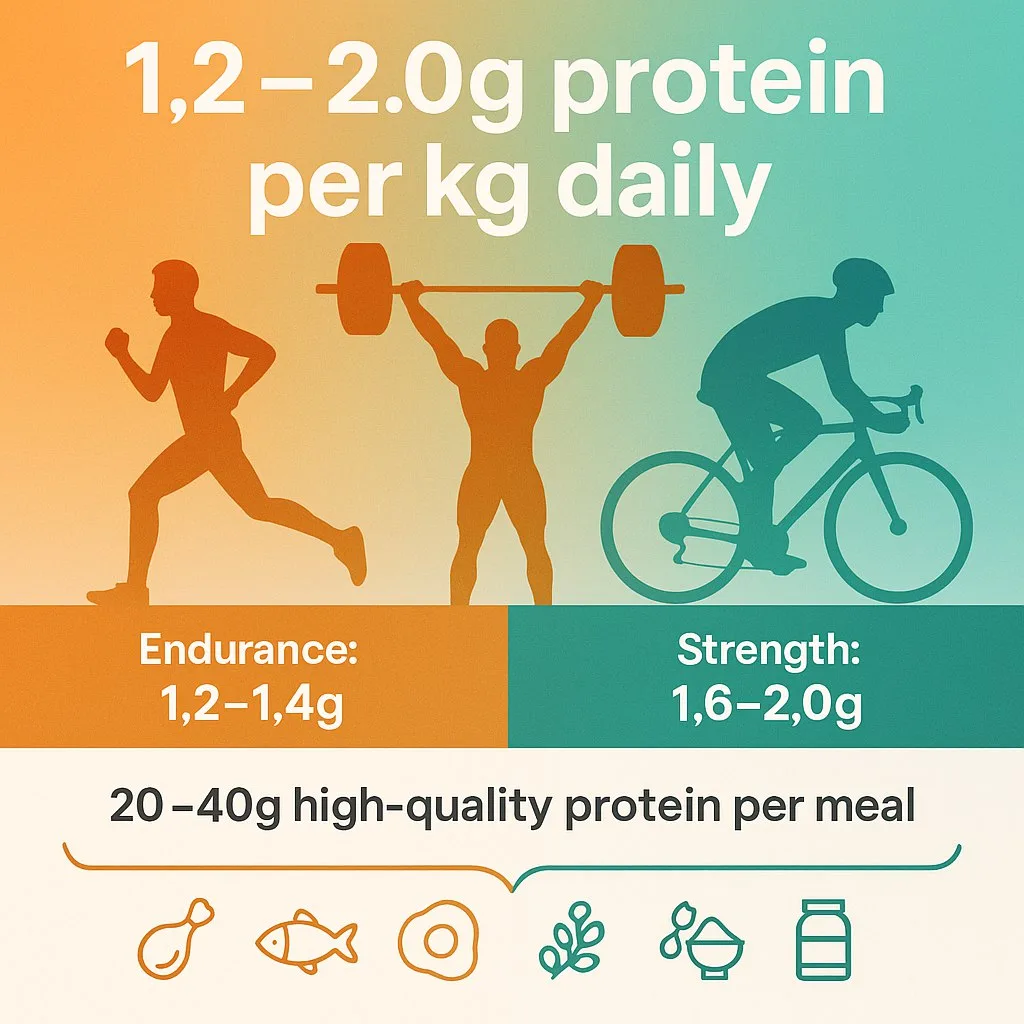
Strength and power athletes require 1.6-2.0 g of protein per kg of body weight daily to support muscle protein synthesis and hypertrophy, according to Springer Medizin’s review of protein intake and athletic performance. A 75 kg weightlifter calculating their target lands at 120-150 g per day. The honest limitation: evidence consistently shows diminishing returns above 2.0 g/kg, so eating beyond that threshold adds cost and digestive load without adding meaningful muscle.
3. Team Sport Athletes: 1.4-1.7 g per kg of Body Weight Daily
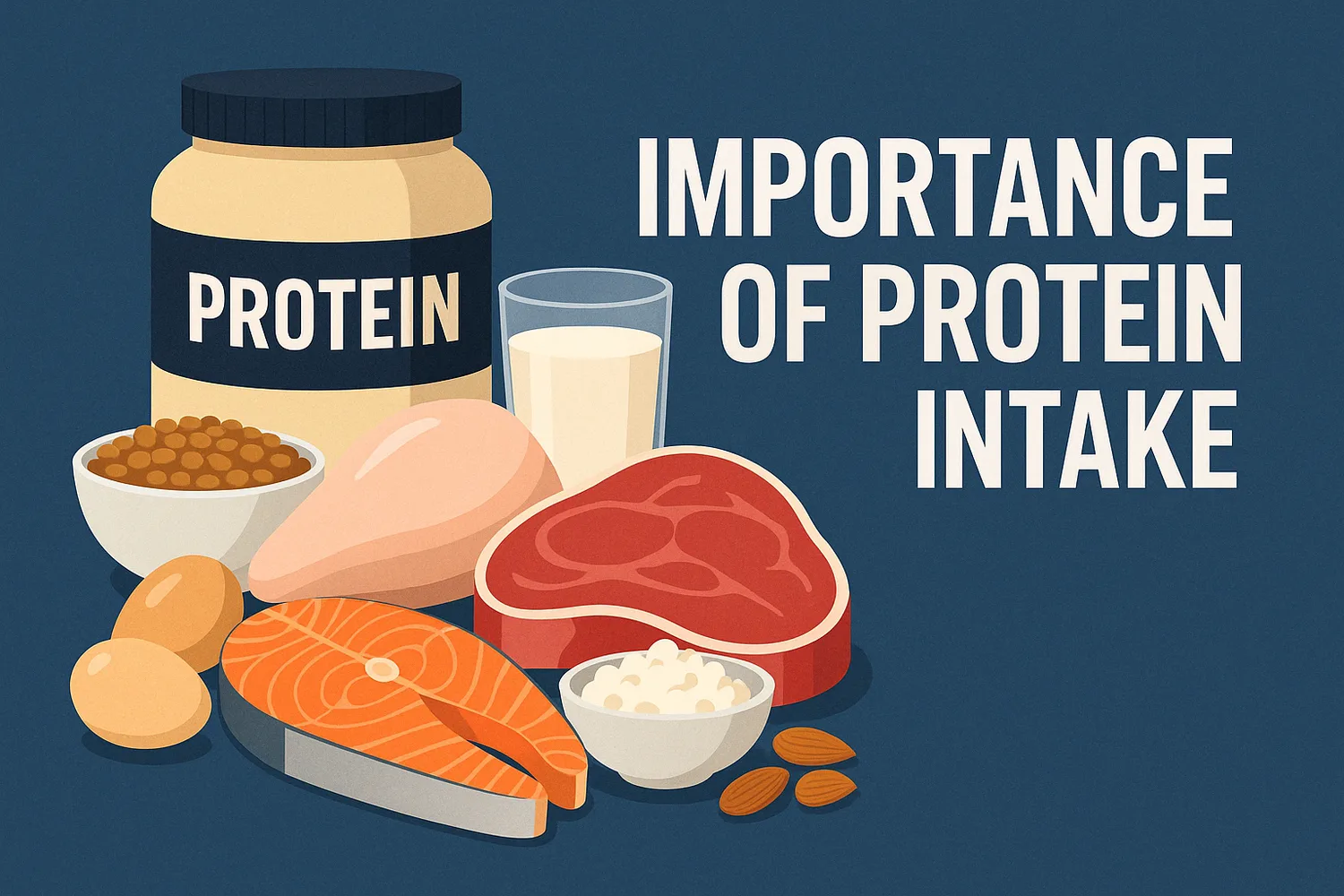
Team sport athletes, including soccer, basketball, and rugby players, sit in the middle range at 1.4-1.7 g per kg of body weight daily, reflecting their mixed aerobic and anaerobic demands, per Springer Medizin’s protein intake research. The real-world challenge for this group is consistency. Irregular travel schedules, unpredictable meal access, and multi-day tournament blocks make hitting a precise daily target harder than calculating one. Knowing your number matters less if the logistics of your sport make it nearly impossible to hit on road trips.
Most athletes pick a number from a YouTube thumbnail and never revisit it, even as their training type, volume, and goals shift. The deeper problem is the absence of a system that tells you exactly what to eat to hit your goal and removes the daily math from the equation entirely. GetFit AI’s nutrition feature addresses both.
It calculates a sport-specific macro target anchored to the ranges above, then lets you log every meal against it with food search, barcode scanning, and weekly macro charts. The right number is tracked day after day, automatically, without manual arithmetic. And because GetFit AI pairs that nutrition layer with athlete-style custom workout plans built around your actual training schedule, your protein target and your training load move together rather than drifting apart the moment your program changes.
Now that you have a personal gram target anchored to your sport type, the next question is where that protein actually comes from on a plate, because hitting 160 grams a day looks very different in practice than it does on a calculator. The next section maps the highest-leverage food sources and the real serving sizes that get you there.
Related Reading
- Athletic Performance Analysis
- Does Vaping Affect Athletic Performance
- How to Avoid Feeling Sleepy After Workout
- How Does Sleep Affect Athletic Performance
- How to Measure Athleticism
- Velocity Based Training
- Building Stamina and Endurance
- Why Am I So Bad at Sports
- Endurance vs Strength Training
- Why Am I So Tired After Working Out
- How to Create a Personalized Workout Plan
High Protein Food Sources Every Athlete Should Actually Be Eating
Good protein sources for athletes aren’t hard to name. The real problem is that most beginners eat one or two of them on repeat, have no idea how much protein each serving actually delivers, and quietly fall 40 to 60 grams short of their daily target without ever realizing it. That gap is especially acute for plant-based athletes, where hitting aggressive daily targets without doing the math yourself at every meal is genuinely hard. GetFit AI’s nutrition tracker is built to close that gap: log meals by food search or barcode scan, and the per-day macro chart shows you in real time whether you are on track or quietly running a deficit that your training will never be able to outwork.
1. Chicken Breast - The Athlete’s Workhorse at 31g Protein per 100g
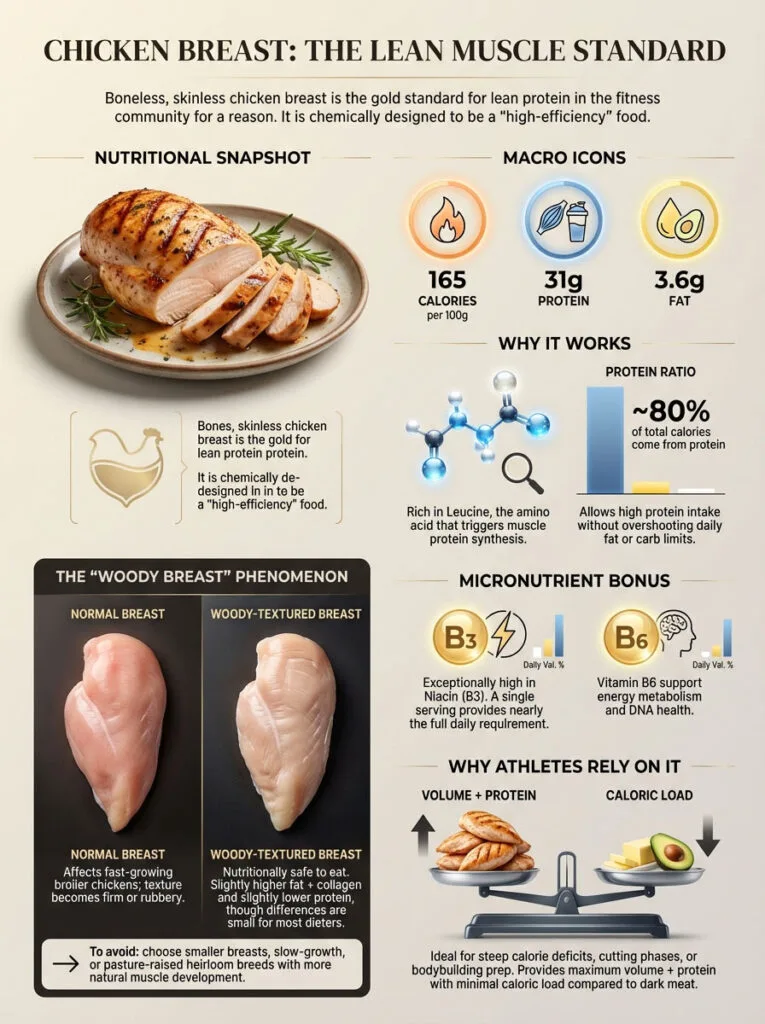
Cooked, skinless chicken breast delivers 31g of protein per 100g, but the trap most beginners fall into is this: raw chicken breast contains only 22 to 24g per 100g because cooking removes water and concentrates the protein. Log it as raw when it was weighed cooked, and you can under-report by 25 to 35% per serving, enough to push your total daily intake below the threshold for net muscle protein synthesis. The raw-versus-cooked weight error is the most common reason numbers look right on paper while training fails to respond. GetFit AI’s food database distinguishes raw and cooked states so the tracker does that math for you rather than leaving you to guess.
2. Salmon and Tuna - Protein-Rich Fish That Also Fuel Recovery with Omega-3s
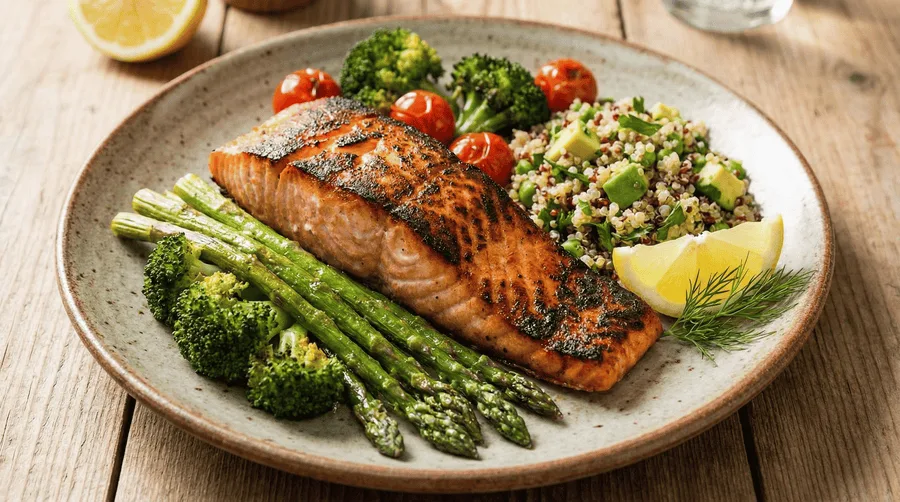
A 170g cooked salmon fillet delivers roughly 40g of protein alongside omega-3 fatty acids that reduce exercise-induced inflammation, making it one of the few complete protein sources that pulls double duty on recovery. Canned tuna is the budget version: around 25g of protein per 100g drained, shelf-stable, and among the best protein-per-dollar options in any grocery store, a genuine priority for athletes who are actively weighing cost against quality when building a weekly meal rotation. The tradeoff is sodium in canned varieties, so athletes watching fluid retention should rinse before eating.
3. Whole Eggs: 6g of Complete Protein with the Highest Biological Value of Any Food
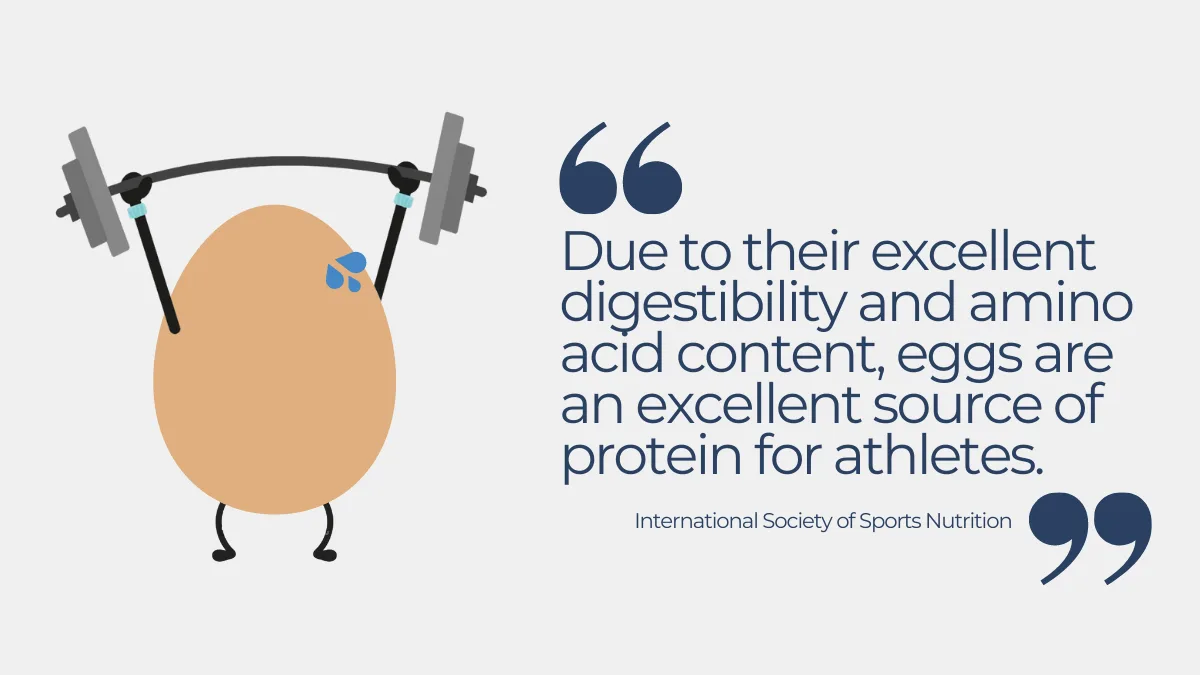
Each whole egg provides roughly 6g of complete protein and carries the highest biological value of any whole food, meaning the amino acid profile matches what human muscle tissue actually needs. Three eggs at breakfast puts 18g on the board before 8 a.m. The limitation is that eating six or more eggs daily to chase high targets adds significant dietary cholesterol, which matters for athletes with cardiovascular risk factors. For athletes still learning to distinguish protein sources from fat sources, a surprisingly common blind spot that leads to poor dietary choices, eggs are worth understanding as both: the yolk carries fat and cholesterol alongside fat-soluble vitamins, while the white is almost entirely protein. Knowing that distinction changes how you use them in a plan.
4. Greek Yogurt and Cottage Cheese - Slow-Digesting Dairy Protein for Overnight Recovery

Greek yogurt delivers 15 to 17g of protein per 170g serving; cottage cheese hits roughly 20g per cup. Both are predominantly casein, a slow-digesting protein that sustains amino acid release for several hours post-ingestion, making either an effective pre-sleep option for athletes targeting overnight muscle protein synthesis. Full-fat versions add calories that cut-phase athletes need to account for. Athletes who want to see that overnight bet paying off in actual strength numbers will find that logging a consistent pre-sleep protein hit in GetFit AI’s tracker makes the contribution visible in the weekly macro summary, connecting the habit to the outcome.
5. Beans and Lentils - Plant-Based Protein with Fiber That Supports Gut Health
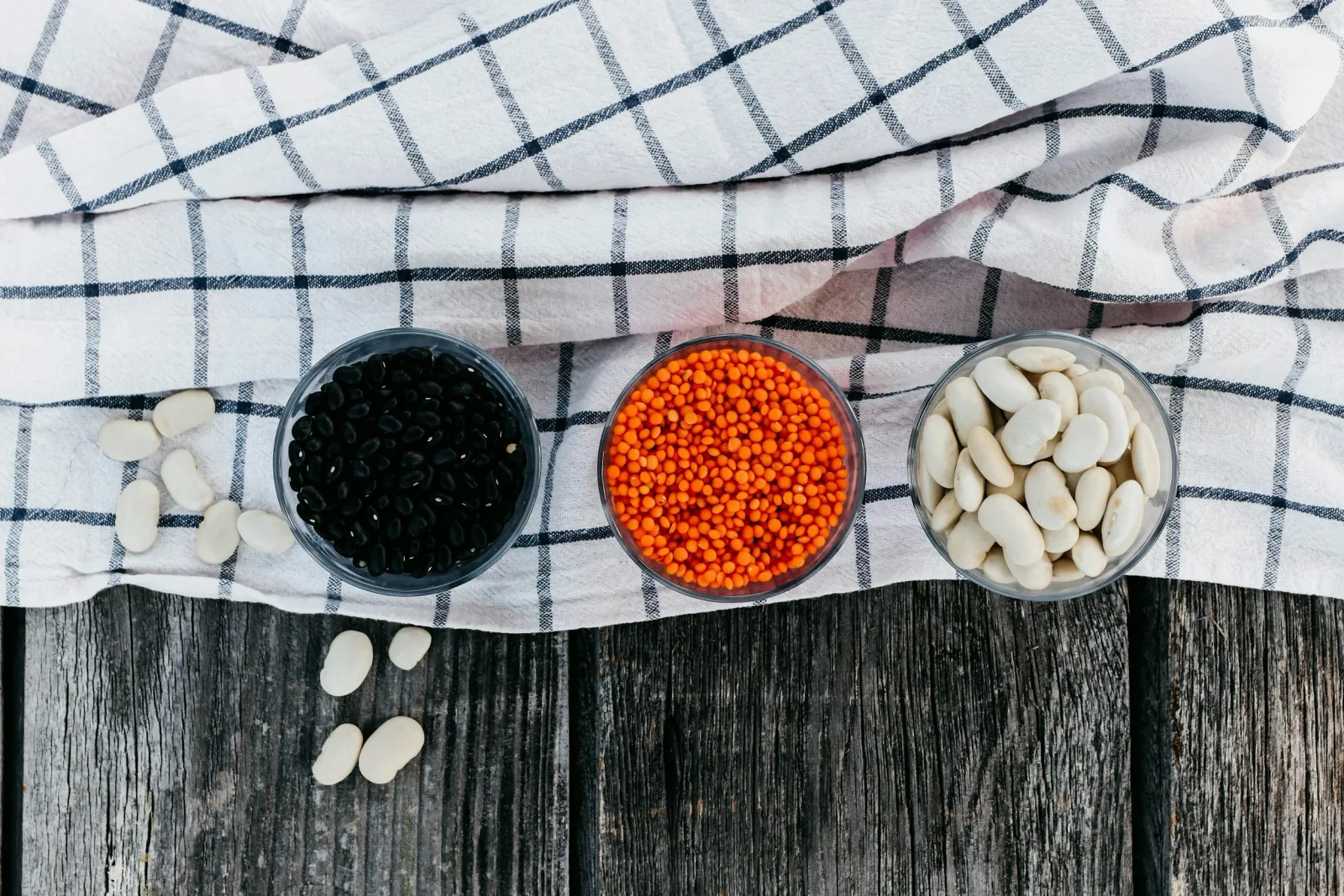
Lentils provide around 18g of protein per cooked cup, but they are low in methionine, making them an incomplete protein source on their own. Pairing them with rice or quinoa completes the amino acid profile and turns a cheap pantry staple into a legitimate recovery meal. Athletes on tight budgets will find beans and lentils among the best protein-per-dollar options available, though the fiber load can cause digestive discomfort if portions jump too quickly.
The deeper challenge for plant-based athletes is that even a well-varied legume rotation leaves leucine, the amino acid most directly linked to triggering muscle protein synthesis, running low. Getting 15 to 18g of leucine daily from plant sources alone is genuinely difficult: the leucine density per gram of food is lower than in meat or dairy, which means portions need to be generous and variety needs to be intentional.
6. Tofu and Edamame - Complete Plant Proteins That Rival Animal Sources

Firm tofu delivers roughly 17g of protein per 200g serving and contains all nine essential amino acids, making it one of the few plant foods that qualifies as a complete protein source. Edamame adds another 17g per cup. Plant-forward athletes targeting 140g or more daily will find that rotating tofu, edamame, lentils, and quinoa together makes the target reachable without any animal products, though total leucine per gram of food runs lower than in meat, which means portions need to be generous.
For athletes targeting even higher daily intakes, the calories and fiber required to reach those numbers through plants alone become a real logistical challenge, not a preference question. GetFit AI’s tracker surfaces that reality in the macro chart rather than hiding it, so you can make deliberate adjustments, more tofu, a larger edamame portion, a second lentil serving, instead of discovering the shortfall at the end of the day.
Building a Full Day of Protein from Real Foods Without Supplements
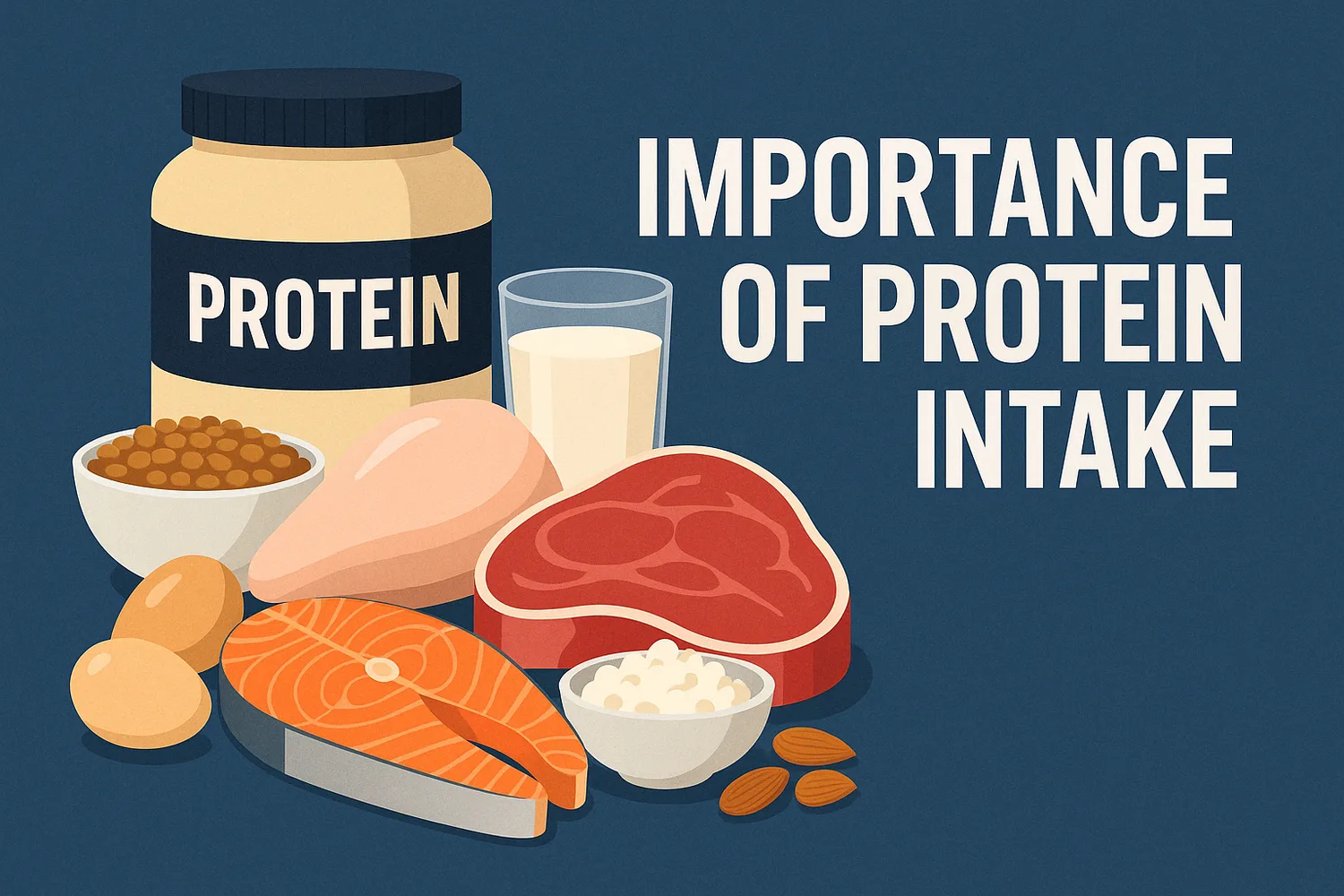
A structured whole-food day can hit 130g of protein without a single shake: 3 eggs at breakfast (18g) + canned tuna at lunch (30g) + Greek yogurt as a snack (17g) + a 170g chicken breast at dinner (roughly 53g per USDA FoodData Central) + cottage cheese before bed (20g). The math works. The harder part is knowing whether your actual meals are hitting those numbers, especially when raw versus cooked weights, portion sizes, and food swaps shift the total daily count by more than most people expect, and doing that calculation manually at every meal is exactly the kind of friction that causes athletes to stop tracking altogether.
GetFit AI’s nutrition tracker removes that friction: log meals by food search or barcode scan, and the per-day macro chart tells you in real time whether you are on track or quietly running a deficit that your training will never be able to outwork. For athletes who want confirmation that the work is producing results, having the protein numbers verified daily is the first layer of evidence that the plan is sound. Premium plans start at $1.99 per week, $4.99 per month, or $49.99 per year, putting that daily accountability within reach regardless of where your grocery budget is already being stretched.
Knowing which foods to eat and how much they deliver gets you to your daily protein target. But when you eat that protein across the day turns out to matter almost as much as the total, and that is where the real leverage is.
How Protein Timing After a Workout Drives Muscle Protein Synthesis
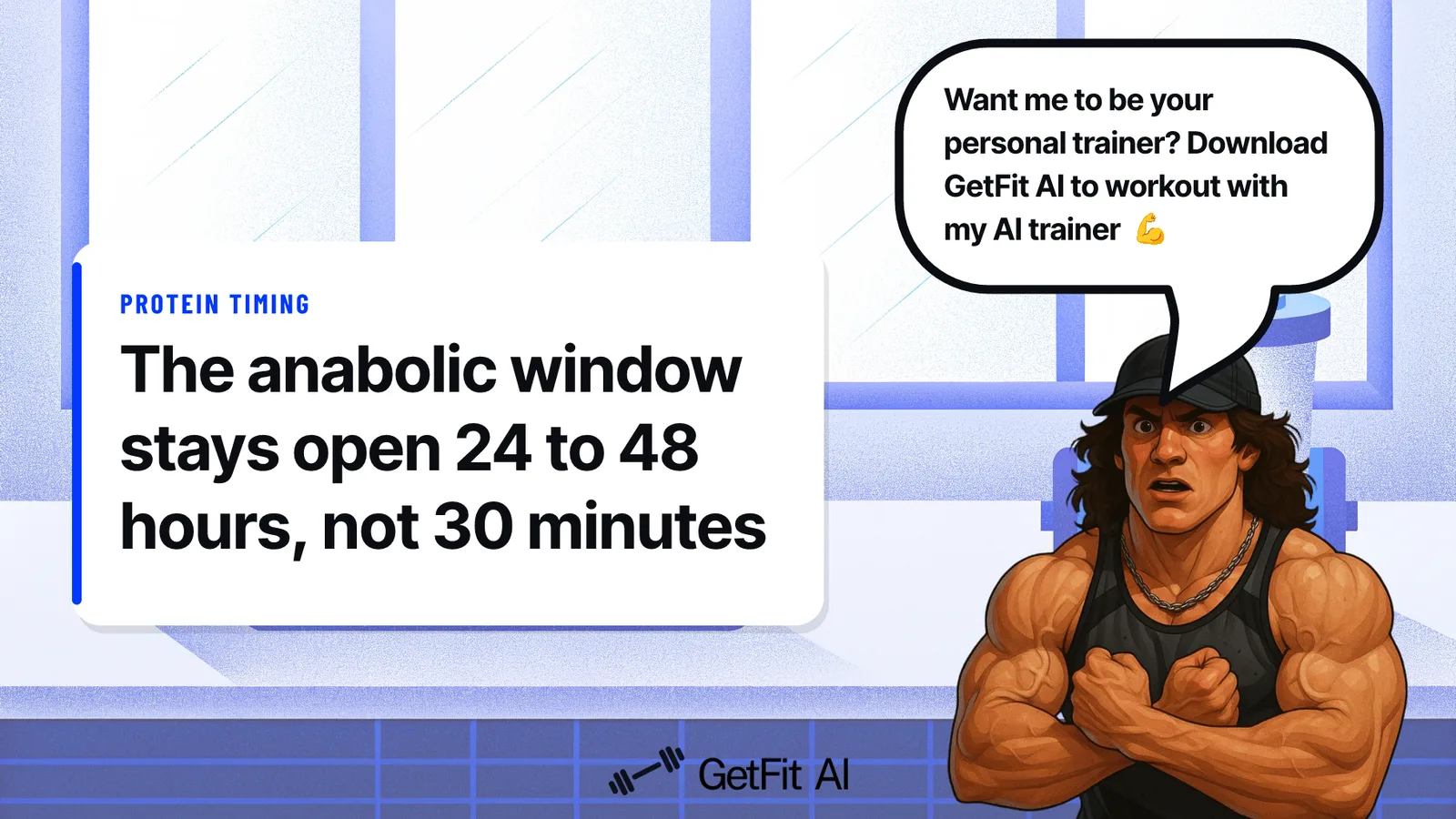
The Post-Workout Anabolic Window Is Wider Than You Think
Post-workout protein timing affects muscle protein synthesis and recovery by extending the window during which dietary protein amplifies muscle repair. The countdown clock is a product of supplement marketing, not physiology.
Key takeaway: The post-workout anabolic window stays open for 24 to 48 hours, not 30 minutes. Supplement marketing invented the countdown clock; physiology did not.
Spread Protein Evenly Across Meals
Spreading protein intake evenly across meals helps the body use it more effectively because each feeding independently stimulates a fresh round of muscle protein synthesis. What most teams of researchers report is that consuming roughly equal doses every three to four hours produced superior muscle protein synthesis compared to the same total protein eaten in fewer, larger sittings. Per-meal dose matters too; most research points to 20-40 g per meal as the range that saturates the leucine threshold needed to trigger a full synthetic response, with diminishing returns above that ceiling.
Related Reading
- How to Deal With Performance Anxiety in Sports
- Hydration Tips for Athletes
- How to Build Mental Toughness in Athletes
- Food for Athletes During Competition
- Strength Training Workout for Runners
- Best Plyometric Exercises for Speed
- Exercises That Improve Muscular Endurance
- Conditioning Workouts for Athletes
- Speed Training for Athletes
- Balance Exercises for Athletes
- Best Core Exercises for Athletes
Why Generic Protein Advice Fails Athletes Who Train Without a Coach
Every week a solo athlete follows the same protein number they found in an article, trains harder than they did the month before, and still wonders why the mirror hasn’t changed. The answer is rarely effort, it’s that the number itself was never designed to move with them.
Why a Fixed Protein Number Becomes Wrong the Moment Your Training Changes
A heavy squat session and a rest day are not the same physiological event. Yet a static daily protein target treats them identically. Optimal protein intake shifts with sport type, training load, and energy availability, so a fixed number becomes inaccurate the moment your training changes. That drift is invisible when you’re tracking against a number that looks the same every day.
The compounding problem is experience level. A beginner accumulates muscle damage faster than an intermediate athlete and requires proportionally more protein to complete the repair cycle. Generic guidelines don’t account for where you are in your training arc, only for a rough body-weight estimate. The further you progress, the wider the gap between what the article recommends and what your body actually needs.
The Hidden Cost of Guessing How Protein Matches Your Actual Training Day
Across the broader landscape of sport nutrition, professional athletes in basketball, volleyball, and karate carry meaningfully different dietary profiles, confirming that a single guideline cannot serve athletes with different training demands. Solo athletes face that same mismatch, only without anyone to flag it.
Under-fueling after a hard session delays the repair cycle, so your next session stacks on top of unfinished damage. Over time, that accumulation quietly erodes progress in ways that are easy to misread as a motivation problem or a training plateau. It’s a structural gap: the athlete has a static number, a dynamic body, and nothing connecting the two.
How an AI Coach Closes the Loop Between Your Gym Log and Tonight’s Plate
An AI fitness app like GetFit AI bridges this by reading what you actually logged in the gym and adjusting your nutrition target around that session, not around a static formula. A beginner who logs a heavier-than-usual leg session can ask the AI coach directly whether to eat more protein tonight and get an answer grounded in that session’s data, not a generic rule. That kind of session-specific feedback is what turns a gym log into a tool that actually shapes recovery.
Next steps
If your training sessions keep stacking up while your strength and the mirror stay frozen, the path forward starts with accepting that more sessions without recalibrated protein just compound unresolved damage rather than build on completed adaptation. Start with our AI fitness app.
The raw-versus-cooked logging error alone can push daily intake 25 to 35 percent below your actual target, quietly erasing the discipline you thought you were applying. And because optimal protein needs shift every time training volume or sport type changes, a fixed number you set three months ago is almost certainly wrong for the schedule you are running now. Together, these two gaps point to one practical action: stop estimating and start tracking against a target that moves with your training.
Start with GetFit to get a sport-specific protein target calculated around your actual training load, then log every meal against it using food search or barcode scan so the raw-versus-cooked gap and the daily distribution both get accounted for automatically, not approximated after the fact.
Frequently Asked Questions
I train four days a week and still feel sore all the time, could protein actually be the reason?
Yes, persistent soreness is closely tied to how quickly your body completes the muscle protein remodeling cycle. When dietary protein is insufficient, the structural damage caused by exercise cannot be fully resolved, so recovery time stretches and soreness can feel permanent. Each session piled on top of unfinished repair compounds the problem quietly over time.
How much protein do I actually need if I mostly run or cycle?
Endurance athletes need 1.2-1.4 g of protein per kg of body weight daily. For a 70 kg runner, that works out to roughly 84-98 g per day. If you are also running a calorie deficit during a heavy training block, push toward the upper end of that range because the body will pull amino acids from muscle tissue for fuel when energy is short.
Does eating more protein than the recommended range help you build muscle faster?
No, the evidence consistently shows diminishing returns above 2.0 g per kg of body weight. Eating beyond that threshold adds cost and digestive load without adding meaningful muscle gain.
Is there a best time to eat protein after a workout, or does it not matter?
Timing matters. The muscle protein synthesis window stays elevated for roughly 24 to 48 hours after a training stimulus, and once it closes, muscles stop actively building new protein at an accelerated rate until the next session reopens it. Missing the protein during that window means the training load you put in delivers less adaptation than it should.
Does protein do anything for recovery beyond just repairing muscle?
Yes, dietary protein also supports immune function and hormone production, both of which are essential for sustaining performance across repeated training loads. Athletes in heavy training blocks who under-eat protein tend to see upper respiratory infections cluster right when training load peaks, and low protein intake can also suppress anabolic signals while elevating cortisol.