23 Best Core Exercises for Athletes to Build Real Power

Your abs can burn every session and still make you slower. Here is why athletic core training is a three-category system, and what happens when athletes skip the one that matters most.
Soreness after an ab circuit feels like progress. Your muscles ache, your stomach is on fire, and you assume something meaningful just happened. The common assumption among most high-school lifters brand new to the gym is that if they train their core hard enough and often enough, results will come, it’s just a matter of consistency.
That feeling of burn is real. What it signals, though, is tissue damage and novelty, not the kind of adaptation that shows up when a defensive back needs to hold his frame through contact or a sprinter needs to drive off the line with maximum force. See our AI fitness app for how this works in practice.
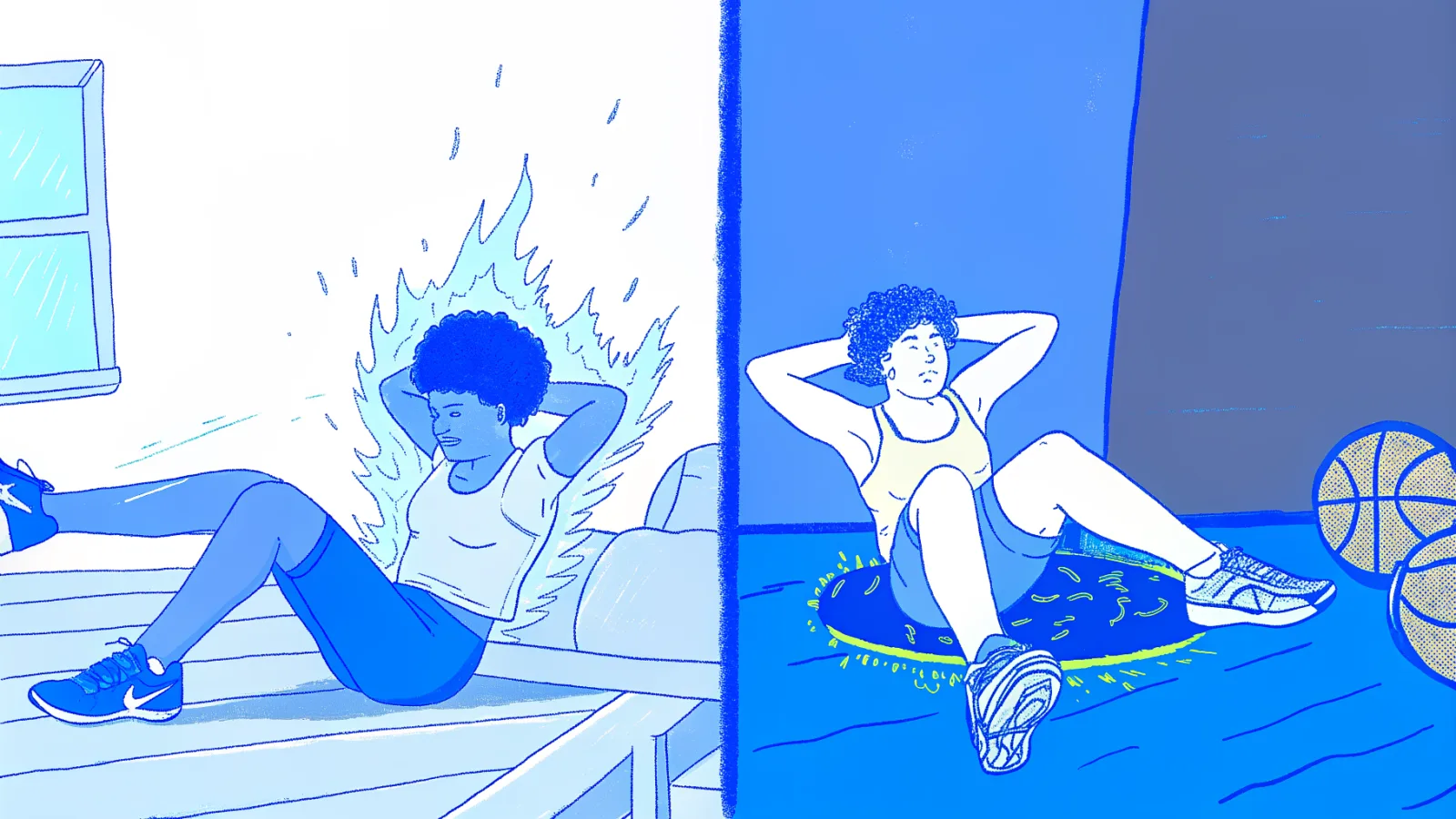
“Young athletes (e.g. 16-year-old basketball players) struggle to understand how training, including core work, should differ from generic fitness routines, specifically around weight, reps, and intensity as an athlete.”
— what we hear from young athletes
Trifecta Therapeutics notes in their October 2024 analysis that while core strength is widely accepted as essential to athletic performance, the contemporary view challenges traditional training approaches, arguing that how exercises are organized and categorized matters as much as how hard or often an athlete trains. Effort applied to the wrong category of work produces fatigue, not athletic carryover.
Effort applied to the wrong category of work produces fatigue, not athletic carryover. The athletic core is not your six-pack.
The rectus abdominis produces spinal flexion, useful for sit-ups but largely irrelevant to sport performance. The muscles that matter athletically sit deeper: the transverse abdominis generates intra-abdominal pressure that stabilizes the lumbar spine before a limb even moves, the multifidus controls segmental spinal motion, and the obliques manage rotation and lateral stiffness. Together, these muscles form a system built to resist force, not just produce it.
Athletic force transfer connects lower-body power to upper-body output. A pitcher’s arm speed, a sprinter’s ground contact efficiency, a basketball player’s change-of-direction sharpness, all depend on a core that can stiffen quickly and transfer energy without leaking it through an unstable spine. Anti-rotation strength, the capacity to hold position while an external force tries to rotate you, is the category most athletes skip entirely, because it does not burn the way crunches do.
The actual signal of athletic core adaptation is stability under load: the ability to maintain a neutral spine while force is applied, resist rotation during single-leg movement, and transfer power from the ground up without compensating through the lower back. That is the difference between training a muscle for appearance and training a system for function.
Key takeaways
- Ab circuits produce soreness because they train tissue fatigue, not the structural stiffness, anti-rotation capacity, and rotational power that sport actually demands.
- Lumbar injuries in youth athletes trace back almost never to a single bad rep, they trace back to a structural deficit that was never addressed before loading began.
- Most throwing velocity in baseball originates from the trunk and lower body, not the arm, which means a weak rotational core is a direct speed leak, not a secondary concern.
- The order you sequence core work matters as much as the exercises themselves: anti-rotation and stability first, anti-extension second, rotational power last, that progression is backed by research, not preference.
- Copying a timed crunch circuit off social media will not make you faster, more explosive, or harder to knock off balance, it will make your abs sore, which is a different outcome entirely.
- GetFit AI's Athlete-Style Custom Workout Plans close the gap between a list of exercises and an actual Monday morning plan, build a custom AI plan around your own goals and equipment, or train in the style of a real athlete or trainer, and the plan adapts as you get stronger.
The Random Ab Circuit Problem That Keeps Most Athletes Stuck

Why Copying TikTok Ab Circuits Produces Soreness Instead of Sport Performance
The burn and the adaptation are two completely different biological events, and soreness is only evidence of the first one. NHS Strength Athletics confirms that performing ab exercises with no knowledge of sequencing or week-over-week progression means the body is never systematically challenged, so measurable athletic improvement never occurs.
Athletes running random YouTube-based timed circuits with fixed work-rest intervals have no progressive overload scheme built in, so the stimulus stalls even as the effort continues.
The second problem is motivational attrition, and it arrives on a predictable schedule. The athletes we work with at GetFit AI describe this in three specific ways:
-
needing something that keeps them going past week three
-
something that holds them accountable when motivation runs out
-
a plan that adapts instead of one they fall behind on and quit
GetFit AI closes that gap at two levels. First, its Athlete-Style Custom Workout Plans replace the random circuit with structured training that covers exercises, sets, order, and progression from the very first workout session, and continues adapting across the overall training program arc, so the stimulus keeps advancing as the athlete does. Second, it reframes what a core plan is for: core training for athletes is a three-category system, and without a plan built to progress, the body has no reason to change.
Why Treating Core Training as Isolation Work Ignores How Athletic Force Actually Travels
The anatomical term for this transfer system is the kinetic chain, and its implications for programming are direct: exercises that train muscles in isolation fail to develop the coordinated stiffness and force transfer the chain depends on during sport.
GetFit AI addresses this directly inside its Athlete-Style Custom Workout Plans by organizing core training around the three functional categories the body uses: anti-extension, anti-rotation, and rotational force transfer, so every session develops the chain as an integrated system rather than a collection of isolated muscles.
Why Randomized Volume Accumulation Builds Fatigue Instead of Adaptation
Supercompensation, the physiological process through which the body rebuilds above its previous baseline after a training stress, requires that the stress be specific, recoverable, and progressive, conditions that randomized volume accumulation cannot meet.
GetFit AI resolves this at the programming level, embedding the correct stress, recovery, and progression logic into the plan itself so the athlete’s body has the conditions it needs to adapt.
Anti-Rotation and Stability Core Exercises That Protect Athletes Under Pressure
Most athletes train their core hard without ever training it correctly, and the gap between those two things is where injuries accumulate. Anti-rotation and stability work addresses the structural deficits that high-rep, high-intensity core circuits quietly exploit, so this category has to come first rather than getting skipped in favour of more visible effort. GetFit AI builds this sequencing into your programming so that every harder set you do later is built on a foundation that can actually support it.
Related Reading
- Why Am I Not Getting Faster at Running
- Does Masturbation Affect Athletic Performance
- Biomechanics in Sports
- Why is Protein Important for Athletes
- What is Speed and Agility Training
- How to Be a Better Athlete
- How Does Sports Psychology Help Athletes
- Why is Hydration Important for Athletes
- Why Do Athletes Train at High Altitudes
- Why Do Athletes Stretch Before a Game?
- IV Therapy for Athletic Performance and Recovery
- Yoga and Athletic Performance
- Red Light Therapy for Athletic Performance
The Structural Case for Anti-Rotation First
Lumbar injuries account for a disproportionate share of youth athlete time-loss events, and the root cause is almost never a single bad rep. It is a structural deficit that was never addressed before loading began. Research published in the International Journal of Environmental Sciences confirms that an unlevelled or tilted pelvis in young athletes alters spinal load distribution and raises injury risk during high-speed movements, a finding corroborated by clinical evidence from the Crosby Chiropractic & Acupuncture Centre showing how pelvic misalignment in developing athletes cascades into compensatory movement patterns throughout the kinetic chain. This makes anti-rotation control foundational before any other core quality is layered on top.
This leads to a point that most programming skips entirely: anti-rotation and stability work must precede any volumised core loading not because it “feels functional,” but because unresolved anterior pelvic tilt mechanically shifts spinal load distribution in ways that make higher-rep, higher-intensity core circuits actively injurious. An athlete who skips the diagnostic stability layer and jumps straight to circuits compounds a structural liability under every set. The hidden cost is not a missing warm-up drill; it is a fault line embedded into every subsequent training session.
One of the most consistent gaps athletes and fitness enthusiasts face is finding reliable, non-clickbait guidance on functional core strength, content that goes beyond aesthetic ab training and actually tells you which exercises to do, in what order, and how to load them safely. That last point matters more than most written resources acknowledge: choosing the wrong load on stability-based exercises is one of the most common ways beginners stall or get hurt, because anti-rotation work done too heavy collapses form before the deep stabilizers have adapted, and done too light it produces no meaningful training stimulus at all. Knowing exactly where to start, and when to progress, is the practical problem this section exists to solve.
The eight exercises below are the ones that address that structural liability directly. Each one has a specific athletic rationale, a clear setup, and at least one common error that will quietly wreck the benefit if left uncorrected.
1. Pallof Press - Anti-Rotation Cable Exercise for Spine Protection During Athletic Cuts
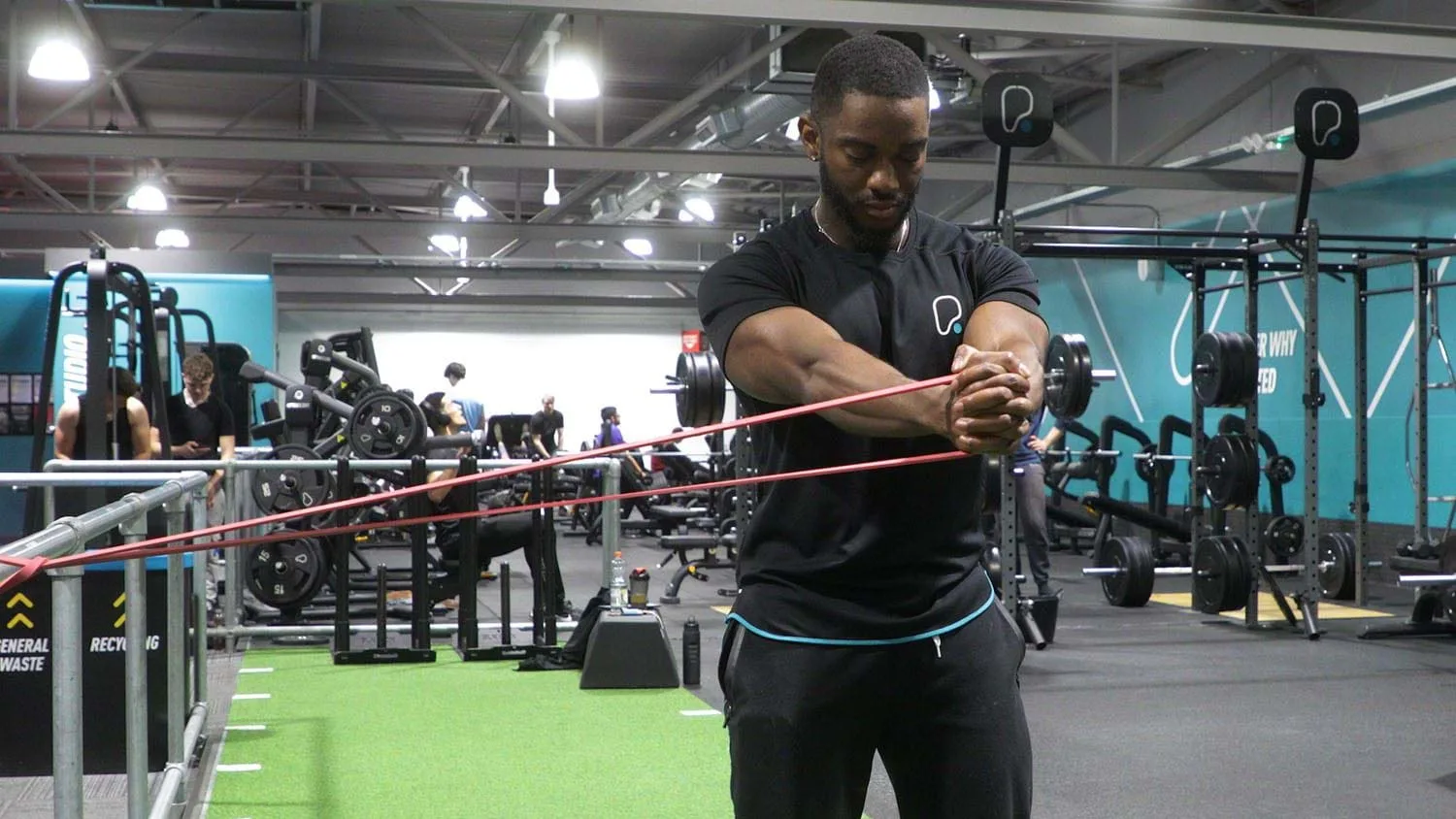
Set a cable at chest height, stand perpendicular to the stack, and grip the handle at your sternum. Press straight out, hold two seconds, return. The cable pulls you toward rotation; your job is to produce zero movement.
NFL receivers use this pattern to build the spinal stiffness that lets them absorb a hit mid-route without folding. The most common error is letting the hips shift toward the cable, which offloads the demand from the core entirely. On load selection: start light enough that your hips stay absolutely still for the full two-second hold.
If the hips drift even slightly, that is your signal to drop the weight, not push through it.
2. Dead Bug - Supine Core Stabilizer That Corrects Anterior Pelvic Tilt Before Heavy Lifts
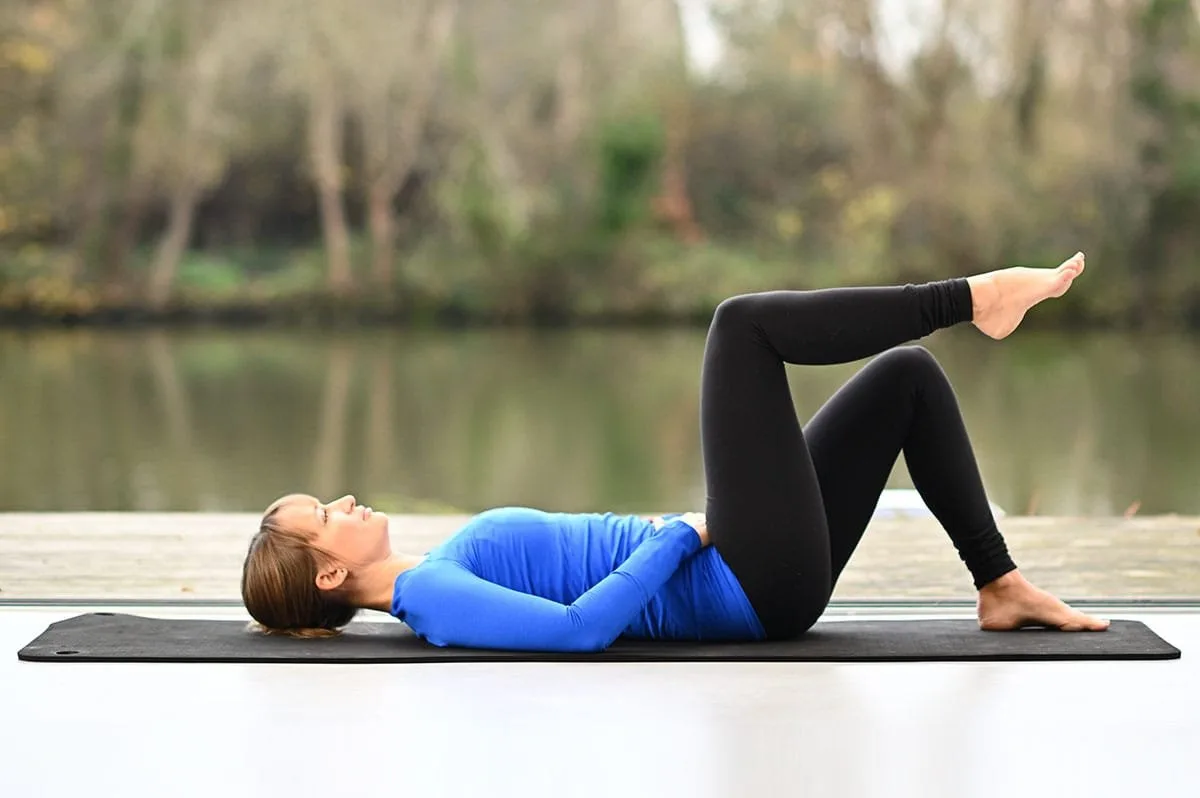
The Dead Bug directly targets the anterior pelvic tilt pattern that International Journal of Environmental Sciences research identifies as a prerequisite correction before heavier loading is introduced. Lie on your back, arms toward the ceiling, knees at 90 degrees. Lower the opposite arm and leg toward the floor simultaneously while pressing your lower back flat into the ground.
That lumbar contact point is the whole exercise; if it breaks, you have gone too far. Beginners should move only one limb at a time until they can hold the position without any daylight under the spine. This exercise is bodyweight by design; adding load before you own the lumbar-flat position defeats the corrective purpose entirely.
3. Bird Dog - Quadruped Diagonal Reach with Breathing Progression for Spinal Endurance
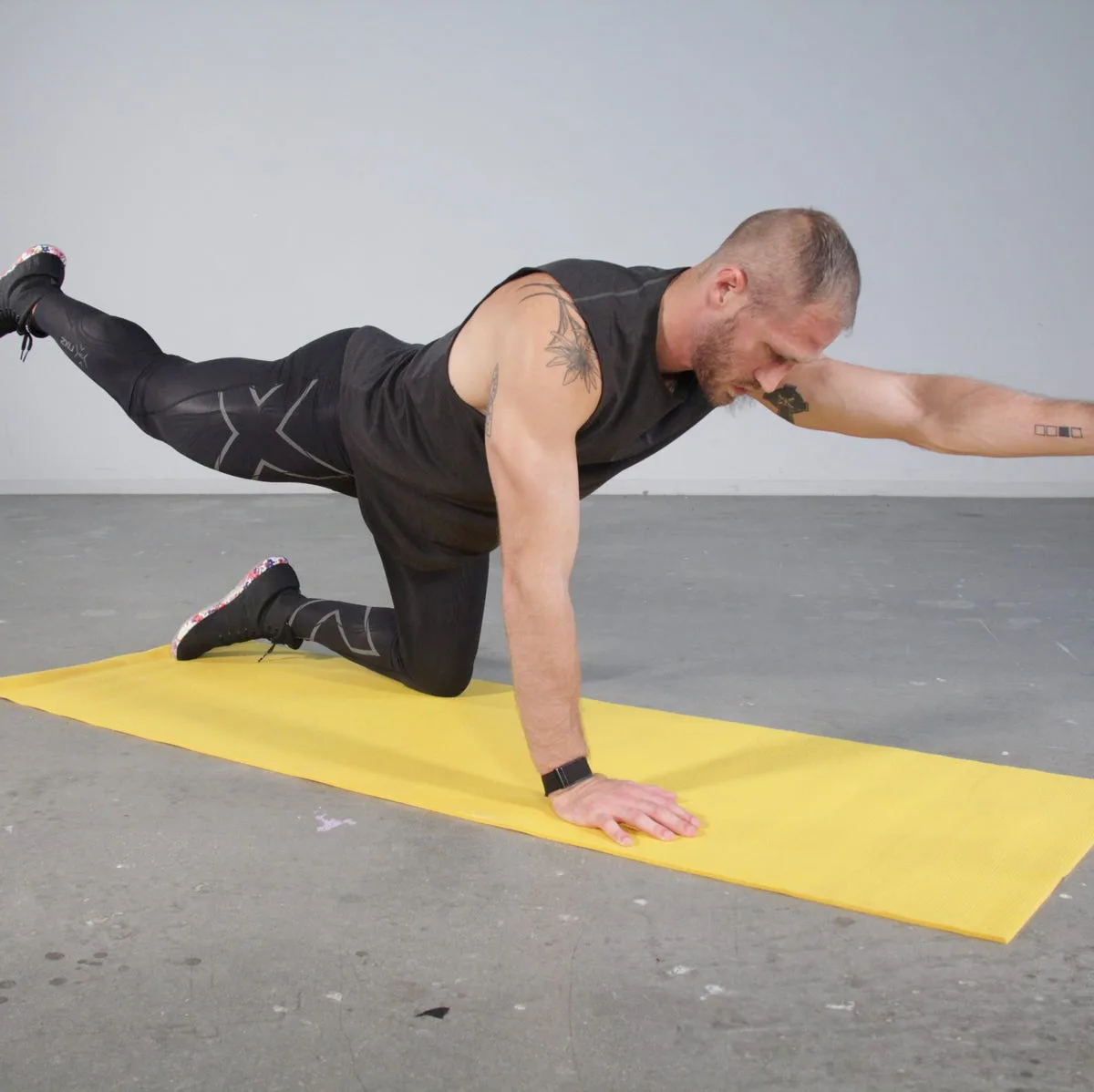
Start on hands and knees, wrists under shoulders, knees under hips. Extend the right arm and left leg simultaneously until both are parallel to the floor, hold three seconds, return with control, and repeat on the other side. The anti-rotation demand comes from resisting the natural tendency to rotate the hips as the leg extends.
Add a slow exhale during the hold to engage the deep stabilizers more effectively. The error that kills this exercise is rushing the return; the eccentric phase is where most of the spinal endurance stimulus lives. Research indexed on PubMed (NCBI) supports the role of deep stabilizer endurance, not just peak strength, in protecting the lumbar spine under repeated loading, which is precisely the quality this tempo approach is training.
4. Copenhagen Plank - Adductor-Loaded Lateral Stabilizer for Groin and Hip Resilience
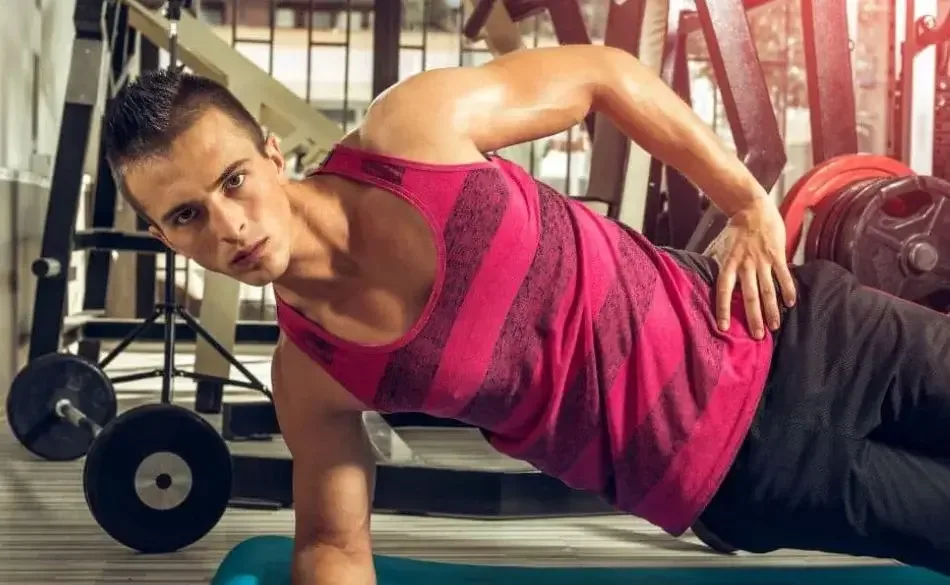
Groin strains are among the most common injuries in cutting sports, which is why the Copenhagen Plank belongs in every soccer and basketball athlete’s rotation. Place your top foot on a bench, bottom leg unsupported, and hold a side-plank position. The adductor of the top leg drives the load.
Hold for time or use short dynamic reps by lowering and lifting the bottom leg. Athletes who skip adductor loading and rely solely on hip abductors for lateral stability are one sharp cut away from a strain. Start with shorter holds and build from there.
This is a bodyweight exercise where position quality, not added resistance, is the progression variable in early training.
5. Side Plank - Oblique Isometric Hold for Lateral Force Resistance in Contact Sports
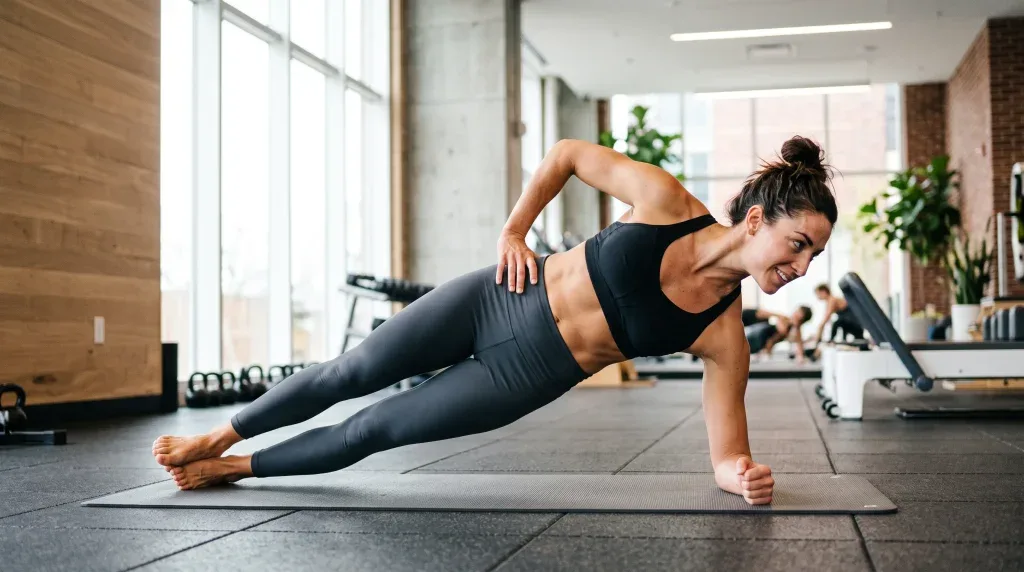
The Side Plank targets the obliques and lateral stabilizers, making it essential for resisting the sideways forces that occur in every collision, sprint stride, and single-leg landing. Stack your feet, prop on your forearm, and lift your hips until your body forms a straight line from ankle to shoulder. Hold for a challenging duration per side. The most common error is letting the hips sag mid-hold, which converts the exercise into a passive stretch rather than an active stability demand. Progress by adding a hip abduction (top leg lift) once you can hold the base position without any drop.
6. Stir the Pot - Stability Ball Circular Plank for Dynamic Anti-Extension Core Control
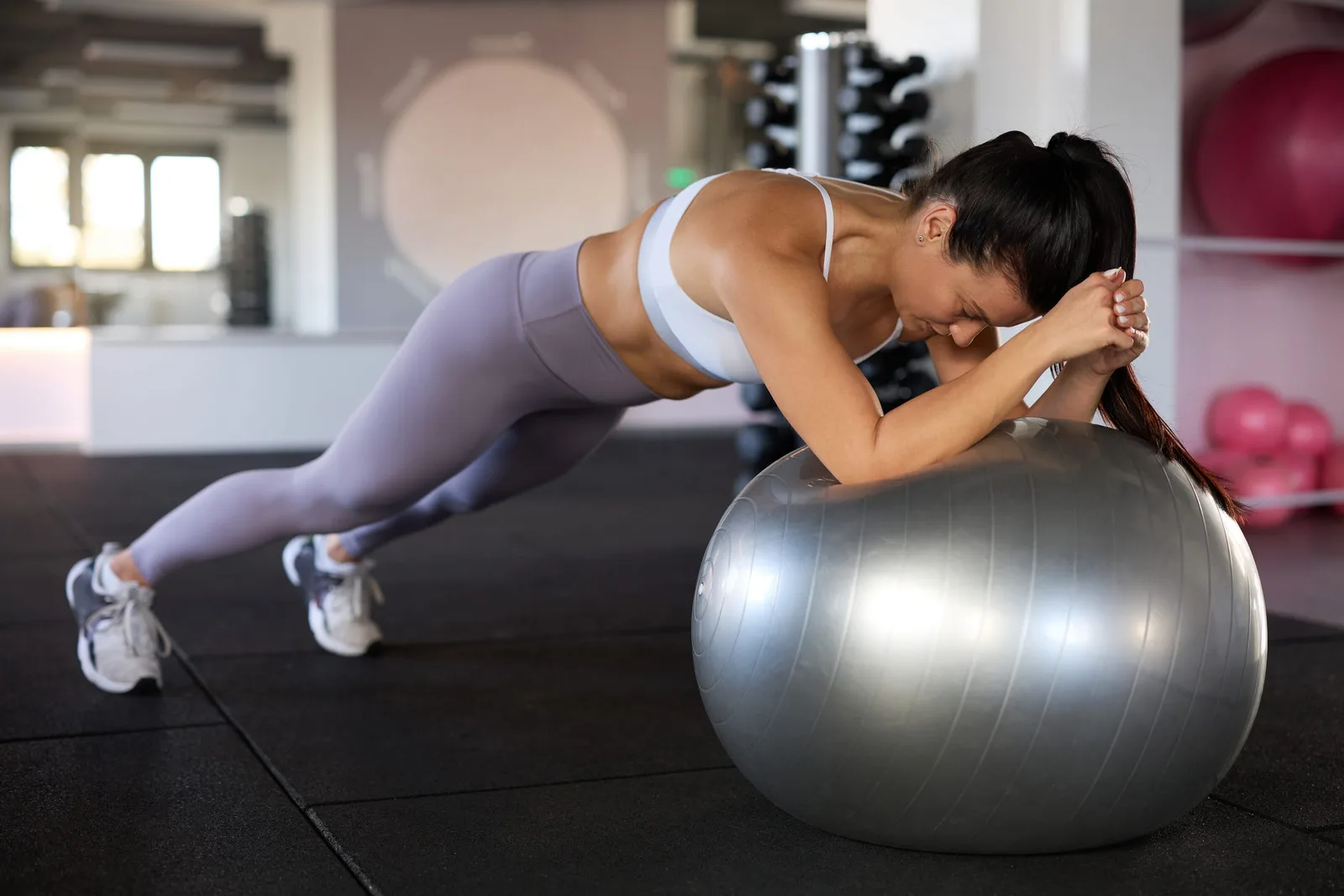
Place your forearms on a stability ball and hold a plank position with feet wide for a base. Slowly trace small circles with your forearms, first clockwise, then counterclockwise. The ball’s instability forces constant micro-corrections from the deep stabilizers that a floor plank never demands. Keep the circles small; large circles shift the challenge from core control to shoulder mobility. This is harder than it looks, and athletes who dismiss it as “too easy” are usually the ones whose hips are swaying with every rotation.
7. Suitcase Carry - Unilateral Loaded Walk That Trains Anti-Lateral-Flexion Under Gait
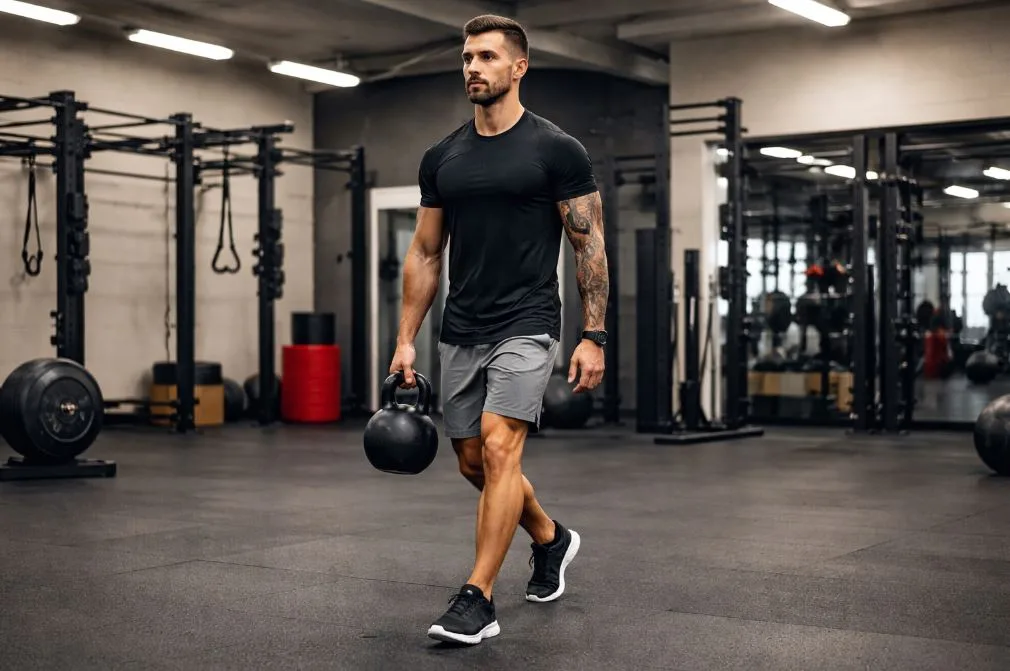
Hold a single dumbbell or kettlebell at your side and walk a measured distance without letting your torso tilt toward the load. That lateral resistance is the training stimulus. The quadratus lumborum works hardest during single-leg stance phases, which maps directly to sprint mechanics and single-leg landing control.
Keep the shoulder on the loaded side packed down, not shrugged. The error to avoid is gripping so hard that the tension travels up through the shoulder and neck rather than staying in the lateral trunk. Load selection here follows the same principle as the Pallof Press: use the heaviest weight that keeps your torso perfectly vertical; the moment your trunk tilts, the weight is too heavy.
8. TRX Reach Row - Suspended Anti-Rotation Pull That Integrates Core and Upper-Back Stability
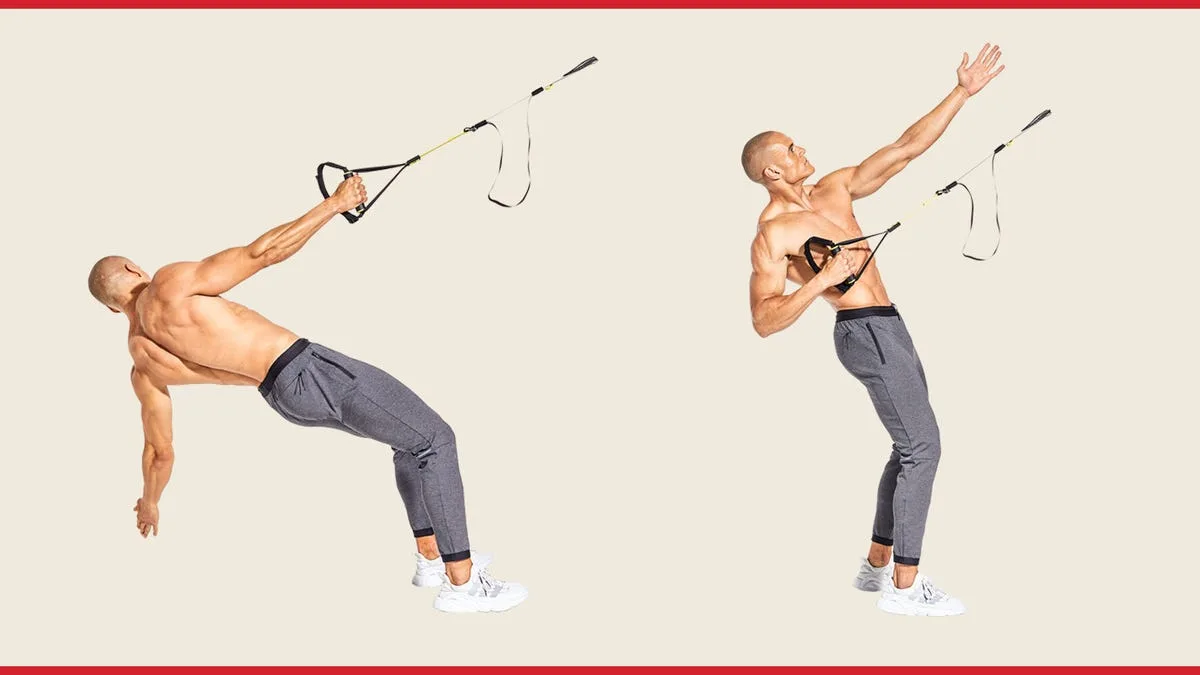
Hold TRX handles, lean back to roughly 45 degrees, and row one arm at a time while the other stays extended. The offset pull creates a rotational force your core has to neutralize in real time. This makes it one of the few exercises that trains anti-rotation and upper-back strength simultaneously, which matters for throwing athletes and anyone whose sport involves overhead or single-arm force production. Keep the hips level throughout; any hip drop signals the core has lost the anti-rotation battle and the set should stop.
Most athletes know these eight exercises exist. The gap is knowing which ones to prioritize for their sport, how to order them in a session, when to add load, and what to do in the gym today. Written resources rarely answer that with enough specificity to be useful. GetFit AI is built around answering it directly: the app generates athlete-style custom workout plans around your actual goal and equipment, with video guides for every exercise and structured programming that tells you the exercise sequence, sets, and progression path from the first workout session onward.
The International Journal of Environmental Sciences research makes clear that compensatory movement patterns driven by pelvic tilt accumulate before athletes or coaches recognize them, which is why having form guidance available at the point of execution, rather than reviewed after the session, matters most for a lifter still learning these patterns. GetFit AI’s structured training delivers that corrective feedback in-session, across the full program arc, not as a one-time consultation.
For athletes who have previously struggled with consistency because no program structure kept them accountable past the first few weeks, GetFit AI’s friends, challenges, and leaderboards layer operates as the retention mechanism that keeps training moving past week three, and is most effective once you have connected with at least one friend also using the app. Premium access starts at a low weekly rate, with monthly and yearly plans available depending on your commitment horizon.
Anti-rotation and stability work gives your spine a locked-down base to operate from, but that base only holds when you can also resist the forces trying to collapse it forward under maximal effort. That is where the next category takes over: anti-extension and bracing exercises that keep your spine position intact when the weight gets heavy and the reps get hard.
Anti-Extension and Bracing Core Exercises Every Serious Athlete Should Own
A passive plank trains endurance in one fixed position. What sport actually demands is something different: the ability to resist spinal collapse while your limbs are moving, a load is shifting, or your body is decelerating at full speed. That gap between static endurance and dynamic stiffness is where most athletes lose force, and where anti-extension training lives.
The distinction matters mechanically. Midline stiffness is the ability to maintain spinal position under load by generating high intra-abdominal pressure on demand. Stability is the passive, low-load version of that.
A standard forearm plank trains the latter. The exercises below train the former, and electromyographical research consistently finds that anti-extension patterns produce meaningfully greater rectus abdominis and oblique activation than the standard crunch, a finding that has informed progressive core programming for decades. Traditional crunches done at high frequency create the illusion of hard core training while producing meaningfully lower trunk-muscle activation than anti-extension alternatives, which means an athlete who doubles the volume of a suboptimal exercise does not double the stimulus, they double the junk reps, and the cumulative result is months of effort with no measurable gain in the midline stiffness that actually drives sprint and lift performance.
Exercise selection determines stimulus quality, not effort or volume.
One of the most persistent technique problems beginners face is confusion between “sucking in” and actually bracing. It is a mechanical reversal. Sucking in reduces intra-abdominal pressure.
Bracing increases it. This confusion shows up constantly during floor exercises: athletes performing bicycle crunches, scissor kicks, and Russian twists with a hollowed, “pulled-in” belly are actively reducing the spinal support they are trying to build. GetFit AI’s athlete-style custom workout plans address this from the very first session, building the bracing cue into every coached rep so the correct motor pattern becomes automatic before loading increases.
Every exercise below requires bracing, so before starting any set, take a breath into your belly, brace as if absorbing a punch, and hold that pressure through the full rep.
1. Ab Wheel Rollout - Maximum Anterior Wall Stiffness Under Full Extension
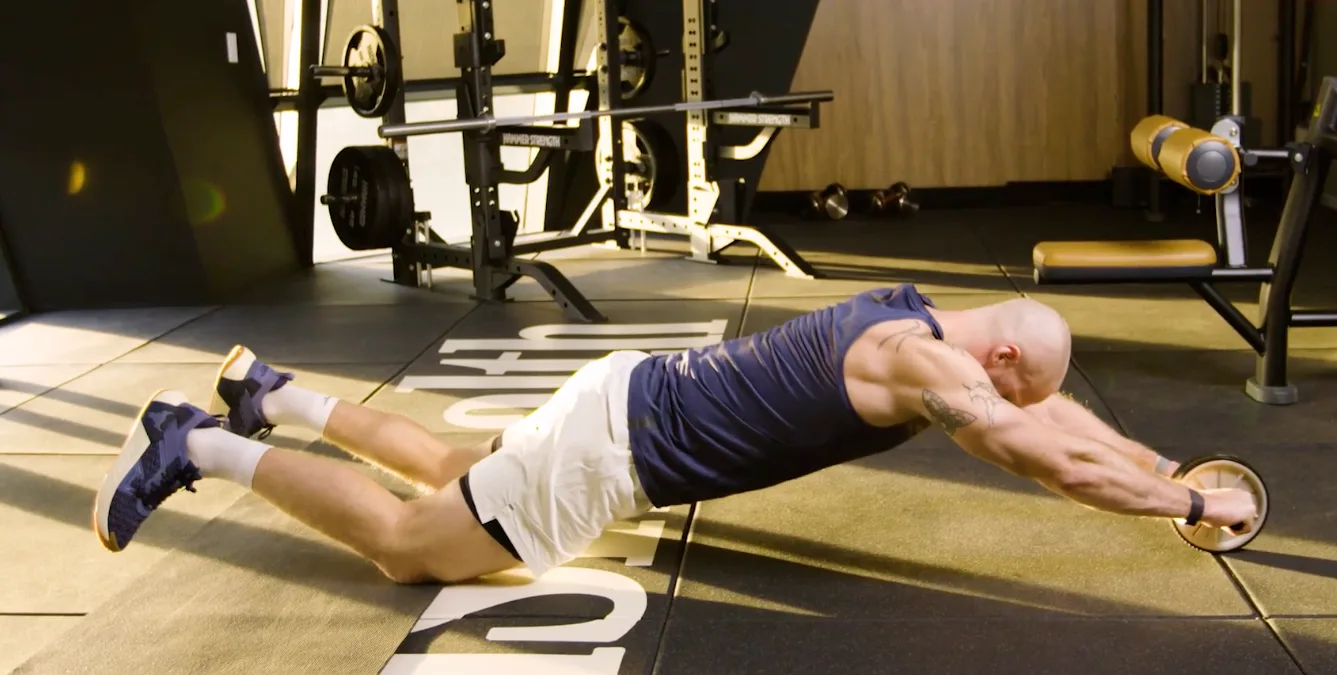
The ab wheel rollout is the single best anterior core exercise for athletes because it forces the entire anterior wall to resist spinal extension across a moving range, directly mimicking the lat-to-core tension pattern of a deadlift lockout or overhead press. A 2024 study published in FIEP Bulletin found that the ab roller produces greater trunk muscle neuromuscular activation than the sit-up. The most common execution failure is lower back collapse at the bottom. If your lumbar arches, regress to a kneeling rollout and build range gradually.
2. Hanging Leg Raise - Grip-Strength Bonus with Deep Hip Flexor and Rectus Integration
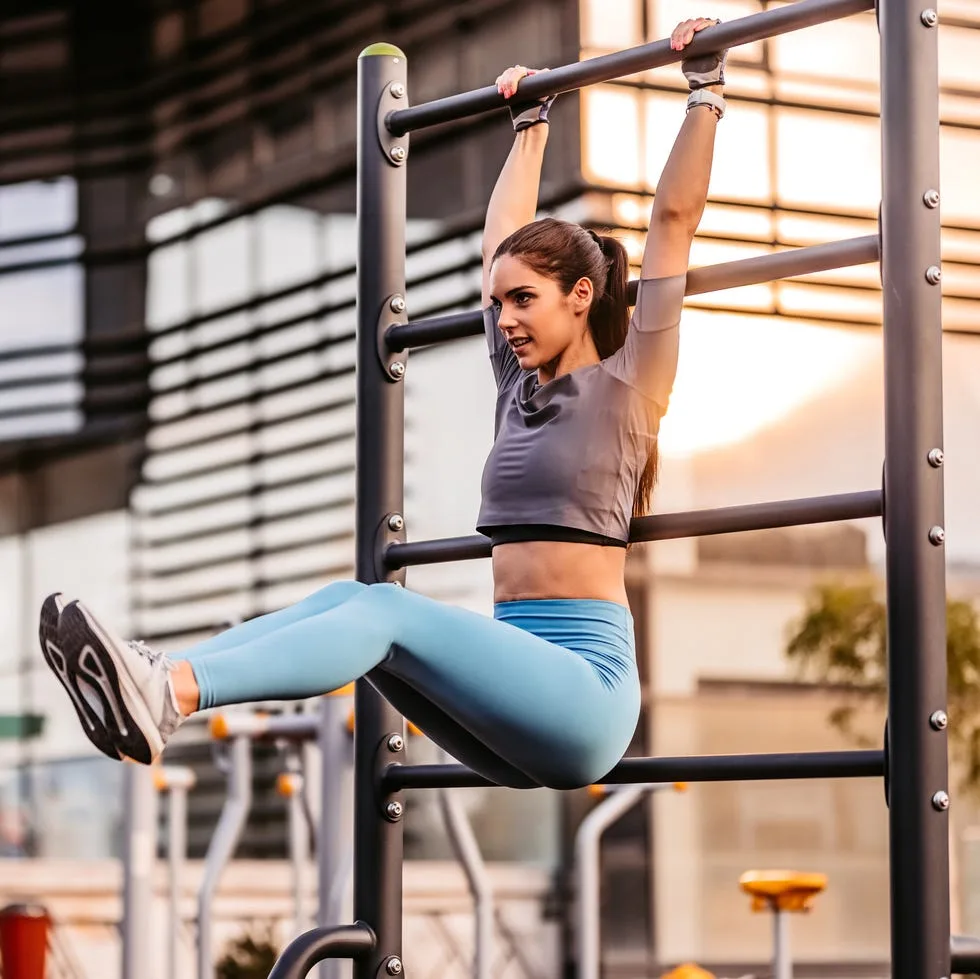
Hanging leg raises build grip strength alongside core strength, making them one of the few exercises that train two athletic capacities simultaneously. Keep the pelvis posteriorly tilted throughout: the moment your lower back arches and your hips swing forward, the rectus abdominis disengages and the hip flexors take over. That compensation is extremely common and completely defeats the purpose. Control the descent, pause at the bottom, and avoid any kipping momentum.
3. Cable Crunch - Loaded Rib-to-Hip Shortening with Hips Fixed
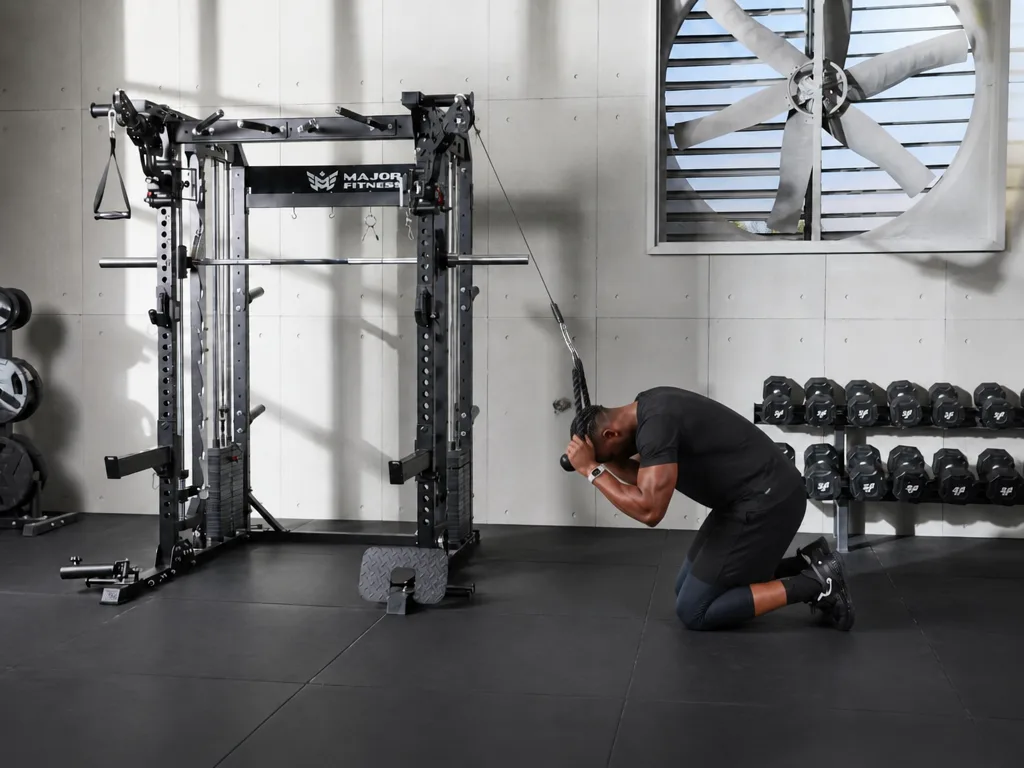
The cable crunch is the most underused loaded anterior core exercise in most high-school training setups. With hips fixed and a cable providing consistent tension through the full range, the rectus abdominis works against resistance it cannot escape, unlike a sit-up where tension drops at the top. Cue: pull the rib cage toward the pelvis, not the head toward the knees. Keep the hips stationary. This is not ideal as a standalone exercise; it works best after a bracing movement has already pre-activated the anterior wall.
4. RKC Plank - Full-Body Irradiation for Maximum Anterior Core Tension
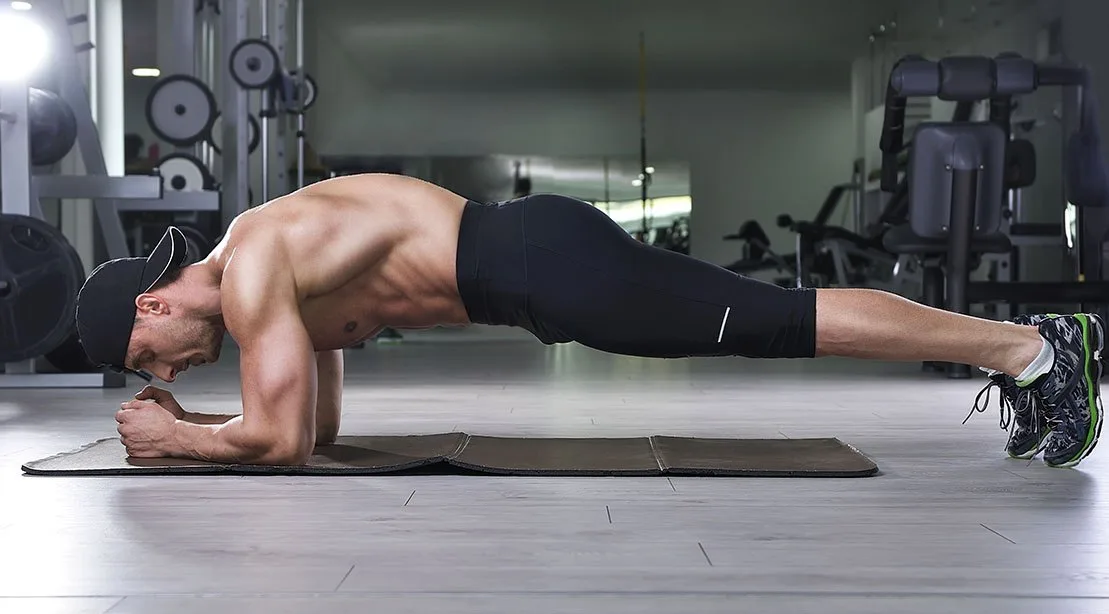
The RKC Plank turns a passive hold into a maximal-effort contraction by using whole-body irradiation: squeeze the glutes hard, drive the elbows toward the toes, and try to “crush” the floor. This spikes intra-abdominal pressure far beyond what a standard forearm plank produces. Short sets at true maximal effort outperform long passive holds for stiffness development. If you can hold it comfortably for an extended period without shaking, you are not bracing hard enough.
5. Hollow Body Hold - Gymnastic Anti-Extension Baseline for Sport Transfer
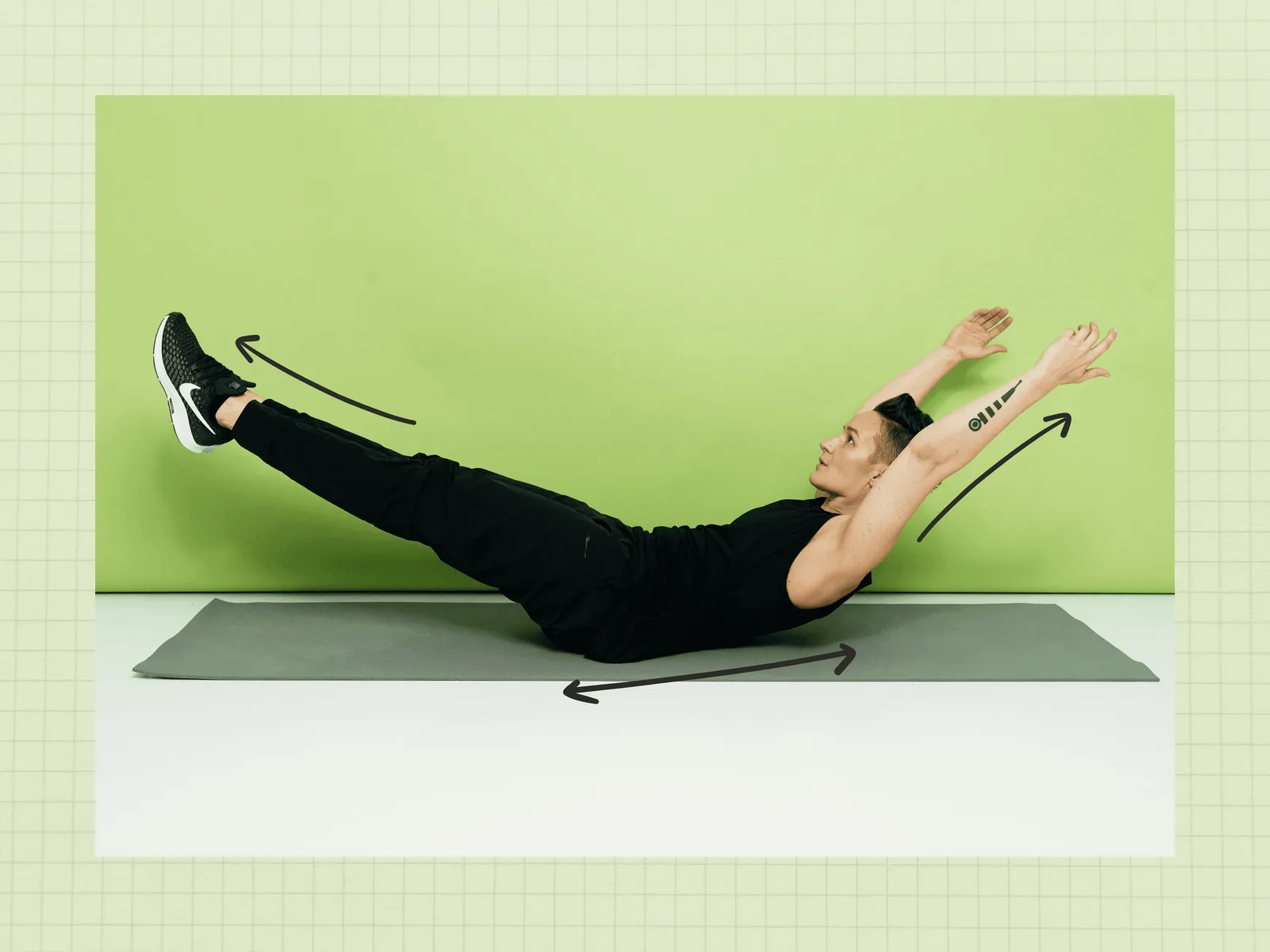
Strength coaches borrow the hollow body hold from gymnastics because maintaining lumbar contact with the floor under extended limb load directly transfers to sprint mechanics and overhead pressing stability. Arms overhead, lower back pressed flat, legs extended low without losing lumbar contact: that is the position. If your lower back lifts off the floor, the hip flexors have taken over. Regress by bending the knees or raising the legs higher. Use this as a diagnostic before loading heavier anti-extension work.
6. Half-Kneeling Kettlebell Windmill - Anti-Lateral-Flexion Stability with Rotational Demand
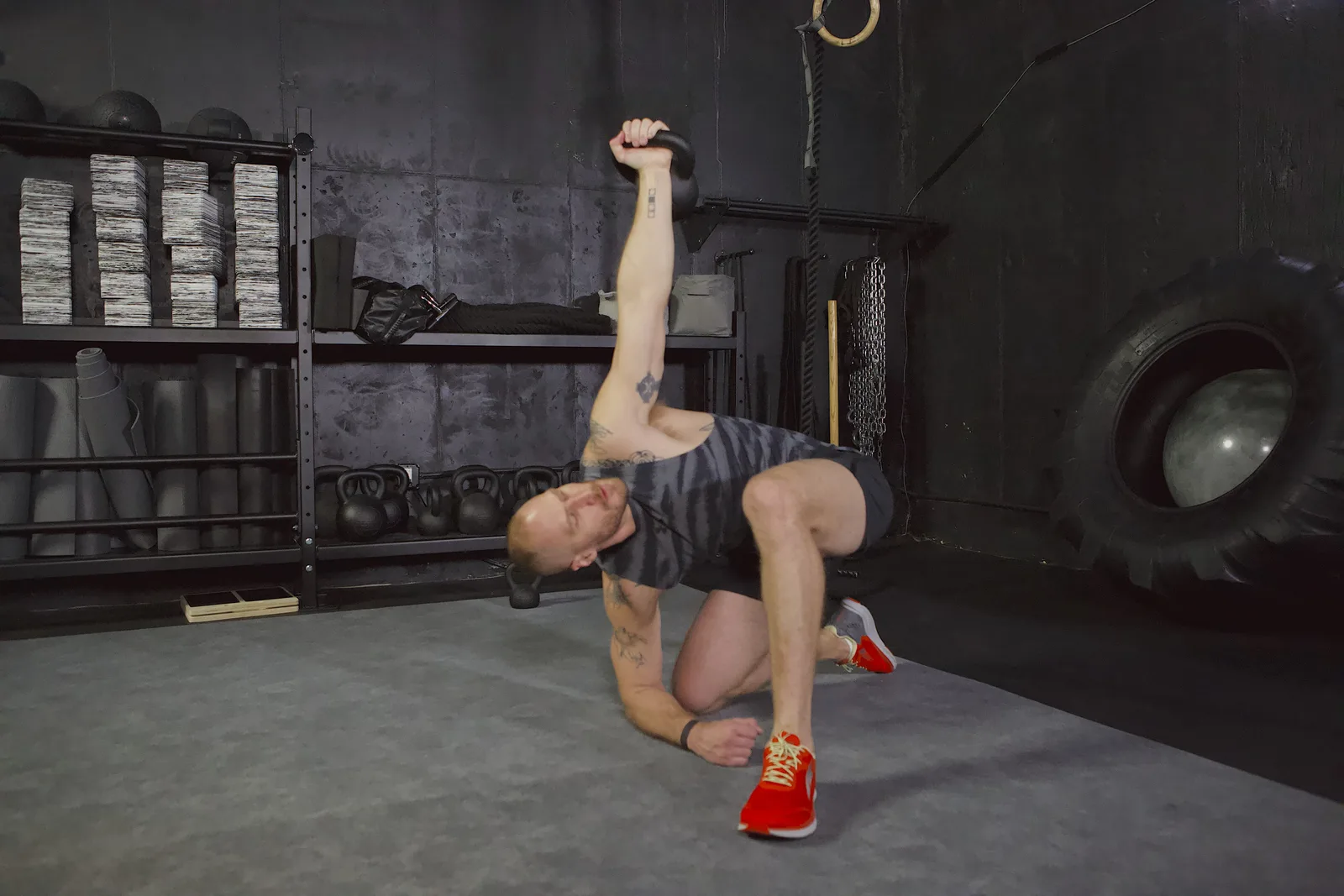
The windmill is the bridge between pure anti-extension and the rotational work covered in the next section. In a half-kneeling position, the base is narrow enough that any lateral core weakness shows up immediately as a hip shift or trunk lean. Press the kettlebell overhead, hinge at the hip, and keep the loaded side’s lat engaged throughout. This is an advanced movement: athletes who cannot hold a solid RKC Plank for 15 seconds should not be loading the windmill yet.
7. Dead Bug - Contralateral Limb Extension Against a Braced Lumbar Spine
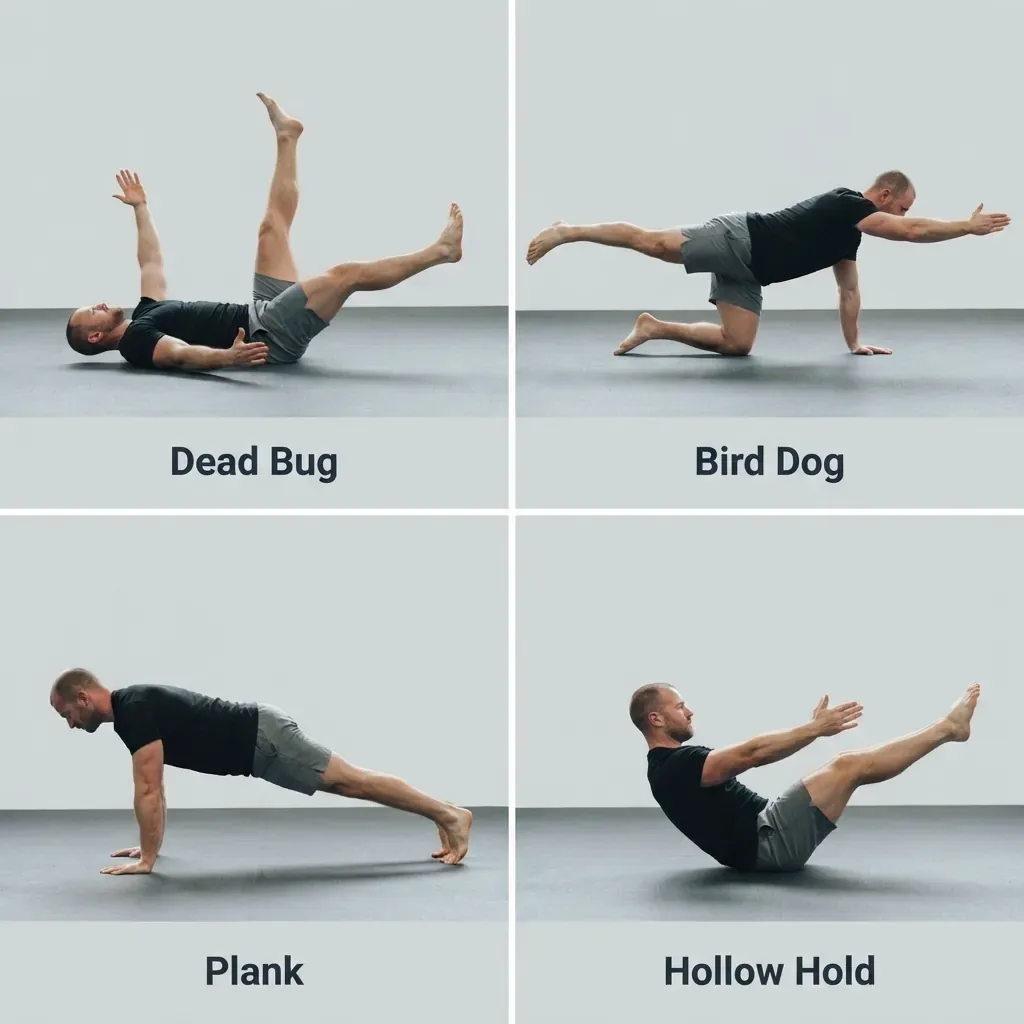
The dead bug is the most athlete-relevant beginner anti-extension drill because it trains the exact demand of sprinting: one arm and the opposite leg extending while the lumbar spine stays completely neutral. Press your lower back into the floor before each rep and keep it there. The second it lifts, the rep is over.
GetFit AI’s structured workout routines include progressions for this movement so athletes have a clear signal for when to advance from bent-knee to straight-leg variations, the same sequencing logic that strength coaches use to prevent compensation patterns from becoming habitual before loading increases. That structure matters most for athletes who have previously struggled with consistency due to lack of program direction: when each session connects to the one before it and the one ahead, the training arc stays coherent rather than drifting into random effort. GetFit AI’s friends, challenges, and leaderboards layer on top of that structure after you connect with at least one friend in the app, turning individual sessions into a shared pursuit, the retention mechanism that keeps athletes training past the point where motivation alone would stall.
For anyone who trains the way the athlete they follow trains, having a training partner inside the same platform closes the gap between watching elite programming and actually executing it with someone holding you to it.
Anti-extension work builds the spine stiffness that keeps your midline from leaking force. Stiffness alone, though, does not create athletic power. The next section covers the rotational exercises that express everything you have built here, turning a locked-in brace into explosive, sport-specific movement.
Related Reading
- Athletic Performance Analysis
- Does Vaping Affect Athletic Performance
- How to Avoid Feeling Sleepy After Workout
- How Does Sleep Affect Athletic Performance
- How to Measure Athleticism
- Velocity Based Training
- Building Stamina and Endurance
- Why Am I So Bad at Sports
- Endurance vs Strength Training
- Why Am I So Tired After Working Out
- How to Create a Personalized Workout Plan
Rotational Power Core Exercises That Translate Directly to Sport
The majority of throwing velocity in baseball pitchers originates from the trunk and lower body, not the arm, according to biomechanics research cited by EliteFTS. The arm finishes the movement; the core starts it. Every exercise below is chosen because it trains that starting mechanism, the hip-before-shoulder kinetic chain that sport actually uses.
One honest caveat first: rotational drills only transfer when the stability base underneath them is already solid (covered in the earlier sections of this list). Bolt these onto a shaky foundation and, as EliteFTS notes, the lumbar spine absorbs load it was never designed to handle. Quality of movement pattern is more deterministic of sport transfer than the number of sessions logged. With that sequencing principle locked in, here are the eight exercises that make up the expression layer.
1. Medicine Ball Wall Throw - Explosive Rotational Power for Striking and Throwing Athletes
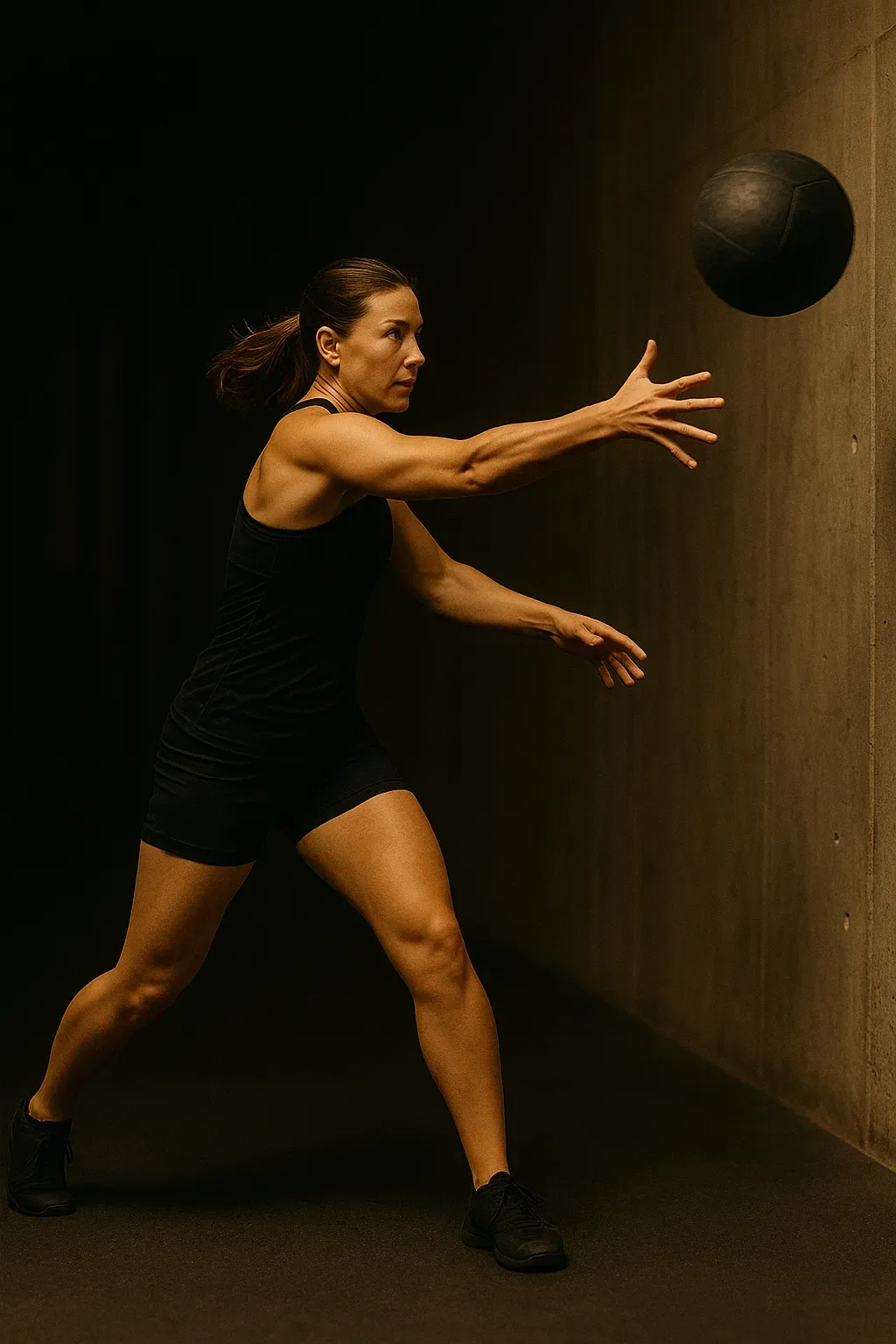
The medicine ball wall throw is the closest gym analog to a baseball swing or a combat sport strike. Stand side-on to a solid wall, load into the trail hip, then drive the hips first and let the shoulders follow. EliteFTS identifies hip-shoulder separation as the exact mechanism that stores and releases elastic energy in throwing athletes. Go light enough that every rep is fast; a ball so heavy it slows the throw trains the wrong quality entirely.
2. Medicine Ball Rotational Slam - Full-Body Diagonal Power From Hip to Opposite Shoulder
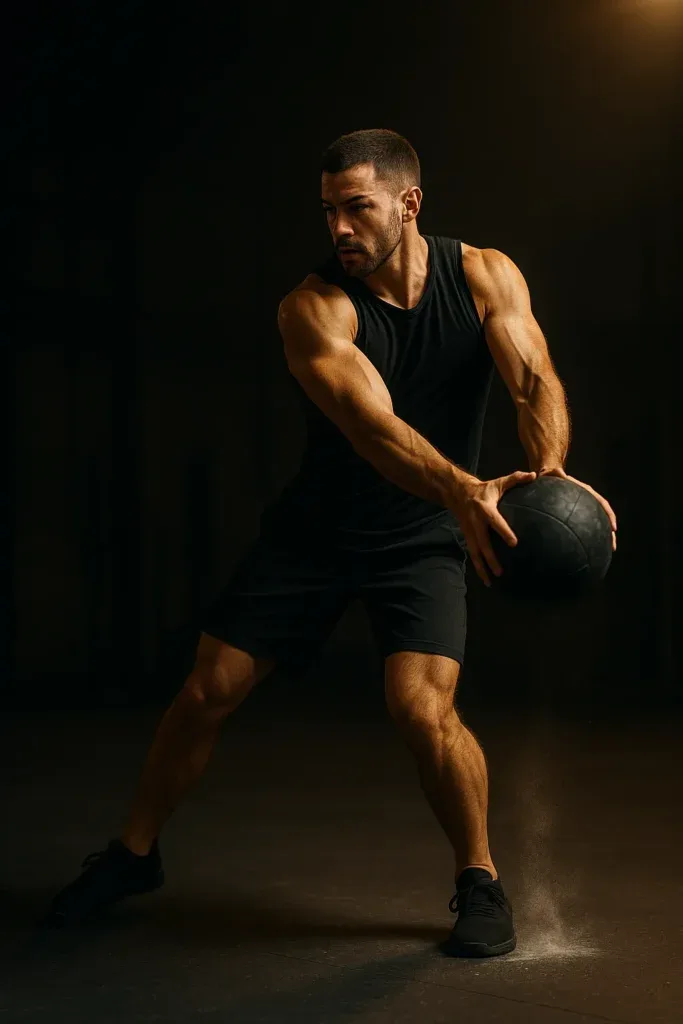
Start with the ball above the trail shoulder, drive the hips toward the target, and slam diagonally across the body to the opposite hip. The diagonal line mirrors the force path of a tennis forehand or a football tackle. Without deliberate hip initiation, athletes default to arm-dominant patterns and the drill becomes a shoulder exercise with a ball. Cue: hips move before hands, every rep.
3. Medicine Ball Overhead Slam - Vertical Core Power and Eccentric Loading for Contact Sports
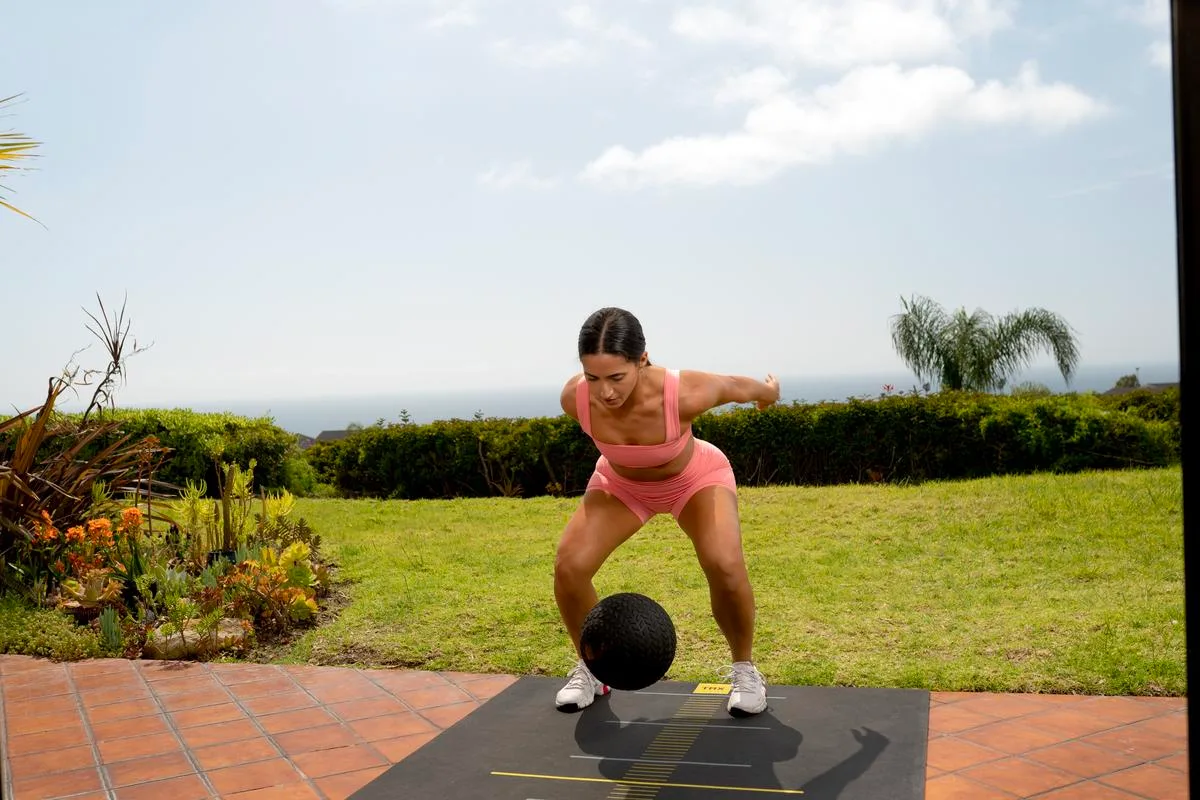
Reach tall, brace hard, then accelerate the ball into the floor using the entire anterior chain. The eccentric loading on the way up is where the real core work happens. This drill suits rugby, wrestling, and basketball players who need vertical force expression under fatigue. Load selection matters: if the ball bounces back and hits you, it is too light; if you cannot finish the set at full speed, it is too heavy.
4. Mountain Climbers for Hip Flexion Speed - Reprogramming the Move as a Core-Driven Drill
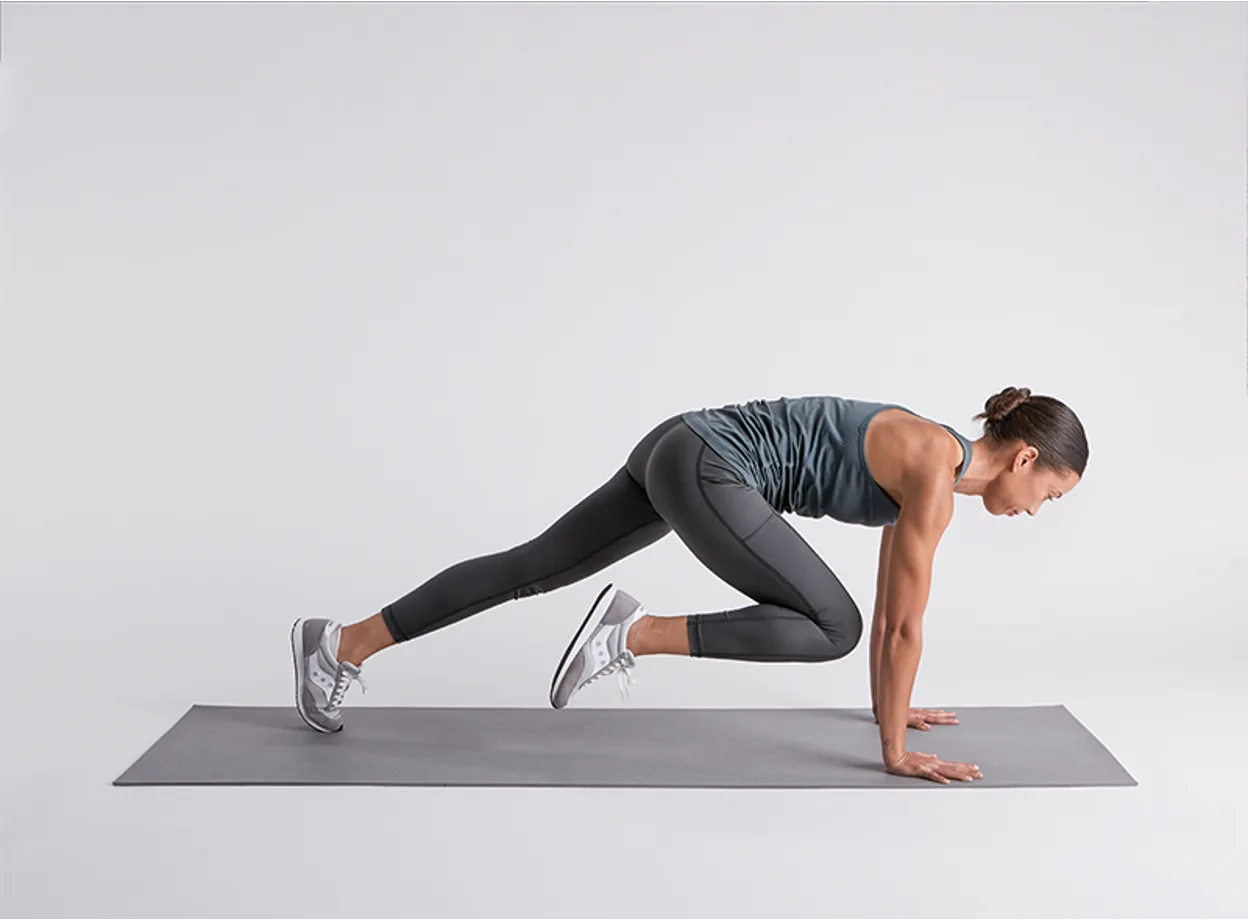
The TikTok version of mountain climbers is a cardio drill. The athletic version is a braced anterior core drill with fast hip flexion layered on top. Set up in a rigid plank, squeeze the glutes, and drive the knee toward the chest without letting the hips pike or drop. Exercise science consistently demonstrates that anterior core activation is highest when the lumbar spine remains neutral throughout the movement. The moment the hips rise and the spine loses position, the hip flexors take over and the core stimulus drops sharply.
5. Dumbbell Sit-Up to Overhead Reach - Anti-Extension and Rotational Demand Combined
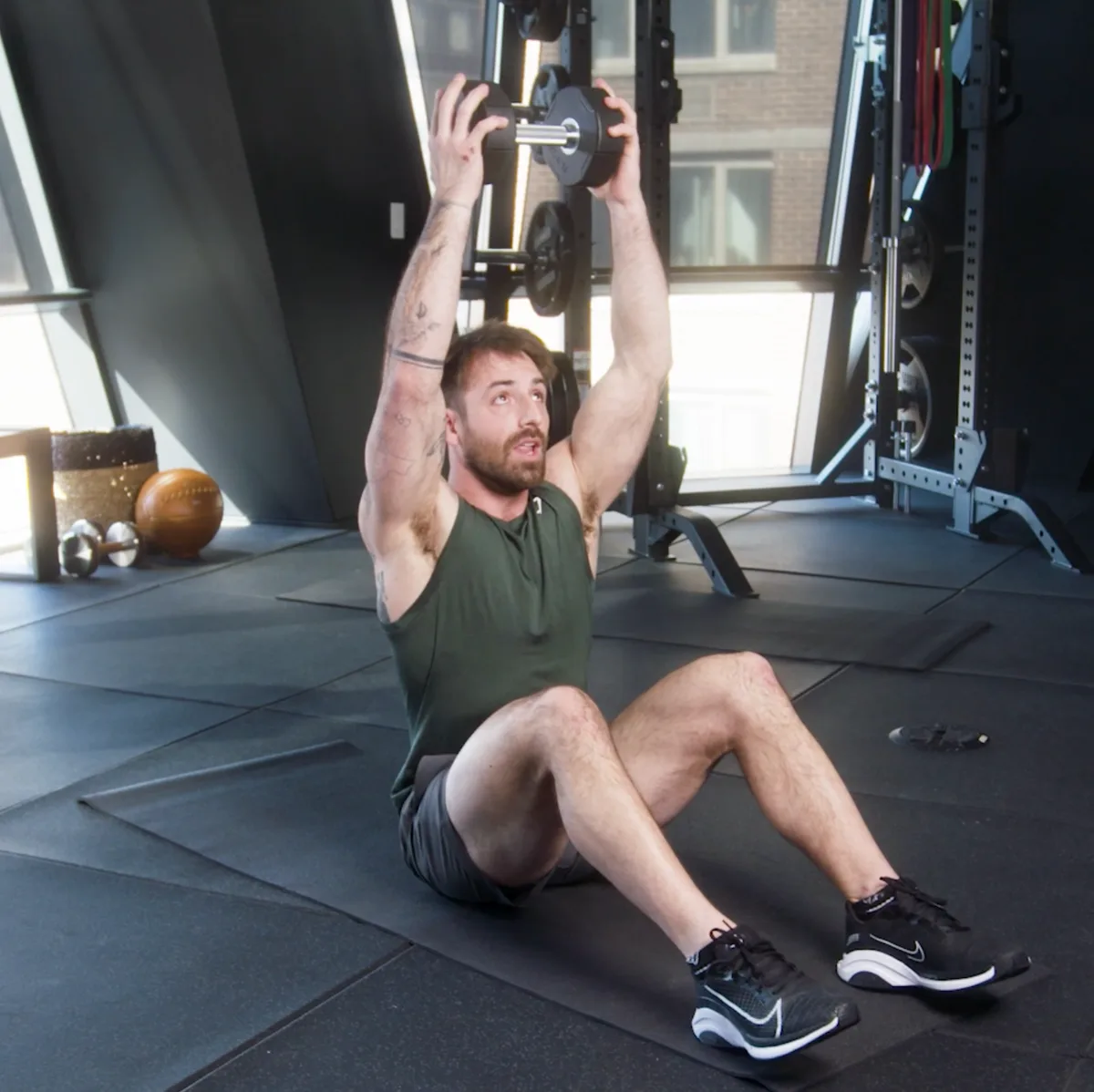
Hold a light dumbbell at the chest, perform a controlled sit-up, then press overhead and rotate slightly at the top. The overhead reach forces the thoracic spine into extension and rotation simultaneously, which is the same demand a volleyball spike or an overhead throw places on the body. Keep the lower back flat on the descent; the second the lumbar spine arches off the floor, the drill is over for that rep.
6. Landmine Rotation - Guided Arc for Teaching Hip-to-Hand Rotational Force Transfer
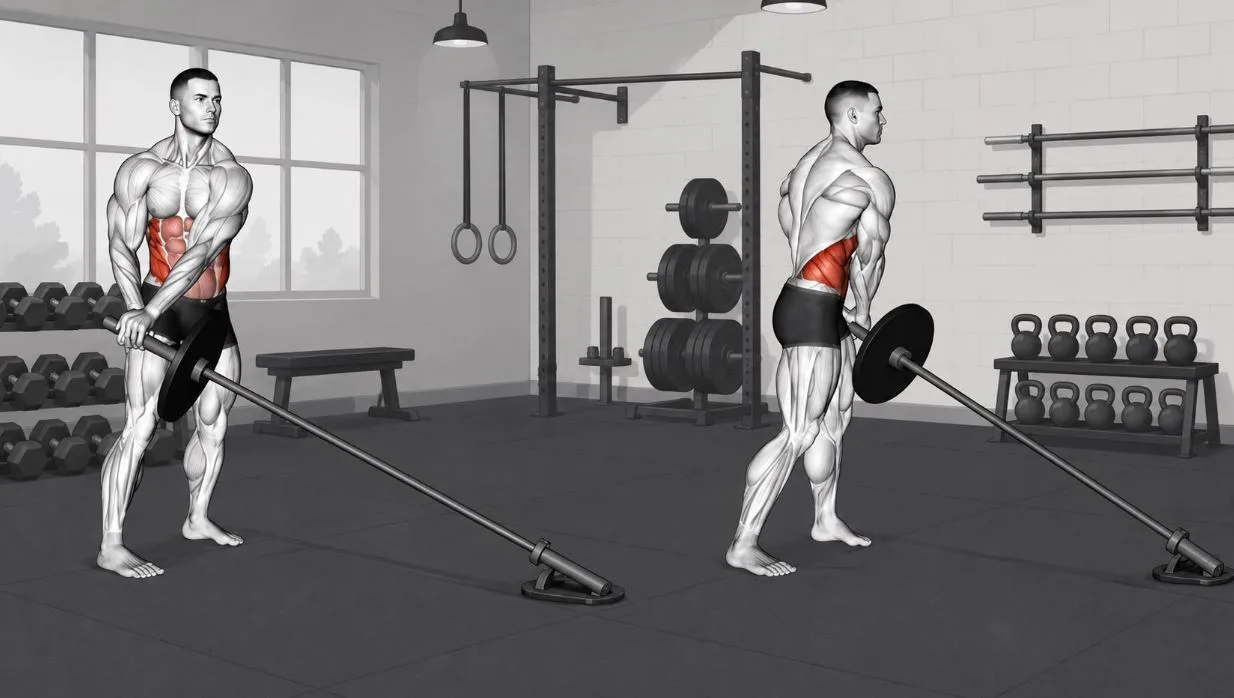
The landmine’s fixed arc is its biggest advantage for athletes new to rotational training. The bar guides the movement into a safe, sport-specific path, so it is the lowest-risk entry point for learning hip-to-hand sequencing. Stand perpendicular to the sleeve, load into the trail hip, rotate through the pelvis, and let the arms follow the body rather than lead it. Beginners who go too heavy here will muscle the bar with their arms and miss the entire training stimulus.
7. Cable Pallof Press with Rotation - Anti-Rotation Loaded Into Active Rotational Control
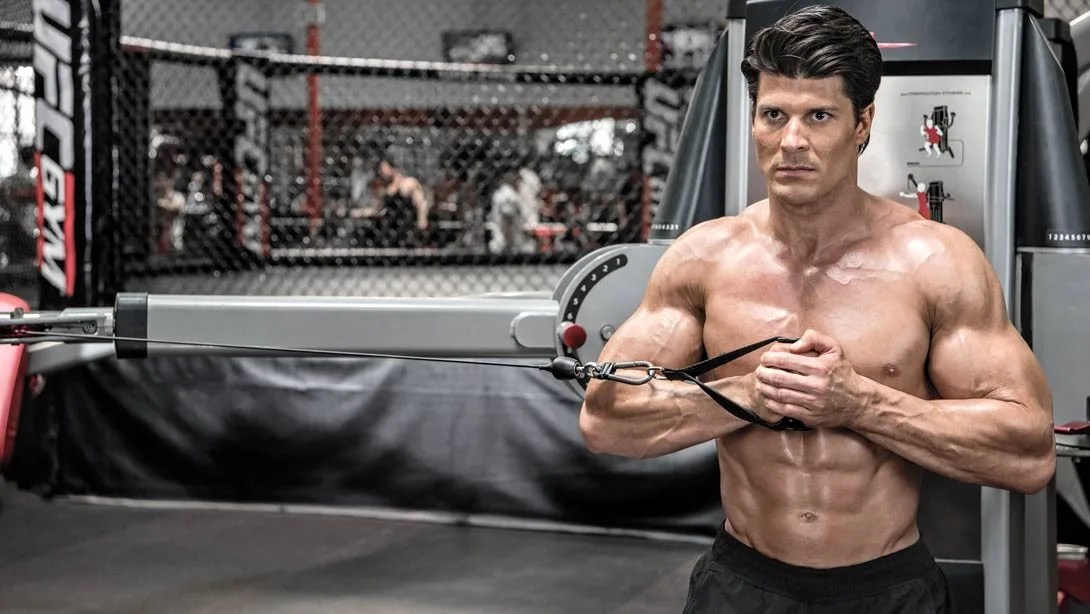
Press the cable handle straight out from the chest, hold the braced position, then rotate the torso away from the stack and return under control. This is the bridge between pure anti-rotation work and dynamic rotational power; it trains the core to resist and produce rotation in the same rep. Athletes who skip straight to medicine ball rotational exercises for explosive power without this intermediate step often train speed on top of instability, which reinforces the dysfunctional pattern rather than fixing it.
8. Sequencing Note - Why Rotational Exercises Belong at the End of a Core Session
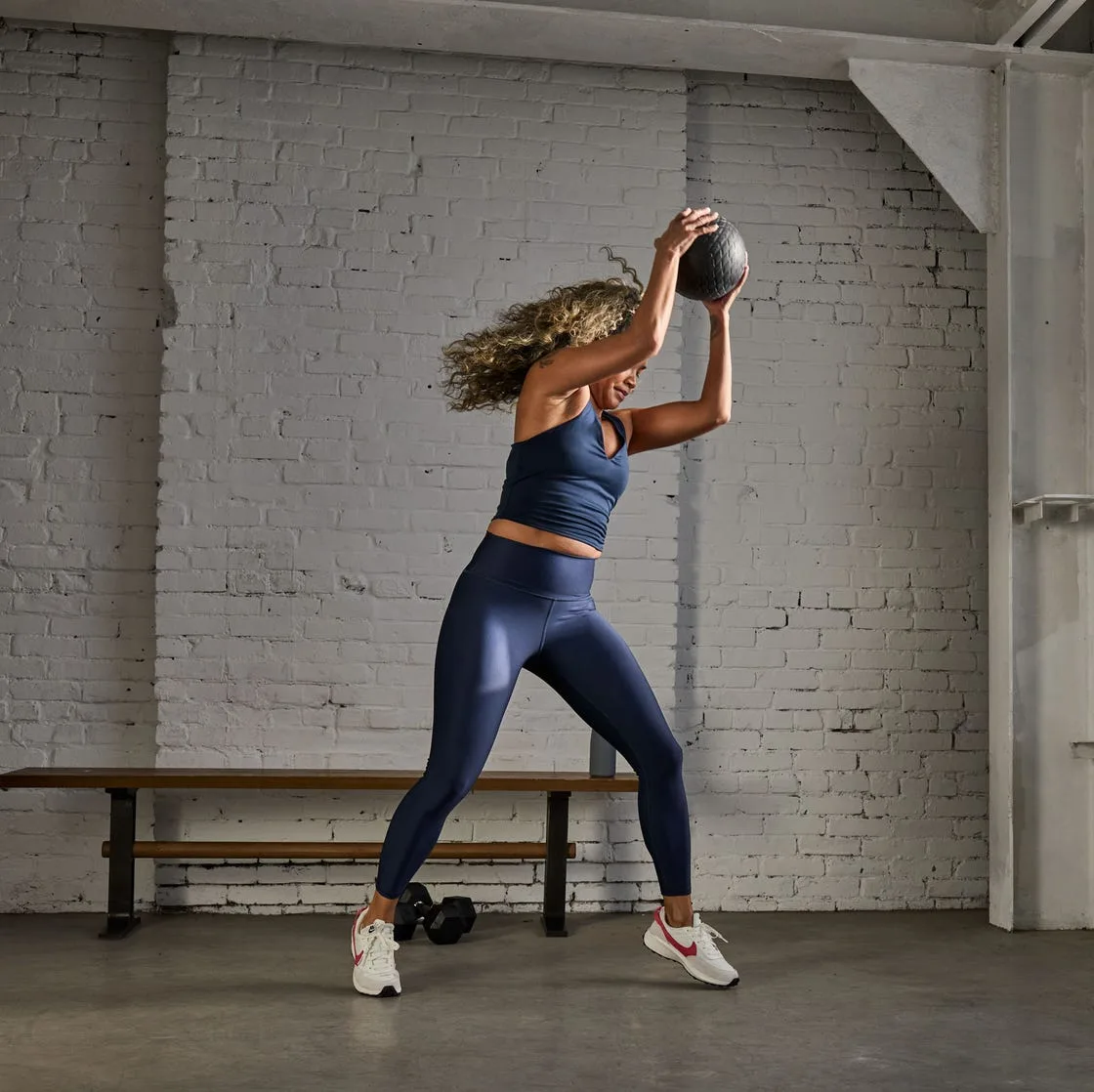
Rotational power drills belong last in a core session, after stability and bracing work, because a fatigued stabilizer system cannot protect the lumbar spine during high-speed rotation. If the earlier exercises left the athlete too tired to move fast and cleanly, the rotational work should be cut. Sloppy reps at speed, as the EliteFTS biomechanics framework makes clear, train sloppy movement patterns permanently.
A common frustration among athletes who try these drills independently is not knowing how heavy to go or where in a session to place them, so the drills either feel pointless or get bolted onto a random ab circuit with no stability base. An AI fitness app like GetFit AI sequences rotational power exercises into the correct position in a session, consistent with the EliteFTS biomechanics framework cited earlier, with an AI trainer available mid-workout to help athletes adjust load selection and cue form corrections before compensatory habits set in.
These eight exercises are the expression layer, the part of your core training that shows up on the field, the court, or the track. But knowing the exercises is only the first problem; the harder question is how to arrange them across a week so the stability work, the bracing work, and the rotational power work build on each other instead of competing. That is exactly what the next section maps out.
Related Reading
- How to Deal With Performance Anxiety in Sports
- Hydration Tips for Athletes
- How to Build Mental Toughness in Athletes
- Food for Athletes During Competition
- Strength Training Workout for Runners
- Best Plyometric Exercises for Speed
- Exercises That Improve Muscular Endurance
- Conditioning Workouts for Athletes
- Speed Training for Athletes
- Balance Exercises for Athletes
How Real Athletes Structure These Core Exercises Into a Weekly Training Plan
The Three-Phase Session Order That Turns a List of Exercises Into a System
Start every core session with anti-rotation and stability work (Pallof Press, Dead Bug), move into anti-extension and bracing drills, then finish with rotational power. This sequence builds from control to power, so fatigued stabilisers never compromise the higher-demand movements that follow.
Frequency and Bolt-On Strategy for Weekly Core Training
A meta-analysis by Schoenfeld, Grgic, and Krieger in the Journal of Sports Sciences (2018) found that training a muscle group at least twice per week produces greater gains than once-weekly training when total volume is equated. For most high-school athletes running a full practice schedule, the practical answer is to bolt core blocks onto existing sessions rather than carving out standalone days: a short block after lower-body lifting, or immediately before sprint work while the nervous system is fresh.
One honest trade-off: if your sport already demands heavy rotational output (wrestling, swimming, baseball), adding high-volume rotational core on top of practice days raises recovery debt in the spinal stabilisers, so prioritise bracing work on those days and save rotational loading for lower-intensity training days.
Progressive Overload for Core Work Matched to Your Sport
Key takeaway: Sport context changes which category gets the most weekly volume. A baseball or tennis player should bias rotational work; a lineman or powerlifter should bias bracing and anti-extension because their sport demands maximal isometric stiffness, not rotational speed.
Weekly Core Session Template for Athletes (3-Day Split)
| Day | Category Focus | Example Exercises | Volume |
|---|---|---|---|
| Day 1 (Lower-body lift day) | Anti-rotation & Stability | Pallof Press, Dead Bug, Copenhagen Plank | 3 sets × 10-12 reps or 20-45 s holds |
| Day 2 (Sprint / practice day) | Anti-extension & Bracing | Ab Wheel Rollout, RKC Plank, Hollow Body Hold | 3 sets × 8-10 reps or 10-20 s holds |
| Day 3 (Upper-body lift or light day) | Rotational Power | Med Ball Wall Throw, Landmine Rotation, Cable Pallof Press w/ Rotation | 3 sets × 6-8 reps (speed focus) |
-
If your sport is rotational (baseball, tennis, golf): add one rotational session per week; drop one bracing-only day.
-
If your sport is collision-based (football, rugby, wrestling): keep two bracing days; limit rotational volume to once weekly.
-
If you are brand new to the gym: spend the first two weeks on Day 1 exercises only before advancing to Days 2 and 3.
Next steps
If your abs burn every session but your sprint speed and on-field power have not moved, the path forward starts with understanding that effort without architecture is just fatigue. Start with our AI fitness app.
Doubling crunch volume does not double the stimulus, it doubles the junk reps, because anti-extension alternatives produce meaningfully greater trunk-muscle activation than traditional crunches. That means exercise selection determines stimulus quality before volume even enters the conversation. Structuring core work by stability, bracing, and rotational category across the week is the minimum viable condition for adaptation to occur, because without that sequence, progressive overload stalls, recovery debt accumulates, and the frequency threshold for real neuromuscular gains is never reached. Together, those two realities point to one action: replace the random circuit with a plan that tells you what to do, in what order, and when to add load.
Start with a structured athlete-style program through the AI fitness app. Your first session generates a core plan organized around your sport, your goal, and your equipment, with progressions built in automatically so the stimulus keeps advancing as you do.
Frequently Asked Questions
What makes the Pallof Press so good for athletes, and how do I know if I’m using the right weight?
The Pallof Press trains your core to resist rotation, the spinal stiffness athletes need during high-speed cuts, throws, and contact, rather than just producing movement. Set the cable at chest height, press straight out, hold two seconds, and return while producing zero rotation. Start light enough that your hips stay absolutely still for the full hold; if your hips drift even slightly toward the cable, that’s your signal to drop the weight, not push through it.
Can core training actually help me sprint faster?
Yes, because a sprinter’s ground contact efficiency depends on a core that can stiffen quickly and transfer energy from the ground up without leaking it through an unstable spine. The post specifically names sprinting as one of the athletic outputs that relies on this force-transfer capacity, which is built through anti-rotation and stability work, not crunches or standard ab circuits.
Why should I do anti-rotation exercises before anything else in my core training?
Unresolved anterior pelvic tilt mechanically shifts spinal load distribution in ways that can make higher-rep, higher-intensity core circuits actively injurious, meaning skipping the stability layer doesn’t just leave a gap, it compounds a structural liability under every subsequent set. The post cites research confirming that a tilted pelvis in young athletes alters spinal load distribution and raises injury risk during high-speed movements, which is why anti-rotation and stability work must come first.
I’ve been doing ab circuits for weeks and I’m still sore, doesn’t that mean they’re working?
Soreness and athletic adaptation are two completely different biological events, soreness is only evidence of tissue damage and novelty, not the kind of change that shows up in sport performance. Without progressive overload built in, the nervous system stops treating the stimulus as a reason to change, so measurable athletic improvement never occurs no matter how consistently you train.
How do I know when to add weight to stability exercises like the Dead Bug or Copenhagen Plank?
For the Dead Bug, adding load before you can hold a flat lumbar position without any daylight under your spine defeats the corrective purpose entirely, it’s bodyweight by design. For the Copenhagen Plank, position quality rather than added resistance is the progression variable in early training, so the signal to advance is consistently clean form, not a desire to make it harder.