How to Avoid Feeling Sleepy After Workout and Why It Happens

That post-workout crash is not proof you trained hard. It is a fuel, fluid, and hormonal signal your body is sending, and once you know what it means, fixing it is straightforward.
Finishing a workout and barely making it to the couch before your eyes close is one of the most common experiences in beginner fitness. Most beginners in their mid-to-late twenties, training without a plan and with no clear idea of what to eat, think: “Post-workout sleepiness just means I crushed it, that’s how training is supposed to feel.” It feels earned. It feels like proof. But that post-workout sleepiness most beginners chalk up to effort is almost never about how hard they trained. It’s a signal from a body that walked into the gym already running low, and walked out even lower.
That post-workout sleepiness most beginners chalk up to effort is almost never about how hard they trained.
That gap between what the signal means and what beginners think it means is exactly what keeps the crash-and-quit cycle alive. Understanding it is the first step toward breaking it.
The belief is understandable. You pushed hard, your body shut down, therefore you must have done something right. According to Rail Stop Fitness, post-workout fatigue in beginners is frequently misread as a sign of a productive session, when it is actually a physiological signal that the body has been pushed beyond its current recovery capacity. A trophy you keep chasing leads you to repeat the same broken session again and again.
The cost of that misread is real. Fitness On Demand’s retention data shows that roughly 50% of new gym members quit within the first six months. Chronic post-session crashes that go unexplained are a direct contributor.
The crash almost always traces back to one of three things: fuel, fluid, or a missing plan. Most beginners skip food before training, then wonder why their brain shuts off twenty minutes after leaving the gym. A moderate resistance session can drop muscle glycogen stores significantly, and when blood sugar follows, mental and physical energy collapse together.
That’s not effort. That’s a fueling gap.
Fluid loss compounds it fast. Even a modest drop in body weight from sweat during a 60-minute session is enough to reduce blood volume, slow oxygen delivery, and produce that heavy, foggy feeling beginners mistake for a hard session’s aftermath. It isn’t glory. It’s dehydration.
The third gap is structural. Beginners who train without a plan don’t know when to push, when to ease off, or what recovery looks like. They go hard every session because intensity feels like the only variable they control. The result is a body that never fully recovers between sessions, and fatigue that compounds week over week until quitting feels like the only relief.
Underneath the surface story, your body was running three separate deficits at once, and each one has a name, a mechanism, and a fix. That’s where we go next.
Key takeaways
- Post-workout sleepiness isn't proof you trained hard, it's a signal that your nutrition timing, hydration, or recovery structure has a gap.
- A body-fluid loss of just 2% of body weight measurably tanks cognitive alertness and perceived energy before any physical performance drop shows up.
- Skipping a cool-down isn't a time-saver, blood pools in your legs, oxygen delivery stalls, and the parasympathetic rebound hits all at once instead of gradually.
- The 30-to-45-minute window after your last set is when a carbohydrate-and-protein snack matters most; miss it and glycogen depletion drags into the rest of your day.
- Late-evening training, chronic sleep debt, and zero rest days each erode recovery on their own, stacked together, they build a cortisol overdraft your body can't pay back.
- Guessing what to eat after a workout, a banana, whatever's in the bag, keeps the crash cycle repeating because the macro balance is almost always wrong.
- 90% of people quit their fitness goals within three months, and fatigue that never resolves is one of the clearest early warning signs.
- GetFit AI's Nutrition feature closes the structural gap: it tells you exactly what to eat to hit your goal, then lets you log every meal against that plan, food search, barcode scanning, custom foods, a per-day meal view, and weekly calorie and macro charts, so post-workout fueling stops being a guess.
Why Post-Workout Sleepiness Happens Inside Your Body
Research consistently shows that post-workout fatigue traces to specific, measurable failures in fuel, fluid, and hormonal regulation, not just effort.
Your Brain and Muscles Are Literally Running Out of Fuel Mid-Session
Post-workout mental fog and physical exhaustion happen, in large part, because your brain and muscles have run out of glucose. Intense exercise depletes muscle and liver glycogen stores, cutting off the steady glucose supply your brain depends on for focus and your muscles depend on for contraction, and the downstream effects reach further than most people realize.
For beginners in their 50s especially, this lands harder than they expect: the cellular machinery responsible for replenishing ATP and creatine phosphate in the brain slows with age, which means post-workout mental fatigue and brain fog are not personal weakness. It is worth noting that this kind of normal post-exercise tiredness is categorically different from Post Exertional Malaise, the worsening of symptoms after even light activity that people with ME/CFS experience.
GetFit AI’s nutrition feature calculates what a session depleted and tells you what to eat and in what amounts, starting from your very first workout session. Users who log post-workout meals inside the app report closing the glycogen window consistently, something most beginners admit they miss entirely when guessing on their own. The accountability layer sharpens further when you connect with at least one friend inside the app: GetFit AI’s friends, challenges, and leaderboards create a social check-in that makes skipping the post-session nutrition window feel like letting a training partner down, not just yourself. That nudge is most effective when you have a friend or workout partner also using GetFit AI, because the comparison is live and specific rather than abstract.
The Heart Rate Rebound and Hormonal Crash That Hit the Moment You Stop Moving
The moment training ends, your body switches from sympathetic dominance to parasympathetic rebound, a recovery state that actively slows the heart and promotes drowsiness. Cortisol and catecholamines spike sharply during training, then fall just as fast once the session ends, leaving many people feeling a sudden and unexpected wave of fatigue within minutes of finishing.
How Even Mild Dehydration Quietly Amplifies Every Other Crash Mechanism
Even mild dehydration reduces plasma volume, which directly lowers the amount of oxygen your blood can deliver to working tissues. The threshold is lower than most people expect. Fluid loss equivalent to roughly one to two percent of body weight is enough to measurably impair cognitive performance and physical output, as confirmed by the Scandinavian Journal of Medicine & Science in Sports. For a 170-pound person, that is less than three pounds of sweat, and because dehydration compounds the glycogen and hormonal mechanisms described above, staying ahead of fluid loss is one of the highest-leverage recovery habits a beginner can build.
Related Reading
- Why Am I Not Getting Faster at Running
- Does Masturbation Affect Athletic Performance
- Biomechanics in Sports
- Why is Protein Important for Athletes
- What is Speed and Agility Training
- How to Be a Better Athlete
- How Does Sports Psychology Help Athletes
- Why is Hydration Important for Athletes
- Why Do Athletes Train at High Altitudes
- Why Do Athletes Stretch Before a Game?
- IV Therapy for Athletic Performance and Recovery
- Yoga and Athletic Performance
- Red Light Therapy for Athletic Performance
How to Cool Down Properly So Your Body Stops Crashing
Most beginners treat the cool-down as optional, a gym myth for people who have time to waste, but the physiological cost of skipping it is real: blood pools in your legs, oxygen delivery stalls, and the parasympathetic rebound hits all at once, turning mild tiredness into a full-body crash before you reach the locker room door. What makes the crash worse is that post-workout cortisol can stay elevated well after the session ends, a stress-hormone overhang that keeps your body locked in a heightened state even as your muscles are screaming for recovery.
“Post-workout stress hormones (cortisol) remain elevated long after exercise, preventing my body from calming down and recovering properly.”
— what we hear from fitness and recovery enthusiasts
Walk It Out for 5 to 10 Minutes After Your Last Set
According to the International Journal of Exercise Science and Applied Biology (WKU Digital Commons, Vol. 8 Iss. 8), a 5 to 10 minute active cool-down of light walking or gentle stretching allows heart rate to taper gradually, supporting continued venous return and preventing the abrupt parasympathetic rebound that causes sudden sleepiness.
A Sub-10-Minute Cool-Down Sequence Any Solo Gym-Goer Can Follow Right Now
Cool down properly after exercise by completing this sequence alone, with no equipment: two minutes of brisk walking, dropping to a slow walk for two more minutes, then four minutes of static stretching targeting the muscle groups you just trained, breathing out on every stretch. That structure matches what the International Journal of Exercise Science and Applied Biology (WKU Digital Commons, Vol. 8 Iss. 8) identifies as the core requirements: gradual heart-rate taper and continued venous return, both of which blunt the cardiovascular rebound that drives post-exercise drowsiness.
Crucially, the sequence also needs to be planned rather than improvised. The International Journal of Exercise Science and Applied Biology (WKU Digital Commons, Vol. 8 Iss. 8) specifically identifies planned, structured cool-downs, rather than improvised ones, as producing measurably better heart-rate recovery outcomes, and GetFit AI closes that gap from the very first workout session.
Hydration and Electrolyte Balance Mistakes That Make You Crash After Exercise
Thirst is a lagging indicator. By the time your mouth feels dry mid-session, your fluid deficit is already wide enough to drag your alertness down. University of Reading research found that a body-fluid loss of just 2% of body weight measurably impairs cognitive alertness, mood, and perceived energy before any physical performance decline is even detectable. That number is easier to hit than it sounds: a 75 kg person loses it after sweating out roughly 1.5 litres, which is well within a single moderate-intensity gym session.
The fix is not a big glass of water after your last set. By the time you finish training, you have already spent 45 to 60 minutes in a progressively dehydrated state, and that cumulative deficit is often what pulls your eyelids shut on the drive home. Beginners we work with regularly describe finishing a session so parched they could drink 60 or more ounces of water in one sitting. That sensation is not a sign you forgot one bottle; it is a sign the deficit built unchecked from the moment you walked through the gym door.
1. The 2% Body-Weight Fluid Loss Threshold That Kills Post-Workout Alertness

Losing just 2% of your body weight in fluids, roughly 1.4 kg for a 70 kg person, measurably impairs attention, reaction time, and perceived energy levels. For anyone trying to avoid feeling sleepy after a workout, this is the critical tipping point. The tradeoff: most people don’t feel thirsty until they’re already past this threshold, making thirst an unreliable early-warning signal.
2. Sodium and Potassium Loss - The Hidden Electrolyte Drain That Amplifies Exercise Fatigue

Plain water replaces volume but leaves the electrolyte gap wide open. University of Reading research confirms that sodium and potassium losses compound fatigue beyond what fluid loss alone causes, because these ions govern nerve signalling and muscle contraction. A moderate-intensity session in the 25 to 30 age bracket can strip significant sodium through sweat, and plain water dilutes what remains. The fix: add a low-sugar electrolyte drink or a small pinch of salt to your bottle for any session running longer than 45 minutes.
3. Drink During Training, Not Just After - The Front-Loading Habit That Prevents the Post-Workout Crash

Drinking enough water during and after exercise is the most direct way to prevent low energy post-session. University of Reading research is clear that hydration must begin before and during exercise, not only after, because front-loading prevents the alertness deficits that accumulate once dehydration has already set in. Sipping 150 to 200 ml every 20 minutes during training keeps plasma volume steadier than chugging 600 ml at the end. The during-session sips are the actual prevention; the post-workout glass is damage control. GetFit AI surfaces this as a prompt during each workout session, and if the gym is packed and you need to swap an exercise on the fly, the plan adapts without breaking your session flow, so a crowded floor never becomes a reason to cut a session short and skip the hydration window that goes with it.
4. Practical Hydration Target for 25-30-Year-Olds Training 45-60 Minutes
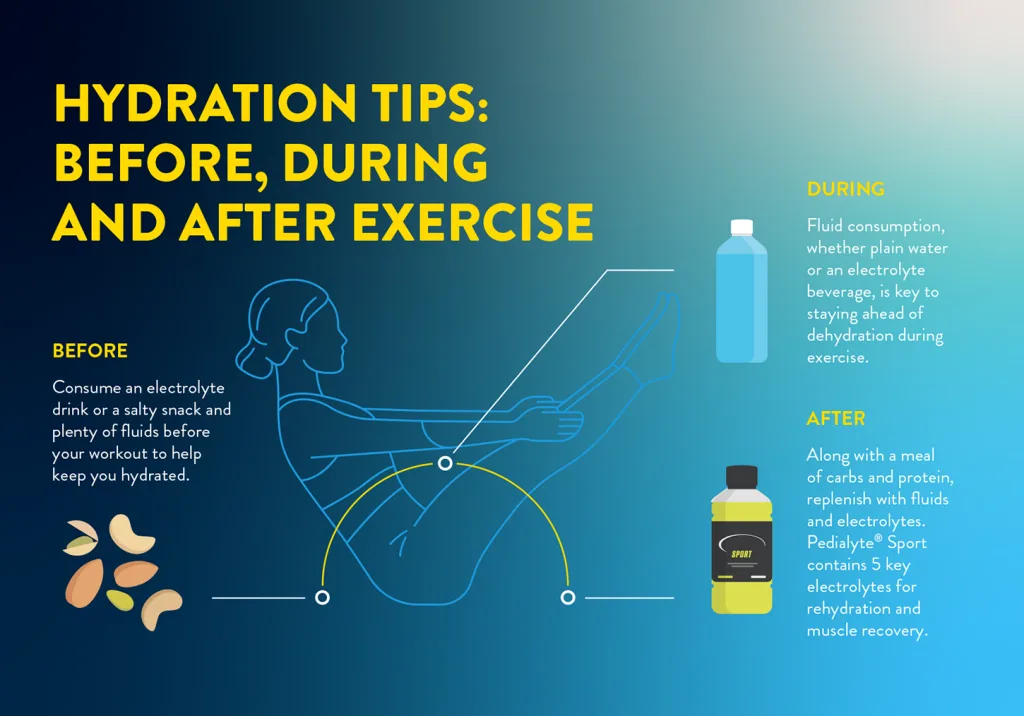
A workable protocol for this training bracket: 400 to 600 ml of water in the hour before the session, 150 to 200 ml every 20 minutes during training (with electrolytes if the session exceeds 45 minutes), and 500 ml in the 30 minutes after finishing. This is not a rigid prescription; body weight, sweat rate, and gym temperature all shift the numbers. The trade-off worth naming: this level of intentional intake requires tracking your fluids, which most people skip entirely until the crash becomes routine. A structured training app that logs intake alongside your program makes that tracking automatic rather than an extra mental task you drop by week two.
5. Chronic Under-Hydration Accumulates Like Sleep Debt and Can Mimic Overtraining Syndrome

One good hydration day does not cancel a week of under-drinking. University of Reading research shows that chronic under-hydration across multiple sessions stacks deficits the same way sleep debt accumulates, producing persistent fatigue, reduced motivation, and impaired performance that closely mirrors overtraining symptoms. If you feel completely drained after every session despite reasonable sleep, the deficit is likely carrying over from previous days.
Consistent daily intake of 2 to 3 litres, increased on training days, breaks that cycle rather than treating each crash individually. For beginners who have previously struggled with consistency due to a lack of program structure, GetFit AI’s Athlete-Style Custom Workout Plans provide the ongoing framework, and the social accountability of friends, challenges, and leaderboards provides the retention layer that makes the protocol stick past the first few weeks, which is exactly when most people quietly revert to old habits.
Related Reading
- Athletic Performance Analysis
- Does Vaping Affect Athletic Performance
- How Does Sleep Affect Athletic Performance
- How to Measure Athleticism
- Velocity Based Training
- Building Stamina and Endurance
- Why Am I So Bad at Sports
- Endurance vs Strength Training
- Why Am I So Tired After Working Out
- How to Create a Personalized Workout Plan
Post-Workout Nutrition Timing That Stops Energy Crashes for Good
The 30-to-45-Minute Glycogen Window Is Real and Missing It Is Why You Crash
Eating a carbohydrate-and-protein snack within 30 to 45 minutes of finishing a workout is the single most effective way to stop the post-exercise blood-sugar slide. Point One Physical Therapy identifies this window as the period when muscle tissue is most receptive to glycogen resynthesis and amino acid uptake, giving it the highest leverage of any nutrition moment in your day. Research on post-exercise muscle glycogen resynthesis confirms that the enzymatic machinery driving glycogen restoration is most active in this early recovery phase. The clock is biological.
Why a Heavy Meal Right After Training Makes Drowsiness Worse, Not Better
Point One Physical Therapy’s recovery guide explains why a heavy meal immediately after training tends to deepen the crash rather than resolve it: it forces the body to redirect blood flow toward the digestive system, which directly competes with the muscular repair process already underway.
Why a Light Snack Refuels Without Putting You to Sleep
A light carbohydrate-and-protein snack is practical enough to prepare in advance, which matters because the window closes whether or not you feel ready for it.
GetFit AI’s Athlete-Style Custom Workout Plans are built around this reality: a plan that adapts to how you actually live is the one you stick with, and sticking with it past week three is where real recovery habits take hold.
The Pre-Workout Fueling Gap Nobody Talks About and How It Poisons the Recovery Window
Training fasted or under-fueled and then skipping the post-workout nutrition window creates a two-stage blood-sugar collapse that has nothing to do with how hard you trained. Addressing it means treating pre-workout fueling and post-workout recovery as a single connected system rather than two separate decisions.
GetFit AI’s Structured Training is designed for the beginner who has previously struggled with consistency because of a lack of program structure, one that accounts for nutrition timing from the first workout session and adapts across the overall training arc, rather than handing you a static plan you inevitably fall behind on and quit.
Sleep Quality, Workout Timing and Overtraining Signals You Shouldn’t Ignore
Morning vs. Evening Workouts and Which Timing Actually Leaves You More Drained
Research on high-intensity evening exercise shows that training close to bedtime elevates core body temperature and neurological arousal, delaying sleep onset in some individuals through sustained cortisol and sympathetic nervous system activity. A Fat Loss Coaches analysis of exercise timing research confirms that very high-intensity training close to bedtime is the specific problem: high-intensity sessions spike cortisol and keep the nervous system alert long after the last rep. The person who trains at 9 PM, lies awake until 1 AM, then drags themselves to a 6 AM session the next day is not earning a hard-training badge.
A June 2025 analysis confirms that shifting workouts earlier allows cortisol and core temperature to normalize well before bedtime, breaking the cycle at its source. Worth noting: the effect varies between people, so if your evening sessions genuinely do not disrupt sleep, the urgency here is lower.
GetFit AI’s Athlete-Style Custom Workout Plans are built around your schedule from the first workout session, not retrofitted to it after the fact.
How Sleep Debt Turns a Normal Post-Workout Dip Into an All-Day Crash
The baseline is plain: adults need 7 to 9 hours of sleep for the body to recover properly from exercise, and carrying a deficit into training makes post-workout fatigue dramatically worse.
The Three Red Flags That Separate Healthy Muscle Tiredness From Overtraining Exhaustion
Normal post-workout tiredness resolves within 24 hours, but a 2025 research summary identifies three specific red flags that distinguish overtraining-level exhaustion from productive fatigue:
-
Fatigue persisting beyond 24 hours
-
Declining session performance over consecutive weeks
-
Motivation that disappears rather than dips
Strength training beginners typically need at least one to two full rest days per week for the body to adapt; skipping them stalls progress and deepens every crash.
The consistency problem underneath this is one GetFit AI is built to address. Beginners who have previously struggled with consistency due to lack of program structure benefit most from the Structured Training approach GetFit AI delivers, a plan that accounts for rest days as training inputs, not gaps in the schedule.
Related Reading
- How to Deal With Performance Anxiety in Sports
- Hydration Tips for Athletes
- How to Build Mental Toughness in Athletes
- Food for Athletes During Competition
- Strength Training Workout for Runners
- Best Plyometric Exercises for Speed
- Exercises That Improve Muscular Endurance
- Conditioning Workouts for Athletes
- Speed Training for Athletes
- Balance Exercises for Athletes
- Best Core Exercises for Athletes
Why Guessing Your Post-Workout Nutrition Keeps the Crash Coming Back
Most beginners guess what to eat after a workout. According to Fitness Volt’s 2024 analysis, athletes who default to guesswork eat too little, too late, or the wrong macronutrient balance, which prolongs glycogen depletion and keeps the crash cycle repeating.
Why “Eat Something After the Gym” Keeps You Tired
The problem with vague post-workout advice is that it treats all sessions as equal. Eating the same generic snack after a light session and a hard one is like topping off a car without knowing whether the tank needs two gallons or ten. Fitness Volt’s 2024 breakdown confirms that generic advice ignoring session intensity or duration leaves the recovery gap open, and that gap is precisely where the energy crash takes hold.
The Hidden Cost of Not Knowing What Your Session Actually Burned
Without knowing what a specific session demanded, there is no way to know what it depleted. So the refueling guess lands wrong, energy crashes an hour later, and the compensatory behavior kicks in: an extra coffee, a skipped next session, a quiet decision that training just makes you tired. Fitness Volt’s analysis frames caffeine-reaching and workout-skipping not as signs of hard effort but as symptoms of an unstructured recovery plan.
That rationalization, “I’m just tired because I trained hard”, is an early signal that the system is breaking down.
How a Structured Post-Workout Nutrition Plan Stops the Energy Crash From Repeating
Without session-specific fuel targets, every post-workout meal is a guess, and a guess cannot close a structural gap. An AI fitness app like GetFit AI bridges that gap directly: it tells you what to eat for your goal, then lets you log it against a calorie card and weekly macro charts, so a beginner logging a post-leg-day meal can see in real time whether that banana-and-peanut-butter snack actually hit the carb-and-protein target, or whether it fell short again.
Every fix covered in this article, the cool-down, the hydration protocol, the glycogen window, the sleep boundary, only compounds when it is part of a plan that adapts to you, not a checklist you abandon by Thursday. The next section shows you what it looks like to actually finish strong, consistently, starting with your next session.
Next steps
If finishing a workout still means fighting to stay awake on the drive home, the path forward starts with closing the gap between what each session demands and what you actually put back in. That gap is not a fitness problem. It is a structure problem. Start with our AI fitness app.
The dehydration research is clear: a fluid loss of just 2% of body weight impairs cognitive alertness before any physical performance drop is even detectable, meaning the foggy, heavy feeling after training often reflects deficits that built before the first set, not during it. The post-workout nutrition window research is equally clear: missing the 30-to-45-minute refueling period leaves a blood-sugar slide uninterrupted, and no amount of effort in the gym fixes a fueling failure that is entirely upstream of the workout itself. Together, those two facts point to the same next step: a plan that tracks both intake and training output from session one, so the crash stops repeating by default rather than by willpower.
Start with GetFit AI. From your first session, it builds a structured plan around your schedule, logs your nutrition against what each workout actually depleted, and surfaces the hydration and refueling cues that most beginners miss entirely when guessing on their own.
Frequently Asked Questions
Is it normal to feel sleepy after a workout, or does it mean something is wrong?
Post-workout sleepiness is extremely common, especially among beginners, but it is not a sign you trained well, it is a signal your body was pushed beyond its current recovery capacity. The crash almost always traces back to one of three things: poor fueling, dehydration, or training without a structured plan. If any form of exercise, including walking, consistently makes you feel worse rather than better across days, that pattern warrants medical evaluation rather than a nutrition or hydration tweak.
Why do I feel so exhausted right when I stop working out, even if I felt fine during the session?
The moment you stop moving, your body switches from sympathetic dominance to parasympathetic rebound, a recovery state that actively slows the heart and promotes drowsiness. At the same time, cortisol and catecholamines that spiked during training fall sharply, producing a sedative-like comedown that amplifies every other fatigue signal already running in your body, including any glycogen depletion or dehydration you have accumulated during the session.
How much water do I actually need to drink before a workout to avoid crashing afterward?
Aim for 400 to 600 ml of water in the hour before training, because hydration needs to begin before and during exercise, not only after. A fluid loss of just 2% of body weight, roughly 1.5 litres for a 75 kg person, is enough to measurably impair cognitive alertness and mood, and that deficit builds from the moment you walk into the gym if you start behind.
Will drinking plain water after my workout fix the tired, foggy feeling?
Plain water replaces fluid volume but not the sodium and potassium your muscles lose through sweat, and electrolyte losses compound fatigue beyond what fluid loss alone causes because these ions are critical for nerve signalling and muscle contraction. For sessions over 45 minutes, adding a low-sugar electrolyte drink or a pinch of salt to your water is more effective than plain water alone. A post-workout drink is also damage control at that point, the deficit has already been building throughout the entire session.
What is the single fastest thing I can do right after my last set to stop the crash?
Spend 5 to 10 minutes walking at a comfortable pace immediately after your last set. This keeps blood pumping back toward your heart instead of pooling in your legs, allows heart rate to taper gradually, and gives elevated cortisol a physiological off-ramp, all of which blunt the cardiovascular rebound that causes sudden post-workout sleepiness. The honest caveat is that walking alone will not fix a crash driven by poor fueling or dehydration; it addresses the cardiovascular rebound specifically.