How Does Sleep Affect Athletic Performance? Science Explains
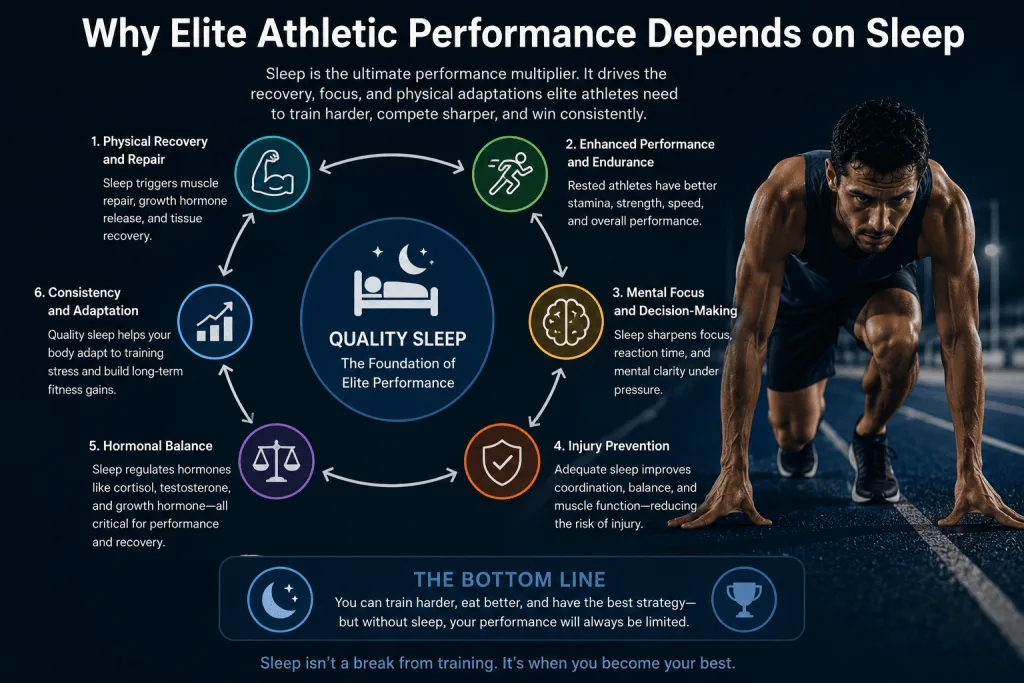
Your training is only as good as the sleep that follows it. Cut that short, and the muscle repair, hormones, and fuel your body needs to adapt simply never arrive.
The common assumption is that sleep is passive downtime, the body just needs some rest, and cutting it short to fit more training or life in is a reasonable trade-off. Four sessions a week, reasonable meals, a genuine effort every time you walk through the door, and still, the weights haven’t moved in months. That stall has a cause most people never examine. Before you discover exactly what the body is building (and losing) overnight, an AI fitness app that structures your training around real recovery logic can at least ensure the work you’re doing is worth recovering from, a difference that matters most for lifters who have previously struggled to stay consistent because they lacked a clear program structure to anchor their routine. See our AI fitness app for how this works in practice.
A 27-year-old training four days a week, eating reasonably well, but sleeping five or six hours a night is running a debt cycle. The training stimulus lands, but Nutrex Research notes that without adequate sleep, the physiological gains from training cannot be fully realized. The session happened. The adaptation didn’t.
Plateaus get blamed on diet, on programming, on genetics. Sleep rarely makes the list. The actual variable stays broken while everything else gets adjusted around it.
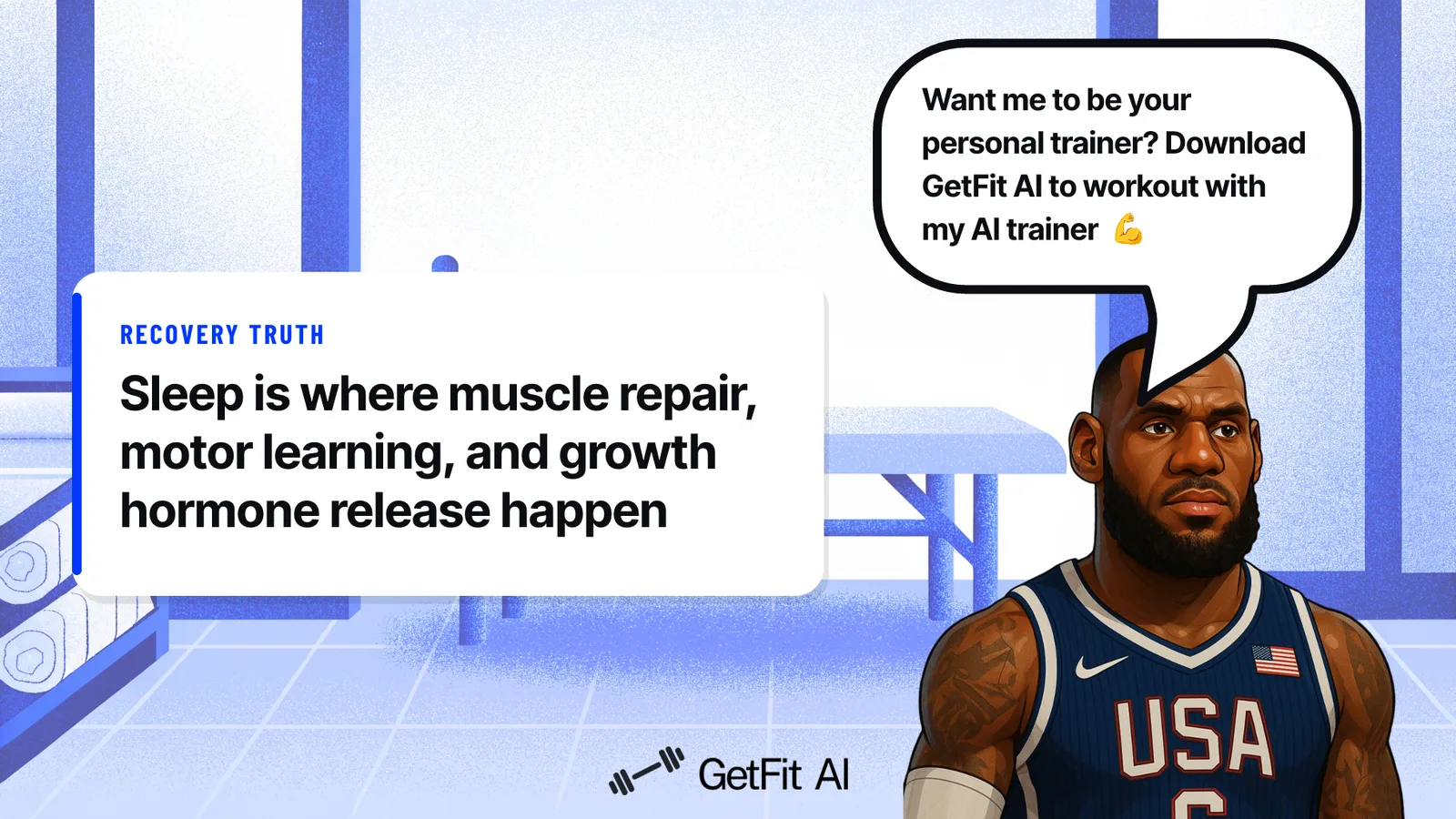
Training creates the signal. Nutrition provides the materials. Sleep is where the construction actually happens.
Mattress Clarity describes sleep as an active physiological process during which the body repairs muscle tissue, consolidates motor learning, and releases growth hormone, and without it, the adaptations triggered by training cannot fully occur. That’s the main event.
The reason sleep deprivation is so damaging to athletic performance is a precise biological failure happening inside the body every night it’s cut short. The next section breaks down exactly what the body is supposed to be building while you sleep, and why no amount of extra training can replicate it.
Key takeaways
- The vast majority of daily growth hormone releases during slow-wave deep sleep, cut that short and the muscle repair signal from your session never fully fires.
- Sleeping fewer than 8 hours per night makes athletes 1.7 times more likely to get injured, meaning poor sleep doesn't just slow progress, it actively breaks the body down.
- Motor skills practiced in a session don't consolidate until sleep happens, reps logged on bad sleep are reps the nervous system never fully files.
- Seven hours is a sedentary adult standard; athletes breaking down muscle tissue and cycling hormones need more, and applying the wrong baseline is one of the most common recovery miscalculations in training.
- A fixed wake time is the highest-leverage sleep habit available, it anchors the circadian rhythm that governs every hormonal and neurological recovery process sleep depends on.
- Sleep doesn't create fitness; it converts training stimulus into adaptation. An athlete who trains hard but sleeps poorly is generating the signal and deleting the file.
- GetFit AI's Structured Training closes the other side of this gap, because sleep can only compound gains that a coherent program progression actually built in the first place.
How Sleep Drives Physical Recovery in Athletes Through Muscle Repair and Energy Restoration
The vast majority of total daily growth hormone is released during slow-wave deep sleep, concentrated in the first sleep cycle of the night, so that early window carries disproportionate weight for recovery.
Training creates the stimulus, but the actual biological manufacturing, growth hormone secretion, muscle-fiber repair, glycogen resynthesis, immune maintenance, happens almost exclusively during sleep, which is why the hours before midnight matter more than most athletes realize.
Erling Haaland has been public about treating sleep as a non-negotiable pillar of performance, framing it as part of a total package alongside training, nutrition, and recovery, a hard variable he controls with the same seriousness as his training load.
Deep Sleep Is When Growth Hormone Peaks and Muscle Repair Actually Happens
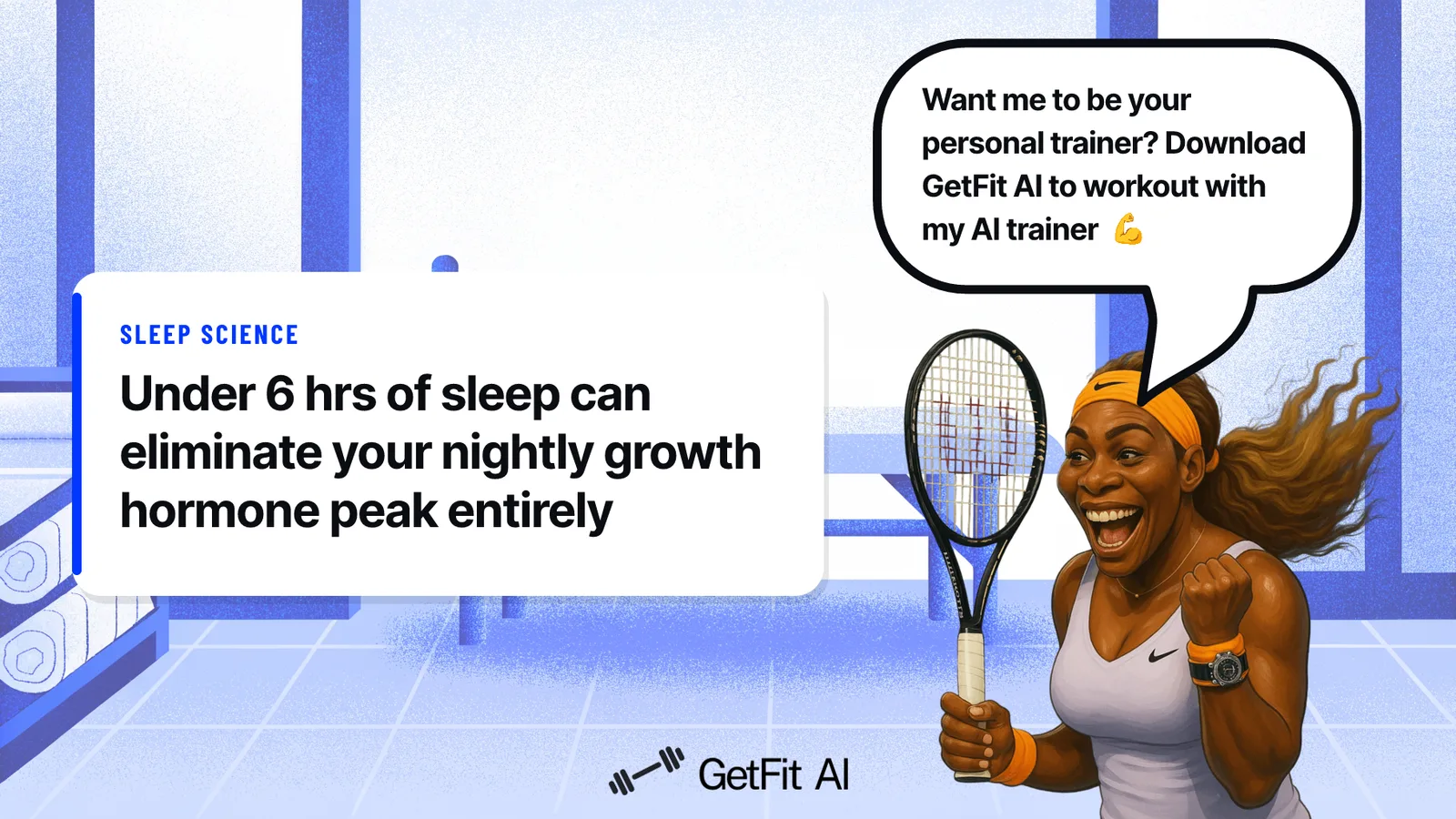
The data is consistent across the field: sleeping fewer than 6 hours per night significantly blunts growth hormone release, directly impairing the muscle-tissue repair that follows training stress. The peak fires early in the night, during the deepest stage of slow-wave sleep. A late bedtime, a disrupted first sleep cycle, or a night cut to 5 hours can eliminate the peak entirely.
The training stimulus is repeatable. The hormonal response is not.
When athletes plateau despite consistent effort, the answer is almost always sleep architecture, specifically, how much time was spent in slow-wave deep sleep versus lighter stages.
GetFit AI’s structured training plans are built around this reality: when your workout schedule is consistent and your training load is periodized correctly, your body is primed to fall into deep sleep faster and stay there longer, because the stimulus is appropriate and the recovery demand is real.
How Short Sleep Undermines Glycogen Stores
What the evidence consistently shows is that sleep deprivation impairs muscle glycogen replenishment, so athletes who cut sleep short undermine the body’s ability to restore the fuel needed for their next training session. An athlete who sleeps 5 hours then trains legs is starting that session against a deficit that compounds across the week.
GetFit AI’s athlete-style custom workout plans distribute training stress across the week with the kind of periodization that elite athletes rely on, so the sessions that demand the most from glycogen stores are scheduled when recovery has had time to do its work.
Sleep Is the Anabolic Window Training Alone Cannot Open
Across the broader research landscape, the pattern is clear: consistently sleeping under 7 hours dysregulates cortisol rhythms and blunts the anabolic hormonal environment athletes depend on for strength and recovery, and no amount of additional training volume compensates for it.
That is one reason GetFit AI users who commit to a structured plan from their first workout session report feeling more in control of their recovery, not just their reps.
Weekend Catch-Up Sleep Does Not Undo a Week of Short Sleep
Research has found that weekend recovery sleep does not prevent the metabolic dysregulation caused by insufficient sleep during the week, so the damage accumulates regardless of attempts to catch up.
GetFit AI’s social layer, friends, challenges, and leaderboards, is most powerful precisely at this moment: after connecting with at least one friend in the app, users have an external accountability structure that survives the weeks when the internal motivation dips.
Related Reading
- Why Am I Not Getting Faster at Running
- Does Masturbation Affect Athletic Performance
- Biomechanics in Sports
- Why is Protein Important for Athletes
- What is Speed and Agility Training
- How to Be a Better Athlete
- How Does Sports Psychology Help Athletes
- Why is Hydration Important for Athletes
- Why Do Athletes Train at High Altitudes
- Why Do Athletes Stretch Before a Game?
- IV Therapy for Athletic Performance and Recovery
- Yoga and Athletic Performance
- Red Light Therapy for Athletic Performance
How Sleep Sharpens Mental Performance in Athletes Through Reaction Time and Decision-Making
Sleep consolidates what practice begins, and treating it as optional quietly empties the return on every training hour logged.
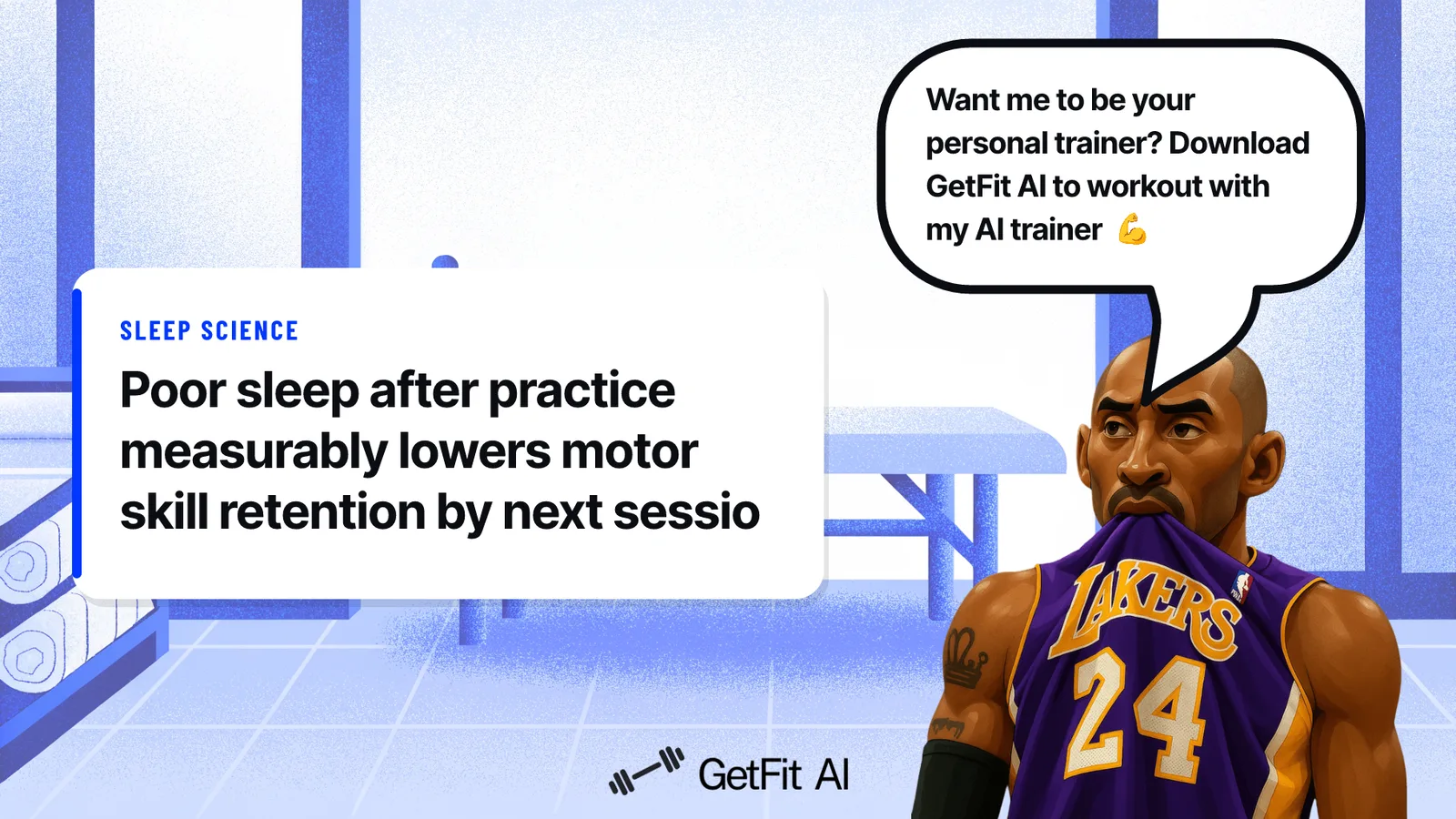
Sleep Is When the Brain Converts Practice Into Permanent Motor Skill
Across the broader research landscape, the neural patterns for new movements are reinforced and stored while an athlete sleeps. That process cannot be fully replicated through rest alone.
Reaction Time and Cue Processing Speed Drop Measurably After Moderate Sleep Loss
Sleep improves how fast the brain processes visual and auditory cues, and sleep loss reverses that directly. What the evidence consistently shows is that reaction time degrades measurably with insufficient sleep, with multiple studies finding that cutting sleep short directly undermines cognitive-motor output, including reaction speed. The Stanford sleep extension research points the other direction: athletes who extended their sleep improved sprint times and shooting accuracy, showing the cognitive and physical crossover is real and measurable in both directions.
In-Session Decision Quality Degrades With Sleep Debt and Most Athletes Miss It
Sleep debt creates a self-concealing trap: the neurological impairment that degrades judgment also degrades the ability to detect that any impairment is occurring. That dynamic makes it one of the harder performance variables to self-monitor.
Sleep debt creates a self-concealing trap: the neurological impairment that degrades judgment also degrades the ability to detect that any impairment is occurring.
Decision-making under pressure, including reading a situation or adjusting technique, degrades significantly with insufficient sleep, and athletes routinely underestimate how much it has affected them.
Beginners we work with through GetFit AI most commonly hit this wall in weeks one through three, the exact window before structured habits solidify. When sleep slips during that period, the resulting cognitive drag makes it harder to plan sessions, choose appropriate loads, and stay consistent. GetFit AI’s Structured Training removes that cognitive load before it compounds: the decisions are already made before the session starts, delivered session by session and across the full program arc.
Beginners who have friends or a workout partner also using GetFit AI, and who connect with at least one friend inside the app, gain access to:
-
friends, challenges, and leaderboards that create external accountability independent of how sharp any single night of sleep left them feeling
-
a social layer that catches the self-concealment problem from the outside when sleep debt has already compromised self-assessment from within
The Specific Risks of Poor Sleep on Athletic Performance That Most Athletes Underestimate
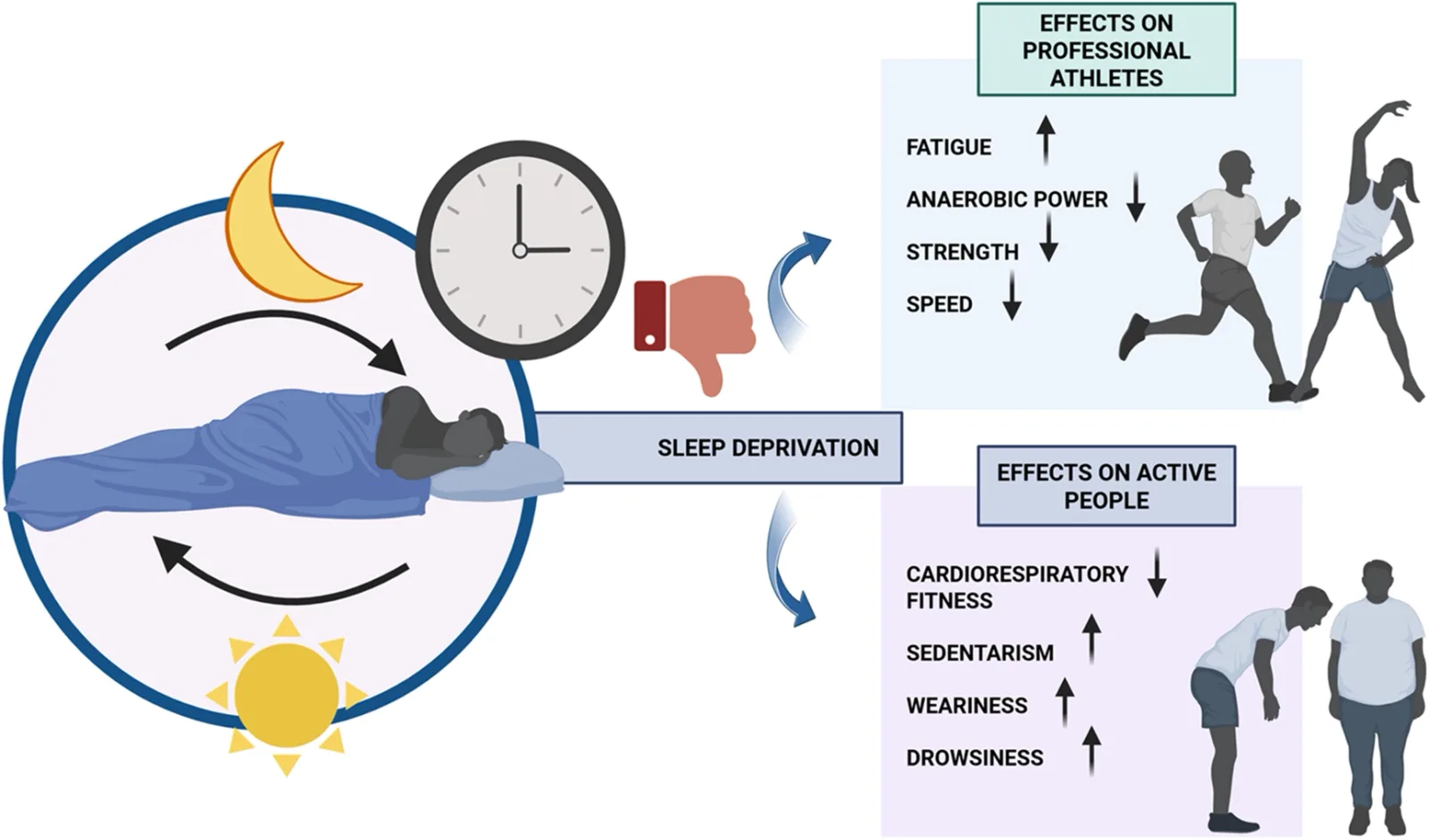
Sleeping fewer than 8 hours per night makes athletes 1.7 times more likely to be injured compared to those who hit that threshold.
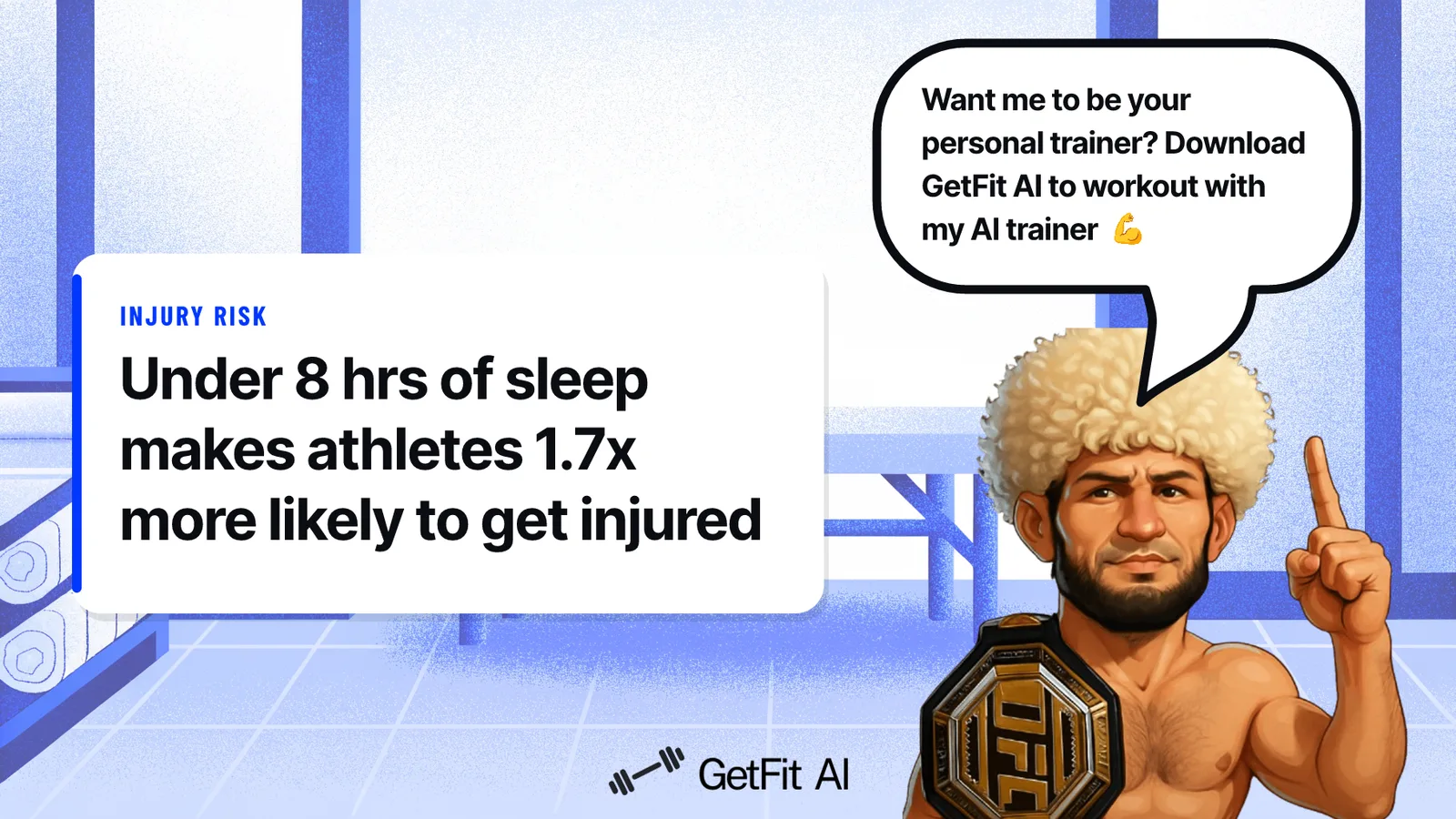
Speed, Power, and Jump Height Drop by Measurable Margins After Poor Sleep
Sleep deprivation measurably reduces explosive athletic output, including vertical jump height and sprint speed, because the neuromuscular system cannot generate peak force without adequate recovery.
The practical consequence: trading sleep for an extra training session does not bank extra progress. Industry research finds that the performance and recovery gains from the extra session are outweighed by the measurable losses in speed and power caused by the deficit.
Sleep Deprivation More Than Doubles Injury Risk
The 1.7x injury multiplier is the floor. Some research indicates insufficient sleep can more than double an athlete’s injury risk, a compounding problem for anyone training without a plan that accounts for daily recovery state.
Without a structured plan, every session runs at the same intensity regardless of how the body arrived that day, which means a single night of poor sleep can quietly set an injury in motion.
GetFit AI’s Structured Training addresses this directly, and it is most beneficial for people who have previously struggled with consistency because of exactly this dynamic: no structure means no built-in mechanism to reduce intensity when the body is running below capacity.
There is also a category of risk that stays invisible until it becomes serious.
Fine-Motor Precision Degrades First When Sleep Is Short
Fine motor precision, including barbell control, passing accuracy, and catching, declines with sleep loss because these skills depend on a fully rested nervous system to coordinate precise movement patterns. A training plan does not resolve the root cause of disrupted sleep, but a plan that adapts during each workout session rather than demanding the same output every time keeps a bad night from becoming the start of an injury chain.
GetFit AI’s Athlete-Style Custom Workout Plans are most beneficial when the user has a clear performance goal they are building toward, because that goal creates the frame within which the program’s session-by-session adaptation actually means something.
GetFit AI’s friends, challenges, and leaderboard layer, most beneficial after connecting with at least one friend in the app, provides the social continuity that keeps users training past week three.
How Many Hours of Sleep Athletes Actually Need to Perform and Recover
Seven hours is the sedentary adult standard, and applying it to a body under active training stress is one of the most common miscalculations athletes make. The National Sleep Foundation sets the general adult window at 7-9 hours, but that baseline was built around bodies that are not breaking down muscle tissue, cycling hormones, and consolidating motor patterns every 24-48 hours.
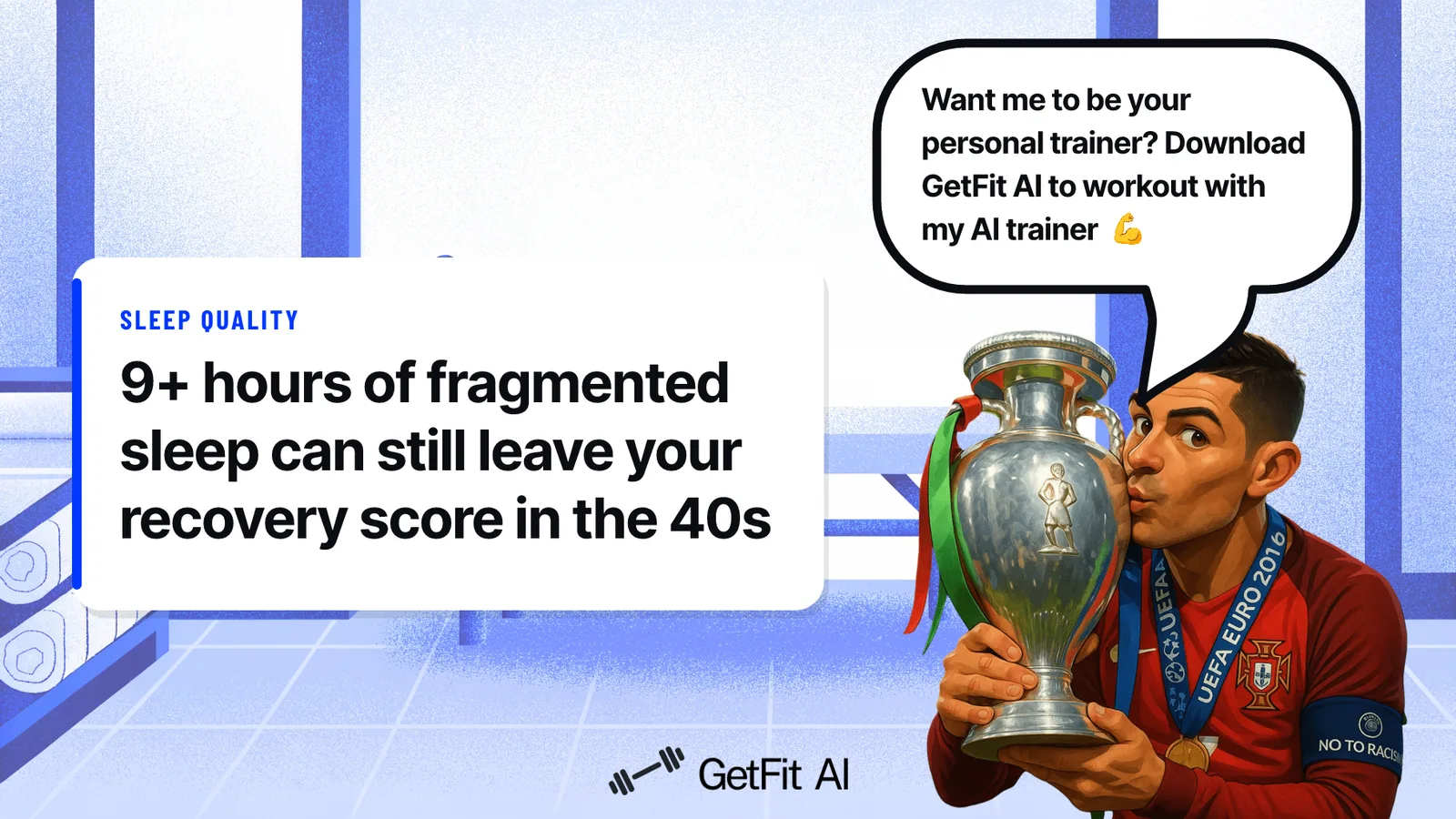
“Athletes sleeping 9+ hours still receive low recovery scores (e.g. 48%), making it unclear how many hours of sleep are actually sufficient for recovery.”
— what we hear from athletes and fitness trackers
Why the Standard 7-9 Hour Rule Undershoots Athletes Under Real Training Load
You can sleep nine-plus hours and still wake up to a recovery score in the 40s. GetFit AI’s Athlete-Style Custom Workout Plans address this directly at the training layer: every session is structured with the right exercises, set counts, and sequencing for the day, so when recovery is genuinely compromised, the program reflects that, rather than blindly stacking another heavy session on top of a body that hasn’t finished repairing from the last one.
Is 7 Hours Enough, Adjusted for Training Intensity and Frequency
Across the broader training landscape, seven hours may be minimally adequate for recreational athletes in moderate training, but for anyone training at high frequency or intensity, it is likely insufficient. Someone running five days a week with two HIIT sessions almost certainly needs closer to 9.
As a general principle well established across the field, two-a-day sessions, high-intensity blocks, and competition periods all increase sleep requirements. Athletes should treat sleep as a training variable to be periodized alongside physical workload. GetFit AI’s structured training layer exists for exactly this situation.
Age-Specific Sleep Targets for Teen, Collegiate, and 25-30 Athletes
The available evidence across sports science puts the target for teenage and collegiate competitors at 9-10 hours per night, driven by the compounding demands of growth, development, and training load running simultaneously.
For the 25-30 bracket, the biological growth premium has faded, but the training debt has not. GetFit AI’s Athlete-Style Custom Workout Plans, available starting at $1.99 per week, provide a clear training structure, telling you exactly what to do in each session and tracking whether the work is translating into the results you are actually training for.
Related Reading
- Athletic Performance Analysis
- Does Vaping Affect Athletic Performance
- How to Avoid Feeling Sleepy After Workout
- How to Measure Athleticism
- Velocity Based Training
- Building Stamina and Endurance
- Why Am I So Bad at Sports
- Endurance vs Strength Training
- Why Am I So Tired After Working Out
- How to Create a Personalized Workout Plan
Practical Sleep Tips for Athletes Who Need to Build the Habit Around a Real Training Schedule
Knowing that sleep affects performance is one thing; actually protecting it around early alarms, late training sessions, and screen-heavy evenings is another. The habits below target the specific friction points athletes run into most, from stabilizing your wake time to managing the cortisol spike that follows an 8pm workout. GetFit AI can help you build these into a routine that fits your real schedule, not an idealized one.
Fixing a chaotic sleep schedule starts with accepting one uncomfortable truth: generic advice like “wind down earlier” was written for someone with a 9-to-5, not someone finishing a training session at 9pm with a 6am alarm waiting on the other side.
1. Lock In a Fixed Wake Time Every Day - Even After a Bad Night
A consistent wake time is the fastest way to stabilize your circadian rhythm, because the body’s clock is set by morning light exposure, not by when you fell asleep. Circadian misalignment carries measurable consequences for athletic output, independent of total sleep hours. Holding the same wake time after a short night feels counterintuitive, but it rebuilds sleep pressure reliably, so the following night is easier to enter without forcing it.
2. Build a 30-60 Minute Wind-Down Buffer Before Bed - Screens Off, Room Cooled

Blue light from screens suppresses melatonin onset, pushing your sleep window later even when your body is physically exhausted. A 30-to-60-minute screen cutoff is the minimum buffer that gives your melatonin curve a real chance to rise before sleep. An athlete finishing an 8pm session can set a 9:30pm screen cutoff and use that window for a cool shower, light stretching, or a quiet meal. Dropping room temperature a few degrees accelerates the core body cooling that triggers sleep onset, compounding the benefit.
3. Name and Solve the Real Barriers - Late Sessions, Travel, Anxiety, and Shift Conflicts
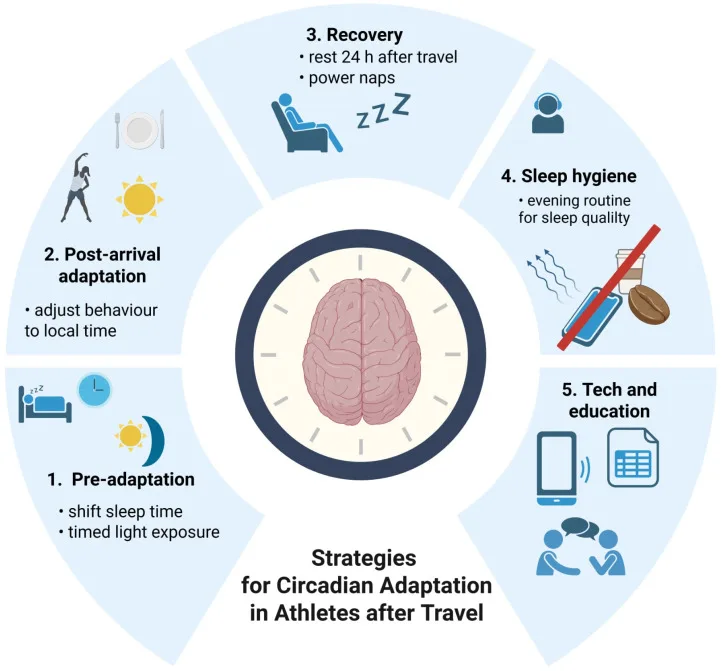
Generic sleep advice fails athletes because it ignores the actual obstacles. Patterns observed across elite athletic populations identify late training sessions, competition anxiety, travel across time zones, and irregular scheduling as documented sleep disruptors, each requiring a specific workaround rather than a general tip. Late sessions demand a physiological wind-down protocol.
Travel requires pre-adjusting sleep timing by one hour per day before departure. Anxiety responds to a consistent pre-sleep routine that signals safety. Shift conflicts need a fixed anchor point, usually wake time, around which everything else flexes.
4. Use 20-Minute Early-Afternoon Naps to Offset Poor Nights Without Wrecking Night Sleep
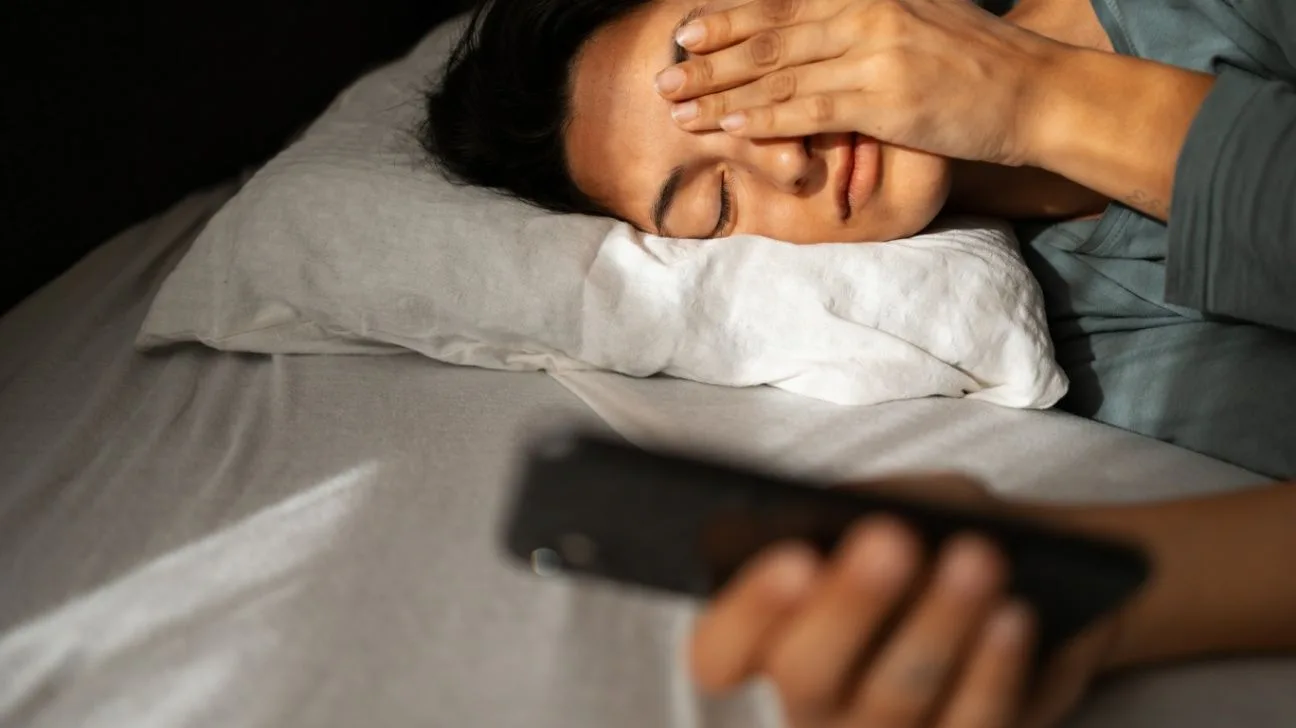
A 20-minute nap taken before 3pm restores alertness and reaction time without accumulating enough sleep pressure to fragment the night that follows. It is a legitimate partial recovery tool when a run of short nights is building a deficit, not a daily substitute for adequate overnight sleep. The tradeoff is precise: extend past 30 minutes or nap after 3pm and you risk blunting evening sleep drive, turning a recovery tool into a new problem. Treat it as a targeted intervention, not a habit.
5. Treat Sleep as a Scheduled Training Block - Written Into the Weekly Plan
Most athletes who struggle to protect sleep are under-scheduled. Sleep gets squeezed out by whatever fills the gap last because it was never written in as a committed block. The athletes who close this gap treat their sleep window with the same non-negotiable weight as a training session, blocking it in advance and adjusting other commitments around it. When workouts are already structured and sequenced, as they are inside a personalized training plan, building fixed sleep windows around them becomes a scheduling decision rather than a daily negotiation.
Related Reading
- How to Deal With Performance Anxiety in Sports
- Hydration Tips for Athletes
- How to Build Mental Toughness in Athletes
- Food for Athletes During Competition
- Strength Training Workout for Runners
- Best Plyometric Exercises for Speed
- Exercises That Improve Muscular Endurance
- Conditioning Workouts for Athletes
- Speed Training for Athletes
- Balance Exercises for Athletes
- Best Core Exercises for Athletes
Why Sleep Gains Only Compound When Your Training Plan Is Structured Enough to Use Them
That framing, sleep as a committed block rather than a leftover, matters because of what sleep does once it is protected. It converts the work already done into adaptation. Strength gains, aerobic improvements, and skill consolidation all depend on processes that only run during sleep, which means an athlete who trains hard but sleeps poorly is generating stimulus without collecting the return.
A landmark sleep and athletic performance study makes this concrete: basketball players who extended their sleep saw free-throw accuracy climb by 9% and three-point accuracy by 9.5%. Those numbers are frequently cited in isolation, but the context gets skipped: every player in that study was already following a structured athletic training program.
This points to an underappreciated synthesis: sleep and structured training are multiplicative, so each raises the return on the other, and optimizing only one captures a fraction of what is available. Extended sleep did not generate those accuracy gains on its own. It consolidated and expressed adaptations that a coherent training stimulus had already initiated.
A user who sleeps eight hours consistently but cycles through the same three machines at the same weights gives sleep nothing meaningful to work with, so the multiplication never happens.
How Periodized Programs Create the Recovery Debt Sleep Is Designed to Repay
Structured training works by deliberately breaking the body down in a controlled, progressive sequence, then allowing sleep to rebuild it stronger. Progressive overload creates the adaptation signal. Deload weeks are the moments when that signal peaks, because accumulated fatigue clears and sleep-driven supercompensation finally has room to express itself.
Without that sequencing, there is no recovery debt to repay. As industry research notes, without adequate sleep the adaptations athletes are working toward are left incomplete. Without a program generating those adaptations, sleep has nothing to complete.
Why Structured Training Makes Every Hour of Sleep More Productive
An AI fitness app like GetFit AI closes the feedback loop by delivering a periodized, progressive custom workout plan that gives each night of recovery a specific adaptation target. Its on-demand AI coach can adjust that day’s training load when recovery is compromised, for example, swapping a heavy compound lift for an accessory movement, a real-time adjustment that mirrors the load-management protocols used in elite periodized programs, where deload weeks and session-intensity modulation are the documented mechanisms behind sleep-driven supercompensation.
Next steps
If your training is consistent but progress keeps stalling, the path forward starts with accepting that sleep is not passive downtime, it is the biological mechanism converting your sessions into actual adaptation. Start with our AI fitness app.
Growth hormone secretion peaks during deep slow-wave sleep and can be eliminated entirely by a short or disrupted night, meaning the hormonal machinery your training activates never fires. Sleep debt also creates a self-concealing trap, impairing the judgment athletes need to recognize that their reaction time, decision-making, and technical precision have already declined. Together, these two realities point to the same corrective action: pair protected, sufficient sleep with a training structure coherent enough to give each night of recovery a specific adaptation target, because sleep extension only produces measurable returns when a meaningful stimulus exists for it to consolidate.
Start with GetFit AI to build the periodized training structure that makes your sleep work visible. From there, your sessions are sequenced, your load is managed across the full program arc, and the guesswork that fragments both your training and your recovery disappears.
Frequently Asked Questions
What actually happens to my body if I keep sleeping only 5 or 6 hours a night while training?
Sleeping fewer than 6 hours per night significantly blunts growth hormone release, which is the primary driver of muscle-tissue repair after training. On top of that, sleep deprivation impairs muscle glycogen replenishment, meaning you start every subsequent session already fuel-depleted, and chronically short sleep dysregulates cortisol rhythms, pushing your body into a catabolic state that actively breaks tissue down rather than building it up.
Can I catch up on lost sleep over the weekend to fix the damage from a bad week of training?
No, research cited in the post found that weekend recovery sleep does not prevent the metabolic dysregulation caused by insufficient sleep during the week. The immune and hormonal debt accumulated across a week of short nights does not clear on Saturday morning.
Does poor sleep actually make me more likely to get sick and miss training days?
Yes. Natural killer cell activity drops significantly after even one night of restricted sleep, and for athletes already in a heavy training block, where immune demand is elevated, that suppression translates directly into sick days and lost training weeks.
If I slept nine hours last night, why do I still feel under-recovered?
Duration is the floor, not the ceiling, sleep quality and architecture matter as much as total hours. Nine hours of fragmented sleep interrupted by a late screen session, alcohol, or an inconsistent bedtime can still deliver almost no meaningful slow-wave deep sleep, which means the growth hormone peak that drives muscle repair never fires.
How does sleep deprivation affect my reaction time and decision-making inside a session?
Reaction time degrades measurably with insufficient sleep, meaning you’re slower to catch form breakdown mid-rep or misjudge load feel, and the Stanford sleep extension research shows the reverse is also true, with athletes who extended sleep improving sprint times and shooting accuracy. Compounding the problem, the neurological impairment from sleep debt also impairs your ability to notice that any impairment is occurring, making accumulated sleep debt easy to dismiss and hard to self-diagnose.