12 Reasons Why Am I So Tired After Working Out

Chronic exhaustion after every session is not the price of progress. It is a signal, and once you know which of the 12 causes is draining your recovery, it becomes fixable.
The majority of people who start a gym routine in January quit within the first few months, according to Stop Fitness. Most people chalk it up to motivation or willpower. The real pattern is quieter and more fixable than that. The common assumption is: “If I’m exhausted after every workout, it means I’m pushing hard enough and results are coming, that’s the price of progress.” That belief is understandable, and it is also one of the main reasons people quit. See our AI fitness app for how this works in practice.
“I struggle to know when my muscles have actually recovered. I’m left guessing between sessions, which directly causes post-workout fatigue to hit harder than expected because I re-train before recovery is complete.”
— what we hear from fitness enthusiasts
The exhaustion hits after the third or fourth week. Not the satisfying tiredness of a hard session, but the kind that follows you home and makes going back feel genuinely awful. Most beginners then make a critical error: they read the fatigue as proof they are working hard enough, wait for it to pass, and quit when it doesn’t.
My Training Space’s October 2024 analysis puts it plainly: post-workout exhaustion is widely treated as proof of progress, but chronic fatigue after every session is not an inevitable outcome of effective training. It signals that something in the training or recovery equation is off. If Monday’s session is still sitting in your legs on Wednesday, that is the body signalling that recovery is not keeping pace with training load.
The distinction matters because the response to each is opposite: the first calls for consistency, the second calls for change. The 12 causes fall into three clusters: fueling, training load, and recovery infrastructure. These clusters interact, and the next section explains why each one matters.
Key takeaways
- Post-workout exhaustion is a diagnostic signal, not a badge of effort, each cause drains recovery through a different mechanism, so identifying the right one is the only way to fix it.
- Three biological systems fail in sequence every time you train hard: energy substrate depletion, muscle tissue breakdown, and nervous system stress, and all three require nutrition and sleep to resolve, not more willpower.
- Most beginners obsess over the workout and treat recovery as an afterthought, that gap between breaking tissue down and rebuilding it overnight is exactly where chronic fatigue is born.
- Eating within the hour after training is not optional timing advice, it is the first link in a recovery chain where scrambling the order compounds fatigue instead of reversing it.
- Knowing the rules of recovery and having a system that enforces them are two different things, most people who feel wrecked every week can already recite the rules.
- GetFit AI's Nutrition feature closes that gap by telling you what to eat to hit your fitness goal, then letting you log it, food search, barcode scanning, custom foods, a per-day meal view, and weekly calorie and macro charts, so the math gets done instead of guessed.
What Physiological Processes Cause Post-Workout Fatigue
Several physiological processes drive post-workout fatigue. Understanding exactly which ones, and why, turns post-workout fatigue from a vague feeling into a readable signal, and it matters more than most beginners realize. One of the most disorienting things beginners we work with face is not knowing whether what they’re feeling is normal post-workout fatigue or something clinically distinct like Post Exertional Malaise (PEM).
GetFit AI’s 1,480 exercises, each with a video guide, step-by-step instructions, form tips and common mistakes, plus muscle maps and free calculators on the website, are built to give your fatigue a framework before it has a chance to spiral into guesswork.
ATP and Glycogen - The Two-Stage Energy System Your Muscles Drain in Every Set
-
First, your muscles burn through ATP (adenosine triphosphate), the immediate fuel that powers every contraction.
-
Think of ATP like a phone battery: once it drops to zero, performance stops instantly until it recharges.
-
According to The Sport Journal, as exercise intensity rises, ATP is consumed faster than muscles can regenerate it, leaving fibers unable to sustain forceful contractions.
-
When ATP runs short, muscles lean harder on glycogen, the stored carbohydrate sitting in muscle tissue and the liver.
-
The Sport Journal identifies glycogen depletion as a central driver of both peripheral fatigue (heavy legs) and central fatigue (the cognitive fog that makes you feel slow and flat after a session).
Because GetFit AI tracks your training arc session by session, it can flag when training load is outpacing recovery before glycogen debt compounds into the kind of chronic fatigue beginners most often misread as a sign they need to push harder.
Micro-Tears and DOMS - Why Muscle Damage Creates Systemic Fatigue, Not Just Local Soreness
Every set that challenges your muscles creates microscopic damage to muscle fibers, and those micro-tears trigger an inflammatory response that peaks 24 to 72 hours after exercise, producing the full-body heaviness most people recognize as DOMS.
This is the precise point where the confusion between normal DOMS and PEM tends to emerge for beginners we work with, because both can feel similar from the outside while meaning something very different underneath.
At a glance
| Condition | Onset / Timing | Cause / Mechanism | Key Feature |
|---|---|---|---|
| DOMS (Normal Post-Workout Fatigue) | Peaks 24 to 72 hours after exercise | Inflammatory cascade tied directly to mechanical muscle damage | Predictable arc; full-body heaviness following exertion |
| PEM (Post Exertional Malaise) | Often delayed; falls outside normal recovery windows | Disproportionate worsening of symptoms after exertion | Symptoms worsen beyond normal recovery windows; looks the same from outside but means something very different underneath |
The biological difference is meaningful: DOMS follows a predictable 24-to-72-hour inflammatory arc tied directly to mechanical muscle damage, whereas PEM involves a disproportionate, often delayed worsening of symptoms after exertion that falls outside normal recovery windows. GetFit AI’s Athlete-Style Custom Workout Plans establish that baseline from the first workout session, so deviation from your normal recovery pattern becomes visible rather than invisible.
How Sweat Loss Shrinks Blood Volume and Forces Your Heart to Work Overtime
Sweat loss reduces plasma blood volume, leaving less fluid available to carry oxygen to working muscles. The heart compensates by beating faster, burning energy it would otherwise spend on recovery. The Sport Journal notes that even modest fluid losses meaningfully impair cardiovascular efficiency and accelerate fatigue onset both during and after a session.
These four processes, ATP depletion, glycogen drain, muscle micro-tears, and blood volume loss, are the biological floor every case of post-workout fatigue is built on. Specific training habits, nutrition choices, and lifestyle patterns determine how hard each one hits you, which is exactly what the next section breaks down across 12 distinct causes.
Related Reading
- Why Am I Not Getting Faster at Running
- Does Masturbation Affect Athletic Performance
- Biomechanics in Sports
- Why is Protein Important for Athletes
- What is Speed and Agility Training
- How to Be a Better Athlete
- How Does Sports Psychology Help Athletes
- Why is Hydration Important for Athletes
- Why Do Athletes Train at High Altitudes
- Why Do Athletes Stretch Before a Game?
- IV Therapy for Athletic Performance and Recovery
- Yoga and Athletic Performance
- Red Light Therapy for Athletic Performance
12 Common Causes of Feeling Tired After Working Out
Chronic post-workout exhaustion is almost never a badge of effort. It is a diagnostic signal, and the specific cause matters because each one drains your recovery through a completely different mechanism. The 12 items below work as a checklist: read each one, match it to your last few sessions, and you will have a clearer picture of what is actually keeping you wrecked.
1. Dehydration - Your Body’s Most Overlooked Energy Drain

Even modest fluid losses during training are enough to measurably reduce strength output. What makes this particularly costly is that gym-specific dehydration hits nearly 3 times harder than passive dehydration, as FitChef’s aggregated analysis of 28 studies confirms. The wrecked feeling you walk out with can partly reflect neuromuscular impairment from fluid loss. That distinction matters: chasing exhaustion as proof of effort when dehydration manufactured half of it means you are optimizing for the wrong signal entirely.
2. Glycogen Depletion - Running on Empty After High-Intensity Work
Glycogen, the carbohydrate stored in your muscles, is your primary fuel during strength training and HIIT. Research shows that high-intensity efforts can deplete working muscle glycogen significantly within a relatively short session, which is why that heavy-legs, foggy-head feeling arrives well before a long session ends. Once glycogen drops, your body shifts to less efficient fuel sources, output falls, and post-session fatigue deepens. This is a sign your pre-session carbohydrate intake did not match your training demand.
3. Poor Pre-Workout Nutrition - Starting the Session Already Behind

Training without adequate fuel is the equivalent of driving a car with a quarter tank and wondering why it stalls. If your last meal was four or more hours before training, blood glucose is already trending low before the first set. Your muscles and brain compete for what little fuel remains, cognitive sharpness drops early, and the session feels harder than it should. The fatigue you feel afterward reflects both the training stress and the energy deficit you carried in, compounded together.
4. Not Eating Post-Workout - Missing the Recovery Window
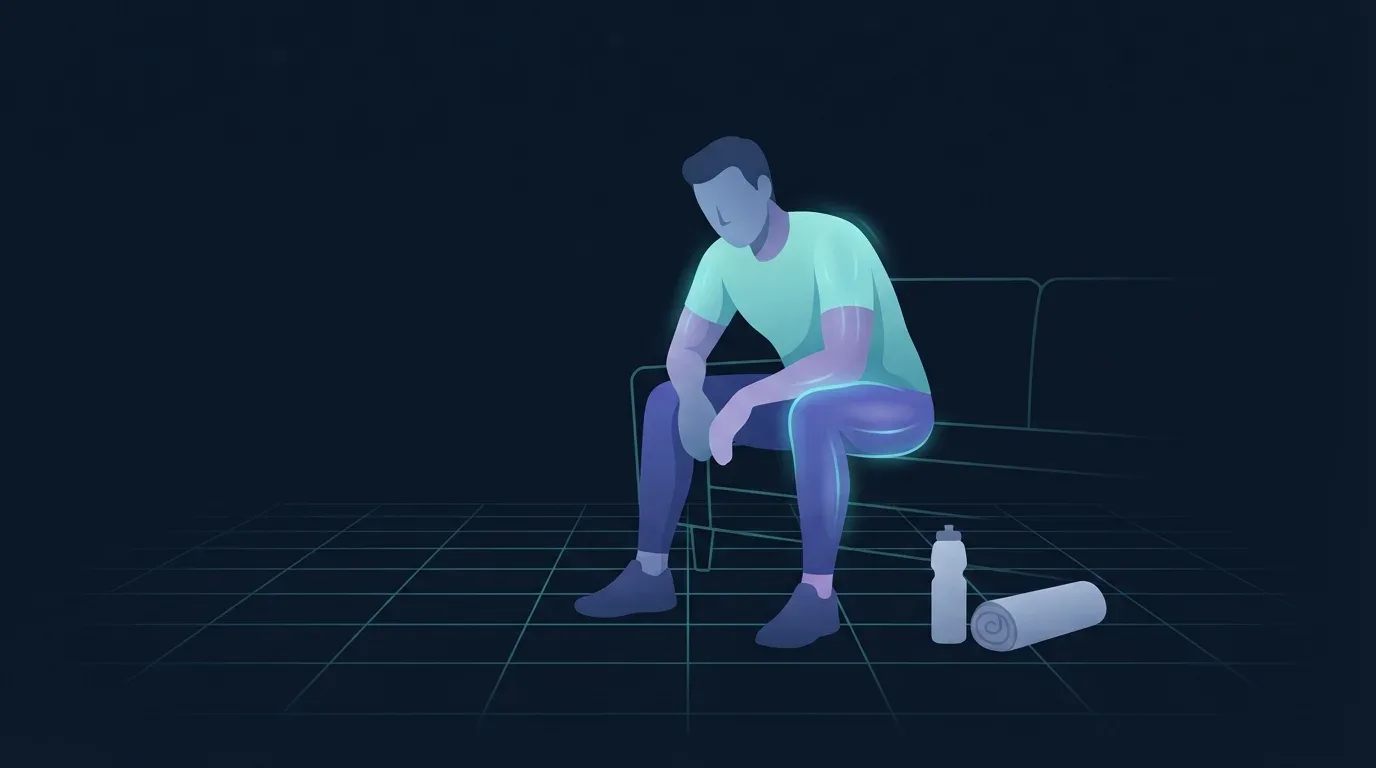
The 30-to-60 minutes immediately after training is when glycogen resynthesis rates are highest and muscle protein synthesis is most receptive to incoming nutrients. Skipping food in this window extends the period your body spends in a catabolic state. Threads across fitness communities are full of beginners who eat well at dinner but wonder why they feel destroyed all evening: the gap between the session ending and the meal arriving is often the entire problem. Protein and carbohydrates together restart the repair process; nothing else substitutes.
5. Muscle Micro-Tears - The Structural Cost of Every Hard Session

Every resistance training session creates small tears in muscle fibers. This is the intended stimulus for growth, but the inflammatory repair process that follows draws significant systemic resources, including blood flow, immune activity, and hormonal signaling. The result is the deep, heavy fatigue that sets in 24 to 48 hours after training, commonly called DOMS. This cause is normal in controlled doses, but it compounds quickly when training volume is high, recovery nutrition is poor, or sleep is cut short (as the next section addresses in depth).
6. Central Nervous System Fatigue - When Your Brain Is More Tired Than Your Muscles
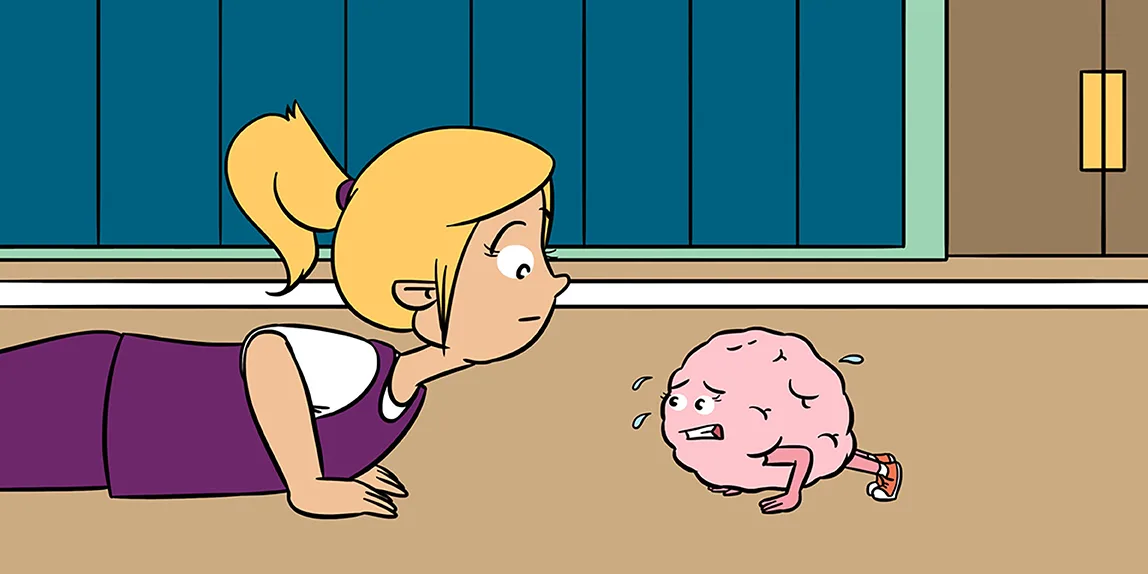
CNS fatigue is the most misread item on this list. A lifter can feel fine muscularly but be unable to focus, motivate, or generate force, because the nervous system is the bottleneck. The central nervous system controls motor unit recruitment; when it is taxed, the signal from brain to muscle weakens and perceived effort spikes for the same actual output. This is why some sessions feel inexplicably hard even when soreness is low. High training frequency, poor sleep, and chronic stress all accelerate CNS fatigue independent of muscle damage.
7. Overtraining and Excessive Workout Volume - Too Much Stress, Too Little Adaptation

Training six days a week with no deload and wondering why performance keeps dropping week over week is a textbook overtraining pattern. The hormonal signature is a rising cortisol-to-testosterone ratio: cortisol climbs as a stress response, testosterone suppresses as recovery falls behind, and the net effect is persistent fatigue, mood disruption, and stalled or declining performance. This is common among motivated beginners who equate more sessions with faster results. Adaptation requires stress plus recovery; stress alone produces tiredness.
8. Training Fasted - Performance Debt You Pay After the Session
The morning gym-goer who skips breakfast and wonders why they are useless by 9am is experiencing a predictable physiological consequence. Fasted training depletes already-low overnight glycogen stores faster, raises cortisol higher, and increases muscle protein breakdown compared to fed training. The workout itself may feel manageable on adrenaline, but the post-session crash is steeper and the recovery window starts from a deeper deficit. For most beginners focused on building strength or body composition, fasted training adds fatigue without adding meaningful benefit.
9. Iron or Vitamin D Deficiency - The Hidden Nutritional Causes of Chronic Exercise Fatigue
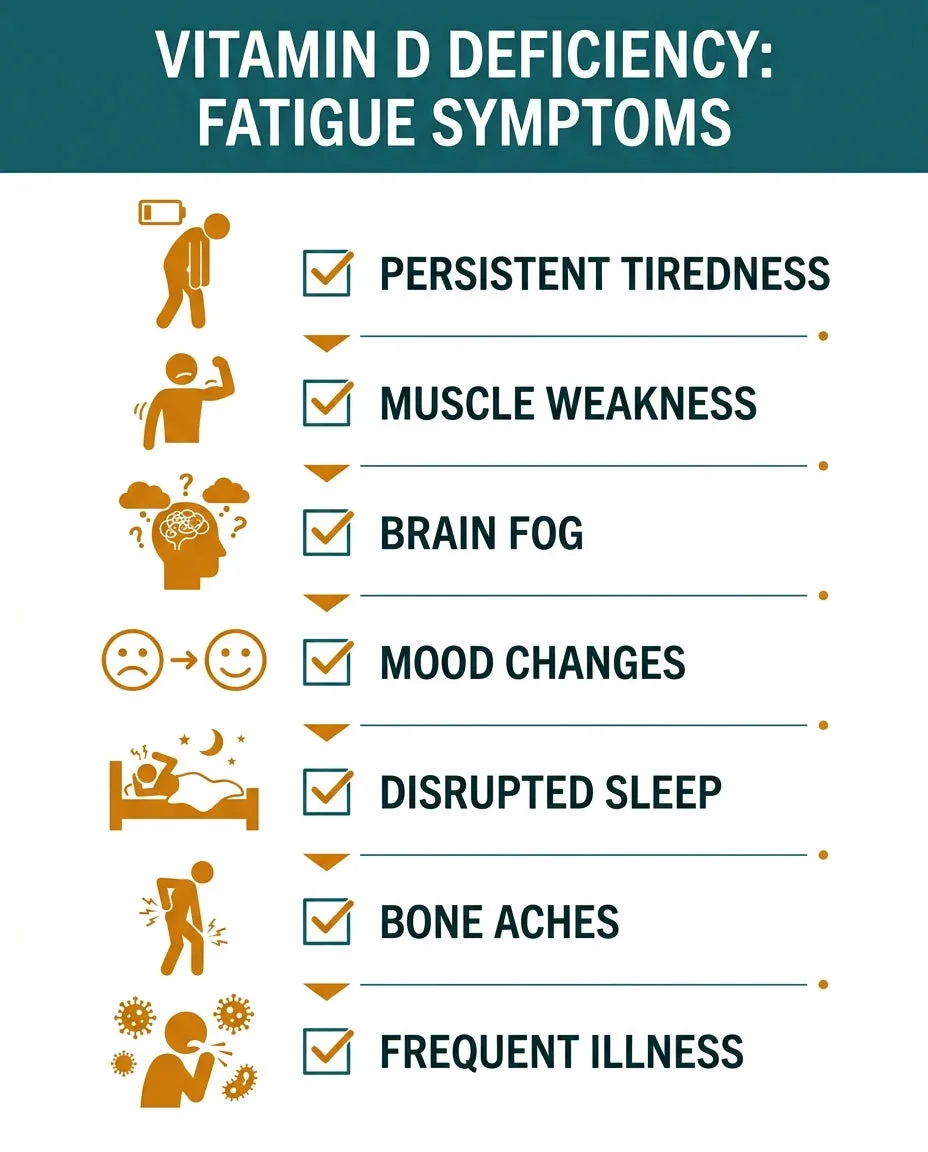
Iron deficiency is particularly common in active women, with many estimates suggesting it affects a significant share of female athletes, making it one of the most underdiagnosed causes of exercise fatigue. Research confirms this concern, with studies reporting that iron deficiency affects 15-35% of female athletes, a rate notably higher than the 3-11% observed in their male counterparts. Iron is essential for oxygen transport; when levels are low, muscles receive less oxygen per contraction and fatigue arrives earlier and harder. Vitamin D deficiency compounds this through its role in muscle function and immune regulation. Both deficiencies produce a chronic, background exhaustion that does not respond to better sleep or more rest days, because the root cause is nutritional, not structural.
10. Poor Sleep Quality - The Recovery Multiplier You Cannot Compensate For
Sleep is where growth hormone is released and muscle repair accelerates. Without adequate deep sleep, the micro-tears from training linger longer, cortisol stays elevated into the next day, and glycogen resynthesis slows. The compounding effect is significant: every other cause on this list hits harder when sleep is compromised. This item is covered in full in the next section, but the short version is this: you cannot out-eat or out-rest a chronic sleep deficit through any other means. It is the multiplier applied to all of them.
You cannot out-eat or out-rest a chronic sleep deficit through any other means.
11. No Structured Plan - Intensity Swings That Prevent Adaptation
Without a structured plan, most beginners swing between accidental undertraining and accidental overtraining in the same week. One session is too easy because it repeats the same three machines; the next is too hard because they tried something new and went too heavy. Neither session produces clean adaptation. The body never settles into a progressive overload pattern, so fatigue accumulates without the fitness gains that would normally accompany it. This is the training-structure version of spinning wheels: effort goes in, results do not come out, and exhaustion is the only consistent outcome.
12. Electrolyte Imbalance - The Fatigue Signal Hidden Inside Your Sweat
Sweat carries sodium, potassium, and magnesium out of the body alongside water. When those electrolytes drop, nerve transmission slows, muscle contractions become less coordinated, and the post-workout crash deepens beyond what fluid alone can explain. You can drink enough water and still be electrolyte-depleted if your diet is low in sodium or you sweat heavily. The fatigue feels muscular but the mechanism is electrical; muscles are not getting clean signals from nerves running low on the minerals that carry those signals.
Notice that four of the twelve causes above are all nutrition problems wearing different labels:
-
Glycogen depletion
-
Poor pre-workout nutrition
-
Missed post-workout eating
-
Training fasted
Most beginners know they should “eat better around workouts” but have no idea what that means in actual grams, timing, or calories for their specific goal. That gap is exactly what turns every session into a recovery hole. GetFit AI addresses that gap directly: it generates personalised pre- and post-workout nutrition targets based on your goal, then lets you log your food with a barcode scan so the calculation is handled and the recovery window is visible rather than guessable.
Fix those four and you eliminate the single largest cluster of post-workout fatigue in one move. But there is one cause on this list that nutrition alone cannot touch: the quality and architecture of your sleep. That is where the next section picks up, because sleep is not just rest; it is the hormonal switch that decides whether today’s training becomes tomorrow’s strength or tomorrow’s soreness.
Related Reading
- Athletic Performance Analysis
- Does Vaping Affect Athletic Performance
- How to Avoid Feeling Sleepy After Workout
- How Does Sleep Affect Athletic Performance
- How to Measure Athleticism
- Velocity Based Training
- Building Stamina and Endurance
- Why Am I So Bad at Sports
- Endurance vs Strength Training
- How to Create a Personalized Workout Plan
How Sleep and Recovery Deficit Make Post-Workout Fatigue Worse
Why Deep Sleep Is the Real Muscle-Repair Window
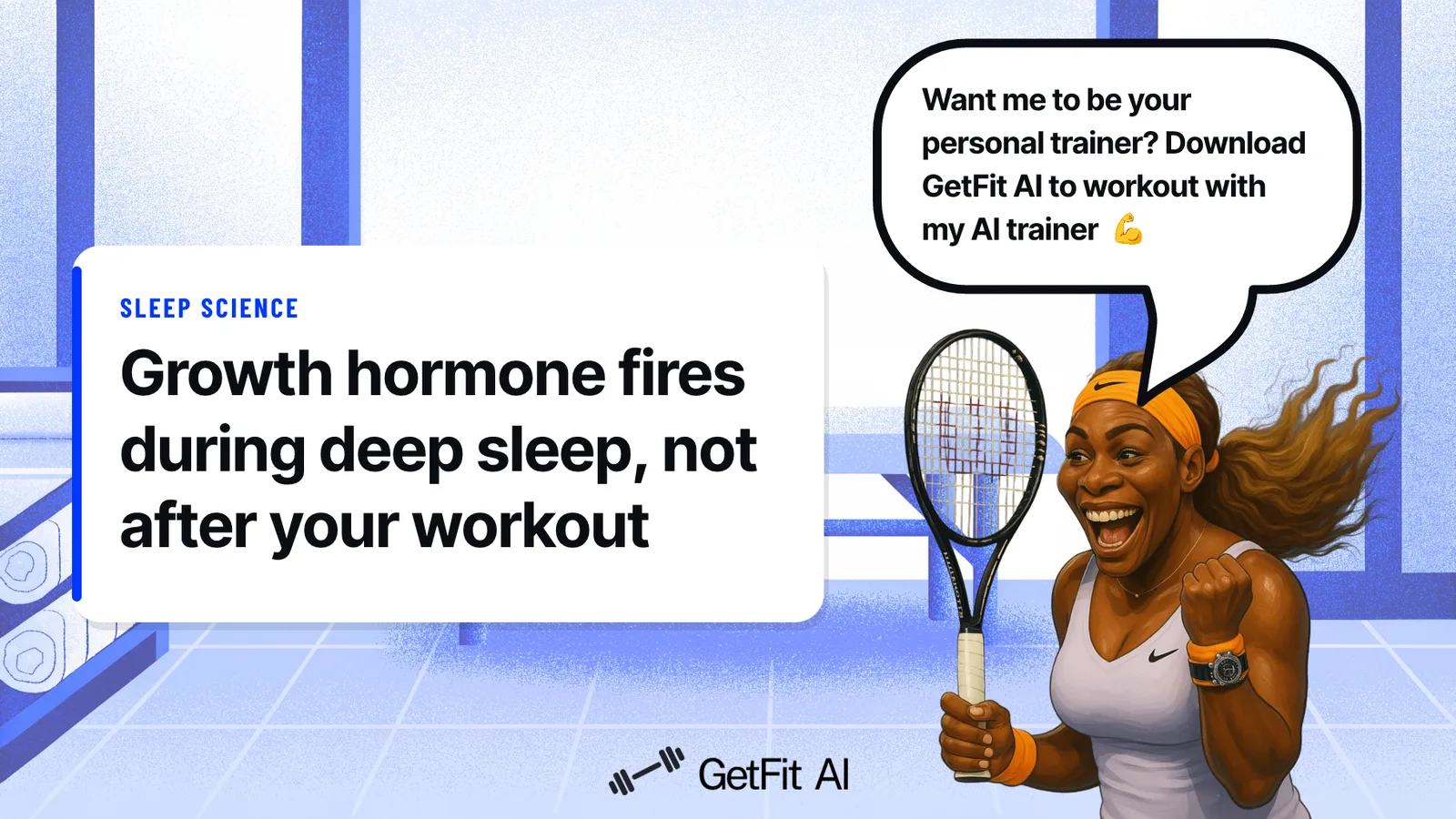
The hour after your workout is not when your muscles actually repair. Arden Endocrinology Specialist Clinic confirms that growth hormone, the body’s primary mechanism for closing micro-tears in muscle tissue, is released almost exclusively during deep slow-wave sleep, so the gym session is the stimulus and sleep is the actual adaptation. One of the clearest patterns we see in beginners is that health apps surface sleep, HRV, stress, and recovery as a dashboard of isolated numbers, and those numbers feel fine right up until the fatigue doesn’t. Yet accumulated training load still produces persistent leg heaviness and tiredness between sessions, because the numbers were never read together.
What Losing Even One Hour of Sleep Does to Your Recovery Timeline
Arden Endocrinology Specialist Clinic notes that adults need sufficient nightly sleep for adequate hormonal and physical recovery, and that cutting even one hour measurably slows the repair processes the body depends on after exercise.
Chronic post-workout fatigue compounds. Poor sleep actively amplifies every other recovery failure happening simultaneously, so that being under-fueled, under-hydrated, and sleep-deprived at once multiplies the cost of each gap rather than merely summing them. GetFit AI’s Athlete-Style Custom Workout Plans are built with this compounding cost in mind, and this structure is most powerful for anyone who has previously struggled with consistency because a program kept outpacing their recovery; starting from the first workout session, each session is placed within an overall arc that accounts for accumulated load, not just today’s effort.
When Fatigue Lasts All Week, Rest Days Are the First Fix
Arden Endocrinology Specialist Clinic is direct on this: persistent all-week fatigue is a signal to reduce training frequency before adding any other intervention. This is also where the week-three wall appears. The beginners we work with who drop off around that mark are rarely under-motivated; they are under-recovered, and they are training alone with no external signal that the load needs to come down. GetFit AI’s friends, challenges, and leaderboards exist precisely as the retention layer that keeps users training past week three, and they work best once you have connected with at least one friend or workout partner also using the app.
How to Recover Energy and Reduce Fatigue After Working Out
The idea underlying all three steps is this: the most actionable recovery intervention is targeted post-workout nutrition that addresses both glycogen depletion and electrolyte loss simultaneously, because these are the two mechanisms that lock in fatigue after exercise ends.
Step One - Hydrate and Replace Electrolytes Before You Do Anything Else
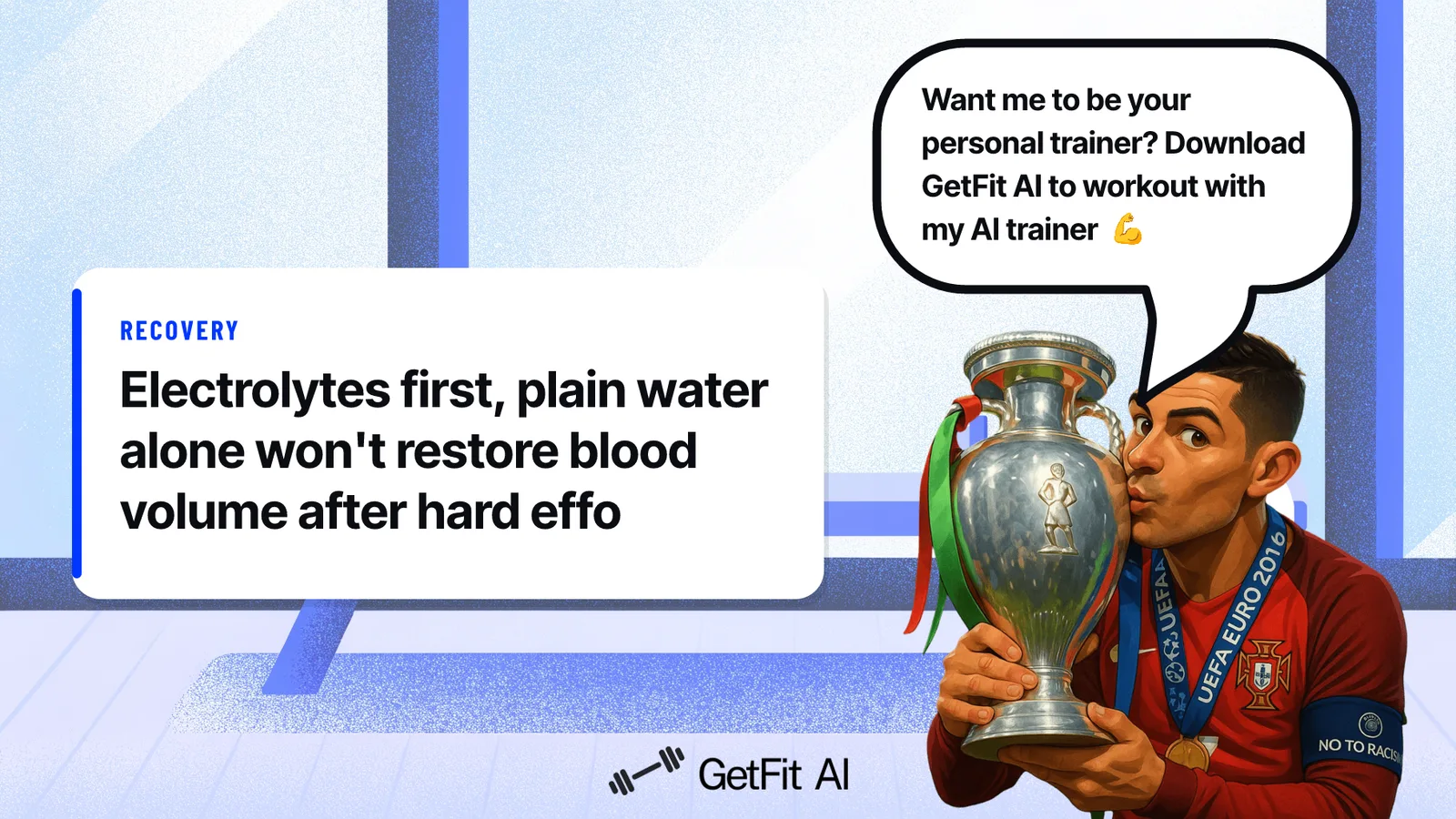
Electrolyte replacement after exercise is the single fastest intervention for reducing post-workout fatigue, and plain water often is not enough.
The Post-Workout Nutrition Window - Why Protein and Carbs Within One Hour Restart Your Engine
Research published in the Journal of the International Society of Sports Nutrition (December 2023) confirms that targeted post-exercise nutrition addressing both electrolyte loss and energy substrate depletion outperforms hydration alone for reducing post-exercise fatigue markers.
When nothing convenient and nutritious is ready, the window closes, and the fatigue that started in the gym is still present the next morning. This is exactly the problem GetFit AI’s Athlete-Style Custom Workout Plans are built around.
Rather than handing you a generic meal suggestion and leaving execution to chance, GetFit AI tells you specifically what to eat to put on size or lean out based on your actual goal, so the post-workout nutrition decision is already made before you walk out of the gym. From your first workout session, the plan accounts for recovery nutrition as part of the training arc. A chaotic 15-minute scramble becomes a pre-solved answer you can act on immediately.
The Five-Minute Cool-Down - The Step Most Beginners Skip Entirely
Stopping exercise abruptly causes blood to pool in your legs, which drops blood pressure and prolongs the lightheaded, drained feeling beginners often mistake for normal post-workout exhaustion. A short cool-down walk keeps circulation moving and lets heart rate descend gradually, which measurably shortens the recovery curve into your next session.
GetFit AI’s friends, challenges, and leaderboards feature is designed for the week-three wall, the retention layer that keeps users training past week three. It works best once you have connected with at least one friend in the app, and becomes most powerful when a workout partner is also using GetFit AI, because shared accountability makes the cool-down, the nutrition window, and the rest day feel like commitments rather than suggestions.
GetFit AI’s Structured Training, available from the first session, spanning each workout and the full program arc, is built to close the gap between knowing and doing for beginners who have previously struggled with consistency due to lack of program structure.
Related Reading
- How to Deal With Performance Anxiety in Sports
- Hydration Tips for Athletes
- How to Build Mental Toughness in Athletes
- Food for Athletes During Competition
- Strength Training Workout for Runners
- Best Plyometric Exercises for Speed
- Exercises That Improve Muscular Endurance
- Conditioning Workouts for Athletes
- Speed Training for Athletes
- Balance Exercises for Athletes
- Best Core Exercises for Athletes
Why Knowing the Recovery Basics Still Leaves Most Beginners Exhausted
Knowing the rules of recovery is not the same as having a system that enforces them. The core point here is this: understanding why you’re exhausted and actually stopping the exhaustion are two entirely different problems, and the gap between them is real-time feedback. First, most beginners fall off their routines not because they lack the basics, but because they have no plan to execute those basics consistently.
The Gap Between Knowing You Should Eat After Training and Actually Doing It
A beginner who understands the post-workout eating window still has to answer three questions in real time:
-
What exactly to eat
-
How much to eat
-
Whether what they grabbed actually counts
Without answers, they skip it. Research on the intention-action gap shows that knowing what to do and executing it under real-life conditions are genuinely separate cognitive tasks, not one continuous process. That is a timing and prompting problem, not an education problem.
How Unplanned Volume Swings Sabotage Even Good Recovery Habits
Even solid sleep and reasonable eating cannot compensate for wildly inconsistent training loads. PATH Fit notes that beginners without a structured plan swing between undertraining and accidental overtraining, which makes nutrition timing effectively inert regardless of how well they understand it. Fatigue compounds because the training stimulus keeps changing shape, not because the recovery strategy is wrong. No static rule set can govern a moving target.
Why Generic Recovery Advice Doesn’t Stop You From Overreaching
RK Athletics frames it plainly: going too hard without a progressive structure leads to burnout, and the problem is the absence of a manageable system. Static advice is always retrospective. It describes what you should do; it cannot observe what you just did and respond to it. GetFit AI is built to act as that real-time layer between knowing and doing, generating your plan in advance, flagging when weekly volume starts climbing, and sending a post-workout prompt before the nutrition window closes. The missing piece is a system that applies that advice to your specific session, your specific macros, and your specific moment of confusion at 9 PM when you are wondering if you ate enough.
Next steps
If you walk out of every session feeling completely drained and assume that is simply the price of pushing hard, the path forward starts with recognizing that constant exhaustion is a signal your nutrition and recovery are not keeping pace with your training load, not proof that your effort is working. Start with our AI fitness app.
Dehydration-driven neuromuscular impairment means that a significant share of the wrecked feeling you carry home was manufactured by fluid and electrolyte loss, not genuine training stimulus, so chasing that feeling leads you further from results, not closer. And because chronic post-workout fatigue compounds exponentially rather than additively, poor sleep does not simply slow recovery on its own; it multiplies the cost of every other gap simultaneously, turning manageable stressors into exhaustion that no single fix resolves. Together, those two realities point to one logical next step: a system that governs your training load, your nutrition timing, and your recovery targets in real time, not a static article you consult after the damage is done.
Start with the AI fitness app from GetFit AI, which generates your personalised post-workout nutrition targets before you open the fridge, tracks your training arc session by session, and flags when accumulated volume is climbing faster than your recovery can absorb it. From your first session, the guesswork is replaced by a closed feedback loop, and the exhaustion that used to follow you home finally has somewhere to go.
Frequently Asked Questions
Does training fasted in the morning make post-workout fatigue worse?
Yes. Fasted training depletes already-low overnight glycogen stores faster, raises cortisol higher, and increases muscle protein breakdown compared to fed training. The workout may feel manageable on adrenaline, but the post-session crash is steeper and recovery starts from a deeper deficit.
How does the brain control whether your muscles feel fatigued?
The central nervous system controls motor unit recruitment, and when it is taxed, the signal from brain to muscle weakens, meaning perceived effort spikes even if your actual muscle soreness is low. High training frequency, poor sleep, and chronic stress all accelerate this CNS fatigue independently of any physical muscle damage.
Can training too many days a week cause chronic exhaustion even if individual sessions feel fine?
Yes, and this is a common pattern among motivated beginners. Training six days a week with no deload drives a rising cortisol-to-testosterone ratio, cortisol climbs as a stress response while testosterone suppresses, producing persistent fatigue, mood disruption, and stalled or declining performance. Adaptation requires both training stress and recovery; stress alone just produces tiredness.
Could a nutrient deficiency be why I’m always exhausted after workouts even when I sleep and eat reasonably well?
Iron and vitamin D deficiencies can produce a chronic, background exhaustion that does not respond to better sleep or more rest days, because the root cause is nutritional rather than structural. Iron deficiency is especially common in active women, with research reporting it affects 15-35% of female athletes, and low iron directly limits oxygen delivery to muscles, causing fatigue to arrive earlier and harder.
Is feeling wiped out after every single workout actually a sign I’m working hard enough?
Not necessarily. Chronic fatigue after every session is not an inevitable outcome of effective training, it signals something in the training or recovery equation is off. The critical distinction is whether fatigue resolves between sessions: if Monday’s session is still sitting in your legs on Wednesday, your body is signalling that recovery is not keeping pace with training load, and the right response is change, not more effort.