Endurance vs Strength Training: Which Builds Your Best Body?
Knowing the difference between endurance and strength training is not enough. Here is what actually determines which one to choose, and why most beginners stall before they ever find out.
The common assumption among beginners is that understanding the difference between endurance and strength training is enough to know which one to pick and see results follow. NHS Strength Athletics puts it plainly: that understanding does not, by itself, tell a beginner which to choose or guarantee results. The comparison gives you vocabulary. It does not give you a session. The two sections below cover what each training type actually does to your body and where beginners most commonly go wrong. See our AI fitness app for how this works in practice.
Endurance Training Builds Cardiovascular Efficiency Over Time: Endurance training improves cardiovascular health and stamina through sustained aerobic activity. According to industry research, this means running, cycling, and swimming performed at moderate intensity for extended periods, relying on the aerobic energy system, which uses oxygen to produce energy over time. Your heart gets more efficient, your muscles develop more mitochondria, and your body learns to burn fat and carbohydrates steadily across long efforts.
Strength Training Builds Muscle Force and Metabolic Rate: Strength training works the opposite way. As NHS Strength Athletics explains, it involves resistance exercises performed at low repetitions with heavy weight, relying on the anaerobic energy system to generate fast, powerful bursts of energy without oxygen. That system fires for seconds at a time. The result is:
-
Thicker muscle fibers
-
Greater peak force output
-
A higher resting metabolic rate
A 27-year-old who reads three articles on aerobic versus anaerobic training still has to decide: how many sets, which exercises, in what order, and how hard to push. That is where the paralysis lives.
A common pattern among beginners is switching between both modalities week to week, never accumulating enough stimulus in either direction to see results. Endurance runners hit a ceiling from muscular weaknesses. Lifters plateau because they never built the aerobic base to recover between sessions. The data makes the cost concrete.
Most gym beginners quit within the first three months, and the most common reason is the absence of a structured plan. The harder question, the one that determines your results, is which type of training maps to what you are trying to achieve. That is where most beginners make their first real mistake, and it starts with how they frame their goal.
Key takeaways
- Endurance and strength training draw from completely different energy systems, that biological divide is why combining them strategically unlocks results neither can produce alone.
- Knowing the difference between endurance and strength training does not tell you what to do on day two. The execution gap is what kills progress, not the vocabulary gap.
- The same squat builds two different bodies depending on load and rep range, how you train the movement matters more than which movement you pick.
- Most gym beginners quit within the first few months, and the pattern is almost always the same: no structured plan, same weights for months, skipped sessions, and a Monday that never comes.
- Endurance training delivers cardiovascular efficiency; strength training thickens muscle fibers and recruits the nervous system at near-maximum capacity. Your body needs both signals, and it needs them sequenced correctly.
- The endurance-vs-strength debate is a distraction. The real bottleneck is walking in without a plan that answers today's exercises, today's sets, and what weight to start with.
- GetFit AI's Athlete-Style Custom Workout Plans close that gap directly, build a custom AI plan around your own goals and equipment, or train in the style of an AI athlete or trainer, with a plan that adapts as you get stronger.
What Your Fitness Goals Actually Reveal About Which Training You Need
A beginner walks in knowing they want to “get stronger” or “build endurance,” assumes that clarity is enough, and treats the rest as detail. It isn’t. Rail Stop Fitness reports that most gym beginners quit within the first few months, and most of those beginners could name their goal on day one. The problem was direction, not motivation.
Strength and Endurance Training Pursue Physiologically Opposite Outcomes, and That’s the Point
The goals of endurance and strength training diverge at the cellular level. Endurance training builds mitochondrial density and cardiovascular efficiency, improving the body’s ability to sustain effort over time. Strength training targets contractile force, increasing the size and power of muscle fibers through progressive overload, which drives hypertrophy, raises bone density, and reshapes body composition. As Rail Stop Fitness notes, muscular endurance and strength happen through entirely separate biological pathways, so training without a clear target means neither pathway receives an adequate stimulus.
Why Knowing Your Goal Still Doesn’t Tell You Which Training to Choose
The failure pattern plays out constantly: someone decides they want to lose fat, build muscle, and improve their running endurance simultaneously, downloads a couch-to-5K app, watches a few YouTube lifting videos, switches between them every two weeks, and then wonders why nothing has changed after three months. Unfocused switching prevents either pathway from accumulating enough consistent stimulus to produce results.
NHS Strength Athletics puts a concrete number on the cost: measurable adaptations in either pathway typically require 6 to 8 weeks of consistent, focused stimulus. Toggle between modalities before that window closes and progress in both resets simultaneously.
GetFit AI is designed to close that gap at the starting line. From the very first workout session, its Athlete-Style Custom Workout Plans convert a stated goal into a structured schedule, telling you exactly which exercises to do, how many sets, and in what order, so the goal stops being an aspiration and starts being a Tuesday.
Training direction alone is not the only gap. Beginners chasing size, fat loss, or both rarely know what to eat to actually move the needle, and doing the math on macros every day is enough friction to kill the habit entirely. GetFit AI’s nutrition feature removes that barrier directly: it tells you what to eat to hit your specific goal and lets you track it without calculating anything yourself.
Related Reading
- Why Am I Not Getting Faster at Running
- Does Masturbation Affect Athletic Performance
- Biomechanics in Sports
- Why is Protein Important for Athletes
- What is Speed and Agility Training
- How to Be a Better Athlete
- How Does Sports Psychology Help Athletes
- Why is Hydration Important for Athletes
- Why Do Athletes Train at High Altitudes
- Why Do Athletes Stretch Before a Game?
- IV Therapy for Athletic Performance and Recovery
- Yoga and Athletic Performance
- Red Light Therapy for Athletic Performance
Exercises for Each Training Type and How Your Body Actually Uses Them
The same squat, performed two different ways, builds two completely different bodies. Load a barbell to 85% of your max and grind out 3 reps; your nervous system fires at near-maximum recruitment and your muscle fibers thicken to handle the load. Strip the bar, knock out 20 bodyweight reps, and your muscles learn to resist fatigue instead. Same movement, opposite biological signal. That gap is what beginners rarely hear about.
1. Endurance Exercises - Running, Cycling, and Swimming at Moderate Intensity

Endurance exercises are sustained, rhythmic, aerobic movements performed at moderate intensity for extended periods. Running, cycling, and swimming are the clearest examples: they keep your heart rate elevated long enough to force the body to improve how it delivers and uses oxygen. They are the right pick for anyone whose goal is cardiovascular efficiency, fat oxidation, or stamina. The real tradeoff is that volume must keep climbing to keep producing adaptation, which demands time most beginners underestimate.
2. Strength Exercises - Squats, Deadlifts, and Heavy Compound Lifts at Low Reps

Strength training centers on resistance training movements performed at low reps with heavy load: back squats, deadlifts, bench press, overhead press. The defining feature is mechanical tension on the muscle fiber, not duration. These movements are best suited for building contractile force, increasing muscle size, and improving bone density. The honest limitation: heavy compound lifts require sound technique before load increases, and without coaching or a structured plan, load often increases before form is ready.
3. Rep Pattern Differences - High Reps vs. Low Reps Send Opposite Signals to Muscle
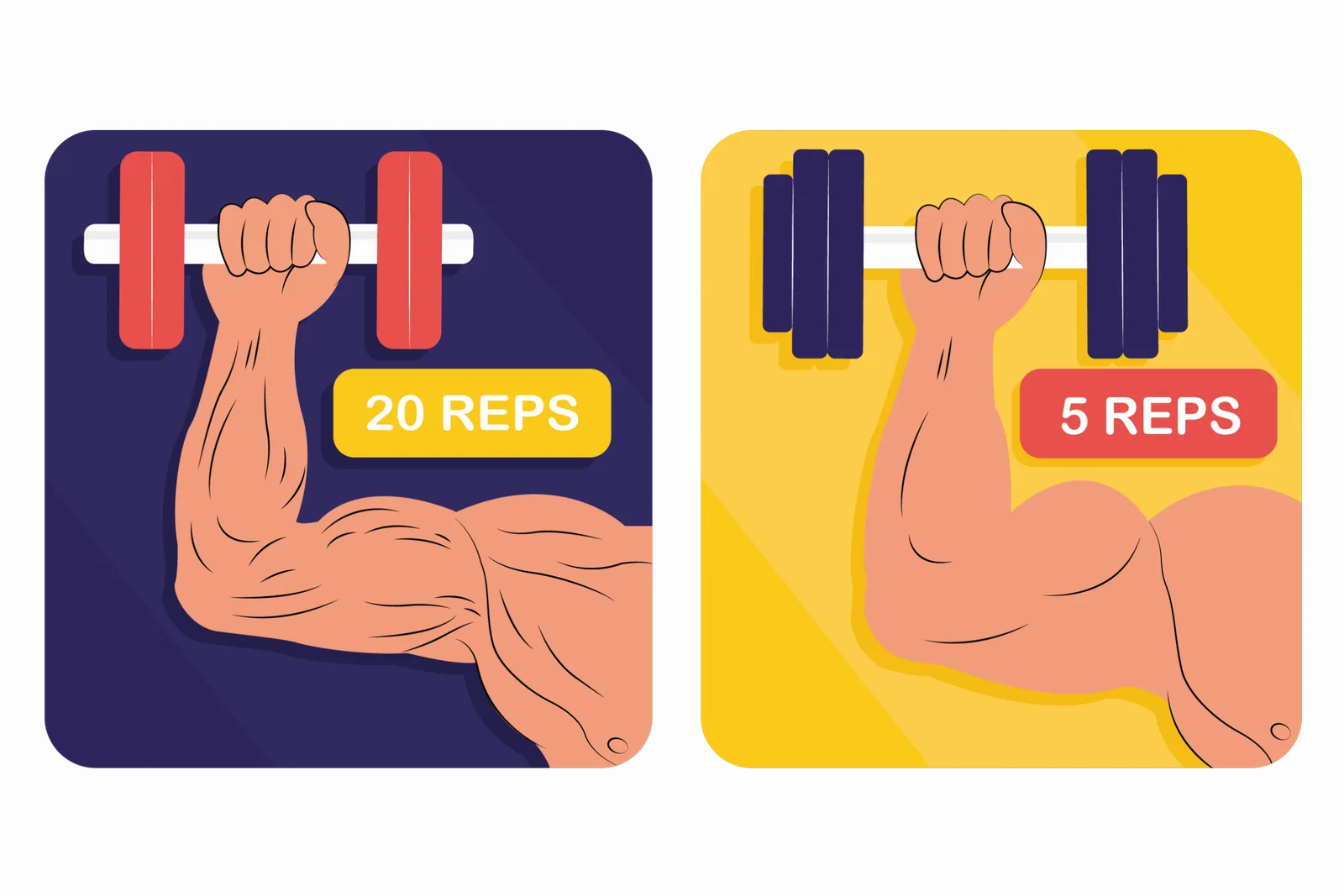
Repetition patterns in strength vs. endurance are not interchangeable. Exercise physiology is clear that the intensity and duration of effort determine which signaling pathways activate in muscle tissue, with sustained moderate efforts driving oxidative adaptations and heavy, low-rep efforts driving hypertrophic ones. High reps at moderate load train the muscle to resist fatigue. Low reps at heavy load train the muscle to produce peak force. The same exercise delivers a completely different outcome depending on which pattern you apply.
4. Physiological Adaptations - Mitochondria and Capillaries vs. Muscle Fiber Hypertrophy
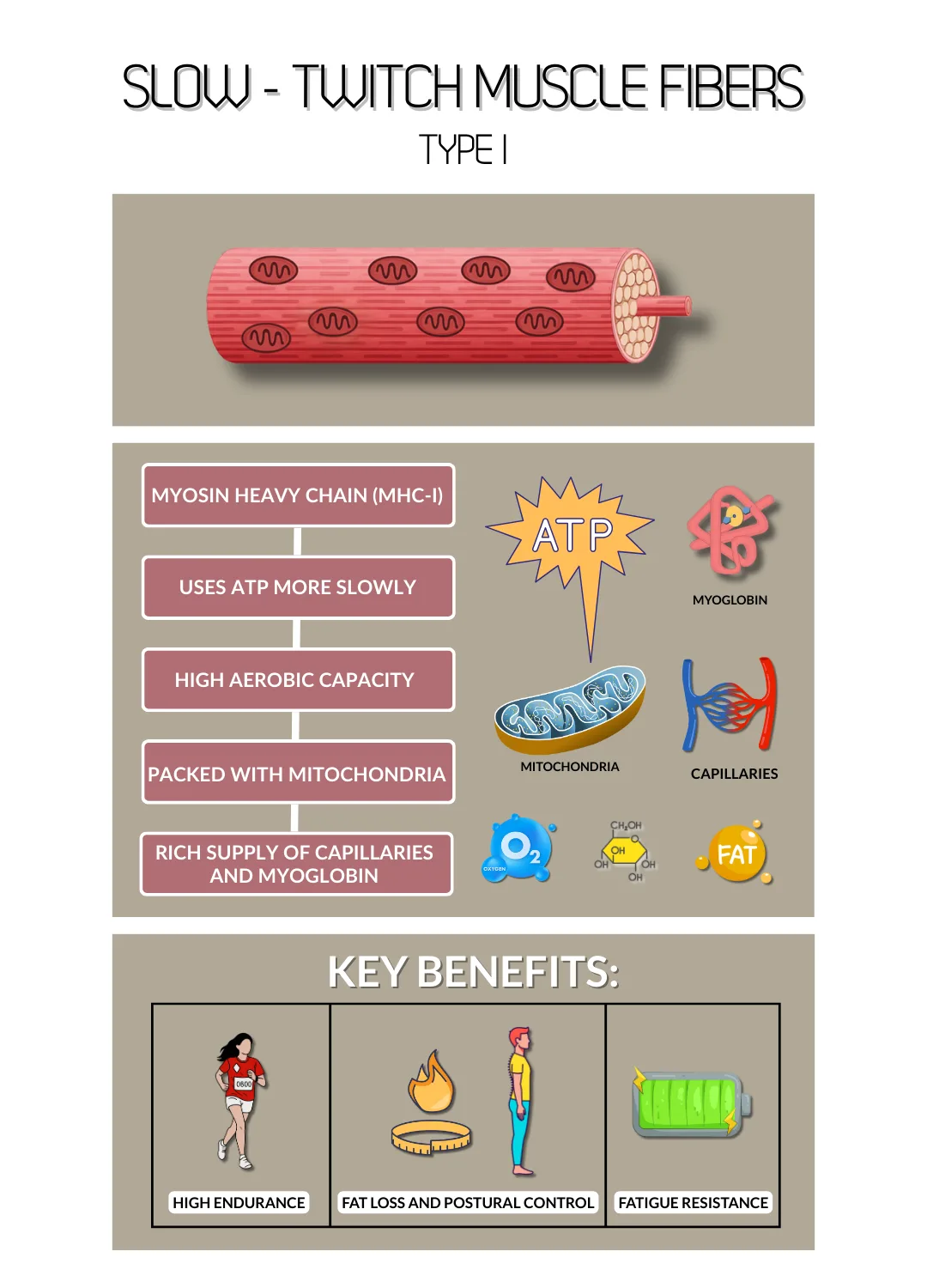
Endurance training drives mitochondrial biogenesis, increasing both the number and size of mitochondria within muscle cells so the body can oxidize fat and carbohydrates more efficiently with oxygen. Capillary density in skeletal muscle also rises, improving oxygen delivery to working tissue. Strength training produces a different result entirely: muscle fiber cross-sectional area increases through hypertrophy, and neuromuscular recruitment improves so more motor units fire on demand. Neither adaptation substitutes for the other.
5. Muscular Endurance Exercises - Bodyweight Squats, Lunges, and Planks as Accessible On-Ramps

Muscular endurance exercises like bodyweight squats, lunges, and planks sit between pure cardio and heavy lifting. They build the capacity to sustain repeated contractions without failure, which is the foundation that lets a beginner accumulate enough training volume to progress safely. They are the right starting point for anyone who has never trained consistently. The limitation is real: bodyweight work stops producing meaningful adaptation once it becomes easy, and many beginners stay there too long rather than adding load.
6. Light-Resistance Circuits - Combining Movements to Bridge Endurance and Strength Training
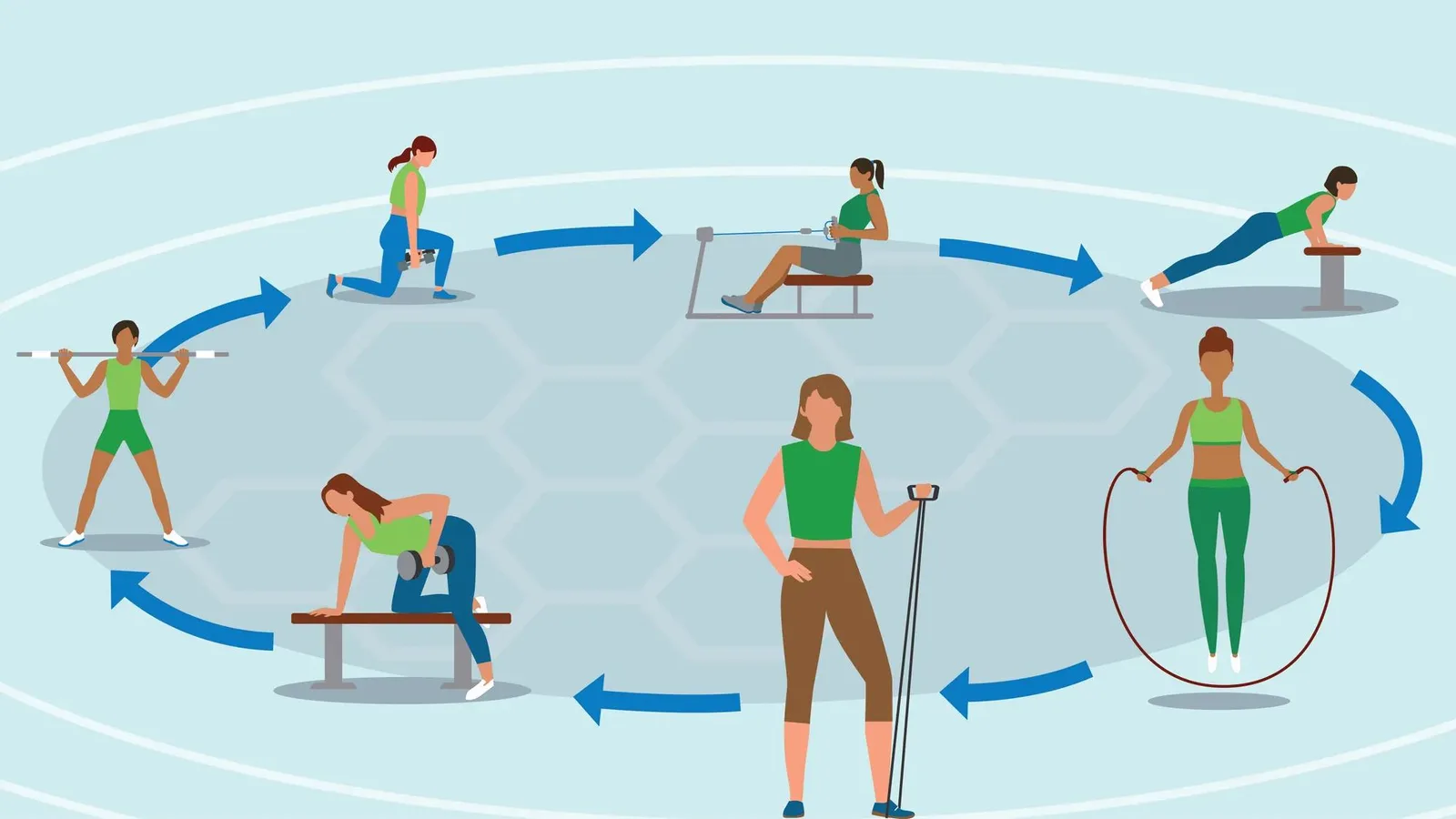
Light-resistance circuits string together multiple movements at moderate load and minimal rest, producing overlapping cardiovascular and muscular stimulus in a single session. Experienced coaches recognize that the endurance-vs-strength binary is a false choice, because the same exercise can produce overlapping adaptations depending on load, rep scheme, and recovery context. The real decision a beginner must make is how to sequence and accumulate stimulus across both without canceling out the gains of either.
Circuits are useful for beginners who need both stimuli before they are ready to specialize. The tradeoff is that they produce moderate adaptation in both directions rather than maximal adaptation in either.
Most beginners never get this far in the thinking. They pick an exercise, repeat it at whatever rep count feels comfortable, and wonder why nothing changes after six weeks. An AI fitness app like GetFit AI removes that guesswork by prescribing the exact exercise, rep range, load, and rest period matched to your stated goal from day one, so the biological signal your body receives on session one is already pointed in the right direction.
Quick-Reference: Which Training Type Fits Your Goal?
| Your Primary Goal | Recommended Modality | Starting Point |
|---|---|---|
| Lose fat / improve heart health | Endurance (aerobic) | 3×/week sustained cardio, 20-40 min |
| Build muscle / reshape body | Strength (resistance) | 3×/week compound lifts, 3-5 sets, 5-8 reps |
| Both (body recomp) | Concurrent training | Strength 2×/week + cardio 3×/week, sequenced |
| Build baseline fitness (total beginner) | Muscular endurance | Bodyweight circuits 3×/week before adding load |
| Athletic performance | Goal-specific plan | Match modality to sport demands |
Use this table to anchor your decision before diving into the benefits of each modality.
Benefits of Endurance and Strength Training: Your Body Needs Both to Deliver
Most people treat endurance and strength as competing priorities, training one at the expense of the other and wondering why progress stalls. The reality is that each fills a gap the other leaves open: cardiovascular fitness without muscular support hits a ceiling, and strength without aerobic capacity leaves performance and recovery on the table. Understanding what each mode actually delivers is the first step to training in a way that lets both work for you.
Those mechanical signals your body receives do not resolve instantly. They unfold across a recovery window most beginners never account for, and that window quietly decides whether strength training ever produces visible results.
What Endurance Training Actually Delivers
Endurance training’s core payoff is cardiovascular efficiency. According to industry research, a structured aerobic program measurably increases cardiac output and stroke volume, so your heart pumps more blood per beat at rest and during exercise. That translates to a lower resting heart rate, better fat oxidation during sustained effort, and the kind of mental stamina that carries over into every other area of life.
Because recovery demands are lower than strength training, industry research notes endurance work can be practiced daily without the same tissue-repair constraints. You can run Monday and run again Tuesday. The body handles it.
That said, aerobic capacity alone does not keep improving indefinitely. Beginners we work with regularly hit a frustrating ceiling: low resting heart rate, easy breathing at conversational pace, and yet race times stall or soft-tissue aches accumulate. The cardiovascular engine is ready; the muscular chassis has not kept up. Endurance training built the base, but without a complementary strength component it cannot finish the job.
Why Recovery Capacity Is the Real Variable
Recovery capacity is the silent bottleneck that determines whether either modality ever produces visible results. A beginner who alternates randomly between lifting and cardio, with no plan for sequencing, never accumulates enough consecutive stimulus in either pathway to trigger the six to eight weeks of adaptation required for measurable change. Every random switch resets the adaptation clock.
Recovery capacity, not training choice, is the silent bottleneck that determines whether either modality ever produces visible results.
The decline in youth endurance fitness over recent decades, with average mile-run times meaningfully slower than a generation ago, reflects exactly this pattern at scale: aerobic training gets deprioritized, deferred, or replaced at random, and the compounding benefit never arrives. Consistency within a structured window is what produces adaptation. Randomness consumes it.
The practical fix is simpler than it sounds. Three days of endurance work and two days of strength training in the same week is entirely feasible, because the recovery windows do not conflict when sessions are sequenced correctly. A beginner running Monday, Wednesday, and Friday while lifting Tuesday and Thursday captures the cardiovascular and metabolic benefits of both modalities without violating either recovery window.
1. Cardiovascular Efficiency and Fat Oxidation - The Core Payoff of Endurance Training
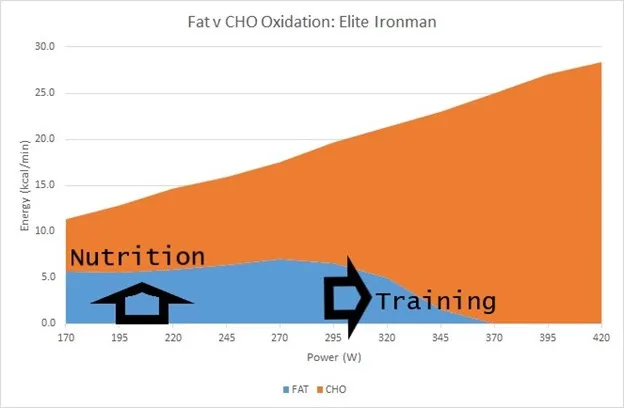
Endurance training’s headline benefit is a more efficient heart. That mechanical improvement lowers resting heart rate and, as industry research notes, shifts the body toward fat oxidation as its primary fuel during sustained effort. For a beginner, that means the same jog feels easier in eight weeks, and the body starts pulling from fat stores rather than burning through glycogen on every session.
2. Improved Stamina and Mental Health - The Underrated Long-Game Benefits of Endurance Work

Stamina compounds in ways the scale never shows. Sustained aerobic sessions trigger meaningful BDNF and endorphin release, the neurochemical combination responsible for reduced anxiety, sharper focus, and the mood lift runners describe as their real reason for lacing up. That mental resilience transfers directly into the weight room: athletes with a strong aerobic base recover faster between sets and sustain effort longer before form breaks down. The benefit is real, but it requires consistency over weeks, not a single long run.
3. Hypertrophy, Bone Density, and Metabolic Rate - What Strength Training Uniquely Delivers

Strength training delivers bone density, body-composition change, and peak force output. It also raises your resting metabolic rate, so you burn more calories at rest as muscle mass increases. The trade-off is real: industry research confirms that muscle fiber repair requires 48 to 72 hours of recovery between sessions targeting the same muscle group. Skip that window and you are not building; you are breaking down.
There is a second, less obvious problem that compounds this: fitness tracking tools like Garmin significantly underrepresent the training load of strength and lifting sessions, making it genuinely difficult for athletes combining both modalities to monitor their overall recovery and readiness accurately. A beginner’s watch may show a low “training load” after a heavy lower-body session simply because heart rate stayed moderate, leaving them thinking they are fresh when their quads are still in repair. GetFit AI’s Athlete-Style Custom Workout Plans account for that sequencing reality explicitly, building your strength days into the weekly structure so recovery windows are honored even when your wearable is not telling you the full story.
4. Functional Strength and Injury Resilience - The Protective Side of Resistance Training
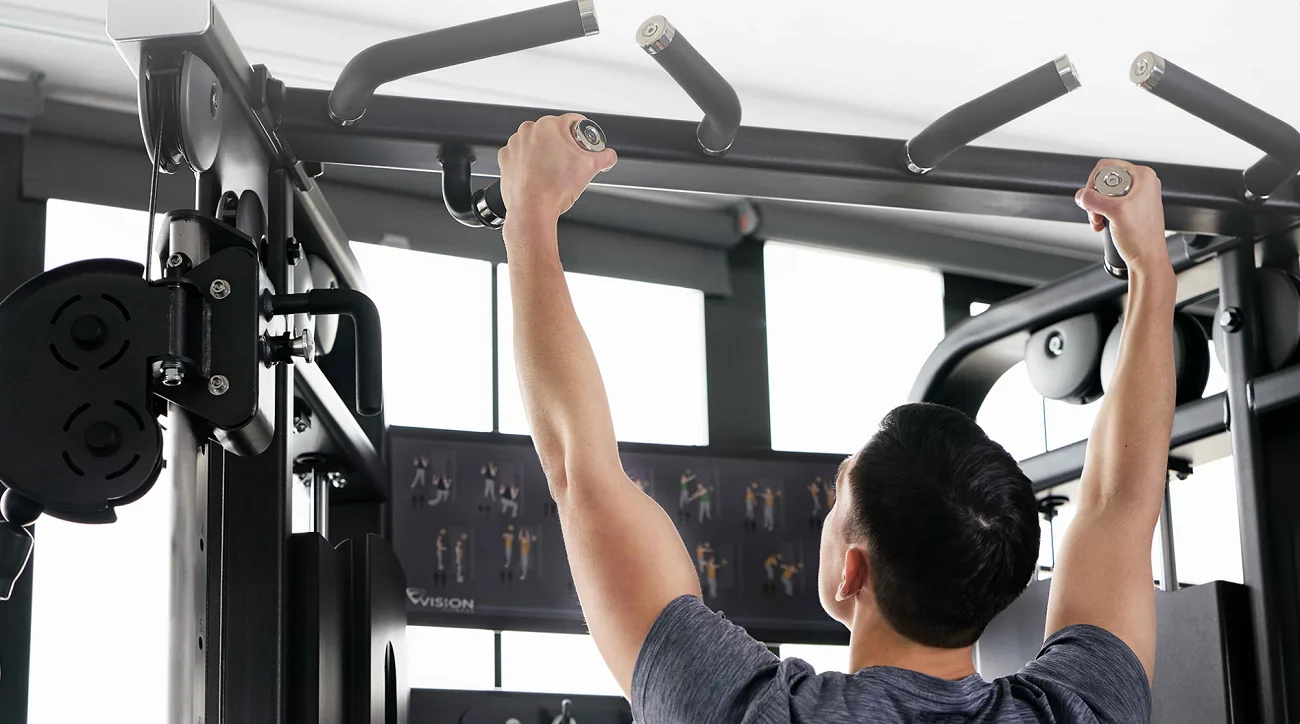
Strength training’s most underrated benefit is what it prevents. Runners who skip resistance work consistently develop muscle imbalances that produce lower back pain from weak glutes and recurring calf problems that no additional mileage resolves. Adding two strength sessions per week addresses those structural gaps directly, reinforcing the tendons, ligaments, and stabilizing muscles that pure cardio leaves underdeveloped. This benefit materializes most clearly for beginners logging consistent weekly mileage who hit a performance ceiling or start accumulating soft-tissue niggles rather than fitness gains.
5. Muscular Endurance - The Underrated Bridge Between Pure Cardio and Heavy Lifting
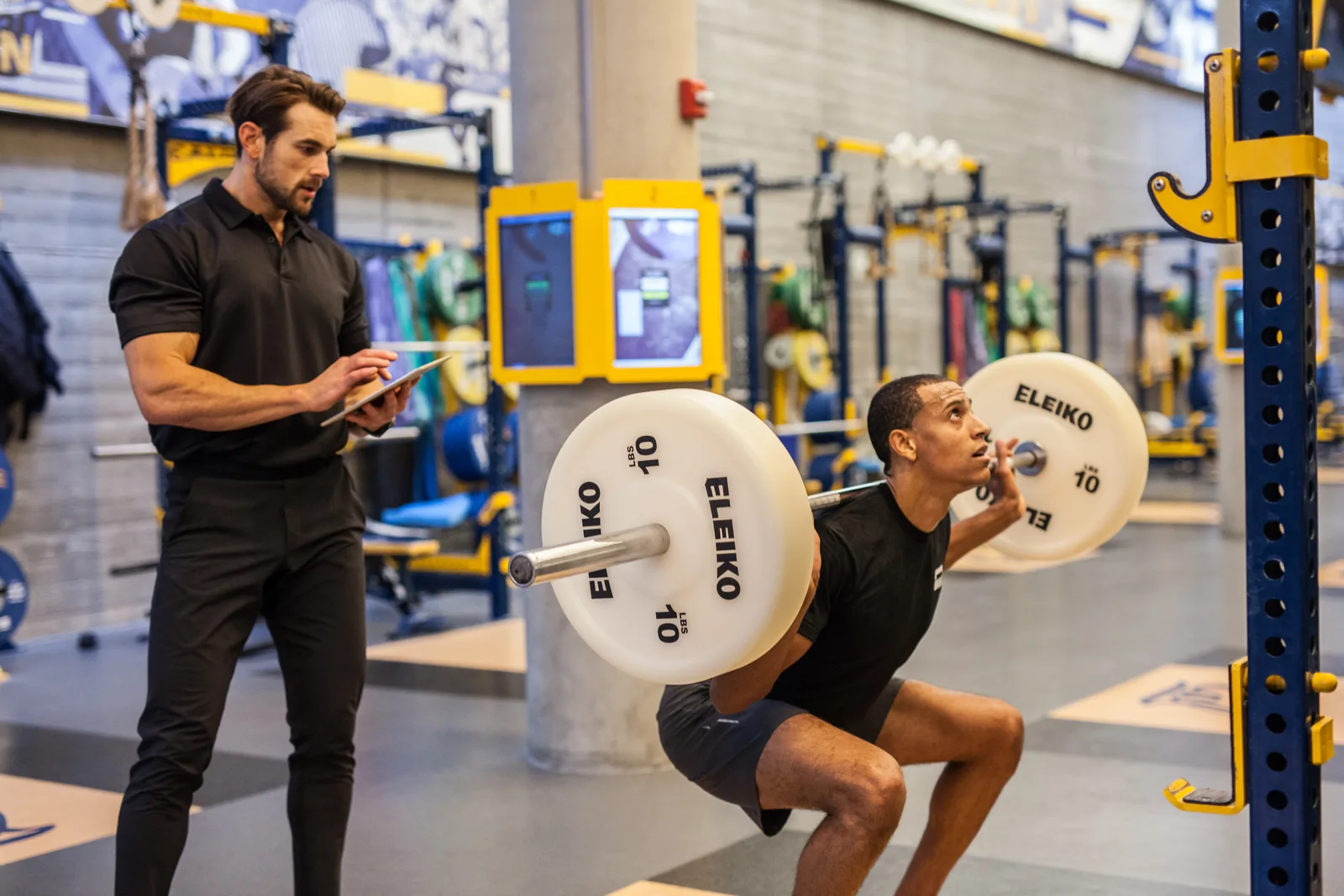
Muscular endurance sits between the two modalities and is often the first real-world fitness quality beginners actually need. It is the capacity to sustain repeated effort under load: holding a plank, completing a circuit of bodyweight squats, or finishing a hike without your legs giving out. Training it with higher-rep, lower-load resistance work, bodyweight squats, lunges, and light-resistance circuits builds both local muscle stamina and connective tissue resilience. It also makes the transition into heavier strength training safer, because the joints and stabilizers arrive prepared rather than shocked.
6. Balancing Endurance and Strength - Why Concurrent Training Beats Choosing One

Combining both modalities in the same week produces superior body-composition outcomes compared to either alone, a finding supported across multiple concurrent training meta-analyses. The sequencing logic is straightforward: because endurance training allows daily practice while strength training demands 48 to 72 hours of muscle repair according to industry research, a beginner can run Monday, Wednesday, and Friday while lifting Tuesday and Thursday without the recovery windows conflicting. The catch is that this only works with a plan.
Random alternation between the two resets the adaptation clock each time, which is exactly why a custom weekly training plan built around your recovery needs produces results that winging it never will. GetFit AI’s free workout routines let any beginner start structured concurrent training immediately, with Athlete-Style Custom Workout Plans available to adapt that structure as fitness and goals evolve.
Related Reading
- Athletic Performance Analysis
- Does Vaping Affect Athletic Performance
- How to Avoid Feeling Sleepy After Workout
- How Does Sleep Affect Athletic Performance
- How to Measure Athleticism
- Velocity Based Training
- Building Stamina and Endurance
- Why Am I So Bad at Sports
- Why Am I So Tired After Working Out
- How to Create a Personalized Workout Plan
What Energy Systems Each Training Type Uses and Why It Changes Everything
Endurance training runs on the aerobic energy system: oxygen breaks down fat and carbohydrates over sustained periods, and the body steadily improves its efficiency with every long run or cycling session. By contrast, the ATP/creatine phosphate pathway (the anaerobic system) delivers a sharp burst of energy lasting only a few seconds before it needs to recharge, mapping almost perfectly to a heavy squat set or a max-effort sprint. These two systems draw on different fuel reserves, and that distinction matters enormously for session order.
The anaerobic tank is finite. Running it down to 20 percent on a long treadmill warm-up and then asking it to power heavy compound lifts produces predictably weak results, yet this is exactly the sequence many beginners default to without recognising the cost.
A pattern GetFit AI beginners repeatedly encounter, especially those who have previously struggled with consistency due to lack of program structure, is squats that feel “weirdly weak” on days they ran first, without connecting the cause to their session order. Once that connection is made, the fix is straightforward.
Key takeaway: Lift before you run. Strength before endurance is the sequence that respects which energy system needs to fire at full capacity first.
Many beginners come to GetFit AI wanting to train the way the athletes they follow actually train, not a watered-down approximation, but a genuinely structured, athlete-style approach. GetFit AI’s Athlete-Style Custom Workout Plans are built precisely for that ambition. The session sequence is embedded into the custom plan from day one, delivered during each workout session and carried across the overall training program arc, so users follow the next exercise rather than recalling energy-system theory at 6 a.m. That built-in structure also extends to the social layer of the platform.
GetFit AI’s friends, challenges, and leaderboards are most beneficial when you have a friend or workout partner also using the platform, the social accountability layer that keeps users training past week three, precisely when the novelty of a new program typically fades. Starting at $1.99 per week (or $4.99 per month), the structured sequencing, athlete-style programming, and social accountability features are all included, so the science of energy-system order stops being theory and becomes the plan you actually follow.
How Skipping a Structured Plan Quietly Costs You Results in Both Modalities
“Without a structured plan, I don’t know what to do at the gym, which leads to skipped workouts and inconsistency, directly costing me training results.”
— what we hear from gym-goers / fitness beginners
Exercise science is clear on this point: the body reaches homeostasis the moment the training stimulus stops changing, so zero progressive overload produces zero new adaptation, regardless of which modality you chose, a principle confirmed across foundational strength-and-conditioning research.
Key takeaway: The failure point is effort repeated without progression. Once the body can handle a stimulus, it files it under “normal” and stops spending resources adapting to it.
GetFit AI’s Structured Training addresses this from the first workout session and across the overall training program arc, most meaningfully for anyone who has previously struggled with consistency precisely because no program structure existed to follow. GetFit AI’s progress analytics close this loop directly: when load, volume, and session history are tracked automatically, the pattern of stalled stimulus becomes visible before another month disappears into the same three machines.
The next section shows exactly how GetFit AI closes that gap, with a plan built in the style of the athlete whose results you actually want.
Related Reading
- How to Deal With Performance Anxiety in Sports
- Hydration Tips for Athletes
- How to Build Mental Toughness in Athletes
- Food for Athletes During Competition
- Strength Training Workout for Runners
- Best Plyometric Exercises for Speed
- Exercises That Improve Muscular Endurance
- Conditioning Workouts for Athletes
- Speed Training for Athletes
- Balance Exercises for Athletes
- Best Core Exercises for Athletes
How GetFit AI Builds Your Plan So You Stop Choosing Between Endurance and Strength
Knowing the difference between endurance and strength training closes zero execution gap. A beginner who can recite the definitions still walks into the gym not knowing today’s exercises, today’s sets, what weight to start with, or what to eat beforehand. The real bottleneck was never the vocabulary, and that is precisely the gap GetFit AI is built to close.

Two Routes to a Plan Built Around Your Goal or an Athlete’s Style
GetFit AI generates a custom workout plan through two distinct paths, and both remove the endurance-vs-strength decision entirely. The first path takes your goal, your current fitness level, and the equipment you have access to, and the AI fitness trainer builds a structured, progressive plan around those inputs, handling every variable that would otherwise stall a beginner before the first session. According to the P&S Intelligence Fitness Apps Market Report, personalization is now a primary growth driver in the fitness apps market, with users seeking apps that adapt to individual goals, fitness levels, and available equipment rather than offering one-size-fits-all programs.
The second path, Athlete-Style Custom Workout Plans, is built for users who already have a clear athletic role model and a specific physique or performance goal they’re working toward. If that describes you, choose a training style modeled on an athlete you admire, and the plan reflects how they train, adapted to your starting point.
Nutrition Built Into the Plan, Not a Separate Homework Assignment
Most plans stop at the workout and leave nutrition as a separate problem to solve. GetFit AI pairs each custom plan with integrated nutrition guidance calibrated to the training type, so the macro targets arrive with the plan rather than as a separate research project. The P&S Intelligence Fitness Apps Market Report notes that integrated multi-function apps combining workout planning, nutrition tracking, and real-time coaching are outpacing single-purpose competitors as users demand holistic solutions.
Midnight Questions and the AI Trainer That Answers Them
Static plans fail at 7 PM on a Tuesday when you are mid-set and unsure whether a substitute exercise is safe for your shoulder. Industry research confirms that AI-powered fitness applications remove the need for users to manually decide between training modalities by analyzing goal, fitness level, and equipment in real time. GetFit AI’s AI trainer chat extends that logic beyond plan generation: message it mid-workout, at midnight, or the morning before a session when the plan feels unclear. That real-time layer closes the gap that every static comparison article, and every fixed-library competitor, leaves open.
Next steps
If you have spent weeks reading endurance versus strength comparisons and still have no clear answer for what to do on Monday, the path forward starts with recognizing that the modality debate was never the real problem. As the section on progressive overload makes clear, a beginner without a structured plan defaults to repeating the same sessions indefinitely, regardless of which training type they picked, which is why the comparison articles keep failing them. Start with our AI fitness app.
Recovery capacity is the silent bottleneck that determines whether either modality ever produces visible results. Strength training requires 48 to 72 hours of tissue repair between sessions, while endurance work can be practiced daily, meaning random alternation between the two resets the adaptation clock before either pathway has time to produce measurable change. At the same time, understanding which energy system a workout uses determines session order, and doing cardio before lifting is a direct tax on the strength gains you came for. Together, these two realities point to the same answer: a structured plan that sequences sessions correctly and tracks progressive overload automatically, so the biology works in your favor from the first workout.
Start with GetFit to generate a goal-specific plan at setup. From there, the app sequences your strength and endurance sessions around your recovery windows, tracks progressive overload automatically, and answers training questions in real time so confusion never sends you back to the comparison loop.
Frequently Asked Questions
What is muscular endurance, and is it the same as strength?
Muscular endurance is the capacity to sustain repeated muscle contractions without failure, and it is not the same as strength. As the post notes, muscular endurance does not equal strength; the two adaptations happen through entirely separate biological pathways, with high-rep moderate-load work training muscles to resist fatigue and heavy low-rep work training them to produce peak force.
Should I do more reps with lighter weight or fewer reps with heavier weight?
It depends entirely on your goal. High reps at moderate load train the muscle to resist fatigue, which is the endurance signal, while low reps at heavy load train the muscle to produce peak force, which is the strength signal. The same exercise delivers a completely different outcome depending on which rep pattern you apply, so picking one without a goal attached to it is the core mistake most beginners make.
Can I train for strength and endurance at the same time, or will they cancel each other out?
You can pursue both, but only with a clear priority order and proper sequencing built into your schedule. Without structure, random alternation means neither gets the stimulus it needs, and toggling between modalities before the 6-to-8-week adaptation window closes resets the clock in both directions, killing muscle gains and endurance improvements at once.
What are some examples of muscular endurance exercises I can start with?
Bodyweight squats, lunges, and planks are the clearest examples in the post. They build the capacity to sustain repeated contractions without failure and are the right starting point for anyone who has never trained consistently, though the post does note that bodyweight work stops producing meaningful adaptation once it becomes easy, so adding load eventually becomes necessary.
How important is nutrition when deciding between endurance and strength training?
Nutrition compounds the same goal-vs-plan gap that derails beginners in their training. Whether the target is putting on size or leaning out, the guidance needs to be goal-specific rather than generic, and doing the math on macros every day creates enough friction to kill the habit entirely, making matched nutrition tracking a critical part of turning a stated goal into a measurable outcome.