8 Ways How Does Sports Psychology Help Athletes Perform

Your body quits last. Learn the mental skills sports psychology has always trained, and why beginners need them most before confidence collapses at week three.
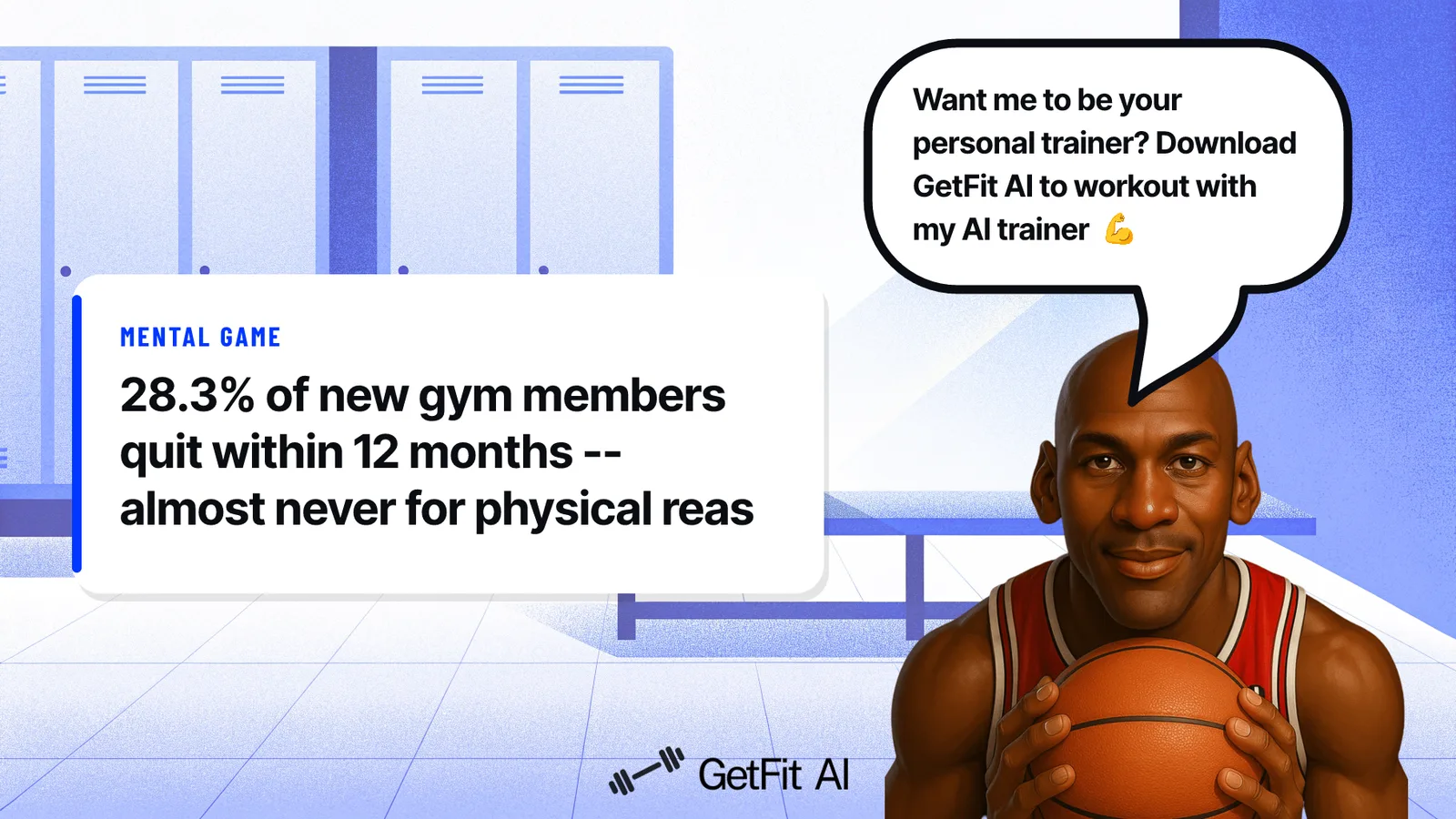
A significant share of new gym members quit within the first few months, according to fitness industry research. In one study tracking new gym members, 28.3% had dropped out by the 12-month mark, with dropout rates climbing steadily after the initial months. That number rarely surprises anyone who has lived it.
What surprises people is the reason: it is almost never physical. The legs could handle more. The schedule had room.
What collapsed first was the mental side, and most beginners never had a framework for that to begin with. The common assumption among beginner lifters, especially those in their mid-to-late twenties with no structured plan and no clear idea of what to eat, is that the mental struggle of training without a plan is just a confidence issue they will grow out of once they get more experience in the gym. See our AI fitness app for how this works in practice.
If you have ever walked into a gym with no real plan and felt that quiet, creeping sense of “what am I even doing here,” you already understand the problem sports psychology was built to solve. An AI fitness app can hand you structure before that spiral starts, but understanding the science behind the mental game is where the real shift begins.
The core mental skills sports psychology teaches are focus, confidence, stress regulation, and goal-setting. According to the Association for Applied Sport Psychology (AASP), applied sport psychology is the study and application of psychological principles to sport and exercise, with the goal of helping people understand how mental factors affect physical performance and how physical activity shapes psychological well-being. The critical word in that definition is trainable. The AASP is explicit: these are learnable competencies, not fixed personality traits you either have or do not.
That reframe matters enormously. Self-doubt before a heavy set is a skill gap, the same way poor squat depth is a skill gap. Both respond to deliberate practice.
Losing focus mid-workout is another skill gap. The AASP confirms that sports psychology principles apply to exercisers at every level, including complete beginners.
The mental challenges it addresses, self-doubt, lack of direction, and performance anxiety, are most intense at the very start of a fitness journey, when there is no coach, no feedback loop, and no visible progress to anchor confidence. Confusion hardens into avoidance. Avoidance becomes a cancelled membership.
The mental spiral does not wait for you to feel ready.
Key takeaways
- Sports psychology isn't reserved for Olympians, the same mental tools that keep elite athletes focused under pressure are what determine whether a beginner survives their first month at the gym.
- 28% of new gym members drop out before the 12-month mark, and the dropout curve steepens fast, most quit in weeks, not months, and the reason is almost never physical.
- The mental spiral that kills a training habit starts before the first rep: walking in with no plan triggers the exact anxiety, avoidance, and self-doubt that sports psychology exists to fix.
- Visualization, self-talk, and focus cues are proven performance tools, but without a structured program to run them against, they produce nothing except a more self-aware version of wandering between machines.
- A sports psychologist and a coach solve different problems: coaches fix movement; sports psychologists fix the mental blocks that stop you from executing movement when it counts.
- Psychological interventions produce measurable athletic performance gains, per a 2023 systematic review and meta-analysis, the beginner fighting gym anxiety is already inside that data set.
- GetFit AI closes the structure gap directly: custom workout plans built in your favorite athlete's style, plus anytime access to an AI trainer, so the mental tools have something real to lock onto from day one.
Why Training Without Mental Tools Keeps You Stuck at the Same Three Machines
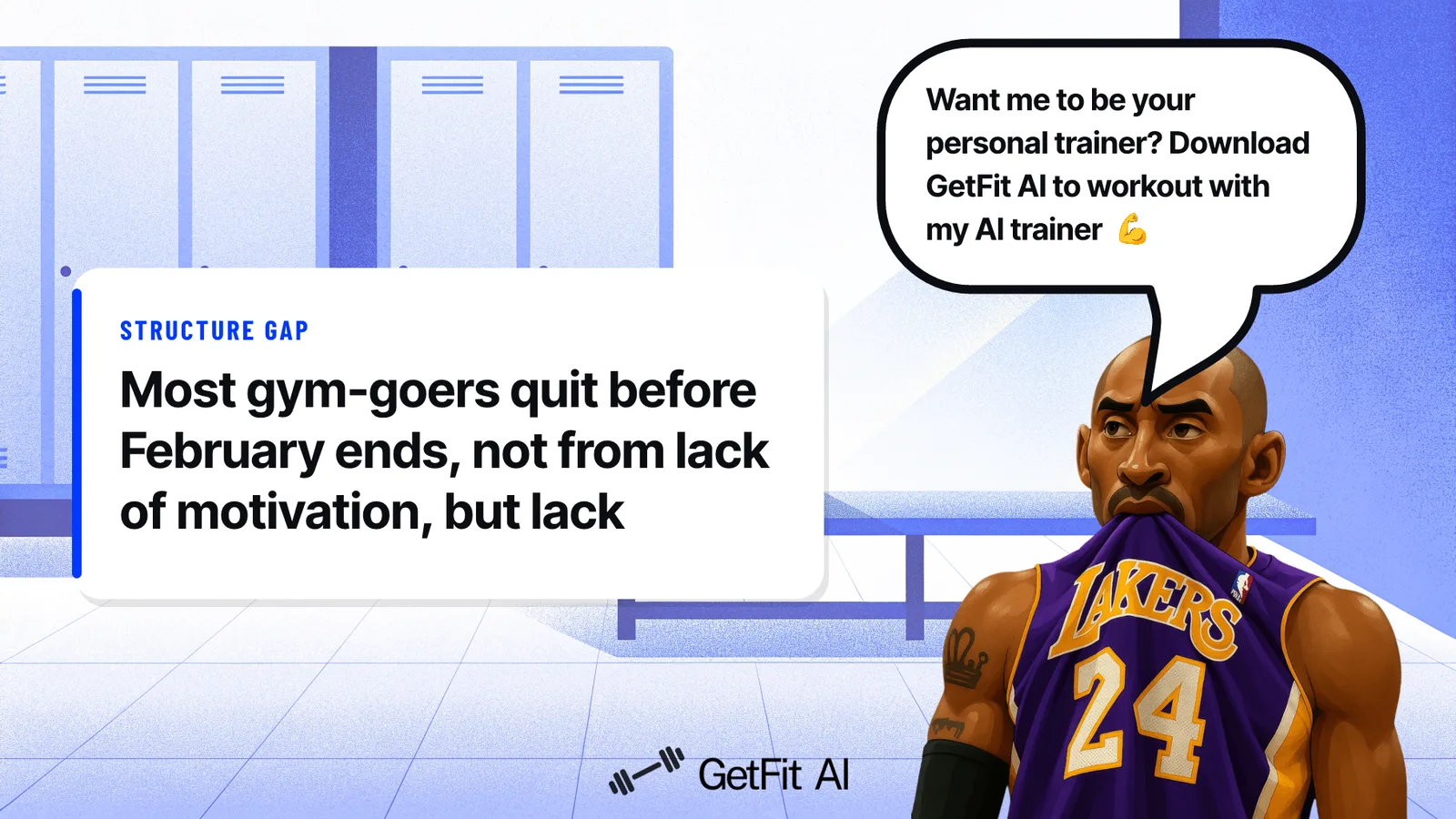
Walk into any gym in the first week of February and you will notice something: it is quieter than January, not because people got what they wanted, but because the majority of gym-goers abandon their routines before February ends, weeks after starting, not months. Rail Stop Fitness documents that pattern repeating every single year, which means motivation is not the missing ingredient, structure is.
The three friction points below are where that structure breaks down, and where GetFit AI is built to intervene.
Decision Paralysis Before You Touch a Single Weight
Research on decision fatigue shows that the cognitive cost of repeated, unstructured choices degrades performance and narrows the options a person is willing to consider, and for many gym-goers that cost is paid before a single rep begins.
This is precisely the gap GetFit AI’s Structured Training is designed to close. From the very first workout session, the app removes the cascade of micro-decisions by delivering a clear, sequenced plan, exercise, order, sets, and intent, before the user reaches the gym floor, so mental energy is preserved for the work itself.
The Mid-Workout Spiral From Confusion to Early Exit
When the machine you planned to use next is taken and no backup plan exists, that moment of confusion triggers what sports psychology literature calls arousal dysregulation: uncertainty spikes stress beyond the level where performance is possible, and avoidance becomes the only exit. Rail Stop Fitness identifies this spiral, confusion becoming self-consciousness, self-consciousness becoming the urge to leave, leaving becoming the habit, as one of the core mechanics behind early dropout.
GetFit AI’s Athlete-Style Custom Workout Plans address this directly. Guidance runs during each workout session and across the overall training program arc, so when a piece of equipment is unavailable the user is never left standing still making an anxious judgment call.
Invisible Progress and the Confidence It Quietly Destroys
Self-efficacy research is consistent: when people perceive no measurable progress, belief in their own ability drops and dropout follows. NHS Strength Athletics notes that real physical adaptation takes weeks to become visible, but the psychological cost of feeling stuck can arrive well before then. The gap between invisible physiological adaptation and visible results is where confidence collapses fastest. Rail Stop Fitness reinforces this, noting that without a framework that tracks effort and reframes invisible progress as evidence of work rather than proof of failure, confidence erodes on schedule.
Two reinforcing layers inside GetFit AI are built to hold users through that window. The first is progress tracking that surfaces effort metrics immediately, giving users concrete evidence of work done before the mirror reflects any change.
Second, and this is the retention layer that keeps users training past week three, GetFit AI’s friends, challenges, and leaderboards introduce social accountability that external willpower alone cannot replicate. The feature is most powerful once a user has connected with at least one friend in the app, and most beneficial when a workout partner is also using GetFit AI, because shared progress visible to both parties transforms an invisible personal struggle into a shared, trackable effort.
Decision paralysis, mid-workout confusion, and invisible progress are not personal failures. They are the exact friction points sports psychology was designed to eliminate, and the exact friction points GetFit AI’s Structured Training, Athlete-Style Custom Workout Plans, and social accountability layer are built to remove, starting from the very first session. Access to all three begins at $1.99 per week on the Premium Weekly plan, $4.99 per month on Premium Monthly, or $49.99 per year on Premium Yearly.
Related Reading
- Why Am I Not Getting Faster at Running
- Does Masturbation Affect Athletic Performance
- Biomechanics in Sports
- Why is Protein Important for Athletes
- What is Speed and Agility Training
- How to Be a Better Athlete
- Why is Hydration Important for Athletes
- Why Do Athletes Train at High Altitudes
- Why Do Athletes Stretch Before a Game?
- IV Therapy for Athletic Performance and Recovery
- Yoga and Athletic Performance
- Red Light Therapy for Athletic Performance
8 Ways Sports Psychology Helps Athletes Perform Better Mentally and Physically
Psychological interventions produce measurable, real-world improvements in athletic performance, according to a systematic review and meta-analysis published in September 2023 by Gustaf Reinebo. That finding matters for more than elite competitors. The beginner who walks into a gym with no plan is already living inside a sports psychology problem: attention scattered across every machine in the room, anxiety spiking at the first confused moment, confidence eroding before a single set is finished. The tools below are the structure that makes showing up actually work.
One clarification before the list: pushing through mental discomfort without a framework builds a tolerance for underperformance. The same dropout cycle repeats year after year because more gym time without cognitive structure does not self-correct the psychological friction. It compounds it. These eight mechanisms, drawn from the evidence base that Certified Mental Performance Consultants (CMPCs) and the American Psychological Association (APA) recognize as core sports psychology practice, are what break that loop.
Pushing through mental discomfort without a framework does not build resilience. It builds a tolerance for underperformance.
1. Attention-Control Training - Blocking Distractions to Stay Present

Focus and concentration improvement is the foundation every other mental skill rests on. Attention-control training teaches athletes to direct awareness toward task-relevant cues and filter out everything else, whether that is crowd noise in a stadium or the uncertainty of standing in a gym with no idea what to do next. For beginners, scattered attention is a predictable outcome of entering an environment without a clear anchor. A structured session plan gives attention something concrete to lock onto, which is why aimless training sessions feel mentally exhausting even when the physical load is low. The limitation: attention-control skills take deliberate repetition to build and do not transfer automatically from one context to another.
2. Arousal Regulation and Pre-Performance Routines - Taming Competition Anxiety
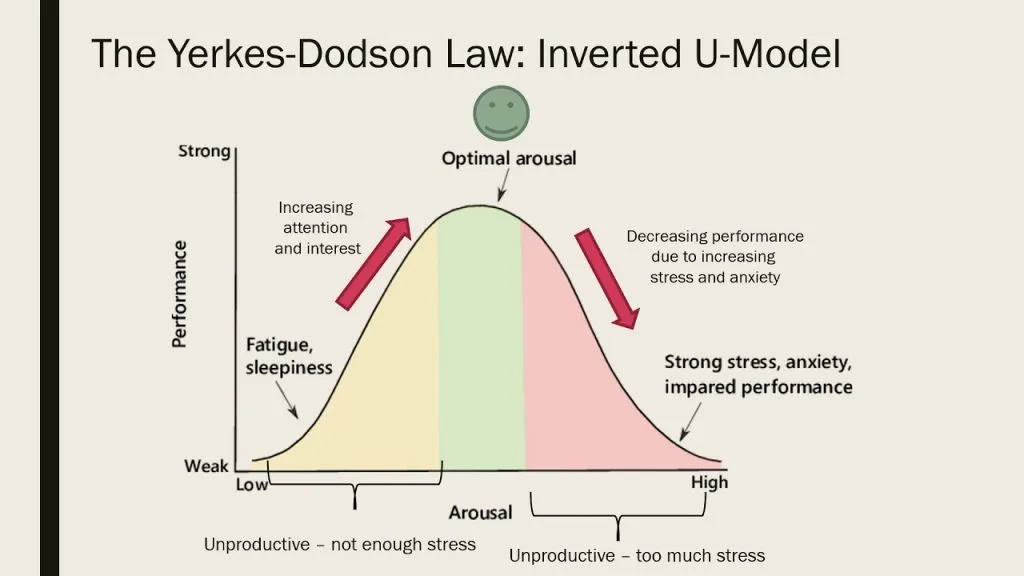
Sports psychology helps athletes manage performance anxiety through diaphragmatic breathing protocols and pre-performance routines that shift the nervous system out of threat mode before competition or training begins. Arousal regulation is one of the core techniques applied systematically to improve performance in both training and competition contexts. For a beginner, the practical version is a two-minute breathing routine before the first set: slow exhale, deliberate focus, cortisol pulled down before the session starts. The honest caveat is that a pre-performance routine only anchors to something useful when there is an actual session structure to execute. Without a plan, the routine has nowhere to land.
3. Self-Talk Restructuring - Building Genuine Confidence From the Inside Out
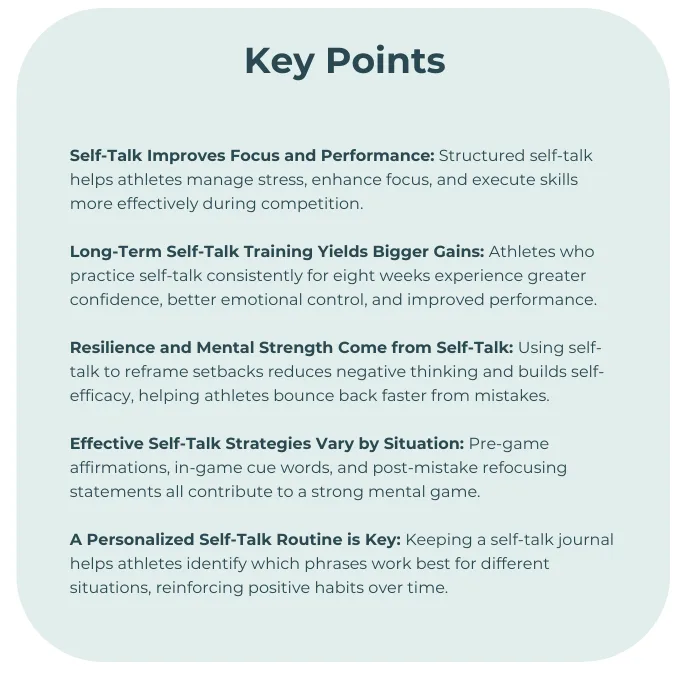
A peer-reviewed meta-analysis on self-talk interventions found that evidence-based self-talk scripts improve both performance outcomes and self-efficacy scores, making this one of the most accessible tools a CMPC deploys. The mechanism is straightforward: the internal commentary running during training either reinforces capability or erodes it. Restructuring that commentary from “I have no idea what I’m doing” to a specific process cue (“tight core, controlled descent”) shifts cognitive load away from self-judgment and toward execution.
Confidence and mental resilience building through self-talk works by replacing vague anxiety with precise instruction. The trade-off is that generic affirmations produce weak results. Effective self-talk is task-specific, which means it requires knowing what the task actually is.
4. Mental Imagery and Visualization - Rehearsing Success Before You Compete
Mental imagery activates the same motor neural pathways as physical practice, as documented in the research literature. A lifter who mentally rehearses the entire squat set, bar path, breath timing, depth, and lockout, before unracking the bar is using the same technique Olympic weightlifters apply pre-lift. The neural rehearsal reduces execution error and builds movement confidence before the body is under load.
Visualization techniques are most effective when the imagery is vivid and first-person, not a passive mental movie watched from the outside. The limitation worth naming: imagery without a clear picture of correct technique reinforces bad patterns just as efficiently as it reinforces good ones. Quality of the mental model matters as much as the practice itself.
5. Process, Performance, and Outcome Goal Frameworks - Giving Every Session a Purpose
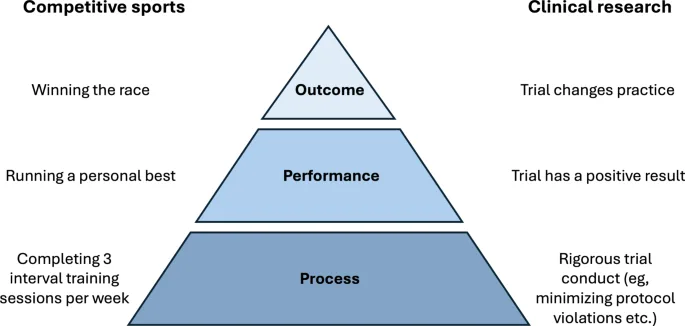
Goal-setting strategies in sports psychology distinguish between three goal types: outcome goals (win the race), performance goals (run a personal best), and process goals (maintain cadence through the final 400 meters). The research consensus, reflected in Beckmann and Elbe’s framework, is that process goals produce the most reliable day-to-day performance gains because they are within the athlete’s control. For a beginner, this translates directly: “I want to get stronger” is an outcome goal with no daily anchor.
“Add 2.5 lbs to the squat every session for six weeks” is a performance goal that makes each gym visit measurable. Without this structure, effort accumulates without direction, which is why athletes who train consistently for months can find themselves making little measurable progress despite showing up.
6. Cognitive Reframing Under Pressure - Turning Threat Into Activation
Cognitive reframing is how sports psychology helps athletes perform under pressure: the physiological symptoms of anxiety (elevated heart rate, shallow breathing, muscle tension) are identical to the symptoms of energized readiness. The difference is interpretation. Beckmann and Elbe (2015) identify pre-competition routines and cognitive reframing as established interventions that help athletes read competitive pressure as activation rather than threat.
For a gym-goer, the equivalent moment is mid-workout confusion: a machine is taken, an exercise feels unfamiliar, or form breaks down with nobody to ask. Without a reframing tool, that moment becomes avoidance. With one, it becomes a problem to solve.
The caveat: reframing is a skill that requires practice under low-stakes conditions before it holds under real pressure.
7. Injury Recovery Psychology - Addressing the Mental Dimensions of Physical Setbacks
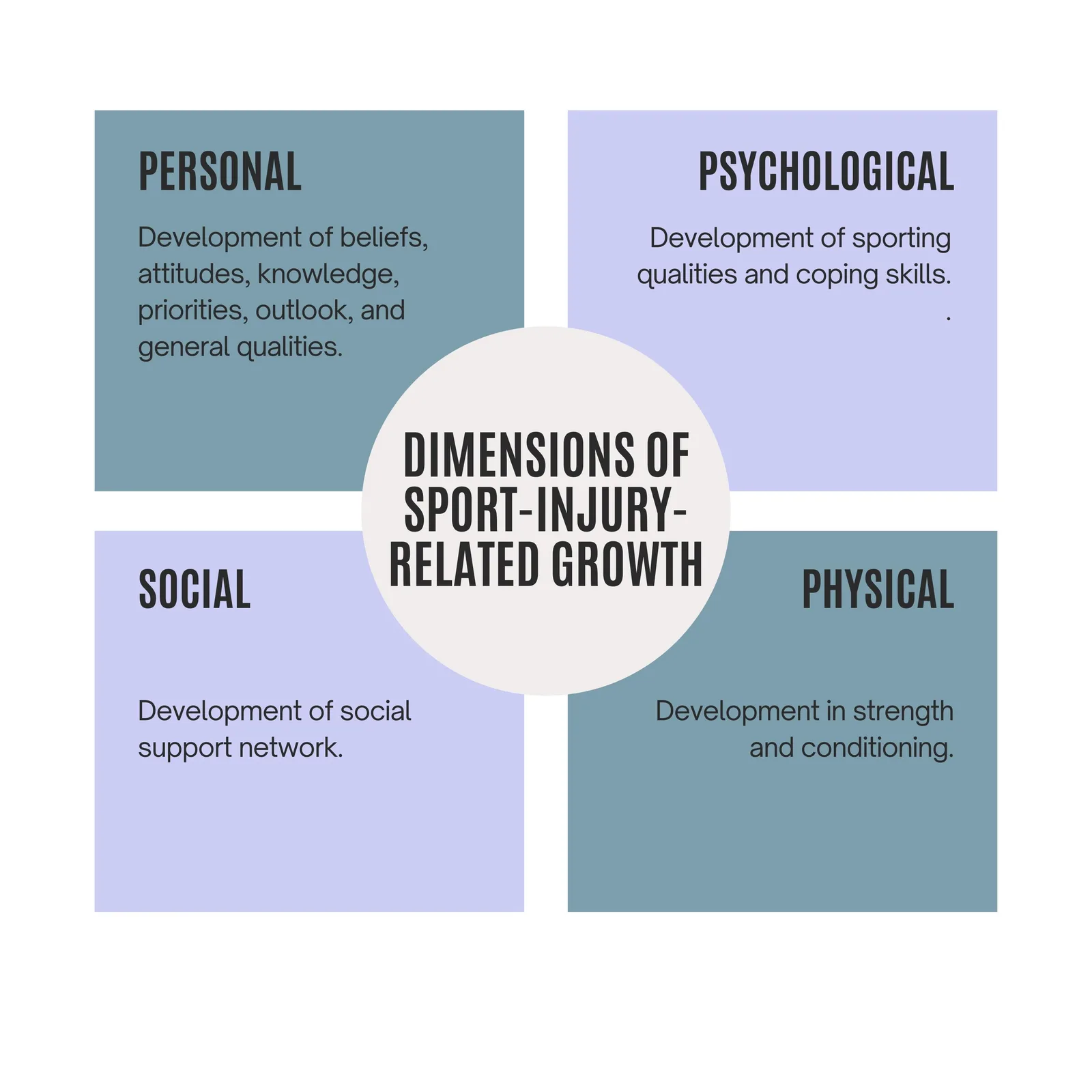
Resilience and injury recovery involve more than physical rehabilitation. Sports psychology addresses the fear of re-injury, grief responses to lost training time, and the mental block of returning to load a joint that was previously hurt, recognizing these psychological barriers as equally significant as the physical ones. An athlete cleared by a physio but still hesitant to load the knee is facing a real psychological barrier, not a motivation problem.
Graduated exposure and positive imagery rebuild trust in the body before return to full training. Anyone who has trained through an injury knows the mental block often outlasts the physical one by weeks. The honest limitation: psychological support during rehab works best when coordinated with the physical rehabilitation plan, not applied independently.
8. Team Cohesion and Communication Training - Strengthening the Collective Mental Game
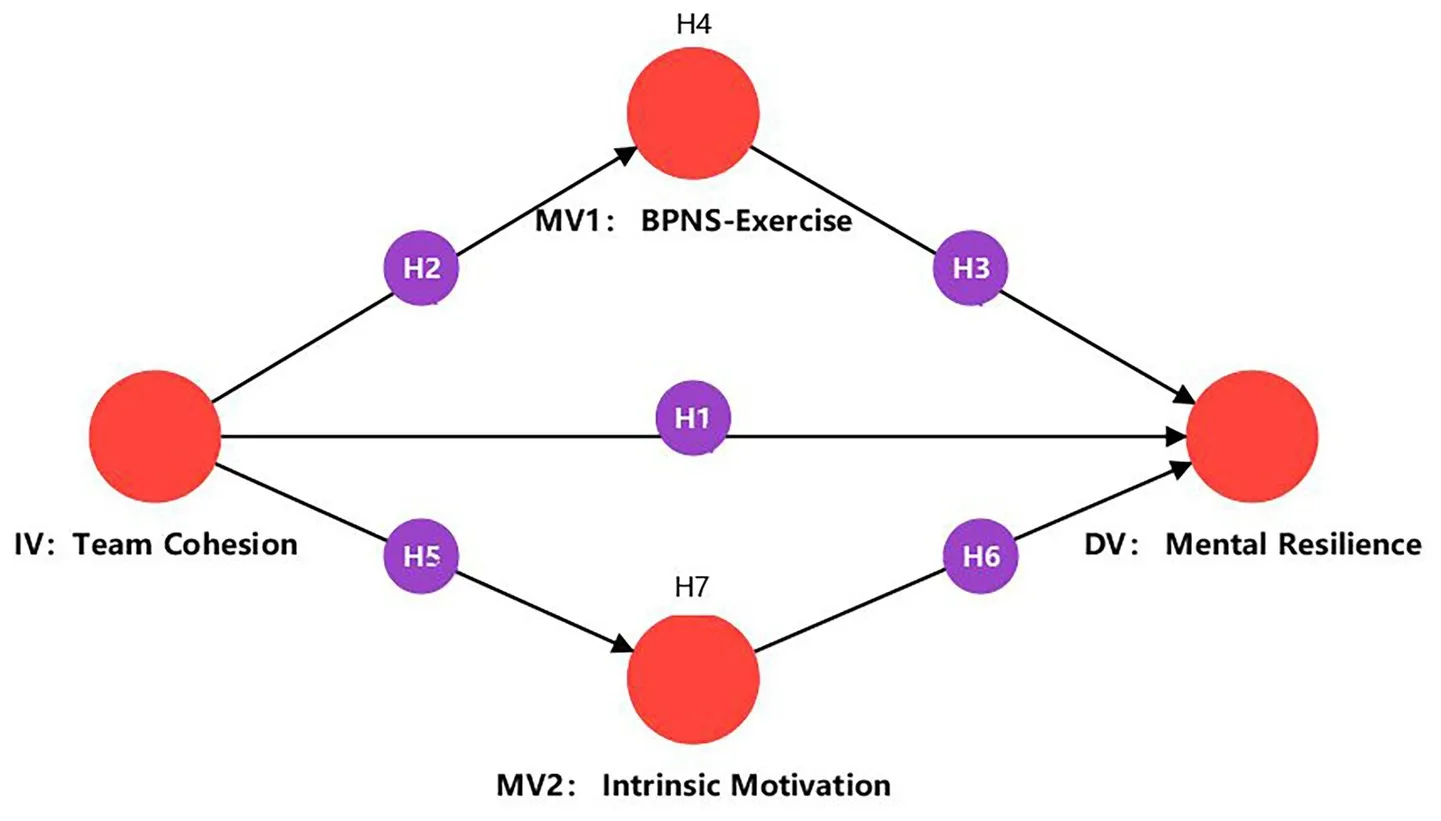
Team cohesion and dynamics represent the eighth mechanism, and the one most often dismissed as irrelevant by solo gym-goers. The research base, documented across sport psychological interventions, shows that shared goals, clear communication norms, and mutual accountability produce performance gains that individual mental skills alone cannot replicate. For someone training alone, the practical translation is accountability structure: a training partner, a shared program, or a competitive element that makes consistency socially reinforced rather than purely self-generated. The friction point most beginners hit around week three is the absence of anyone who notices whether they showed up. Cohesion training in a team context and social accountability in an individual context solve the same underlying problem.
Most beginners never get access to a CMPC or a structured coach, so they white-knuckle through the focus failures, anxiety spirals, and aimless sessions that these eight tools were designed to solve. An AI fitness app like GetFit AI bridges part of that gap by giving every user a custom athlete-style training plan that eliminates the aimless wandering that is the beginner’s primary attention and confidence killer, plus an always-on AI trainer to answer the mid-workout questions that, left unanswered, are the exact moment the mental spiral begins.
The plan gives visualization and goal-setting an anchor. The AI trainer gives cognitive reframing a prompt. Neither replaces a CMPC, and that trade-off is worth naming plainly: structured digital tools address the environmental and informational causes of mental friction, but the deeper psychological work of injury recovery, performance anxiety, and identity-level confidence still benefits from a trained human specialist.
These eight tools represent what the science says works. But knowing the tools exist and knowing who delivers them are two different things. That distinction matters for any athlete serious about performance, and it is exactly where the next section picks up: the difference between a coach who manages your body and a sports psychologist who manages what your body is up against.
Related Reading
- Athletic Performance Analysis
- Does Vaping Affect Athletic Performance
- How to Avoid Feeling Sleepy After Workout
- How Does Sleep Affect Athletic Performance
- How to Measure Athleticism
- Velocity Based Training
- Building Stamina and Endurance
- Why Am I So Bad at Sports
- Endurance vs Strength Training
- Why Am I So Tired After Working Out
- How to Create a Personalized Workout Plan
How a Sports Psychologist Differs from a Coach in Improving Performance
A coach tells you to keep your chest up on a squat. A sports psychologist helps you stop catastrophizing when the weight feels heavy and you’re convinced you’re about to fail the rep. Each role is distinct, and that distinction matters.
Coaches Fix the Output; Sports Psychologists Fix What Blocks It
The two roles divide the work cleanly. The coach owns technique, tactics, and physical load: what you do, how you do it, and how much. The Certified Mental Performance Consultant (CMPC), the credentialed standard for mental performance consultants, owns something the coach was never trained to touch: the internal barriers that stop an athlete from executing what the coach already taught them.
That division reflects a well-documented gap. What most practitioners in the field consistently report is that most coaches consider psychological skills critical to performance yet spend almost no deliberate practice time on them. That is not a criticism of coaches. It reflects how the roles were designed.
That boundary also creates real anxieties that beginners and athletes quietly carry. When a sports psychologist is employed by a team or organization, athletes often worry, with good reason, that their private conversations could be reported back to a coach, or that the psychologist’s loyalty belongs to management rather than the player. Even when those fears are unfounded, they are enough to keep an athlete from being honest in the room where honesty matters most.
The separation of roles that should protect athletes can feel like a trap.
Both professionals are typically absent from the moment of performance itself, the set, the rep, the instant of doubt. Expertise and credentials simply do not grant access to the moment that matters most.
The Double Gap for Solo Gym-Goers
The solo beginner has neither role covered. No coach means no structured physical plan, so the session defaults to whatever feels familiar. No mental performance support means the first wave of self-doubt often ends the workout entirely.
Across the broader fitness landscape, psychological factors are the primary variable driving day-to-day performance swings, yet the average gym-goer has no deliberate mental framework at all. GetFit AI is designed to close both gaps simultaneously, and to do it from the very first workout session.
The coaching gap is addressed through Athlete-Style Custom Workout Plans: structured programs built around a specific physique or performance goal, most powerful when you have a clear athletic role model in mind and know what outcome you are training toward. The plan replaces the guesswork that fills most beginner sessions.
The mental performance gap is addressed through an always-on AI trainer chat that provides in-session guidance across each workout and across the overall training arc. It is available at the exact moment doubt appears, not scheduled for a later appointment. Without that kind of real-time support, a beginner’s session often ends the moment something feels uncertain.
Both capabilities are available from day one, starting at $1.99 per week on the Premium Weekly plan, $4.99 per month on the Premium Monthly plan, or $49.99 per year on the Premium Yearly plan, so the structural support that used to require two separate professionals is accessible at the start of your first session, not reserved for athletes with dedicated coaching staff.
Related Reading
- How to Deal With Performance Anxiety in Sports
- Hydration Tips for Athletes
- How to Build Mental Toughness in Athletes
- Food for Athletes During Competition
- Strength Training Workout for Runners
- Best Plyometric Exercises for Speed
- Exercises That Improve Muscular Endurance
- Conditioning Workouts for Athletes
- Speed Training for Athletes
- Balance Exercises for Athletes
- Best Core Exercises for Athletes
How to Apply Sports Psychology Mental Tools to Your Own Training Starting Today
Three tools. Two minutes. Use them starting today.
Most beginners hear about visualization and self-talk and want to apply them immediately. The mental tools collapse the moment they walk in with no program to execute them against. Visualization without a plan is daydreaming. Self-talk without a set to anchor it is noise.
The 2-Minute Pre-Session Stack
Run these three steps before every session:
-
Spend sixty seconds visualizing the specific movements you are about to perform: the actual sequence, the setup, the grip, the tempo. Research on mental rehearsal, including work reviewed in sport psychology literature, shows that visualization primes motor pathways and builds confidence when practiced as a consistent pre-session habit rather than a one-time ritual.
-
Write one process goal for the session, something you control completely: a cue about your form or technique beats chasing a number on the bar. Targeting controllable actions within a session, rather than outcome goals, is a core sports psychology tool athletes use before each training block.
-
Choose one self-talk cue phrase and repeat it at the start of each set: one word or short phrase, such as “Tight,” “Drive,” or “Stay.” That single cue, applied consistently, is how positive self-talk regulates arousal and maintains focus during effort, a mechanism supported across the self-talk meta-analyses referenced earlier, without requiring a psychologist in the room.
Why Mental Tools Fail Without a Physical Plan to Anchor Them
As sport psychology research consistently notes, visualization requires an existing structure to anchor the imagery to; without it, the technique lacks grounding in executable behavior. If you walk in not knowing whether you are doing squats or leg press, your sixty-second visualization rehearses ambiguity. The process goal has nothing concrete to target, and the self-talk cue has no moment to attach to.
Industry research is direct on this point: mental skills training requires deliberate, repeated practice anchored to specific physical training contexts to produce measurable performance gains. Without that anchor, you are rehearsing confusion.
How a Structured AI Training Plan Turns Mental Readiness Into Measurable Reps
GetFit AI closes that gap by giving beginners a custom workout plan they can visualize the night before, set process goals around session by session, and interrogate in real time via AI trainer chat when confusion would otherwise kill momentum. The mental tools work because there is finally something concrete to apply them to.
Next steps
If your gym sessions still feel like controlled confusion, more reps without a cognitive framework will not fix it. The February dropout data makes this plain: mental discomfort in unstructured training compounds over time rather than self-correcting, and the only variable that breaks that cycle is introducing structured mental tools before the spiral reaches avoidance. Start with our AI fitness app.
Psychological factors drive day-to-day performance variance more than physical programming does, yet most gym-goers arrive at every session with zero deliberate mental framework in place. That delivery gap is the problem. Separately, visualization, self-talk, and process goal-setting only produce measurable gains when they are anchored to a concrete session structure. Without one, those tools rehearse ambiguity rather than performance. Together, these two realities point to the same corrective action: a structured training plan that gives mental tools something executable to grip, paired with real-time guidance for the moments confusion would otherwise end the session early.
Start with GetFit AI, which pairs athlete-style custom workout plans with an always-on AI trainer you can message mid-session the moment uncertainty hits. From your first workout, the decision paralysis that drains mental horsepower before a single set is lifted disappears, replaced by a clear sequence you can visualize the night before and anchor a process goal to every time you walk in.
Frequently Asked Questions
Does sports psychology only help professional or competitive athletes?
No, the Association for Applied Sport Psychology confirms that sports psychology principles apply to exercisers at every level, including complete beginners. In fact, the mental challenges it addresses, self-doubt, lack of direction, and performance anxiety, are most intense at the very start of a fitness journey, before any coach, feedback loop, or visible progress exists.
Can sports psychology actually help with the anxiety and stress I feel before a workout?
Yes, and it does so through concrete techniques rather than mindset advice. Arousal regulation tools like diaphragmatic breathing and pre-performance routines shift the nervous system out of threat mode before training begins, for example, a two-minute slow-exhale breathing routine before your first set can pull cortisol down before the session starts. The honest caveat the post raises is that a pre-performance routine only anchors to something useful when there is an actual session structure to execute.
Are mental skills like focus and confidence things you’re born with, or can you actually train them?
You can train them. The AASP is explicit that focus, confidence, stress regulation, and goal-setting are learnable competencies, not fixed personality traits, the same way poor squat depth is a skill gap that responds to deliberate practice, self-doubt before a heavy set is a skill gap that responds to the right mental tools.
If I keep pushing through the mental discomfort of bad workouts, will that eventually build resilience?
Not on its own, the post is direct on this point: pushing through mental discomfort without a framework builds a tolerance for underperformance, not resilience. The same dropout cycle repeats year after year because more gym time without cognitive structure does not self-correct the psychological friction; it compounds it.