Why Is Hydration Important for Athletes and Performance
Thirst feels like your body’s warning system. It isn’t. By the time you feel it, your strength, speed, and focus are already slipping, and most athletes never connect the bad session to the fluid they didn’t drink.
The common assumption among athletes is that thirst is a reliable real-time signal: drink when you feel it and you’re fine. The body’s thirst mechanism, however, is not built for athletic precision. According to the Gatorade Sports Science Institute (2023), a fluid loss of just 2% of body mass is enough to measurably impair cognitive and physical performance in athletes, yet thirst sensation typically does not trigger until losses have already reached that same threshold. That means the alarm fires at the exact moment damage is already done. See our AI fitness app for how this works in practice.
The physiological reason is straightforward: osmoreceptors in the brain detect rising blood concentration and send a thirst signal, but that detection process has a built-in delay during exercise. By the time the signal reaches conscious awareness, your blood volume has already dropped, your heart is already working harder, and your output has already slipped.
Industry research confirms that athletes frequently begin training in a hypohydrated state without any awareness of it, because the absence of thirst does not confirm optimal fluid balance. Studies comparing ad libitum drinking against structured hydration protocols consistently show worse physical and cognitive outcomes in the thirst-led group, even when those athletes reported feeling adequately hydrated mid-session. The performance cost is real, and it arrives silently, which is why so many athletes blame their program or their effort rather than their fluid intake. Unreliable thirst is only half the problem. Understanding what is happening inside your body during those early, symptom-free minutes of fluid loss is the other half, and the damage during that window is more severe than most beginner athletes expect.
Key takeaways
- Thirst is not a real-time hydration signal, fluid loss of just 2% of body mass measurably impairs strength, endurance, and cognitive performance before you feel thirsty at all.
- A bad session in the gym is often not a training problem; it's a fluid deficit that arrived hours before the first rep.
- Sweat loss shrinks blood plasma volume, forcing your heart to work harder to deliver the same oxygen to working muscles, cardiovascular efficiency drops in direct proportion to dehydration.
- Muscle tissue is approximately 75% water, so even modest fluid loss reduces force production and sets the stage for cramping that has nothing to do with flexibility.
- Urine color is a zero-equipment performance metric: pale yellow means you're ready to train; dark amber means the session is already compromised.
- Dehydration after training doesn't just cost you fluids, it slows protein and glucose delivery to damaged muscle, cutting into every recovery adaptation that made the session worth doing.
- GetFit AI's Nutrition feature tells you exactly what to eat to hit your fitness goal, then lets you log it, food search, barcode scanning, custom foods, and weekly macro charts, so hydration and fueling stop being guesswork and start being part of the same plan as your training.
What Dehydration Actually Does to Athletic Performance
Fluid loss as small as 1 to 2 percent of body weight is enough to produce measurable drops in strength, endurance, and mental sharpness, and that threshold arrives before thirst does. Before you add another set or blame a rough night’s sleep, consider a simpler explanation: you may have walked in already running on empty, already past that 1 to 2 percent line, already paying a performance cost you had no way to feel coming.
The 1 to 2 Percent Threshold That Quietly Kills Strength and Endurance Output
A 2% drop in body weight from sweat loss, roughly 1.4 kg for a 70 kg person, is enough to reduce endurance capacity meaningfully, with industry research confirming that dehydration accelerates fatigue onset by forcing the heart to beat faster to deliver the same oxygen to working muscles. Teams of exercise scientists consistently report that athletes who begin exercise in a hypohydrated state reach critical dehydration thresholds sooner than those who start fully hydrated, so the damage is not just additive; it is accelerated.
Dehydration Slows Your Brain Before Your Body Gives Out
Across the broader landscape of performance research, slower reaction times and impaired decision-making can occur before thirst registers at all.
How Dehydration Disrupts Muscle Contraction and Accelerates Fatigue at the Cellular Level
Muscles are approximately 75 percent water. When fluid drops even slightly, cells shrink, electrolyte concentrations shift, and the nerve-to-muscle signaling that coordinates contraction becomes less precise.
Reduced plasma volume forces cardiac compensation: heart rate climbs to maintain oxygen delivery, and waste products like lactate clear more slowly when circulation is compromised, so soreness arrives sooner and recovery between sets stretches out.
Most beginner lifters tracking sets and reps have no system for tracking what they drink, and that gap is exactly what GetFit AI’s nutrition pillar closes.
Why Hydration Matters for Body Temperature Regulation During Exercise
When working muscles generate heat, your body has one scalable answer: push fluid to the skin, let it evaporate, and pull the heat out with it.
Sweat-Based Evaporative Cooling Is the Body’s Only Real Defense Against Exercise Heat
Sweat-based evaporative cooling is consistently identified as the body’s primary mechanism for dissipating heat generated during exercise, preventing dangerous core temperature buildup during athletic activity. In extreme heat, think a 45°C summer day, the body can lose up to 2 liters of water at rest, before a single rep is logged.
How Sweat Rate Scales With Intensity and Environment
Sweat rate scales with both exercise intensity and ambient conditions, and the relationship is steep. GetFit AI’s Athlete-Style Custom Workout Plans account for the fact that environmental conditions change the nature of a session, not just the feel of it. The free workout routines available through GetFit AI give beginners a starting point that is already calibrated to real training constraints, so effort stays controlled and manageable even when conditions aren’t.
When Cooling Fails, Every Other System Fails Next
When a session falls apart in the heat, most athletes blame their fitness. The real cause is usually thermal: core temperature climbed past the point where the body could sustain effort, and the cooling system ran short of the fluid it needed to hold the line.
That is a hydration deficit wearing a fitness costume.
GetFit AI’s Structured Training approach, beneficial from the very first workout session and built to sustain engagement across the overall program arc, gives users the framework to treat those sessions as data points, adjust, and keep going.
Related Reading
- Why Am I Not Getting Faster at Running
- Does Masturbation Affect Athletic Performance
- Biomechanics in Sports
- Why is Protein Important for Athletes
- What is Speed and Agility Training
- How to Be a Better Athlete
- How Does Sports Psychology Help Athletes
- Why Do Athletes Train at High Altitudes
- Why Do Athletes Stretch Before a Game?
- IV Therapy for Athletic Performance and Recovery
- Yoga and Athletic Performance
- Red Light Therapy for Athletic Performance
What Role Hydration Plays in Cardiovascular Efficiency and Blood Flow
How Blood Volume Shrinks With Sweat Loss and Why Your Heart Pays the Price
Reduced blood volume from dehydration limits the amount of oxygen and nutrients delivered to working muscles, accelerating fatigue and reducing sustainable power output, as sports physiologists consistently observe.
Adequate hydration keeps blood viscosity low, so blood circulates more efficiently through the cardiovascular system, a pattern that shows up reliably across endurance performance data.
Cardiac Drift, the Invisible Rep-by-Rep Tax on Every Workout
When blood volume drops due to fluid lost through sweat, the heart beats faster to maintain the same cardiac output, climbing even if exercise intensity stays constant, a well-documented pattern among endurance athletes. This is precisely where GetFit AI’s Athlete-Style Custom Workout Plans close a real gap.
GetFit AI’s Structured Training feature is most valuable for athletes who have previously struggled with consistency due to lack of program structure, and it begins working from the very first workout session, removing the guesswork that lets hydration slip.
Why Fluid Requirements Scale With Intensity and Body Size
Fluid requirements during physical activity scale with exercise intensity and individual body size. A 90-kilogram athlete running at threshold pace loses fluid at a different rate than a 65-kilogram athlete jogging at conversational effort, and that difference has meaningful consequences for performance and recovery.
Research presented at the Special Session on Exergaming as a Strategic Tool to Promote Functional Fitness in Older People (SciTePress) further reinforces that individualized approaches to physical activity programming, accounting for body composition and effort level, produce meaningfully better outcomes than one-size-fits-all prescriptions.
GetFit AI is most beneficial when you have a clear athletic role model and a specific physique or performance goal, because that specificity is what allows the app’s custom plans to calibrate intensity progression in a way that also makes your hydration strategy legible: you know what effort you’ll be producing, at what body weight, across which sessions. For athletes uncertain whether their current electrolyte routine is adequate for cardiovascular recovery, GetFit AI’s structured program arc provides the session-by-session context needed to evaluate and adjust, rather than guessing in isolation after every session.
How Hydration Affects Muscle Function and Prevents Painful Cramps
“People report experiencing muscle cramps and dehydration when taking the field, raising concern about hydration’s role in muscle function.”
— what we hear from fitness and sports nutrition enthusiasts
What Fluid Loss Does to Muscle Force Production
According to Composition ID (2024), even slight fluid loss can impair contractile function and reduce force production directly at the tissue level.
Why Water Alone Won’t Stop Cramps and Which Electrolytes Sweat Steals
Sweat doesn’t just carry water out of the body, it takes key minerals with it. The more physical the work, whether that’s repeated heavy sets in the gym or a demanding physical job like mechanic work that generates significant sweat across a full day, the faster sodium, potassium, and magnesium deplete. Those minerals govern the electrical gradients that tell muscle fibers when to contract and when to release. As Composition ID explains, when electrolyte levels drop too low, the disruption in those gradients triggers involuntary muscle cramps, and water replacement alone cannot rebalance them.
Sports drinks or electrolyte supplements become necessary when sweat losses are high, to restore the sodium and minerals that fluid alone cannot replace.
Joint Lubrication and the Overlooked Injury Risk Under Load
Synovial fluid, the lubricant that cushions cartilage surfaces inside every joint, depends directly on hydration status. Composition ID confirms that adequate hydration maintains synovial fluid volume, reduces friction between joint surfaces, and lowers injury risk during high-load or high-repetition movement. That makes hydration a joint-protection strategy as much as a performance one.
GetFit AI’s nutrition guidance can flag whether logged meals and fluids are covering the sodium, potassium, and magnesium a training session burns through, so the next cramp gets traced to its actual cause rather than dismissed as bad luck. Users on the Premium plan, available at $1.99 per week, $4.99 per month, or $49.99 per year, get that layer of structured guidance built into every session, so the mineral math never falls through the cracks.
Warning Signs an Athlete Is Already Dehydrated
Dark urine after a hard session is not a coincidence. It is a measurement. The warning signs of dehydration in athletes are observable, zero-equipment signals that show up before a headache ever does, and reading them correctly is the difference between catching a deficit early and grinding through a session that was already lost before the first rep.
1. Dark Amber Urine - The Easiest Real-Time Dehydration Signal
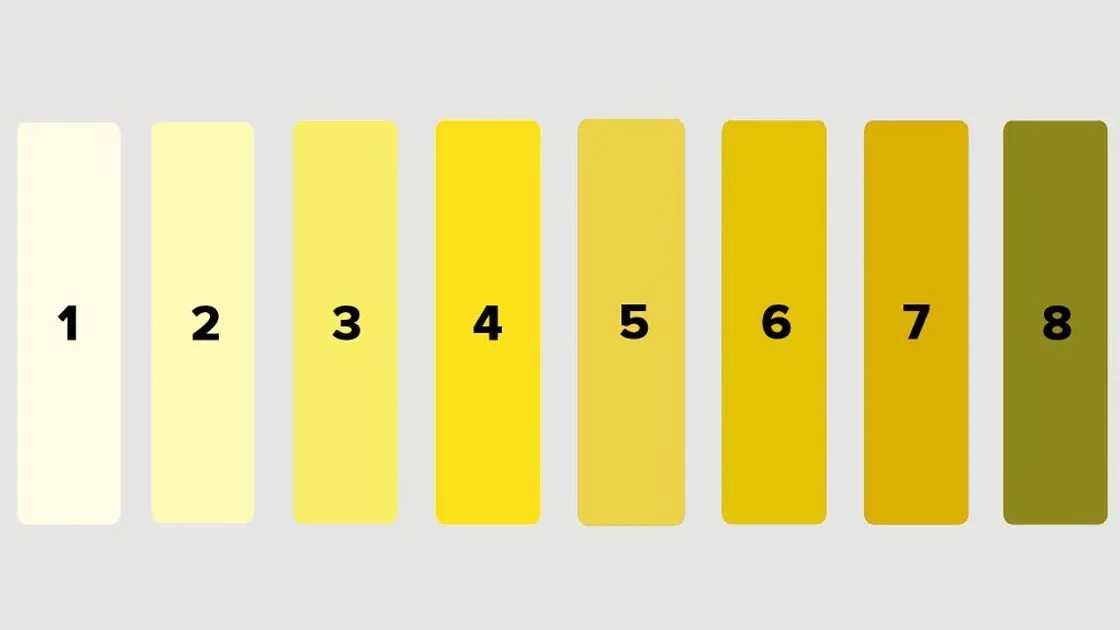
Dark amber or deeply concentrated urine is one of the clearest signs of dehydration in athletes, and it requires no equipment to check. According to the Healthy Pee Chart public health reference, pale yellow indicates adequate hydration, while dark amber signals your body is rationing water rather than clearing waste efficiently. Check color on your first post-workout bathroom visit, before any additional fluid intake skews the reading.
2. Dizziness and Lightheadedness During Exercise - Early Physiological Red Flags

Dizziness mid-set is a warning sign that dehydration has already reduced blood volume enough to compromise cardiovascular oxygen delivery. Athletes frequently attribute this to overexertion or poor sleep, but if lightheadedness appears at a consistent point in a session, a fluid deficit is the more likely cause. It is worth noting that this signal alone does not confirm dehydration; rule out other causes, especially if the symptom is new or severe.
3. Dry Mouth and Intense Thirst - Signs the Deficit Is Already Significant
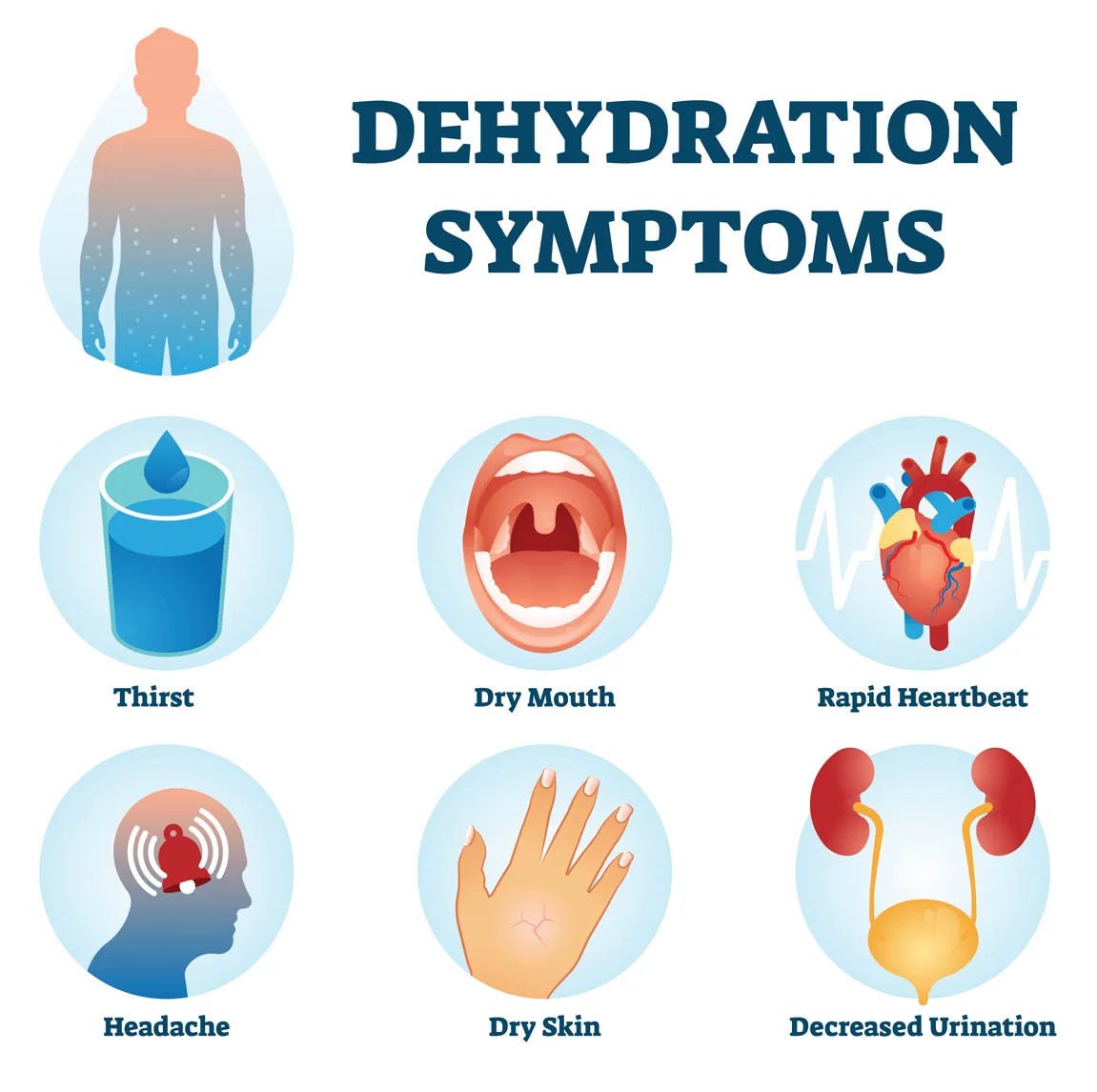
By the time dry mouth and strong thirst register, the fluid deficit is no longer mild. The Healthy Pee Chart reference identifies these as late-stage warning signals, meaning performance has already been compromised before the sensation fully surfaces. Thirst is useful as a confirmation, not an early alert. Waiting for it to trigger your drinking is the hydration equivalent of training without a plan.
4. Pre- and Post-Workout Bodyweight Method - A Practical Hydration Monitoring Tool
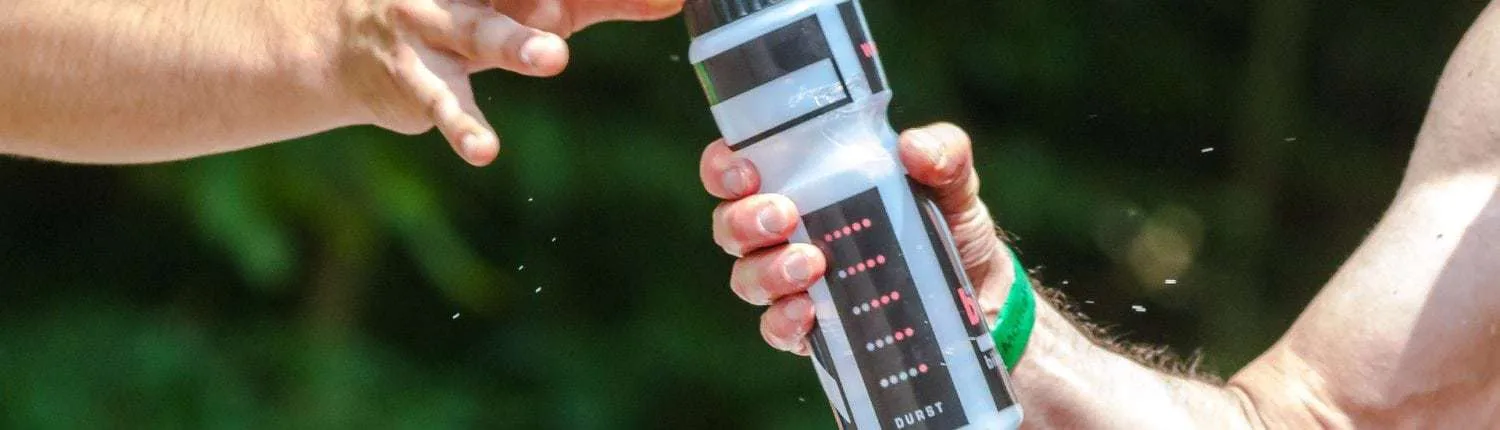
Stepping on a scale before and after training gives you the most honest hydration audit available. The Healthy Pee Chart public health reference confirms that every pound of bodyweight lost during exercise corresponds to approximately 16 oz of fluid deficit. A 2 lb post-session drop means 32 oz gone, regardless of how you felt during the workout. Pair this with urine color and you have a two-point check that outperforms thirst every time.
5. Reduced Exercise Intensity Tolerance - When Performance Drops Before You Feel Thirsty
If a weight or pace that felt manageable last week now feels disproportionately hard, dehydration is a more likely culprit than a sudden fitness regression. Fluid loss reduces blood volume, forcing the heart to work harder at the same output, which means strength and endurance both erode before any obvious symptom appears. This is the warning sign most athletes miss entirely because it looks identical to a bad training day, and it is exactly why tracking fluid intake alongside workout data matters.
Related Reading
- Athletic Performance Analysis
- Does Vaping Affect Athletic Performance
- How to Avoid Feeling Sleepy After Workout
- How Does Sleep Affect Athletic Performance
- How to Measure Athleticism
- Velocity Based Training
- Building Stamina and Endurance
- Why Am I So Bad at Sports
- Endurance vs Strength Training
- Why Am I So Tired After Working Out
- How to Create a Personalized Workout Plan
Hydration Strategies Before During and After Exercise That Actually Work
Most athletes who struggle with performance, cramps, or early fatigue are not making mistakes during their workout; they are paying for decisions made hours before it started. Getting hydration right means understanding the full timeline, from how you drink through the day before training, to what you sip mid-session, to how you recover afterwards. GetFit AI builds that timeline into your plan from day one, so fluid targets are something you follow, not something you improvise.
Three numbers, 500, 200, and 150, set your entire hydration plan before you touch a weight or lace a shoe.
1. Pre-Exercise Hydration - Start Training Already Topped Up, Not Playing Catch-Up
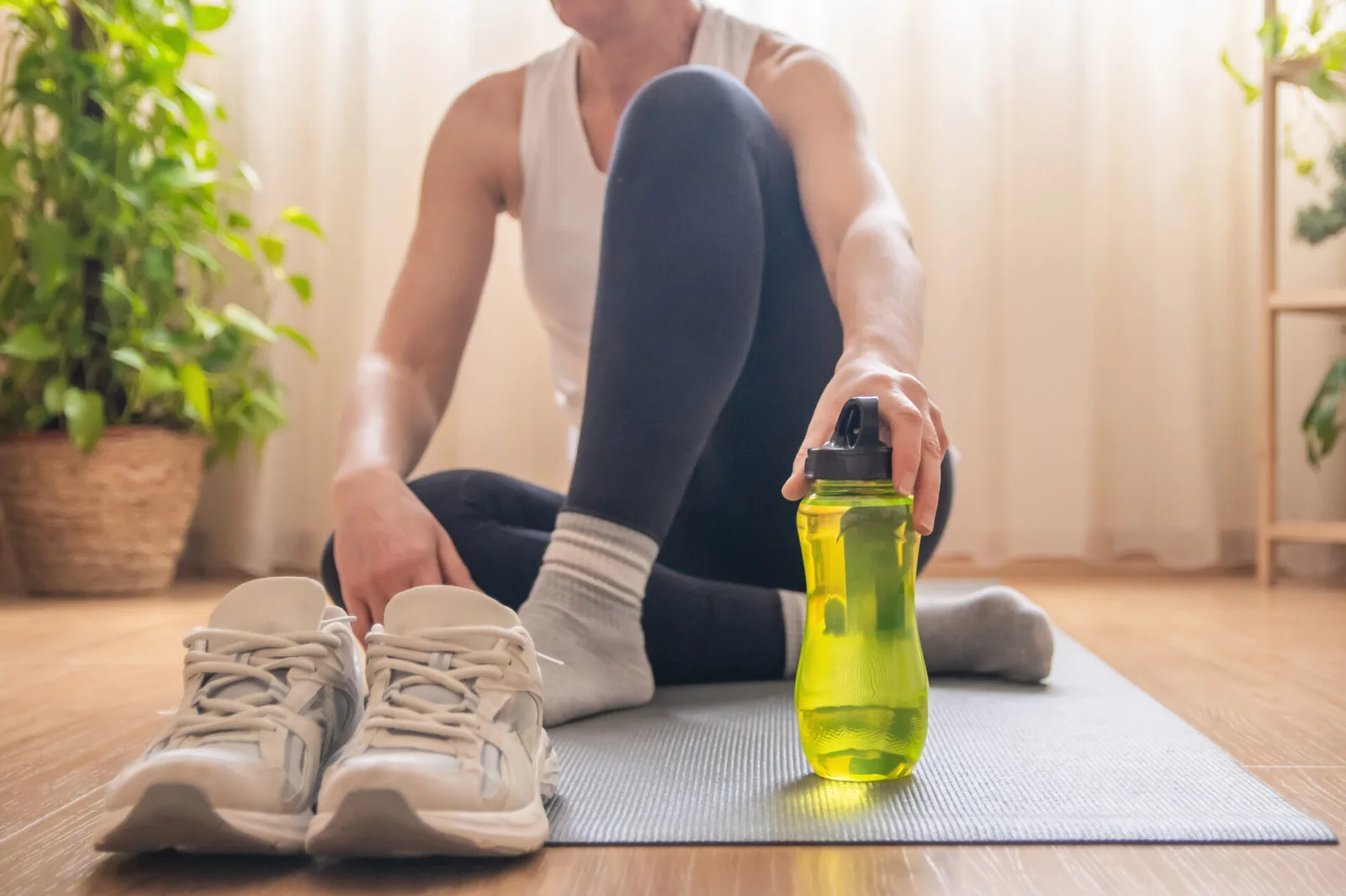
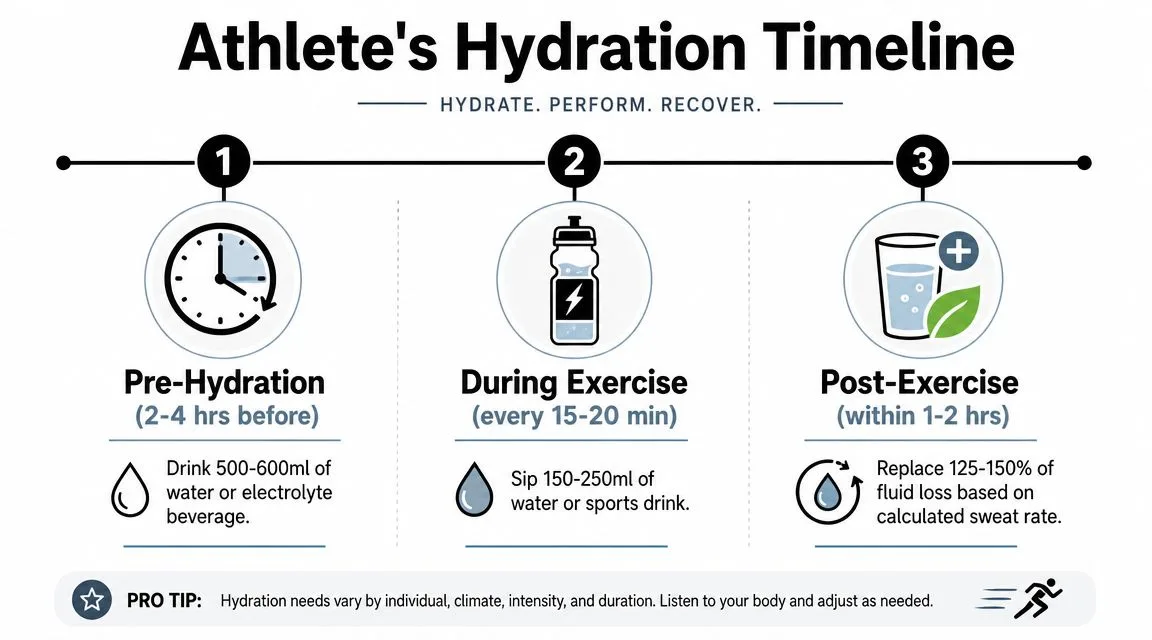
The Athlete’s Food Coach recommends arriving at training already well-hydrated, with 500-600 ml consumed two hours before exercise and a 200-300 ml top-up fifteen minutes out. For a 75 kg lifter training at 6pm, that means drinking with lunch, not scrambling at the gym door. The real tradeoff: this requires planning your day around fluid intake, not just your workout.
Runners who find their legs feeling like cement on long runs frequently blame fitness or sleep, but the more likely culprit is poor hydration in the 24-48 hours before the run, not just what they drank that morning. Same-day water intake is the last line of defence. By the time your pre-workout top-up arrives, you are either confirming a well-hydrated state or papering over a deficit that has been building since yesterday. GetFit AI’s Athlete-Style Custom Workout Plans account for this by treating your fluid targets the same way they treat your training sessions: as something you plan from the first day, not something you react to on the day.
2. During-Exercise Fluid Replacement - Scheduled Sipping vs. Ad Hoc Drinking and When Electrolytes Become Necessary
Sip on a schedule, not on instinct. A practical default is 150-250 ml every 15-20 minutes during moderate-intensity work. For sessions exceeding 60-90 minutes, The Athlete’s Food Coach notes that electrolyte replacement becomes necessary because sodium lost through sweat must be replenished to maintain fluid balance and prevent hyponatraemia. Rigid sip schedules carry one documented risk: over-drinking in low-sweat conditions, so dial back volume on short, cool-weather sessions.
People managing conditions like POTS understand this challenge more acutely than most. Finding the right balance of fluids, sodium, and electrolytes can take weeks of trial and error, and a generic schedule simply does not cover individual variation. The broader lesson applies to all beginners: your during-exercise protocol is a variable, not a fixed rule, and it needs to adapt as your training load, environment, and physiology shift. GetFit AI’s adaptive plan structure is built precisely for this, giving you a plan that adjusts rather than one you fall behind on and quit. Because the app tracks your workouts and training arc continuously, the context needed to flag when your session length or intensity crosses the threshold where electrolytes move from optional to necessary is already in the system.
3. Post-Exercise Rehydration - Replace 125-150% of Fluid Lost Using Pre/Post Bodyweight
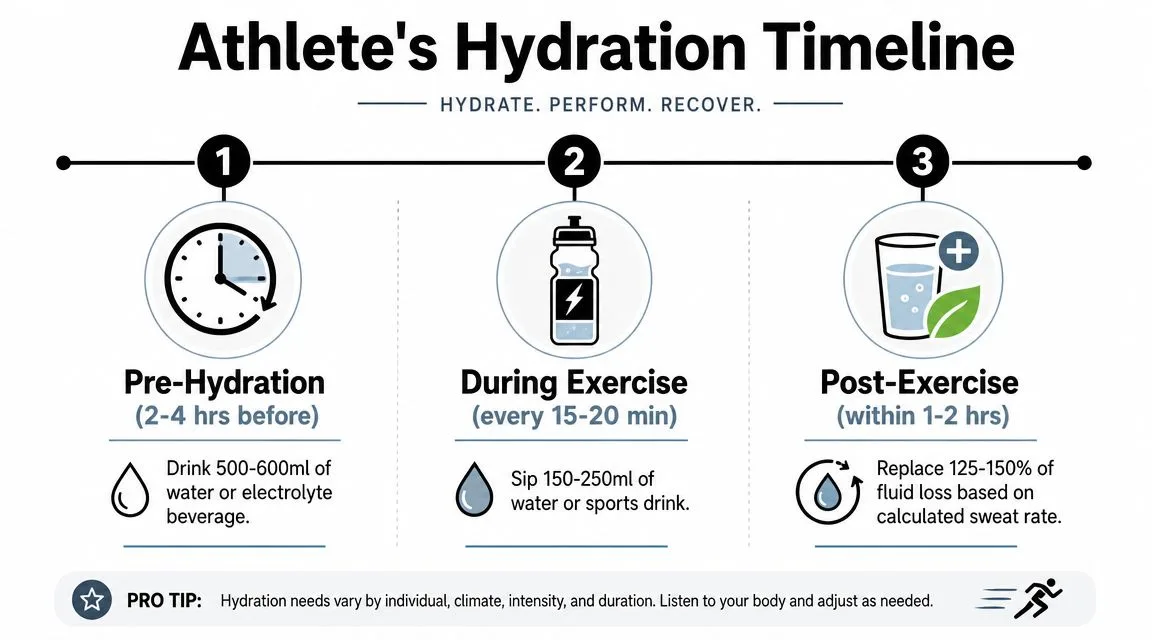
Step on a scale before and after training. Each kilogram lost equals roughly one litre of fluid deficit. The Athlete’s Food Coach confirms that post-exercise rehydration should target 125-150% of that loss to account for ongoing urinary output during recovery. Lose 0.8 kg, replace 1.0-1.2 litres over the next two hours. This math is precise; guessing is not.
4. Fluid Requirements During Physical Activity - How Sweat Rate, Duration, and Environment Set Your Target
Sweat rates range from 0.5 to 2.5 litres per hour depending on intensity, heat, and individual physiology, as industry research documents. A beginner lifting indoors in a cool gym sits near the low end; the same person running intervals in summer heat moves toward the top. The honest limitation here is that no single generic volume covers everyone. Body size, fitness level, and climate all shift your personal target, sometimes significantly.
5. Integrated Hydration Strategy Across All Three Phases - The Before, During, and After Framework That Actually Works
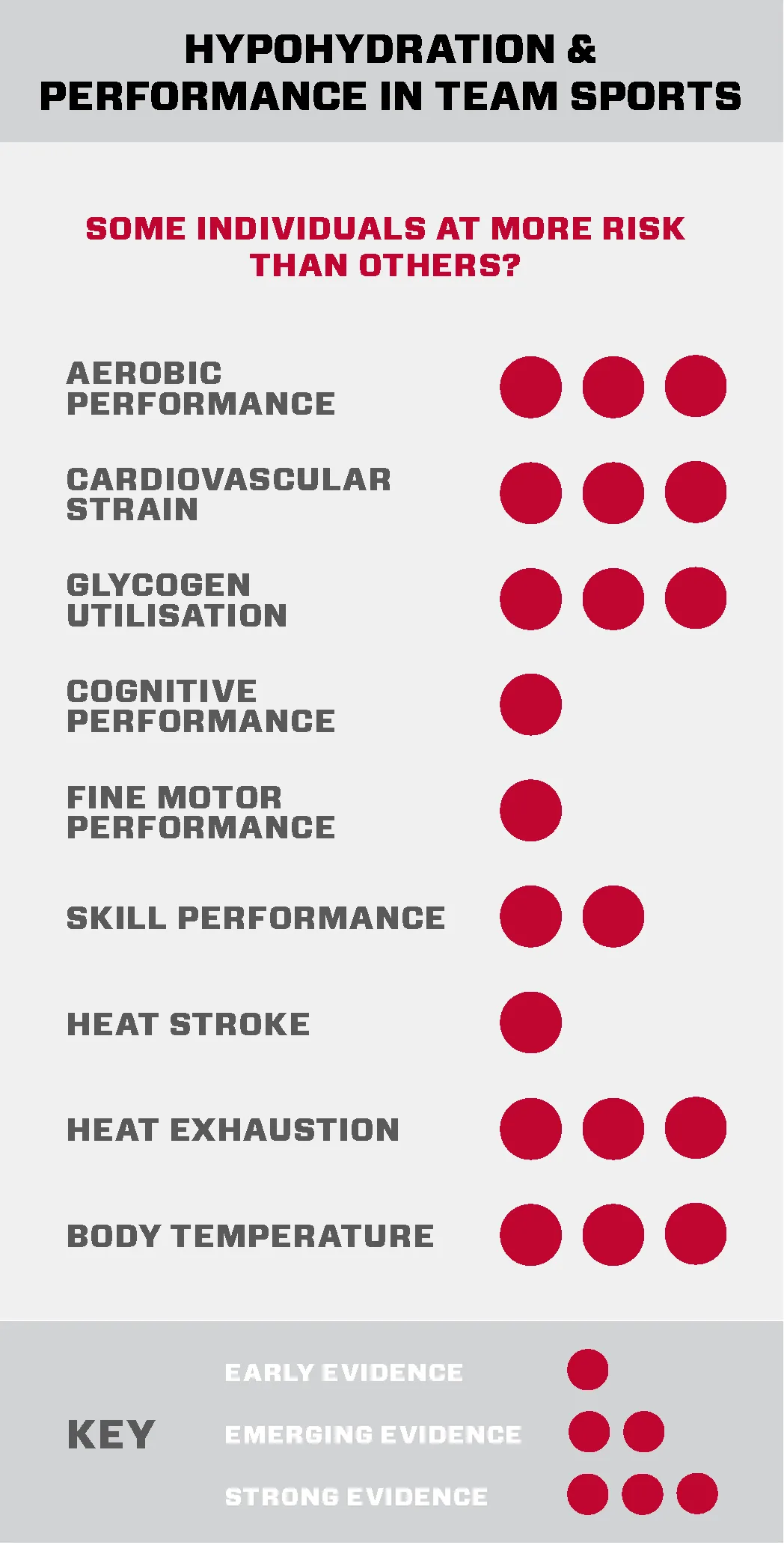
Treating pre-, during-, and post-exercise hydration as a single connected system, rather than three isolated habits, is what separates athletes who consistently perform at their peak from those who manage symptoms reactively. Urine colour monitoring (pale yellow as the target) provides a simple daily checkpoint across all phases. The practical tradeoff is that building this three-phase habit requires deliberate planning around training schedules, especially for athletes who train twice daily or in back-to-back sessions with limited recovery windows.
Benefits of Hydration for Physical Recovery After Hard Training
Finish a hard session dehydrated and you have not just lost fluids. You have actively slowed every repair process your body needs to make that session count.
1. Water as the Body’s Nutrient Highway - Delivering Protein and Glucose to Damaged Muscle Cells
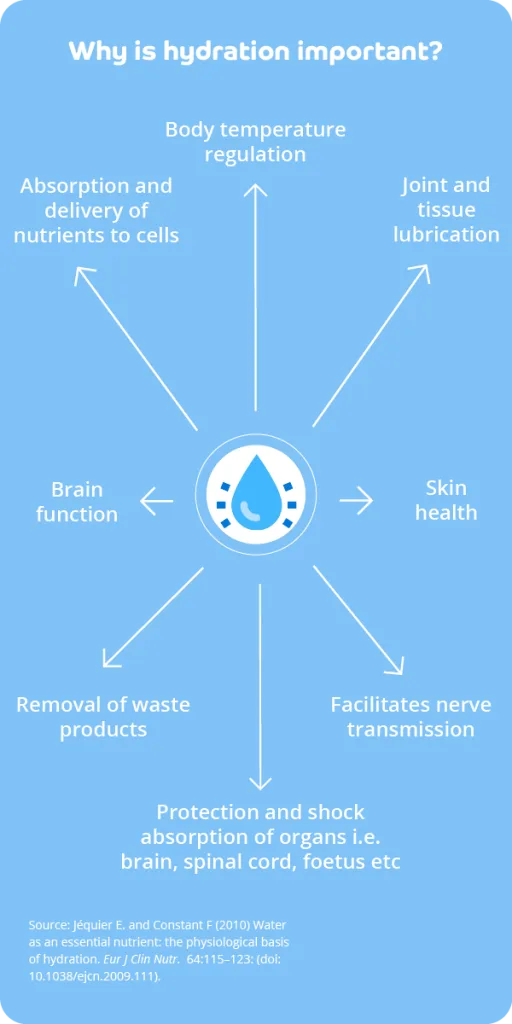
Proper hydration speeds recovery after hard exercise by keeping the nutrient delivery system open. According to the Madhav University research blog, water is the primary medium through which protein, glucose, and micronutrients reach muscle cells, making adequate hydration a direct prerequisite for post-exercise repair and adaptation.
2. Flushing Out Lactate and Metabolic Waste - How Hydration Cuts Soreness and Recovery Time

Hydration supports clearance of lactate and other metabolic byproducts that accumulate during hard training and drive delayed soreness when they linger. Rehydrating promptly after training is one of the fastest levers for shortening that recovery window, though hydration alone cannot compensate for genuinely insufficient sleep or nutrition.
3. Hydration for Joint Lubrication and Connective Tissue Resilience After High-Impact Training

Synovial fluid, the cushioning layer inside every joint, is predominantly water. When fluid losses from training go unreplaced, that viscosity drops, increasing friction and mechanical stress on cartilage and connective tissue during subsequent sessions. For athletes doing back-to-back training days, this is where chronic underhydration quietly accumulates into nagging joint discomfort that gets misread as overuse injury rather than a fixable recovery gap.
4. Cognitive Recovery Through Hydration - Restoring Mental Sharpness for the Next Training Session
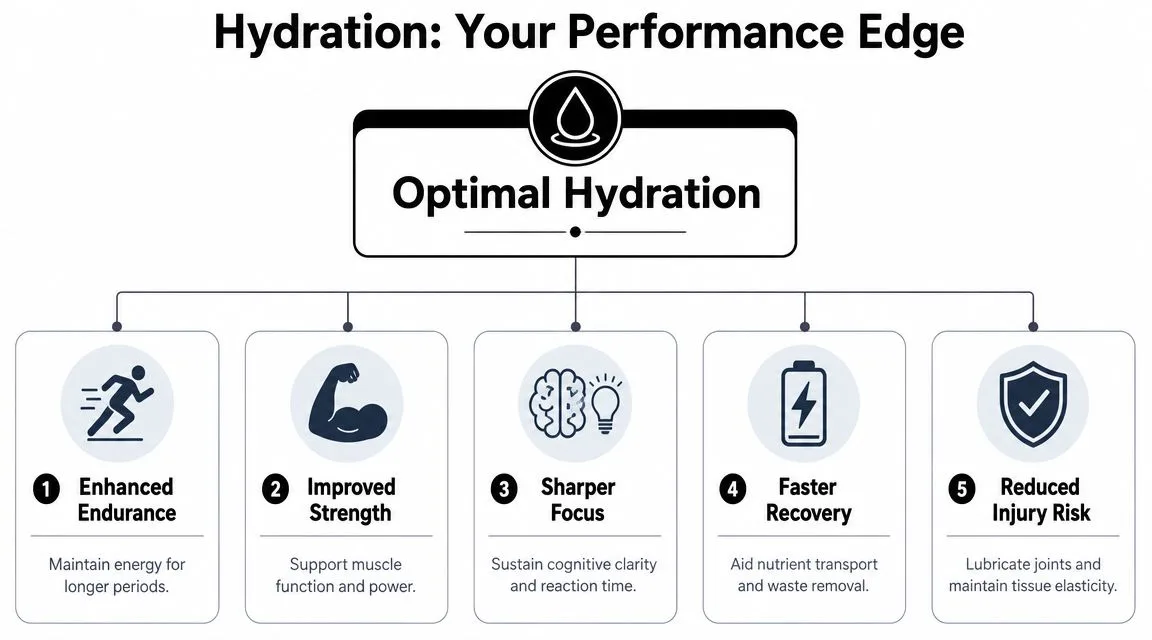
Even slight dehydration measurably impairs coordination and recovery, including the mental sharpness needed to execute technique in the next session, according to the Madhav University blog. Flat focus and slow reaction times the following day are frequently fluid-related, not a sign of overtraining. Rehydrating consistently after sessions is one of the simplest cognitive resets available to athletes training without a coach.
5. The Full Upside of a Consistent Hydration Plan - Physical Function, Adaptation, and Long-Term Athletic Gains
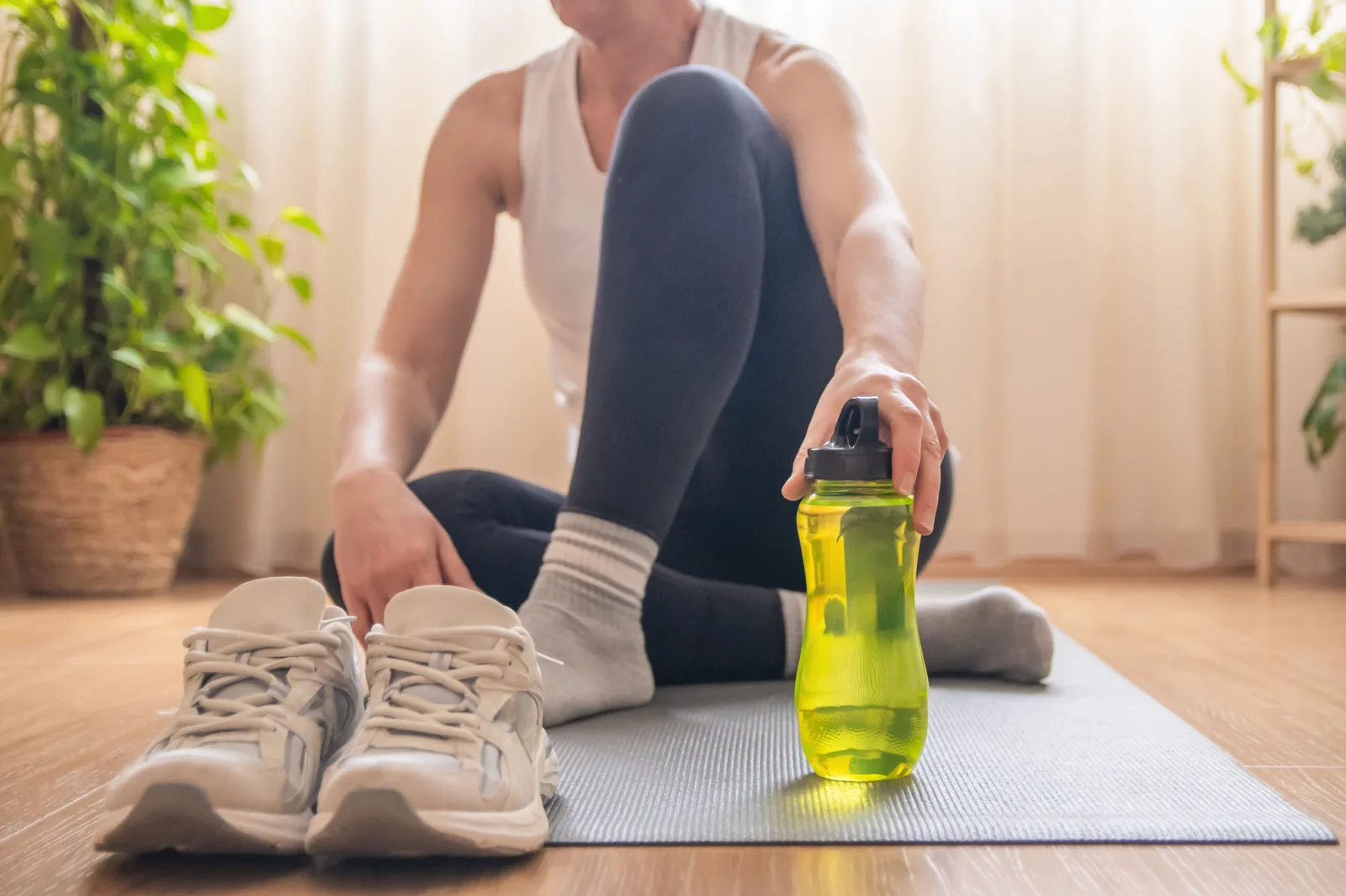
Hydration is recovery infrastructure. An athlete who trains hard but guesses on fluids undermines the adaptation their session was designed to produce, repeatedly. Consistent daily hydration, not reactive drinking after thirst fires, is what separates athletes who keep progressing from those stuck at the same weights for months. The limitation worth naming: building that habit without a tracking system means it stays intention rather than practice.
Related Reading
- How to Deal With Performance Anxiety in Sports
- Hydration Tips for Athletes
- How to Build Mental Toughness in Athletes
- Food for Athletes During Competition
- Strength Training Workout for Runners
- Best Plyometric Exercises for Speed
- Exercises That Improve Muscular Endurance
- Conditioning Workouts for Athletes
- Speed Training for Athletes
- Balance Exercises for Athletes
- Best Core Exercises for Athletes
How GetFit AI Gives Athletes Personalized Nutrition Guidance When They Need It Most
Sixty-two percent of recreational athletes receive no personalized nutrition or hydration guidance, according to broader industry trends, and that gap shows up in the gym long before it shows up on a scale. Reading a solid hydration article closes the awareness gap. It does not close the performance gap. Those are two different problems.
Why Generic Hydration Advice Breaks Down the Moment Your Training Gets Personal
For a beginner training alone, the gap is wider. Generic charts assign the same calorie and fluid targets every day regardless of whether you ran five miles or sat at a desk. That mismatch is where intake goes wrong and sessions start feeling inexplicably flat.
Personalization is a calibration requirement. Carbohydrate, protein, and fat intake must be individually calibrated to an athlete’s training load and goals, something no universal chart can do without individualized tracking.
How GetFit AI Turns Hydration Awareness Into a Trackable Daily Habit
The GetFit AI fitness app builds a personalized eating and hydration target around your actual goal and training load, then lets you log every meal through food search, barcode scanning, or custom entries. A daily calorie card and weekly macro charts show whether your habits are backing up your effort, or quietly working against it. Research consistently shows that tracking behavior, not just knowing targets, is what drives dietary adherence.
GetFit AI’s AI trainer chat is available the moment the app opens. Ask “I feel off today, should I keep going?” and you get a response calibrated to your session, your goal, and your logged intake, not a recycled article paragraph. That is the practical difference between knowing hydration matters and actually acting on it before the session goes sideways.
Understanding why hydration matters is the foundation. Understanding alone does not fill your water bottle, time your electrolytes, or tell you whether yesterday’s intake is why today’s session felt flat.
Next steps
If your sessions keep falling apart mid-set and you cannot explain why, the path forward starts with treating hydration as a daily system, not a reactive habit triggered by thirst. Start with our AI fitness app.
Dehydration degrades strength from two independent directions at once, structural and electrical, meaning an athlete can lose meaningful force output before thirst ever registers. That same fluid deficit silently accelerates heart rate even when effort stays flat, so athletes relying on perceived exertion are unknowingly training harder than their program prescribes and accumulating fatigue they blame on the plan, not the water bottle. Together, those two mechanisms point to one obvious next step: pair your workout tracking with a nutrition and hydration log that runs every day, not just on the days you remember to drink more.
Start with GetFit AI to build a personalized hydration and nutrition target around your actual training load, then log meals and fluids daily so a dehydration-driven bad session becomes a diagnosable data point rather than a mystery you blame on effort.
Frequently Asked Questions
Does dehydration actually slow down your thinking, or does it just make your muscles feel tired?
Both happen, but the cognitive hit can come first. Slower reaction times and impaired decision-making can occur before thirst even registers, meaning your brain is already operating below full capacity before your body signals that anything is wrong. For a lifter, this shows up as sluggish bar-path corrections, misjudged tempo, and a general sense that nothing feels coordinated.
Why does my heart rate keep climbing mid-workout even when I’m not pushing any harder?
That’s cardiac drift, as sweat loss reduces blood volume, your heart beats faster to maintain the same cardiac output, even if your exercise intensity stays completely flat. Thicker, lower-volume blood moves more slowly through the capillary networks feeding your muscles, so your heart has to spin faster just to deliver the same oxygen. Athletes who rely on perceived exertion as a training guide end up unknowingly training harder than their plan prescribes.
How much fluid can you actually lose before it starts hurting your performance?
A fluid loss of just 1 to 2 percent of body weight is enough to produce measurable drops in strength, endurance, and mental sharpness, and that threshold arrives before thirst does. For a 70 kg person, a 2 percent loss is roughly 1.4 kg of sweat. The problem is compounded if you start a session already under-hydrated, because you’ll reach that critical threshold sooner than if you started fully hydrated.
Does it matter how hot or humid it is, or is sweat loss basically the same no matter where I train?
It matters a great deal. Sweat rate scales with both exercise intensity and ambient conditions, a summer run and an air-conditioned treadmill session at the same pace produce very different fluid losses. Humidity makes it worse because when air is already saturated, sweat cannot evaporate efficiently, so the body produces more sweat for less cooling return. In extreme heat, the body can lose up to 2 liters of water at rest before a single rep is logged.
Is there a universal daily water target I can follow, or does it change based on my size and how hard I train?
Fluid needs are individual, not universal. Higher-intensity efforts and larger athletes generate more heat and sweat loss, increasing hydration needs well beyond any fixed baseline, a 90-kilogram athlete running at threshold pace loses fluid at a fundamentally different rate than a 65-kilogram athlete jogging at conversational effort. Treating hydration as a flat “eight glasses a day” rule ignores both variables entirely.