18 Best Plyometric Exercises for Speed and Explosive Power


Plyometrics build speed through your nervous system, not your muscles. But only if the drills follow a sequence your nervous system can actually learn from.
Ground contact time during sprinting drops below 0.1 seconds at top speed. That single number explains everything about why plyometrics build speed in a way that squats and deadlifts simply cannot touch.
Most athletes assume plyometrics are just jumping exercises with a fancier name. The mechanism behind plyometric speed gains is actually neurological, not muscular, and understanding it changes how you train entirely.

Plyometrics build speed by training the nervous system to fire muscles faster during the stretch-shortening cycle (SSC): the rapid pre-stretch of a muscle immediately before a powerful contraction that stores and releases elastic energy for greater force output than a slow lift ever produces. Heavy resistance training builds muscle size and raw strength, but it does not teach your nervous system to recruit motor units at the speed sprinting demands. The measurable outcome is rate of force development (RFD), the speed at which your muscles reach peak force.
Research from UTEP ScholarWorks links plyometric-driven RFD improvements directly to shorter ground-contact time and greater stride power, independent of any increase in muscle size. Bigger legs do not automatically mean faster legs. A faster nervous system does.
Bigger legs do not automatically mean faster legs. A faster nervous system does.
Horizontal plyometrics transfer more directly to linear sprint velocity than vertical drills do. That same UTEP ScholarWorks research ties sprint performance improvements to plyometric specificity, exercises must match sprint mechanics to transfer. If faster sprint times are the goal, horizontal work earns the priority slots in your plan. Start bilateral, low-intensity, and low-volume. Pogo hops, broad jumps, and two-leg bounds are the entry point. Never train plyometrics on fatigued legs. Quality of ground contact beats quantity of jumps every single time.
Key takeaways
- Ground contact time during sprinting drops below 0.1 seconds at top speed, that single number explains why plyometrics build speed in a way squats and deadlifts cannot.
- Plyometric speed gains are neurological, not muscular. The nervous system is what you're actually training, and that changes everything about how you should program.
- Two plyometric sessions per week is what research supports, fewer than most athletes assume, and more sessions without controlling volume actively undermine neuromuscular adaptation.
- The exercise a clip shows you is the least important variable. What determines whether a plyometric drill makes you faster is the mechanism it trains and where it sits in a structured progression.
- Pulling drills from three different creators and staying consistent is not a plan. The nervous system adapts to patterns, not effort, and random collections don't build patterns.
- GetFit AI's Athlete-Style Custom Workout Plans close that gap directly, build a custom AI plan around your own goals and equipment, or train inside an athlete's or trainer's proven program. Either way, the plan adapts as you get stronger, so the structure that actually drives speed is always there.
The Plyometric Mistake That Keeps Fast Athletes Running Slow
Most athletes who stall on speed aren’t doing the wrong exercises; they’re doing the right ones in the wrong order, with the wrong frequency, and without any coherent structure tying them together.

Why Your Nervous System Ignores Random Drill Collections
The common assumption among high-school athletes, ages 15-18, brand new to speed training, is that if they find enough plyometric exercises online and just stay consistent, their speed will eventually come. When you pull three different plyometric drills from three different creators in the same week, you’re presenting your neuromuscular system with noise, not a signal. Adaptation requires repetition of a coherent stimulus across multiple sessions, with intensity and volume building in a logical sequence. Without that sequence, the nervous system never receives a clear enough input to reorganize toward faster ground contact or higher stride frequency.
The exercises are never applied with enough frequency or coherence to force adaptation, and your 40-yard dash time stays exactly the same.
GetFit AI’s Athlete-Style Custom Workout Plans are built to fix this by giving you a structured sequence that begins from your first workout session and builds deliberate plyometric exposure into every training week.
The Instagram Jump vs. the Track Result
Elite sprinters follow periodized plyometric plans with deliberate volume progressions, starting low and building across training blocks. What doesn’t get posted is the six weeks of pogo hops, ankle stiffness drills, and single-leg work that made those advanced movements safe and effective.
Research supports this directly: broader training science confirms that structured plyometric training reduces injury risk by preparing connective tissue and neuromuscular coordination before higher-load movements are introduced, the opposite of what random drill selection delivers.
Skipping the Foundation Tier Is How Athletes Get Hurt and Quit
A sprinter who skips pogo hops because they “look too easy” and jumps straight to depth jumps is loading the Achilles and patellar tendons beyond their prepared capacity. Overuse injuries from unstructured plyometric adoption are the most common reason athletes abandon speed training entirely. Shin splints, knee soreness, and Achilles tightness are enough to sideline a 16-year-old for three weeks and kill momentum entirely.
GetFit AI’s Structured Training is designed for athletes who have previously struggled with consistency due to lack of program structure, and it works across both the individual workout session and the overall training arc. The plan builds a coherent signal across weeks so the nervous system has something to reorganize around. For athletes who want to access it, plans start at $1.99/week, with $4.99/month and $49.99/year options available, so the structure that prevents these injuries and keeps training on track is accessible from the first session.
Related Reading
- Why Am I Not Getting Faster at Running
- Does Masturbation Affect Athletic Performance
- Biomechanics in Sports
- Why is Protein Important for Athletes
- What is Speed and Agility Training
- How to Be a Better Athlete
- How Does Sports Psychology Help Athletes
- Why is Hydration Important for Athletes
- Why Do Athletes Train at High Altitudes
- Why Do Athletes Stretch Before a Game?
- IV Therapy for Athletic Performance and Recovery
- Yoga and Athletic Performance
- Red Light Therapy for Athletic Performance
How to Program Plyometrics for Speed Without Burning Out Your Nervous System
“The athlete has no clear structure or progression for power training. Jumps and plyometrics are done ad hoc before power sessions, suggesting a gap in understanding how to systematically program explosive work.”
— what we hear from strength and conditioning coaches
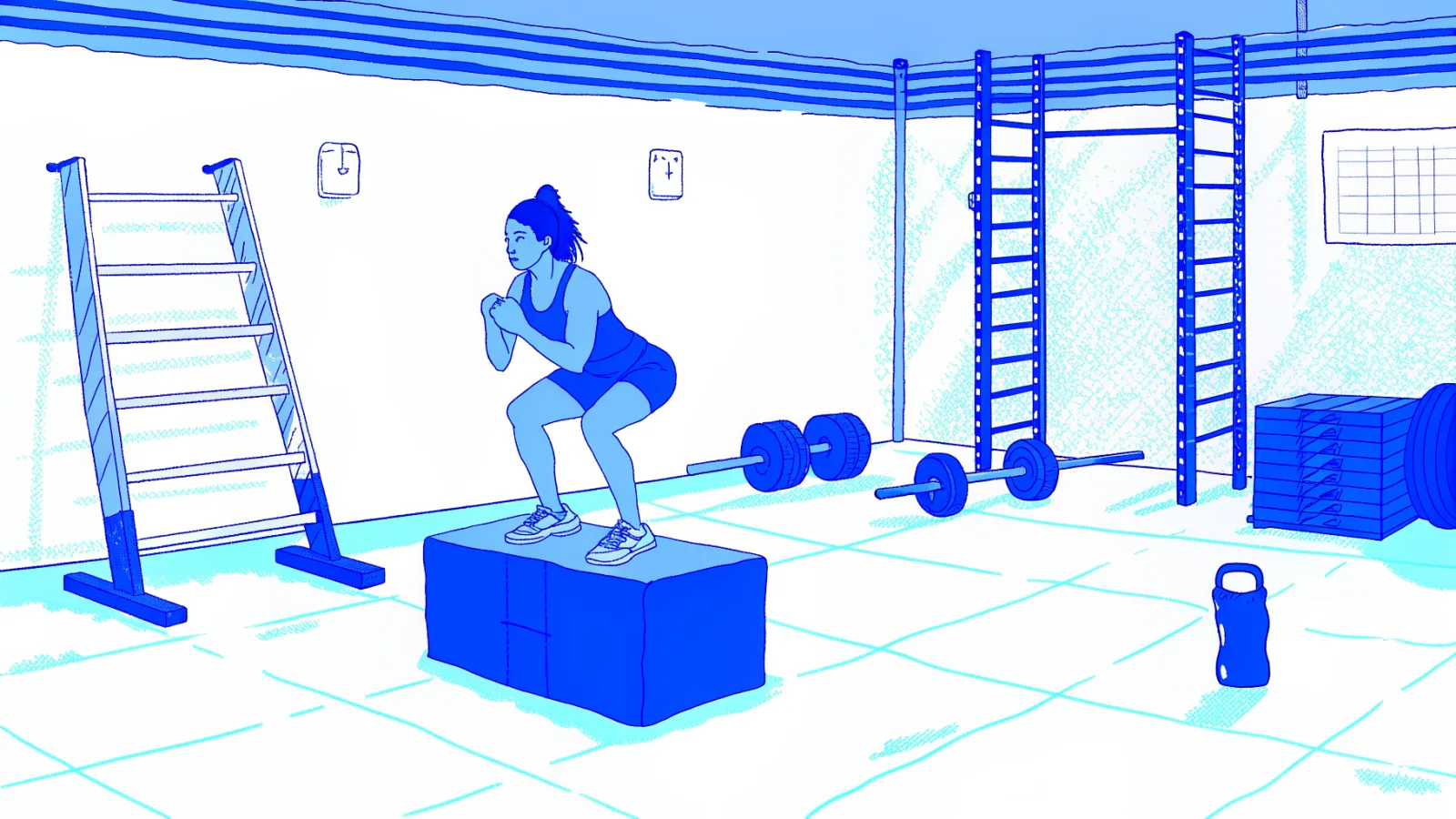
Plyometrics Before Lifting Is the Non-Negotiable Rule
Athletes who include high-intensity efforts, 90% sprints, for example, in their warm-up are taxing the nervous system before the first jump ever leaves the ground. The main set is then performed on a CNS that is already compromised, which means the very adaptations you showed up to build are blunted from rep one. Sequencing plyometrics before lifting, and before any high-intensity warm-up work, protects that window of peak neural readiness and is the single easiest structural fix most athletes can make.
This is precisely why GetFit AI builds Athlete-Style Custom Workout Plans from your first workout session: the progression is mapped, the sequencing is locked in, and the guesswork that derails most beginners in weeks one through three is removed before it can do damage.
The 20 to 40 Ground-Contact Rule for Real Speed Gains
Two plyometric sessions per week, with 20 to 40 ground contacts per session, is the ceiling research points to for beginners and early-intermediate athletes, because the central nervous system does not recover like a muscle. Staying inside that ceiling keeps quality high and lets the nervous system absorb the stimulus rather than survive it. Rest 60 to 90 seconds between sets so the nervous system can reset and the next set is genuinely explosive. Exceeding that contact ceiling, or cutting rest short, turns a power session into a conditioning session and stalls speed development.
Inside GetFit AI, the structured training layer tracks your session volume and flags when you are drifting past your weekly contact ceiling, so you never have to do the math yourself.
Your Progression Tier From Bilateral Jumps to Reactive Single-Leg Drills
The tier structure is straightforward, but the transitions between tiers matter as much as the exercises themselves. Weeks 1 through 4: two sessions per week, 20 contacts each, built around pogo hops and broad jumps. That foundation phase is about teaching the body to absorb and redirect force before asking it to do so quickly. By weeks 5 and 6, volume can climb to 30 contacts per session and you can introduce drop jumps, mixing them with bounding.
GetFit AI’s friends, challenges, and leaderboard layer is the retention mechanism that keeps users training past week three, and it works best once you have connected with at least one friend in the app, because shared accountability converts intention into showing up.
6-Week Beginner Plyometric Speed Plan, Quick-Reference Framework
| Week | Sessions/Week | Contacts/Session | Primary Exercises | Intensity Tier |
|---|---|---|---|---|
| 1-2 | 2 | 20 | Ankle Hops, Pogo Hops, Broad Jumps | Foundation |
| 3-4 | 2 | 20-25 | Pogo Hops, Broad Jumps, Box Jumps, Power Skips | Foundation |
| 5-6 | 2 | 30 | Drop Jumps, Hurdle Hops, Bounding, Split Squat Jumps | Intermediate |
Before-you-progress decision criteria: advance to the next week only when ALL three conditions are true: (1) landing on every rep is quiet and controlled, (2) ground contact feels springy, not heavy, and (3) no joint soreness 24 hours after the session.
GetFit AI’s structured training program tracks these criteria across the overall training arc, not just session by session, so you have a clear, objective answer to the question every beginner eventually asks themselves: am I actually ready to move on? If you have previously struggled with consistency because you had no program telling you what comes next, that is exactly the gap Athlete-Style Custom Workout Plans are built to close, starting from your very first session.
18 Best Plyometric Exercises for Speed and Explosive Power
Copying a depth jump from a 30-second clip feels like training. The box is there, the landing is loud, the legs burn. But here is the point most athletes never encounter: the exercise a social-media clip shows you is the least important variable in whether it makes you faster; what determines speed transfer is the reactive strength quality of each rep**, specifically whether the drill is intense enough to challenge your stretch-shortening cycle without exceeding the box height at which you can still minimize ground contact time.** This means an athlete copying an advanced depth-jump video at the wrong height is doing a completely different, speed-irrelevant exercise while accumulating the injury risk of the real one.
Research from Just Fly Sports makes this concrete: the moment your box height exceeds what you can absorb and rebound from with minimal ground contact, the drill stops being a speed exercise entirely. You are no longer training reactive stiffness. You are practicing slow, heavy landing absorption, a completely different neuromuscular signal that does nothing for your 40-yard dash. Evidence from depth-jump research confirms that going even slightly too high on box height converts a reactive speed drill into a slow-absorption drill, killing the neuromuscular signal entirely.
That distinction cuts across every exercise on this list. Each drill below is tagged with its primary speed mechanic so you know exactly why it belongs in a plan, not just how it looks on a screen. The five mechanics you will see are: reactive stiffness (the nervous system’s ability to rebound fast), elastic return (ankle and Achilles storing and releasing energy), stride length (how much ground each step covers), cyclical mechanics (how fast your legs cycle between contacts), and horizontal acceleration (converting force into forward movement). Plug the wrong mechanic into the wrong phase of training and the reps accumulate without the adaptation.
A meta-analysis published in PubMed Central found that structured plyometric training produces an average 8 to 12 percent improvement in jump height and sprint speed over 6 to 8 weeks in beginner and intermediate athletes. The key word is structured. Random drill selection does not produce those numbers. The exercises below are the raw material; what you do with the order and progression is a separate problem entirely.
1. Depth Jumps - Advanced Reactive Strength Builder for Sprinters
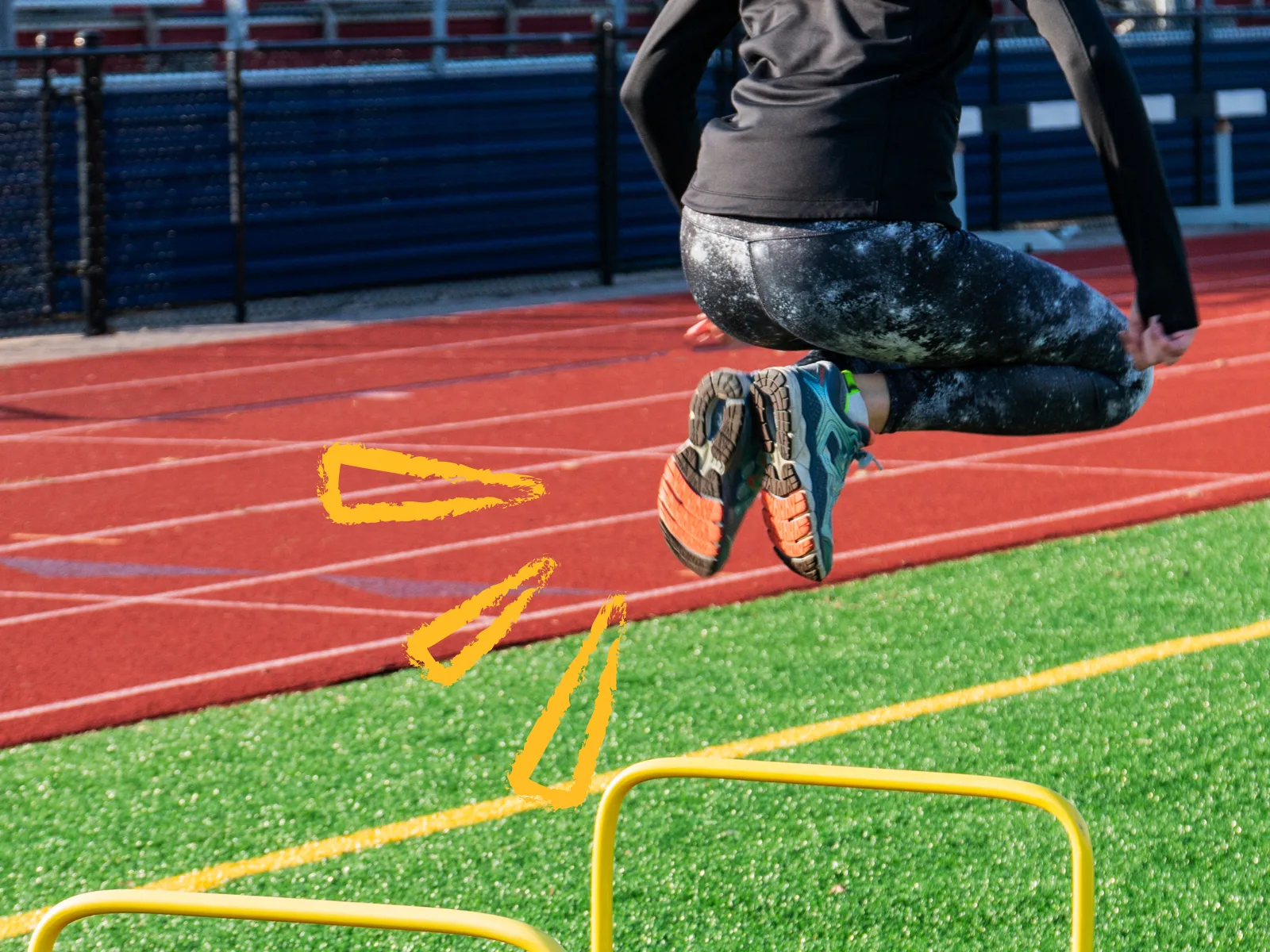
Depth jumps train reactive stiffness, the most direct speed mechanic on this list. Step off a box, do not jump off, and the moment both feet contact the ground, rebound upward immediately. The optimal box height is the tallest height from which you can still minimize ground contact time, commonly 12 to 24 inches for most athletes, not the tallest box available.
Beginners start at 12 inches. Advanced athletes can work toward 20 to 24 inches. Going higher converts the drill into a landing drill and kills the speed signal entirely. Arms drive hard upward on the rebound. Reset fully between reps. This is an advanced exercise; do not start here.
2. Bounding - Horizontal Power Developer for Track and Field Athletes

Bounding targets stride length and single-leg horizontal power, the two variables most directly linked to closing speed between 20 and 60 meters. Alternate explosive single-leg strides, driving the opposite knee high and reaching maximum horizontal distance on each rep. A 2016 study in the Journal of Human Kinetics found that bounding protocols produced measurable improvements in sprint performance and stride length in youth athletes over an 8-week training block.
Arm drive is aggressive and opposite to the lead leg. Land on a slightly bent knee, absorb briefly, and explode into the next stride without pausing. This drill belongs in intermediate and advanced plans; beginners should build single-leg stability first.
3. Power Skips - Vertical and Horizontal Combo for Acceleration Development
Power skips train cyclical mechanics and teach the nervous system to generate force quickly through a full skip pattern. Drive the lead knee up aggressively while simultaneously pushing off the back foot, aiming for both height and horizontal distance on each skip. The arm opposite the lead knee drives forward hard.
This drill is one of the best for athletes learning to coordinate upper and lower body during acceleration, which is why sprinters use it as a warm-up and a training tool. Land softly on the ball of the foot, reset the pattern, and skip continuously for 20 to 30 meters. Appropriate for beginners and intermediates.
4. Broad Jumps - Maximum Horizontal Distance for Sprint Power
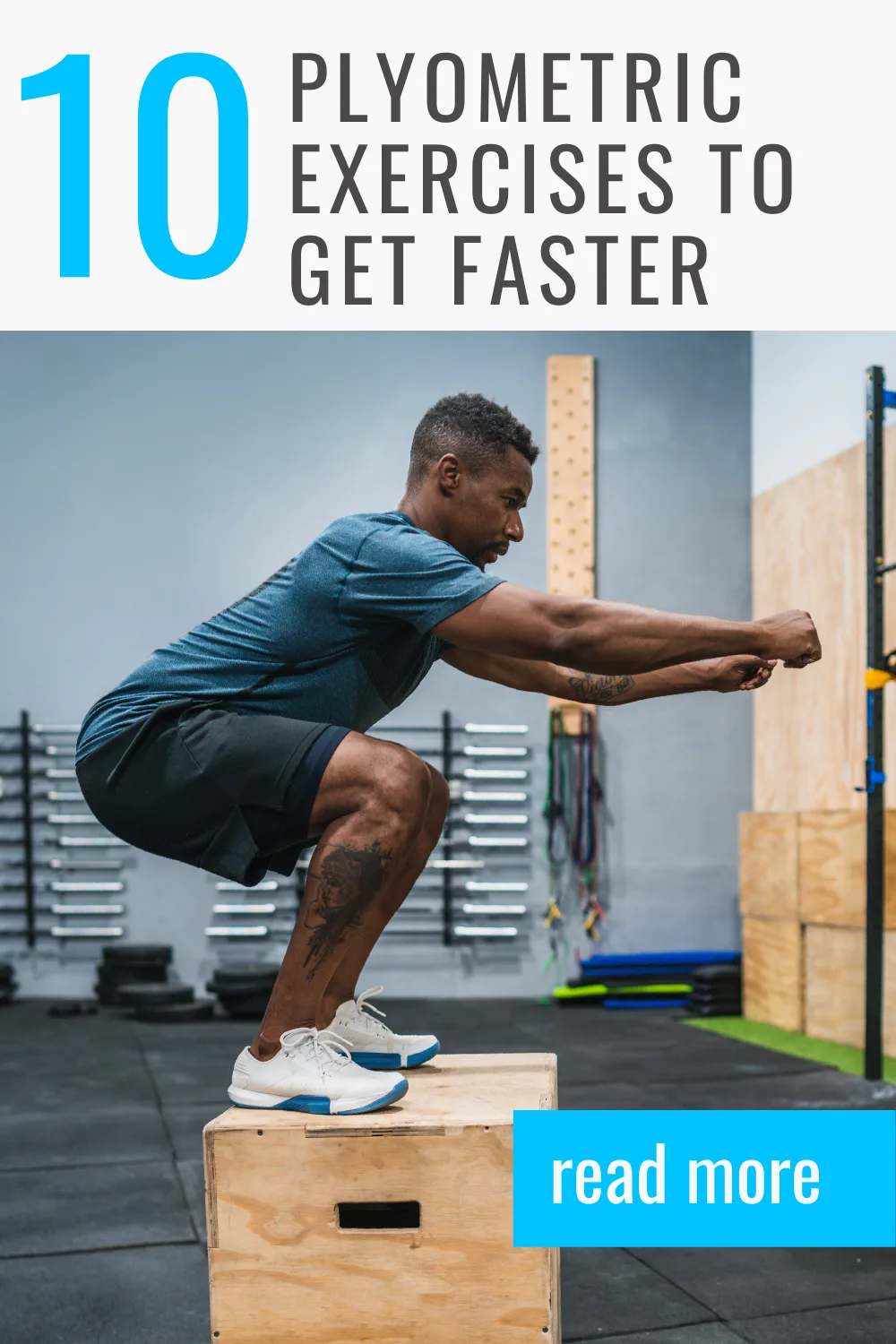
Broad jumps develop horizontal acceleration by forcing maximum horizontal force output from a bilateral stance. Stand with feet hip-width apart, load the hips back, swing the arms back, and explode forward as far as possible, landing softly on both feet with knees bent and hips back. The key cue is to push the hips through and forward rather than jumping up.
Measure distance to track progress. Broad jumps are one of the most reliable predictors of sprint speed in high school athletes because they test raw horizontal power output with no equipment required. Beginners can start here.
Advanced athletes can add a short pause and reset between reps to keep quality high.
5. Pogo Hops - Ankle Stiffness and Ground Contact Speed for Sprinters
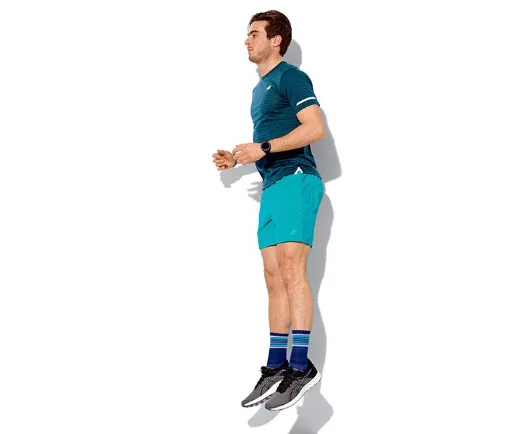
Pogo hops train elastic return through the ankle and Achilles complex. Stand tall, keep the knees nearly locked, and bounce continuously using only ankle snap, no knee bend, no hip hinge. The goal is the shortest possible ground contact time on each hop.
Elite sprinters average ground contact times between 80 and 100 milliseconds at top speed, and pogo hops are one of the only drills that directly trains that quality at low impact. Cue: think of the ground as hot. Arms stay relaxed at the sides.
Start with 10 to 15 continuous hops, rest fully, and repeat. Appropriate for all levels as a warm-up or a standalone ankle stiffness drill.
6. Split Squat Jumps - Single-Leg Power and Asymmetry Correction
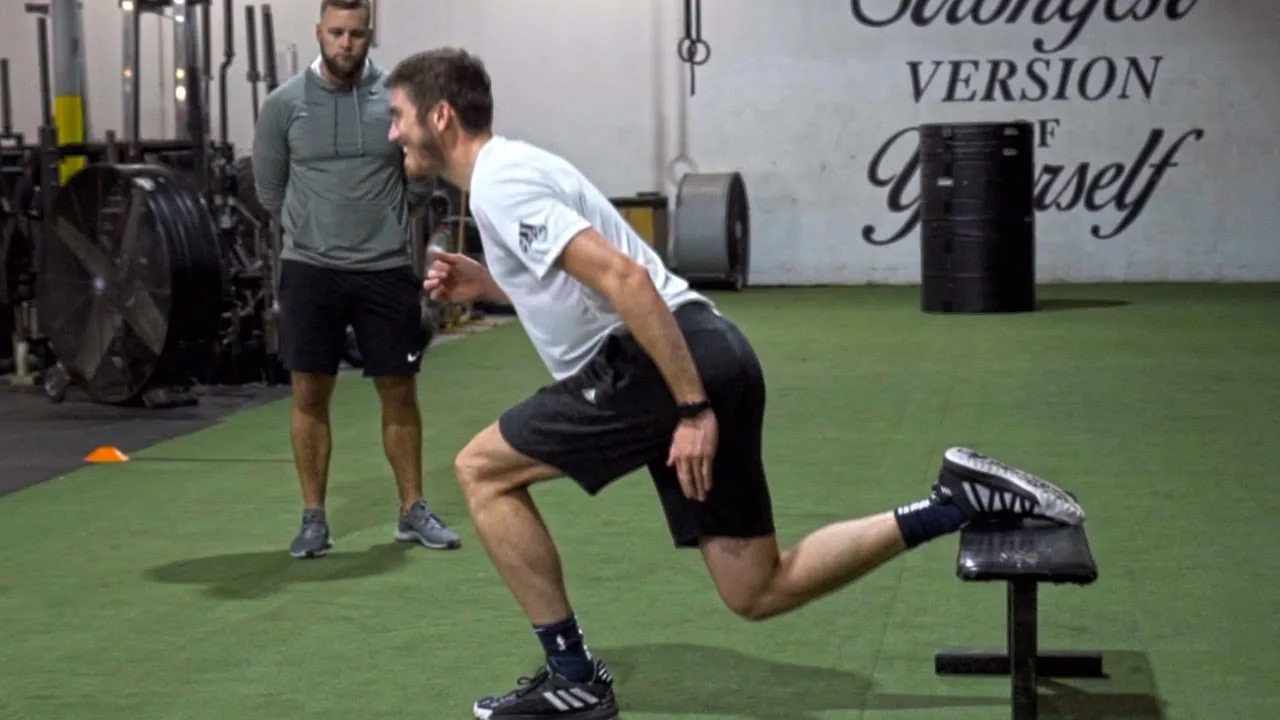
Split squat jumps train single-leg power and expose strength imbalances between legs that silently slow sprint mechanics. Start in a lunge position, lower until the back knee nearly touches the ground, then explode upward and switch legs in the air, landing in the opposite lunge. The key cue is to drive both arms upward on takeoff.
Most athletes discover quickly that one leg is noticeably weaker, which is exactly the point. Correcting that asymmetry improves stride symmetry and reduces injury risk. Land softly with a controlled descent each rep.
Intermediate level; beginners should build basic lunge strength before adding the jump.
7. Box Jumps - Vertical Explosive Power for Beginners and Intermediates
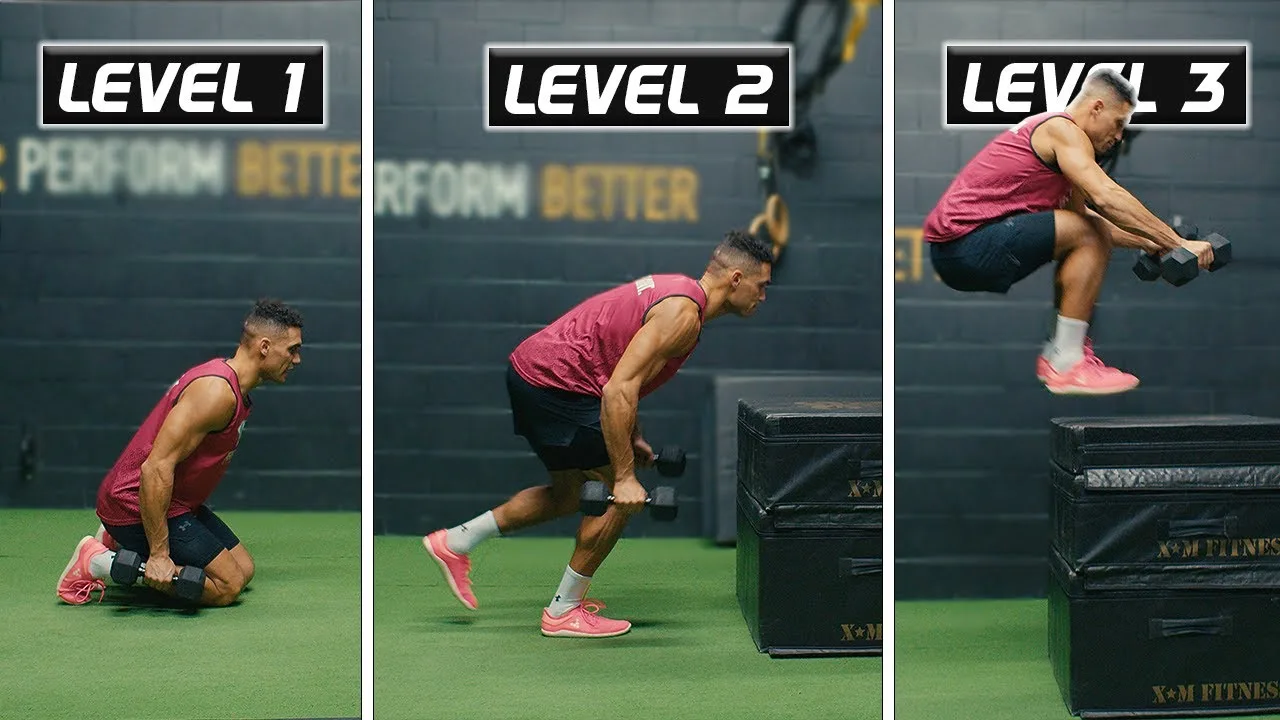
Box jumps train vertical power output and teach safe explosive takeoff and landing mechanics, making them the ideal starting point for athletes new to plyometrics. Load the hips, swing the arms, jump onto the box, and land softly with both feet flat and knees tracking over toes. Step down, do not jump down, to protect the joints and keep the nervous system fresh.
Box height should allow a clean, quiet landing. If the landing is loud or the knees cave, the box is too high. Box jumps are frequently misused as a conditioning drill, but their real value is as a low-fatigue power exercise performed fresh with full recovery between reps.
8. Tuck Jumps - Vertical Power and Hip Flexor Speed for All Levels
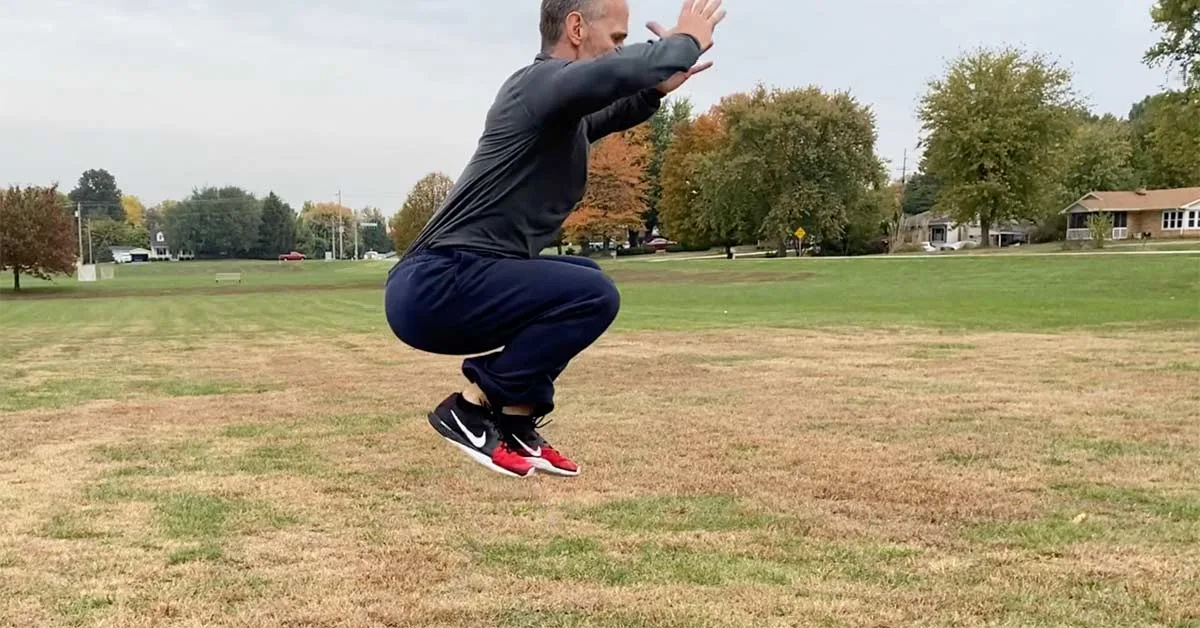
Tuck jumps train cyclical mechanics and hip flexor speed, both critical for the leg recovery phase of sprinting. Jump straight up and drive both knees toward the chest at the peak of the jump, then extend the legs and land softly. The cue most athletes miss is to pull the knees up rather than letting the body drop down to meet them.
Continuous tuck jumps, done for 6 to 8 reps, also build the ability to repeat explosive efforts quickly, which transfers directly to acceleration over the first 10 meters of a sprint. Appropriate for all levels. Beginners focus on landing quality; advanced athletes focus on minimizing time between reps.
9. Lateral Bounds - Single-Leg Lateral Power for Change-of-Direction Speed
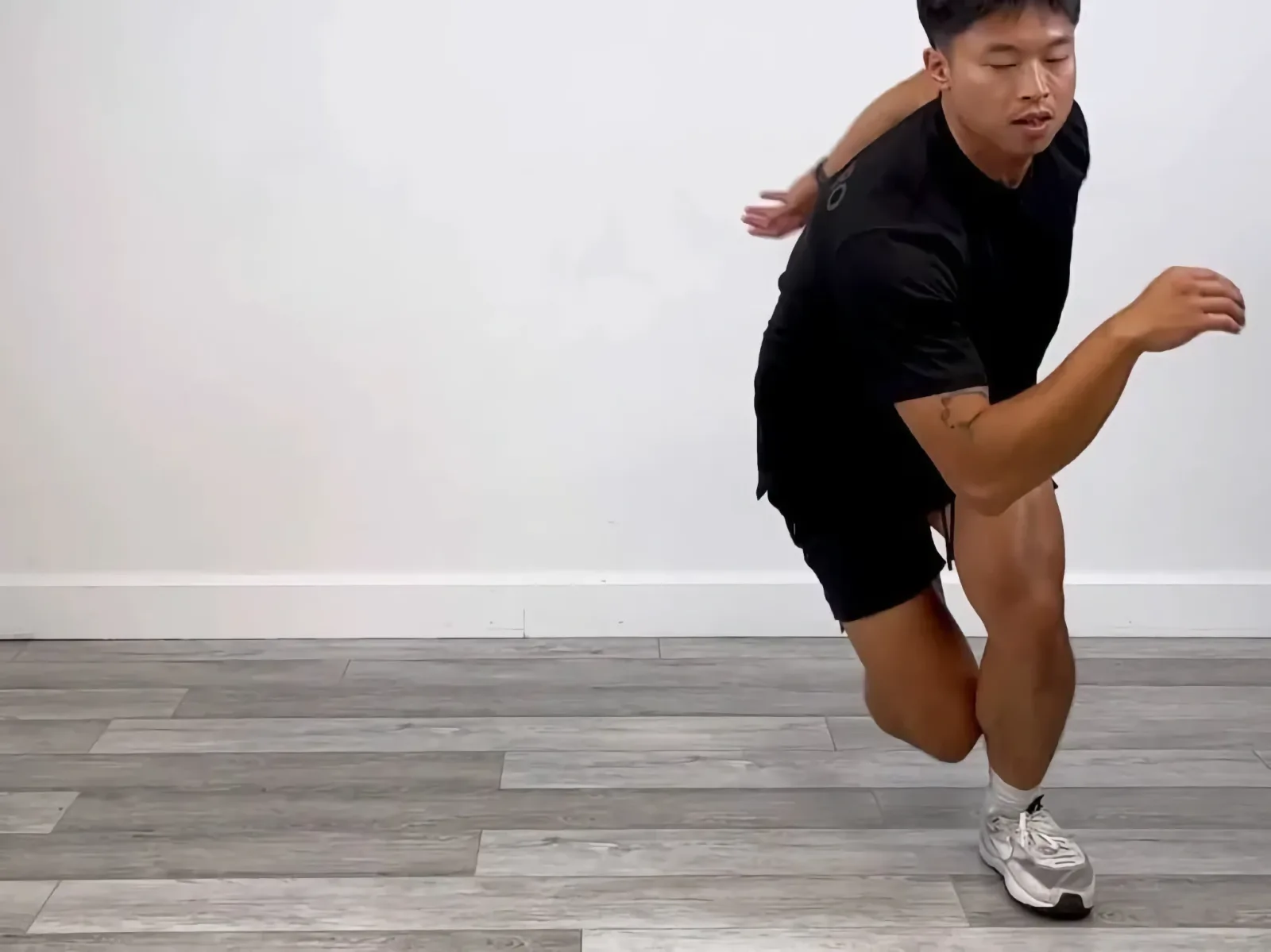
Lateral bounds develop single-leg lateral power and the hip abductor strength that stabilizes every ground contact during sprinting. Push explosively off one foot to the side, covering maximum horizontal distance, and stick the landing on the opposite foot with a controlled pause. Hold the landing for two seconds before bounding back.
The pause is what separates a stability-building drill from a sloppy hop. Athletes who skip the pause train momentum, not power. Lateral bounds transfer directly to change-of-direction speed and are one of the most underused horizontal plyometrics in track and field training.
Intermediate level.
10. Single-Leg Hop and Hold - Unilateral Landing Stability for Injury Prevention
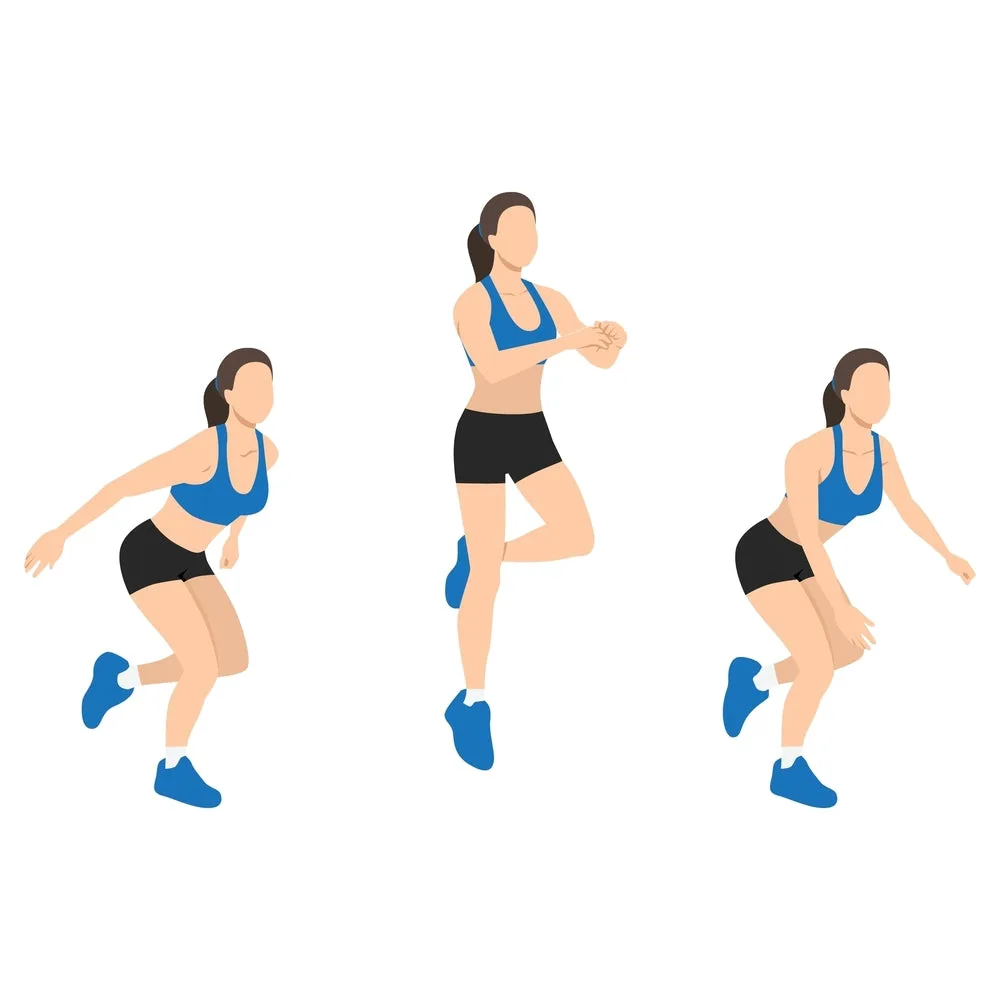
Single-leg hop and hold trains reactive stiffness at the unilateral level and builds the landing mechanics that prevent ACL injuries during explosive movements. Industry research found that structured unilateral landing training significantly reduces ACL injury risk in young athletes, with female athletes showing the largest benefit. Hop forward on one foot, land, and hold the position for three seconds without wobbling. The landing knee must stay aligned over the second toe; any inward collapse is a sign the athlete is not ready for higher-intensity single-leg drills. This is a beginner and intermediate drill that belongs in every speed plan, not just injury prevention programs.
11. Hurdle Hops - Reactive Stiffness Over Barriers for Sprint Mechanics
Hurdle hops train reactive stiffness by forcing fast, rhythmic ground contacts over a series of low hurdles, typically 6 to 12 inches tall. Jump over each hurdle with both feet, land, and immediately rebound over the next. The cue is to spend as little time on the ground as possible between hurdles.
Hurdle hops are superior to basic vertical jumps for speed development because the hurdles enforce a rhythm that mimics the cyclical demands of sprinting. Use 6 to 8 hurdles spaced evenly. Arms drive upward on each takeoff.
Intermediate level; beginners should master pogo hops and box jumps before adding hurdles.
12. Ankle Hops - Low-Intensity Elastic Return Primer for Beginners
Ankle hops are the entry-level version of pogo hops, using a small range of motion and lower intensity to teach the elastic return mechanic without overloading the Achilles. Hop continuously on both feet using only ankle plantarflexion, keeping the body tall and the knees soft but not deeply bent. Sets of 20 to 30 hops build the lower leg stiffness that makes every other drill on this list more effective. This is the drill to start with if pogo hops feel uncontrolled or if ground contact time feels long. Beginners use this as a daily warm-up tool before any plyometric session.
13. Single-Leg Bounding - Stride Power Isolation for Advanced Sprinters
Single-leg bounding isolates stride length on one leg at a time, removing the bilateral compensation that standard bounding allows. Push off one foot repeatedly for 4 to 6 consecutive hops, covering maximum horizontal distance each rep, then switch legs. This drill exposes weaknesses that alternate-leg bounding hides and directly trains the single-leg power output that determines top-end sprint speed.
The nervous system cannot share the load between legs, which makes this one of the most demanding drills on this list. Advanced athletes only. Build alternating bounding volume for at least four weeks before attempting single-leg bounding.
14. Drop Jumps - Reactive Landing Conversion for Intermediate Athletes
Drop jumps train the transition between elastic return and upward force production, making them a bridge between landing drills and full depth jumps. Step off a low box (8 to 12 inches), land on both feet, and immediately jump upward as high as possible. Unlike depth jumps, the box height here is intentionally low to prioritize fast ground contact over maximum eccentric load. The distinction matters: drop jumps teach the body to convert a landing into a jump; depth jumps challenge that conversion under heavier eccentric stress. Intermediate athletes use drop jumps to build toward depth jumps without the injury risk of premature heavy loading.
15. Stair Bounds - Cyclical Power Development for Sprint Acceleration
Stair bounds train horizontal acceleration and cyclical leg power using stadium stairs or bleachers as resistance. Bound up the stairs two at a time, driving the opposite knee high and pushing explosively off the back foot. The incline forces greater hip extension than flat-ground bounding, which directly targets the glute and hamstring mechanics used during the acceleration phase of sprinting.
Keep the torso upright; leaning too far forward reduces power output from the hip. 4 to 6 bounds per set, full recovery between sets. Intermediate level.
Stair bounds are a practical alternative when a track or long flat surface is unavailable.
16. Reactive Step Jumps - Acceleration Mechanics from a Split Stance
Reactive step jumps train horizontal acceleration from a split stance, mimicking the first two steps of a sprint start. Start in a staggered stance, lower slightly, and explode forward off the back foot as aggressively as possible, driving the front knee forward. Reset and repeat.
The drill isolates the push-off mechanics of the initial acceleration phase, where most athletes lose time they never recover. Arm drive is critical: the arm opposite the back leg drives forward hard on takeoff. Beginners and intermediates can use this drill safely because the movement pattern is simple and the load is controlled entirely by bodyweight.
17. Plyo Push-Ups - Upper Body Reactive Power for Sprint Arm Drive
Plyo push-ups train reactive stiffness in the upper body, specifically the chest, shoulders, and triceps that power arm drive during sprinting. Lower to the bottom of a push-up, then push explosively so both hands leave the ground. Land with soft elbows and immediately rebound into the next rep.
Arm drive contributes meaningfully to sprint speed, and most plyometric lists ignore it entirely. Athletes who train explosive leg power but neglect upper body reactive strength leave speed on the table. Beginners perform these from the knees.
Advanced athletes add a clap or reach forward at the top. 5 to 8 reps per set, full recovery.
18. Resisted Broad Jumps - Loaded Horizontal Power for Advanced Athletes
Resisted broad jumps add a light resistance band anchored behind the athlete to the standard broad jump, increasing the horizontal force demand and training horizontal acceleration under load. The band forces the athlete to generate more power to cover the same distance, which builds the specific force output needed for the first 10 meters of a sprint. Use a band that allows full range of motion without collapsing the jump pattern.
If the landing is short or uncontrolled, the resistance is too heavy. Advanced athletes only. This drill requires a partner or anchor point and is most effective when broad jump distance without resistance has plateaued.
Related Reading
- Athletic Performance Analysis
- Does Vaping Affect Athletic Performance
- How to Avoid Feeling Sleepy After Workout
- How Does Sleep Affect Athletic Performance
- How to Measure Athleticism
- Velocity Based Training
- Building Stamina and Endurance
- Why Am I So Bad at Sports
- Endurance vs Strength Training
- Why Am I So Tired After Working Out
- How to Create a Personalized Workout Plan
Why Knowing the Right Plyometric Means Nothing Without a Plan Behind It
Turning that list into a working plan exposes a problem no static protocol can solve: speed training is not linear. Within a single session, three distinct moments tend to derail even well-designed programs, and they do so quietly enough that most athletes never identify them as the source of their stalled progress.
Picture this: you are on set 3 of depth jumps and the box is taken. Or your legs feel heavier than expected and you are unsure whether to push through or scale back. Or you finish early and do not know whether adding volume is smart or counterproductive. A static protocol has one answer to all three situations: nothing. It was written before any of those moments existed.

Returning to structured training requires coordinating loading, readiness, and progressive structure together. CNS fatigue is the hidden variable here. When your nervous system is running on empty, power output drops and the explosive adaptation you trained for actively reverses.
Pushing through anyway erases speed rather than building it. GetFit AI’s AI fitness app puts an in-app AI trainer in your pocket for exactly these moments, so mid-session questions get answered before you make a bad call. Static trackers and printed programs cannot offer that kind of real-time adaptability.
Why a Fixed Exercise List Stops Producing Speed Gains by Week Three
Most tracking apps let you log sets, reps, and rest times, and many include a library of pre-built programs. That is genuinely useful. But logging is not the same as prescribing, and a catalogue of programs is not the same as a plan built around your current capacity.
The difference materialises in week three. Most beginner athletes hit a wall around that point because the program does not adjust to where they actually are. Broader industry trends are direct: progressive overload must be managed deliberately across a multi-week structure, calibrated to an athlete’s current recovery state, not just repeated. A custom plyometric plan that adapts as you get stronger closes that gap. Fair warning: if you are not consistent enough to give the plan real data to work with, even an adaptive plan cannot do much.
The exercises on this list are the raw material. What turns them into real, measurable speed is the structure, the progression, and the real-time guidance that wraps around them.
Related Reading
- How to Deal With Performance Anxiety in Sports
- Hydration Tips for Athletes
- How to Build Mental Toughness in Athletes
- Food for Athletes During Competition
- Strength Training Workout for Runners
- Exercises That Improve Muscular Endurance
- Conditioning Workouts for Athletes
- Speed Training for Athletes
- Balance Exercises for Athletes
- Best Core Exercises for Athletes
Next steps
If your sprint times have stayed flat despite months of plyometric work, the path forward starts with recognizing that consistency with random drills is a plateau strategy, not a speed strategy. Start with our AI fitness app.
Copying exercises without a progressive structure means your nervous system never receives a clear, escalating signal to adapt, which is exactly why effort accumulates while ground contact time stays the same. Knowing which 18 plyometric exercises exist is a trivia answer, not a training plan, and the gap between those two things is precisely where sprint progress dies. Together, these realities point to one logical next step: a structured, adaptive plan that sequences the right exercises at the right volume and tells you when to advance.
Get that structure through GetFit. After setup, it builds a custom plyometric plan around your speed goals, slots exercises into the right sessions in the right order, and adapts week over week as your reactive capacity improves.
Frequently Asked Questions
Why do plyometrics improve speed more than just lifting heavy?
Plyometrics train your nervous system to fire muscles faster during the stretch-shortening cycle, the rapid pre-stretch before a powerful contraction that stores and releases elastic energy. Heavy resistance training builds muscle size and raw strength but does not teach your nervous system to recruit motor units at the speed sprinting demands, which is why bigger legs don’t automatically mean faster legs.
Should I start with single-leg or double-leg plyometric exercises?
Start bilateral (double-leg). The post’s 6-week framework keeps both feet on the ground for the first four weeks, exercises like pogo hops and broad jumps, with full focus on landing mechanics. The shift to single-leg reactive drills comes only after landing control is solid on two legs, because rushing that step is how athletes end up with knee problems early in training.
Do horizontal jumps or vertical jumps do more for sprint speed?
Horizontal plyometrics transfer more directly to linear sprint velocity than vertical drills do. The post cites research tying sprint performance improvements to plyometric specificity, exercises must match sprint mechanics to transfer, so if faster sprint times are the goal, horizontal work earns the priority slots in your plan.
How do I know when a depth jump box height is too high?
The moment your box height exceeds what you can absorb and rebound from with minimal ground contact, the drill stops being a speed exercise entirely. Research from Just Fly Sports confirms that going even slightly too high on box height converts a reactive speed drill into a slow-absorption drill, eliminating the neuromuscular signal that actually makes you faster.
How many plyometric sessions per week should a beginner do, and how many jumps per session?
Two sessions per week is the number research points to, with 20 to 40 ground contacts per session for beginners and early-intermediate athletes. The post notes that the central nervous system does not recover like a muscle, so exceeding that volume without adequate rest produces stiffness and flat jumps rather than speed gains, rest 60 to 90 seconds between sets so each set is genuinely explosive.