How to Start Building Stamina and Endurance That Lasts

Most beginners confuse stamina with endurance, train the wrong system, and plateau within weeks. Here is the science behind why that happens and the exact structure that fixes it.
Stamina is your combined mental and physical capacity to sustain activity and resist fatigue. It includes how long your body can keep moving and whether your mind lets it. A common assumption among beginner lifters is that they just need to push harder or show up more often and eventually their stamina will break through, a pattern that turns out to be biology, not character. A runner who has the aerobic capacity to finish a 10K but mentally quits at mile four has a stamina gap, not an endurance gap. That distinction matters because the fix is different.
Endurance, by contrast, is a concrete physiological output. Cardiovascular endurance is measured by VO2 max, expressed in millilitres of oxygen per kilogram of body weight per minute (mL/kg/min), reflecting how efficiently the heart and lungs deliver oxygen to working muscles during sustained effort. That is not a feeling. It is a number, and it is trainable.

Cardiovascular endurance and muscular endurance are not the same system. Cardiovascular endurance describes heart and lung capacity to sustain aerobic effort over time. Muscular endurance describes how long individual muscles resist fatigue before output drops.
Someone who gasses out on a set of 15 bodyweight squats is hitting a muscular endurance ceiling, not a cardiovascular one. These two systems respond to different training stimuli. Cardiovascular endurance improves through sustained aerobic work that progressively challenges oxygen delivery.
Muscular endurance improves through higher-repetition resistance training that stresses slow-twitch fiber recruitment and lactate clearance. Training one does not automatically improve the other.
The practical cost of conflating these terms shows up fast. As SoLongevity’s research makes clear, simply showing up more often or pushing harder without structured stimulus is insufficient to drive measurable gains in VO2 max. Naming your target changes your session design entirely.
Cardiovascular endurance work calls for zone-based pacing and progressive duration. Muscular endurance work calls for rep ranges, load selection, and rest periods calibrated to fiber fatigue. That is where a structured training plan, built around this split from the first session, replaces guessing with a coherent program that changes as you adapt.
Knowing the difference between stamina and endurance is the first structural decision. But most beginners still hit a wall within weeks, not because they lack effort, but because of a specific physiological trap that sameness sets for every untrained body.
Key takeaways
- Stamina isn't a willpower problem, it's a structure problem. Most people plateau because their body stops adapting to training that never changes.
- The SAID Principle explains the wall beginners hit: your body only adapts to demands that actually challenge it, and repeating the same sessions guarantees you stop improving.
- Elite endurance athletes spend roughly 80% of their training volume at an easy, conversational pace, most beginners do the opposite and wonder why they burn out.
- Forty minutes into a hard session, your legs aren't failing because you trained wrong, they're failing because you showed up with empty tanks. Nutrition and hydration are part of the training, not an afterthought.
- The workout is the instruction; sleep is where the body builds. Stamina gains, tissue repair, glycogen replenishment, cardiovascular adaptation, happen during recovery, not during the session.
- 73% of new gym members quit within six months, and most drop out precisely when real adaptation was about to pay off. That's a planning failure, not a fitness failure.
- GetFit AI's Structured Training closes the gap by delivering workouts as a coherent program progression, not random exercises, so every session builds on the last and your body never stops adapting.
Why Most Beginners Hit a Stamina Wall and Stop Improving
Training hard but going nowhere is one of the most common frustrations beginners face, and it is exactly what this section covers, along with how GetFit AI is built to catch it before the plateau takes hold.
Your Body Stops Adapting the Moment Training Stops Challenging It
The SAID Principle (Specific Adaptation to Imposed Demands) explains exactly why this happens. The body adapts specifically to the type and magnitude of stress placed on it; once it has fully adapted to a given training stimulus, repeating that same stimulus produces no further adaptation. The first time you ran that 3-mile loop, your heart rate spiked, your lungs burned, and your body scrambled to keep up, but once it adapted completely, that same loop stopped being a stimulus and became routine.
Key takeaway: Sameness is physiologically identical to rest once full adaptation has occurred.
Most beginners have no reliable way to know when that crossover point has arrived, which is the blind spot GetFit AI’s Athlete-Style Custom Workout Plans are built to remove. The program begins structuring progressive demand from the first workout session, so the training load is always moving relative to where your body currently is.
The Overload Principle as the Structural Cause of Every Stamina Plateau
The fix has a name: the Overload Principle. For cardiorespiratory endurance to keep improving, the training load must progressively exceed the body’s current capacity; without that increase in duration, intensity, or frequency, the body shifts into maintenance mode and stops building. The practical problem is that most beginners have no structured system for knowing when or how to apply that increase.
GetFit AI’s Structured Training is designed to solve exactly that problem. The program applies progressive overload both during each individual workout session and across the overall training program arc, so neither the single-session effort nor the multi-week trajectory ever quietly flatlines into maintenance mode. Consistency across that arc is reinforced socially as well. After connecting with at least one friend in the app, GetFit AI’s friends, challenges, and leaderboards become the retention layer that keeps users training past week three, the exact window where the Overload Principle most often goes unmet and plateaus first take hold.
How Long It Actually Takes to See Stamina Improvements
Measurable cardiorespiratory improvements, including meaningful gains in VO2 max and submaximal exercise capacity, typically emerge after 8 to 12 weeks of structured, progressively overloaded training. Noticeable improvements can appear as early as 4 to 8 weeks, but the real gains arrive closer to the 2 to 3 month mark, which means the full adaptation window needs to be covered by a program that does not let overload slip. GetFit AI’s Premium plan costs $4.99 per month, less than the cost of a single drop-in fitness class, making consistent access to structured, progressive programming viable for beginners who cannot afford or access a human personal trainer across the full adaptation window.
With the timeline and the underlying mechanics established, the next section maps out exactly which exercise formats apply the right kind of progressive stress to keep your stamina climbing past the wall most beginners never get through.
Related Reading
- Why Am I Not Getting Faster at Running
- Does Masturbation Affect Athletic Performance
- Biomechanics in Sports
- Why is Protein Important for Athletes
- What is Speed and Agility Training
- How to Be a Better Athlete
- How Does Sports Psychology Help Athletes
- Why is Hydration Important for Athletes
- Why Do Athletes Train at High Altitudes
- Why Do Athletes Stretch Before a Game?
- IV Therapy for Athletic Performance and Recovery
- Yoga and Athletic Performance
- Red Light Therapy for Athletic Performance
Exercises That Build Stamina and Endurance Without Plateauing
Elite endurance athletes spend roughly eighty percent of their weekly training volume at an easy, conversational pace, a figure drawn from the Journal of Human Sport and Exercise study Polarized Training Improves Time Trial Performance in Triathletes. Most beginners do the opposite: they push at a grinding moderate effort every session, accumulate fatigue, and wonder why their stamina stalls after week three.
That stall is one of the most discouraging walls a beginner hits. Whether you’re someone who gets winded walking back inside from the car, someone who can’t complete a full set of push-ups without stopping mid-rep, or someone whose hands and arms feel like noodles by the third round of a workout, the cause is almost always the same: training without a deliberate structure. More effort applied to the wrong mix of stimuli doesn’t build stamina. It burns you out before adaptation can take hold.
The fix is a deliberate structure: a large aerobic base, targeted high-intensity blocks, and progressive overload rules that change the stimulus before the body locks in. Here’s how each piece works and when to use it.
1. Zone 1-2 Easy Aerobic Training - 80% of Weekly Volume at Conversational Pace
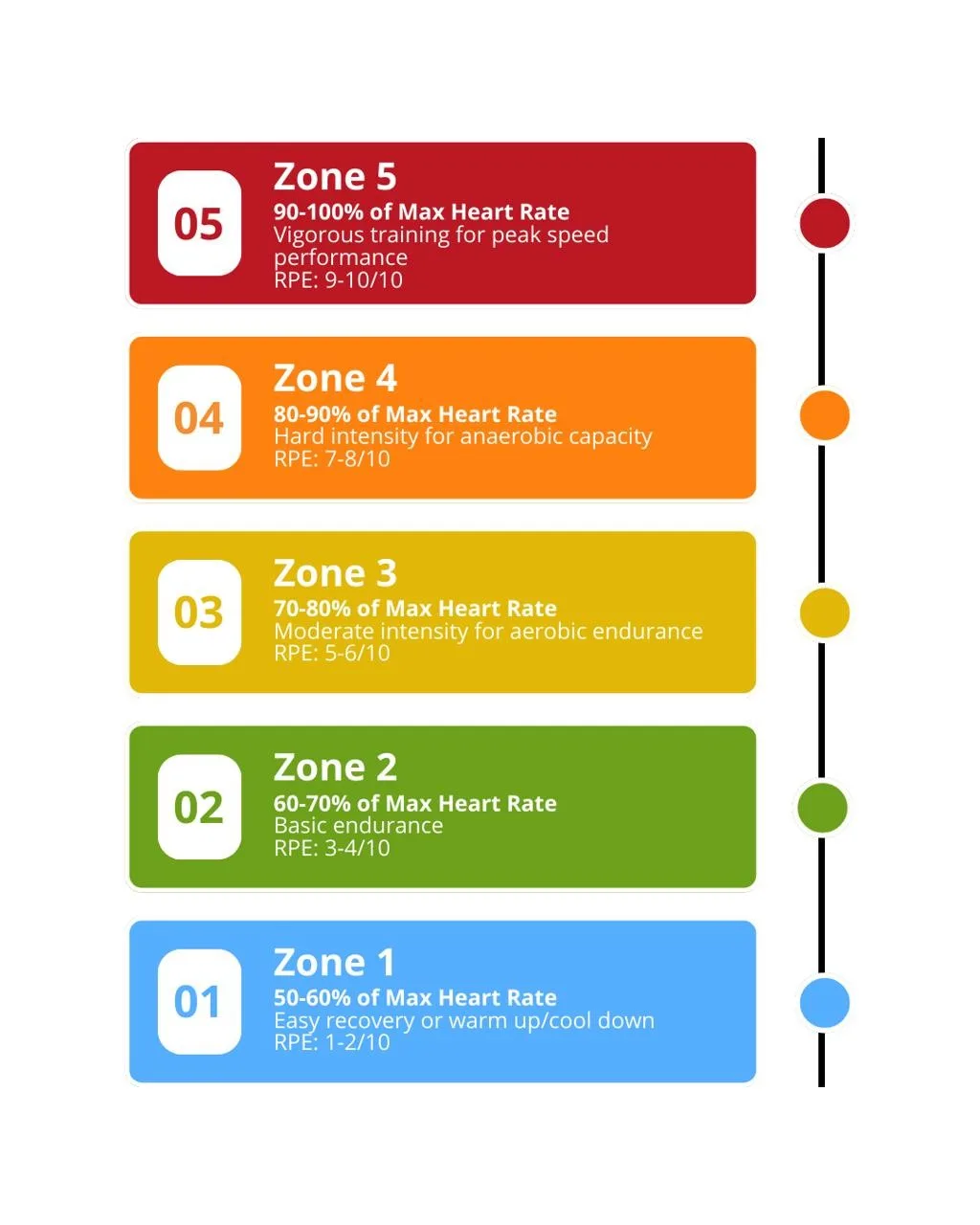
Zone 2 cardio is the foundation of every stamina program, not the warm-up you skip. Running, cycling, or brisk walking at a pace where you can hold a full conversation builds mitochondrial density and trains your cardiovascular system to deliver oxygen efficiently. The triathletes in the Journal of Human Sport and Exercise, Polarized Training Improves Time Trial Performance in Triathletes who kept 80% of sessions at easy aerobic intensity outperformed those who trained harder more often, a pattern also documented by the Sport Information Resource Centre (SIRC) in its analysis of how elite endurance athletes actually structure their weeks.
The real tradeoff: it feels embarrassingly easy, and most beginners abandon it because “easy” doesn’t feel productive. It is. If you’ve previously plateaued on bodyweight training at home, hitting a ceiling where push-ups and air squats stopped producing results, it’s often because you never built the aerobic base that makes every other training layer work. Zone 2 is where that base gets built.
GetFit AI’s Structured Training feature addresses exactly this. From your first workout session, the program places you inside the right intensity zone rather than leaving you to guess. If you’ve previously struggled with consistency because you didn’t have a clear program to follow, that structure is what changes the trajectory: the right session type lands on the right day, automatically.
2. HIIT Interval Sessions - 1-2 Weekly High-Intensity Blocks to Raise VO₂ Max and Lactate Threshold
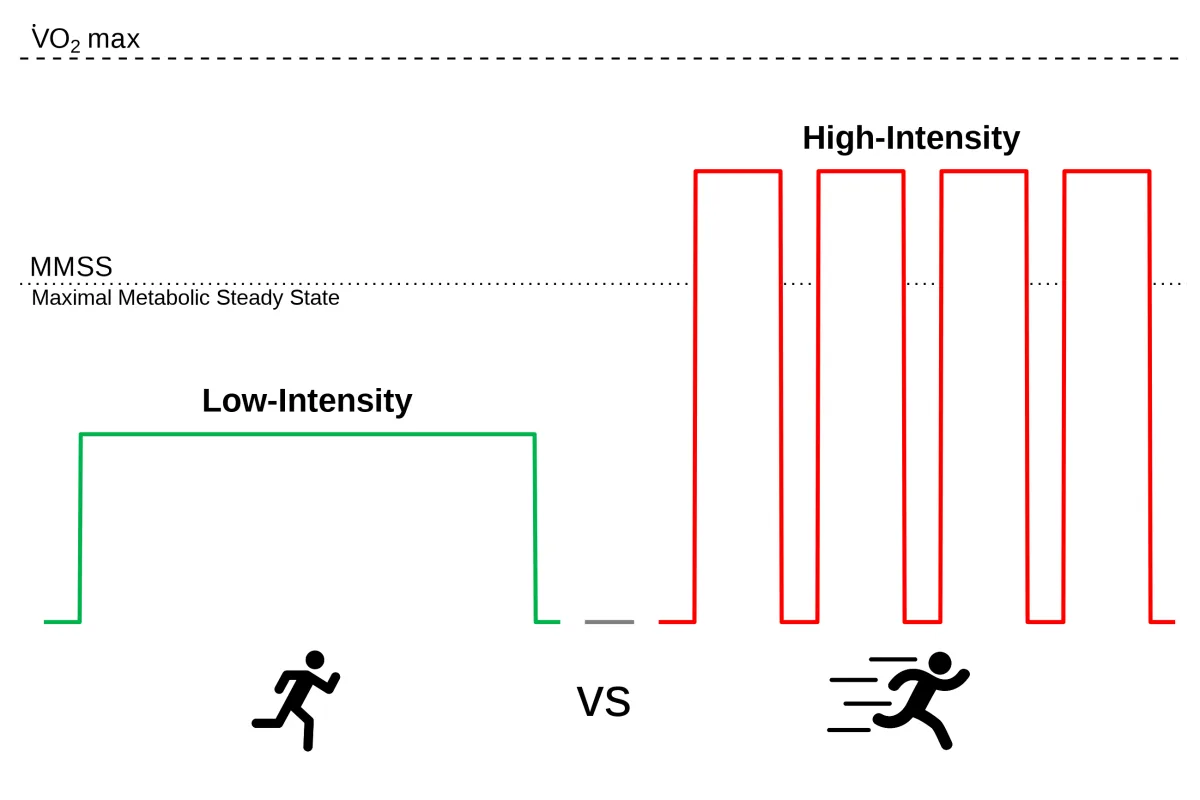
One or two HIIT sessions per week are enough to raise VO₂ max and push your lactate threshold higher, provided they sit on top of an aerobic base rather than replacing it. A simple structure: several rounds of short hard efforts followed by easy recovery intervals. The critical limit is frequency. More than two sessions per week without adequate base volume accelerates fatigue faster than adaptation, turning a useful stimulus into a plateau trigger.
When your weights stop moving or your interval times stop improving, the answer is rarely “do more.” It’s almost always a sequencing problem: the wrong stimulus on the wrong day, or high-intensity work without the aerobic base to absorb it. GetFit AI’s Athlete-Style Custom Workout Plans surface that diagnosis in plain language, telling you exactly what to change and why, so you’re not left guessing what broke.
3. Muscular Endurance Lifting - Light Loads at 40-60% of One-Rep Max for 12-20+ Reps

The National Strength and Conditioning Association (NSCA) prescribes lighter loads performed for higher repetition ranges to build muscular endurance rather than peak strength. Goblet squats, step-ups, and push-ups performed at high rep ranges train the slow-twitch muscle fibers responsible for sustained output. This approach is most beneficial when your legs or upper body fatigue before your cardiovascular system gives out, a pattern common in beginners whose muscles haven’t yet caught up to their aerobic capacity, and especially noticeable in anyone whose upper body gives out during sustained effort (grip, arms, and shoulders fatiguing long before breathing becomes the limiting factor).
GetFit AI tells you exactly which exercises to do in the gym today, which movements, how many sets, in what order, so you’re not walking in and improvising. That specificity is what separates a muscular endurance session that produces adaptation from one that just accumulates fatigue.
4. The 10% Weekly Progression Rule - Safe Progressive Overload Without Plateauing or Injury
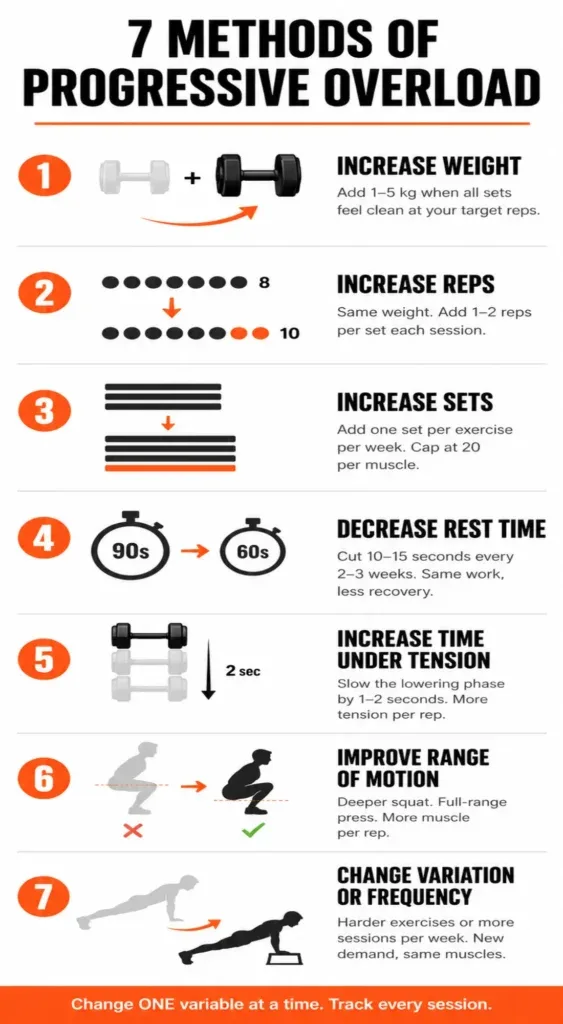
Sports medicine consensus recommends increasing weekly training volume, distance, or duration incrementally, keeping jumps modest from week to week, to prevent overuse injuries while keeping adaptation moving forward. This applies to running mileage, total cardio minutes, and resistance training load alike. The rule exists because connective tissue adapts more slowly than cardiovascular fitness. Jumping 20 or 30% in a single week often feels fine at the time and shows up as a stress injury two weeks later.
GetFit AI’s Structured Training tracks this progression across your overall training program arc, not just within individual sessions, so the 10% ceiling is enforced automatically rather than left to willpower and mental math.
5. Cross-Training Alternatives - Cycling, Rowing, Swimming, and Resistance Circuits for Cardio Without Running

Cross-training solves two problems at once: it prevents overuse injuries from repetitive movement patterns and keeps the aerobic stimulus fresh when the body has adapted to a primary modality. Cycling and swimming load the cardiovascular system without the impact stress of running, making them practical active-recovery options on non-run days. The limitation worth naming: cross-training builds general aerobic capacity but doesn’t replace the sport-specific adaptation you get from your primary activity.
6. Full-Body Stamina Exercises - Burpees, Jump Rope, Kettlebell Swings, and Rowing for Total Endurance
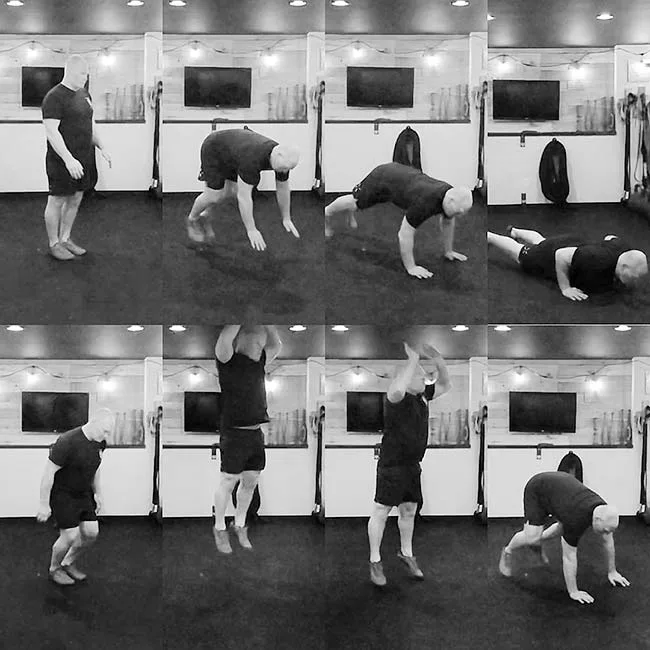
Rowing machines deserve particular attention for beginners building stamina and endurance without running. A single rowing interval session hits cardiovascular and muscular endurance simultaneously, loading the legs, back, and arms under sustained aerobic demand, making it one of the most efficient tools for anyone who has hit a ceiling on bodyweight-only training at home.
A practical beginner week looks like this: three Zone 2 runs or rides, one HIIT cycling session, and one muscular endurance circuit using goblet squats, step-ups, and push-ups at high rep ranges. That structure satisfies standard public-health guidelines for weekly moderate aerobic activity while building the aerobic base interval training requires.
Most beginners know they should vary their training. Sequencing Zone 2 sessions, HIIT blocks, and endurance lifting into a single coherent week without guessing which stimulus belongs on which day is where the difficulty lies. GetFit AI closes that gap with Athlete-Style Custom Workout Plans that automatically balance aerobic base work, interval sessions, and progressive overload, modeled in the style of the athlete you actually want to train like. The friends, challenges, and leaderboard layer inside the app adds the accountability that keeps users training consistently past the week-three wall, and it’s most effective once you’ve connected with at least one friend also using GetFit AI, turning a solo training plan into a shared commitment.
Access to that structure starts at $1.99 per week on the Premium Weekly plan, $4.99 per month on Premium Monthly, or $49.99 per year on Premium Yearly, less than the cost of a single training session with a coach, with a program that adjusts every week.
Get the exercise structure right and you’ve solved half the stamina equation, but the other half happens outside the gym entirely. What you eat and drink in the hours around each session determines whether the adaptations you just triggered actually take hold, which is exactly where most beginners leave gains on the table.
Beginner Stamina Week - Exercise Structure at a Glance
| Day | Session Type | Format | Target Duration |
|---|---|---|---|
| Monday | Zone 2 Cardio | Run, ride, or brisk walk at conversational pace | 30-45 min |
| Tuesday | Muscular Endurance Circuit | Goblet squats, step-ups, push-ups at 40-60% 1RM, 12-20+ reps | 30 min |
| Wednesday | Active Recovery | 20-min walk or easy cycling | 20 min |
| Thursday | HIIT Intervals | 6-8 × 30 sec hard / 90 sec easy (cycling or rowing) | 25-30 min |
| Friday | Zone 2 Cardio | Run, ride, or rowing at conversational pace | 35-50 min |
| Saturday | Zone 2 Cardio or Cross-Train | Swim, cycle, or walk | 30-45 min |
| Sunday | Full Rest or Active Recovery | Foam rolling or short walk | 15-20 min |
Progressive overload rule: increase total weekly duration or volume only modestly from one week to the next.
Nutrition and Hydration Habits That Actually Fuel Stamina Work
Forty minutes into a tempo run, your legs aren’t failing because you trained wrong. They’re failing because you showed up with empty tanks.
The session is the trigger. The actual stamina improvement happens afterward, during recovery, and recovery runs entirely on what you ate and drank before and after you trained. According to the NSCA (National Strength and Conditioning Association), without adequate carbohydrates for energy and protein for muscle repair, training stress accumulates without producing fitness adaptation or visible progress. You can do everything right in the gym and still chemically prevent your stamina from improving.
One pattern beginners repeatedly run into: they spend weeks chasing advanced biohacks and supplements, special powders, timing protocols, expensive stacks, only to eventually realize the gap was always in the basics. Hydration was off. Pre-run carbohydrates were missing. Post-session protein was an afterthought. The fundamentals were never addressed. Getting those right first is where real adaptation begins.
1. Carbohydrates and Protein - The Two Macros You Cannot Skip When Building Stamina and Endurance
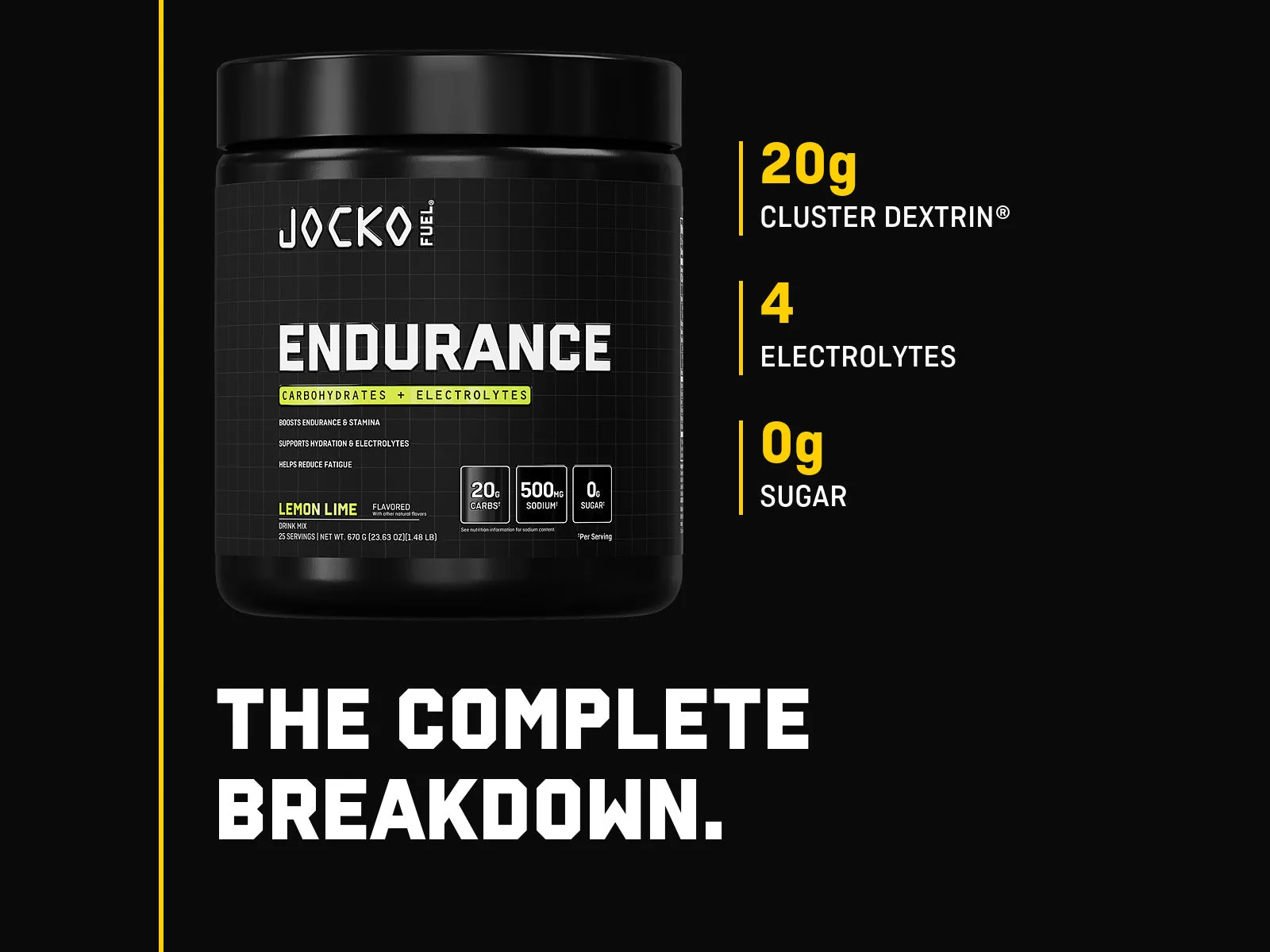
Carbohydrates and protein are not optional upgrades to a stamina plan; they are the mechanism. The NSCA (National Strength and Conditioning Association) is direct: without adequate carbohydrates for energy and protein for muscle repair, training stress accumulates without producing adaptation or visible progress. Carbohydrates replenish glycogen so the next session starts full. Protein resolves the tissue damage each session creates. Miss either consistently and effort pours into an underfueled system that produces fatigue, not fitness. Whether your goal is to lean out or put on size, neither outcome is reachable without getting these two macros right; every other variable is downstream of them.
2. Drink Approximately 3 Liters of Water Daily to Prevent Fatigue and Protect Endurance Output

Hydration is a performance variable, not a wellness habit. According to the NSCA (National Strength and Conditioning Association), even mild fluid deficits impair physical performance and increase perceived effort, meaning sessions feel harder while delivering less stimulus. The baseline target is approximately 3 liters of water daily, with additional intake around training. Heat, humidity, and session intensity all push that number higher.
3. Pre-Session Carb Choices That Load Your Engine Without Requiring a Nutrition Degree

The goal before a stamina session is simple: arrive with glycogen topped up and your stomach settled. Oatmeal with a banana, toast with nut butter, or rice with fruit eaten one to two hours before training covers that need for most people. The NSCA (National Strength and Conditioning Association) confirms that pre-session carbohydrate intake is critical for sustaining effort during high-intensity endurance work. The one real trade-off: high-fiber or high-fat options eaten too close to a session can cause GI discomfort mid-run, so simpler, lower-fiber carbohydrates work better inside the 60-minute window. No advanced prep required; the options that work best are also the easiest to make.
4. Post-Session Protein Foods That Trigger Muscle Recovery Without Overthinking It
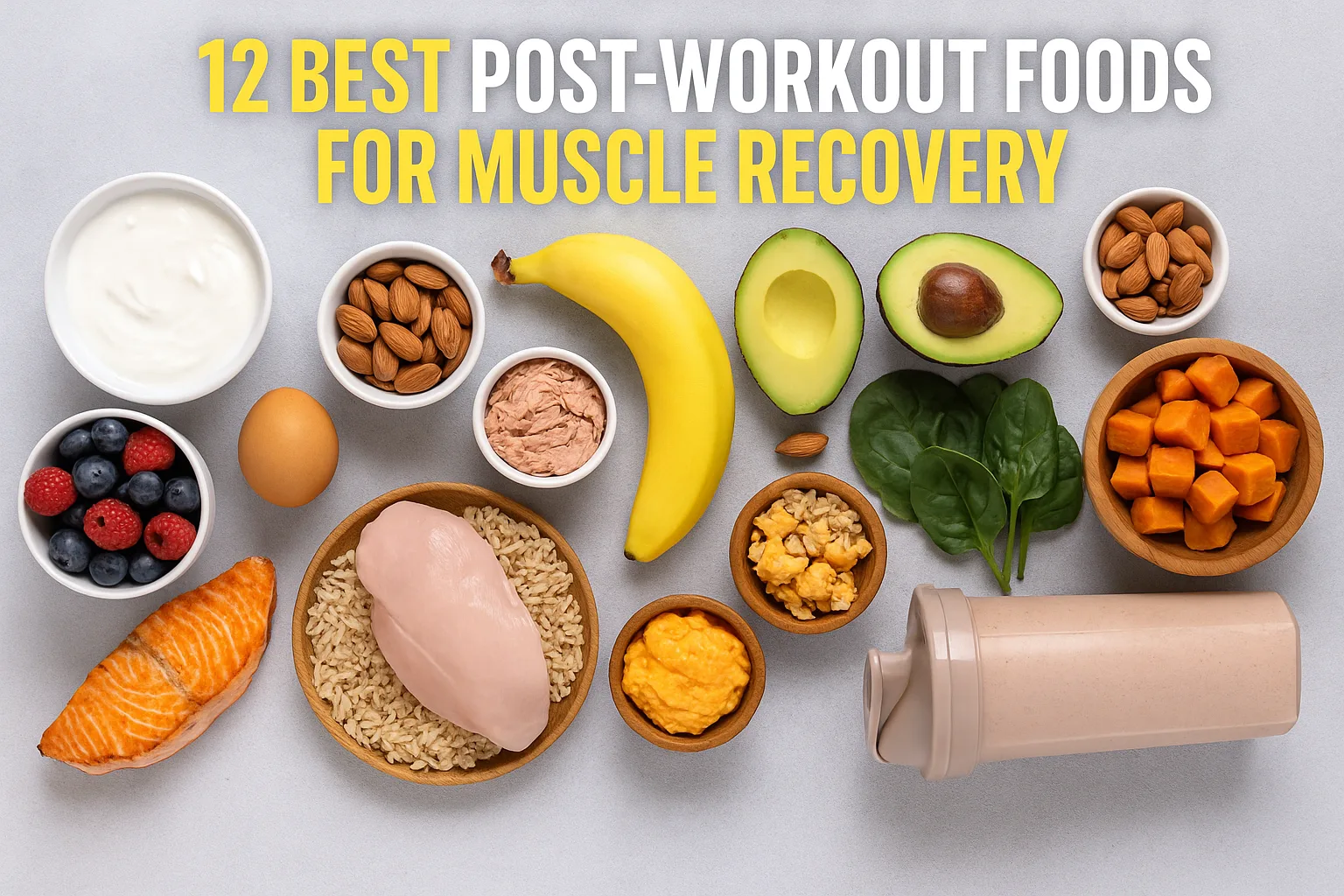
Within two hours of finishing a stamina session, a solid serving of protein gives the body what it needs to repair tissue and consolidate the aerobic adaptations the session triggered. Greek yogurt, eggs, cottage cheese, chicken, or a protein shake all hit that range without requiring a food scale. This window matters for endurance athletes as much as for lifters; the tissue stress from sustained aerobic work still demands protein to resolve. Keep the recovery meal as simple as the pre-run snack; execution consistency matters more than optimization.
Fueling the session and recovering from it are two sides of the same coin. But food and water only take you so far. The third leg of the adaptation loop is what happens when you’re horizontal: how well and how long you sleep determines whether the work you put in actually sticks, which is exactly where the next section picks up.
Related Reading
- Athletic Performance Analysis
- Does Vaping Affect Athletic Performance
- How to Avoid Feeling Sleepy After Workout
- How Does Sleep Affect Athletic Performance
- How to Measure Athleticism
- Velocity Based Training
- Why Am I So Bad at Sports
- Endurance vs Strength Training
- Why Am I So Tired After Working Out
- How to Create a Personalized Workout Plan
Recovery and Sleep Habits That Make Stamina Gains Stick
The workout is the instruction. Sleep is where the body actually builds.
“I feel that the field’s native sleep and recovery data presentation is insufficient, and I need third-party tools to make sense of recovery metrics that could inform stamina gains.”
— what we hear from fitness tracker users
Across the market, the actual gains in stamina capacity, including tissue repair, glycogen replenishment, and cardiovascular adaptation, occur during recovery, not during the session itself. Every hard run or cardio circuit creates microscopic stress on muscle fibers and the cardiovascular system. The body converts that stress into new capacity only when it has an uninterrupted window to do the work. Cut that window short, and the instruction gets issued to a factory that never finished processing the last order.
The failure pattern is almost always the same: someone trains consistently, adds a session or two when progress stalls, and wonders why their endurance keeps hitting the same ceiling. The problem is rarely effort. More sessions on top of poor sleep interrupt adaptation rather than accelerate it.
1. Recovery Is the Real Training - Your Workout Is Only the Stimulus
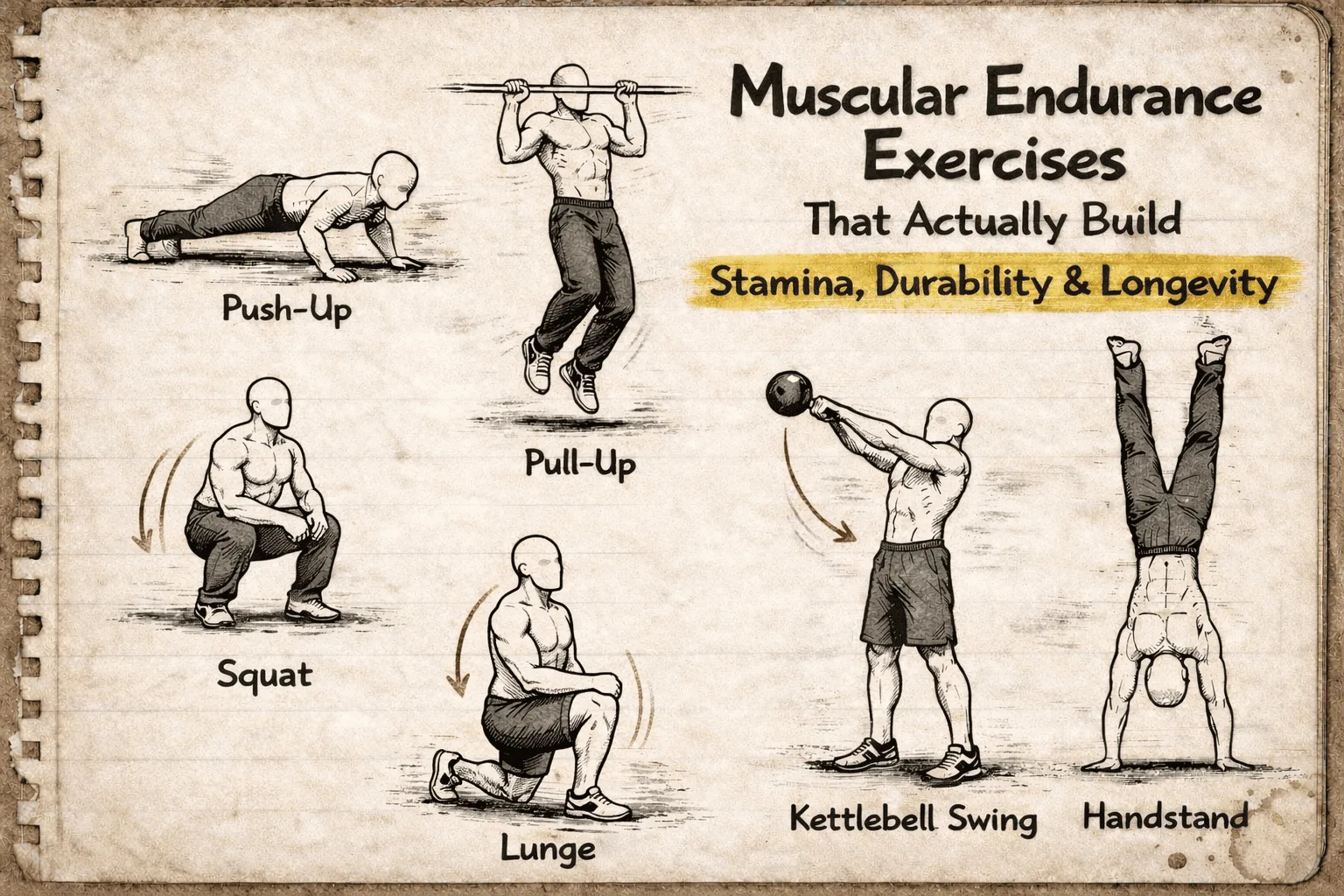
Recovery is the productive phase of the training cycle. The workout is only the stimulus for adaptation; the actual gains in capacity, including muscle repair, energy replenishment, and performance improvement, occur during the recovery period. Think of each session as issuing an instruction to the body. Sleep and rest are when the body executes it. Skip or shorten that window and the instruction piles up unprocessed, which is why adding sessions on top of poor recovery prevents progress rather than accelerating it.
2. 7-9 Hours of Quality Sleep for Tissue Repair and Energy Replenishment
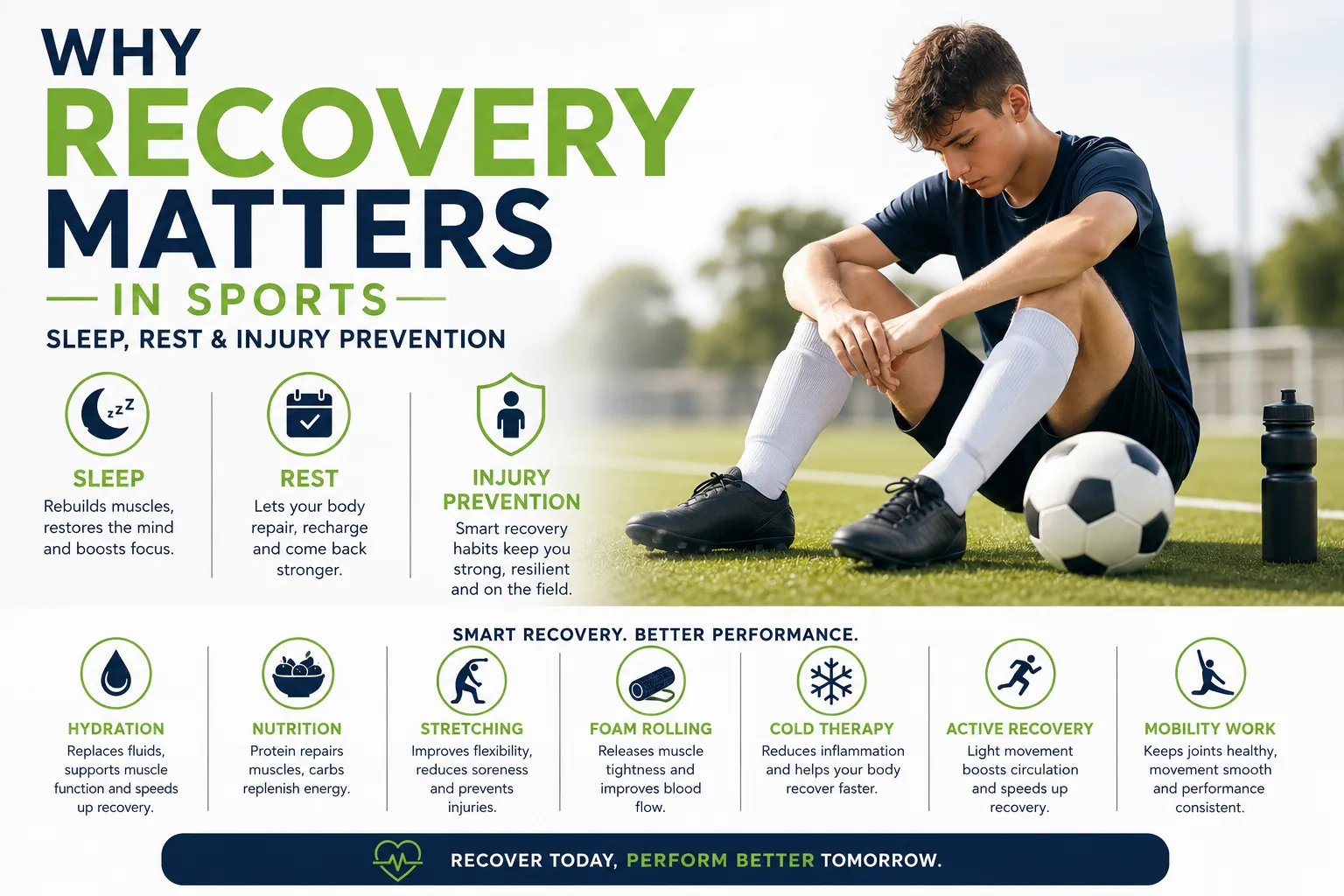
Sufficient, high-quality sleep is the mechanism through which stamina gains are physically constructed. Mend Colorado’s analysis confirms that sleep is when the body repairs training-induced tissue damage, replenishes glycogen stores, and consolidates the cardiovascular adaptations the session triggered. Duration alone is not sufficient; sleep architecture matters. Fragmented or light sleep compresses the deep-stage repair window without the athlete realizing it, producing the frustrating pattern of hitting eight hours and still feeling flat the next session. Consistent bed times and limiting screens before sleep protect the quality that duration alone cannot guarantee.
3. Mental Stamina Training - Mindfulness and Meditation to Push Through Physical Fatigue

Mental fatigue raises perceived effort independently of physical output. Research by Samuele Marcora on the psychobiological model of endurance demonstrates that a cognitively drained athlete reaches their perceived limit sooner, even when their muscles retain genuine capacity. The wall many beginners hit mid-session is partly psychological, not purely physiological. Short mindfulness practices between sessions, such as brief focused breathing, reduce the cognitive load that bleeds into training. Mental stamina is the variable that determines whether the body’s available capacity actually gets used.
4. Diaphragmatic Breathing as an In-Session and Lifestyle Endurance Tool

Diaphragmatic breathing serves two distinct functions: it lowers resting heart rate over time as a lifestyle habit, and it controls perceived exertion in real time during a session. A box-breathing protocol, four counts in and six counts out, used mid-run, reduces the panic response that causes premature pacing collapse and lets the body access capacity the mind was already closing off. The practical trade-off is that the technique requires deliberate practice before it becomes automatic under cardiovascular stress; using it only when already exhausted produces minimal benefit.
5. Active Recovery Habits That Lock In Endurance Gains Between Sessions

Complete inactivity between sessions slows inflammation clearance more than structured light movement does. A 20-minute walk, easy cycling, or foam rolling keeps circulation moving, clears metabolic byproducts, and reduces the accumulated fatigue debt that hard sessions create. This is the difference between training frequency that compounds and training frequency that grinds the body down. The limit worth acknowledging: active recovery only works when intensity stays genuinely low; sessions that drift into moderate effort simply add another hard day without the label.
Related Reading
- How to Deal With Performance Anxiety in Sports
- Hydration Tips for Athletes
- How to Build Mental Toughness in Athletes
- Food for Athletes During Competition
- Strength Training Workout for Runners
- Best Plyometric Exercises for Speed
- Exercises That Improve Muscular Endurance
- Conditioning Workouts for Athletes
- Speed Training for Athletes
- Balance Exercises for Athletes
- Best Core Exercises for Athletes
Why Structured Training Closes the Gap Between Effort and Results
Most beginners who stall are not failing for lack of effort. They are failing because effort without structure eventually hits a ceiling, and information without a clear execution path leaves you repeating the same sessions long after they stopped producing results.
Why the Standard Prescription Fails Behaviorally Even When It Is Physiologically Correct
73% of new gym members quit within six months, and the timing is not random. Most drop out precisely in the window when real adaptation was about to pay off, and the behavioral reasons behind that dropout are just as important as the physiological ones.
The standard prescription hands people a destination with no map for getting there, then blames them when they stop walking.
Key takeaway: Progressive overload, 150 minutes of weekly cardio, adequate sleep: all of it works. The failure happens one layer below the science, at the level of daily execution.
The Consistency Gap - What Unguided Training Actually Costs You Over Time
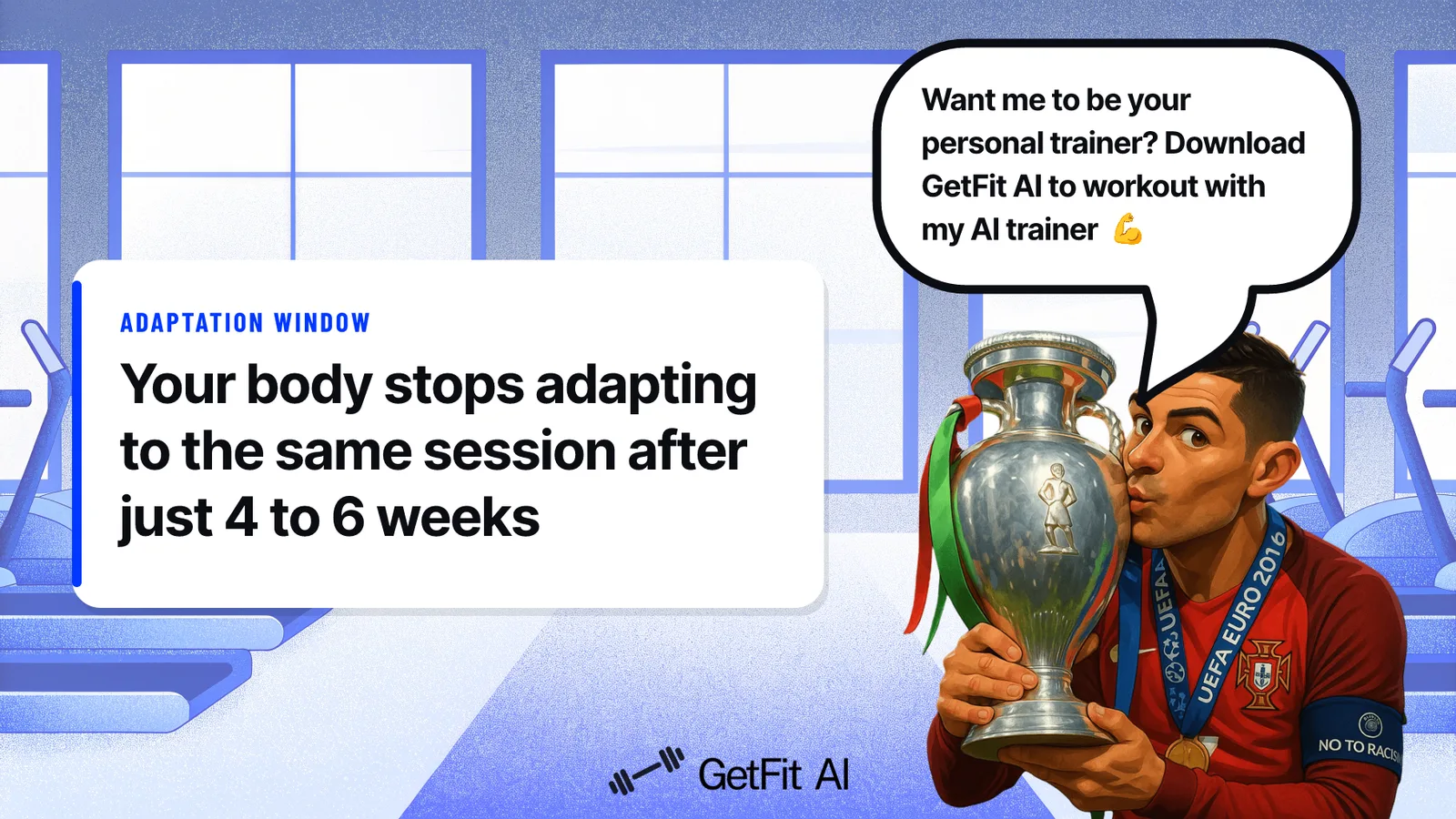
The body adapts to a given training stress in roughly four to six weeks. After that, repeating the same session is physiologically neutral: the stimulus is familiar, the adaptation signal is gone, and the work produces maintenance at best. Without a structured system to introduce new demands at the right time, progress quietly stalls. As Slamdot’s research notes, without structured support that addresses plateaus and confusion, even well-intentioned effort consistently fails to produce lasting results. Invisible progress is indistinguishable from failure, and that feeling is what drives abandonment.
How a Structured Training Plan Replaces Guesswork and Keeps Stamina Climbing
Structure removes the decision points that quietly derail unguided training. Consider the moment mid-workout when you are unsure whether to push or rest: without guidance, most people guess, underperform, or cut the session short.
GetFit AI addresses this by delivering a custom workout plan built in the style of athlete training models, structured to progress as you adapt rather than repeat what you already handled. It also provides real-time guidance that answers those in-session questions before they become reasons to quit. The structural scaffold the standard prescription never provides is a system that evolves with you and answers back. Industry research confirms that plans designed to reduce decision ambiguity and adapt over time consistently outperform unguided effort on both retention and continued participation, a finding that applies directly to the gap between knowing the right inputs and actually executing them week after week.
Next steps
If your cardio sessions keep hitting the same ceiling no matter how often you show up, the path forward starts with recognizing that stamina is a structure problem, not a willpower problem. Your body stops adapting the moment training stops changing, and more effort applied to the same stimulus produces fatigue, not fitness.
The 80/20 training split from elite endurance research means most recreational athletes are grinding in exactly the wrong intensity zone, accumulating fatigue instead of building aerobic base. The 73% dropout rate within six months means most people quit in the precise window before measurable stamina gains become detectable, precisely because nothing in their routine closes the feedback loop between effort and visible progress. Together, they point to one practical fix: a structured plan that applies progressive overload automatically, signals what to do next, and adapts as your capacity grows.
Start with the AI fitness app to get a custom workout plan built around your current capacity, with an AI trainer available the moment you hit uncertainty mid-session. The structure does what static routines cannot: it changes the demand before your body locks in, keeps the aerobic base and intensity blocks sequenced correctly, and removes the daily decision friction that turns invisible progress into dropout.
Frequently Asked Questions
What’s the actual difference between stamina and endurance?
Stamina is your combined mental and physical capacity to sustain activity and resist fatigue, it includes both how long your body can keep moving and whether your mind lets it. Endurance is a concrete physiological output: cardiovascular endurance is measured by VO2 max (mL/kg/min), reflecting how efficiently your heart and lungs deliver oxygen to working muscles during sustained effort. The distinction matters because a stamina gap and an endurance gap require different fixes.
How is cardiovascular endurance actually measured?
Cardiovascular endurance is measured by VO2 max, expressed in millilitres of oxygen per kilogram of body weight per minute (mL/kg/min). It reflects how efficiently the heart and lungs deliver oxygen to working muscles during sustained effort, it’s a number, not a feeling, and it’s trainable.
Is HIIT or steady-state cardio better for building endurance?
Both play a role, but they serve different purposes and must be combined deliberately. Elite endurance athletes spend roughly 80% of their weekly training volume at an easy, conversational aerobic pace (Zone 1-2), with only one or two high-intensity HIIT sessions per week sitting on top of that base to raise VO2 max and lactate threshold. Doing more than two HIIT sessions per week without adequate base volume accelerates fatigue faster than adaptation and can trigger a plateau.
Can lifting weights actually help my endurance?
Yes, muscular endurance lifting targets the slow-twitch muscle fibers responsible for sustained output, which is a different system from cardiovascular endurance and responds to different training stimuli. The NSCA prescribes lighter loads at 40-60% of one-rep max for 12-20+ reps using movements like goblet squats, step-ups, and push-ups. This is especially useful when your legs or upper body fatigue before your cardiovascular system gives out.
How long does it realistically take to see stamina improvements?
Noticeable improvements can appear as early as 4 to 8 weeks, but meaningful gains in VO2 max and submaximal exercise capacity typically emerge after 8 to 12 weeks of structured, progressively overloaded training. Most beginners quit around week four convinced nothing is working, which is just before the real gains arrive.