8 Conditioning Workouts for Athletes That Build Peak Fitness


Sweat is not a training plan. Here is why unstructured effort quietly kills athletic progress, and the 8 conditioning workouts that actually build speed, stamina, and sport-ready fitness.
Why Most Never Get Athletic Conditioning Results
The common assumption is that as long as you’re sweating and showing up, your conditioning is improving, that effort alone is enough to build peak fitness. In reality, cardio raises your heart rate, but conditioning builds the specific energy systems, movement patterns, and physical qualities an athlete needs to perform under pressure. By definition, conditioning is structured, sport-specific training designed to develop speed, power, and stamina, not simply any activity that produces sweat or an elevated pulse.
The difference shows up in results. A 20-minute jog and a structured alactic sprint session might feel equally exhausting, but only one of them trains your nervous system to accelerate explosively and recover fast enough to do it again. Effort is the input. Architecture is what converts that effort into athletic output.
Effort is the input. Architecture is what converts that effort into athletic output.
Picture a 16-year-old copying a fitness influencer’s “athlete workout”: bicep curls followed by random sprints, a core circuit from one video, a leg day from another. High effort. Zero system. See our AI fitness app for how this works in practice.

Copying workouts from social media creates the appearance of conditioning, but without energy-system targeting, those sessions do not build athletic conditioning. The sweat is real. The adaptation is not. Random intensity never compounds. Without structure, each session resets the clock instead of building on the last one.
Athletic conditioning is not reserved for varsity starters or elite competitors. As Rail Stop Fitness puts it, conditioning training is intended for athletes and sport-aspiring lifters pursuing performance outcomes.
The goal does not have to be a scholarship. It just has to be a real performance target. Unstructured effort quietly takes away time, progress, and the athletic ceiling you lower every week you train without a system.
Key takeaways
- Conditioning and cardio are not the same thing, cardio raises your heart rate, conditioning builds the specific energy systems and movement patterns an athlete needs to perform under pressure.
- Effort without structure doesn't build fitness, it builds a physiological debt that compounds until performance stalls or the body breaks down.
- The eight most effective conditioning workouts aren't defined by how hard they feel, but by which energy system they target and whether rest intervals are long enough to allow real adaptation.
- Sequence is the variable most athletes never control, running the same stressor under different labels on back-to-back days isn't a program, it's a plateau waiting to happen.
- A single workout your favorite athlete posts online has no progression logic, no energy-system sequencing, and no feedback loop, that's the aesthetic version of their training, not the functional version.
- GetFit AI's Athlete-Style Custom Workout Plans close that gap two ways: build a custom AI plan around your own goals and equipment, or adopt an athlete's or trainer's plan and train in their exact style, either route adapts automatically as you get stronger.
What Unstructured Conditioning Actually Costs an Athlete

Why Sweat and Soreness Are False Signals of Athletic Progress
Across the broader exercise science community, delayed onset muscle soreness-8/abstract) (DOMS) feels like productive work but does not reflect actual physiological adaptation or fitness gains.
What beginners we work with at GetFit AI consistently face is the trap of showing up without being able to answer the harder question: am I actually getting stronger, or just showing up? Without a repeatable stimulus and a measurable baseline, what most coaches and trainers observe is that each session effectively starts from scratch rather than building on the last, blocking the cumulative overload required for real adaptation. GetFit AI’s Structured Training addresses this directly.
The Sport-Specific Energy System Gap That Kills Field and Court Performance
Soccer is predominantly aerobic, while basketball and football flip toward anaerobic bursts, with explosive alactic efforts dominating short possessions and sprint sequences. An athletic conditioning program built without sport-specific energy system training means speed and stamina never transfer to the field.
GetFit AI’s Athlete-Style Custom Workout Plans are built around that exact ambition, calibrating work-to-rest ratios, energy system emphasis, and exercise selection to the sport, so the conditioning that happens in the gym shows up on the field or court where it counts.
The Nutrition Blind Spot That Erases Hard Conditioning Sessions
Athletes who train in a caloric deficit blunt the hormonal response that drives muscle adaptation; the session registers as stress but produces no structural return.
GetFit AI surfaces nutrition guidance alongside each training session, treating fueling as part of the program arc, not a separate problem the athlete has to solve alone. Combined with the Friends, Challenges, and Leaderboards layer, most effective once a user connects with at least one friend or workout partner also using GetFit AI, the accountability loop keeps athletes eating and training with intention past the initial motivation spike and into the weeks where most beginners quietly quit.
GetFit AI Premium is available at multiple price tiers, so the infrastructure that removes every one of these blind spots costs less than a single post-practice meal.
Related Reading
- Why Am I Not Getting Faster at Running
- Does Masturbation Affect Athletic Performance
- Biomechanics in Sports
- Why is Protein Important for Athletes
- What is Speed and Agility Training
- How to Be a Better Athlete
- How Does Sports Psychology Help Athletes
- Why is Hydration Important for Athletes
- Why Do Athletes Train at High Altitudes
- Why Do Athletes Stretch Before a Game?
- IV Therapy for Athletic Performance and Recovery
- Yoga and Athletic Performance
- Red Light Therapy for Athletic Performance
8 Conditioning Workouts for Athletes That Actually Build Peak Fitness
Each workout in an athlete’s program earns its spot by targeting a specific energy system at a specific intensity. Sweat and effort are not the selection criteria. The eight most effective conditioning workouts are defined by which energy system they target and whether the rest intervals are long enough to train that system. The phosphocreatine system, the aerobic pathway, and the anaerobic glycolytic system each respond to different stimuli, and training the wrong one for your sport builds a different body than the one your game demands.
1. Alactic Capacity Sprint Series - 10×40-Yard All-Out Efforts
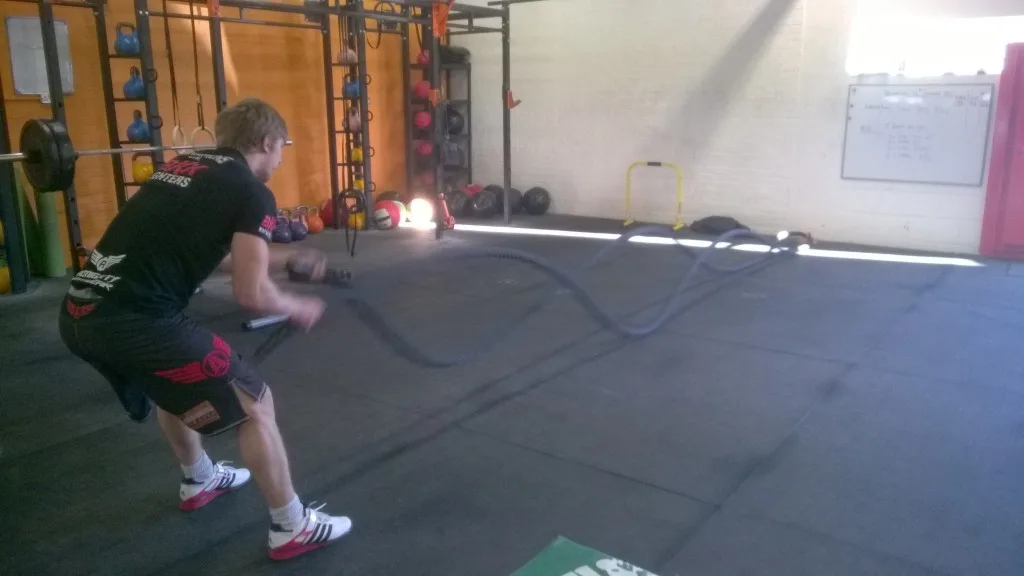
Alactic capacity sprints are the foundation of speed development for any power-sport athlete. Sprint max speed for 5 to 75 meters (roughly 5 to 10 seconds of work), rest triple the work time (15 to 30 seconds), for 10 to 16 rounds. That rest window is non-negotiable: as Outperform makes clear, cutting rest short shifts the training stimulus away from speed development and toward metabolic conditioning, which means athletes can grind through every rep and walk away slower than when they started. Football skill players and sprinters use this protocol in pre-season precisely because it trains the phosphocreatine system when it is fully restored, not when it is depleted.
2. Tempo Interval Run - 6×800m at 75-80% Max Heart Rate

Tempo intervals build the aerobic base that soccer players, cross-country runners, and basketball guards depend on for repeated effort across a full game. Run 6 rounds of 800 meters at 75 to 80 percent of max heart rate, with 90-second rest between efforts. This intensity sits just below the lactate threshold, which means the body learns to clear lactate faster rather than accumulating it. The tradeoff: this workout does almost nothing for pure speed or power. It is an aerobic investment, and athletes who skip it because it feels too easy are usually the ones who fade in the fourth quarter.
3. Functional Strength Circuit - 5 Exercises, 4 Rounds, 45 Seconds On / 15 Seconds Off
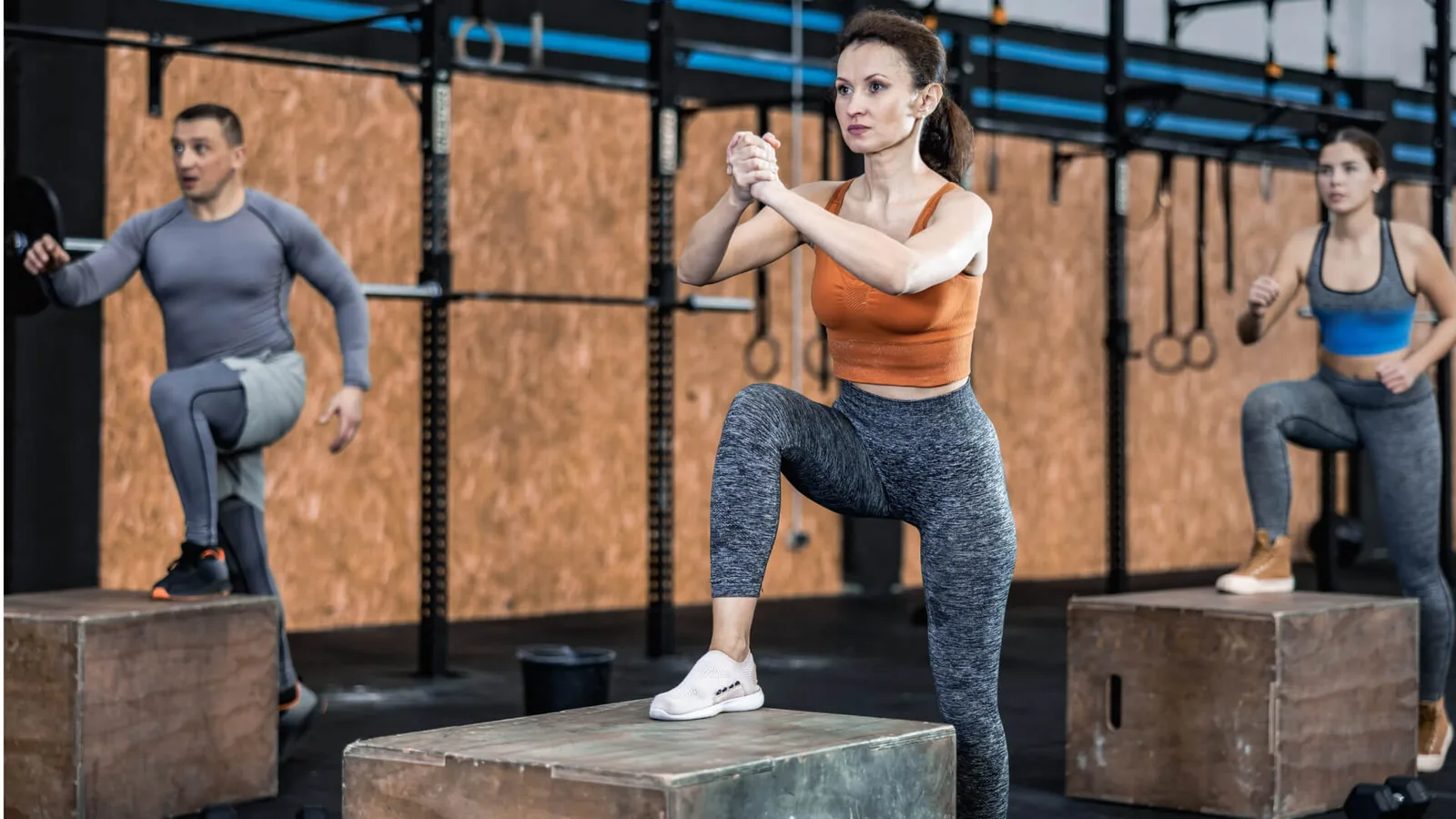
Functional strength circuits close the gap between the weight room and the field by combining compound movements under metabolic stress. The protocol: walking lunges, kettlebell swings, push-ups, box step-ups, and a plank hold, cycled for 45 seconds of work and 15 seconds of rest, repeated for 4 rounds with 1 minute between rounds. This format builds muscular endurance and reinforces movement patterns that carry over to sport. The limitation is load: because rest is short, weights stay moderate, so this is not a substitute for a dedicated strength session. It is most valuable as a conditioning finisher or an active-recovery day option.
One underappreciated reality for athletes managing recurring injuries, a back injury that flares during heavy loading, a hamstring that tightens mid-season, is that “just push through” is a path to a shorter season. The functional strength circuit’s moderate load and movement-pattern focus make it a sustainable option during flare-up weeks, but sustainability only compounds into results when the surrounding program is structured well enough to keep those weeks from derailing everything else. That is the structural problem GetFit AI’s Athlete-Style Custom Workout Plans are designed to solve from the first workout session: the plan adapts as the athlete gets stronger, so a week of modified effort doesn’t mean falling behind on a program and quitting.
4. Repeat Agility Shuttle Drill - 5-10-5 Pro Agility, 8 Rounds, 1:3 Work-to-Rest Ratio
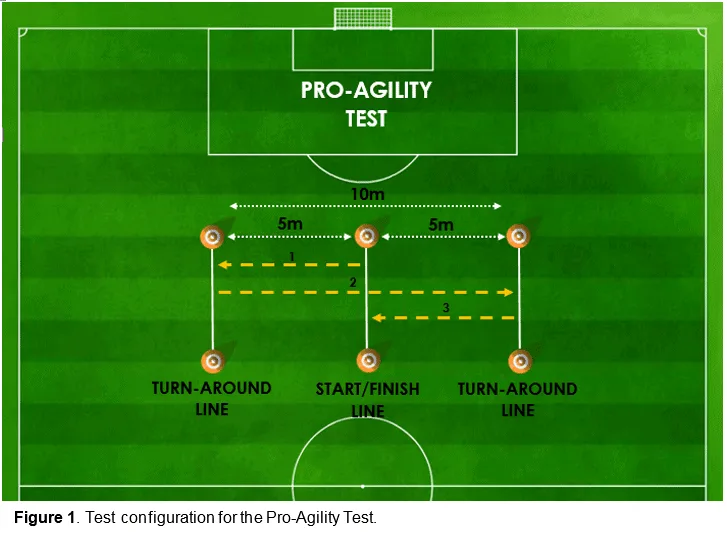
Multi-directional agility drills should run 10 to 15 seconds at maximum effort with 1 to 2 minutes of rest between rounds, mimicking the actual work-to-rest demands of field and court sports. The 5-10-5 pro agility drill fits that window exactly. Run 8 rounds with a 1:3 work-to-rest ratio: roughly 5 seconds of work, 15 seconds of rest. This targets repeated sprint ability under cumulative fatigue, which is the quality that separates athletes who stay sharp in the third set or fourth quarter from those who slow down and make mistakes. The drill is directional, not linear, which makes it more transferable than straight-line sprints for most team-sport athletes.
5. Metabolic Conditioning AMRAP - Kettlebell Swings, Box Jumps, and Battle Ropes for 20 Minutes
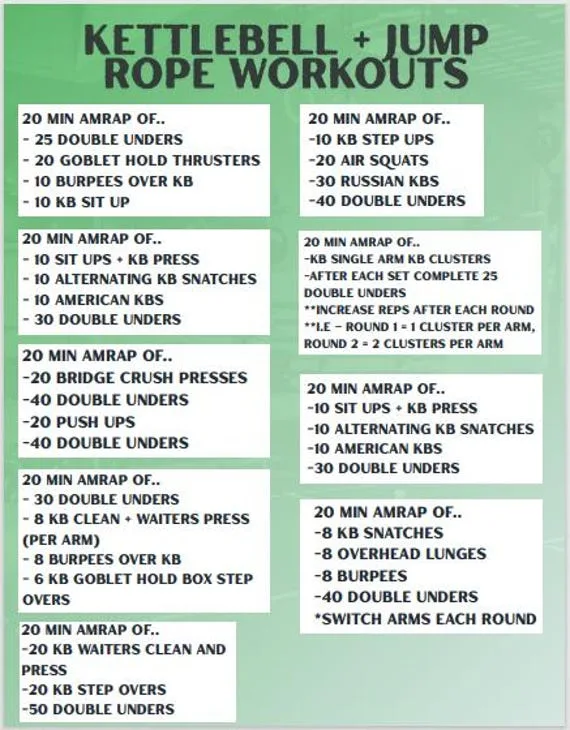
A 20-minute AMRAP (as many rounds as possible) of kettlebell swings, box jumps, and battle rope slams draws on both aerobic and anaerobic energy pathways simultaneously, making it one of the most time-efficient conditioning formats for mixed-sport athletes. Set a repeating sequence: 15 kettlebell swings, 10 box jumps, 20 seconds of battle rope alternating waves. The dual-pathway demand is the point: neither system gets full recovery, so both adapt. The honest tradeoff is that this format is hard to dose precisely, meaning athletes who push too hard too early blow up before the stimulus accumulates. Pacing the first five minutes conservatively produces better adaptation than going all-out from the start.
6. Plyometric Power Block - Depth Jumps, Broad Jumps, and Lateral Bounds, 4 Sets of 6 Reps Each
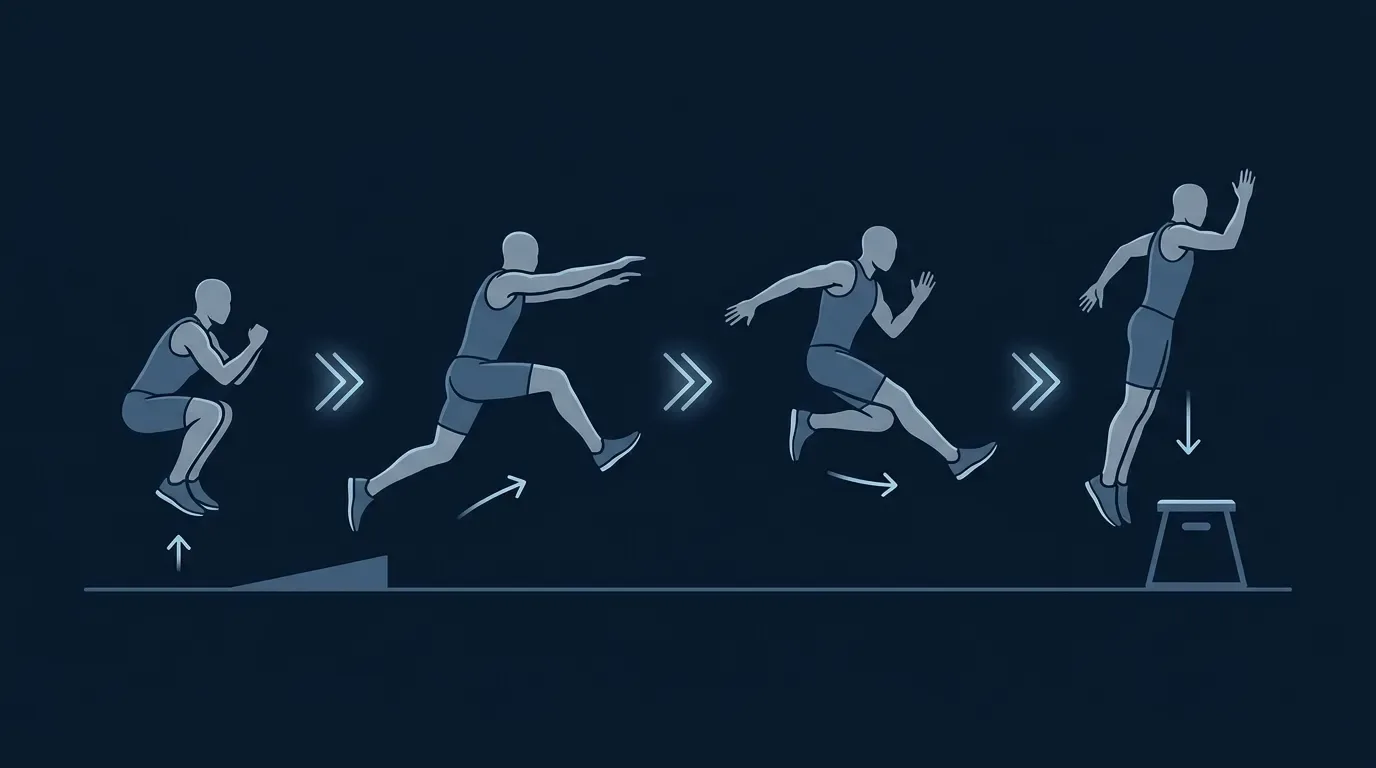
Plyometric training develops the rate of force development that separates explosive athletes from merely strong ones. The protocol is 4 sets of 6 reps each: depth jumps (step off a box and immediately jump as high as possible on landing), broad jumps (maximum horizontal distance per rep), and lateral bounds (single-leg push, stick the landing). One critical prerequisite: athletes should have established a solid strength base before adding depth jumps to their program. Without that strength base, the landing forces exceed what the joints can absorb safely, and the plyometric stimulus becomes an injury risk rather than a power stimulus. Rest fully between sets, 90 seconds minimum.
7. Aerobic Power Intervals - 8×200m at 90% Effort with 2-Minute Rest

Aerobic power intervals sit at the top of the aerobic intensity range, just below true sprint work. Run 8 repetitions of 200 meters at 90 percent effort with 2 full minutes of rest between each. This format trains the body to sustain near-maximal output while still relying on aerobic metabolism for recovery between reps, which is exactly what middle-distance runners and soccer midfielders need. The 2-minute rest is load-bearing here: Outperform’s analysis of sprint rest protocols confirms that different sprint distances demand different rest-to-work ratios, and shorter intervals at this intensity require longer relative recovery to preserve quality across all 8 reps.
8. Sport-Specific Basketball Conditioning - 17s Suicide Drill, 10 Rounds, 45-Second Rest
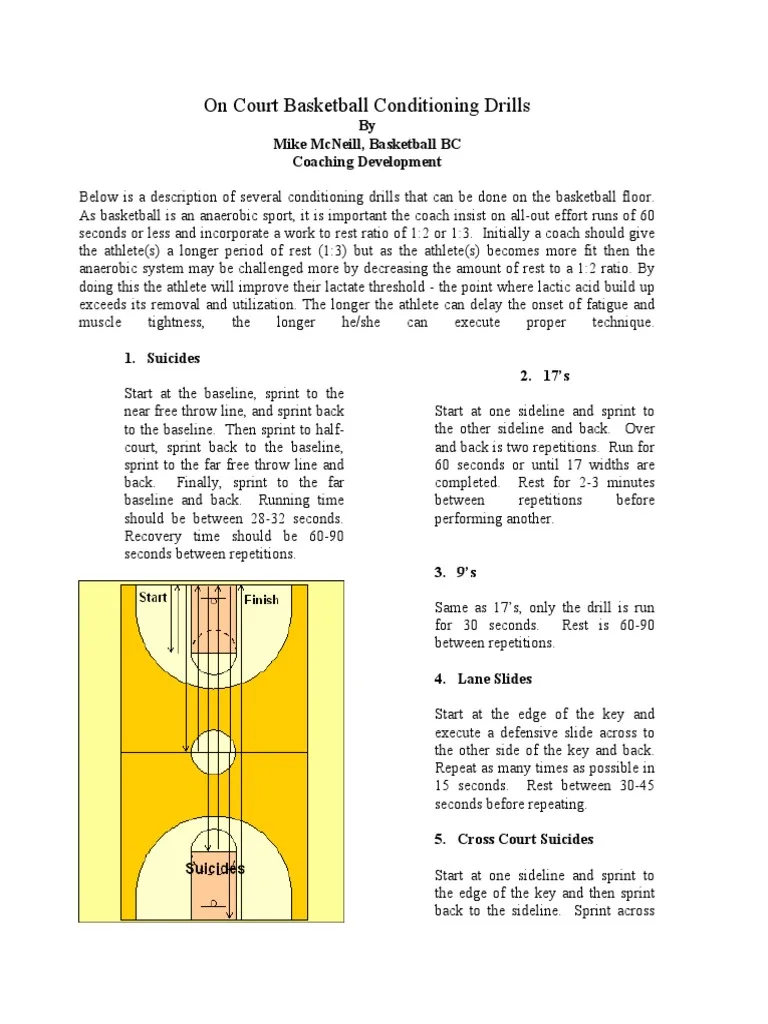
The 17s suicide drill is a staple of basketball player conditioning at every level from high school to the pros. Sprint baseline to baseline 17 times within the target time standard, rest 45 seconds, then repeat for 10 rounds. The drill is named for the 17 touches required to complete one round.
It trains repeated sprint ability under cumulative fatigue, which is the exact demand basketball places on guards and forwards across four quarters. Coaches who run this drill in pre-season are building the specific aerobic and anaerobic capacity the sport requires. Athletes who do only straight-line cardio instead of this format are conditioning for a different sport entirely.
One persistent problem for athletes and coaches alike is the absence of clear, measurable benchmarks for what “peak conditioning” looks like across a full season. Anecdotes fill the vacuum, a specific drill a pro player reportedly runs, a rumored time standard at a combine, but anecdotes are not programs. The 17s suicide drill is one of the few sport-specific benchmarks that is both standardized and widely used: sub-60 seconds per round, 10 rounds, 45 seconds of rest.
That is a concrete target an athlete can train toward and measure across a pre-season. The GetFit AI onboarding quiz captures exactly where an athlete sits relative to benchmarks like this, then uses that baseline to build an Athlete-Style Custom Workout Plan that sequences these drills in the right order and density, rather than leaving the athlete to guess whether they are ready to add rounds or cut rest.
Related Reading
- Athletic Performance Analysis
- Does Vaping Affect Athletic Performance
- How to Avoid Feeling Sleepy After Workout
- How Does Sleep Affect Athletic Performance
- How to Measure Athleticism
- Velocity Based Training
- Building Stamina and Endurance
- Why Am I So Bad at Sports
- Endurance vs Strength Training
- Why Am I So Tired After Working Out
- How to Create a Personalized Workout Plan
How to Structure a Conditioning Program That Keeps Building
“I struggle to distinguish between a genuinely structured conditioning program and a loosely bundled class package with a few personal training sessions, making it hard to commit to a program that will keep building over time.”
— what we hear from fitness program seekers

The Session-Sequencing Rule - Why Order Determines Whether You Adapt or Just Accumulate Fatigue
Otterbein University Student Research, Prevention of Overuse Injuries in High School Athletes (Wright) confirms that structured periodization, distributing speed, strength, and aerobic work across the week, is necessary to allow adequate recovery between sessions and ensure continued physiological adaptation. Without that deliberate sequencing, effort accumulates without producing adaptation.
A 5-Day Weekly Blueprint - Distributing Alactic, Aerobic, Strength-Circuit, and Agility Work Without Overlap
A practical weekly structure looks like this: Monday alactic sprints, Wednesday functional strength circuit, Friday tempo intervals, Saturday agility drills, Sunday full rest. Tuesday and Thursday become active recovery or complete rest days. That spacing gives each energy system 48 to 72 hours to respond before the next demand hits it.
Monday’s sprint work primes the neuromuscular system so Wednesday’s strength circuit can express force more effectively, and Friday’s tempo run builds the aerobic buffer that makes Saturday’s agility session cleaner and faster. Keeping that sequence intact is what separates a program that compounds from one that simply tires you out, and it is the logic behind GetFit AI’s Structured Training feature, designed precisely for athletes who have previously struggled with consistency due to lack of program structure.
The Beginner Progression Ladder - How to Advance Intensity and Volume Without Burning Out by Week Three
The Otterbein University research is direct on this point: beginning athletes are particularly vulnerable to plateau and injury when volume is added too quickly, and a phased approach, mastering foundational movement before progressing, is the evidence-backed path. Practically, that means starting with two or three days in the first two weeks and adding one session per week until the full schedule is reached, with GetFit AI’s accountability layer activating continuously from that first session forward, functioning specifically as the retention mechanism that keeps users training past week three when motivation runs out.
Quick-Reference - Which Conditioning Session to Run Each Day
| Day | Session Type | Energy System Targeted | Beginner Volume |
|---|---|---|---|
| Monday | Alactic sprints (e.g., 10×40-yd) | Phosphocreatine | 6-8 reps |
| Tuesday | Full rest or light walk | Recovery | None |
| Wednesday | Functional strength circuit | Muscular endurance / aerobic | 3 rounds |
| Thursday | Full rest or light walk | Recovery | None |
| Friday | Tempo interval run (e.g., 4×800m) | Aerobic / lactate threshold | 4 reps |
| Saturday | Agility shuttle drills | Repeated sprint / anaerobic | 6 rounds |
| Sunday | Full rest | Recovery | None |
Beginner rule: run 2-3 days in weeks 1-2, then add one day per week up to the full schedule.
How GetFit AI Builds Your Conditioning Plan in the Style of the Athletes You Want to Train Like

How to Get a Conditioning Plan Built Around Your Sport and Schedule
Most high-school athletes already know which athlete they want to train like, and that’s exactly when GetFit AI’s athlete-style plans are most powerful. If you have a clear athletic role model and a specific physique or performance goal in mind, the athlete-style route gives you a structured, progressing plan built around that athlete’s actual conditioning style from day one. GetFit AI closes that gap two ways:
-
Generate a fully custom conditioning plan around your own goals and available equipment.
-
Step directly into an AI athlete’s or trainer’s program and train in their style from day one.
The critical difference from copying a social-media post is the adaptation mechanism. Most athletes stall because their training has no mechanism to detect or close the gap between how they currently train and how high performers at their target level actually train. A personalized AI-driven plan continuously measures how closely your current training stimulus matches the demands of the performance level you’re chasing, then adjusts session by session before the plateau sets in. Research published in the Journal of Strength and Conditioning Research found personalized training plans produced roughly 11% greater performance gains compared to generic programs over the same period, so showing up more often compounds progress instead of cementing the stall.
How Real-Time Coaching and Accountability Keep Your Conditioning Program on Track
Based on what we see across teen training behavior, the sharpest dropout spike occurs inside the first 30 days, before any meaningful adaptation has had time to register. Real-time support during that window is critical to staying on track.
GetFit AI’s AI trainer chat means you can ask “Is my rest period right here?” mid-session and get an answer without losing your momentum, so small doubts never become reasons to quit.
Why Fueling Belongs Inside Your Conditioning Plan, Not as a Separate Task
Hard training sessions only show up in the mirror and on the field when the fueling matches the work. Research has found that a large share of adolescent athletes do not meet their daily energy and macronutrient needs on training days, and that shortfall is an information problem: most 15-to-18-year-olds training hard have no reliable way to know what to eat before, during, or after a conditioning session.
GetFit AI builds macro and calorie guidance directly into the plan so fueling is not separate homework, keeping nutrition and training aligned from the same place.
Related Reading
- How to Deal With Performance Anxiety in Sports
- Hydration Tips for Athletes
- How to Build Mental Toughness in Athletes
- Food for Athletes During Competition
- Strength Training Workout for Runners
- Best Plyometric Exercises for Speed
- Exercises That Improve Muscular Endurance
- Speed Training for Athletes
- Balance Exercises for Athletes
- Best Core Exercises for Athletes
Next steps
If your sessions keep feeling like effort without direction, the path forward starts with recognizing that effort without architecture is just fatigue accumulating under a different label each week. Start with our AI fitness app.
Cutting rest short between sprint efforts silently shifts the training stimulus away from speed and toward generic fatigue tolerance, meaning athletes can grind through every rep and walk away less conditioned than when they started. Tracking nothing beyond how hard a session felt means the same unproductive stimulus can repeat for months while feeling like progress. Together, those two realities point to one obvious next step: a plan that sequences the right energy systems, enforces the right rest intervals, and measures whether the stimulus is actually closing the gap between where you train now and where high performers train.
Start with GetFit to generate an athlete-style conditioning plan at onboarding. From your first session, the plan sequences alactic, aerobic, and strength work in the order that produces adaptation rather than accumulated fatigue, then adjusts session by session before a plateau sets in.
Frequently Asked Questions
What actually is conditioning training, and how is it different from regular cardio?
Conditioning is structured, sport-specific training designed to develop speed, power, and stamina, not simply any activity that produces sweat or an elevated pulse. Cardio raises your heart rate, but conditioning builds the specific energy systems, movement patterns, and physical qualities an athlete needs to perform under pressure. A 20-minute jog and a structured alactic sprint session might feel equally exhausting, but only one of them trains your nervous system to accelerate explosively and recover fast enough to do it again.
What’s the difference between aerobic and anaerobic conditioning, and does it matter for my sport?
Yes, it matters a lot, the wrong energy system emphasis builds a different body than your sport demands. Soccer is predominantly aerobic, while basketball and football flip toward anaerobic bursts, with explosive alactic efforts dominating short possessions and sprint sequences. Effective sport-specific conditioning blends short explosive sprints, functional strength circuits, and interval training calibrated to the work-to-rest ratios of the sport itself.
If I’m sore after a workout, does that mean my conditioning is actually improving?
Not necessarily, soreness is a response to novelty, not proof of adaptation. Delayed onset muscle soreness (DOMS) feels like productive work but does not reflect actual physiological adaptation or fitness gains; the body is simply registering an unfamiliar stimulus and responding with inflammation. Without a repeatable stimulus and a measurable baseline, each session effectively starts from scratch rather than building on the last.
What are the most common conditioning mistakes athletes make?
The biggest mistake is training without a structured system, copying random workouts creates the appearance of conditioning, but without energy-system targeting, those sessions don’t build athletic conditioning. A close second is cutting rest intervals short: as the post explains with alactic sprints, shortening rest shifts the training stimulus away from speed development and toward metabolic conditioning, meaning athletes can grind through every rep and walk away slower than when they started. Training in a caloric deficit is another overlooked mistake, since it blunts the hormonal response that drives muscle adaptation so sessions register as stress but produce no structural return.
What plyometric exercises does the post recommend, and is there anything I need before starting them?
The post recommends a plyometric power block of depth jumps, broad jumps, and lateral bounds, 4 sets of 6 reps each, with at least 90 seconds of rest between sets. There is one critical prerequisite: athletes should have established a solid strength base before adding depth jumps, because without it the landing forces exceed what the joints can absorb safely and the stimulus becomes an injury risk rather than a power stimulus.