8 Ways How to Deal With Performance Anxiety in Sports

Performance anxiety is not a mindset flaw. It is a predictable biological response that gets worse without training structure, and here is exactly how to break the cycle.
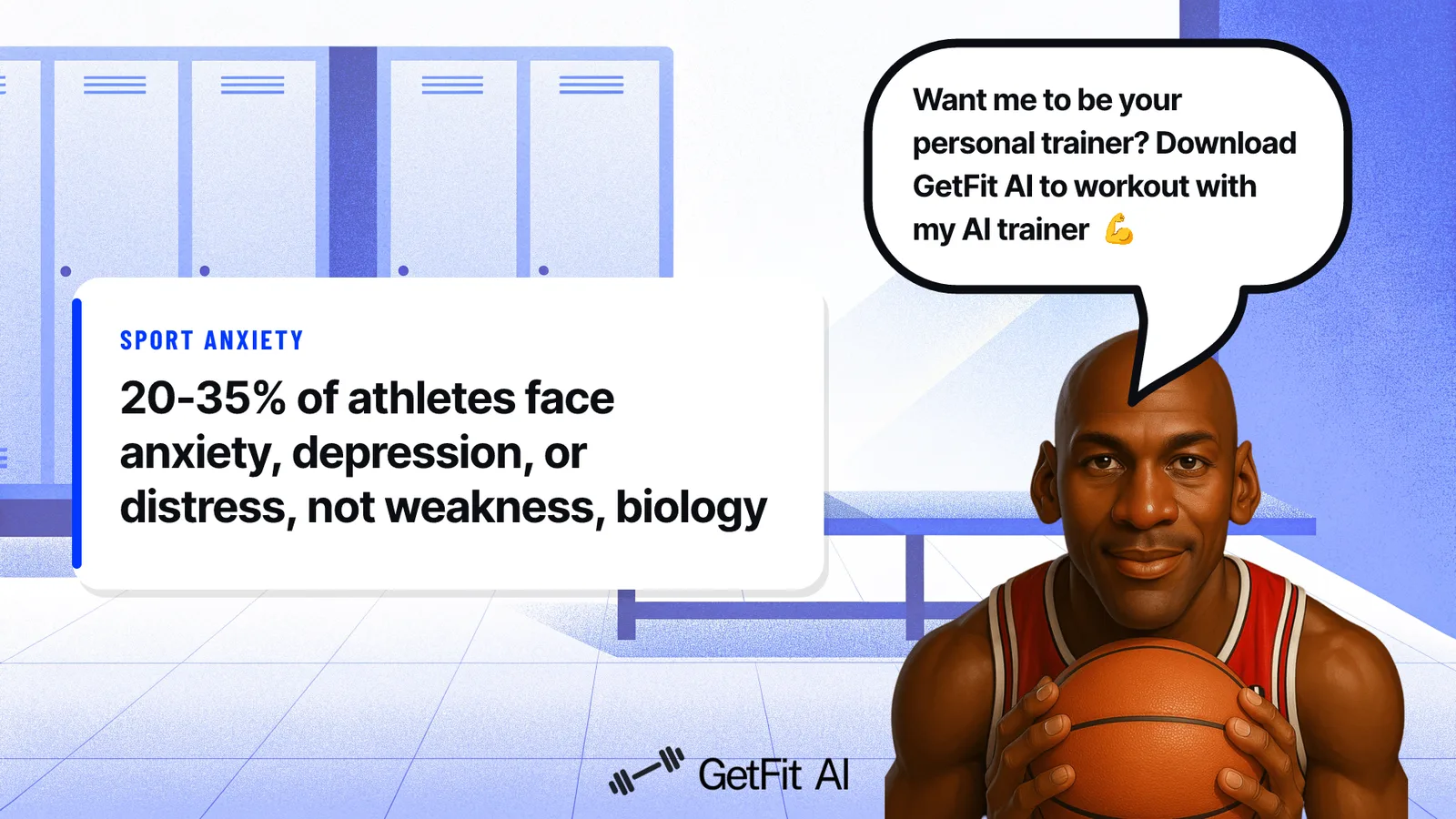
A significant share of high-school athletes report performance anxiety severe enough to hurt their results, according to industry research on adolescent sports anxiety. Systematic reviews back this up, finding anxiety, depression, and distress rates of 20-35% among athletes, particularly around high-pressure events such as injury, deselection, or career transitions. The common assumption is that performance anxiety is a mindset problem, so the fix must be mental: more confidence, more self-talk, more trying to stay calm in the moment.
That framing misses something the locker-room culture rarely admits. This is a predictable biological event, affecting a large portion of the athletes standing next to you right now. See our AI fitness app for how this works in practice.
Cognitive anxiety and somatic anxiety hit at the same time, and that double-hit is what makes competition nerves feel so overwhelming. Cognitive anxiety is the mental track: the racing thoughts, the self-doubt spiral, the sudden inability to remember a play you have run a hundred times in practice.
Somatic anxiety is the physical track: shaky hands, a tight chest, nausea, a heart rate that feels like it is trying to escape your ribcage. Both tracks share the same trigger. Your brain reads the competitive situation as a genuine threat, activates the sympathetic nervous system, and floods your body with stress hormones. The mental symptoms and the physical symptoms are two outputs of one threat-detection system, which is why telling yourself to “calm down” rarely works. You cannot talk your way out of a physiological alarm.
Three pressures stack on top of each other during high school in a way that simply does not exist at any other point in an athlete’s life. Peer judgment is at its most intense. College recruitment turns every game into an audition with real consequences. And athletic identity fuses with self-worth at this age in a way that adult athletes have usually learned to separate.
When your sport is your identity, a bad game does not feel like a bad game. It feels like evidence that you are not good enough as a person.
Normal pre-game nerves are temporary and can sharpen focus at manageable levels. Performance anxiety is a different animal: anxiety that shows up consistently across competitions, does not settle once the game starts, and actively degrades performance over time. If you find yourself dreading competition weeks out, avoiding high-stakes situations, or noticing anxiety worsening across a season, that pattern warrants real support, not just a pep talk.
Key takeaways
- Performance anxiety rates of 20-35% among athletes are documented in systematic reviews, it is not a rare edge case or a sign of mental weakness.
- Positive self-talk and breathing drills lose their edge after a few competition cycles when the training behind them is scattered or random.
- Teen athletes carry a heavier anxiety load than adult competitors because their identity is still being built inside sport, standard mental-performance advice was not designed for that.
- The stomach knot, the skipped rep, the 2 a.m. worry loop, young athletes normalize these as nerves when they are actually signals that training structure is missing.
- Confidence before a big event traces back to accumulated deliberate reps, not a pre-game speech, elite athletes feel prepared, not fearless.
- A training log is a more reliable anxiety reducer than motivation because it gives you evidence the pep talk cannot fake.
- GetFit AI's Athlete-Style Custom Workout Plans close the structural gap directly, build a custom plan around your own goals and equipment, or train inside an athlete's or trainer's proven system, and the plan adapts as you get stronger.
Why Performance Anxiety Keeps Coming Back Without a Training Structure
Why Fear of Failure Gets Worse Without a Consistent Training Plan
Sports psychology research on pre-competition anxiety identifies a key predictor of anxiety: the athlete’s perceived lack of readiness, and without a consistent training record, the brain fills that gap with dread.
The brain does not care how many affirmations you repeat. It cares what you have actually done.
Fear of failure, perfectionism, and social evaluation are the three most documented root causes of performance anxiety in athletes, according to the same sports psychology research. Take the athlete who has done box breathing for six months but still blanks during free throws: the mental tool cannot substitute for the physical evidence of preparation.
Athletes who approach competition without a structured pre-performance routine are substantially more likely to choke under pressure. Among performers who come to GetFit AI after years of inconsistent programming, the anxiety is a direct product of never having a repeatable system to point to as evidence of readiness. GetFit AI’s Structured Training feature is most beneficial for athletes who have previously struggled with consistency due to lack of program structure, and it begins delivering that structure from the very first workout session, building a compounding record of demonstrated competence the brain can use.
High-level athletes managing ADHD and anxiety face a sharper version of this same problem: when no structured mental and physical training routine exists to anchor the week, their mental state deteriorates to the point of directly hindering athletic performance, so a reliable external structure becomes essential.
Why Anxiety Overwhelms You Faster When Your Training Isn’t Structured
The Yerkes-Dodson Law holds that arousal lifts performance up to a point, then flips it, and the width of that productive window depends heavily on how prepared an athlete actually feels.
Structured preparation measurably changes that buffer. Research on the effects of anxiety on athletic performance supports the pattern: preparation structure, rather than mindset interventions alone, drives meaningful anxiety reduction, because the brain needs real evidence, not reassurance.
Most unstructured programs quietly collapse within the first several weeks, exactly when the novelty wears off and the effort required to self-direct becomes too high. GetFit AI’s structured training program is designed to sustain progression continuously, during each individual workout session and across the overall training arc, because consistency past week three is where the real evidence of readiness begins to accumulate. Athletes who manage competition anxiety tend to have an athlete-style custom workout plan structured around progressive overload and consistent execution, the same principles that separate a competitor with a coaching system from one improvising week to week.
How Chaotic Nutrition Turns Pre-Game Nerves Into a Full-Blown Energy Crisis
Nutrition is rarely framed as an anxiety issue, but it functions as one. Unpredictable eating habits spike cortisol and mood variability on competition days, turning what might be manageable nerves into a full-blown energy crash at exactly the wrong moment.
Cognitive anxiety and somatic anxiety are distinct, as pre-competition sports psychology research confirms, and chaotic nutrition drives both channels at once. One goal we consistently hear from the athletes we work with is straightforward: sort out my eating so the training finally shows. GetFit AI’s structured approach addresses this directly, because nutrition guidance that runs alongside a structured training program closes the loop between effort in the gym and the physical evidence the brain needs to feel ready on competition day.
Related Reading
- Why Am I Not Getting Faster at Running
- Does Masturbation Affect Athletic Performance
- Biomechanics in Sports
- Why is Protein Important for Athletes
- What is Speed and Agility Training
- How to Be a Better Athlete
- How Does Sports Psychology Help Athletes
- Why is Hydration Important for Athletes
- Why Do Athletes Train at High Altitudes
- Why Do Athletes Stretch Before a Game?
- IV Therapy for Athletic Performance and Recovery
- Yoga and Athletic Performance
- Red Light Therapy for Athletic Performance
Signs and Symptoms of Performance Anxiety Young Athletes Normalize Too Soon
The common assumption among young athletes, and many of the coaches and parents around them, is that performance anxiety is a mindset problem, so the fix must be mental: more confidence, more self-talk, more trying to stay calm in the moment before a big game.
-
Physical
-
Cognitive
-
Behavioral
The Physical Warning Signs Athletes Chalk Up to Pre-Game Jitters
Across the broader research on youth sport, somatic anxiety in young athletes produces distinct physiological symptoms: elevated heart rate, muscle tension, and gastrointestinal distress. GetFit AI’s Athlete-Style Custom Workout Plans deliver structured training from the first workout session, and because GetFit AI chat is available as soon as the app is downloaded, an athlete does not have to sit alone with a 2 a.m. question about whether what they are feeling is normal.
The Mental and Behavioral Red Flags Hidden in Plain Sight
The cognitive side of anxiety looks different from the physical side, and the Grossbard et al. research confirms they must be assessed separately. Worry, negative self-talk, and catastrophizing are their own dimension of competitive anxiety, distinct from the muscle tension your teammate might notice from the outside.
The same Grossbard et al. research identifies attentional narrowing as a third, separate dimension: the inability to stay task-focused under pressure, even when the body feels calm and the athlete believes they are “ready.”
This is where GetFit AI’s social layer does work that structured programming alone cannot. Friends, challenges, and leaderboards are most beneficial once an athlete has connected with at least one friend in the app, and they function as the retention layer that keeps users training past week three, the exact window when anxiety-driven behavioral withdrawal tends to accelerate.
GetFit AI is built to meet athletes where they are: structured plans that run from the first session through the overall training arc, chat support available the instant the app is downloaded, and a social environment that keeps training consistent even when motivation has been quietly hollowed out. Premium plans start at $1.99 per week, $4.99 per month, or $49.99 per year, so removing the structural and social conditions that let anxiety compound does not require a significant commitment to begin.
8 Ways to Deal With Performance Anxiety in Sports That Actually Work
Breathing drills work. So does positive self-talk. But athletes who rely on them exclusively tend to notice something uncomfortable after a few competition cycles: the tools stop landing as hard. The heart still races. The mind still blanks. The body still does something different than it does in practice. That pattern has a name, and it is a structural gap.
The eight methods below are ordered deliberately. Items 1 through 5 address the acute spike of pre-competition arousal. Items 6 through 8 address the root. Both layers matter, but athletes who skip the bottom three will keep cycling through the top five forever.
1. Controlled Breathing and the Physiological Sigh to Blunt Acute Stress
A double inhale through the nose followed by a long exhale through the mouth deflates the alveoli in the lungs and rapidly offloads carbon dioxide, which is the fastest known way to reduce physiological stress in real time. The technique takes only a few seconds with no equipment, making it usable mid-warmup or right before a starting whistle. The limitation: it treats the arousal spike, not the cognitive worry underneath it.
2. Build and Rehearse a Locked Pre-Competition Routine as a Familiar Brain Script
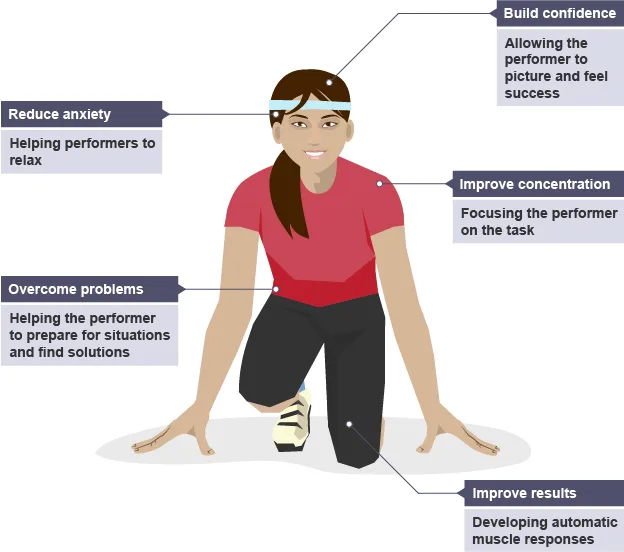
A consistent pre-competition sequence, the same playlist, the same warm-up order, the same self-check, trains the nervous system to associate that sequence with “I have done this before.” Sport psychologists call this anchoring. The routine does not need to be elaborate; it needs to be identical every time. Athletes who skip this step show up to each competition as if it is a novel threat. Athletes who use it arrive with a neurological head start. It is most beneficial when the routine is built during practice, not invented on game day.
3. Cognitive Reframing - Relabeling ‘I’m Terrified’ as ‘I’m Ready’ Using Excitation Transfer
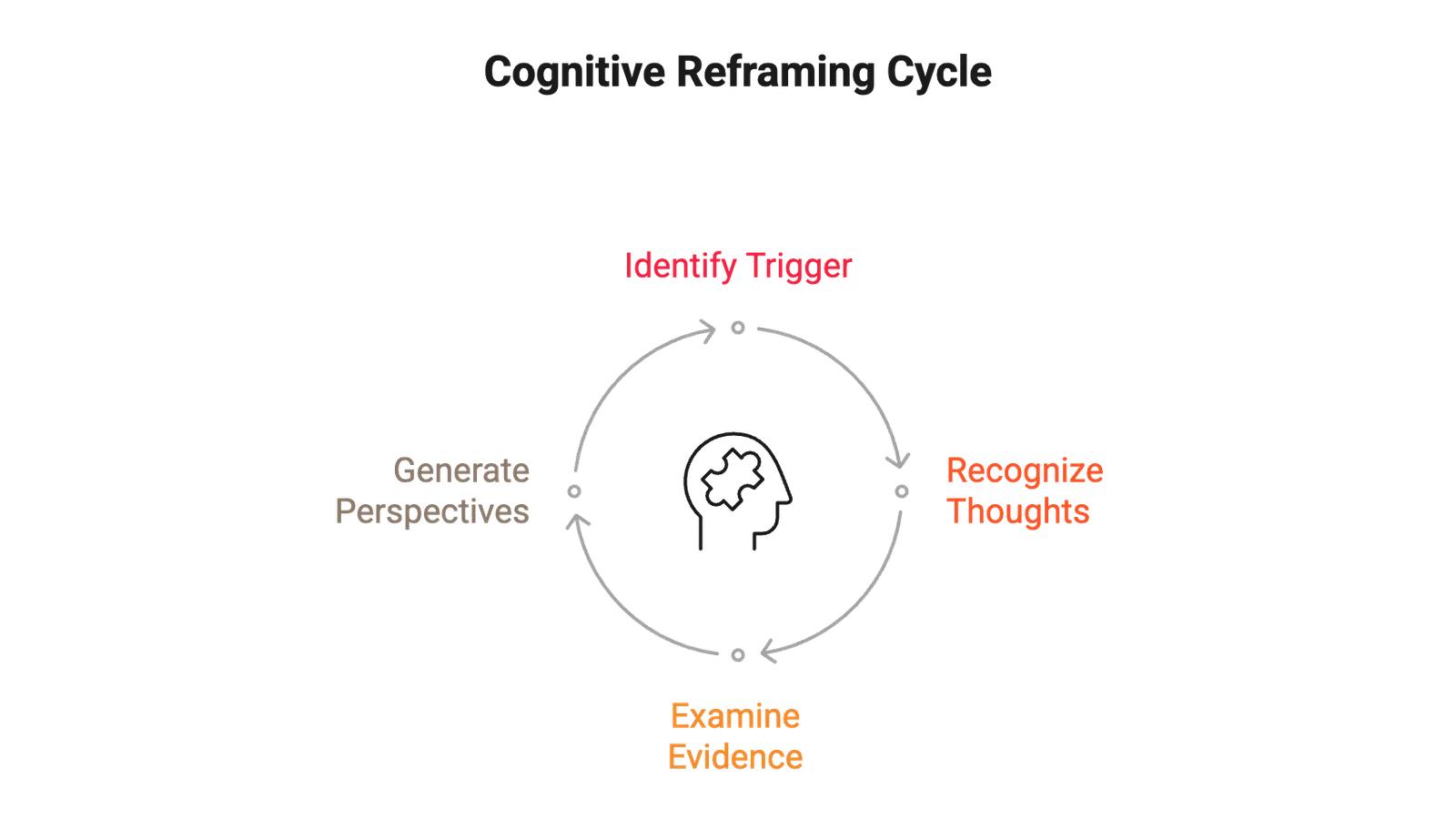
Telling yourself “I am excited” outperforms trying to calm down. Harvard researcher Alison Wood Brooks found that participants who reframed pre-performance anxiety as excitement scored measurably higher on performance tasks than those who attempted to suppress arousal. The mechanism is the excitation transfer principle: anxiety and excitement share the same physiological signature, so the brain can be redirected with a single verbal cue rather than fighting the arousal state entirely. For a nervous high-school swimmer, this sounds like: “My heart is racing because my body is ready to race.” That reframe is applied neuroscience.
4. Process Goals Over Outcome Goals - Redirect Attention to Controllable Execution Cues
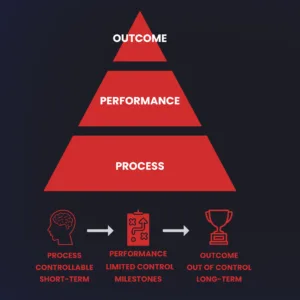
Outcome focus under pressure accelerates choking. When attention narrows onto the scoreboard or what others think, working memory gets hijacked. Process goals, specific technical targets like “drive through the block” or “keep elbows high on the pull,” redirect attention toward what the body already knows how to do. Sport psychology research consistently shows that process-goal focus reduces performance decrements under pressure by keeping attention on executable actions rather than uncontrollable results. This is especially critical for teenage athletes, where identity and performance are tightly fused and outcome stakes feel existential.
5. Progressive Exposure - Deliberately Practice in Higher-Stakes Environments

Anxiety spikes hardest in unfamiliar environments. The fix is deliberate desensitization: practice in conditions that replicate competition stress before the actual event. Scrimmages with consequences, timed trials in front of peers, simulated meet conditions with a crowd present. Research on graduated exposure in sports settings shows that athletes who train in simulated high-stakes environments report lower pre-competition anxiety than those who only practice in low-pressure contexts. The exposure does not eliminate nerves; it shrinks the gap between “practice me” and “competition me” until the gap is no longer threatening.
6. Structured Training Consistency - Build Body Trust Rep by Rep Over Weeks
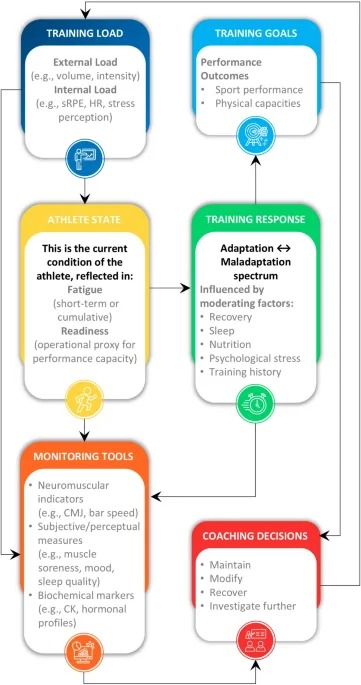
The cognitive anxiety underneath performance anxiety, the part that breathing cannot touch, is almost always rooted in uncertainty about preparation. An athlete who has trained consistently with a structured plan for eight weeks arrives at the track meet having already done the hard reps. The scoreboard has nothing new to show them. An athlete winging sessions, copying random workouts, never tracking progress, arrives with a reservoir of low-grade doubt that no breathing drill can drain.
This is where a progressive, personalized training system built through GetFit AI’s athlete-style plans closes the gap that mindset tools cannot, giving the brain concrete evidence of readiness rather than just a pep talk.
7. Nutrition Planning for High-Stakes Days - Remove the Energy Variable That Spikes Mood Volatility
Blood sugar instability on game day amplifies anxiety in ways most athletes never connect to food. Skipping dinner the night before a match, eating nothing before a morning competition, or loading up on sugar an hour before tip-off all produce energy and mood swings that the nervous system reads as threat signals. Research on pre-competition nutrition shows that athletes with unstable blood glucose experience greater perceived anxiety and reduced cognitive control during high-stakes performance moments. Carbohydrates timed two to three hours before competition, combined with protein to slow the release, produce steadier energy and a calmer baseline. This is not a minor tweak; it is one of the most underused performance levers at the high-school level.
8. Anchor Training to an Admired Athlete - Step Into a Performance Identity on Game Day

Identity is an underrated anxiety buffer. An athlete who trains in the style of a conditioning routine built around someone they genuinely admire replaces “am I good enough?” with “I train like they train.”
That shift is not cosmetic. It builds a performance identity larger than any single result. A 16-year-old running the same weekly structure as their favorite NBA player’s off-season conditioning does not need to manufacture confidence before a game; the confidence is already embedded in the training history.
This is the structural fix that makes items 1 through 5 work better, because the brain finally has something real to draw on when the nerves arrive.
Quick-Reference: Match Your Symptom to the Right Fix
| Symptom You're Noticing | Channel | Go-To Method(s) from the 8 |
|---|---|---|
| Shaky hands, racing heart, nausea before competition | Somatic (physical) | Physiological sigh (#1), Pre-competition routine (#2) |
| Racing thoughts, self-doubt spiral, blanking on plays | Cognitive (mental) | Reframe anxiety as excitement (#3), Process goals (#4) |
| Skipping hard drills, losing motivation in practice | Behavioral | Progressive exposure (#5), Structured training plan (#6) |
| Energy crashes or mood swings on game day | Nutritional | Pre-competition nutrition timing (#7) |
| General low-grade dread weeks before a meet | Identity/preparation | Athlete-style training plan (#6, #8) |
Use this table to identify your primary anxiety channel before deciding which method to try first.
Related Reading
- Athletic Performance Analysis
- Does Vaping Affect Athletic Performance
- How to Avoid Feeling Sleepy After Workout
- How Does Sleep Affect Athletic Performance
- How to Measure Athleticism
- Velocity Based Training
- Building Stamina and Endurance
- Why Am I So Bad at Sports
- Endurance vs Strength Training
- Why Am I So Tired After Working Out
- How to Create a Personalized Workout Plan
How Performance Anxiety in Young Athletes Responds Differently to Standard Advice
“Young athletes often handle in-game competition adequately, but break down mentally during post-game environments at home, suggesting standard ‘game-day’ mental performance advice misses the real trigger zone.”
— what we hear from youth sports coaches and parents
The Hidden Reason Generic Sports Psychology Scripts Fail Teenagers
When a young athlete has no structured plan behind them, no logged sessions, no tracked progression, the instruction to “picture yourself winning” gives an anxious brain nothing real to work with.
This is why a 17-year-old who journals positive affirmations before games can still freeze at the critical moment. Research indexed by PMC / National Institutes of Health reinforces this: the psychological demands on developing athletes are structurally different from those facing their adult counterparts, and interventions designed without that distinction tend to misfire.
Build the Plan Before the Mindset Work - Why Confidence Needs Evidence First
A young athlete who has four months of progressive, structured training behind them can close their eyes before a game, or in that dangerous post-game window at home, and replay specific sessions, specific personal records, specific moments where their body did what they asked it to do. GetFit AI’s athlete-style custom workout plans build that foundation.
GetFit AI’s friends, challenges, and leaderboards become most meaningful once a user has connected with at least one friend or workout partner also using the app, and that accountability tends to be what carries athletes past week three, the point where unstructured self-training typically collapses.
Related Reading
- Hydration Tips for Athletes
- How to Build Mental Toughness in Athletes
- Food for Athletes During Competition
- Strength Training Workout for Runners
- Best Plyometric Exercises for Speed
- Exercises That Improve Muscular Endurance
- Conditioning Workouts for Athletes
- Speed Training for Athletes
- Balance Exercises for Athletes
- Best Core Exercises for Athletes
How a Structured Athlete Training Plan Removes the Uncertainty That Feeds Anxiety
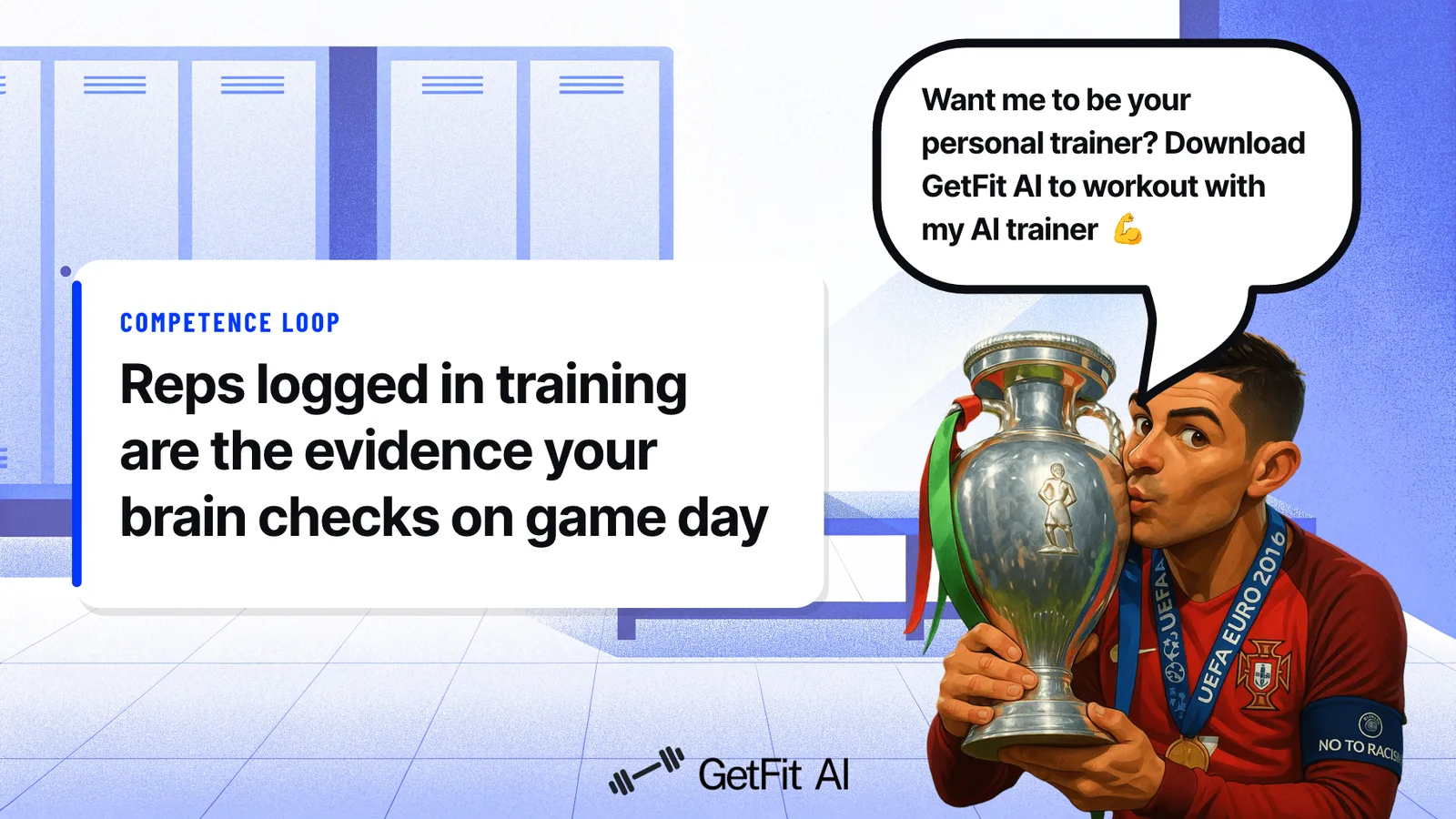
Structured repetition is what separates athletes who perform under pressure from those who collapse beneath it. Elite competitors across individual and team sports consistently report that their confidence before a major event traces back not to a coach’s pre-game speech but to the accumulated weight of thousands of deliberate practice reps, each one a small piece of evidence that the body already knows what to do. That mechanism has a name in sports psychology: the competence-confidence loop, and it only activates when preparation has been consistent and deliberate.
Every rep you’ve ever logged is a data point your brain checks on game day. When those data points are missing, or scattered across random sessions copied from social media, your nervous system fills the gap with dread. That’s the actual root cause of pre-competition anxiety for most high-school athletes, and it’s a preparation problem.
Research on psychological skills training found that structured, systematic preparation is the operative mechanism through which anxiety’s grip on performance is reduced. The mechanism is straightforward: repeated successful reps create verifiable evidence of readiness, and the brain draws on that evidence automatically when stakes rise.
The Second Anxiety Source Nobody Talks About - Training Uncertainty
Uncertainty about whether you’re even training correctly is its own source of pre-competition dread. Without a plan that tells you exactly what to lift, how heavy, and when to push harder, every session is a question you can’t answer, and that ambiguity compounds into anxiety long before competition day arrives.
How Following a Structured Training Plan Reduces Pre-Competition Anxiety
Most athletes handle pre-competition prep by layering mindset tools on top of a training void. GetFit AI addresses this directly: it generates a custom plan built around your goals and equipment that adapts as you get stronger.
A high-school basketball player who trains every week in the style of their favorite NBA player arrives at game day having already done the reps. Research on psychological skills training confirms that structured, systematic preparation is the operative mechanism through which anxiety’s grip on performance is reduced; the structured plan does the confidence work before the athlete ever steps on the court.
Structure is accessible to any athlete willing to follow a consistent, progressive plan, and the confidence-building mechanism it produces is the same one the elite rely on.
Next steps
If your pre-game dread keeps returning no matter how many breathing drills you stack on top of it, the path forward starts with fixing the preparation gap underneath, not the mindset layer on top. Start with our AI fitness app.
Breathing techniques like the physiological sigh can blunt the acute arousal spike in real time, but they cannot resolve cognitive anxiety rooted in uncertainty about preparation, meaning athletes who lack a structured training record will keep hitting the same anxiety ceiling regardless of how well they breathe. Self-belief is downstream of competence, not upstream of it, meaning positive self-talk fails under pressure because the brain has no accumulated evidence of readiness to draw on when stakes rise. Together, they point to one actionable next step: build the training record first, so the mindset tools have something real to work with.
Start with GetFit to generate an athlete-style custom plan that builds a compounding record of preparation your brain can actually verify on game day.
Frequently Asked Questions
What are the two types of anxiety in sport?
The two types are cognitive anxiety and somatic anxiety. Cognitive anxiety is the mental track, racing thoughts, self-doubt, and forgetting plays you’ve run a hundred times, while somatic anxiety is the physical track: shaky hands, tight chest, nausea, and a racing heart. Both are triggered by the same event: your brain reading competition as a genuine threat and activating the sympathetic nervous system.
What is the Yerkes-Dodson Law and why does it matter for athletes?
The Yerkes-Dodson Law holds that arousal improves performance up to a point, then flips it, past that tipping point, anxiety becomes debilitative rather than facilitative. Critically, that tipping point arrives sooner for athletes who lack structured preparation, because there is no buffer of demonstrated competence to absorb rising nerves.
What’s the relationship between anxiety and athletic performance?
Research supports the pattern that preparation structure, not mindset interventions alone, is what drives meaningful anxiety reduction and keeps performance from degrading. Without a consistent training record to draw on, the brain has no concrete proof it is ready, so it fills that gap with dread; with a structured plan, the athlete doesn’t feel fearless, they feel ready, and readiness raises the tipping point at which anxiety becomes harmful.
Does performance anxiety only affect athletes who are worried about winning or losing?
No, the post identifies fear of failure, perfectionism, and social evaluation as the three most documented root causes, which go well beyond concern about the scoreboard. For high-school athletes in particular, athletic identity fuses with self-worth in a way that makes a bad game feel like personal evidence of not being good enough, not simply a loss.
Why doesn’t positive self-talk fix performance anxiety on its own?
Because anxiety is an evidence problem, not a volume problem, the brain doesn’t care how many affirmations you repeat, it cares what you have actually done in training. Positive self-talk can quiet the noise for a few minutes, but without a consistent, progressive training record to draw on, the noise comes back because the underlying structural gap is untouched.