Why Do Athletes Train at High Altitudes to Boost Performance


Your kidneys trigger a red blood cell surge the moment oxygen drops. Here is exactly what altitude does to your body, why beginners almost always get it wrong, and what real adaptation actually requires.
Stepping above 2,000 meters feels like someone quietly turned down the oxygen without telling you. Your legs are fine. Your lungs are fine. But something is clearly wrong, and that wrongness is measurable, immediate, and entirely driven by physics, not fitness. The common assumption among athletes new to altitude training is: “If I copy the exact training environment elite athletes use, I’ll get elite-level results.” That assumption collapses fast when the air gets thin. See our AI fitness app for how this works in practice.
High altitude has lower barometric pressure, which means each breath delivers fewer oxygen molecules than the same breath would at sea level. According to the Hypoxico Altitude-to-Oxygen Chart (2019), the partial pressure of oxygen drops proportionally with altitude, leaving the body immediately under-supplied even before any exercise begins. At roughly 2,500 meters, atmospheric pressure falls meaningfully compared to sea level, and blood oxygen saturation in unacclimatized individuals can drop noticeably from a healthy resting baseline, a reduction your tissues feel immediately.
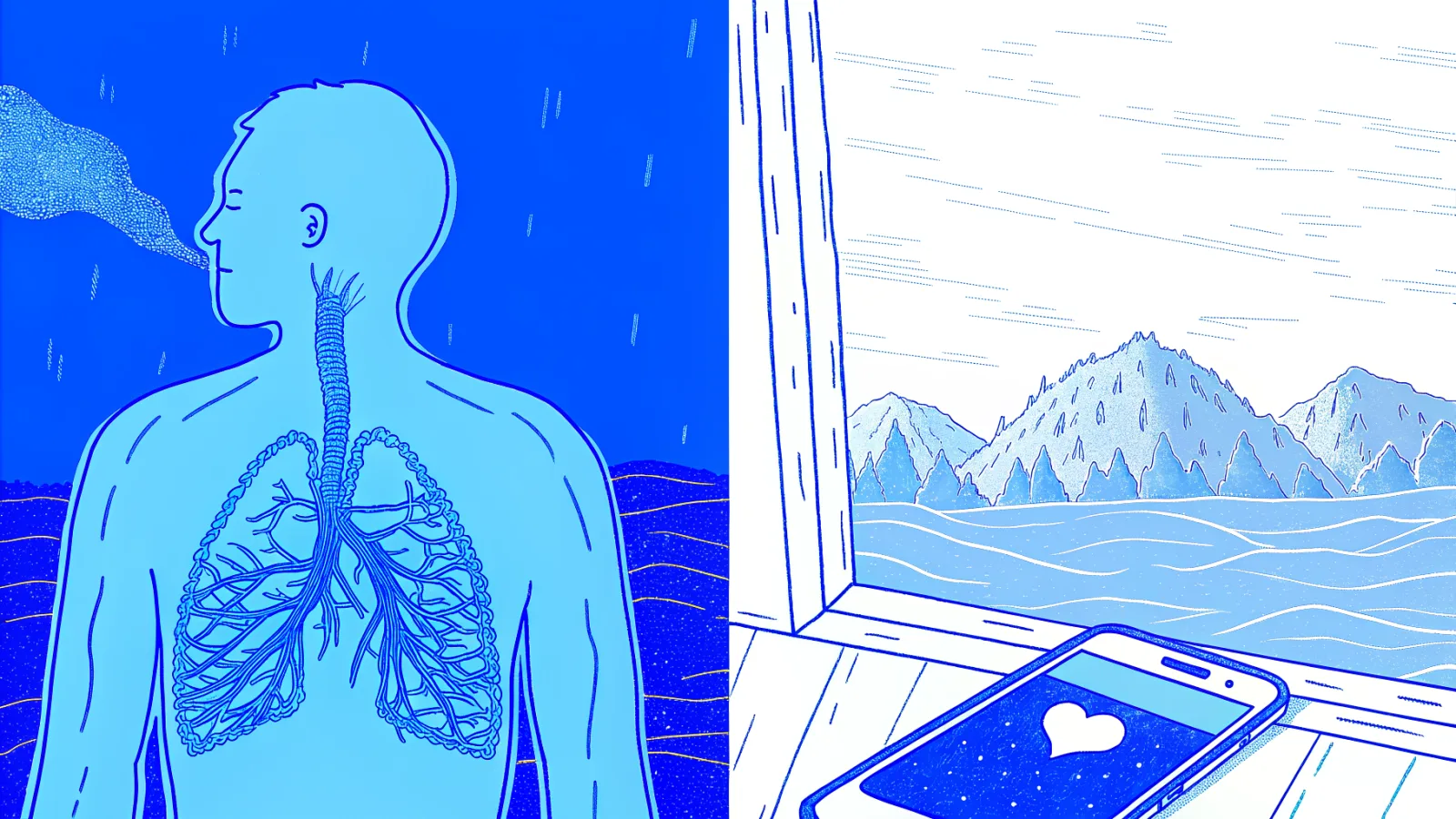
That drop sounds small. It is not. The body’s first response is hyperventilation.
Breathing rate climbs automatically as the respiratory system tries to pull in more air to compensate for the lower oxygen concentration per breath. Hypoxia, the state of insufficient oxygen reaching the tissues, is the mechanism driving all of this.
The body’s immediate compensatory response includes an elevated resting heart rate, as the cardiovascular system attempts to circulate blood faster to deliver adequate oxygen to tissues. Research on initial altitude exposure shows resting heart rate can rise substantially within the first day or two, even while sitting still. The heart rate increase is a distress signal, not a training adaptation. Athletes who mistake that elevated heart rate for productive cardiovascular stimulus and push harder often dig themselves into a hole that takes days to climb out of.
The heart rate increase is a distress signal, not a training adaptation. The acute phase is the body reacting to a threat, not adapting.
Acute stress responses peak in the first few days and can suppress performance if training load is not reduced to match the body’s compromised state. Adaptation is a slower, structural process that begins only after the body stabilizes enough to respond to the hormonal signals triggered by sustained hypoxia, a process the next section covers in full.
Key takeaways
- Altitude training works because low oxygen forces your kidneys to release EPO, which triggers a red blood cell surge, your muscles then carry more oxygen per contraction and delay the lactic acid wall.
- The physiological cascade is real, but it only pays off if the training program surrounding the altitude block is structured to absorb the stress, without that, you're just grinding slower in thin air.
- Elite coaches invented live high, train low precisely because hard workouts at altitude produce worse sessions, not better ones, the environment triggers the hormonal benefit, but sea-level training delivers the quality reps.
- More than 60% of people who ascend above 2,000 meters experience altitude sickness, for a meaningful share of athletes, it wipes out the entire training block before a single quality session gets done.
- Copying the environment elite athletes use, the camp, the elevation, the location, gives you the backdrop, not the program; the periodized block underneath is what actually moves fitness.
- GetFit AI's Athlete-Style Custom Workout Plans close that execution gap: build a custom AI plan around your own goals and equipment, or train in the style of an athlete or trainer you admire, and the plan adapts as you get stronger, so the structure scales with you.
How Low Oxygen Triggers a Red Blood Cell Surge in Athletes
That distress signal originates in your kidneys, and this surprises almost every young athlete who first encounters serious altitude work. The common assumption among most high-school lifters and athletes, ages 15-18 and brand new to serious training, is that copying the exact training environment elite athletes use will produce elite-level results. The real engine, however, is a hormonal chain reaction that begins in your kidneys within hours of arriving above a certain elevation, and understanding it changes how you think about every elite training camp you’ve ever read about.
“People with end-stage COPD may suffer from cachexia potentially linked to hypoxia-driven metabolic changes in red blood cells, suggesting low oxygen conditions create complex downstream health complications beyond athletic performance.”
— what we hear from pulmonary medicine researchers
The Altitude Alarm System in Your Kidneys
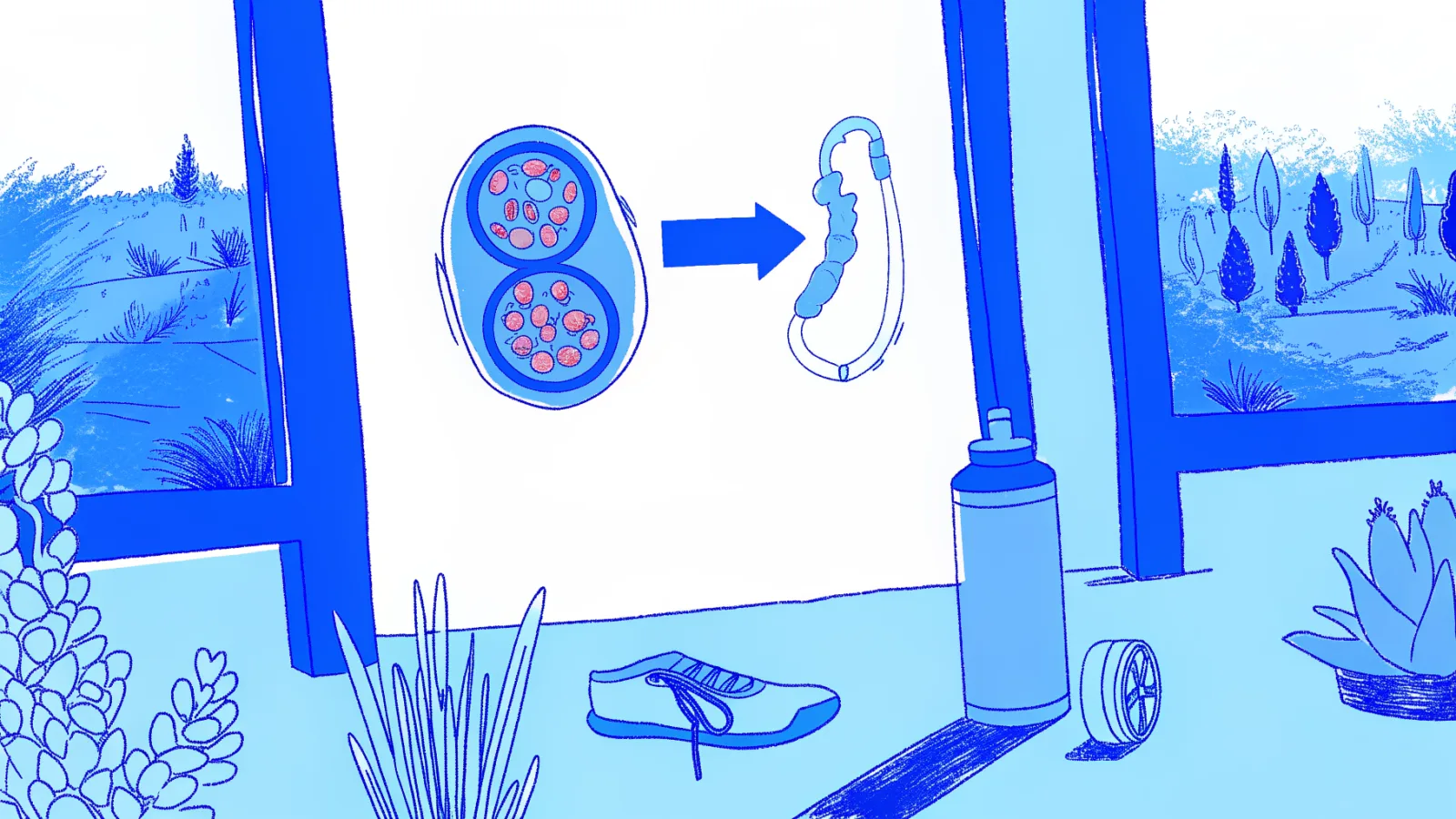
Low oxygen at altitude triggers red blood cell production through a direct hormonal signal from the kidneys. The moment arterial oxygen saturation drops, specialized kidney cells detect the shortfall and release erythropoietin (EPO) into the bloodstream.
An oxygen drop of roughly 26% is enough to flip the kidney’s oxygen sensor into alarm mode, so that threshold is only crossed once elevation is sufficient to drive a meaningful drop in saturation.
Below that elevation, the signal is too weak to drive meaningful adaptation.
EPO Is the Hormone That Orders Bone Marrow to Build More Red Blood Cells
EPO stimulates red blood cell production by traveling from the kidneys to the bone marrow and instructing it to manufacture more erythrocytes, the cells that carry hemoglobin and deliver oxygen to working muscles. According to research published in Determinants of Erythropoietin Release in Response to Short-Term Hypobaric Hypoxia, EPO is the primary hormonal signal driving this erythropoiesis response, with the kidneys serving as the production site.
The result is a measurable rise in hemoglobin concentration in the bloodstream. That same research confirms the increase in red blood cell mass directly raises the blood’s oxygen-carrying capacity to working muscles. More hemoglobin per unit of blood means muscles receive more oxygen per heartbeat, which is the raw biological gain altitude training is actually chasing.
This is also where beginners we work with run into their first real frustration: they want to train the way the athlete they follow trains, but they arrive at altitude, or begin any high-intensity block, without a structured plan calibrated to where their body actually is. Altitude sickness is a well-documented and significant barrier at this stage. The headaches, fatigue, and disorientation that accompany the early days of hypoxic exposure are the body’s honest cost of triggering the EPO cascade. GetFit AI’s Athlete-Style Custom Workout Plans address this directly: structured training that accounts for where you are in the adaptation curve, delivered from your very first workout session and recalibrated across the full program arc, so you earn the adaptation without paying for recklessness.
Why the Oxygen-Sensing Cascade Is a Feature, Not a Bug
Research on short-term hypobaric hypoxia confirms the EPO cascade follows a defined, measurable sequence: reduced arterial oxygen saturation triggers kidney EPO secretion, which stimulates bone marrow, which elevates red blood cell production. That sequence takes weeks to pay off, and most athletes stop training before it does. That is the gap GetFit AI’s Structured Training is built to close: it functions as a retention layer that keeps athletes training past week three, the point at which real adaptation begins to show up in performance.
Related Reading
- Why Am I Not Getting Faster at Running
- Does Masturbation Affect Athletic Performance
- Biomechanics in Sports
- Why is Protein Important for Athletes
- What is Speed and Agility Training
- How to Be a Better Athlete
- How Does Sports Psychology Help Athletes
- Why is Hydration Important for Athletes
- Why Do Athletes Stretch Before a Game?
- IV Therapy for Athletic Performance and Recovery
- Yoga and Athletic Performance
- Red Light Therapy for Athletic Performance
Why More Red Blood Cells Make Athletes Measurably Faster and Stronger
More red blood cells improve athletic performance by raising the oxygen supply to working muscles, but that advantage has limits most athletes never hear about, including a physiological trap where heavy training mileage actively damages the red blood cells you just worked to build.

How More Red Blood Cells Keep Muscles Fueled Longer
More red blood cells improve athletic performance by raising the oxygen supply to working muscles with every contraction, delaying the moment those muscles switch to anaerobic metabolism and start producing lactic acid. When your muscles run low on oxygen, they quit burning fuel cleanly and start burning it messily. That messy process is what creates the burn in your legs at the end of a hard 400m. A higher red blood cell count pushes that wall back, so you can hold a faster pace for longer before the burn arrives.
According to KAWASAKI (note.com, #27 Verifying the Effects of Altitude Training via Changes in VO2max), altitude training at approximately 2,500 meters increases red blood cell count and raises the oxygen-carrying capacity of the blood, so muscles can sustain high-intensity effort longer before fatiguing. That maps directly onto a faster 800m split or one more clean rep before your form breaks down.
There is, however, a physiological trap that endurance athletes rarely account for upfront: extreme endurance running physically damages red blood cells, impairing their ability to carry oxygen efficiently, which directly erodes the advantage altitude training is supposed to build. You can do everything right at elevation and still blunt your own gains by failing to account for the mechanical stress high-mileage training places on your RBCs. Worth noting alongside that: more red blood cells only translate into real speed if your body also has enough iron to build the hemoglobin that fills those cells. The altitude signal triggers the adaptation; iron availability and training history determine whether that signal becomes a performance gain.
VO2 Max Is the Performance Ceiling and Altitude Training Raises It
VO2 max is the single most important number for endurance performance because it measures the maximum volume of oxygen your body can consume per minute, and raising it is the clearest path to a faster race time.
KAWASAKI’s 2023 research identifies VO2 max as the primary metric used to verify the effectiveness of altitude training, noting that camps at roughly 2,500 meters raise this ceiling even in world-class track and field athletes. If altitude training moves VO2 max in athletes who are already elite, the effect on a developing high-school runner is not trivial. Those gains, however, begin to erode within two to three weeks of returning to sea level if training load drops off.
That three-week window is where most runners lose their gains, because consistency fails first. Runners we work with regularly find that the initial motivation of returning from altitude fades by week two, and without a structured program pulling them forward, sea-level training drifts before the adaptations can be locked in. GetFit AI’s Athlete-Style Custom Workout Plans address this directly: structured training is most beneficial when you have previously struggled with consistency due to lack of program structure, and it kicks in from the first workout session, guiding each session and the overall training arc so the program keeps doing the work of keeping you on track.
Capillaries, the Diaphragm, and Lactic Acid Buffering as Hidden Upgrades
Beyond red blood cells, altitude training triggers three structural changes that compound the oxygen-delivery advantage.
First, capillarisation. KAWASAKI’s 2023 analysis documents that altitude exposure drives growth of small blood vessels, distributing enriched blood more efficiently to muscle tissue. More delivery routes mean more of your red blood cells actually reach the fibers that need them, assuming those red blood cells are healthy. The capillary network amplifies every other adaptation altitude produces.
Second, the diaphragm. Breathing against thinner air strengthens the respiratory muscles themselves, so at sea level the diaphragm fatigues later and ventilation stays efficient deeper into a race. That detail shows up in the final 200 meters.
Third, lactic acid buffering. Altitude exposure improves the muscles’ ability to tolerate and clear lactate, pushing the threshold at which fatigue accumulates to a higher percentage of VO2 max. That threshold shift is what a middle-distance runner feels when they return from a three-week altitude block and hold goal pace through a full 800m for the first time. Knowing that these three adaptations exist is half the equation. The other half is timing and structuring your altitude exposure so the gains hold when you come back down, with a training system in place from the moment you do.
How Elite Athletes Use Live High Train Low to Get the Most from Altitude
Live high, train low came from watching athletes grind through hard workouts at altitude and come back slower, not faster, because the thin air that triggers the hormonal cascade (as the EPO mechanism above shows) also destroys the quality of every training session.

Live High Train Low - Sleep at Altitude, Train at Sea Level
Live high, train low (LHTL) is a method where athletes sleep and recover at high altitude to stimulate red blood cell production, then descend to lower elevation to train at full intensity. According to EBSCO Research Starters, Altitude Training, the thin air at altitude compromises workout quality so severely that staying high for both sleeping and training blunts the very adaptations you are chasing. LHTL resolves this by separating where you recover from where you work.
Beginners we work with at GetFit AI frequently lose progress not because they lack effort, but because they lack a structured program that tells them when to push hard and when to recover, the exact principle LHTL encodes at the elite level. GetFit AI’s Athlete-Style Custom Workout Plans are built around this same logic: structured training that sequences stress and recovery deliberately, not randomly, and that begins working from the first workout session rather than after a ramp-up period.
The 6,500 to 8,200 Foot Sweet Spot - Why Altitude Range Is a Precision Decision
2,000 to 2,500 meters (approximately 6,500 to 8,200 feet) is the optimal altitude band for LHTL. EBSCO Research Starters, Altitude Training identifies this range as high enough to trigger meaningful physiological adaptation but low enough to avoid severe performance impairment during training sessions. Drop below it and the hormonal stimulus weakens to the point where red blood cell gains become negligible; push above it and training quality collapses, oxygen delivery tanks, and the athlete captures the physiological cost of altitude without the red blood cell dividend.
That precision matters because the adaptation window is narrow. Compress the range or pick the wrong elevation and you disrupt the biological sequence entirely.
GetFit AI’s structured training approach is calibrated during each workout session and across the overall training program arc, adjusting intensity so users are always in their own productive window, never grinding so hard that recovery collapses, never coasting so easy that adaptation stalls.
The 3-Week Minimum and the 20-Day Return Window
Timing governs the entire LHTL protocol just as much as elevation does. According to EBSCO Research Starters, Altitude Training, a minimum block of 3 to 4 weeks is required for meaningful red blood cell adaptations to accumulate, because the EPO-to-erythropoiesis cascade takes time to complete its full cycle.
The same source confirms that the red blood cell benefits persist for approximately 20 days after an athlete returns to sea level, making competition timing a deliberate calculation rather than a preference. Return too early and the body is still adjusting; wait too long and the extra red blood cells have cleared the system. Elite coaches plan the competition date backward from the return date, not forward from the departure.
That three-to-four-week threshold is also where most self-directed training programs fall apart, and GetFit AI’s friends, challenges, and leaderboards are specifically designed as the retention layer that keeps users training past week three. The feature is most powerful after connecting with at least one friend in the app, because social accountability mirrors what elite camps provide naturally: people around you who are also doing the work.
If you or a training partner lacks access to or the budget for a human personal trainer, having a friend inside GetFit AI running the same Athlete-Style Custom Workout Plan replicates the camp dynamic at a fraction of the cost. GetFit AI Premium is available at $1.99 per week, $4.99 per month, or $49.99 per year, making structured, coach-calibrated training available without the cost of a private coaching relationship.
Live high, train low works precisely because it treats physiological stress as something to be managed, not maximized, and every element of the protocol reflects that discipline.
Related Reading
- Athletic Performance Analysis
- Does Vaping Affect Athletic Performance
- How to Avoid Feeling Sleepy After Workout
- How Does Sleep Affect Athletic Performance
- How to Measure Athleticism
- Velocity Based Training
- Building Stamina and Endurance
- Why Am I So Bad at Sports
- Endurance vs Strength Training
- Why Am I So Tired After Working Out
- How to Create a Personalized Workout Plan
Health Risks and Downsides of Altitude Training Athletes Actually Face
Altitude sickness is not a minor inconvenience. It is a measurable physiological crisis, and for a surprising number of athletes, it derails the entire block before a single quality session gets done.

Altitude Sickness Is Not a Minor Inconvenience; It Can Derail an Entire Training Block
Altitude sickness is a genuine, frequent risk: more than 60% of people ascending to high altitude developed acute mountain sickness (AMS), so the majority get hit. Symptoms including headache, nausea, dizziness, and disrupted sleep can appear within hours of arrival, as documented across the broader altitude medicine literature. The athlete who flies to Leadville, Colorado (10,152 ft) for a spontaneous “altitude training week” and spends two days bedridden before flying home has not adapted.
Severity is also deeply individual, and this is one of the most consequential traps athletes at every level fall into. Even well-prepared athletes cannot reliably predict their own reaction until they are at altitude, which makes unsupervised replication genuinely dangerous. That unpredictability scales with objective risk: climbers attempting extreme high-altitude objectives face dramatically higher mortality risk, with far less margin for error and fewer commercial safety nets, a real health and survival downside that must be weighed honestly and not romanticised. For the recreational athlete, the practical takeaway is that no amount of fitness history or prior mountain experience guarantees a manageable acclimatisation curve.
Why Training Quality Collapses at Elevation and How Unstructured Exposure Causes Detraining
Reduced oxygen availability forces athletes to cut exercise intensity sharply, so they cannot replicate sea-level training loads or paces.
This is where lack of program structure inflicts its quiet damage. Athletes who have previously struggled with consistency because they lacked a structured plan that adapted to where they were physiologically are the ones most exposed when conditions change. GetFit AI’s Athlete-Style Custom Workout Plans address this directly: structured training begins from the first workout session and adapts across the overall training program arc so that intensity targets remain appropriate even as the athlete’s capacity shifts.
The Iron Deficiency Trap - Why Nutrition Gaps Silently Sabotage EPO Gains
EPO drives red blood cell production, but the body needs adequate iron to synthesise the haemoglobin that fills those cells.
Nutrition is where unguided altitude attempts most frequently collapse in silence. Athletes who ask “tell me what to eat to actually put on size or lean out” are already aware that fuelling is decisive, but altitude adds a layer that most recreational plans never account for. Appetite suppression is a documented altitude sickness symptom, so the athletes who most need caloric and micronutrient density to support red blood cell production are often the least able to eat adequately. GetFit AI provides the session-by-session program architecture that recreational athletes otherwise attempt to improvise, and consistently fail to maintain past the first sign of physiological stress.
Related Reading
- How to Deal With Performance Anxiety in Sports
- Hydration Tips for Athletes
- How to Build Mental Toughness in Athletes
- Food for Athletes During Competition
- Strength Training Workout for Runners
- Best Plyometric Exercises for Speed
- Exercises That Improve Muscular Endurance
- Conditioning Workouts for Athletes
- Speed Training for Athletes
- Balance Exercises for Athletes
- Best Core Exercises for Athletes
Why Understanding Altitude Science Means Nothing Without a Plan to Execute It
Most athletes who research altitude training walk away knowing the science and still having no idea what to do with it. The gap between understanding a physiological mechanism and actually converting it into performance gains comes down to sequencing, nutrition timing, and structured execution, none of which fall into place automatically.

The Execution Gap - Why Knowing the Science Doesn’t Move the Needle
There is no shortage of information. A 16-year-old who watches a documentary on Kenyan runners training at altitude, reads every article on EPO and red blood cell production, and then opens a blank notes app on Monday morning still has nothing actionable, because information without structure produces no output.
What most coaches and sports scientists consistently emphasize makes the mechanism clear: the benefit of any training stimulus depends heavily on how it is sequenced within a broader periodized plan, so copying an elite environment without the surrounding structure fails to replicate elite outcomes. Understanding the effect of altitude on athletic performance is necessary but entirely insufficient. The variable that converts that knowledge into actual progress is sequencing: placing the altitude stimulus at the right point in a training cycle, then building the recovery and load phases around it. Without that sequencing layer, the science becomes trivia. The physiological trigger fires, but there is no framework to absorb and compound it.
Nutrition compounds the problem further. Iron deficiency quietly undermines the EPO-to-hemoglobin conversion and affects a significant share of adolescent athletes. Carbohydrate and protein demands both increase meaningfully at altitude, meaning a teenager eating a normal school-day diet is almost certainly under-fueling the adaptation their body is trying to make. Knowing that altitude stimulates red blood cell production is useless if the raw materials for hemoglobin synthesis are missing from every meal.
A well-established principle in periodization science frames the structural requirement plainly: the value of a periodized training program lies in the planned accumulation of stress and recovery cycles over time. Altitude adaptations persist for only a limited window after returning to sea level, so without a structured return-to-competition block already mapped out, the gains evaporate before they compound into anything measurable. That planned structure is the piece most athletes never build.
GetFit AI closes that gap by building an adaptive, periodized custom workout plan around your goals and equipment from day one, the same sequenced-load logic that periodization research identifies as the critical variable between stimulus and measurable progress, so the structured execution framework is already in place before your first session.
Next steps
If your training stalls every time you try to copy what elite athletes do at altitude, the path forward starts with recognizing that the EPO cascade is a signal, not a result. Iron availability and periodized sequencing are what convert that signal into actual speed, and without both in place, the stimulus fires into a vacuum. Start with our AI fitness app.
The finding that altitude exposure triggers the hormonal cascade but nutrition and training history determine whether it becomes a performance gain means copying an environment is not enough. The finding that a periodized execution plan is the variable that separates altitude science from measurable progress means the sequencing layer is not optional. Together, they point to building that structure before the stimulus, not after it.
Start with GetFit to get a periodized, athlete-style custom training plan built around your goals from day one. From there, the structured load progression, daily nutrition targets, and adaptive recovery weeks are already sequenced before your first session, so the framework that converts physiological stimulus into real performance is in place the moment you begin.
Frequently Asked Questions
What altitude do you actually need to reach for the training adaptations to kick in?
You need to be in roughly the 2,000 to 2,500 meter range (approximately 6,500 to 8,200 feet) for the adaptation to begin in a meaningful way. Below that elevation, the drop in available oxygen per breath is too small to flip the kidney’s oxygen sensor into alarm mode and drive the EPO cascade that triggers red blood cell production.
Why does my heart rate spike so much in the first couple of days at altitude even when I’m barely moving?
That elevated resting heart rate is your cardiovascular system trying to circulate blood faster to compensate for the lower oxygen your blood is carrying, it’s a distress signal, not a sign that you’re getting a good workout. Research cited in the post shows resting heart rate can rise substantially within the first day or two just from sitting still, which is why pushing hard during that acute phase tends to make things worse rather than better.
How does the body actually produce more red blood cells in response to altitude?
The moment arterial oxygen saturation drops at altitude, specialized kidney cells detect the shortfall and release the hormone erythropoietin (EPO) into the bloodstream. EPO then travels to the bone marrow and instructs it to manufacture more erythrocytes, the cells that carry hemoglobin and deliver oxygen to working muscles, directly raising the blood’s oxygen-carrying capacity.
What does hypoxia actually do to your body during training, and is it dangerous?
Hypoxia, insufficient oxygen reaching the tissues, is the mechanism behind every immediate symptom at altitude: the faster breathing, the elevated heart rate, and the headaches and fatigue that can accompany early days of exposure. The post notes that for healthy athletes the key distinction is controlled exposure with structured recovery built around it, as opposed to the chronic, involuntary oxygen shortfall seen in serious respiratory conditions, which is linked to complex downstream metabolic complications.
How long does it take for altitude training adaptations to actually show up in performance?
The EPO cascade begins within hours of arriving above the threshold elevation, but the meaningful red blood cell gains compound over weeks, the post identifies past week three as the point at which real adaptation begins to show up in performance. The gains are also time-limited after you return to sea level, making the weeks immediately following an altitude block decisive for locking in the improvements.