Biomechanics in Sports Explained: How It Shapes Performance
Your effort isn’t the problem. The physics of every rep you’re ignoring is. Here’s what biomechanics actually means for your training, and why it’s the variable separating progress from plateau.
The common assumption among beginner lifters is that results are simply a matter of effort and time: “I just need to show up more often and try harder.” Yet most regular exercisers hit a plateau within their first year, not because they stopped showing up, but because showing up stopped being enough. The problem is effort’s direction.
Most people walk in, find the machines they know, and repeat. The logic feels sound: more sessions, more sweat, more progress.
Except the body does not work that way. A principle well established in exercise science puts it plainly: once the body has adapted to a given stress, it stops responding to it. That adaptation happens faster than most beginners expect.
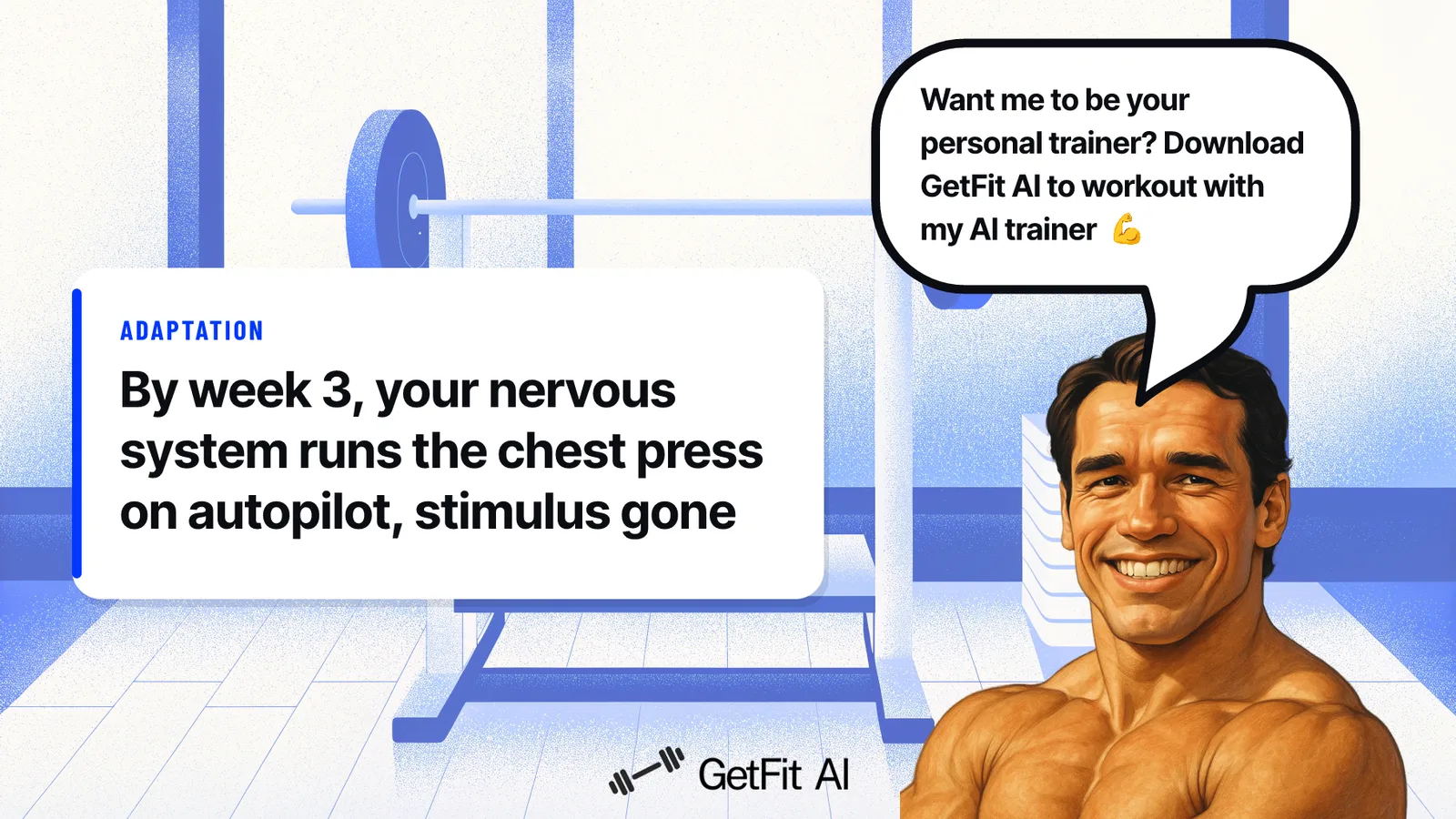
By week three, the chest-press machine that once felt challenging has become a movement the nervous system can execute on autopilot. The muscle has learned it. The stimulus is gone. See our AI fitness app for how this works in practice.
Consistency without change is just repetition. And repetition, past a certain point, maintains fitness rather than building it.
The missing variable is progressive mechanical demand, and specifically whether the force being applied to a muscle is increasing in a way the body cannot yet handle. As NASM notes, muscle recruitment efficiency depends on movement mechanics, not just effort or frequency. Without proper neuromuscular control, more gym time does not produce greater adaptation. A 25-year-old doing the same chest press for three months at the same load is not training; they are rehearsing a movement pattern the body already solved.
This is where a structured plan built around AI-powered custom workouts changes the equation. Rather than leaving load, sequence, and muscle-recruitment logic to guesswork, it applies those decisions systematically every session, a model consistent with research showing structured programming produces meaningfully greater strength gains than unstructured approaches. The gap between effort and results almost always has a name, and it is not laziness, genetics, or bad luck.
Key takeaways
- Effort alone does not break a plateau, the body adapts to mechanical demands, not to how hard a session felt, which is why adding weight to a flawed movement pattern amplifies the error instead of fixing it.
- The same force vectors acting on an elite sprinter's hip at peak velocity are acting on your knee every time you squat, regardless of your experience level or gym membership tier.
- Most training plateaus hit within the first year not because lifters stopped showing up, but because showing up without a structured, biomechanics-aware plan stopped producing a new stimulus.
- Pain is a lagging indicator, by the time your knee aches climbing stairs after squats, the mechanical error causing it has already been rehearsed dozens of times.
- The SAID principle operates at the force-vector level: if your squat drifts from hip-dominant to knee-forward as fatigue builds, your body adapts to the drifted pattern, not the intended one.
- Biomechanical analysis tools have moved from $50,000-$250,000 lab setups to consumer apps, closing the gap between Olympic training centers and someone lifting alone at 8 PM.
- Knowing the principles does not close the gap, cognitive load under real training conditions does, which is exactly why GetFit AI translates biomechanics-backed structure into custom workout plans built in your favorite athlete's style, with an AI trainer available anytime to answer what the textbook never will.
What Sports Biomechanics Actually Means Outside the Lab
The same mechanical forces acting on an elite sprinter’s hip at peak velocity are acting on your knee the moment you drop into a squat.
The Working Definition That Actually Makes Sense for Gym Training
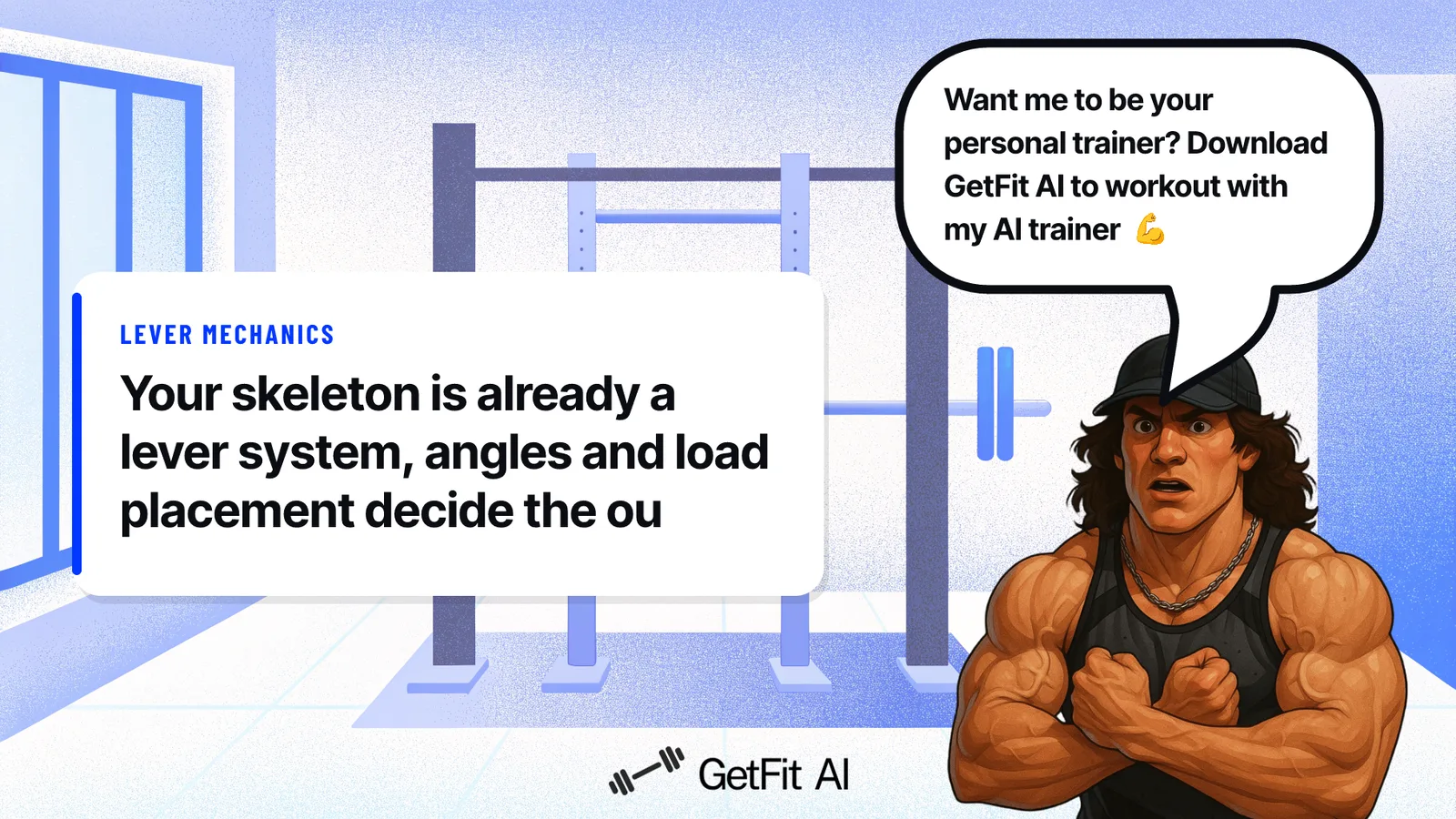
Sports biomechanics is the study of how mechanical principles, including force, motion, and leverage, govern human movement during physical activity, drawing on physics, anatomy, and physiology as an interdisciplinary science. In practice: every time you pick up a barbell, your skeleton acts as a system of levers, your muscles generate force across those levers, and the outcome depends on angles, load placement, and joint position. That understanding is accessible to any lifter willing to look past the jargon. One barrier that holds many beginners back is the assumption that meaningful biomechanics analysis belongs exclusively in a laboratory, force plates, reflective markers, white coats, when the same principles apply on any gym floor.
The Hidden Cost of Treating Movement as Guesswork Instead of a System
A pattern widely observed across the fitness industry: a large share of people quit the gym early on because they rely on effort and willpower alone, without understanding the underlying principles that govern effective training, as documented by Rail Stop Fitness and corroborated by research from My Training Space. Showing up more often does not fix a flawed movement pattern, and without clear feedback on whether the load is producing the adaptations you are chasing, actual strength gains, measurable body composition changes, it is easy to mistake fatigue for progress and plateau for effort.
That gap is where structure matters. GetFit AI’s Athlete-Style Custom Workout Plans are built on sound movement principles from the first workout session, so the biomechanics work for you from session one rather than against you by session ten.
GetFit AI also reinforces that structure socially. Friends, challenges, and leaderboards, most powerful after connecting with at least one friend in the app, and most beneficial when a workout partner is also using GetFit AI, form the retention layer that keeps users training past week three, the window where effort and willpower alone most often breaks down. The real question is which specific mechanical principles are determining how fast you progress every time you step under a bar, and whether your program is built to answer that question or leave you guessing.
Related Reading
- Why Am I Not Getting Faster at Running
- Does Masturbation Affect Athletic Performance
- Why is Protein Important for Athletes
- What is Speed and Agility Training
- How to Be a Better Athlete
- How Does Sports Psychology Help Athletes
- Why is Hydration Important for Athletes
- Why Do Athletes Train at High Altitudes
- Why Do Athletes Stretch Before a Game?
- IV Therapy for Athletic Performance and Recovery
- Yoga and Athletic Performance
- Red Light Therapy for Athletic Performance
The Biomechanical Principles in Sports That Determine How Fast You Progress
Many recreational lifters report hitting a progress wall early in their training, and the cause is rarely a lack of effort. The frustrating part is that most of them were still showing up, still adding weight, still grinding. The problem was physics.
Adding load to a flawed movement pattern does not accelerate progress. It amplifies the error, shifts demand onto compensating muscles, and produces a plateau that feels like a motivation problem but is a mechanics problem. There is a second, quieter trap that compounds this: most static training programs are built to a fixed schedule, and the moment a beginner falls even slightly behind, misses a session, underloads a set, or skips a progression step, the plan no longer fits. They are training against a program that has already moved on without them. Understanding which biomechanical lever each principle pulls, and having a plan that moves with you rather than ahead of you, is the fastest way to stop repeating that cycle.
1. Force and Motion - How Muscle Force Translates to Athletic Output
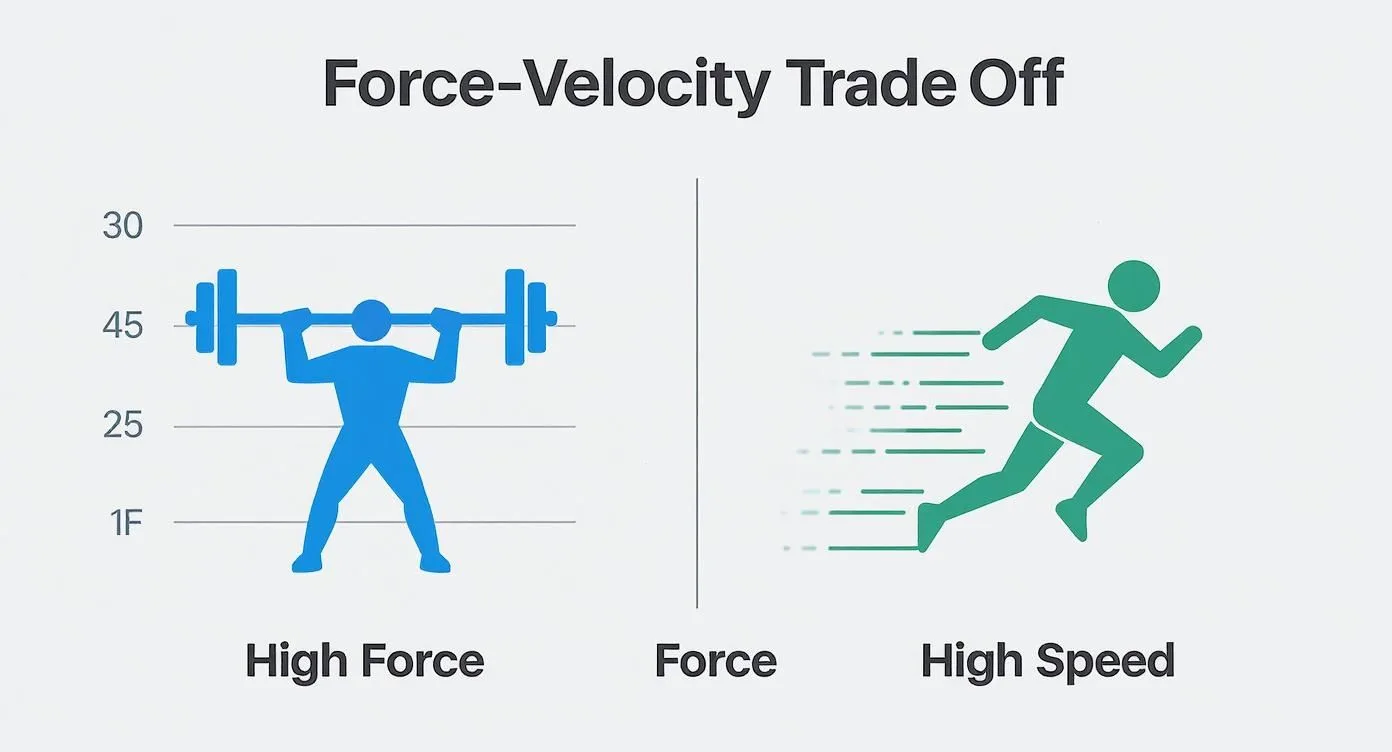
How muscle force translates to athletic output: Force production determines how much mechanical tension reaches the target muscle, and tension is the primary signal that drives hypertrophy. The critical detail most beginners miss is that force direction matters as much as force magnitude. EMG research in biomechanics has found that shifting barbell placement even slightly changes lumbar erector activation meaningfully, so the same movement, loaded differently, trains a different structure entirely. This is precisely why a program that adapts to how a session actually went, rather than assuming every session went to plan, captures more of the intended training signal over time.
2. Leverage and Joint Angles - Why Grip Width and Stance Shift the Entire Load
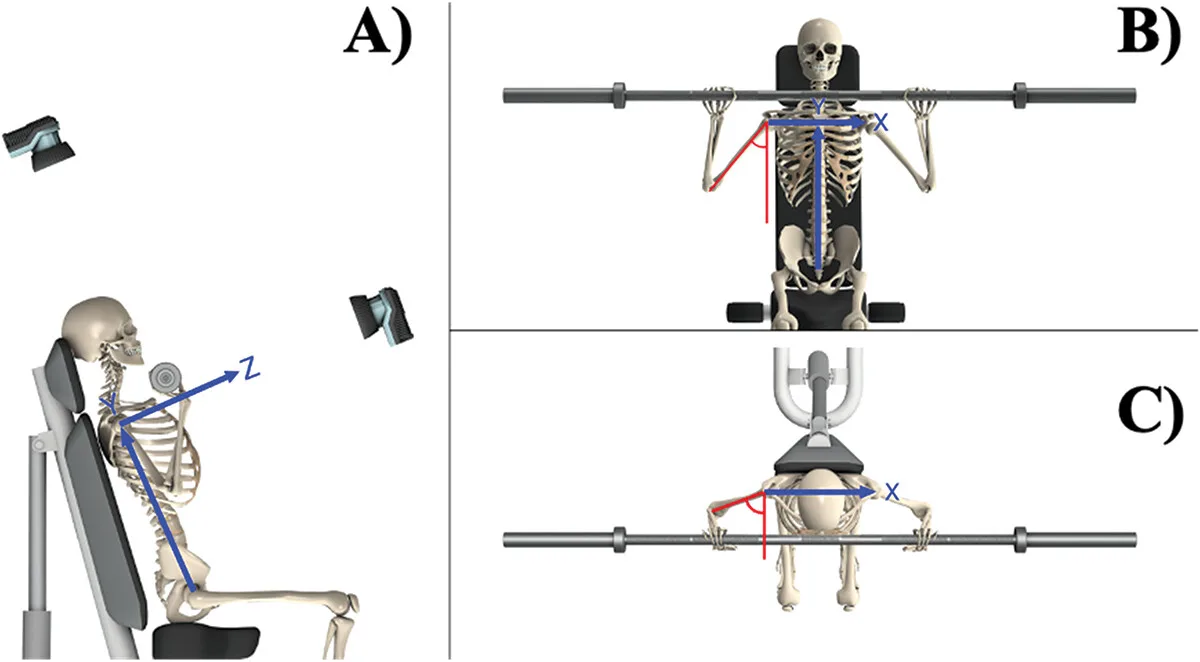
Why grip width and stance shift the entire load: Stance width is one of the most underused variables in beginner training. Research on squat mechanics shows that a wider stance increases gluteus maximus and adductor recruitment, while a narrower stance shifts load toward the quadriceps. Neither is wrong.
Both are deliberate levers. As EnduraLAB notes, changing grip width, stance, or bar placement redirects mechanical demand onto entirely different muscle groups, so the same exercise produces different outcomes depending on setup. GetFit AI’s Athlete-Style Custom Workout Plans embed these setup variables directly into each session’s cues from the very first workout, so stance and grip choices are never left to guesswork.
3. Kinematics vs. Kinetics - The Gap Between How a Movement Looks and What Drives It
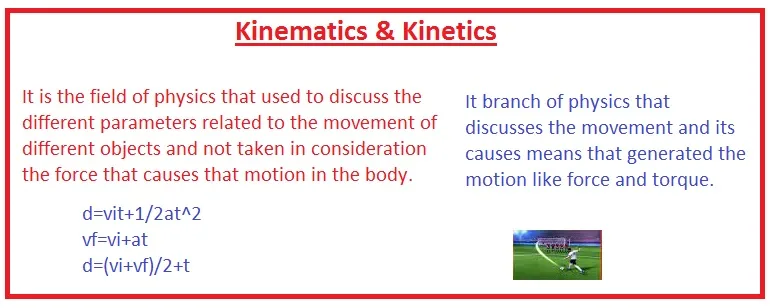
The gap between how a movement looks and what drives it: Kinematics describes what a movement looks like from the outside. Kinetics describes the forces actually driving it. A squat can look textbook-clean while the kinetic load bypasses the glutes entirely and overloads the lower back. EnduraLAB frames this precisely: whether training stimulus reaches the intended tissue depends on the forces at work, not the visible appearance of the rep. “It looked fine” is not a reliable self-diagnostic, which is why real-time cues embedded inside each workout session matter more than a summary reviewed after the fact.
4. Movement Patterns as Biomechanical Categories - Why Pattern Selection Beats Exercise Selection
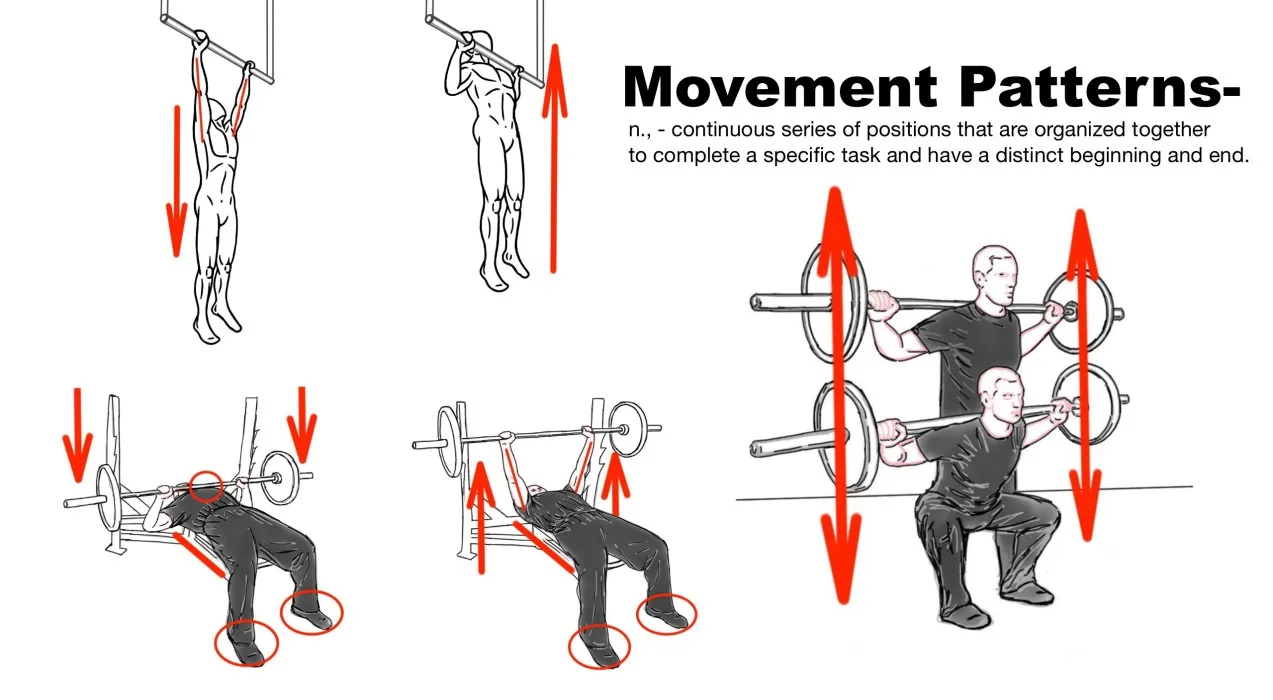
Why pattern selection beats exercise selection: Choosing a hinge over a squat for posterior chain development matters more than choosing between a Romanian deadlift and a kettlebell swing. EnduraLAB makes this case directly: fundamental movement patterns, push, pull, hinge, squat, determine which muscles and joints bear load, and selecting the right pattern for a training goal matters more than the specific exercise chosen within that pattern. A beginner building sessions around patterns rather than exercise names removes most of the guesswork immediately.
GetFit AI’s Structured Training feature is most valuable precisely here: beginners who have previously struggled with consistency because they lacked program structure get a pattern-first framework delivered from session one, so the architecture of every workout is already correct before a single rep is loaded.
5. Core Biomechanical Principles in Sports - Stability, Sequencing, and Transfer of Force
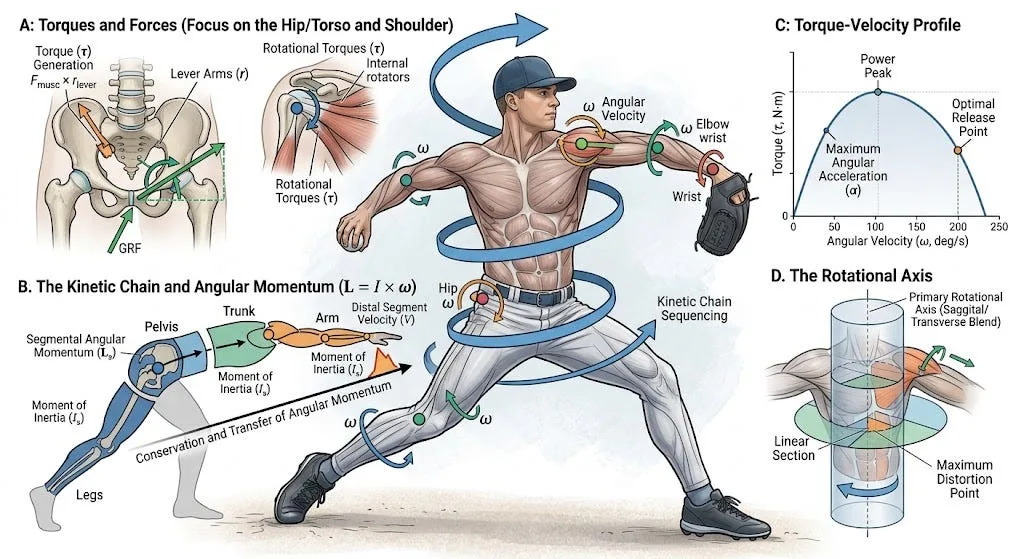
Biomechanics in sports encompasses principles like proximal stability enabling distal mobility, kinetic chain sequencing, and ground reaction force transfer, all of which determine how efficiently an athlete converts training into sport-specific performance. A sprinter, a swimmer, and a thrower each rely on these same underlying laws expressed differently. Ignoring them means training volume accumulates without proportional performance gains. The tradeoff: applying sport-specific biomechanical principles demands context-specific coaching expertise that general programming cannot provide.
How Force and Motion in Athletic Performance Expose the Real Reason Progress Stalls
This section breaks down the biomechanical principles that explain why completing a rep and loading the right muscle are two different things, and how GetFit AI uses that same logic to keep your training adaptations on track.
Why Your Body Adapts to Force Vectors Not to Effort
The body obeys a precise rule: it adapts to the exact mechanical demands placed on it, not to the general experience of working hard. As Khvedelidze’s 2025 analysis in Universum: Chemistry and Biology makes clear, the body adapts to the force vectors and ranges of motion it is repeatedly exposed to, which is why performing the same exercise with altered joint angles produces different mechanical loading patterns even when the effort feels identical.
GetFit AI’s Athlete-Style Custom Workout Plans are built around this exact distinction.
How Tempo, Joint Angle, and Range of Motion Change What a Rep Actually Does
Change the tempo, joint angle, or range of motion and the load can stay identical. What has changed is the time under tension and the force curve experienced at each joint angle, and that change produces a qualitatively different adaptive stimulus. Khvedelidze’s 2025 research confirms that movement duration directly alters the mechanical signal delivered to the muscle, independent of load. Tempo is a structural variable in whether the right tissue receives the right stimulus.
GetFit AI prescribes tempo and range of motion alongside load as primary training variables.
Mechanical Tension as the Real Signal for Muscle Growth
Bulk Nutrients’ 2024 review identifies mechanical tension as the primary driver of muscle growth, with the magnitude and duration of that tension determining the adaptive response.
GetFit AI’s Structured Training addresses this from the first workout session, matching exercise selection, tempo, and range of motion to your specific goal so the force goes where it needs to go rather than where compensation takes it.
Injury Prevention Through Biomechanics Starts Before Pain Appears
Pain is a lagging indicator. It shows up weeks or months after the real problem began, which means by the time your knee aches climbing stairs after squats, the mechanical error causing it has already been rehearsed dozens of times. Understanding injury prevention through biomechanics is about recognizing what the body is doing long before damage becomes undeniable.
How Compensatory Movement Patterns Quietly Redirect Load onto the Wrong Structures
When a primary muscle group cannot complete its share of a movement, the body does not simply stop. It recruits neighboring structures to keep the movement going. Poor movement mechanics during resistance training redistribute load away from target muscles and onto passive structures, including tendons, ligaments, and joint surfaces, increasing cumulative injury risk over time.
The Three Beginner Movement Errors That Biomechanics Flags as High-Risk Before Pain Arrives
Three compensatory movement patterns appear most often in beginners, and each one follows a predictable injury pathway. Biomechanics research consistently identifies knee valgus collapse in the squat, lumbar flexion under load in the deadlift, and shoulder impingement mechanics in the overhead press as the highest-risk form breakdowns for new lifters, all of which go uncorrected without external feedback.
Why Solo Late-Night Training Removes the Only Early-Warning System Most Beginners Have
Self-perception of form is already imperfect under fresh conditions. Under fatigue, that signal becomes unreliable fast. Research on motor control under fatigue consistently shows that self-monitoring during later sets is particularly poor, so form degradation reinforces faulty motor patterns precisely when the body is most stressed. Nobody training alone at 9 PM catches their third-set knee cave, and without an external check, those patterns compound.
GetFit AI’s anytime chat gives that solo lifter an immediate line to their AI trainer the moment something feels off, addressing precisely the self-monitoring failure that research identifies as most acute during later sets under fatigue.
Related Reading
- Athletic Performance Analysis
- Does Vaping Affect Athletic Performance
- How to Avoid Feeling Sleepy After Workout
- How Does Sleep Affect Athletic Performance
- How to Measure Athleticism
- Velocity Based Training
- Building Stamina and Endurance
- Why Am I So Bad at Sports
- Endurance vs Strength Training
- Why Am I So Tired After Working Out
- How to Create a Personalized Workout Plan
Tools and Technology in Biomechanical Analysis That Have Moved from Lab to Your Phone
A full professional motion-capture lab setup costs between $50,000 and $250,000 in hardware alone. That number has kept biomechanical analysis locked inside university research departments and Olympic training centers for decades. The gap between that reality and what a 27-year-old training alone at 8 PM actually has access to is closing fast. Here is the spectrum of tools that now exist, from lab-grade to pocket-sized.
1. Force Plates, Motion Capture, and EMG - The Gold-Standard Lab Trio Behind Elite Biomechanics in Sports
Sports scientists rely on force plates to measure ground reaction forces, multi-camera motion capture systems to track joint kinematics in 3D, and electromyography to record muscle activation timing. Together they produce the most precise biomechanical data available, informing injury prevention and technique refinement at the elite level. The hard tradeoff: this equipment costs tens of thousands of dollars and requires a controlled lab environment, making it inaccessible to everyday athletes.
2. Wearable Accelerometers and IMU Sensors - Real-Time Movement Data Without Leaving the Field
Inertial measurement units embed accelerometers and gyroscopes into devices worn on the wrist, shin, or lower back, capturing movement velocity, trunk tilt, and jump height continuously. Research comparing IMU output to lab force plates shows strong agreement on these metrics, confirming they produce genuinely useful biomechanical data rather than glorified step counts. The honest limitation: placement inconsistency and signal noise reduce accuracy during complex, multi-joint lifts, and no wrist-worn device yet reliably tracks bar path or upper-body mechanics.
3. AI-Powered Video Analysis Apps - Smartphone Motion Capture That Flags Form Deviations Instantly
Apps using AI pose estimation overlay a skeletal model onto video in real time, flagging joint angles, squat depth, and lateral asymmetries without any wearable hardware. The accuracy gap versus a full 3D lab system is real: 2D pose estimation introduces meaningful error on depth and rotation measurements. A practical barrier compounds this: a 17-second 4K clip can exceed 1GB, well above upload limits some tools impose. For most beginner movements, though, the feedback is directionally accurate and far better than nothing, especially when no coach is present at 8 PM.
4. Translating Biomechanical Data into Mid-Workout Cues - How Apps Turn Numbers into Plain-Language Corrections
Raw joint-angle data means nothing to someone who just wants to know why their lower back rounds on the third set. The tools that close this gap convert sensor output or pose-estimation flags into plain-language cues delivered inside the session itself. That is the practical difference between a data file and a coaching moment. GetFit AI builds this translation layer into a custom AI plan, so biomechanical feedback and programming live in the same workflow rather than requiring a separate upload to a separate platform.
5. Biomechanics in Structured Sports Science Curricula - Why Class 12 and Coaching Programs Now Teach These Tools
Biomechanics has moved from postgraduate research into undergraduate coaching degrees, physical education teacher training, and even advanced secondary curricula, reflecting how broadly the field now applies to practice rather than theory alone. Student coaches are learning motion analysis software and basic IMU interpretation as standard competencies. The implication for everyday gym-goers is significant: the trainer or coach they eventually work with is increasingly likely to apply biomechanical frameworks rather than intuition. Understanding the tool spectrum now puts a self-coached lifter closer to that same baseline.
Practical Applications in Sports Training That Work Even Without a Coach in the Room
That shift from classroom to gym floor is where frameworks either prove their worth or collapse into abstraction. A trainer who has studied motion analysis still has to make real decisions under time pressure, three machines taken, a timer running, a client waiting, and the same pressure applies to anyone training alone. More reading does not solve that problem; a repeatable decision filter does, one you run before each exercise, each set, and each progression. Encoding week-over-week decisions into a plan removes guesswork so you never rely on in-the-moment intuition to drive progress. These five checkpoints give you that filter.
“Elite biomechanical assessment tools, force plates, speed gates, lab-grade systems, have historically been out of reach for coaches working without large budgets or institutional support, making independent athlete evaluation difficult.”
— what we hear from independent sports coaches
1. Match Your Exercise to the Muscle’s Strength Curve - Not Just the Movement
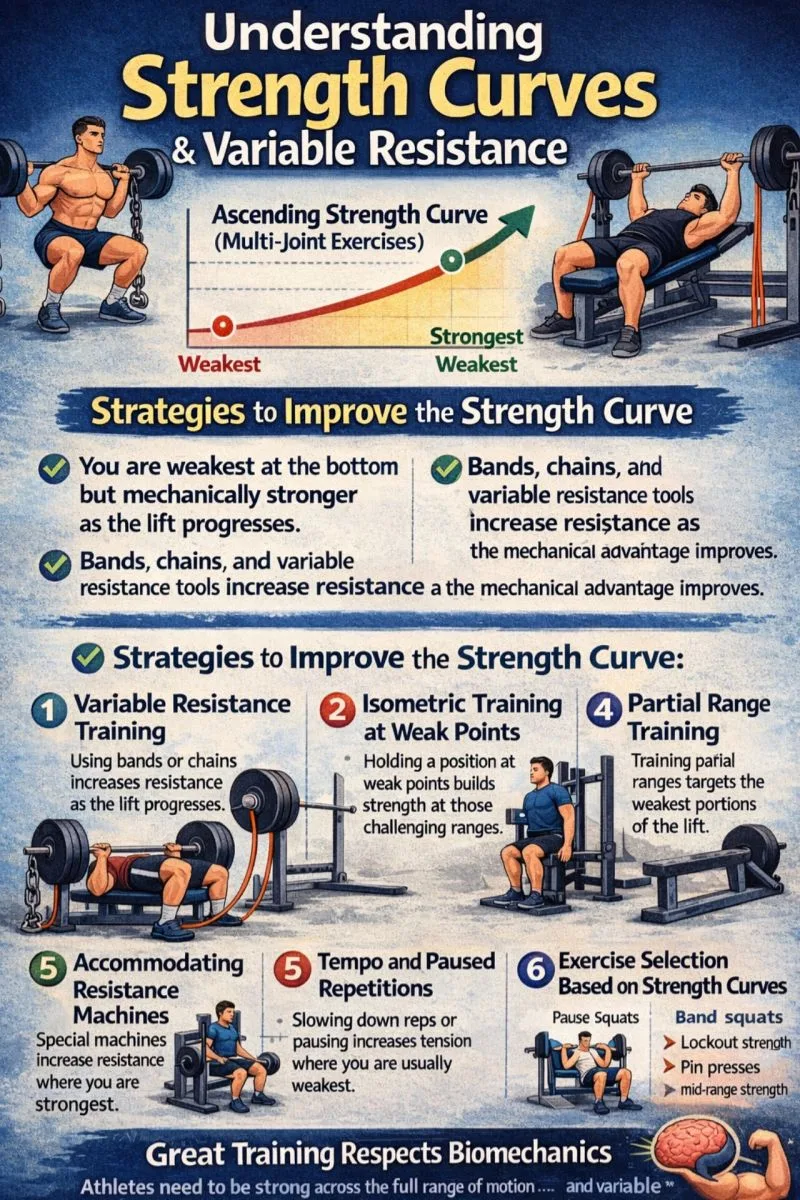
Before choosing between a cable and a free-weight variation, ask where the target muscle is weakest across its range. Free weights load heaviest at the bottom of a movement and go slack at the top; cables maintain tension through the full arc. Selecting a Romanian deadlift over a leg curl, for instance, places peak load on the hamstring where it generates the most force. That single swap changes the stimulus without changing the movement pattern at all.
2. Use Range-of-Motion Awareness to Diagnose a Stalled Lift Before Adding Weight
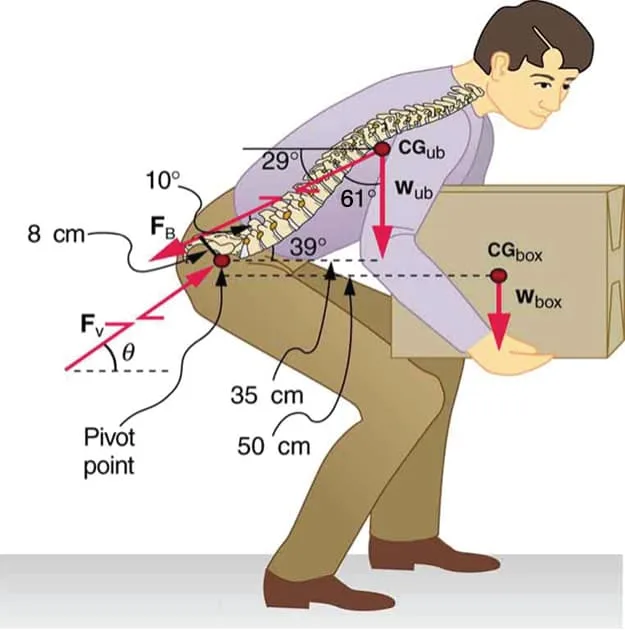
When a lift stops progressing, film a side-angle set before touching the load. Watch specifically for where the range shortens under fatigue. Across most self-coached training contexts, range of motion is one of the overload variables a self-coached lifter can adjust independently, so it functions as a diagnostic tool as well as a form cue. A stall caused by a mobility deficit needs mobility work; one caused by a strength deficit needs load management. Confusing the two wastes weeks.
3. Build Every Session Around Fundamental Movement Patterns Instead of Random Exercise Lists
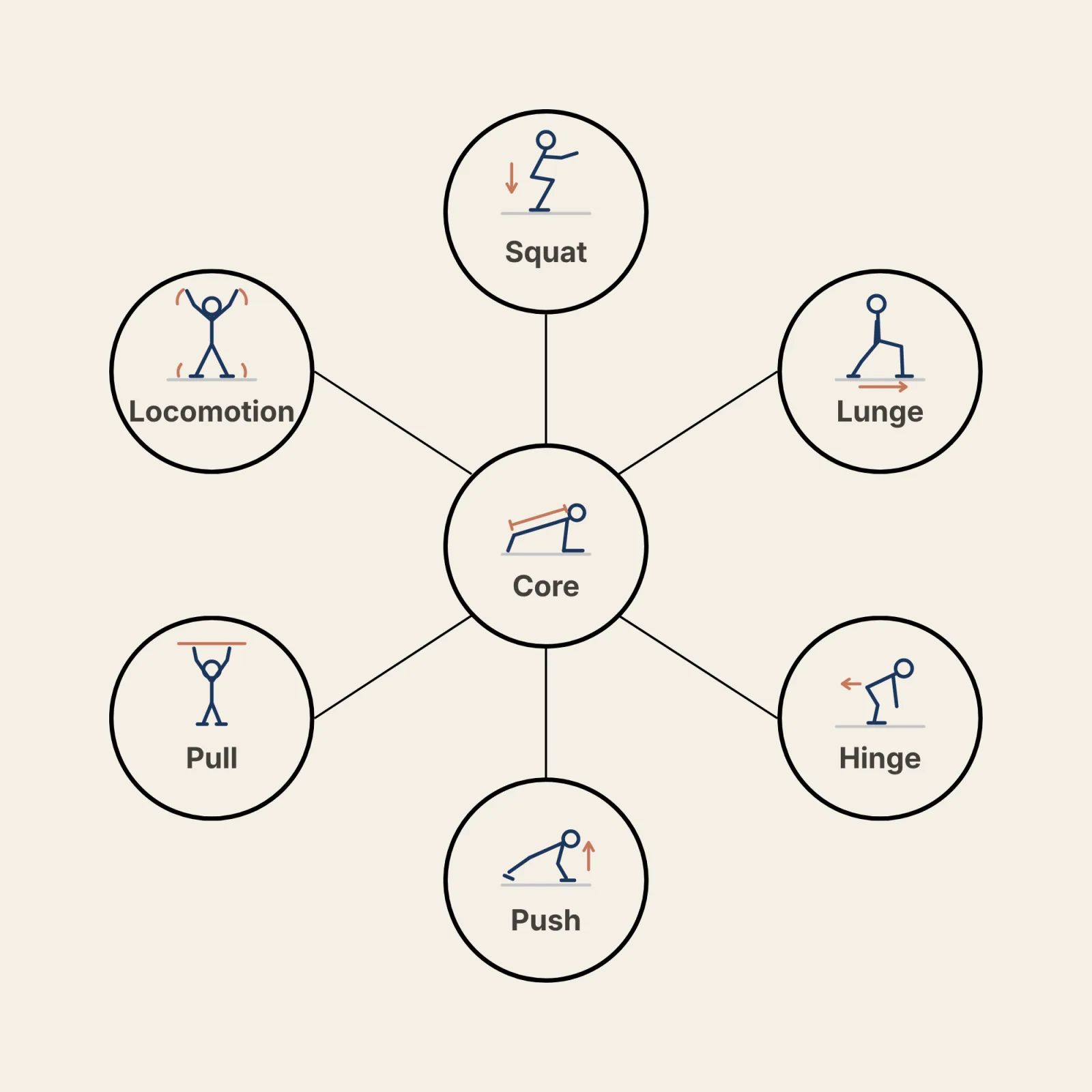
Structure each session around one push, one pull, one hinge, and one squat before adding anything else. Pattern-based programming produces balanced stimulus across joint systems and prevents the accidental quad-dominant, chest-heavy split most beginners drift into when they pick whatever machine is open. The honest trade-off: the structure feels rigid early on, and it means skipping a favorite exercise when a pattern slot is already filled for the day.
4. Let Progressive Programming Translate Biomechanical Principles Into Week-Over-Week Decisions
Biomechanical awareness only compounds when it is tracked. A well-established principle of adaptation is this: repeating the same stimulus stops producing gains. A written progression rule, such as adding load only after hitting every rep with full range and controlled tempo, removes the in-the-moment judgment call that most self-coached lifters get wrong under fatigue. Without that rule encoded somewhere, the feedback loop breaks the moment the session feels hard.
5. Apply Force-Vector Awareness to Choose Exercises That Actually Match Your Training Goal

Force vector describes the direction resistance travels relative to the target muscle. A cable pull-down and a barbell row both train the back, but one loads the lats through shoulder extension and the other through scapular retraction. Choosing based on vector rather than muscle name alone means the exercise you select matches the stimulus your training goal requires. This is the filter that separates informed exercise selection from picking whatever feels like a back exercise in the moment.
Related Reading
- How to Deal With Performance Anxiety in Sports
- Hydration Tips for Athletes
- How to Build Mental Toughness in Athletes
- Food for Athletes During Competition
- Strength Training Workout for Runners
- Best Plyometric Exercises for Speed
- Exercises That Improve Muscular Endurance
- Conditioning Workouts for Athletes
- Speed Training for Athletes
- Balance Exercises for Athletes
- Best Core Exercises for Athletes
Why Knowing the Principles Without a Structured Plan Still Leaves You Guessing
The gap between knowing and doing widens fastest under load, when the squat rack is finally free, your legs are already burning, and every biomechanical cue you studied the night before has quietly left the building.
That gap is a cognitive load problem, and it is why PROSOC research from Dobrescu (2018) found that students and trainers who understand fitness principles conceptually still struggle to apply them correctly in practice without structured guidance. Understanding the principles is real progress. Assuming that understanding alone will hold up under fatigue is where the plan falls apart.
The Fatigue-Distraction Gap - Why Biomechanical Knowledge Breaks Down Mid-Session
Fatigue does not just tire your muscles. It degrades the prefrontal processing that keeps form cues active. A beginner who has read everything about hip-hinge mechanics can still round their lower back on set three, because no external prompt fires at the moment the pattern breaks.
Self-assessment under load is unreliable; effort and habit rush in to fill the void left by fading concentration. This is most costly for someone training alone at 9 PM. Silent form errors compound across sessions long before pain appears.
Knowing the right cue is a different thing from having a system that applies it.
How a Biomechanics-Built Plan Eliminates Decision Fatigue
Understanding biomechanics is the map. A map left in your pocket while you wander does not get you anywhere. The next step is handing that map to a system that navigates for you, every session, without the guesswork.
Next steps
If your months of consistent training keep returning the same body and the same weights, the path forward starts with recognizing that effort directed at a fixed stimulus trains the nervous system to produce less over time, not more. Start with our AI fitness app.
The research on mechanical tension makes one thing clear: two people performing the identical exercise with different tempos, joint angles, or load paths are delivering qualitatively different stimuli to their tissue, which means movement shape is not the variable that drives muscle growth. Force is. And as the fatigue-distraction gap confirms, biomechanical knowledge held in your head evaporates under the cognitive load of an actual workout, leaving effort and habit to fill the void. Knowing the right cue is not the same as having a system that fires it at the moment your form starts to break. Together, those two realities point to one next step: a plan that encodes the correct force variables into every session before you walk through the door, so the decisions are already made when concentration fades.
Start with the AI fitness app that builds your custom workout plan around the biomechanical principles covered here, adapts when your planned station is taken, and answers your form questions mid-session when no coach is present. Download free on iOS today.
Frequently Asked Questions
Why do I keep hitting a plateau even though I’m consistently going to the gym?
Once your body has adapted to a given stress, it simply stops responding to it, and that adaptation can happen as quickly as week three. The missing variable is progressive mechanical demand: the force being applied to a muscle needs to keep increasing in a way the body cannot yet handle, not just the frequency of your sessions.
Does biomechanics only matter for elite athletes, or does it apply to regular gym-goers too?
It applies equally to everyone. The same mechanical forces acting on an elite sprinter’s hip at peak velocity are acting on your knee the moment you drop into a squat, the physics does not change based on your experience level. What changes is whether you have a structured system helping you apply those principles in the moment.
How does grip width or stance actually change which muscles I’m training?
Changing grip width, stance, or bar placement redirects mechanical demand onto entirely different muscle groups. For example, a wider squat stance increases gluteus maximus and adductor recruitment, while a narrower stance shifts load toward the quadriceps, so the same exercise produces different outcomes depending purely on setup.
If a rep looks correct in the mirror, does that mean my form is actually good?
Not necessarily. Kinematics describes what a movement looks like from the outside, while kinetics describes the forces actually driving it, and a squat can look textbook-clean while the kinetic load bypasses the glutes entirely and overloads the lower back. This is why ‘it looked fine’ is not a reliable self-diagnostic.
Why is choosing the right movement pattern more important than picking a specific exercise?
Fundamental movement patterns, push, pull, hinge, squat, determine which muscles and joints bear load, so selecting the correct pattern for your training goal matters more than the specific exercise chosen within that pattern. For example, choosing a hinge over a squat for posterior chain development is more impactful than deciding between a Romanian deadlift and a kettlebell swing.