Does Masturbation Affect Athletic Performance? Experts Explain
The locker room myth is wrong. Science shows masturbation does not hurt your strength, endurance, or testosterone in any way that matters for training or competition.
Somewhere between the locker room and the internet, a simple question became a source of real anxiety. It is also almost entirely a product of cultural mythology, not sports science.
“I’m concerned that masturbation may reduce testosterone levels and negatively impact my physical performance, and I’m not alone. There is ongoing anxiety among athletes around sexual activity and competitive readiness.”
— what we hear from athletes and fitness enthusiasts
See our AI fitness app for how this works in practice.
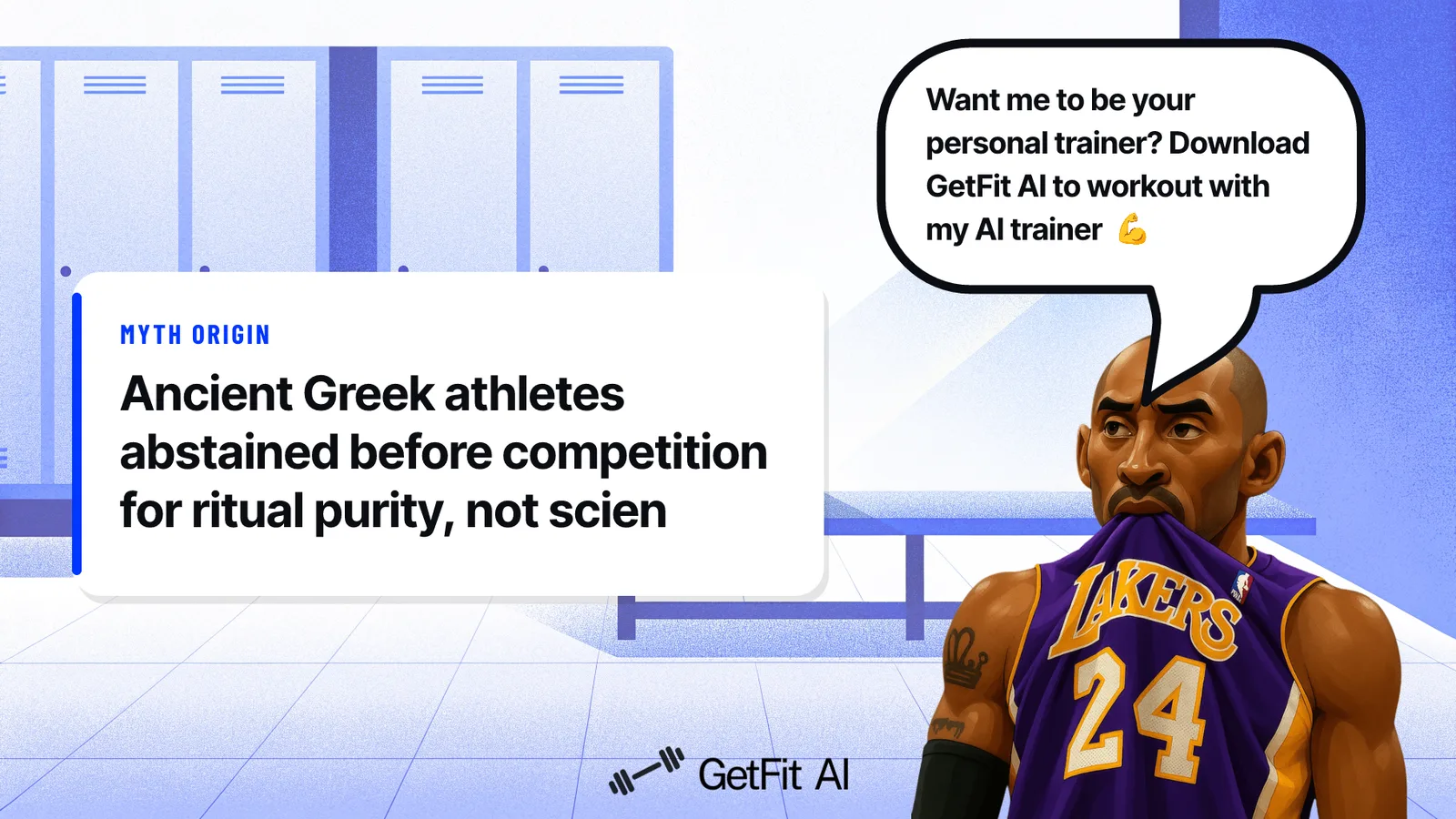
The belief that sexual activity before competition destroys athletic performance is centuries old. According to a 2021 systematic review published in Bioscience Biotechnology Research Communications, ancient Greek and Roman athletes were advised to abstain before competition to preserve their strength and aggression, framing sexual restraint as ritual purity rather than physiology. The science was never there. The tradition was.
That tradition found loud modern voices. The same review confirms that boxing legends Muhammad Ali and Mike Tyson publicly endorsed pre-competition abstinence, spreading the belief across generations of athletes who trusted their example over any evidence. Neither was making a physiology-based argument. But when icons speak, locker rooms listen, and the myth compounds with every retelling.
Athletes who believe abstinence improves performance can experience something close to a nocebo effect when they do not abstain, so the anxiety itself creates the dip they feared. The physiology is negligible. The psychology, untethered from any structured feedback system, is loud.
The deeper question is about having no reliable answer to “is what I’m doing actually working?”
Key takeaways
- The belief that masturbation destroys athletic performance is centuries old, and the sports science behind it is nearly nonexistent.
- Orgasm burns a negligible number of calories, far less than a single flight of stairs, making the idea that it drains your aerobic or muscular capacity mathematically impossible.
- Testosterone fluctuates briefly after ejaculation but returns to baseline within minutes, no clinically meaningful suppression, no hormonal cost to your next training session.
- The neurochemical release from orgasm (oxytocin, dopamine) can reduce stress and regulate arousal, meaning the psychological effect is more likely neutral-to-positive than harmful.
- The one real risk is behavioral: staying up late chasing the habit and cutting into sleep, which is the variable that actually tanks recovery and next-day output.
- Missing progressive overload, eating without a caloric target, and training without structure cost far more performance than any pre-game habit ever could.
- GetFit AI closes those gaps directly, custom workout plans built in your favorite athlete's style, plus anytime access to an AI trainer when you have questions no locker room can answer honestly.
Does Masturbation Affect Strength and Power Output
The caloric expenditure of masturbation is negligibly small, even compared to partnered sexual activity, which itself burns only a fraction of what a single 30-minute treadmill session demands.
The Verdict From Controlled Research - No Drop in Strength or Power
According to a systematic review and meta-analysis published in the Journal of Global Health, sexual activity performed within 30 minutes to 24 hours before exercise does not negatively affect musculoskeletal strength or power performance. The same body of evidence notes small improvements in handgrip strength and time to exhaustion following orgasm, with the net effect on strength running neutral to marginally positive.
What the Spanish Athlete Study Found About Handgrip and Jump Performance
The most specific evidence comes from a study of 21 male college athletes in Spain, who were tested on handgrip strength and jumping ability after masturbation versus abstinence. No significant drop appeared in either metric. Grip force held, and the athletes who had orgasmed before testing did not perform worse on the measures that matter most for strength sports and court-based competition.
That is a direct, controlled comparison, not a survey or self-report, and it is the kind of data that should settle the question for good.
Why Orgasm Cannot Meaningfully Deplete Muscle Glycogen or Neuromuscular Capacity
Meaningful glycogen depletion, the kind that actually impairs muscle contraction and power output, requires sustained, high-intensity effort across multiple muscle groups, a threshold orgasm does not come close to meeting.
Neuromuscular capacity follows the same logic. The nervous system fatigue that reduces force production builds from heavy compound loading, not from a brief autonomic event with negligible mechanical output. The real culprits are almost always a missing progressive overload structure, no rep-range targets, and no feedback loop when the numbers stall.
Related Reading
- Why Am I Not Getting Faster at Running
- Biomechanics in Sports
- Why is Protein Important for Athletes
- What is Speed and Agility Training
- How to Be a Better Athlete
- How Does Sports Psychology Help Athletes
- Why is Hydration Important for Athletes
- Why Do Athletes Train at High Altitudes
- Why Do Athletes Stretch Before a Game?
- IV Therapy for Athletic Performance and Recovery
- Yoga and Athletic Performance
- Red Light Therapy for Athletic Performance
Does Masturbation Affect Endurance and Aerobic Fitness
The Caloric Math - Why Orgasm Cannot Meaningfully Drain Your Aerobic Tank
Measuring energy expenditure during sexual activity in young, healthy adults, the average burn across both sexes was approximately 85 kcal per session at 5.8 METs, classified as moderate intensity.
A 30-minute treadmill run at the same moderate pace burns 276 kcal in men alone, more than three times that figure. Masturbation demands substantially less effort than even partnered sex, so its caloric footprint sits well below 85 kcal, and cardiovascular recovery is complete within minutes.
What NIH-Indexed Research Actually Measured in Endurance Athletes
No peer-reviewed study indexed on PMC has found a statistically significant reduction in VO2 output, aerobic capacity, or endurance metrics attributable to masturbation when sleep is kept intact.
The subjective sense of tiredness some athletes report is real, but it reflects a genuinely modest caloric cost. The honest limitation: most research uses partnered sexual activity as the proxy, since isolating masturbation in a controlled lab setting is methodologically difficult. Even so, the data from that proxy is instructive: at its most demanding, partnered activity burned an average of 101 kcal in men and 69 kcal in women, only 36 to 37 percent of the energy spent during a 30-minute moderate treadmill session, according to Energy Expenditure during Sexual Activity in Young Healthy Couples, PLOS ONE (2013), with masturbation falling well below even those figures.
Key takeaway: Even partnered sex, the more demanding version, burns only 36-37% of the calories of a single 30-minute moderate treadmill run. Masturbation falls well below that.
Your aerobic tank is not being touched.
Young athletes who feel gassed during workouts and blame this habit are almost always missing something more structural: no progressive overload in their cardio plan, inconsistent sleep, or no real nutrition target around training.
How Masturbation Actually Affects Your Testosterone Levels
Testosterone levels experience a brief fluctuation during and after orgasm, but ejaculation does not suppress testosterone in any clinically meaningful way. The fluctuation is measured in minutes, not training sessions.
Testosterone After Orgasm - What the Numbers Actually Show
Masturbation does not measurably lower testosterone. Examine confirms that testosterone remains largely unchanged following orgasm, and any transient shift falls well within the normal intraday variance every male experiences from waking up, eating, or training hard. Your testosterone naturally peaks in the morning and dips through the afternoon by a margin that dwarfs anything orgasm produces.
One gap beginners struggle with is context: the most-cited measurement windows, capturing testosterone in the 30 minutes immediately after ejaculation, are essentially irrelevant to real athletic life. What happens at 4, 8, or even 24 hours post-orgasm is the question that matters for your training session the next morning, and the research captured by PubMed (PMID 7429442) shows the hormone returns to personal baseline well within that window.
What does shift is prolactin, which rises briefly after ejaculation and contributes to the refractory period. It is also completely irrelevant to muscle protein synthesis, because the threshold required to drive anabolic signaling sits far above the magnitude of any fluctuation orgasm creates. A hard squat session produces a bigger, longer testosterone spike than abstinence does.
Why Young Athletes Misread Transient Hormonal Spikes as Lasting Damage
Testosterone may shift briefly after orgasm, but the hormone returns to its personal baseline.
The hormonal claims that circulate in fitness culture rest on this misreading: a transient spike during abstinence gets treated as proof that ejaculation causes a lasting deficit, when the evidence supports no such conclusion.
A separate concern we see among beginners is more psychological than hormonal: athletes who feel their sexual habits are compulsive or out of control sometimes attribute genuinely low energy, poor recovery, or stalled strength to those habits, when the far more likely culprits are chronic sleep debt, under-eating, or the complete absence of a structured progressive program. Blaming frequency is easier than auditing a training plan.
In GetFit AI, from your first session, every workout sits inside a structured program arc designed for progressive overload, so you are never guessing whether the work is moving the needle. GetFit AI tracks performance across sessions and gives a concrete answer to whether you are getting stronger, via its Strength Score, a single number updated every session that measures overall strength muscle by muscle, directly answering “am I actually getting stronger?”
The Hormones Orgasm Actually Releases and What They Do
Orgasm triggers a release of dopamine, norepinephrine, and oxytocin, and none of those are performance-wrecking compounds. Here is what each one actually does:
-
Dopamine sharpens motivation and reward signaling.
-
Oxytocin reduces cortisol.
-
Norepinephrine improves alertness.
If you want to stop second-guessing your hormones and start seeing measurable progress instead, GetFit AI, available from $1.99 per week, $4.99 per month, or $49.99 per year, gives you the nutrition and training framework to actually put on size, lean out, and prove to yourself the work is compounding.
The Mental and Psychological Effects of Masturbation on Athletic Performance
Orgasm releases oxytocin and dopamine through hypothalamic pathways that reduce stress and regulate autonomic arousal. When athletes report feeling tired or calm afterward, the question worth asking is whether the biology caused that feeling, or whether the story they told themselves did.
Dopamine, Oxytocin, and the Case That Orgasm Can Actually Calm Pre-Competition Nerves
Stress relief and improved mood via dopamine and oxytocin are the direct mental and psychological effects of masturbation on athletic performance. Sharma (2022) in Reproductive System & Sexual Disorders: Current Research traces that oxytocin release to the hypothalamic paraventricular nucleus, the same region governing autonomic stress control, heart rate, and blood pressure regulation. For an athlete who struggles with pre-competition anxiety, that is a plausible neurobiological argument for masturbation reducing cortisol-driven nervousness rather than compounding it.
But it is worth separating the physiological signal from the psychological one, because structured training context changes how both are interpreted.
GetFit AI’s Athlete-Style Custom Workout Plans are most beneficial precisely when a user has a clear athletic role model and a specific physique or performance goal, because that goal orientation gives the nervous system something to anchor to on days when intrinsic motivation is blunted.
Why Athletes Who Believe Masturbation Hurts Them Often Perform Worse - The Nocebo Effect Explained
The belief that masturbation hurts performance can generate the exact performance drop the athlete feared, entirely independent of any physiology. This is the nocebo effect: negative expectation produces a measurable outcome. Meta-analytic evidence in sport psychology consistently shows that expectation-driven anxiety can suppress focus, reduce motivation, and impair execution on tasks requiring fine motor control or sustained concentration.
Athletes caught in that belief are experiencing self-monitoring stress, a chronic internal audit that consumes the cognitive bandwidth that focus needs.
Key takeaway: The nocebo effect is real. An athlete who believes masturbation will hurt their performance can produce an actual performance drop through expectation-driven anxiety alone, with zero physiological cause.
GetFit AI’s Structured Training is built for athletes who have previously struggled with consistency due to lack of program structure, and it operates from the first workout session onward.
The Sleep and Recovery Window When Relaxation Becomes a Legitimate Performance Tool
Sharma (2022) documents that prolactin release following orgasm is associated with faster sleep onset, so masturbation timed appropriately can shorten the time it takes an athlete to fall asleep and extend total sleep duration. Athlete self-report surveys on pre-competition sexual activity show mixed results overall, but the consistent finding is that timing and sleep disruption explain the variance. An athlete who masturbates and falls asleep by 10pm is using the relaxation response as a legitimate recovery tool. An athlete doing the same at 2am while scrolling a phone is suffering from the late hour and the screen, not the orgasm.
This is where having a structured program with visible session targets the next morning matters behaviourally: athletes tracking their workouts inside GetFit AI’s Athlete-Style Custom Workout Plans, particularly those working toward a specific physique or performance goal modelled on a real athletic reference point, report stronger pre-sleep discipline because the morning session carries weight.
Related Reading
- Athletic Performance Analysis
- Does Vaping Affect Athletic Performance
- How to Avoid Feeling Sleepy After Workout
- How Does Sleep Affect Athletic Performance
- How to Measure Athleticism
- Velocity Based Training
- Building Stamina and Endurance
- Why Am I So Bad at Sports
- Endurance vs Strength Training
- Why Am I So Tired After Working Out
- How to Create a Personalized Workout Plan
When Masturbation Can Actually Hurt Your Workouts
The common assumption among most high-school lifters, ages 15 to 18 and brand new to the gym, is: “If I can just figure out which habits are secretly ruining my performance, my training will finally click and results will come.”
Consider two athletes following an identical evening routine. One finishes and is asleep by 10pm, getting a full night of recovery. The other stays up well past midnight, cuts their sleep to a fraction of what recovery demands, and drags themselves to an early morning session. Their performances the next day diverge sharply, and the difference has nothing to do with the habit itself.
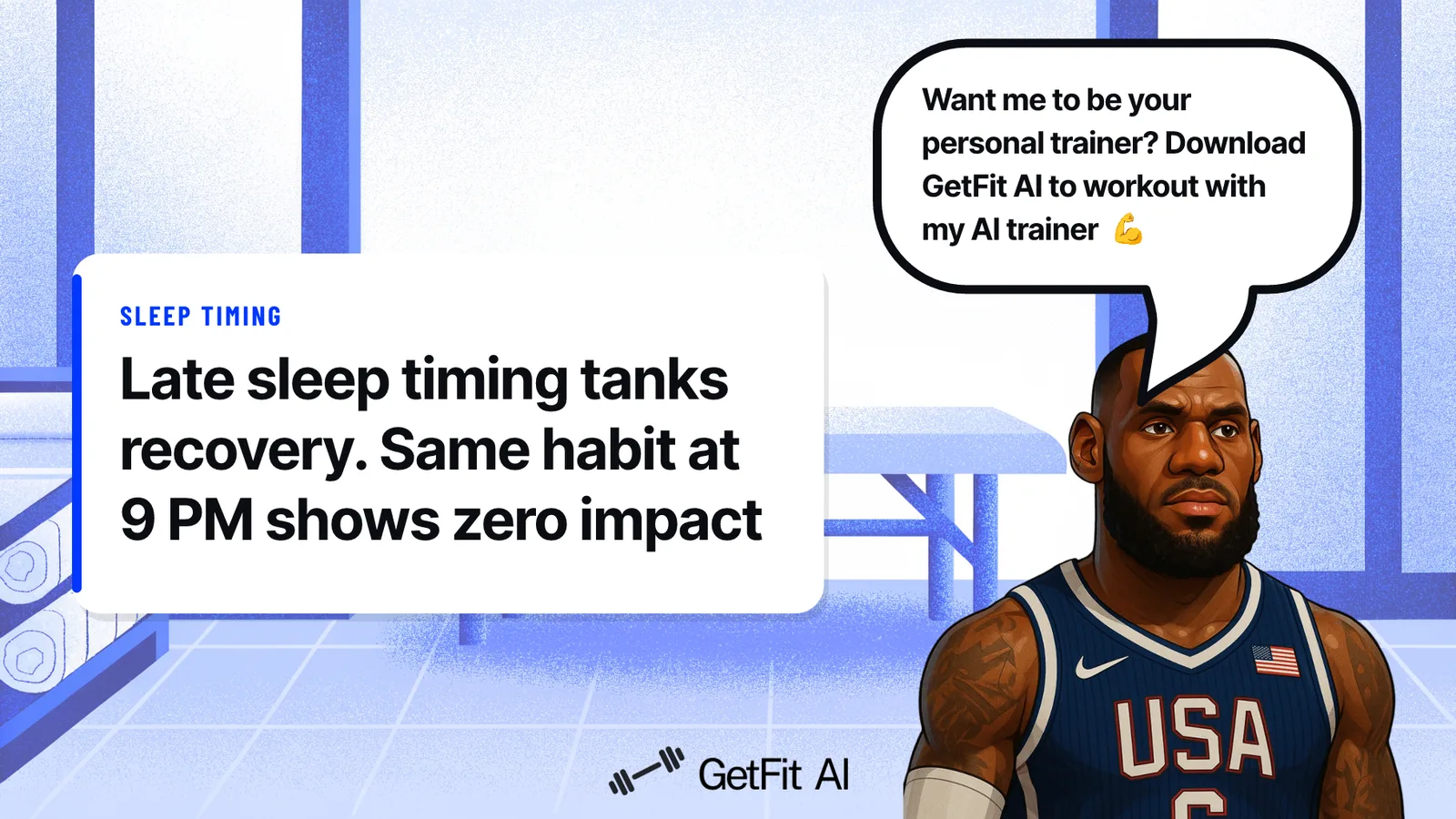
What separates those two outcomes is when they slept.
Late Night Timing, Not the Act Itself, Is What Tanks Next-Day Energy
Late-night masturbation can hurt your workout the next day, but only through one specific mechanism: it delays sleep onset, fragments sleep architecture, and leaves you running on less recovery than your body needs. As Mayo Clinic Health System explains, poor or insufficient sleep produces measurable fatigue, reduced energy, and diminished workout capacity the following day. The mechanism is sleep loss itself, not the behavior that preceded it. Perform the same habit at 9pm with a full night ahead, and research finds zero measurable performance impact.
Many teen athletes we work with describe a cycle that feels real and frustrating: they associate an evening habit with the fatigue and mental fog that follows the next morning. That association is understandable, but Mayo Clinic Health System is clear that the culprit is compromised sleep, not the habit itself. Naming the actual mechanism matters, because it points you toward the fix.
Why Teen Athletes Are Especially Exposed to This Compounding Risk
The CDC and the American Academy of Pediatrics recommend 8 to 10 hours of sleep per night for teenagers aged 14 to 18. Most are not getting close. National survey data consistently shows that a large majority of high-school students sleep fewer hours than recommended on school nights. That baseline deficit already costs teen athletes reaction time, recovery, and output before a single late-night habit enters the picture.
Key takeaway: Teen athletes already carry a chronic sleep deficit before any late-night habit enters the picture, and for a 16-year-old with no buffer, one bad night doesn’t stay contained to one bad workout. It stacks.
For a 16-year-old lifting without a plan and eating at random, one bad night does not stay contained to one bad workout. It stacks on an already depleted baseline, compounding across the week in ways that feel mysterious but are entirely traceable to disrupted recovery.
GetFit AI’s friends, challenges, and leaderboards are most powerful when you have a training partner or friend also using the app, someone whose check-in on the leaderboard creates just enough external accountability to keep you showing up even when a bad night makes skipping feel easy. Mayo Clinic Health System notes that consistent training patterns, not isolated great sessions, drive athletic adaptation. Protecting your sleep timing is what makes that consistency possible.
Sleep disruption is the one real mechanism, and once you see it clearly, the fix becomes straightforward: adjust the timing, protect the sleep, and the performance cost disappears entirely.
What Science Says Is Actually Costing You Athletic Gains
The real culprits the research keeps pointing back to are structural training gaps, stalled progression, and chronic underfueling, problems that quietly compound every session while attention gets directed elsewhere.
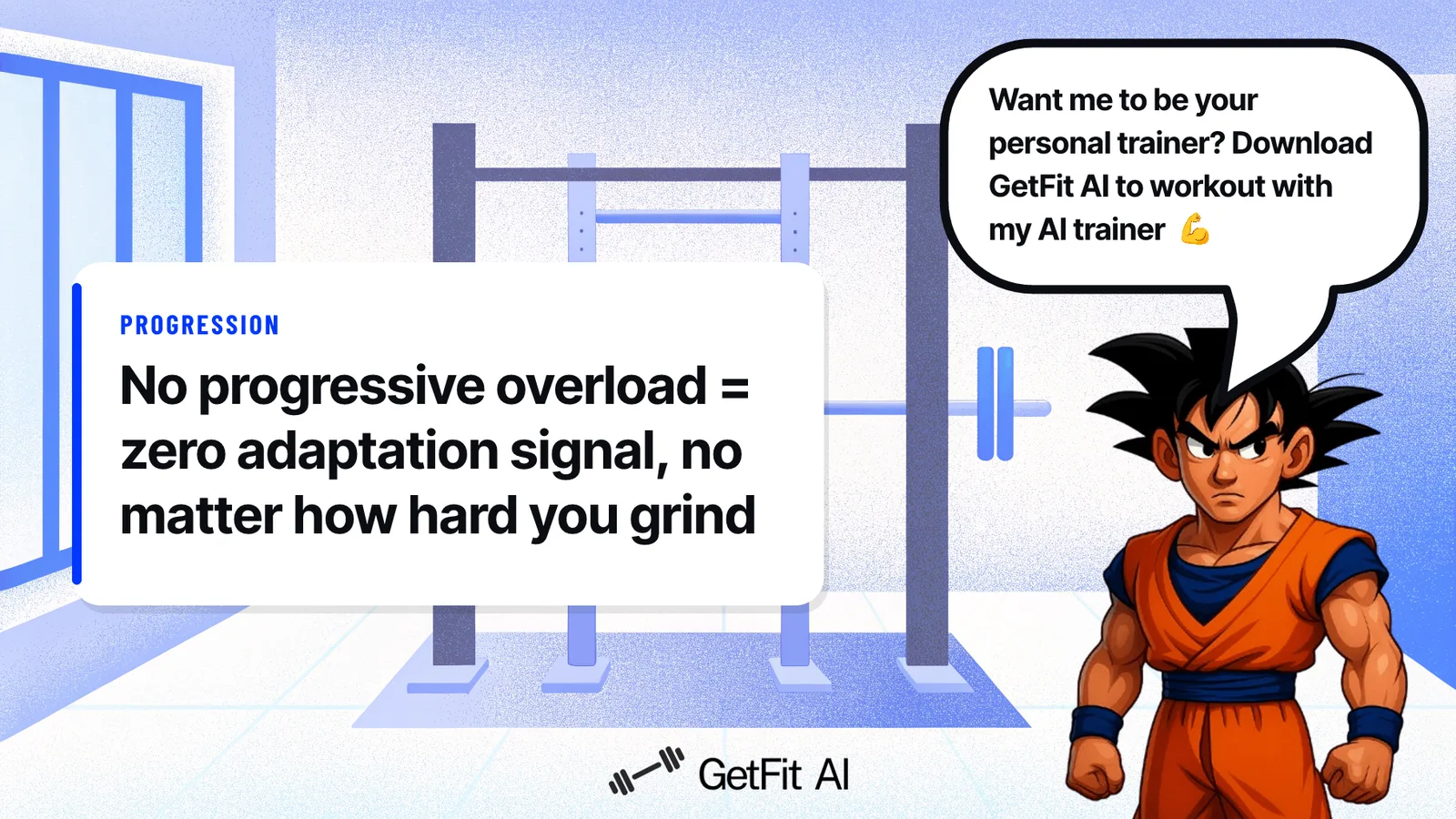
Why Missing Progressive Overload Kills Athletic Gains
The body adapts to stress, not to effort. Without a structured progressive training plan that forces a new adaptation signal each session, your nervous system and muscles have no reason to change. As Protokl’s August 2026 review of novice training programs describes it, the months spent grinding a dead linear progression are the most wasted training months in the sport, because the athlete stalls on the same weights with zero adaptation signal. The fix is adding load, session over session, through a plan that tells you exactly when and how much.
Research consistently identifies insufficient hypertrophy volume and a near-total absence of horizontal pulling as the real performance drains in poorly designed beginner plans. A 16-year-old lifting alone in a school gym rarely knows those gaps exist.
Undereating and Untracked Macros - The Energy Drain the Studies Keep Pointing Back To
Caloric deficits in adolescent male athletes measurably reduce both strength output and endurance capacity. No macro target means no fuel baseline, and no fuel baseline means the body cannibalises recovery resources it needs to adapt to training. Every athlete needs a concrete calorie and protein number to hit each day. Without one, athletes guess, and guessing almost always lands short.
Why Replacing Superstitions With a Structured Program Closes the Real Performance Gap
Fragmented advice pulled from friends, videos, and gym superstitions produces fragmented adaptation. None of it connects. The Protokl analysis is direct: the real bottleneck is the absence of a program matched to the athlete’s current adaptation stage.
The three habits that actually cost athletes their gains, and that receive the least attention, are:
-
No progressive overload: training without a plan to add load means no new adaptation signal.
-
No macro target: without a calorie and protein baseline, the body lacks fuel to recover and grow.
-
No structure: fragmented advice from friends, videos, and superstitions produces fragmented adaptation.
Every session spent chasing a superstition is a session not spent stacking the boring, predictable overload the body adapts to. The science has cleared the wrong suspects off the list and pointed straight at the habits you can actually control.
Related Reading
- How to Deal With Performance Anxiety in Sports
- Hydration Tips for Athletes
- How to Build Mental Toughness in Athletes
- Food for Athletes During Competition
- Strength Training Workout for Runners
- Best Plyometric Exercises for Speed
- Exercises That Improve Muscular Endurance
- Conditioning Workouts for Athletes
- Speed Training for Athletes
- Balance Exercises for Athletes
- Best Core Exercises for Athletes
Next steps
If you have been auditing your habits for hidden saboteurs while your training runs on no structure and your nutrition is a guess, the path forward starts with fixing what the science actually flagged. Masturbation’s caloric footprint is physiologically indistinguishable from noise. The real gap is the missing progressive overload plan that never forces a new adaptation signal, session over session. Start with our AI fitness app.
The nocebo finding makes the case plainly: athletes who believe a habit is hurting them generate more measurable performance disruption than the habit itself ever could, through self-monitoring stress that consumes the focus they needed. The energy drain finding makes it equally plain: the fatigue young athletes feel has nothing to do with orgasm and everything to do with no macro target and no fuel baseline. Together, they point to the same fix: replace the habit audit with a structured program that gives your body an actual adaptation signal and your nutrition a number to hit.
Start with the AI fitness app that builds a custom, athlete-style training plan from your first session and puts a coach in your pocket when the recovery questions hit at 11 PM. Answer the onboarding questions and your periodised plan is ready immediately.
Frequently Asked Questions
Does ejaculating make you weak or hurt your strength in the gym?
No. A systematic review and meta-analysis published in the Journal of Global Health found that sexual activity performed within 30 minutes to 24 hours before exercise does not negatively affect musculoskeletal strength or power performance. Some data even showed small improvements in handgrip strength and time to exhaustion following orgasm, making the net effect neutral to marginally positive.
Is there a difference between sex and masturbation when it comes to athletic performance?
The research mostly uses partnered sexual activity as the proxy for masturbation, since isolating masturbation in a controlled lab setting is methodologically difficult, but this actually strengthens the case against any harm. Partnered sex is the more physically demanding version, burning an average of 101 kcal in men and 69 kcal in women, and even that shows no measurable aerobic or strength impairment. Masturbation demands substantially less effort, so its physiological footprint is even smaller.
Could believing masturbation hurts my performance actually be what’s hurting my performance?
Yes, and this is a real psychological phenomenon. Athletes who believe abstinence improves performance can experience something close to a nocebo effect when they don’t abstain, meaning the anxiety itself creates the dip they feared, not the act. The physiology is negligible; the psychology, untethered from any structured feedback system, is loud.
Will masturbating before a run or cardio session kill my stamina?
No. The caloric cost of masturbation falls well below even partnered sex, which itself burns only 36-37% of the calories of a single 30-minute moderate treadmill run, and no peer-reviewed study has found a statistically significant reduction in VO2 output, aerobic capacity, or endurance metrics attributable to masturbation when sleep is kept intact. Glycogen stores are essentially untouched and cardiovascular recovery is complete within minutes.
What does the actual science say about sex or masturbation before competition?
A 2021 systematic review published in Bioscience Biotechnology Research Communications traced the abstinence-before-competition belief all the way to ancient Greek and Roman athletic tradition, noting the science was never there, only the ritual. Modern controlled research, including a study of 21 male college athletes in Spain who were tested on handgrip strength and jumping ability after masturbation versus abstinence, found no significant drop in either metric, confirming that the long-held performance cost has no meaningful physiological basis.