Athletic Performance Analysis: What It Is & Why It Matters

Effort without feedback is not progress. Here is why most gym-goers stay stuck, and how a simple measure-and-adapt loop changes everything.
Most beginners believe that showing up consistently is enough. That belief feels true, especially in the first few weeks when every session costs real willpower. But consistent effort without feedback produces a different result than progress, and the gap between the two is where most beginners quietly lose the plot. See our AI fitness app for how this works in practice.
The body adapts to a stimulus, then stops. Without progressive overload, the same weights on the same machines week after week produce the same physiological signal: nothing new to respond to. A 27-year-old who has cycled through the same three exercises for ten weeks at identical loads is rehearsing, not training. The frustrating part is that this stall is nearly impossible to feel in the moment. There is no alarm. No notification. Just a slow, creeping sense that something is not working, with no data to confirm why.
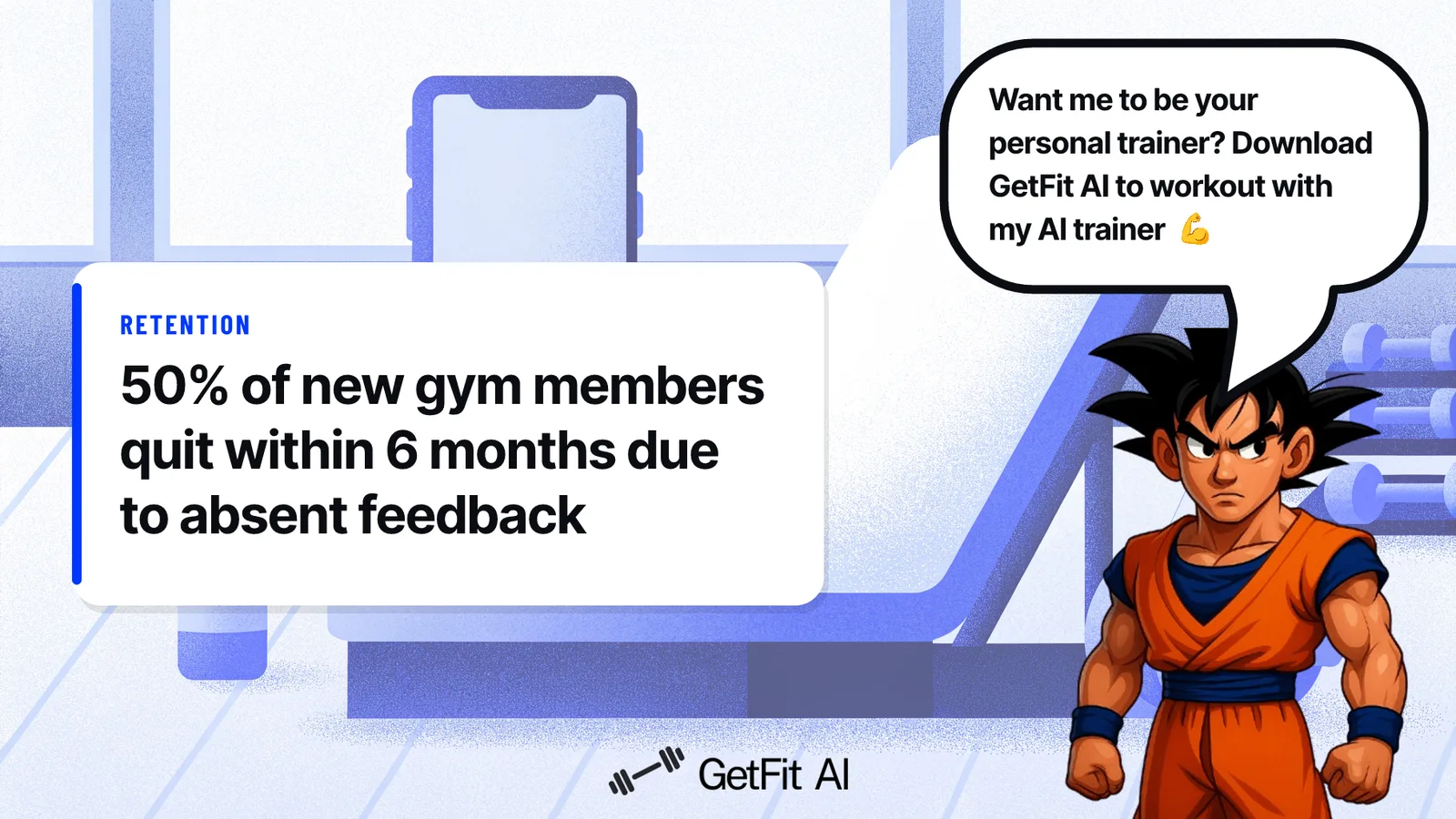
Clubwise’s 2024 retention research found that 50% of new gym members quit within the first six months of joining, and the primary driver is absent feedback. Members who see no visible progress are among the most likely to cancel; the problem is not absent effort. Motivation runs on evidence. Remove the evidence, and motivation has nothing to feed on.
Motivation runs on evidence. Remove the evidence, and motivation has nothing to feed on.
Showing up creates opportunity. A structured, measurable system is what converts that opportunity into adaptation. The difference is a feedback loop: measure what you lifted, compare it to last week, identify the gap, adjust. Without that loop, every session resets to zero. The missing ingredient is a system for knowing whether your effort is pointed in the right direction.
Key takeaways
- Training without a feedback loop is not a discipline problem, it is a measurement problem, and most plateaus trace back to that gap, not a lack of effort.
- Athletic performance analysis is not lab equipment and sports scientists, at its core, it is any system that tells you whether what you did last week is actually working.
- Showing up consistently is not enough on its own; without progressive overload tracked over time, consistent effort produces consistent stagnation.
- Performance analysis stacks five distinct layers, biomechanics, video, physiological tracking, wearables, and predictive modelling, and no single layer answers the questions the others surface.
- Overtraining is a data problem before it becomes a physical one: measurable markers appear in training logs long before an athlete feels the breakdown.
- Visible results from consistent training appear between four and eight weeks only when progressive overload is applied, which means athletes who cannot measure load cannot reliably trigger adaptation.
- GetFit AI's Progress analytics, weight logging, body-weight trend charts, and a workout analytics dashboard, give solo gym-goers the same feedback loop elite setups run on, without a sports scientist in the room.
What Athletic Performance Analysis Actually Is
The core problem most athletes face is a measurement problem: showing up consistently is not the problem; the absence of a personal feedback loop is.
The Precise Definition of Athletic Performance Analysis
Athletic performance analysis is the systematic process of collecting objective data on what an athlete actually does, comparing it against what they should be doing, and adjusting the training stimulus accordingly. According to Sport Science and Human Health research, an effective training system must be built on the control of fitness aspects and the structure of competitive activity, with measurement informing every decision rather than intuition filling the gaps.
That distinction matters because analysis is not the GPS vest or the force plate; those are only the instruments through which it is expressed.
The Four Dimensions a Complete Analysis Covers
-
Physical capacity
-
Technical execution
-
Individual psychological factors
Neglecting any one of these dimensions leaves the picture incomplete. It is a particularly acute problem for masters athletes, who struggle to distinguish which aspects of their performance are genuinely declining with age versus which are simply undertrained, a separation that only systematic, multi-dimensional tracking can make visible.
Why This Definition Scales to a Solo Gym-Goer
A recreational lifter tracking progressive overload across a twelve-week block is doing the same fundamental thing as a professional team’s performance department. Both are performing sport performance analytics, differing only in the sophistication of the tools.
GetFit AI runs this loop automatically through its Athlete-Style Custom Workout Plans, structured programs most powerful when the user arrives with a clear athletic role model and a specific physique or performance goal in mind. From the first workout session, the app logs session output, surfaces weight trends across the overall training program arc, and gives the AI trainer the data it needs to adjust before another month disappears into the same three machines. That structured training layer is especially valuable for anyone who has previously struggled with consistency due to lack of program structure: the plan adapts to you rather than waiting for you to figure out what to change. GetFit AI Premium is available in weekly, monthly, and yearly subscription options.
Related Reading
- Why Am I Not Getting Faster at Running
- Does Masturbation Affect Athletic Performance
- Biomechanics in Sports
- Why is Protein Important for Athletes
- What is Speed and Agility Training
- How to Be a Better Athlete
- How Does Sports Psychology Help Athletes
- Why is Hydration Important for Athletes
- Why Do Athletes Train at High Altitudes
- Why Do Athletes Stretch Before a Game?
- IV Therapy for Athletic Performance and Recovery
- Yoga and Athletic Performance
- Red Light Therapy for Athletic Performance
The Core Methods Used in Athletic Performance Analysis
Performance analysis is a stack of five distinct layers, each answering a question the others cannot. A strength coach watching a lifter’s knee cave mid-squat learns something no heart rate monitor would ever surface. Equally, a runner whose form looks textbook on video can still plateau for months because no one measured whether their sessions were actually stressing the right energy systems. Each layer closes a different blind spot.
1. Biomechanical Analysis - Quantifying Joint Angles, Force Production, and Movement Efficiency
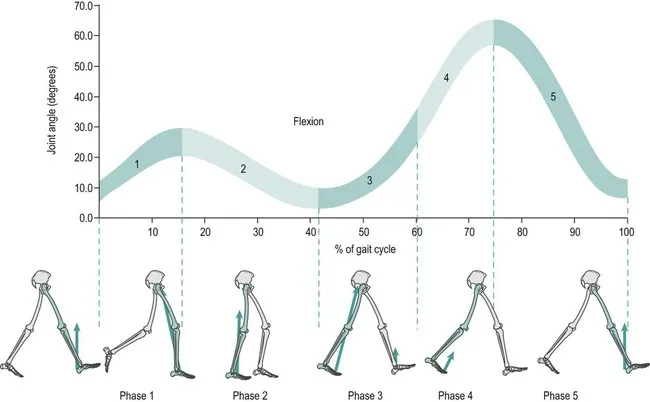
Biomechanical analysis measures how the body moves: joint angles, force production, and the efficiency of each movement pattern. Force plates capture ground reaction forces with high precision, revealing asymmetries invisible to the naked eye. This is the layer that catches a knee cave, a weak hip hinge, or a lopsided push. The limitation is access: lab-grade force plate setups are expensive and rarely available outside professional or university environments, making this the least accessible layer for solo gym-goers.
2. Video Analysis - Evaluating Technique, Tactical Decisions, and Spatial Positioning from Footage
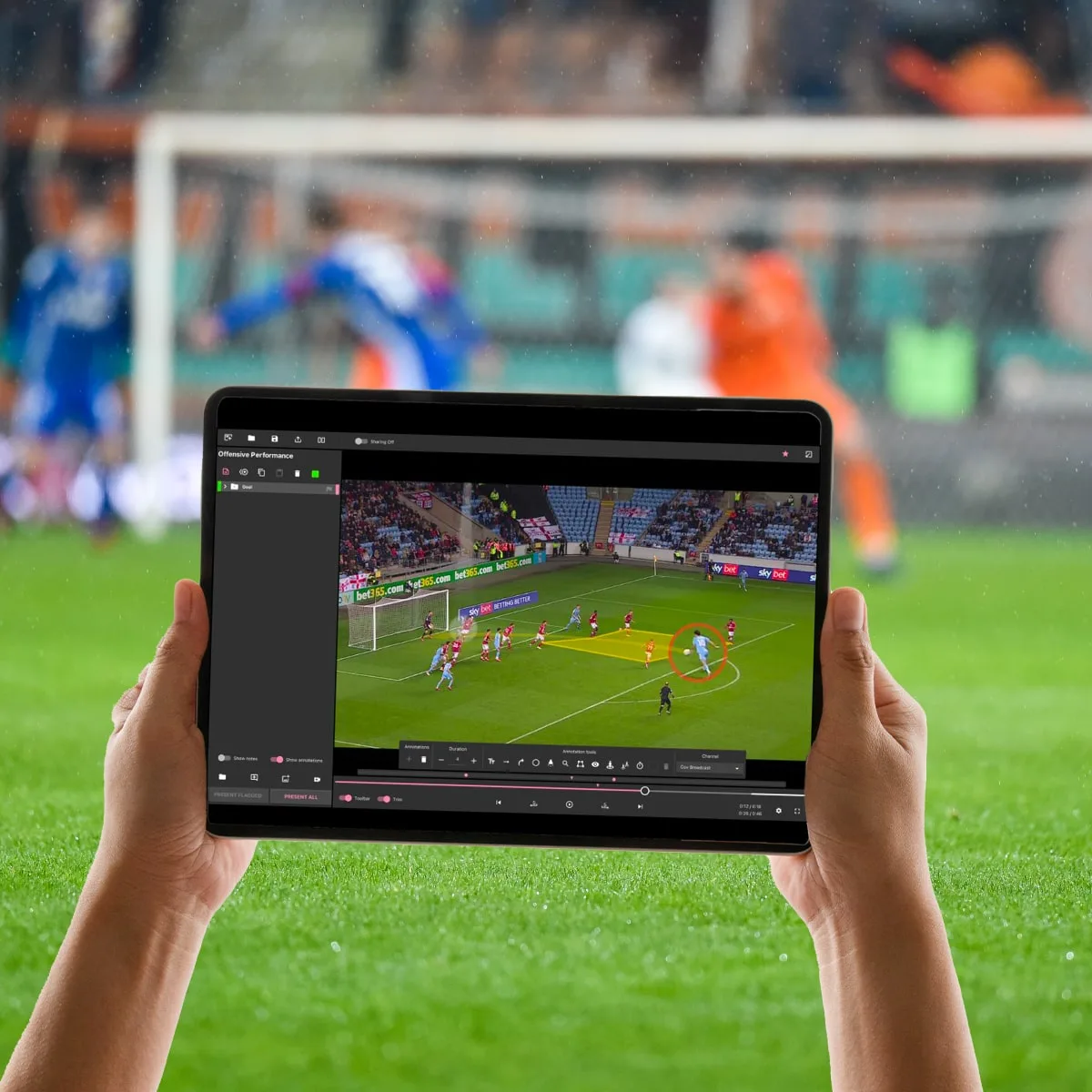
Video analysis is the most widely adopted method across all levels of sport because the barrier to entry is low and the feedback is immediate. Coaches review footage to assess technical execution, tactical decisions, and spatial positioning during competition or training. The critical gap: video tells you what happened but not why. An athlete can look technically sound on film and still plateau, because video captures movement shape, not the physiological or neuromuscular load driving it.
3. Physiological Tracking - Monitoring Heart Rate, Lactate Thresholds, and Oxygen Uptake
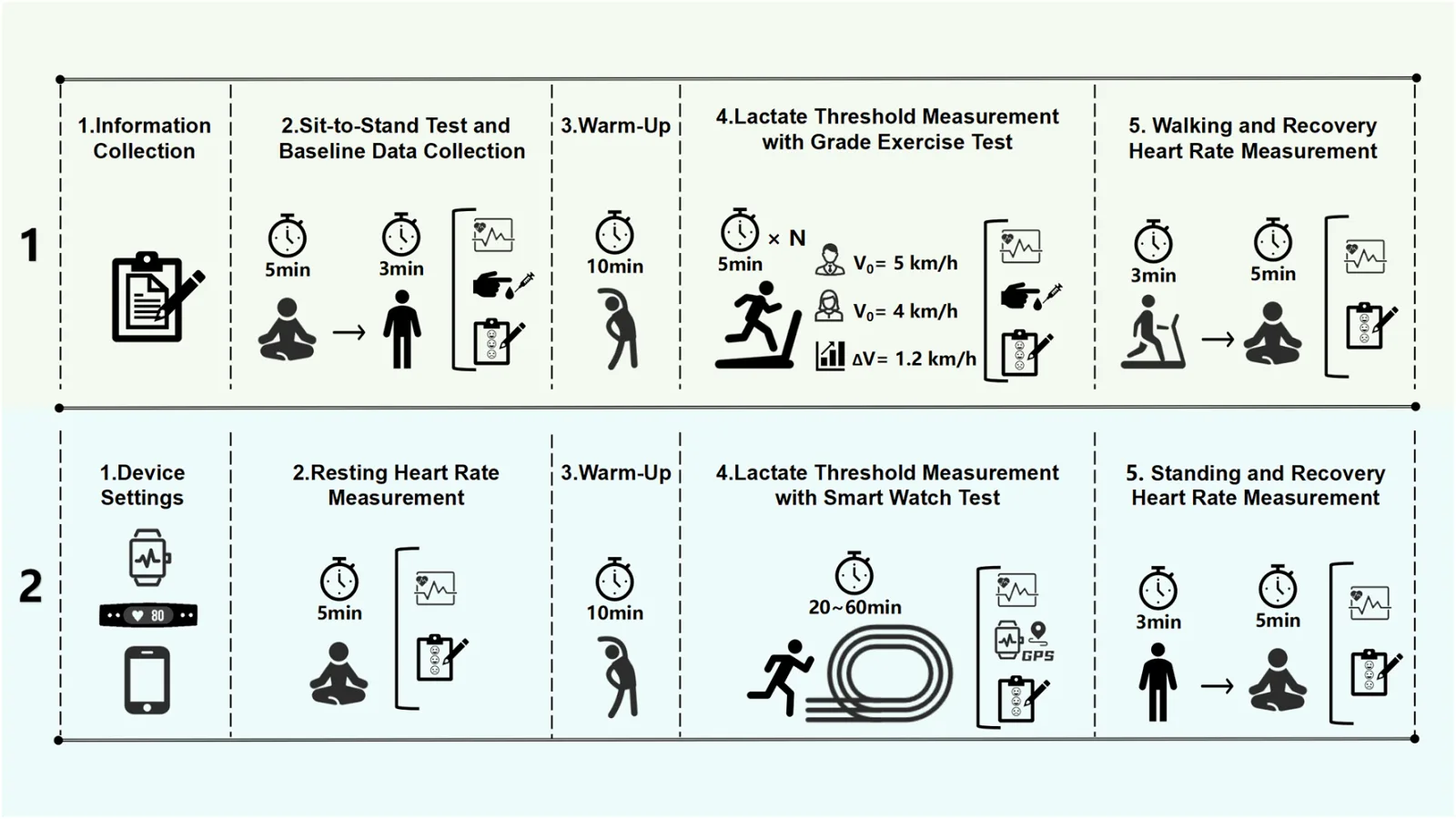
Physiological tracking monitors internal load: heart rate, lactate thresholds, and oxygen uptake (VO2 max). This layer answers whether the body is actually being stressed enough to adapt, or whether sessions that feel hard are metabolically junk. A common discovery among athletes who add this layer is that their “hard” efforts were sitting in a moderate zone that produced fatigue without the stimulus for improvement. Without this data, training intensity is guesswork dressed up as effort.
4. Wearable Technology - GPS Units, IMUs, and Sensors as the Data-Collection Bridge
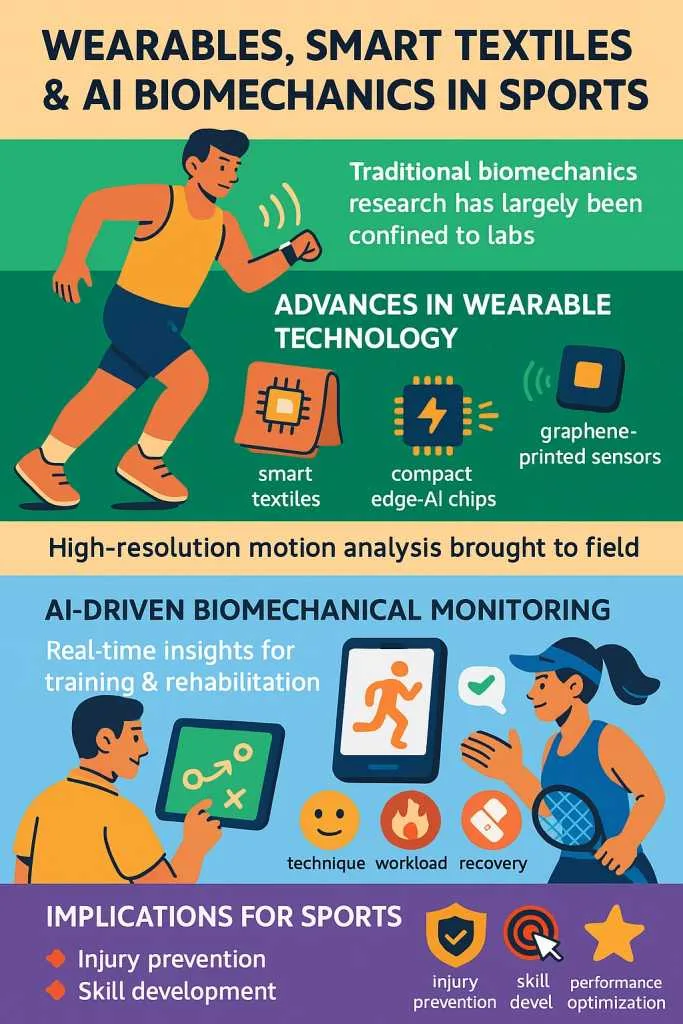
GPS units and inertial measurement units (IMUs) track external load: distance covered, acceleration, deceleration, and movement quality across a session. Professional teams collect thousands of data points per athlete per session, which creates its own problem: volume without interpretation is noise. The practical tradeoff is that raw sensor output requires a system to filter signal from clutter. For most solo athletes, the value is in trends over time, not individual data points.
5. Predictive Modelling - Using Computational Models to Simulate and Optimise Athletic Movement
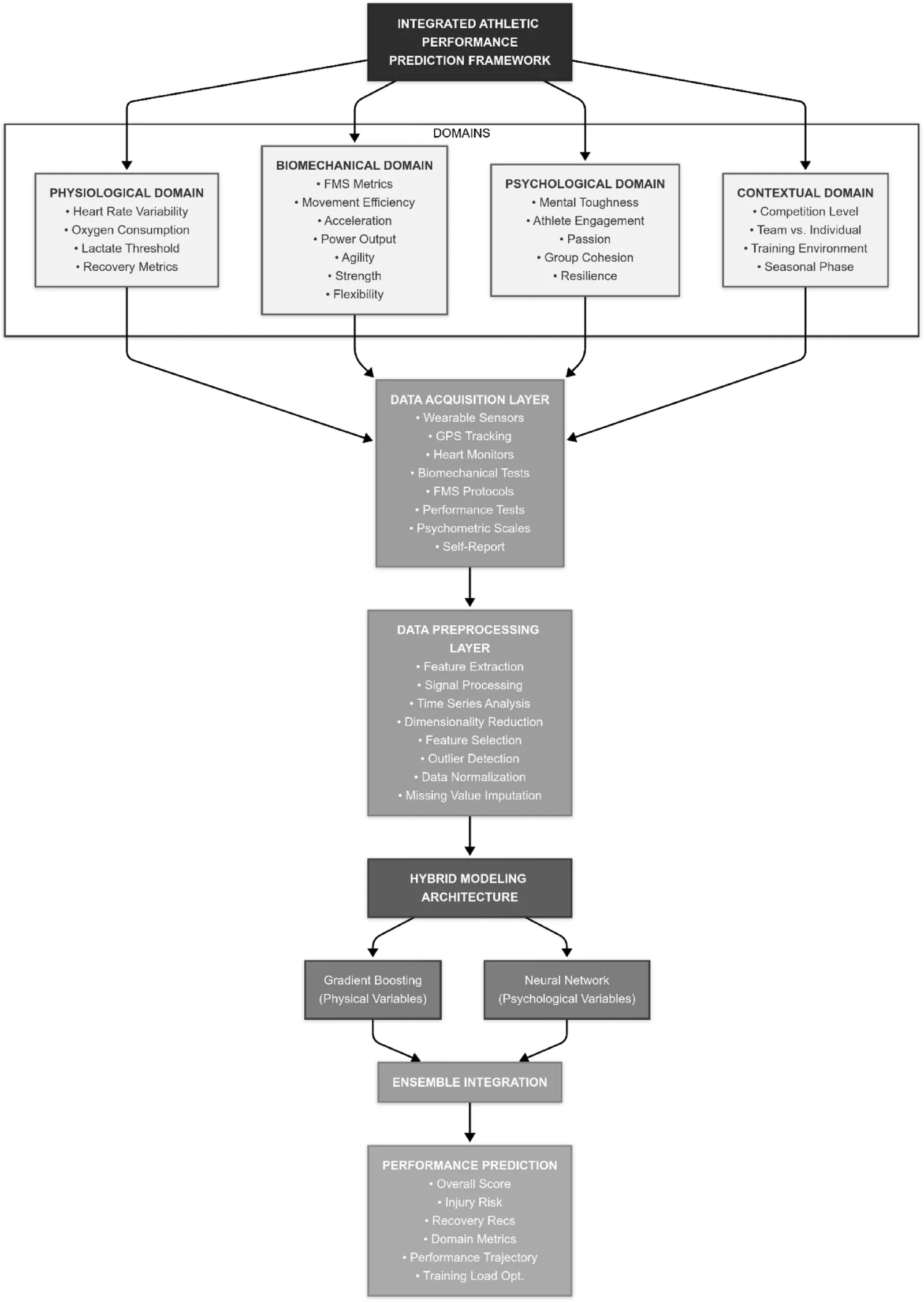
Predictive modelling uses computational simulation to test movement changes before an athlete physically attempts them, identifying marginal gains in a sprinter’s block start or a swimmer’s stroke cycle without risking injury through trial and error. This is the most resource-intensive layer and the least accessible outside elite sport. Its value scales with the quality of biomechanical and physiological data feeding it, which means the other four layers have to be working first.
The performance-analysis loop elite coaches run, measure output, identify the gap, adjust the variable, re-measure, is not exclusive to sports science labs. Stripped of the jargon, it is the same cycle any gym-goer can run with a training log. The elite version is staffed and expensive. The solo version is free and almost entirely unused, which is exactly why most people stay stuck at the same weights for months with no idea why. An AI fitness app like GetFit AI closes that gap by logging every session, surfacing weight and volume trends over time, and flagging when progress has stalled so the user gets the feedback loop without needing a sports scientist to build it.
Each of these methods depends on one thing before it can produce a single insight: a tool that actually collects the raw data. The next section maps the full technology stack, from the sensors on an athlete’s body to the platforms that turn those numbers into decisions, and shows why that stack is no longer reserved for professional clubs.
Technologies That Collect Athletic Performance Data
GPS and Local Positioning Systems track distance, speed, and spatial positioning for athletes during training and competition, feeding the raw numbers that every downstream analysis layer depends on. According to The Upside Newsletter, more than 20 vendors including Catapult and STATSports now supply professional teams, making GPS the most widely deployed position-tracking technology in elite sport. Accuracy degrades indoors, where satellite signal weakens, so indoor venues require a different approach entirely.
“We struggle with data overload. When too much athletic performance data is collected, it can become overwhelming and counterproductive rather than actionable.”
— what we hear from sports performance practitioners
1. GPS and Local Positioning Systems - Satellite and Beacon-Based Speed and Distance Tracking
Satellite and beacon-based tracking captures distance covered, top speed, and field positioning in real time, giving coaches a spatial record of every training session and match. Outdoor GPS accuracy is strong enough to separate sprint zones and recovery patterns with confidence, but signal dropout in enclosed venues forces teams to switch to local positioning systems using fixed beacons instead of satellites, a distinction The Upside Newsletter covers in its breakdown of the outdoor GPS vendor landscape. The tradeoff is cost and infrastructure: beacon networks require permanent installation, which limits this tier to well-funded clubs.
2. Inertial Measurement Units (IMUs) - Wearable Sensors for Acceleration, Rotation, and Movement Quality
IMUs are embedded directly inside GPS vests, capturing acceleration, rotation, and movement quality without any camera system present, as detailed by AZoSensors. A rugby player’s vest logs every tackle impact and change-of-direction load; a lifter’s phone accelerometer approximates the same physics when tracking session volume over 12 weeks. The honest limitation here is interpretation: raw IMU output is dense, and turning acceleration data into actionable coaching cues requires either sophisticated software or genuine sports-science expertise most athletes do not have.
This is precisely where data overload becomes a real hazard. When too much performance data is collected without a clear interpretive layer, it stops being useful and starts being paralyzing. What athletes need is a plan that adapts to what the numbers reveal, so they stay on track instead of falling behind and quitting.
3. Optical Tracking Systems - High-Speed Camera Arrays for Tag-Free Player and Ball Coordinate Mapping
Optical tracking uses high-speed camera arrays mounted around a venue to map player and ball coordinates continuously, with no physical tag on the athlete required. The output is exceptionally detailed, covering positional heat maps, off-ball movement, and tactical shape. The tradeoff is installation cost and fixed infrastructure, which locks this technology to permanent professional venues. It is the right tool when tag-free tracking at scale matters; it is overkill for anything below that threshold.
4. Athlete Management Systems (AMS) - Centralized Platforms That Aggregate Tracking Data for Profiling and Tactical Decisions
Athlete Management Systems are the connective layer that pulls GPS, IMU, and optical data into a single platform, delivering instant tactical insights and building long-term athlete profiles across a squad. Most gym-goers assume this aggregation layer only exists inside professional clubs. In practice, the same logic scales down: an AI fitness app that ingests logged sets, reps, body weight, and session load over weeks is performing the same function, converting scattered inputs into a longitudinal profile that shows whether training is actually moving forward.
GetFit AI’s Athlete-Style Custom Workout Plans apply exactly this principle. Structured from the first workout session, they adapt continuously across the overall training program arc so the plan evolves with the athlete rather than becoming something they fall behind on and quit. A rising resting heart rate flags overtraining whether it comes from a $3,000 IMU vest or a consumer app; the physiological signal is identical, only the label on the device changes. The practical danger to guard against at every level is data overload: aggregation without interpretation produces noise, not decisions.
GetFit AI’s Structured Training is most beneficial when the user has previously struggled with consistency due to lack of program structure, which is exactly why the platform filters aggregated inputs into clear, session-by-session guidance rather than surfacing raw numbers a beginner cannot act on.
5. GPS-Driven Tactical and Workload Analysis - Linking Positional Data to Strategic Planning and Load Management
Tactical and workload analysis links positional data to training load management, using GPS outputs, tracked across the vendor landscape The Upside Newsletter documents, to identify when an athlete is accumulating risk before breakdown occurs. The same early-warning logic applies at every level: a beginner logging weekly volume in an app captures the load-spike signal that GPS systems surface for professional teams. The tradeoff is precision; consumer-grade tracking catches trends but cannot isolate the biomechanical detail a force plate or optical system would add.
For most athletes, trend-level data is what they need and the only layer worth acting on. That trend data only pays off if it feeds a plan that adapts, one that adjusts session load when the signal says to back off, rather than holding to a fixed program the athlete will eventually abandon.
Understanding what each layer of the technology stack measures is only half the picture. The more pressing question, and the one that determines whether any of this hardware and software is worth the investment, is what coaches and athletes concretely gain once the data starts flowing, which is exactly where the next section picks up.
Related Reading
- Does Vaping Affect Athletic Performance
- How to Avoid Feeling Sleepy After Workout
- How Does Sleep Affect Athletic Performance
- How to Measure Athleticism
- Velocity Based Training
- Building Stamina and Endurance
- Why Am I So Bad at Sports
- Endurance vs Strength Training
- Why Am I So Tired After Working Out
- How to Create a Personalized Workout Plan
Primary Benefits of Athletic Performance Analysis for Coaches and Athletes
Most coaches and athletes already sense when something is off, but sensing is not the same as knowing, and knowing early is what separates a minor adjustment from a missed season. Athletic performance analysis turns that gut feeling into actionable data across the areas that matter most: spotting overtraining before it becomes injury, giving technique feedback that actually changes movement, and building programs that reflect what the body is genuinely handling. GetFit AI puts each of these capabilities directly in your pocket, so the insight is there whether you train with a coach or entirely on your own.
Performance analysis delivers its highest return by stopping losses before they compound.
1. Injury Prevention Through Training Load Monitoring and Asymmetry Detection
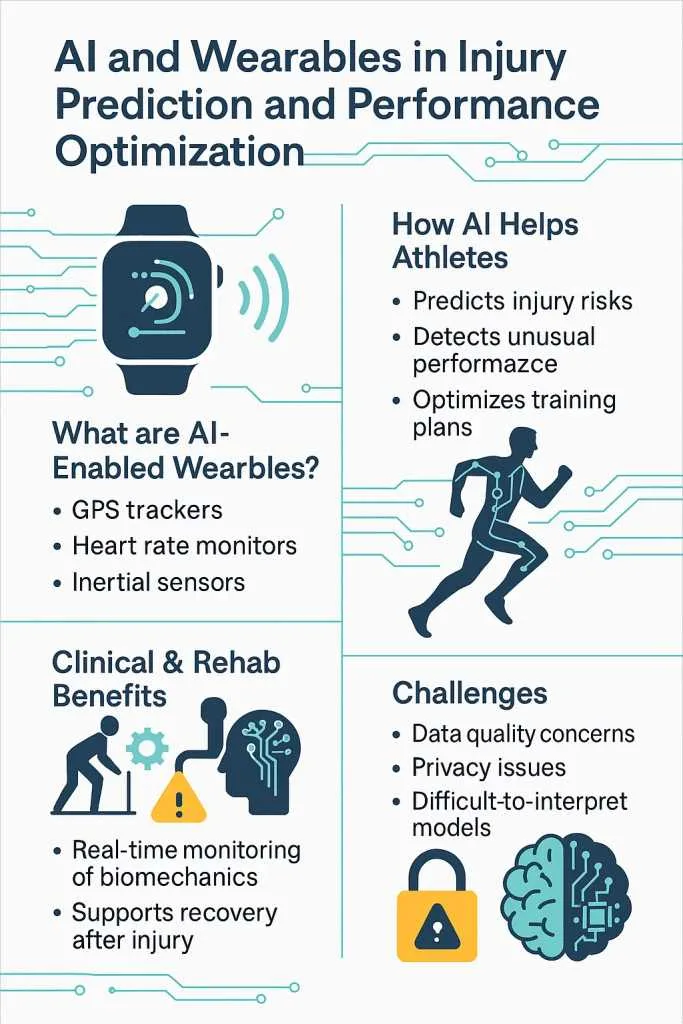
The injury that never happens is the highest-ROI outcome performance analysis produces. According to the National Sports Medicine Institute, overtraining is especially common in the lead-up to big events and after injuries, making training load monitoring a critical prevention tool rather than an optional extra. A rising resting heart rate flags excessive physiological stress before the athlete feels it as pain. One avoided stress fracture protects an entire training block. The honest limitation: monitoring only works when data is collected consistently. Sporadic logging produces sporadic protection.
2. Objective Technique Feedback That Replaces Coaching Guesswork with Evidence
Verbal cues fade within minutes; movement data does not. When athletes can see the exact frame where their knee caves on a squat or their elbow drops mid-press, correction happens faster because the feedback is concrete rather than abstract. This benefit is most pronounced for solo lifters with no coach watching their sets and no external reference point to confirm whether form has drifted across weeks of accumulated fatigue. The tradeoff is that video and sensor feedback requires a baseline recording to compare against; without that reference, even objective data loses its diagnostic value.
3. Sport-Specific Program Design Matched to Real Metabolic Demands
The National Sports Medicine Institute identifies conditioning the whole body rather than isolated parts as a direct overuse-injury reducer, and performance analysis makes that principle actionable at any level. By showing which movement patterns are overloaded and which are neglected, analysis turns program design from guesswork into a targeted response. A conditioning staff might catch an acute:chronic workload ratio spike before a hamstring pull; a solo lifter might notice their squat trend has flatlined while their press keeps climbing, signalling a recovery imbalance rather than a need for more volume.
4. Strategic Planning Powered by Opponent Tendency and Pattern Recognition

At the team level, match data reveals opponent tendencies, set-piece patterns, and transition habits that are invisible to the naked eye across a full game. Coaches who review positional and event data before competition can design specific tactical responses rather than relying on general preparation. The constraint worth naming: pattern recognition requires a meaningful sample of match data to be reliable. One game’s footage produces noise; four or five games produce signal worth acting on.
5. Enhanced Coaching Effectiveness Through Real-Time Data-Driven Decision Making
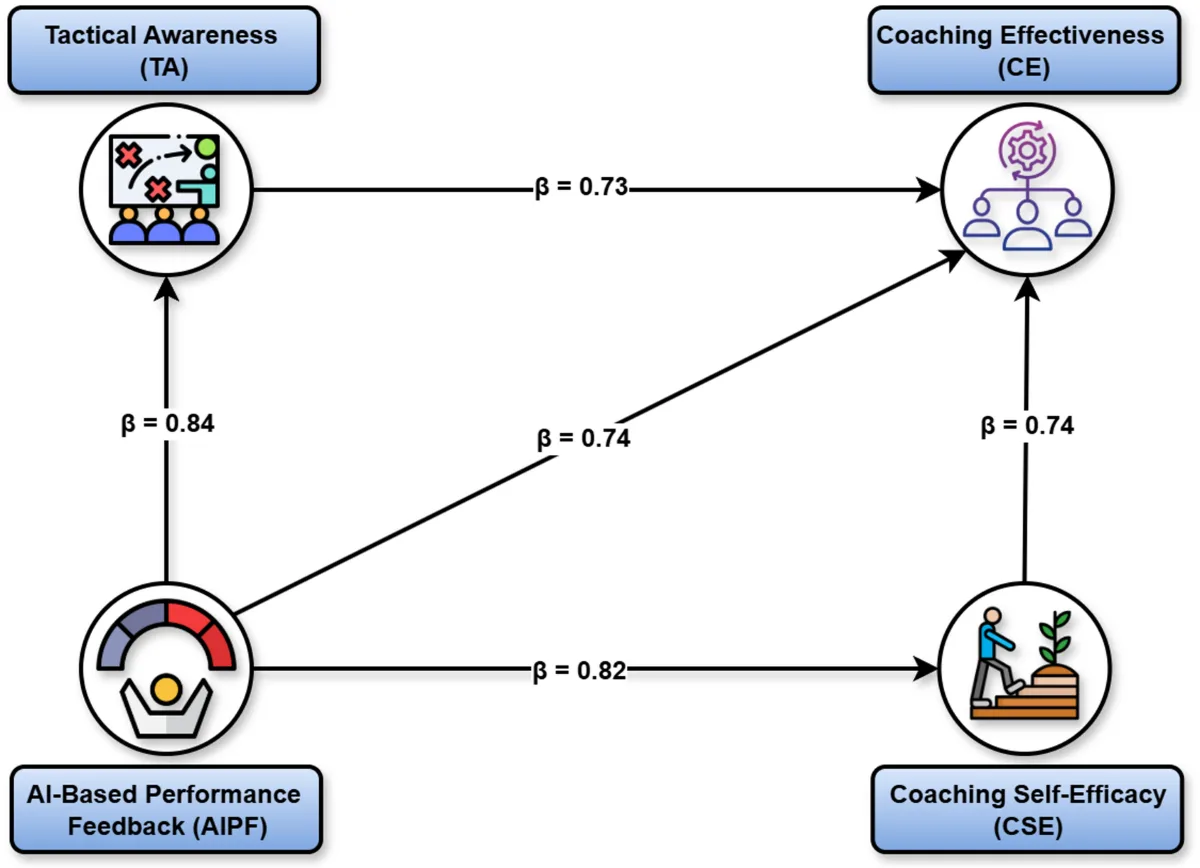
Coaches who anchor feedback in measurable outcomes rather than intuition see faster athlete compliance. When an athlete can see their own trend line, the conversation shifts from “trust me” to “look at this,” reducing resistance and accelerating skill acquisition. Game on Field’s analysis confirms that training load, recovery, and sleep are the modifiable factors separating breakdown from breakthrough, and real-time data puts those levers in the coach’s hands during the session, not just in the post-match debrief.
How Everyday Athletes Can Apply Performance Analysis Without a Sports Scientist
Most beginners train on hope, not data. Hope, as industry research consistently shows, is why many new gym members abandon their training within the first few months, with no coach, no feedback system, and no way to identify why progress stalled.
Without a weight log or tracking system, a gym-goer has no trend line and no way to detect that repeating the same three exercises at the same load for eight weeks is a red flag for stalled adaptation. The person showing up every Tuesday and Thursday, grinding through the same dumbbells, is not lazy.
Research into exercise adherence consistently finds that the primary reason most people quit their fitness journey before seeing results is a lack of visible progress feedback. The program failed to show them it was working.
Simple self-monitoring, even basic logging of sets, reps, and load, measurably improves both training adherence and outcomes.
GetFit AI’s weight logging, body-weight trend charts, and workout analytics dashboard give that invisible stall a visible shape, turning a vague frustration into a specific gap the AI fitness app can act on.
Related Reading
- How to Deal With Performance Anxiety in Sports
- Hydration Tips for Athletes
- How to Build Mental Toughness in Athletes
- Food for Athletes During Competition
- Strength Training Workout for Runners
- Best Plyometric Exercises for Speed
- Exercises That Improve Muscular Endurance
- Conditioning Workouts for Athletes
- Speed Training for Athletes
- Balance Exercises for Athletes
- Best Core Exercises for Athletes
How GetFit AI Brings Performance Analysis to Solo Gym-Goers
GetFit AI closes that gap immediately, using the data captured in session one to anchor every training decision that comes after. Research published in the Journal of Strength and Conditioning Research found that individuals who tracked training variables from the outset of a program made measurably greater strength gains over twelve weeks than those who began tracking midway through, suggesting that early data collection is the mechanism that makes progressive overload visible and actionable from session one.
Weight Logs, Trend Charts, and a Dashboard That Shows What’s Actually Changing
GetFit AI’s AI fitness app operationalises that cycle through weight logging, body-weight trend charts, and a workout analytics dashboard that surfaces what is actually shifting session to session.
A 28-year-old lifter seeing their squat trend move across six weeks for the first time has data, and data is what makes the next decision defensible rather than instinctive.
Pros and cons at a glance
| ✓ Pros | ✗ Cons |
|---|---|
| Surfaces what is actually shifting session to session | Dashboard is most valuable only when you log consistently |
| Turns a vague frustration into a specific, actionable gap | Sporadic entries produce incomplete trend lines, not insights |
| Early data collection makes progressive overload visible from session one | N/A |
How Idol-Based Programming Gives Your Analysis Loop a Meaningful Target
GetFit AI’s idol-based custom workout plans treat your training style preference as a genuine performance input, a distinction highlighted in independent reviews of the app, which noted that the personalisation layer adapts exercise selection and intensity rather than applying a one-size structure, giving the analysis loop a concrete target to measure progress against.
How an AI Coaching Layer Turns Raw Data into Training Decisions
An AI coaching layer closes the specific gap between collecting data and acting on it, which is where self-directed lifters reliably break down. Independent reviews of GetFit AI describe the on-demand AI trainer as a practical substitute for in-workout expert guidance, available the moment a movement feels wrong or equipment is unavailable, and that immediacy keeps the data-to-decision loop intact rather than deferred.
Next steps
If months of consistent training have produced nothing visible, the path forward starts with accepting that attendance is a precondition, not a mechanism. Showing up creates opportunity; a structured measure-and-adapt cycle is what converts that opportunity into actual progress. Start with our AI fitness app.
The research thread running through this post makes the next step hard to argue with. Consumer-grade self-tracking captures the same early-warning signals that GPS units and Athlete Management Systems surface for professional teams: a rising resting heart rate flags overtraining whether it comes from a $30 wrist monitor or a $3,000 IMU vest. At the same time, overtraining and under-progressing are two sides of the same missing-data problem, and without a measurement system, a lifter cannot distinguish between needing more effort and needing more recovery. Those two facts together point to one action: start logging every session so the feedback loop has something to run on.
Start with GetFit AI. From your first session, weight logs and a workout analytics dashboard surface the trend lines that turn a vague plateau into a specific, fixable gap.
Frequently Asked Questions
What exactly is athletic performance analysis, and does it apply to regular gym-goers?
Athletic performance analysis is the systematic process of collecting objective data on what an athlete actually does, comparing it against what they should be doing, and adjusting the training stimulus accordingly. The feedback loop it runs, measure, compare, adjust, repeat, is identical whether you’re a professional with a sports scientist or a solo lifter with a training log. The instrument differs; the logic is the same.
What are the main methods used in sport performance analytics?
The post identifies five distinct layers: biomechanical analysis (joint angles and force production), video analysis (technique and tactical decisions), physiological tracking (heart rate, lactate thresholds, and VO2 max), wearable technology such as GPS units and IMUs, and predictive modelling using computational simulation. Each layer closes a different blind spot that the others cannot address.
Why do so many people plateau even when they’re training consistently?
The body adapts to a stimulus and then stops, so without progressive overload the same weights at the same loads week after week produce no new physiological signal to respond to. The problem is that this stall is nearly impossible to feel in the moment, there’s no alarm, just a slow sense that something isn’t working. The missing ingredient is a feedback loop: a structured system for measuring output, comparing it to previous sessions, and adjusting accordingly.
Does video analysis on its own tell me why my progress has stalled?
No, video tells you what happened but not why. An athlete can look technically sound on film and still plateau, because video captures movement shape rather than the physiological or neuromuscular load driving it. Separating a physical recovery issue from a technical breakdown or a psychological block requires looking across multiple dimensions of analysis, not just footage.
How do the four dimensions of performance analysis apply to someone lifting weights alone?
The post identifies physical capacity, technical execution, tactical decision-making, and individual psychological factors as the four dimensions any complete assessment must cover. For a solo lifter, a squat that stops progressing might be a physical recovery issue, a technical breakdown under load, or a psychological block around heavier weights, and without separating the dimensions, every plateau looks identical and every fix is a guess.