IV Therapy for Athletic Performance and Recovery Explained

IV drips promise elite recovery in a bag. Before you book a session, here is what the ingredient list actually delivers, what the science supports, and what a $200 saline drip cannot replace.
A needle is inserted into a vein, typically in the forearm, and fluid drips directly into the bloodstream, bypassing the digestive system entirely. The IV line is a route, not an ingredient. Think of it like a highway versus the cargo on the truck. The highway does not determine whether the cargo is useful. See our AI fitness app for how this works in practice.
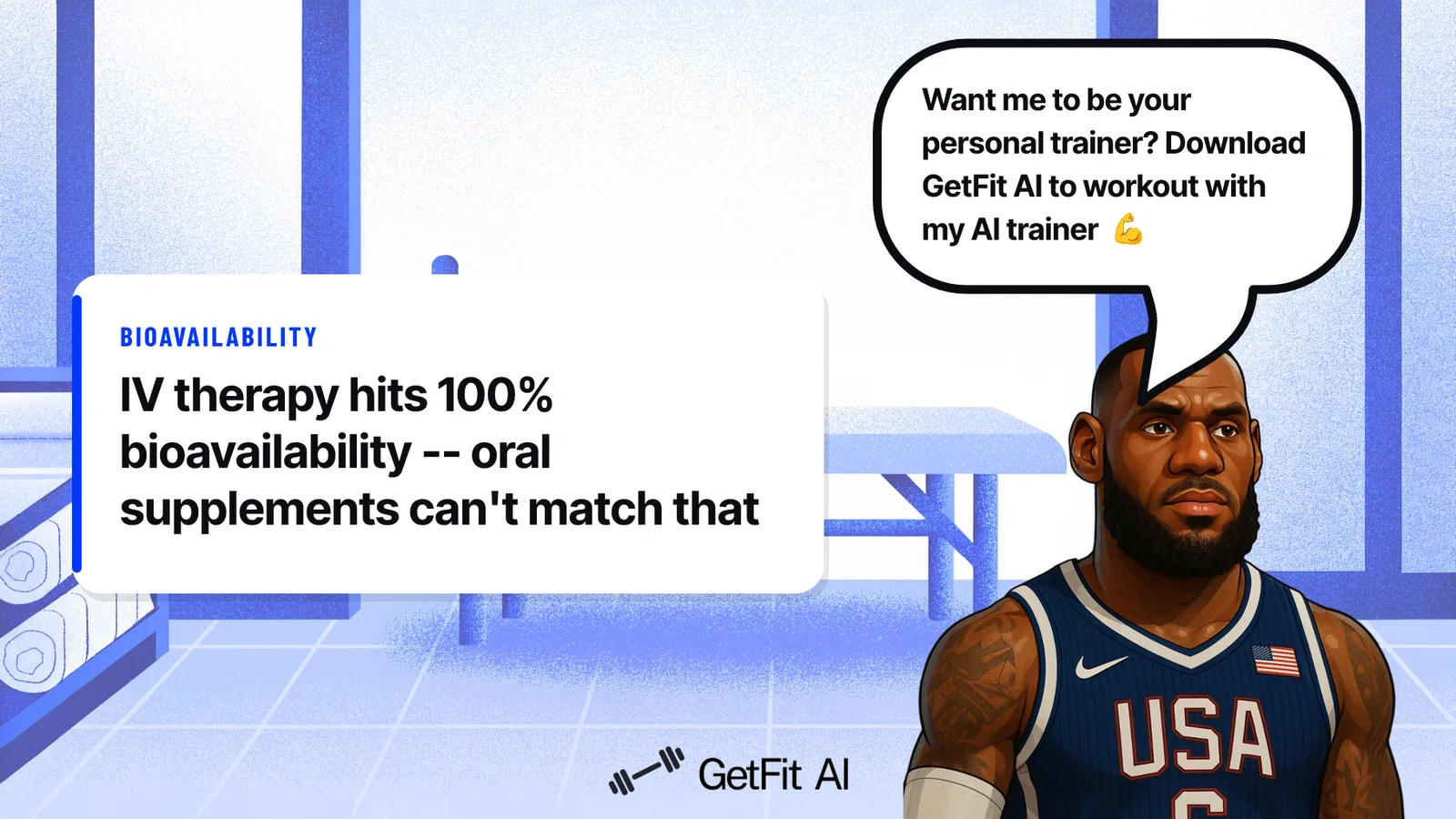
What matters is whether the nutrients being delivered are actually what your body is short of, and whether the delivery method changes the outcome in any meaningful way for someone who is not clinically unwell. The bioavailability argument is IV therapy’s strongest selling point. The Osteopathic Center (June 2023) confirms that IV therapy delivers vitamins, minerals, and fluids directly into the bloodstream, allowing for immediate systemic availability, whereas oral intake is subject to digestive absorption limits and processing delays. In clinical terms, according to SKYNN MD (2023), that means 100% bioavailability compared to the partial absorption oral supplements achieve.
That advantage is real in specific situations: severe dehydration from heat illness, post-surgical recovery where the gut is compromised, or extreme endurance events where fluid losses outpace what drinking can replace. For a recreational lifter who is adequately hydrated and eating regularly, the gut is not the bottleneck. Bypassing it solves a problem that, for most gym-goers, does not exist.
Sessions run $100 to $300 out of pocket with no insurance coverage, and the real recovery leak in most cases is the absence of a structured, progressive plan. What’s inside the bag is where the real marketing claims live.
Key takeaways
- IV therapy delivers fluids and nutrients directly into the bloodstream, bypassing digestion, but that speed advantage disappears entirely when a healthy athlete's gut is already working normally.
- Peer-reviewed research finds no measurable performance or recovery edge for euhydrated athletes who choose IV over oral hydration, the clinical benefit simply does not transfer to the gym bag.
- Most athletic IV drips share the same short commodity ingredient list: saline, B vitamins, vitamin C, magnesium, and electrolytes, the clinic branding is doing more work than the formulation.
- A single drip session runs $150-$300; that same budget funds about 30 months of structured coaching at the monthly price, the math alone reframes what 'investing in recovery' means.
- Under WADA anti-doping rules, IV infusions over 100 mL per 12-hour period are prohibited regardless of what's in the bag, a routine rehydration drip the night before a sanctioned race can trigger a violation.
- Soreness that lingers for days is usually a programming problem wearing a recovery costume, inconsistent training, guesswork nutrition, and no accountability are the actual leaks no drip can seal.
- GetFit AI closes that gap directly: custom workout plans built in your favorite athlete's style, plus anytime access to an AI trainer who adjusts the program as you progress, the structured foundation IV therapy was never designed to replace.
What Specific Nutrients Are in Athlete IV Formulations
The same handful of compounds appears on menu after menu, which tells you something important: what looks like a custom formulation is usually a commodity stack dressed up in performance language.
Core Nutrients in Almost Every Athlete IV Formulation
B vitamins (typically B1, B2, B3, B5, B6, and B12) anchor almost every athlete IV formulation because they serve as cofactors in cellular energy metabolism, converting carbohydrates and fats into usable ATP.
The Tayside Area Formulary (NHS Tayside) ties approved magnesium glycerophosphate use to specific diagnosed conditions including chemotherapy toxicity, Crohn’s disease, and intestinal failure, a clinical context far removed from athletic recovery marketing.
WADA prohibits IV infusions exceeding 100 mL within a 12-hour period unless there is a documented medical justification, and that limit applies even when the bag contains nothing more than saline or electrolytes. Athletes and their support teams are routinely unaware of or non-compliant with this threshold, which means a routine wellness drip can generate an anti-doping sanction regardless of what is in it.
The Add-On Tier - BCAAs, Glutamine, Arginine, and Glutathione Are Where Formulas Actually Diverge
BCAAs (leucine, isoleucine, valine) are added for muscle protein synthesis signaling, while glutathione, a tripeptide antioxidant, appears as a premium add-on marketed to reduce exercise-induced oxidative stress.
A glutathione IV push at a drip lounge typically runs 600-1200 mg; studied antioxidant protocols in clinical settings use similar ranges but in patients with measurable oxidative pathology, not post-leg-day soreness.
GetFit AI’s Athlete-Style Custom Workout Plans are designed precisely for athletes who have a clear role model and a specific physique or performance goal, translating “I want to train the way the athlete I follow trains” into a structured program built around the user’s actual capacity, not a supplement menu built around marketing copy.
Why Ingredient Variability Between Providers Is the First Red Flag to Audit
The Bradford District and Craven Prescribing Guidance for Vitamins and Minerals v2.0 is explicit about which preparations are sanctioned and under what clinical conditions, yet no equivalent standard governs commercial drip providers. Compounding pharmacies that supply drip lounges operate under FDA oversight for sterility, but ingredient concentrations, combinations, and dosing rationale vary by provider with no published benchmark.
GetFit AI’s Structured Training feature is built to address exactly that gap, delivering program structure from the first workout session and sustaining it across the overall training arc, so the search for an external performance shortcut becomes considerably less compelling.
Related Reading
- Why Am I Not Getting Faster at Running
- Does Masturbation Affect Athletic Performance
- Biomechanics in Sports
- Why is Protein Important for Athletes
- What is Speed and Agility Training
- How to Be a Better Athlete
- How Does Sports Psychology Help Athletes
- Why is Hydration Important for Athletes
- Why Do Athletes Train at High Altitudes
- Why Do Athletes Stretch Before a Game?
- Yoga and Athletic Performance
- Red Light Therapy for Athletic Performance
The Claimed Benefits of IV Therapy for Athletic Performance and Recovery
Elite endurance athletes report using some form of IV therapy during training blocks or competition recovery, according to industry research, yet the marketing built around that elite use reaches far beyond elite locker rooms into everyday gyms. The common assumption among recreational athletes is that the right recovery tool, faster hydration, better nutrients in the bloodstream, is all that’s standing between them and real athletic results. The gap between who those claims were originally built for and who is now buying drip sessions matters, because the language providers use rarely makes that distinction clear.
1. Rapid Rehydration and Electrolyte Restoration After Intense Training
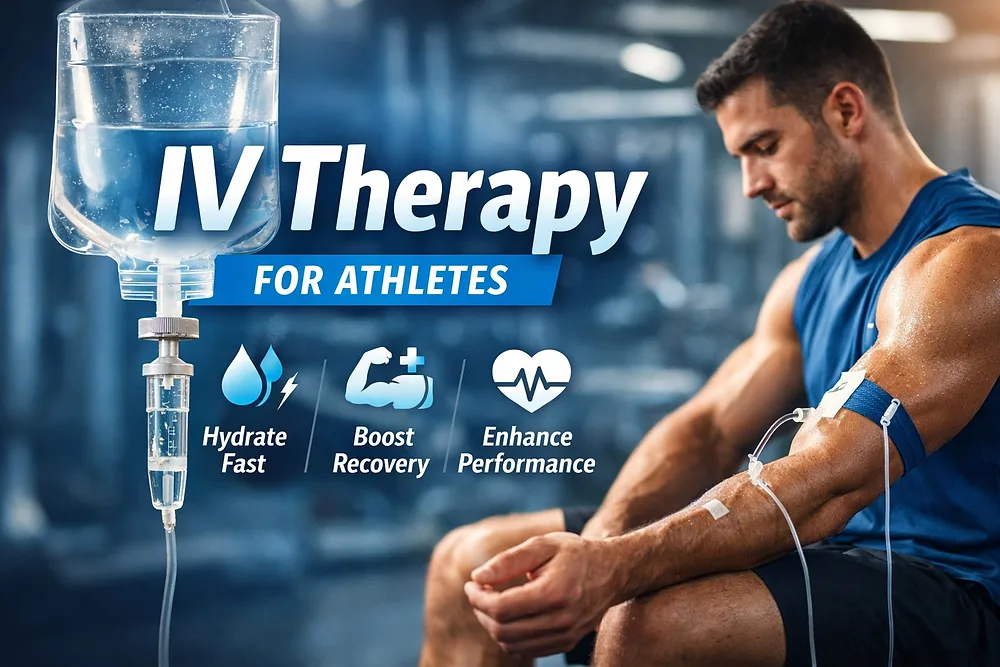
The most prominent claim in IV therapy marketing is speed. Providers argue that bypassing the digestive system and delivering fluids directly into the bloodstream restores electrolyte balance faster than any sports drink can after intense training or competition. The clinical logic sounds airtight: why wait for your gut to absorb a bottle of water when saline can hit your bloodstream in minutes?
What the marketing rarely mentions is the threshold that makes IV rehydration medically relevant. Clinical dehydration in athletes is typically defined as fluid loss exceeding 2% of body weight, a level associated with measurable performance decline and, in severe cases, heat illness. The recreational lifter finishing a tough leg day is almost never there.
2. Reduced Muscle Soreness and Faster Tissue Repair via Direct Nutrient Delivery
Providers claim IV therapy reduces muscle soreness and accelerates tissue repair by delivering amino acids and antioxidants directly to cells, with no digestive absorption step slowing things down. The pitch resonates because delayed onset muscle soreness (DOMS) is genuinely miserable, typically peaking 24 to 72 hours after unfamiliar or high-intensity exercise and resolving on its own within three to five days in healthy athletes.
That natural recovery window is exactly what IV therapy marketing positions itself against. “Feel better faster” is a compelling promise when your legs ache walking down stairs. Whether the drip compresses that timeline is a question the evidence section will answer directly.
3. Enhanced Energy Levels Through B-Vitamin and Magnesium Infusion

IV therapy is marketed as an energy solution through direct infusion of B-vitamins and magnesium, said to support ATP production and reduce fatigue following high-intensity exertion. The mechanism is real in a narrow sense: both nutrients play genuine roles in cellular energy metabolism, and deficiency in either does impair performance.
The implied leap is significant, though. A healthy athlete eating a reasonably balanced diet is unlikely to be deficient enough for infusion to produce a noticeable energy effect. The “boost” many clients report may owe more to lying still for 45 minutes in a calm clinical environment than to anything arriving through the IV line.
4. Immune Support and Reduced Inflammation Claimed Through High-Dose Vitamin C Drips
High-dose vitamin C infusions are marketed for immune support and inflammation reduction, particularly after hard training blocks that temporarily suppress immune function. The anti-inflammatory logic has surface appeal: oxidative stress rises sharply after intense exercise, and antioxidants theoretically mop up the damage.
The counterintuitive caveat is worth noting here. Research into high-dose antioxidant supplementation has raised questions about whether flooding the system with antioxidants after training may blunt the adaptive signals that make training productive in the first place. Oxidative stress is not purely a problem to be eliminated; it is partly a trigger for the adaptations athletes train for.
Oxidative stress is not purely a problem to be eliminated; it is partly a trigger for the adaptations athletes train for.
The Evidence Gap - Compelling Claims Built More on Anecdote Than Clinical Proof
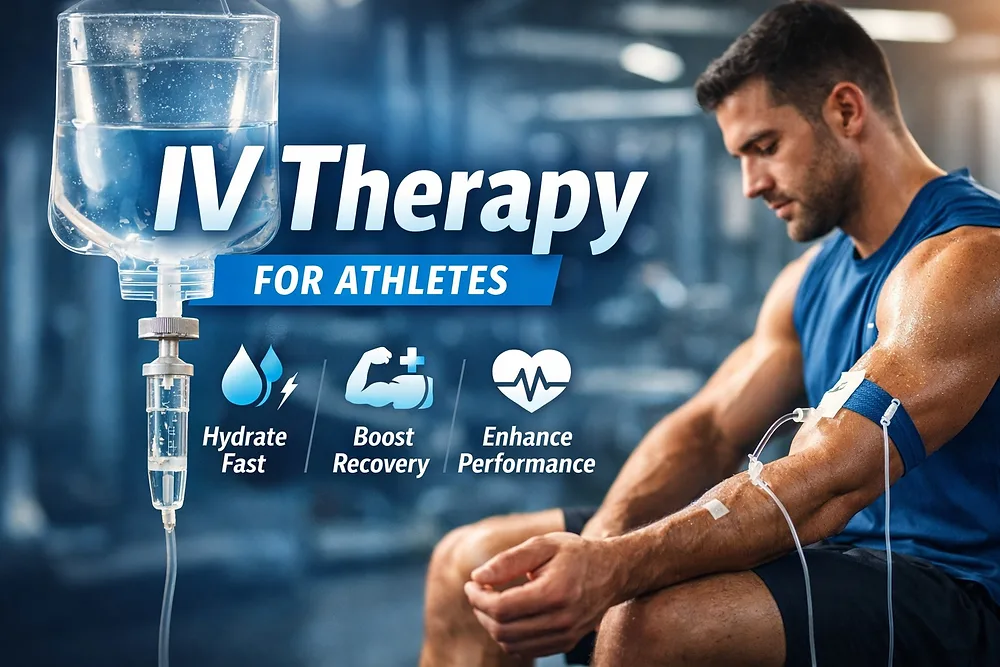
The claimed benefits of IV therapy for athletic recovery are promoted primarily through provider marketing and athlete testimonials rather than clinical trial evidence, leaving a significant gap between what is promised and what is proven. Sessions typically run $150 to $300 out of pocket, with no insurance coverage, which means the cost-versus-evidence tension is real and immediate.
That price point matters for a specific reason.
Most recreational athletes chasing IV therapy are chasing a solution to a problem that lives upstream of recovery. They trained inconsistently, ate without a real structure, and have no plan telling them what comes next. The exhaustion and soreness feel urgent, so a clinical-looking fix feels justified. The hidden cost is the months of unstructured effort that made recovery feel so desperate in the first place. An AI fitness app that builds a custom workout plan around your schedule and connects you with an AI trainer you can message mid-workout closes the consistency gap that makes expensive recovery shortcuts feel necessary in the first place.
Key Benefits of IV Therapy for Athletic Recovery - A Summary of What Proponents Claim
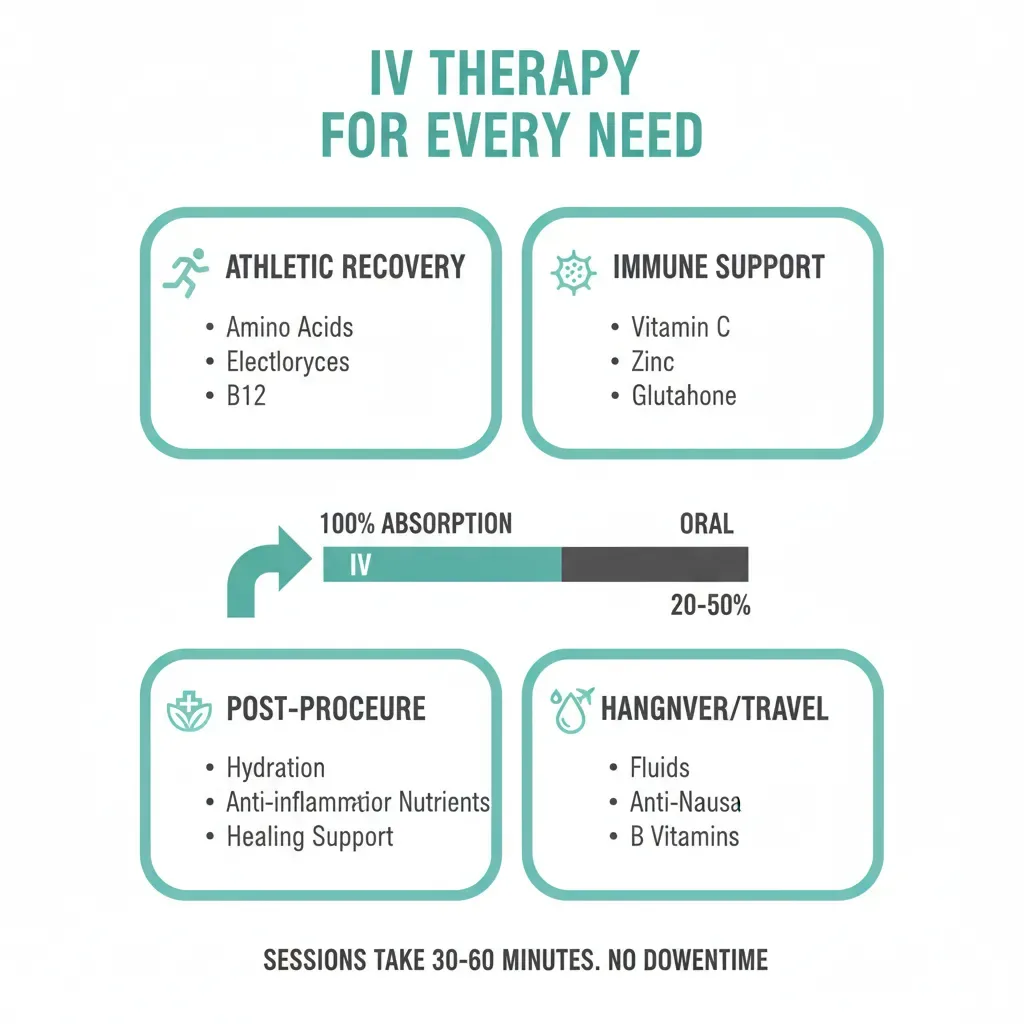
Taken together, IV therapy for athletic performance and recovery is marketed around four pillars: faster rehydration, accelerated muscle repair, boosted energy, and reduced inflammation, all delivered at full bioavailability within 30 to 60 minutes. For athletes who travel frequently, compete in extreme conditions, or struggle with gut absorption issues, these benefits carry genuine situational logic. The overarching limitation is cost, medical oversight requirements, and the lack of peer-reviewed evidence in healthy athletic populations.
What Scientific Evidence Says About IV Therapy Effectiveness for Athletes
What Peer-Reviewed Research Actually Concludes About IV Therapy and Athletic Outcomes
No proven performance or recovery advantage exists for healthy, euhydrated athletes who choose IV over oral hydration. Across the market, IV fluid administration offers no measurable edge over drinking fluids when the gastrointestinal tract is functioning normally.
A 2025 literature review published in the Proceedings of Conference on Health Universitas Ngudi Waluyo reinforces the point: of 16 studies on sports drinks and athletic performance, nearly one in three found no clear performance benefit at all, and none of the reviewed literature positioned IV therapy as superior to oral hydration for healthy athletes.
The positive feelings athletes experience after elective IV sessions are most likely explained by enforced rest during the infusion, the placebo effect, and simple rehydration that oral fluid intake could have achieved equally well. Athletes are buying a 30-to-60 minute forced sit-down and a needle-shaped confidence boost.
Wanting to train the way the athlete you follow trains is an impulse we see constantly among the beginners and recreational athletes we work with at GetFit AI, and it is an impulse worth channelling productively.
GetFit AI’s Athlete-Style Custom Workout Plans are built for athletes who have previously struggled with consistency due to lack of program structure, delivering a personalised program arc from the very first workout session, so the ambition to train like a pro is channelled into something that actually compounds.
The Healthy Gut Does Not Need a Bypass
Research indexed by the National Center for Biotechnology Information (NCBI) confirms that the gastrointestinal tract is highly effective at absorbing water and electrolytes in healthy individuals. The bypass rationale for IV hydration is largely irrelevant unless gut function is compromised by illness, injury, or extreme physiological stress.
GetFit AI’s friends, challenges, and leaderboards layer is most powerful once you have connected with at least one friend in the app, and it operates continuously as the retention mechanism that keeps users training past week three, which is when motivation from novelty fades and structure has to carry the load.
The One Legitimate Exception for IV Fluid Therapy
The clinical consensus is explicit that IV fluid therapy has a legitimate clinical role in cases of severe dehydration caused by heat illness or extreme exertion, specifically scenarios where oral intake is impossible or dangerously slow.
Safety Risks and Side Effects of IV Therapy Athletes Should Know
Every needle that breaks the skin opens a direct infection pathway into the bloodstream. That single fact reframes the entire risk-benefit calculation for a healthy athlete who has no clinical need for intravenous access in the first place.
1. Infection Risk at the IV Insertion Site - A Real Threat Even in Healthy Athletes
Any breach of the skin barrier created by IV needle insertion establishes a direct route for pathogens into the bloodstream, with catheter-related bloodstream infections representing a potentially life-threatening complication according to broader clinical literature. A systematic meta-analysis by Marsh et al. at the University of Queensland and Royal Brisbane and Women’s Hospital, Infection and All-Cause Failure of Peripheral Intravenous Catheters, reinforces this, documenting that infection is a primary driver of peripheral IV catheter failure even in controlled clinical environments. At a wellness spa, without hospital-grade sterile protocols, that baseline risk climbs further. For a healthy athlete with no clinical fluid deficit, the upside is marginal at best; the downside is a systemic infection that pulls you out of training for weeks.
It is also worth flagging a risk pattern that extends beyond the drip itself: athletes drawn to IV therapy often explore adjacent injectable and blood-based protocols. Injectable and nasal forms of compounded peptides carry a real risk of immune reactions, directly relevant to anyone already accepting needle-based risk. And EBOO therapy, a blood-filtering procedure sometimes marketed alongside IV drips, involves passing blood through a filter that can trap platelets and red blood cells, potentially triggering clot formation. These are not theoretical edge cases. They are the logical next step for athletes chasing the training intensity they see from the professionals they follow, and each step adds compounding medical exposure with no guaranteed performance return.
2. Phlebitis and Thrombophlebitis - How Repeated IV Access Damages Veins Over Time
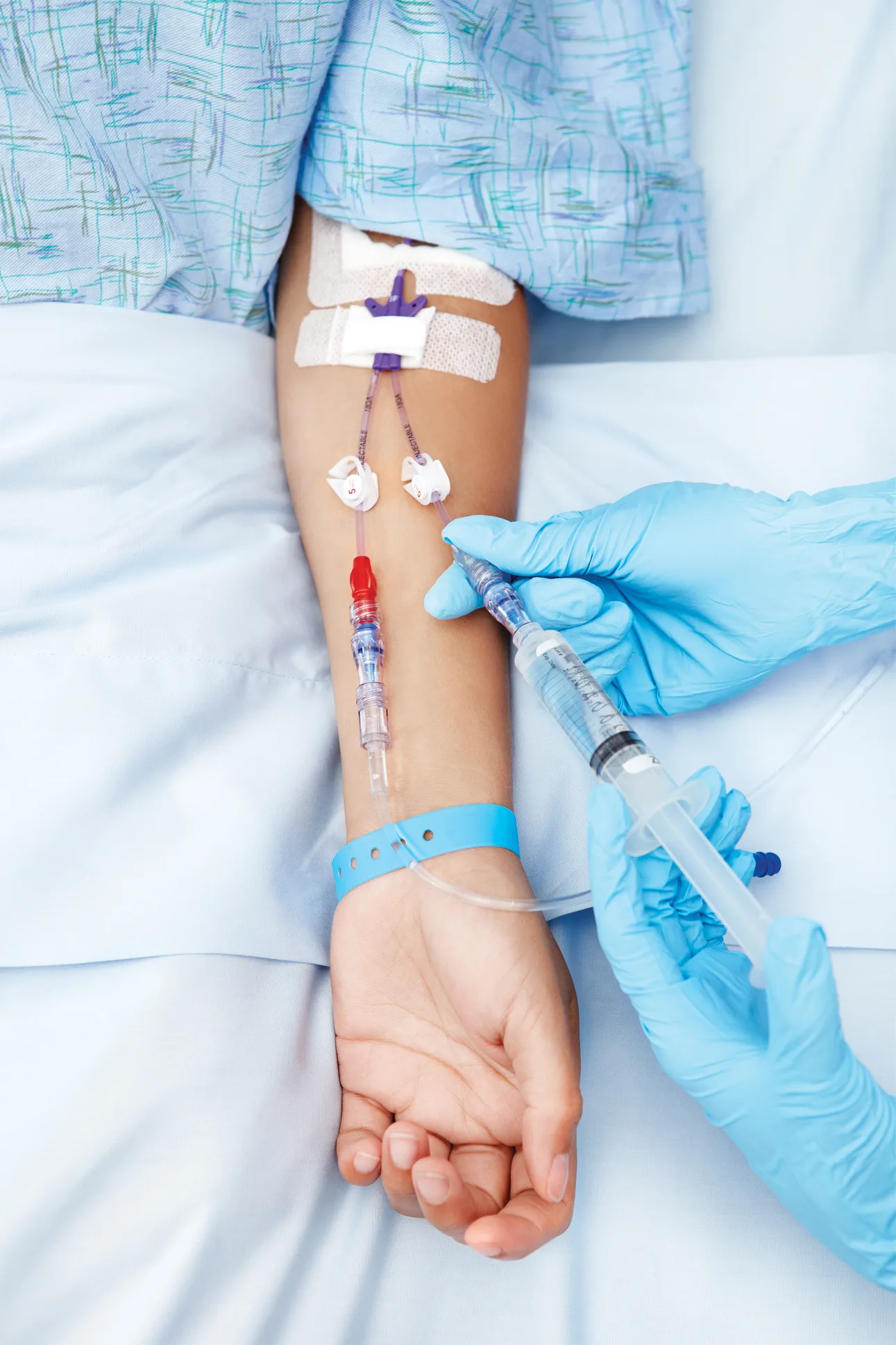
Repeated peripheral IV access causes phlebitis and thrombophlebitis, inflammation and clot formation in the vein wall that can produce lasting vascular damage and limit future access, as documented in the systematic review and meta-analysis of peripheral IV catheter outcomes. A recreational athlete booking weekly drip sessions to chase a recovery edge is the textbook scenario here: the frequency required to chase any cumulative benefit is precisely the frequency that makes vein damage progressively more likely. The risk compounds; the benefit does not.
3. Fluid Overload - Why Unsupervised IV Hydration Can Backfire Dangerously
IV fluid administration without clinical supervision carries a documented risk of fluid overload, which can trigger pulmonary oedema and cardiovascular stress, particularly when no diagnosed fluid deficit exists, a well-established principle in clinical fluid management. A gym-goer who drank adequately before their session and then receives a full saline bag is not correcting a deficit; they are adding volume their cardiovascular system must now process. That is not recovery support. That is an unnecessary physiological load.
4. Fat-Soluble Vitamin Toxicity - The Hidden Danger of High-Dose IV Nutrient Drips
Intravenous delivery of fat-soluble vitamins (A, D, E, and K) bypasses the gut’s natural absorption-limiting mechanisms entirely, creating a tissue toxicity risk at doses that oral intake would safely prevent, as most practitioners in clinical nutrition consistently report. Hypervitaminosis D and resulting hypercalcemia are not theoretical; they appear in clinical case reports tied to IV nutrient drips. The gut exists partly as a gatekeeper, and bypassing it with a needle removes that protection.
5. Cost Reality: $100-$300 Per Session With No Insurance Coverage for Most Athletes
At $100 to $300 per session, a weekly IV drip habit runs $5,200 to $15,600 annually, entirely out of pocket. That financial reality matters most when the evidence for benefit is marginal: you are paying a premium price for a low-probability gain while accepting compounding medical risks.
The athletes most vulnerable to this spending pattern are often working without structured programming, no clear signal that their recovery is actually improving, no objective marker that training is working, and no accountability loop past week three. That absence of structure is what makes expensive recovery shortcuts feel necessary. If you cannot measure whether your training is adapting, you reach for the next intervention that promises to move the needle.
GetFit AI closes that loop directly. Athlete-Style Custom Workout Plans are available from the first workout session, giving beginners who have previously struggled with consistency due to lack of program structure a concrete framework to follow, not a generic template, but a plan built around how the athlete you are trying to train like actually trains. During each session and across the overall program arc, the structure is there. The social layer reinforces it: friends, challenges, and leaderboards, most powerful once you have connected with at least one friend or workout partner also using GetFit AI, form the retention layer that keeps users training past week three, which is precisely where unstructured athletes drop off and start looking for shortcuts.
The cost comparison is not subtle. The Premium Monthly Subscription is $4.99 per month. The Premium Yearly Subscription is $49.99 per year. A single IV drip session costs more than two years of structured, personalized AI coaching on the yearly plan. That is not a marginal difference, it is the entire annual budget for evidence-based programming versus one session of a therapy with documented medical risk and no proven performance benefit for healthy athletes.
The risks above are documented enough that the world’s most powerful sports-governing bodies have taken formal notice. Before any competing athlete books a drip, there is a compliance layer they almost certainly have not read, and the consequences of missing it go well beyond a sore arm.
Related Reading
- Athletic Performance Analysis
- Does Vaping Affect Athletic Performance
- How to Avoid Feeling Sleepy After Workout
- How Does Sleep Affect Athletic Performance
- How to Measure Athleticism
- Velocity Based Training
- Building Stamina and Endurance
- Why Am I So Bad at Sports
- Endurance vs Strength Training
- Why Am I So Tired After Working Out
- How to Create a Personalized Workout Plan
Anti-Doping Regulations on IV Use Every Competing Athlete Must Understand
A masters-division triathlete booking a routine 1,000 mL rehydration drip the night before a sanctioned race is not making a smart recovery call; it is a potential anti-doping violation.
“Athletes can allegedly dope for multiple years (3+ years in this case) without being caught by standard in-competition doping tests, raising concerns about the effectiveness of current anti-doping enforcement.”
— what we hear from sports integrity advocates
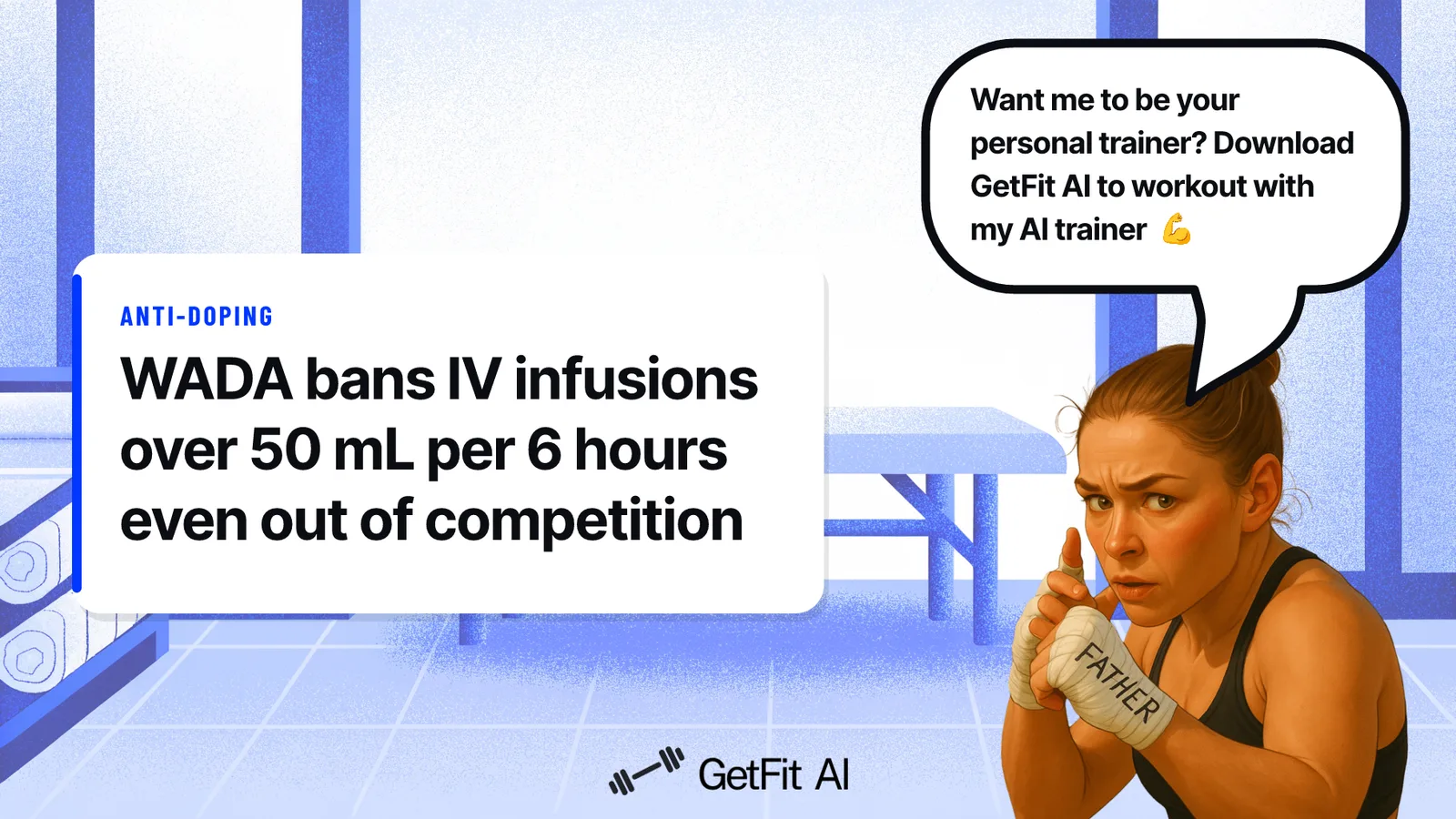
WADA’s 100 mL Rule That Most Amateur Competitors Have Never Heard Of
WADA prohibits IV infusions exceeding 100 mL per 12-hour period outside of legitimate medical treatment, surgical procedures, or clinical diagnostic investigations. That distinction matters because many athletes assume the rule only targets performance-enhancing compounds rather than the delivery mechanism itself.
The WADA 2024 Prohibited List, enforced through thousands of Code Signatories, is mandatory for national anti-doping organizations and amateur sport federations across masters running, age-group triathlon, and recreational powerlifting, so the rule reaches far beyond elite competition.
Why the NCAA Specifically Banned IV Rehydration in Wrestling
The NCAA’s prohibition on IV rehydration in wrestling reflects the same underlying concern: that intravenous fluid loading can mask rapid weight cutting and confer an unfair competitive advantage. GetFit AI’s Athlete-Style Custom Workout Plans are designed around exactly that principle, building the fitness and recovery capacity that makes last-minute IV shortcuts unnecessary in the first place.
The TUE Process Competing Athletes Must Follow Before Any Therapeutic IV Infusion
Because WADA’s IV limit applies unless there is a documented medical justification, a competing athlete with a genuine clinical need should have that justification documented before any infusion. For athletes who train with a partner, GetFit AI’s friends, challenges, and leaderboards features add a layer of social accountability that is most effective when at least one friend in your circle is also using the app, turning compliance and consistency into a shared standard rather than a solitary discipline.
When IV Therapy Is Medically Appropriate for Athletes
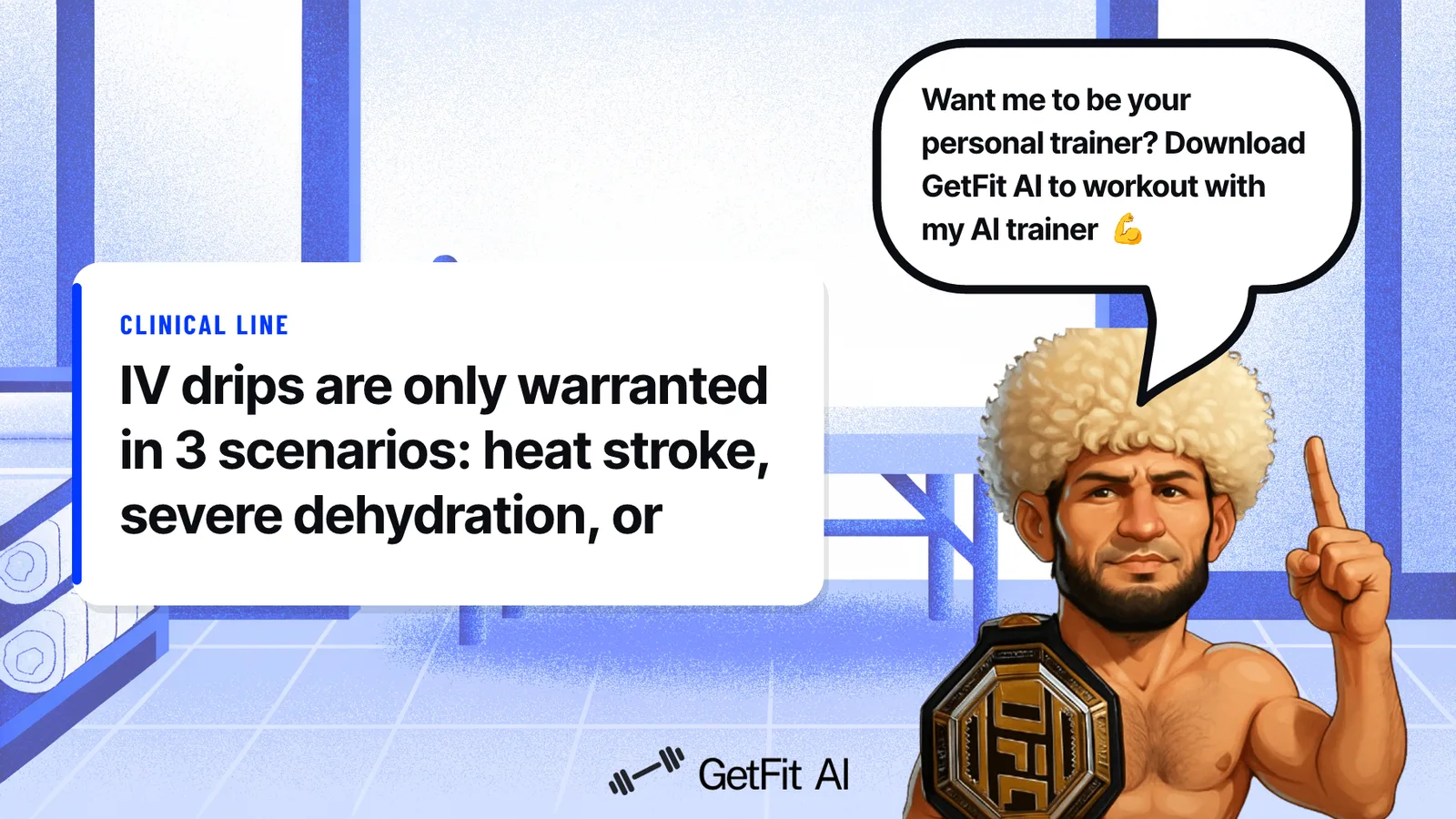
The Three Clinical Scenarios Where IV Therapy Is Actually Warranted
IV therapy is medically appropriate for athletes in three specific situations: exertional heat stroke, severe dehydration where oral intake is physically impossible, and post-surgical recovery when gut function is compromised.
According to research published in Clinical Pediatric Emergency Medicine by Pryor, Casa, Holschen, O’Connor, and Vandermark (2013), exertional heat stroke is a life-threatening emergency in which core body temperature rises to dangerous levels, making oral fluid intake unfeasible; intravenous fluid resuscitation becomes a necessary clinical intervention at that point.
Post-surgical gut compromise is the second legitimate scenario, where the digestive tract cannot reliably absorb nutrients or fluids. Severe hyponatremia in extreme endurance events, the kind seen at ultramarathon medical tents after an athlete collapses at mile 80, represents the third case.
The Line Between a Medical Drip and a Wellness Booking
That clinical threshold, as Pryor et al. (2013) note, is explicitly separate from routine post-exercise fatigue or dehydration experienced by the general gym-going population. Soreness after a hard session, general tiredness, or sluggishness are not clinical deficits. They are normal training responses that food, water, and sleep resolve. An athlete who can drink, eat, and walk out of the gym under their own power does not meet the threshold that makes IV therapy the appropriate tool.
When the Real Problem Is the Program, Not the Plumbing
Training load, sleep quality, caloric adequacy, and periodization are the variables that actually determine how an athlete recovers between sessions.
Related Reading
- How to Deal With Performance Anxiety in Sports
- Hydration Tips for Athletes
- How to Build Mental Toughness in Athletes
- Food for Athletes During Competition
- Strength Training Workout for Runners
- Best Plyometric Exercises for Speed
- Exercises That Improve Muscular Endurance
- Conditioning Workouts for Athletes
- Speed Training for Athletes
- Balance Exercises for Athletes
- Best Core Exercises for Athletes
Why Structured Training Closes the Recovery Gap IV Therapy Can’t
What looks like a nutrient-delivery problem is often a programming problem or a chronic under-eating problem, and closing those gaps changes your results in ways a drip never will. GetFit AI addresses both, which is why understanding the difference matters before you spend money on a shortcut.

Why Structured Training Beats IV Therapy for Everyday Recovery
Poor recovery is rarely a deficiency problem. Most of the time, it is a programming problem wearing a recovery costume. The body gets beaten up when random effort replaces structured effort, and no drip, shake, or supplement stack can manufacture the adaptation signal that only consistent, progressive training creates.
The pattern is familiar: show up three times one week, skip the next two, then wonder why everything hurts and nothing changes. That cycle produces what Fit Square’s training analysis calls “unproductive fatigue” rather than genuine adaptation, because the body never receives a coherent overload signal to respond to. Random soreness is the body’s honest response to a plan that does not exist.
Progressive overload, applied week over week, is what tells muscle tissue to grow stronger. Without it, recovery has nothing meaningful to recover toward.
How Targeted Nutrition Compares to IV Drips for Recovery
Chronic under-eating, skipped post-workout carbohydrates, and protein spread too thin across the day create the fatigue and slow repair that IV therapy is marketed to fix. According to broader industry trends, hitting protein targets, tracking macros, and timing carbohydrates around sessions supports nutrient replenishment comparable to IV delivery for healthy athletes and carries no associated medical risk. Across the market, there is no measurable advantage for IV over oral intake when the gastrointestinal tract is functioning normally. Correcting what you eat and when you eat it is a structural fix, not a product upgrade.
The Recovery Variables IV Clinics Don’t Address
Most new gym-goers quit within the first month or two of starting, well before any recovery tool becomes relevant. The dropout happens because the plan is vague, progress is invisible, and there is nobody to ask when confusion sets in mid-session. No IV clinic addresses those variables.
GetFit AI closes that gap with AI-personalized workout plans, real-time trainer chat available from the first session, and friend competitions with streak mechanics that make consistency the default.
Next steps
If your workouts keep leaving you beaten up and your recovery never quite catches up, the path forward starts with fixing the structure underneath, not the drip on top. As the evidence in this post makes clear, healthy athletes with a functioning gut absorb fluids just as effectively through normal hydration, meaning the positive feelings reported after IV sessions trace back to enforced rest and a placebo response, not the saline bag. Start with our AI fitness app.
That finding connects directly to a second reality this post surfaces: the risks of IV therapy compound with frequency, introducing infection pathways, vein damage, and fluid overload at the exact usage pattern a meaningful performance habit would require. In other words, the tool gets more dangerous precisely as you use it more. Together, those two points lead to the same conclusion: the part of recovery that is actually leaking does not have a needle-shaped solution. It has a programming solution.
Start by building that program through GetFit AI, which generates a custom, athlete-style workout plan from your first session and keeps it adapting as you progress. A single IV drip at minimum market rate funds nearly 30 weeks of structured coaching at the monthly subscription price. The soreness that made a $150 drip feel necessary is most often the body’s honest response to sessions without a coherent plan behind them. Fix the plan, and the recovery follows.
Frequently Asked Questions
What’s actually inside a typical athletic IV drip?
Most athletic IV drips share the same short core stack: B vitamins (B1, B2, B3, B5, B6, and B12), vitamin C, magnesium, and electrolytes. Premium or add-on tiers may include amino acids like BCAAs, glutamine, and arginine, plus glutathione marketed as an antioxidant, but the exact doses and ratios vary widely between providers with no published clinical standard.
Does IV therapy actually absorb better than taking oral supplements?
The delivery advantage is real but context-dependent. IV infusion delivers nutrients at 100% bioavailability by bypassing the digestive system entirely, compared to the partial absorption oral supplements achieve. However, for a healthy athlete who is adequately hydrated and eating regularly, the gut is not the bottleneck, a healthy digestive system already absorbs water and most micronutrients efficiently, so bypassing it solves a problem that, for most people, doesn’t exist.
Will an IV drip after a hard workout actually reduce soreness and speed up recovery?
Providers claim IV amino acids and antioxidants reduce DOMS and accelerate tissue repair, and the mechanism sounds plausible since delayed onset muscle soreness typically peaks 24 to 72 hours after high-intensity exercise. Whether an IV drip actually compresses that recovery window in healthy athletes is not supported by the clinical trial evidence reviewed in the post, which found no proven performance or recovery advantage for healthy, euhydrated athletes over oral hydration.
Can IV therapy give me more energy through B-vitamin and magnesium infusions?
B vitamins and magnesium genuinely play roles in cellular energy metabolism and ATP production, so the underlying mechanism is real. The catch is that a noticeable energy effect from infusion is only likely if you are actually deficient in these nutrients, a healthy athlete eating a reasonably balanced diet probably isn’t, and the post notes that the “boost” many clients report may owe more to lying still for 45 minutes in a calm environment than to anything arriving through the IV line.
Are there any rules competitive athletes need to know before booking an IV session?
Yes, and it’s a compliance risk most athletes miss entirely. WADA prohibits IV infusions exceeding 100 mL within a 12-hour period unless there is a documented medical justification, and that volume limit applies even when the bag contains nothing but saline or electrolytes. A routine wellness drip can therefore generate an anti-doping sanction regardless of what’s in it.