How to Master Hydration Tips for Athletes and Peak Performance
Thirst is a lagging indicator, not a warning system. By the time you feel it, dehydration has already stolen your reps, your power output, and your best session.
The common assumption among beginner athletes is: “If I drink when I’m thirsty, my body will naturally regulate how much water it needs.” That belief means a fluid loss you cannot feel is already costing you reps. Most beginner athletes think dehydration looks like dizziness or cramping, so they train right through the early stages without ever connecting the dots. That sluggish second half of a session, the set that felt heavier than the numbers suggest, the brain fog during a cool-down: these are not bad days. They are a measurable performance tax, and it starts long before thirst shows up.
For a typical recreational athlete, the performance threshold, losing just 1-2% of body fluid, is a surprisingly small amount of fluid, one most people lose without ever noticing. You will not feel it. You will just lift worse, move slower, and think less clearly, then blame your programming.
The Gatorade Sports Science Institute confirmed in 2025 that even modest fluid loss at this same 1-2% threshold impairs endurance performance, with the deficit compounding as dehydration deepens. For a beginner who shows up to every session already slightly under-hydrated, that compounding effect means they are perpetually training at a handicap they cannot see. This is not an elite-sport edge case.
Thirst feels like a warning system. It is not.
Industry research states directly that thirst is a lagging indicator of hydration status, so athletes who rely on it as their primary cue are perpetually under-hydrated during training. One heavy session in a warm gym can push fluid loss well past the 2% threshold before a single drop of thirst registers.
Thirst feels like a warning system. It is not.
According to the Cadence Science Blog, Effects of Hydration on Performance and Athlete Hydration Strategies (2024), electrolytes lost through sweat affect nutrient absorption and muscle function directly, so a performance plan that addresses food without fluid is only doing half the job. The calories you logged, the protein you hit, the pre-workout meal you timed correctly: all of it underperforms when the fluid side of the equation is unstructured. An AI fitness app that tracks your food but ignores fluid intake is only solving part of the problem.
Dehydration rarely announces itself with dramatic symptoms. It disguises itself as a bad day, a weak set, or a foggy cool-down. The five signals athletes most commonly misread as normal fatigue are:
-
A sluggish second half of a training session that feels disproportionate to the workload
-
Individual sets that feel heavier than the numbers on the bar suggest
-
Brain fog or difficulty focusing during cool-downs
-
Reduced endurance that compounds as a session progresses
-
A perpetual training handicap caused by arriving to sessions already slightly under-hydrated
Catching these signals before they cost you the session starts with understanding that thirst is not a reliable early warning.
Key takeaways
- Thirst is a lagging indicator, by the time it fires, your focus is already softening and your output is already dropping.
- A 2% drop in body weight from fluid loss is enough to measurably hurt strength, endurance, and decision-making, long before you feel 'dehydrated.'
- Pre-hydration starts 4 hours before training, not 4 minutes, the kidneys need time to process fluid, and chugging water in the car means most of it leaves before your first set.
- Post-workout rehydration has a measurable target: weigh yourself before and after, then replace 125 to 150% of the fluid you lost within a defined recovery window.
- Sweat rate varies dramatically between athletes training at the same pace in the same heat, 'eight glasses a day' is not a personalization strategy.
- A macro plan with no fluid targets is half a nutrition strategy, hydration and food intake are one compounding system, not two parallel tracks.
- GetFit AI's Nutrition feature tells you what to eat to hit your fitness goal, then lets you log every meal against it, food search, barcode scanning, custom foods, and weekly macro charts, so your nutrition plan finally accounts for the full picture, not just the solid half.
Related Reading
- Why Am I Not Getting Faster at Running
- Does Masturbation Affect Athletic Performance
- Biomechanics in Sports
- Why is Protein Important for Athletes
- What is Speed and Agility Training
- How to Be a Better Athlete
- How Does Sports Psychology Help Athletes
- Why is Hydration Important for Athletes
- Why Do Athletes Train at High Altitudes
- Why Do Athletes Stretch Before a Game?
- IV Therapy for Athletic Performance and Recovery
- Yoga and Athletic Performance
- Red Light Therapy for Athletic Performance
Warning Signs of Dehydration Athletes Routinely Misread as Normal Fatigue
Those five signals start with a single, deeply embedded misconception. Most beginner athletes trust thirst as a reliable, real-time indicator: drink when you’re thirsty, and the body will naturally regulate what it needs. In practice, thirst lags behind actual fluid loss, which means by the time it registers, dehydration is already affecting performance.
The quads are screaming, the head feels thick, coherent thought barely survives the drive home. Easy conclusion: you trained hard. That’s the point, right?
The problem is that dehydration produces almost identical symptoms to genuine fatigue, and most beginner athletes never question which one they’re actually dealing with. Misreading the signal means the same invisible saboteur shows up at the next session, and the one after that.
The five warning signs covered below are:
-
Dark urine: your body is already rationing fluid before thirst kicks in
-
Post-workout headaches driven by reduced oxygen delivery to the brain
-
Muscle cramping caused by electrolyte loss rather than lactic acid buildup
-
Reduced performance output from fluid deficit rather than fitness regression
-
Hyponatremia risk when drinking too much plain water dilutes blood sodium
1. Dark Urine - The Color Signal Athletes Dismiss as Concentrated Morning Pee
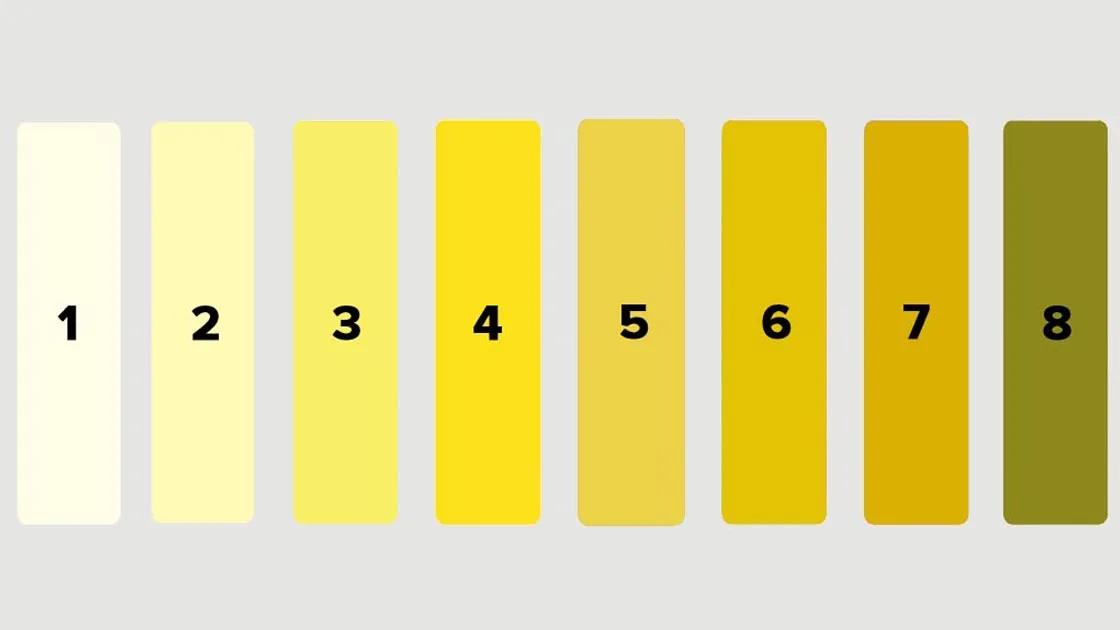
Pale yellow urine signals good hydration; anything darker means your body is already rationing fluid. According to industry data, the urine color hydration guide shows that the yellow pigment urochrome concentrates as fluid intake drops, making urine color a direct, zero-cost proxy for hydration status. Most athletes glance, shrug, and assume it’s just a morning thing.
It rarely is. The real difficulty for beginners is that without a daily fluid log to reference, there’s no way to connect that dark-yellow reading to yesterday’s intake, the context that would actually make the signal useful. GetFit AI’s nutrition tracking solves this directly: it builds a per-day record of fluid intake alongside calories, macros, and meal timing, so the color you see in the morning can be traced back to a concrete number rather than a vague feeling about whether you drank enough.
2. Dehydration Headache - The Post-Workout Head Pain Mistaken for Exertion or Sun Exposure
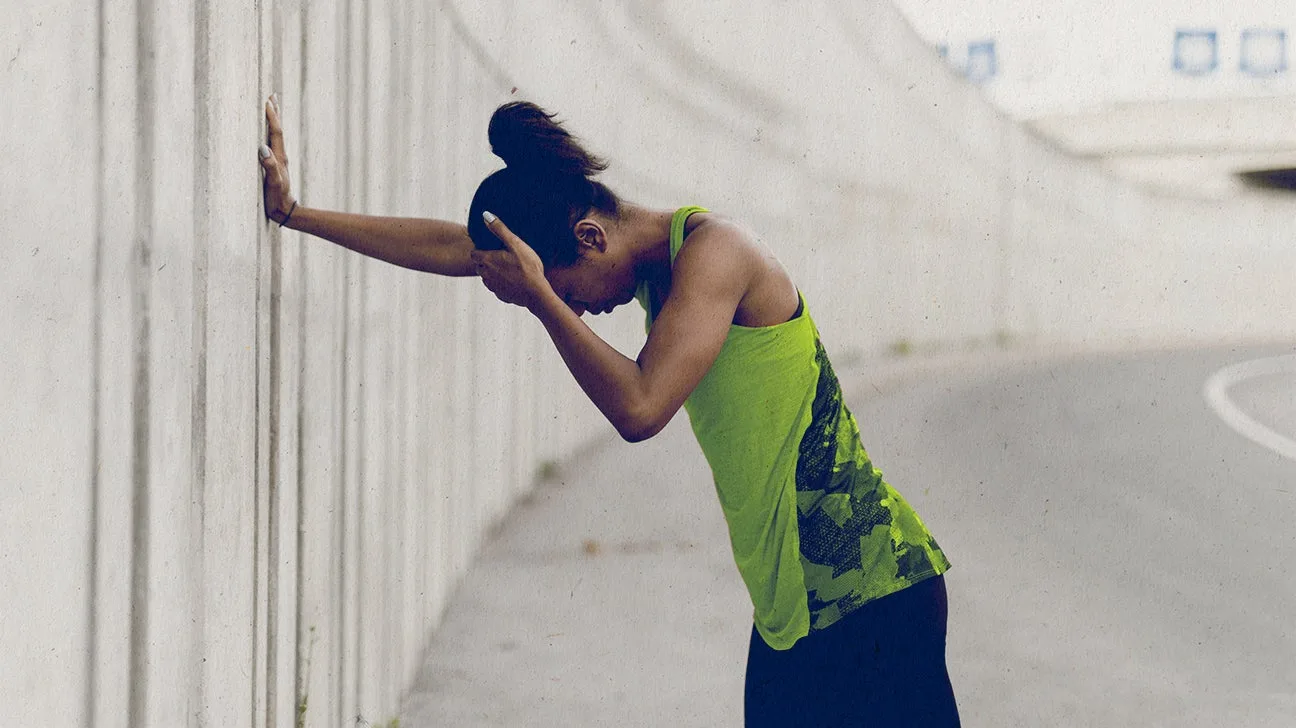
A post-session headache feels like effort. It’s easy to blame the heat, the heavy sets, or a bad night’s sleep. In practice, reduced blood volume from fluid loss lowers oxygen delivery to the brain, producing the same dull pressure athletes attribute to everything except their water bottle.
Research confirms that even mild hypohydration impairs cognitive and physical performance in ways athletes routinely misattribute to exertion. Beginners who struggle with this pattern rarely have the nutritional data to challenge their own assumptions, because they haven’t been tracking. GetFit AI’s nutrition log removes that gap: when a headache follows a flat session, you have the same-day food and water record to cross-reference rather than guessing.
3. Muscle Cramping - The Performance Saboteur Blamed on Lactic Acid Instead of Electrolyte Loss
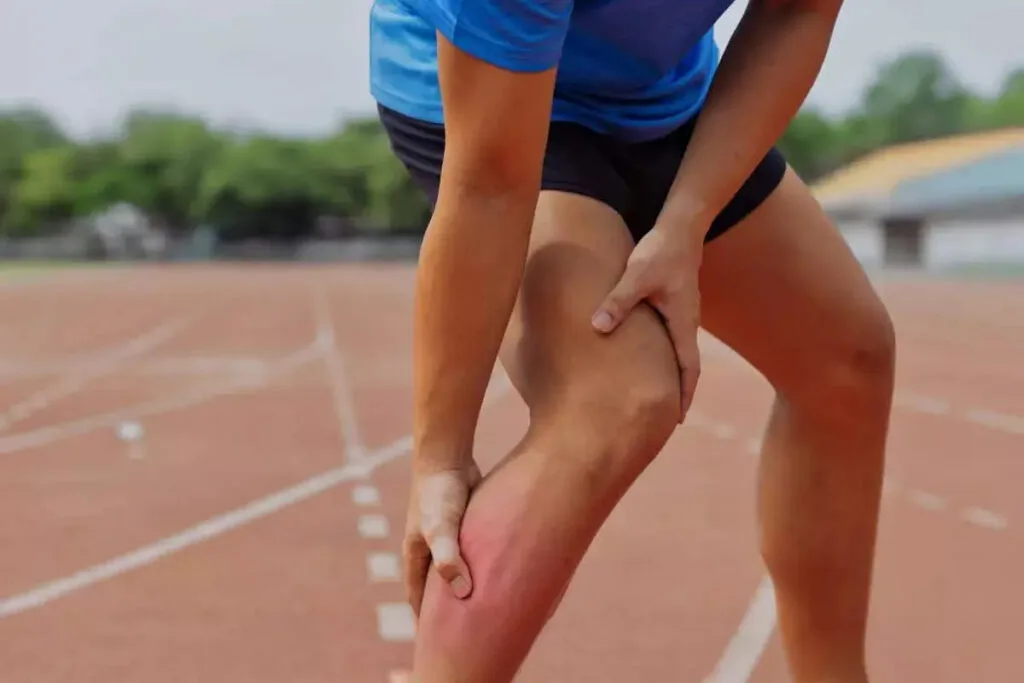
Cramping mid-set or mid-run gets blamed on lactic acid buildup almost universally. The mechanism is more specific than that. NDURANZ notes that dehydration reduces blood flow to muscles and accelerates energy depletion, disrupting the electrolyte balance that keeps muscle contractions coordinated.
Sodium and magnesium losses are the more likely culprits. For beginners following a structured program, this distinction matters: cramping that interrupts a session is a fixable input problem, not a reason to cut the workout short and question your fitness. GetFit AI’s Athlete-Style Custom Workout Plans are built around this understanding, pairing structured training guidance with the nutrition tracking that makes electrolyte and fluid intake visible across each workout session and the broader program arc, so the same cramp doesn’t show up in week four for the same invisible reason it did in week one.
4. Reduced Performance Output - The Gradual Power Drop Athletes Attribute to a Bad Training Day
Some sessions just feel flat. The bar moves slower, the pace drops, the numbers disappoint. Attributing that to a bad day is comforting. The more honest read is that even mild dehydration impairs sweating efficiency, raises perceived effort, and burns through energy stores faster, all of which NDURANZ’s research links directly to fluid deficit rather than fitness regression.
This is where the pattern becomes costly. Beginners we work with consistently face one specific wall: they have no record of what they ate or drank before a rough session, so there is nothing to diagnose against. GetFit AI’s nutrition tracking builds a per-day log of calories, macros, meal timing, and fluid intake, and it does the math for you, so you’re never manually calculating totals or guessing whether you hit your targets. Having that same-day food and water log lets you cross-reference a flat session against the previous day’s intake, turning what would otherwise be an undiagnosed bad day into a fixable pattern. That’s the shift from “I just had a bad training day” to “I was 600 ml short and under on sodium, here’s what to fix before Thursday.”
5. Hyponatremia Risk - When Drinking Too Much Plain Water Becomes as Dangerous as Not Drinking Enough
More water is not always the answer. Drinking large volumes of plain water without electrolytes dilutes sodium in the blood, a condition called hyponatremia. NDURANZ flags this directly: the resulting symptoms, including fatigue and difficulty concentrating, closely mimic dehydration itself, which means athletes sometimes drink more plain water and make the problem worse.
Clear urine can signal overhydration just as readily as good hydration. This is precisely the kind of nuance that gets lost when athletes are self-coaching without data. GetFit AI’s nutrition tracking makes both fluid volume and electrolyte intake visible in the same daily log, so you’re not flying blind in either direction.
Once you can name the signal, the next question is mechanical: exactly how much fluid do you need to show up to a session already ahead of the deficit? That’s where a concrete pre-workout hydration protocol, with specific volumes and timing windows, turns awareness into action.
How Much Water Athletes Should Drink Before Exercise
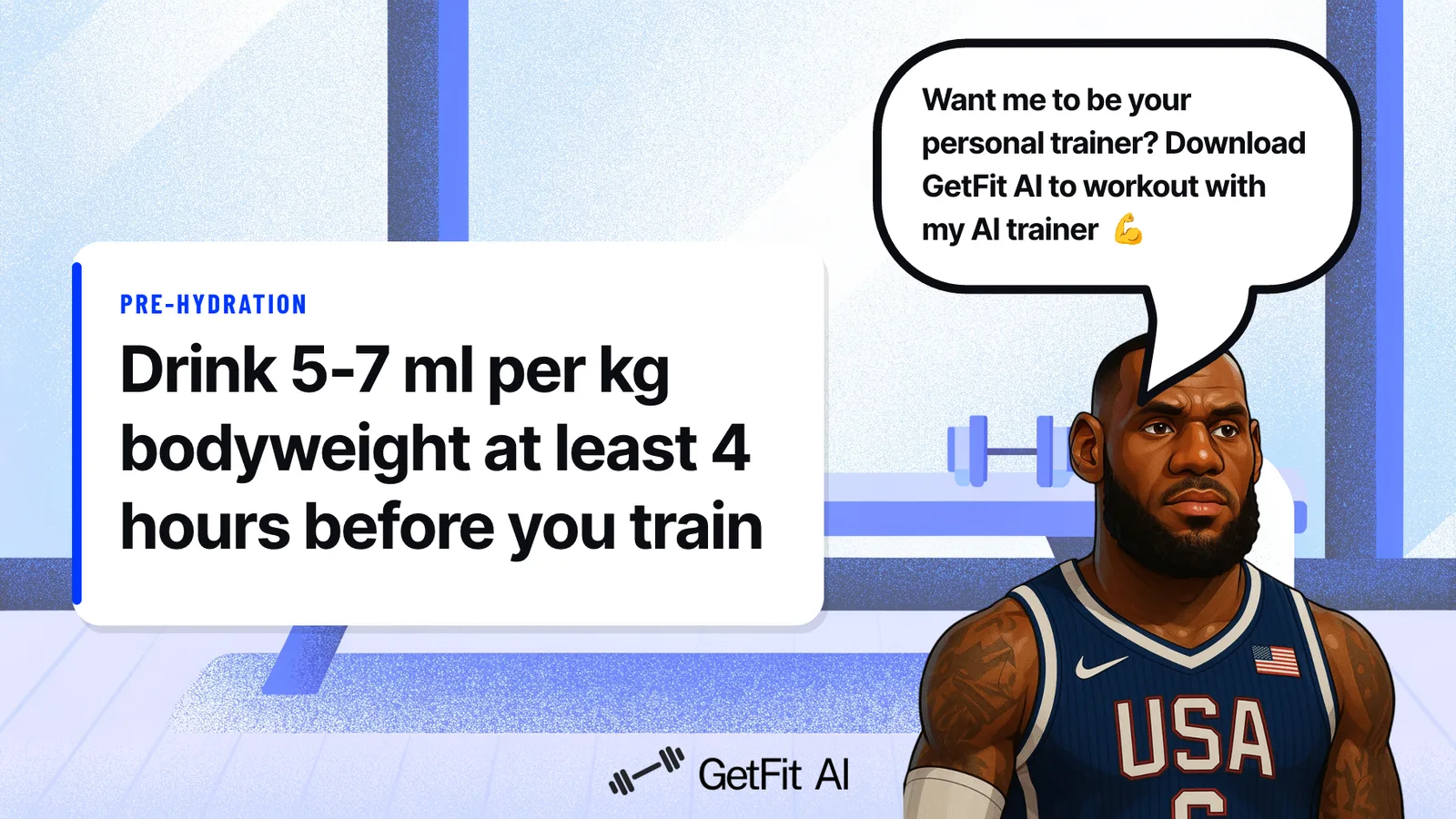
Start Pre-Hydrating 4 Hours Out, Not 4 Minutes Out
Chug 500 ml in the car on the way to the gym and a significant portion of it will leave your body before your first set is done. The ACSM (American College of Sports Medicine) is direct on this in its position stand: pre-hydration should begin several hours before exercise, with fluids consumed slowly to allow for better absorption and to give the kidneys time to process the load. Beginners we work with at GetFit AI frequently struggle with hydration timing and with building any reliable pre-session routine at all, and a missed hydration window is usually the first casualty of an unstructured training day.
Pre-Workout Fluid Targets: 5-7 ml/kg at 4 Hours
Drink 5 to 7 ml of fluid per kilogram of body weight at least 4 hours before exercise. That is the precision-dosing recommendation from the ACSM (American College of Sports Medicine). For an 80 kg athlete training at 7 PM, that translates to 400 to 560 ml consumed around 3 PM, sipped gradually rather than swallowed in one go.
Then, roughly 2 hours out, add another 500 ml. The ACSM (American College of Sports Medicine) specifies this second dose as a standard pre-hydration protocol to top up fluid status heading into the session. For that same 80 kg athlete, the full plan looks like this: 400 to 560 ml at 3 PM, followed by 500 ml around 5 PM, before a 7 PM lift. And if you arrive at the gym to find every squat rack taken and your planned session is suddenly in flux, GetFit AI can swap an exercise on the fly, so a crowded gym never derails the structured session your hydration protocol was built around.
Why Heavy Sweaters Should Add Salt to Their Pre-Workout Fluid
The ACSM (American College of Sports Medicine) notes that heavy sweaters or athletes who begin exercise already under-hydrated may benefit from consuming beverages with added sodium, or pairing pre-exercise fluids with salty snacks, to stimulate thirst and improve fluid retention. GetFit AI users who connect with at least one friend in the app, and engage with the platform’s friends, challenges, and leaderboards, are the ones most likely to still be training consistently past week three. If you and a training partner are both using GetFit AI, the social layer is most beneficial because it turns individual protocols like pre-hydration into shared accountability.
GetFit AI’s structured training plans are available starting from $1.99 per week, $4.99 per month, or $49.99 per year on the Premium Yearly Subscription, the most cost-effective option for athletes building the kind of long-run consistency where pre-hydration habits actually compound.
| Timing Before Session | Volume | Notes |
|---|---|---|
| 4 hours out | 5-7 ml per kg body weight | Sip gradually; don't gulp |
| 2 hours out | 500 ml | Standard top-up dose |
| 30 min out | 150-250 ml | Small top-up only if urine is dark |
| Heavy sweater? | Add sodium | Pair fluid with salty snack or sodium-containing drink to improve retention |
| Light sweater, cool gym, <1 hr session | Plain water only | No electrolyte addition needed |
How Often Athletes Should Drink During Workouts
Most athletes know they should hydrate during exercise, but few treat fluid intake as the timed, structured protocol it needs to be, and that gap costs them performance before they ever notice it. The evidence points to a specific sipping cadence and a clear threshold for switching from water to electrolyte drinks, both of which most athletes have never been taught.
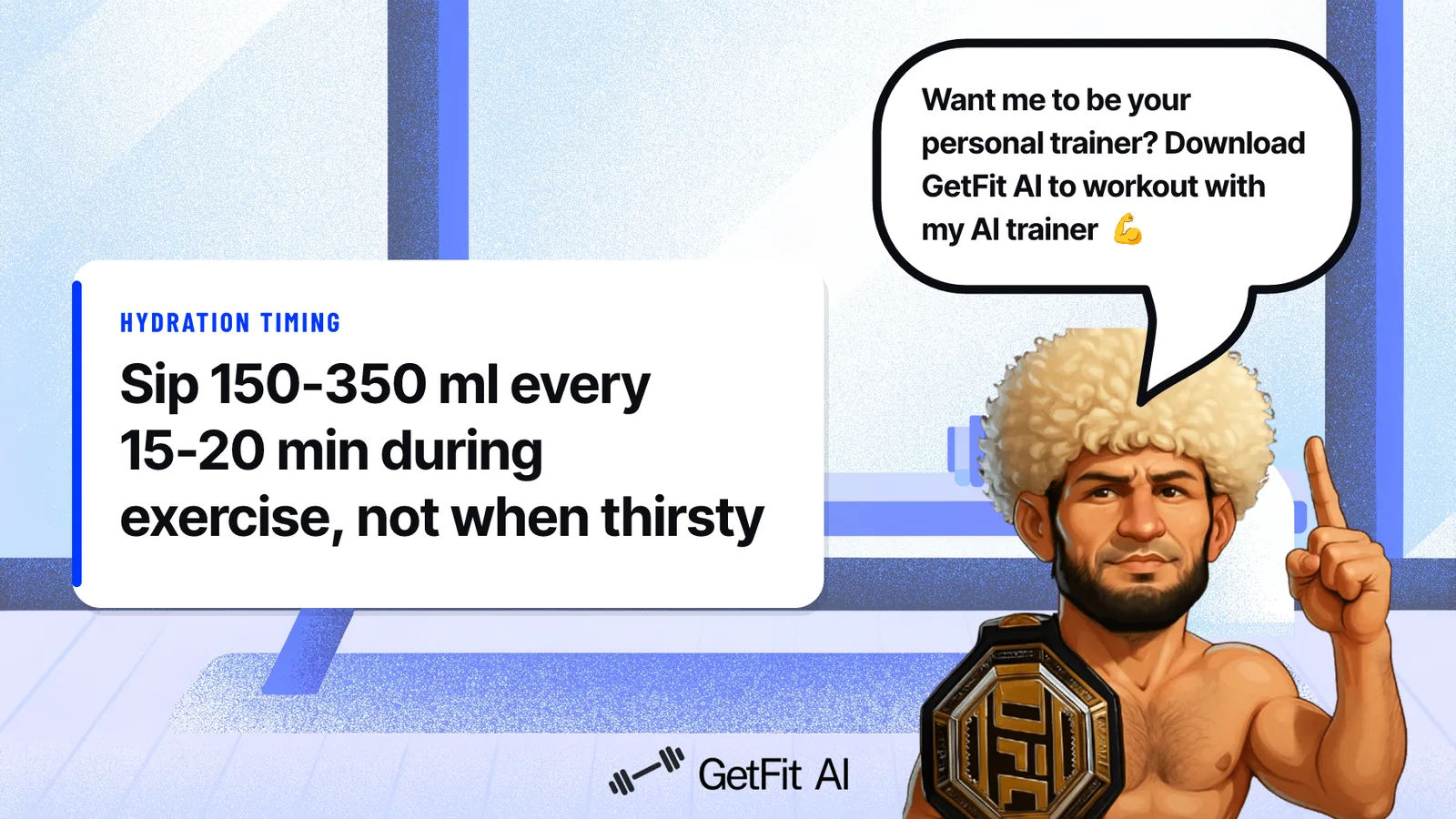
Drink on a Schedule, Not a Signal
According to Fit India Trust’s hydration guide, 150-350 ml every 15-20 minutes is the evidence-based target during exercise, sipped consistently rather than gulped in large amounts. A practical anchor: set a 15-minute timer on your phone and use a marked bottle to track your volume.
This approach matters most when sessions run 45 minutes or longer, where cumulative fluid loss compounds quickly, making a built-in reminder structure more valuable than relying on thirst alone.
GetFit AI’s Athlete-Style Custom Workout Plans are built to surface hydration cues like this 15-20 minute sipping reminder directly inside your session structure, from the very first workout.
The 60-Minute Threshold for Electrolyte Drinks
Fit India Trust’s hydration guide confirms that for sessions exceeding 60 minutes, athletes should switch to a sports drink containing electrolytes and 4-8% carbohydrates to replace nutrient losses and sustain output. That carbohydrate concentration is the functional window: too low and you get minimal fuel benefit, too high and gastric emptying slows. Research published in Nutrients (MDPI) further supports the role of carbohydrate-electrolyte solutions in sustaining endurance performance past the one-hour mark.
The 60-minute switch is one of those rules that sounds simple but gets missed constantly in real sessions, especially when an athlete is focused on reps, form, or competition. GetFit AI’s structured workout arc flags this transition point within the session itself, so the cue arrives at the right moment rather than as a post-session regret.
Cool Drinks and Faster Absorption
Temperature is not a comfort preference; it is a performance variable. Fit India Trust’s hydration guide notes that cooler drinks during exercise encourage greater voluntary consumption and improve gastric absorption rate, meaning athletes who train with chilled fluid take in more and use it faster. If your bottle sits uninsulated in a warm gym for 45 minutes, you are drinking something your body processes more slowly.
Embedding session-aware hydration cues, like the 15-20 minute sipping reminder and the 60-minute sports-drink prompt, directly into a structured workout plan keeps those timing rules actionable rather than theoretical. GetFit AI’s Athlete-Style Custom Workout Plans do exactly that, surfacing the right cue during each workout session and across the overall training program arc, not just in a static article you read once and forget.
That experience is also stronger with company: GetFit AI is most beneficial when a friend or training partner is also using the app, as shared challenges, leaderboards, and the accountability of someone else following the same session cues create the kind of social reinforcement that keeps hydration habits from slipping after week three.
Related Reading
- Athletic Performance Analysis
- Does Vaping Affect Athletic Performance
- How to Avoid Feeling Sleepy After Workout
- How Does Sleep Affect Athletic Performance
- How to Measure Athleticism
- Velocity Based Training
- Building Stamina and Endurance
- Why Am I So Bad at Sports
- Endurance vs Strength Training
- Why Am I So Tired After Working Out
- How to Create a Personalized Workout Plan
How to Rehydrate After Exercise and Maximize Recovery
Post-exercise fluid loss is measurable to the ounce, and replacing it requires a specific volume target, the right foods, and a deliberate window of time. To rehydrate with precision, measure it: a simple pre-to-post bodyweight comparison translates directly into a precise fluid-replacement target, and calculated deficit drinking is the habit that separates fast recoverers from slow ones.
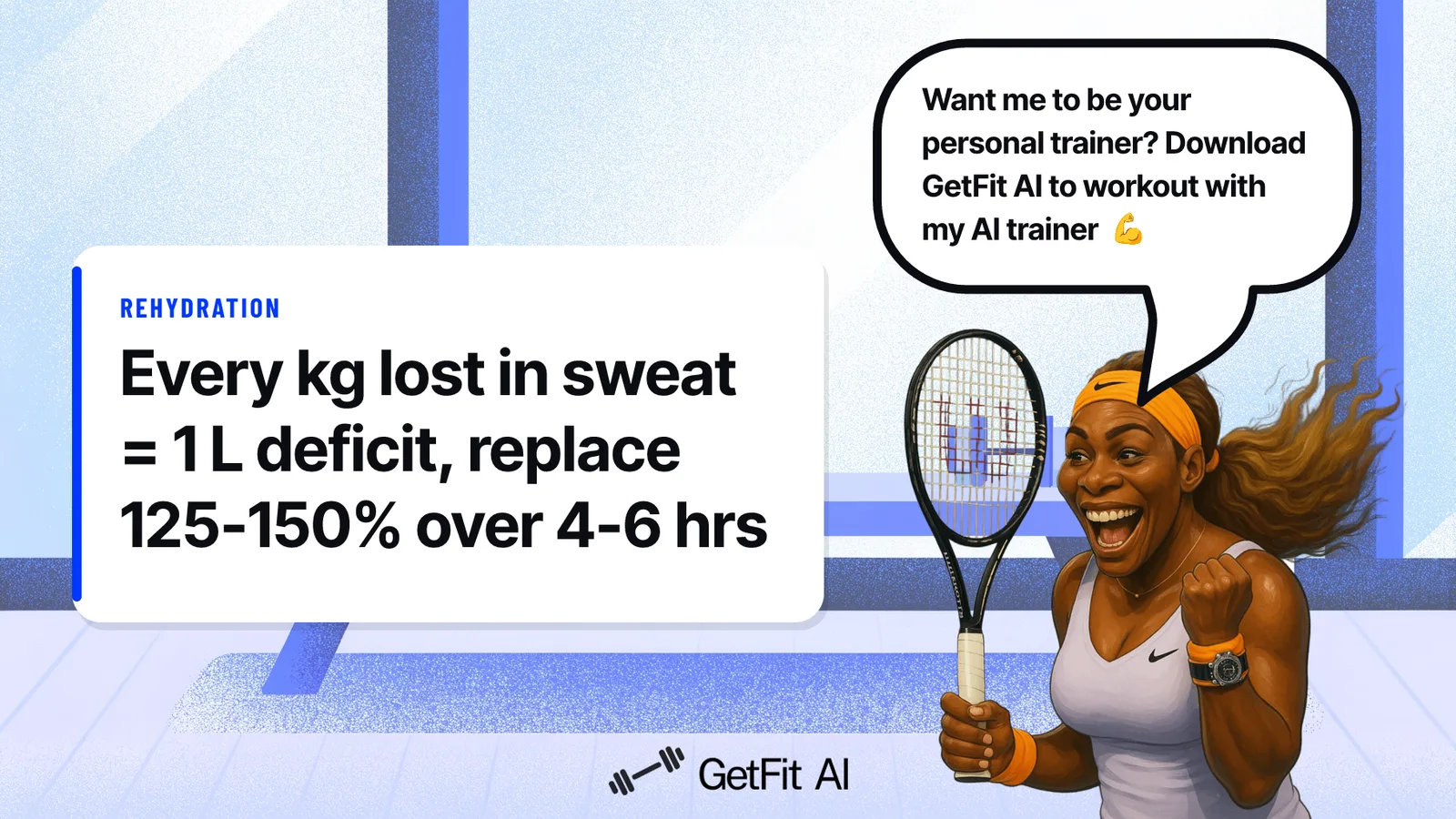
The Scale Test Turning Post-Workout Weight Loss Into a Precise Fluid Target
To rehydrate after exercise with any precision, weigh yourself nude before and after your session. Every kilogram of body weight lost equals roughly one litre of fluid deficit. The American College of Sports Medicine recommends replacing 125 to 150 percent of that deficit, which means a 0.7 kg loss translates to a replacement target of 875 ml to 1.05 litres, consumed over the next four to six hours rather than all at once, giving the body time to absorb and retain what it receives.
What to Eat and Drink in the Recovery Window to Restore Fluid and Electrolytes
Plain water alone is not enough. Research published in the European Journal of Applied Physiology confirms that sodium consumed alongside fluid significantly improves retention, because sodium triggers the hormonal response that tells your kidneys to hold water rather than excrete it. Whole foods can deliver that sodium alongside additional fluid, and watermelon is a practical example: roughly 92 percent water by weight and carrying natural sodium and potassium, it is one of the most effective whole-food recovery options available.
Why Alcohol After Training Quietly Blocks the Rehydration You Just Earned
Alcohol undermines recovery in ways that extend well beyond simple dehydration. A 2014 study in PLOS ONE found that post-exercise alcohol consumption impaired muscle protein synthesis by approximately 37 percent compared to protein intake alone, even when total protein was matched, so a post-training drink can erase much of the adaptation the session was meant to produce.
How to Calculate Your Individual Sweat Rate and Personalize Your Hydration Plan
According to the Gatorade Sports Science Institute’s normative data, mean sweat rates across athletes range from roughly 0.5 L/h to over 2.0 L/h at the same exercise intensity, a four-fold spread that makes any single population guideline close to useless for personalizing hydration plans for athletes. That variation is inherent to the individual, and no generic guideline can account for it.
The Five-Minute Sweat Rate Test That Replaces Every Generic Guideline
To calculate sweat rate, weigh yourself nude before training, train normally while tracking every milliliter you drink, then weigh yourself nude again immediately after. Each kilogram of weight lost equals approximately one liter of sweat, giving you a session-specific rate you can act on. The GSSI’s validated methodology confirms this pre-to-post nude weigh-in approach as the practical gold standard for individual sweat-rate calculation.
This is the kind of individual-specific input GetFit AI is built around, treating your measured data as the starting point. GetFit AI’s Athlete-Style Custom Workout Plans are structured around that premise from the outset, so the hydration guidance embedded in your plan reflects your individual profile rather than a guideline written for a hypothetical average athlete.
Why Your Sweat Rate Number Changes and Which Variables Move It Most
Heat, humidity, exercise intensity, and fitness level all shift your sweat rate, sometimes substantially. The hDrop research review notes that sweat rate varies significantly both between individuals and within the same individual as conditions shift. A single test result becomes outdated the moment your environment or intensity changes, which is why retesting across different conditions matters.
GetFit AI’s Structured Training layer updates across the overall program arc, not just within a single session, so the framework around your hydration targets moves with you rather than leaving you chasing a number that no longer fits your current training phase.
How to Convert a Sweat Rate into a Session-Specific Hydration Target
Once you have your sweat rate, matching fluid intake to that figure for each session type gives you a target grounded in your own physiology. As the GSSI’s sport-stratified normative data makes clear, no single universal hydration prescription fits all athletes or all session types.
If accountability is part of what keeps you consistent long enough to actually run this test across multiple session types, GetFit AI’s friends, challenges, and leaderboard features exist for that, giving you a social layer that reinforces the habit of measuring rather than guessing.
GetFit AI is available on a Premium Monthly plan at $4.99 or a Premium Yearly plan at $49.99, so the barrier to getting a plan built around your actual sweat rate is low enough to remove cost as the reason for staying on a generic guideline.
Related Reading
- How to Deal With Performance Anxiety in Sports
- How to Build Mental Toughness in Athletes
- Food for Athletes During Competition
- Strength Training Workout for Runners
- Best Plyometric Exercises for Speed
- Exercises That Improve Muscular Endurance
- Conditioning Workouts for Athletes
- Speed Training for Athletes
- Balance Exercises for Athletes
- Best Core Exercises for Athletes
How Structured Nutrition Tracking Closes the Hydration Gap Athletes Miss
Most athletes who track macros diligently still treat fluid intake as an afterthought, and that gap quietly undermines the nutrition plan they worked to build. Hydration and food intake form a single system, and leaving one half untracked means the data you are acting on is incomplete. GetFit AI closes that gap by connecting your logged sessions and nutrition data to personalised hydration guidance, so the advice you get reflects your actual training rather than a generic daily target.
Why a Macro Plan Without Fluid Targets Is Only Half a Nutrition Strategy
Logging every meal while leaving fluid intake to chance is like tracking every expense except rent: the math looks complete until the month falls apart. Most beginner athletes treat calorie and macro tracking as the serious, structured part of a nutrition plan and treat water as a background variable that sorts itself out.
A well-established principle in sports nutrition holds that absolute recommendations like eight glasses per day are misguided because body size and climate vary so widely that a single number serves almost nobody well.
How to Time Your Hydration Around Any Workout Session
A beginner who finishes a 90-minute session and messages their GetFit AI coach at 11 PM asking whether they need electrolytes gets an answer built around the logged session data, not a recycled generic response. The coach knows the session happened, can factor in duration and effort, and delivers a recovery-specific cue at the exact moment the athlete is ready to act on it. Individual fluid needs vary too much for a single timing rule to serve everyone; the value of an AI fitness app is that it collapses that gap without requiring the athlete to run the math themselves.
One Daily Plan, Two Coachable Variables
Tracking water alongside macros pulls hydration into the same feedback loop as food. When both variables live inside one daily view, a pattern that was invisible becomes obvious: the days with low fluid intake are usually the days with worse food choices and lower-quality sessions. Broader trends across the market show that logging water intake alongside macros prevents athletes from treating hydration as an afterthought, because thirst alone is not a reliable signal for optimal hydration, especially during exercise.
Hydration is already quantifiable, already timing-sensitive, and already linked to every outcome the macro log is trying to improve. It is the most straightforward variable to bring inside the same system.
Next steps
If your energy keeps crashing mid-session and recovery feels slower than your effort warrants, the path forward starts with treating hydration as a structured variable, the same way you treat sets, reps, and macros. Start with our AI fitness app.
Pre-hydration spread across the two-to-four hours before training produces measurably better fluid retention than any last-minute water chug, which means the deficit most athletes carry into the gym is preventable before they ever arrive. And because plain water sipped through a session lasting more than an hour can dilute sodium faster than sweat removes it, the type of fluid matters as much as the volume. Together, those two realities point to one corrective action: logging fluid intake with the same daily structure you already apply to food, so both variables live in the same feedback loop instead of one being tracked and one being guessed.
Start with the AI fitness app that embeds your daily water target alongside your food log from session one. From there, your intake data builds the feedback loop that turns hydration from a background variable into a coachable one.
Frequently Asked Questions
How early should I actually start drinking water before a workout?
Start at least 4 hours before exercise, not right before you leave for the gym. The ACSM recommends 5-7 ml of fluid per kilogram of body weight at the 4-hour mark, sipped gradually, followed by another 500 ml roughly 2 hours out, because the kidneys need time to process and retain fluid before your first set.
Is dark urine after a workout always a sign I’m dehydrated?
Dark urine is a direct signal that your body is already rationing fluid, the yellow pigment urochrome concentrates as fluid intake drops, making urine color a reliable, zero-cost proxy for hydration status. If it’s darker than pale yellow, you’re behind on fluids, and the post points out that most athletes shrug it off as a morning thing when it rarely is.
Can drinking too much plain water actually make things worse?
Yes. Drinking large volumes of plain water without electrolytes can dilute sodium in the blood, causing a condition called hyponatremia, whose symptoms, fatigue and difficulty concentrating, closely mimic dehydration itself. Drinking more plain water in that state makes the problem worse, not better, and clear urine is not automatically a sign everything is fine.
Why do I get a headache after training even when I don’t feel thirsty during the session?
A post-workout headache is often a dehydration symptom, not just a sign you worked hard. Fluid loss reduces blood volume, which lowers oxygen delivery to the brain and produces the same dull pressure athletes routinely blame on heat or heavy sets, and research confirms that even mild dehydration impairs cognitive and physical performance in ways athletes typically misattribute to exertion.
Should I add salt or electrolytes to my pre-workout drink?
It depends on how much you sweat. The ACSM specifically recommends that heavy sweaters or athletes who are already under-hydrated consider beverages with added sodium, or pair their fluids with a salty snack, because sodium helps the body retain the water you drink rather than excreting it quickly. If you’re a light sweater training in a cool gym for under an hour, plain water at the recommended volumes is sufficient.