Velocity Based Training: What It Is and How It Works

Your plateau is not a willpower problem. It is a missing feedback loop, and bar velocity is the signal that finally closes it.
Industry surveys consistently find that a majority of recreational lifters report hitting a wall within their first three to six months of consistent training. They keep showing up. They put in the work.
And yet the bar doesn’t move. The instinct is to blame discipline, to tell yourself you just need to want it more. That instinct is wrong, and it quietly costs months of progress.
Clean Health’s 2020 analysis makes the mechanism clear: a plateau is a physiological adaptation. The body has absorbed the current stimulus, decided it no longer needs to change, and settled.
The problem is structural. See our AI fitness app for how this works in practice.
Fixed-percentage programs are built on one quiet assumption: that 75% of your one-rep max feels the same on Tuesday after a bad night’s sleep as it does on Saturday after a full recovery week. Research on day-to-day strength variability shows that output can fluctuate by 10-18% based on sleep quality, stress, and accumulated fatigue alone. A prescription that ignores that fluctuation is a guess dressed up as precision.
Without an objective signal, Clean Health notes, a lifter has no reliable way to identify which variable needs to change. Load? Volume? Recovery? Gut feel can’t answer that. Most lifters grinding the same weights month after month are missing a plan that reads their actual output and tells them what to do next. The missing ingredient is a signal that tells you, objectively, whether today’s session moved the needle or not.
Key takeaways
- Bar speed doesn't lie, on days your nervous system is fried, the bar slows down before your perceived effort catches up, making velocity the only feedback signal that's honest in real time.
- Most lifters plateau not because they stop trying, but because their program keeps assigning the same weights with no mechanism to detect that something has changed.
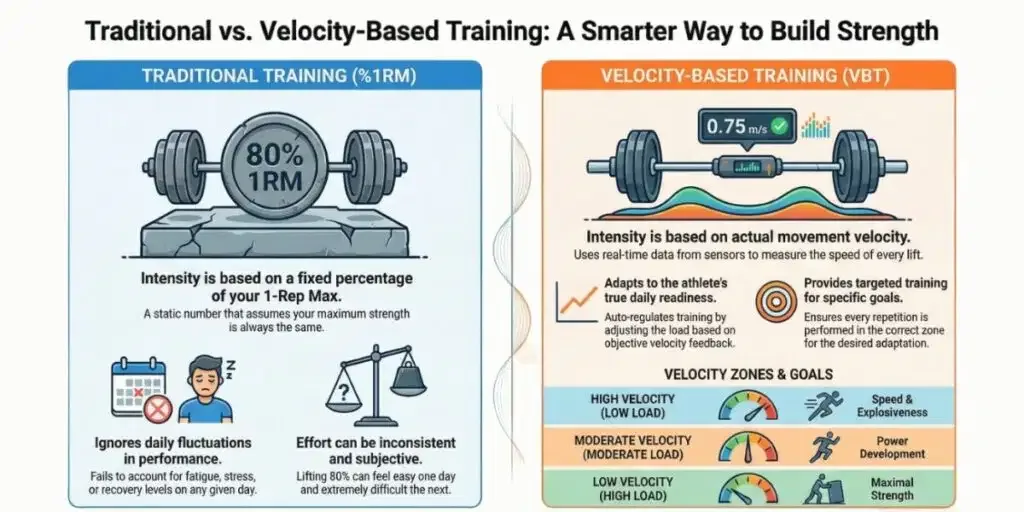
- Velocity-based training replaces percentage-of-max guesswork with a live readout: if the bar moves fast, load up; if it slows past a threshold, the set is done, no math, no ego.
- Each velocity zone targets a distinct adaptation, maximal force at slow speeds, power and rate-of-force development at fast ones, so training without tracking zones means leaving specific gains on the table.
- Stopping a set at a velocity-loss threshold (typically 20% drop) preserves the stimulus without accumulating the fatigue that kills next week's session.
- You don't need a $1,000 linear position transducer to apply VBT logic, reps in reserve and rep-PR tracking are low-tech proxies that still give your program a feedback loop.
- GetFit AI's Athlete-Style Custom Workout Plans close the adaptation gap directly: build a plan around your own goals and equipment, or train in the style of an AI athlete or trainer, and watch the plan adjust as you actually get stronger, no stalled spreadsheet required.
What Velocity Based Training Is and How It Differs from Percentage Based Training
Bar speed offers a more reliable signal, and understanding what that signal is and why it outperforms percentage-based loading is the foundation for everything GetFit AI uses to regulate your training in real time.
Velocity-Based Training Defined as Real-Time Bar Speed as the Training Signal
Velocity-based training (VBT) is a method of regulating resistance training load using real-time bar speed as the primary feedback signal. Instead of prescribing a weight based on a percentage of your one-rep max, VBT measures how fast the bar moves during each rep and uses that number to determine whether the load is appropriate for today’s session.
Velocity-based training measures bar displacement over time, typically in meters per second, during the concentric phase of a lift. That number is captured set by set, rep by rep, and compared against established velocity benchmarks for a given exercise and intensity zone. When bar speed drops below a target threshold, the load is too heavy for today’s capacity, or fatigue has accumulated past the productive training window, and the session can be adjusted accordingly.
Why Percentage-Based Training Is a Static Map for a Moving Target
The core problem with percentage-based loading is that it treats your 1RM as a fixed constant when it is a variable. Research by Nuzzo, Pinto, Nosaka, and Steele, via a meta-regression of 952 repetitions-to-failure tests across 7,270 individuals, found substantial between-individual variation at any given percentage of 1RM, so a prescribed load does not reliably reflect the true training demand for every athlete on every day.
The Nuzzo et al. meta-regression cited above points to a practical corollary: a lifter can complete every prescribed rep, feel like they worked hard, and still generate a suboptimal adaptive signal, because the load was either too easy for today’s capacity or too heavy to produce quality mechanical output. Bar speed cuts through that ambiguity by anchoring the session to what the body is actually doing rather than what a spreadsheet assumed it would do.
Bar Speed as Objective Feedback That Does Not Care How You Feel
Bar velocity gives you a number that cannot be argued with, rationalized, or inflated by effort perception**.** Feeling like a set was hard is useful information, but it is also subjective and notoriously unreliable across sessions. Velocity cuts through that noise with a concrete, repeatable metric. A lifter who “felt strong” but moved the bar 12% slower than their baseline is getting real data, not a feeling.
Bar velocity gives you a number that cannot be argued with, rationalized, or inflated by effort perception.
One honest trade-off: VBT’s feedback is only as useful as the consistency of how velocity is measured, so equipment quality and measurement discipline matter.
How VBT Works Mechanically, Including Bar Velocity Tracking, MPV, and Autoregulation
Every rep you complete generates a data point most lifters throw away the moment the bar touches the rack.
That data point is bar velocity, and according to the International Journal of Sports Medicine, real-time velocity tracking gives coaches and athletes immediate, rep-by-rep feedback on neuromuscular output that no percentage chart or perceived-effort scale can replicate.
Why Mean Propulsive Velocity Is the Metric That Actually Matters
Every barbell rep ends with a deceleration phase, and if a sensor measures your average speed across the full rep, that deceleration phase drags the number down and distorts the signal. Mean Propulsive Velocity (MPV) solves this by capturing only the propulsive phase of the lift, the portion where bar acceleration stays above zero, and discarding the deceleration noise entirely. The result is a cleaner window into true neuromuscular output.
How Sensors Capture and Return Bar Velocity Data in Real Time
-
Linear position transducers (LPTs) attach to the bar via a cable and measure displacement directly, making them the gold standard for accuracy.
-
Accelerometers, worn on the bar or wrist, infer velocity from acceleration data and cost considerably less, though detection can be limited by bar orientation and setup angle.
The Load-Velocity Profile and Dynamic 1RM Estimation
Each lift you perform at a known load produces an MPV, and plotting those paired values across a range of intensities builds a personal speed-strength curve. The International Journal of Sports Medicine identifies this load-velocity profile as the foundation for automatic load prescription each session. Because the profile is built from sub-maximal efforts, you never need to grind to a true maximum to generate it. Test-retest reliability data for the squat and bench press show low coefficients of variation, meaning your personal speed-strength map does not change dramatically week to week unless your fitness actually changes.
Bar velocity measurement also collapses a formal 1RM test and a separate readiness assessment into a single data point captured on your first warm-up set. That single reading is enough to recalibrate the entire session, because the profile anchors expected velocity to expected load. If 70% of your tested 1RM produces an MPV of 0.82 m/s on a good day but only 0.71 m/s after poor sleep, the profile recalculates your ceiling downward automatically, adjusting prescribed loads before fatigue compounds across the session.
Autoregulation in Practice
The International Journal of Sports Medicine describes autoregulation as plotting velocity against load across a spectrum of intensities so that training loads adjust each session to match actual performance capacity, accounting for fatigue, recovery status, and daily fluctuations. If your MPV at a given load runs 10% below your profile baseline, the system prescribes a lighter session, keeping accumulated stress in proportion to what your body can actually absorb that day.
Related Reading
- Why Am I Not Getting Faster at Running
- Does Masturbation Affect Athletic Performance
- Biomechanics in Sports
- Why is Protein Important for Athletes
- What is Speed and Agility Training
- How to Be a Better Athlete
- How Does Sports Psychology Help Athletes
- Why is Hydration Important for Athletes
- Why Do Athletes Train at High Altitudes
- Why Do Athletes Stretch Before a Game?
- IV Therapy for Athletic Performance and Recovery
- Yoga and Athletic Performance
- Red Light Therapy for Athletic Performance
Velocity Zones and the Specific Adaptations Each Zone Targets
The force-velocity curve is a map of who you are becoming every time you load a bar.
Balsalobre-Fernández & Torres-Ronda, Sports (Basel) make the mechanism clear: heavier loads moved at slower velocities build maximal force, while lighter loads moved at higher velocities build power and speed, with each point along the curve producing a distinct neuromuscular adaptation. Training hard in the wrong velocity zone does not just waste effort. It actively builds the wrong motor qualities for your goal, so months of consistent, effortful work can leave you measurably less equipped to hit the specific strength or power quality you were chasing. The lifter grinding heavy triples every session while wondering why their vertical jump never improves is camping in one zone and calling it complete training.
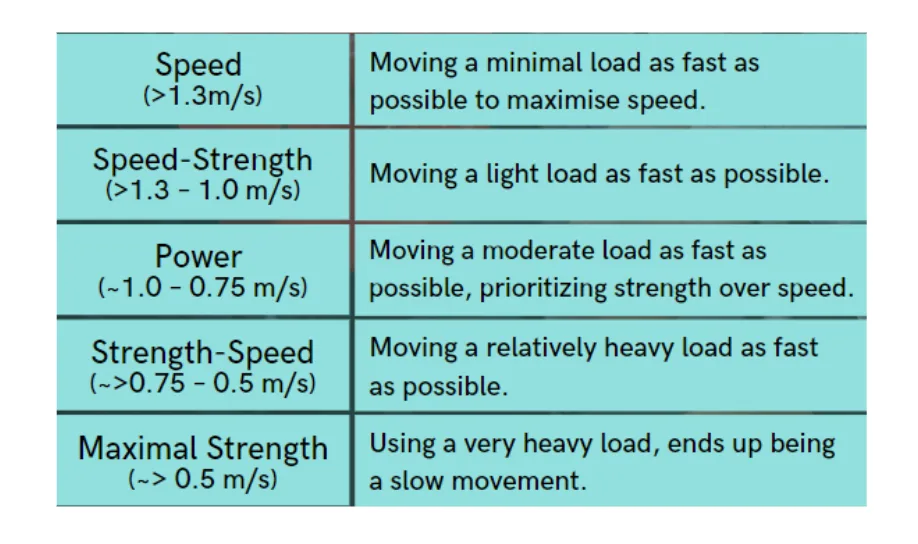
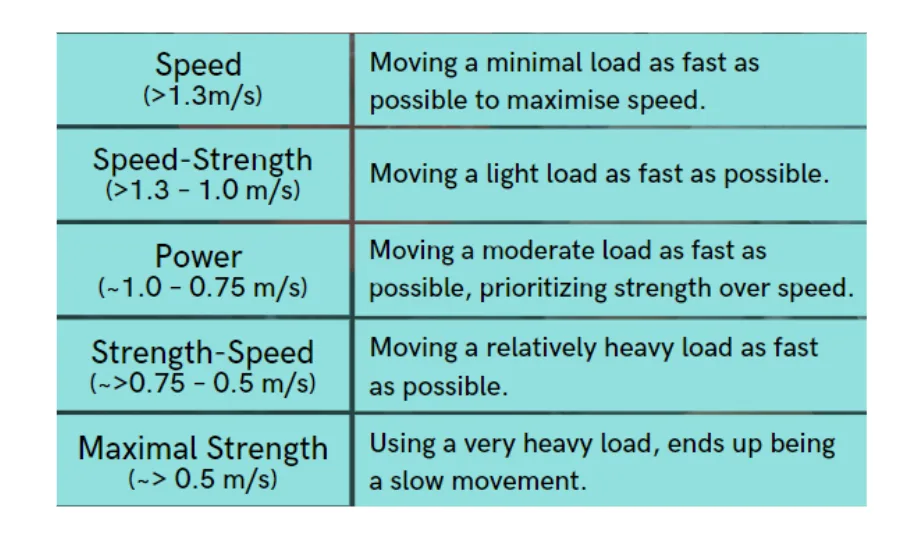
The five zones below map each velocity band to its actual adaptation target.
| Velocity Zone | MPV Range (m/s) | Primary Adaptation | Velocity Loss Threshold to Stop Set | Best For |
|---|---|---|---|---|
| Absolute Strength | 0.15-0.50 | Maximal motor unit recruitment | 5-10% | 1RM-focused strength blocks |
| Strength-Speed | 0.50-0.65 | Force at sport-relevant speed | 10-15% | Athletic transfer, compound lifts |
| Speed-Strength | 0.65-0.75 | Power with moderate load | 10-15% | Physique + performance overlap |
| Power / Ballistic | 0.75-1.00+ | Rate of force development, fast-twitch recruitment | 5-10% | Explosiveness, jump training |
| Hypertrophy Band | 0.50-0.75 | Mechanical tension + metabolic stress | 25-40% | Lean mass accumulation |
1. Absolute Strength Zone (0.15-0.50 m/s) - Maximum Force, Minimal Speed
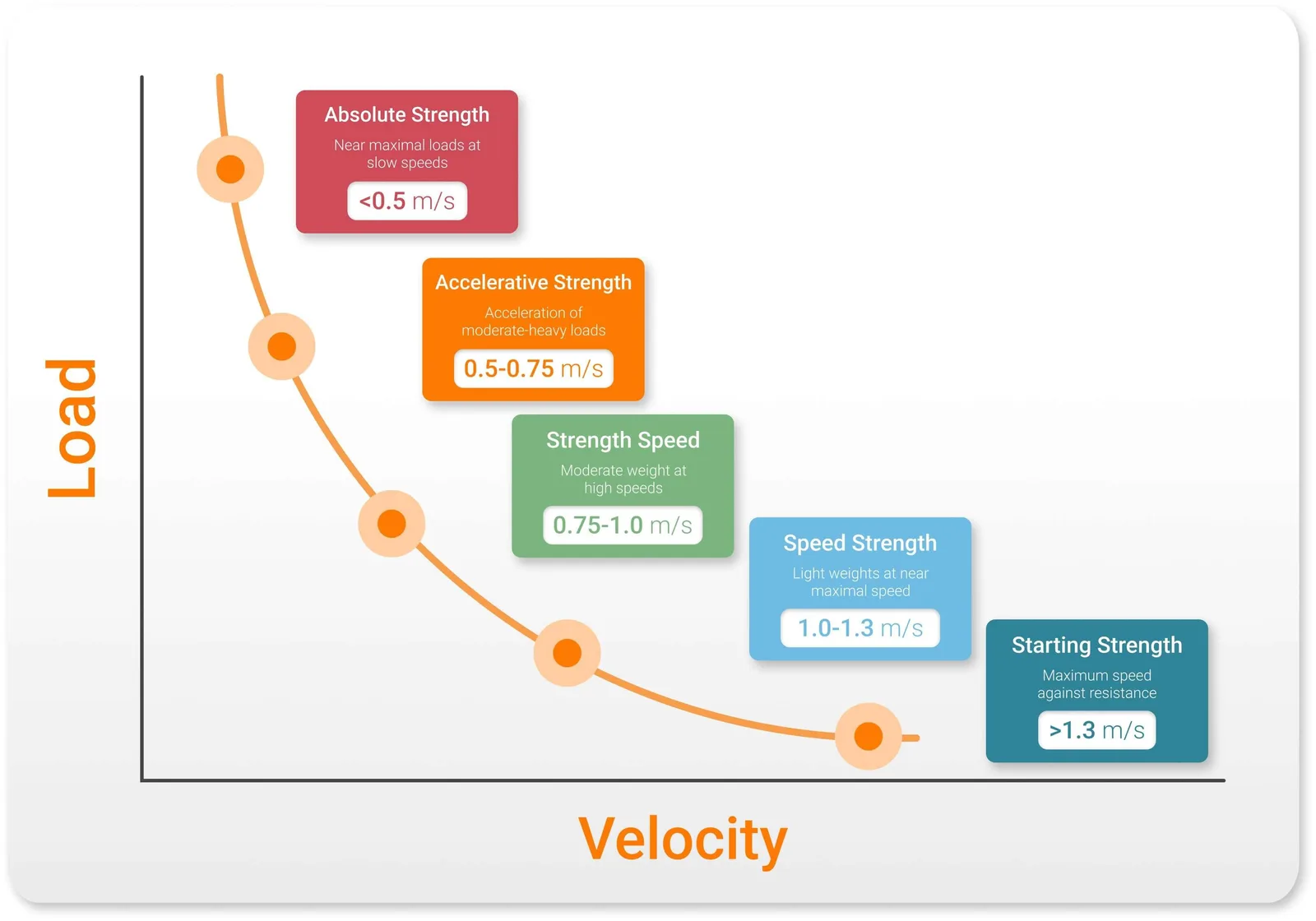
Loads in this range demand near-maximal motor unit recruitment, which is the primary adaptation target. Weakley et al. place absolute strength work at roughly 0.30 to 0.50 m/s, where the nervous system is taxed most heavily. Neural fatigue accumulates fast, which limits how much volume you can productively run here before output degrades. This zone builds the foundation but cannot be the whole program.
2. Power and Ballistic Zone (0.75-1.00+ m/s) - Speed-Dominant Neuromuscular Output
Above 0.75 m/s, the adaptation shifts toward rate of force development and fast-twitch fiber recruitment under light-to-moderate load. Balsalobre-Fernández & Torres-Ronda, Sports (Basel) confirm that this end of the curve targets power and speed qualities that slower velocity work cannot reach. The limitation is load: you cannot build maximal strength here, so this zone works as a complement to heavier training blocks.
3. Strength-Speed and Speed-Strength Zones (0.50-0.75 m/s) - Bridging Force and Velocity for Performance Gains
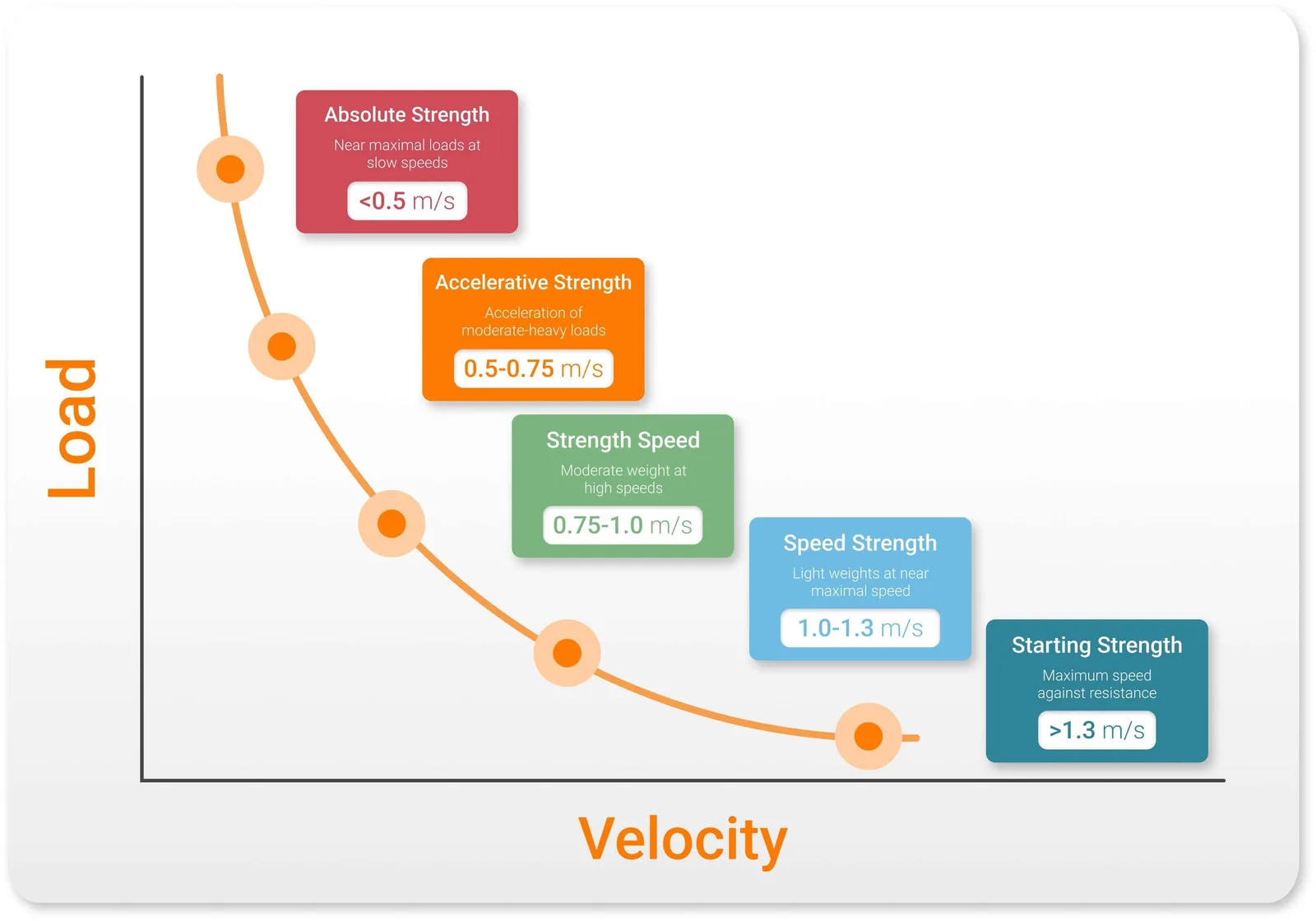
This middle band is where athletic transfer lives. Movements like jumps, change-of-direction cuts, and sprint acceleration demand force produced quickly, not just force produced maximally. Training in the 0.50 to 0.75 m/s range teaches the nervous system to express strength at sport-relevant speeds. Lifters chasing physique goals alongside performance gains benefit most here, since moderate loads at moderate velocities also accumulate meaningful mechanical tension for hypertrophy.
The Force-Velocity Curve - Why Every Velocity Zone Produces a Different Athlete
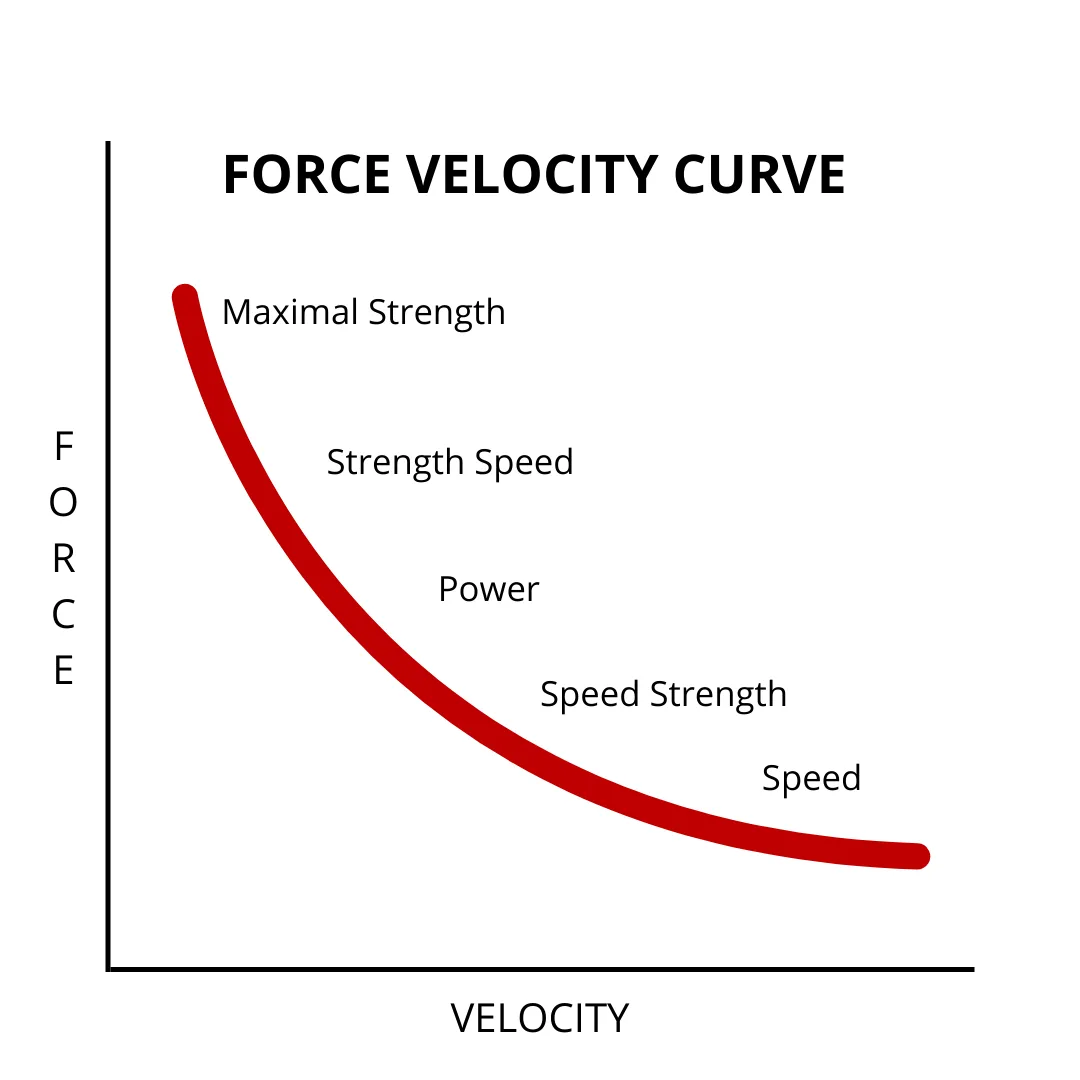
The force-velocity relationship means you cannot train all neuromuscular qualities simultaneously at the same bar speed. Weakley et al., Velocity-Based Training: From Theory to Application, Strength & Conditioning Journal describe how distinct velocity zones map to specific adaptations along the curve, from absolute strength at the slow end to ballistic power at the fast end.
A supporting systematic review and meta-analysis by Orange et al., SportRxiv further confirms that velocity-based training produces measurable improvements in strength, power, and sprint speed compared with alternative resistance training approaches, evidence that zone-specific programming is a practical lever for real outcomes. Choosing a zone is choosing an outcome. Conflating zones is how programs stall despite real effort.
Velocity Loss Thresholds for Hypertrophy (25-40% Drop) vs. Power (5-15% Drop)
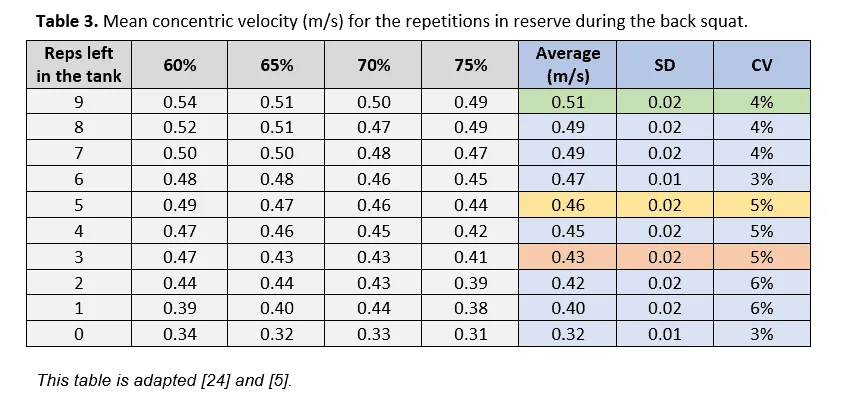
Zone selection sets the target; velocity loss thresholds determine when to stop. Sánchez-Medina & González-Badillo, Medicine & Science in Sports & Exercise established that a 5 to 15 percent speed drop terminates sets for power training, preserving explosive quality, while a 25 to 40 percent drop accumulates the metabolic stress that drives hypertrophy. A systematic review with meta-analysis by Chen et al., International Journal of Sports Science and Coaching reinforces this distinction at the lower-limb level, showing that the choice of velocity loss threshold produces meaningfully different performance outcomes, not a marginal difference in set length. Stopping at the wrong threshold in the wrong zone trains a different athlete than you intended.
Many lifters we work with run the same heavy sets every session without realizing they are locked into one velocity zone, accumulating neural fatigue without ever touching the power or hypertrophy zones their actual goals require. This is especially common among those who have previously struggled with consistency due to a lack of program structure. They default to what feels hard rather than what is targeted. GetFit AI addresses this from the first workout session through its 1,480 exercises, each with a video guide, step-by-step instructions, form tips and common mistakes, plus muscle maps and free calculators on the website, so that each zone gets worked in proportion to your goal.
That zone-matching logic is most powerful when you bring a clear athletic role model and a specific physique or performance goal into the setup process. Without that anchor, the plan has no target to optimize toward, and the adaptive benefit narrows accordingly. For lifters who want structured training and have previously found that accountability is what keeps them on track past the first few weeks, GetFit AI’s friends, challenges, and leaderboards layer on a social retention mechanism, one that works best once you have connected with at least one friend in the app, and that continuously reinforces training habits past the point where most unstructured programs lose users.
GetFit AI is available as a Premium Weekly Subscription at $1.99 per week, a Premium Monthly Subscription at $4.99 per month, or a Premium Yearly Subscription at $49.99 per year.
Knowing which zone produces which adaptation is the mechanical foundation. The reason VBT has moved from elite sports labs into mainstream programming is what those zones unlock in practice: real-time fatigue management, daily readiness signals, and objective feedback that a static percentage-based plan can never provide. That is where the next section picks up.
Related Reading
- Athletic Performance Analysis
- Does Vaping Affect Athletic Performance
- How to Avoid Feeling Sleepy After Workout
- How Does Sleep Affect Athletic Performance
- How to Measure Athleticism
- Building Stamina and Endurance
- Why Am I So Bad at Sports
- Endurance vs Strength Training
- Why Am I So Tired After Working Out
- How to Create a Personalized Workout Plan
The Primary Benefits of VBT, Including Fatigue Management, Objective Feedback, and Daily Readiness
A brutal session can feel like a badge of honor. The logic writes itself: if it hurt, something good must have happened. In practice, that assumption quietly stalls progress for months, because perceived effort and actual training quality are not the same thing.
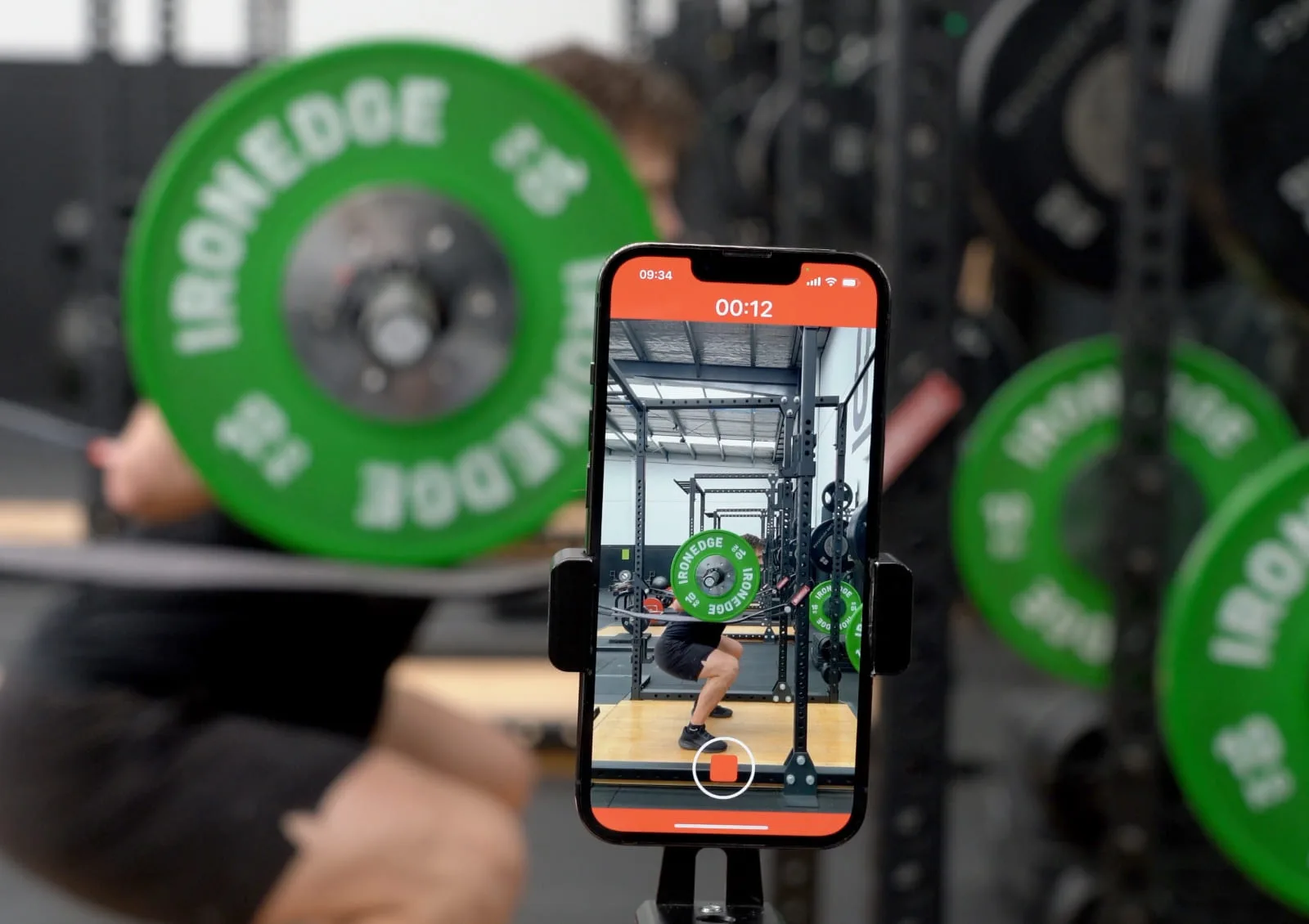
“Phone-based velocity trackers have hardware limitations. My self-built tracker can only detect plates from the side, restricting its versatility and use cases during training.”
— what we hear from amateur sports performance trackers
1. Fatigue Management via Velocity Loss Thresholds - Stop Sets Before Damage Accumulates
Stopping a set at the right moment is the difference between a stimulus and a setback. MeasureUp’s 2024 evidence review confirms that velocity loss thresholds let lifters terminate sets at a predetermined fatigue point, such as a 20% speed drop, preventing systemic wear while still delivering the intended training stimulus. Without a sensor reading that number in real time, the threshold stays theoretical and unactionable.
One hardware reality worth naming here: phone-based velocity trackers carry real physical constraints. A self-built phone tracker, for example, can often only detect plates from the side, which limits the exercises and bar positions it can actually monitor. That detection gap is an architectural limit of the hardware, and it means some lifters are flying blind on the very sets where a velocity cue matters most.
2. Objective Feedback - Real-Time Bar-Speed Data Replaces Gut-Feel Session Evaluation
MeasureUp’s 2024 evidence review frames bar speed as a feedback signal that most percentage-based programs never surface for the lifter. VBT replaces subjective effort perception with a measurable output number the lifter can act on immediately. Anyone who has logged workouts in a free tracker for months and never received a clear signal on whether the session was productive understands exactly what that absence costs. Velocity turns that absence into a decision. GetFit AI’s Athlete-Style Custom Workout Plans are built around this same principle: every session is structured so the feedback you receive is actionable from the first workout, not something you have to reconstruct in a spreadsheet afterward.
3. Daily Readiness Detection - VBT Surfaces Sleep, Nutrition, and Stress Deficits Before They Wreck a Session
A lifter’s mean concentric velocity on a submaximal warm-up set fluctuates measurably with recovery status. Velocity Based Training captures this signal before the working sets begin, allowing load to be scaled down on high-stress or under-recovered days rather than grinding through a session that will yield poor adaptation and elevated injury risk. The caveat: this readiness signal requires a consistent testing protocol and baseline data to be interpretable.
4. Athletic and Body Composition Outcomes - Connecting VBT’s Precision to Real-World Physique and Performance Gains
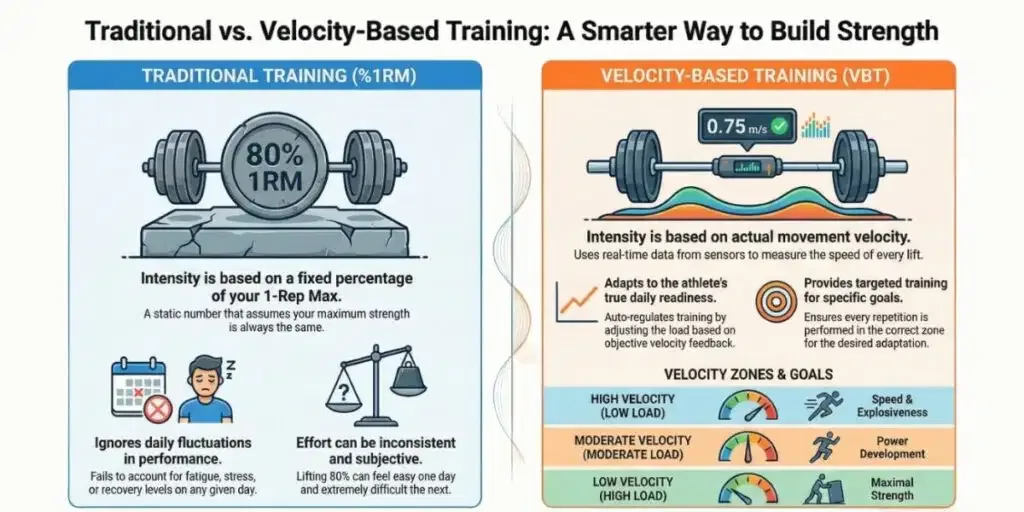
Precision in velocity zones translates to precision in adaptation. Training consistently in a true hypertrophy band (roughly 0.50 to 0.75 m/s) rather than guessing rep ranges means the body receives a repeatable stimulus matched to the intended outcome, whether that is lean mass, strength gains, or athletic performance. Research published via PMC / National Institutes of Health supports the link between velocity-zone precision and meaningful adaptation outcomes, and that difference compounds across weeks of training. The limitation worth naming: VBT optimizes the signal, but nutrition and sleep still determine how the body responds to it, which is exactly why GetFit AI pairs structured training with integrated nutrition guidance rather than treating them as separate problems.
5. Auto-Regulation - The Antidote to Rigid 12-Week Programs Lifters Abandon When Life Intervenes
Most 18 to 24 year old lifters know this loop personally: start a 12-week plan, miss one week, feel permanently behind, and quit. MeasureUp’s 2024 overview frames auto-regulation as the direct antidote, allowing training loads to adjust dynamically to what a lifter can actually produce on a given day rather than what a fixed spreadsheet assumed they would. The same logic drives GetFit AI’s adaptive custom plans, which scale the session to where the athlete actually is today, not where a rigid program decided they should be three weeks ago.
That responsiveness is the practical upside: training blocks stay intact because the plan bends to real output rather than snapping when life intervenes. GetFit AI’s Structured Training benefit is most powerful for lifters who have previously struggled with consistency due to lack of program structure, and it activates from the first workout session, not after a ramp-up period. The social layer compounds this: friends, challenges, and leaderboards inside the app apply the kind of low-friction accountability that keeps training alive past the critical week-three dropout window, and that layer works best once a user has connected with at least one friend or workout partner also using GetFit AI.
Every benefit covered here, smarter set termination, honest session data, and readiness-adjusted loads, depends on one thing this section has not addressed yet: how you actually capture bar velocity in the first place. The next section maps the full hardware spectrum, from lab-grade linear position transducers to budget-friendly wearables, so you can see exactly what the access barrier looks like before deciding how to clear it.
VBT Devices and Technologies Available to Track Bar Velocity
VBT devices fall across a clear spectrum: research-grade hardware at the top, budget wearables in the middle, and smartphone apps at the entry point. Understanding where each sits tells you exactly why most lifters never actually adopt the system.
1. Linear Position Transducers - The Gold Standard for Bar Velocity Accuracy
Linear position transducers measure bar velocity by tracking a cable attached directly to the barbell, giving sub-2% error rates that make them the reference standard in peer-reviewed VBT research. The physics is simple and reliable: a tethered cable means no signal drift, no guesswork. The tradeoff is equally simple. These units are fixed to a rack, which means no travel, no commercial gym use, and a price point that puts them out of reach for most individual lifters.
2. GymAware - Elite-Grade Linear Position Transducer for Research and High-Performance Sport
GymAware is the device strength and conditioning coaches attach to the barbell when athlete profiling actually matters. Peer-reviewed VBT studies frequently use GymAware as the reference device, and independent accuracy comparisons place it among the highest-performing commercial options available. Retail pricing sits above $2,000, which is why you see it in professional sport environments and funded research programs rather than home gyms. For a solo lifter trying to break a squat plateau, the hardware cost alone makes this a non-starter.
3. Accelerometers - Lower-Cost Sensor Alternative with Accuracy Tradeoffs
Accelerometers estimate velocity by measuring inertial movement rather than direct cable displacement, which drops the price significantly but introduces cumulative drift error. That drift compounds on slow, heavy lifts, exactly the conditions where accurate velocity data matters most for strength work. Peer-reviewed comparisons show meaningful accuracy gaps between accelerometer-based devices and linear position transducers, particularly at loads above 80% of one-rep max. Useful for moderate-intensity work; less reliable when precision is critical.
4. PUSH Band - Wearable Accelerometer Device for Individual Lifters
The PUSH Band is the most widely recognized consumer-grade VBT device, worn on the forearm rather than attached to the bar. It removes the tether problem and brings the price into a range individual lifters can consider. The accuracy gap versus linear position transducers is real and documented in peer-reviewed comparisons; the device performs most reliably at moderate training intensities, with published data showing larger divergence from cable-based reference standards at loads above 80% of one-rep max. Right tool for moderate training loads; not a substitute for cable-based measurement in high-stakes programming.
5. Session-to-Session Data Application - How Lifters Use Device Output to Autoregulate Training

The practical output of any VBT device is a velocity number that tells you whether today’s load matches today’s capacity. Research supports a 20% velocity loss threshold as the signal to end a set before systemic fatigue accumulates. The problem is that acting on this data requires consistent baseline profiles, session-by-session logging, and the hardware to generate the signal in the first place. Most lifters hit the access wall before they ever reach the application stage.
That access gap is real, and it is exactly what adaptive AI training is built to close. The autoregulation logic VBT hardware delivers through bar-speed data, an AI fitness trainer app can deliver through progress-pattern recognition, adjusting the plan before you ever have to wonder why the weights stopped moving.
The hardware spectrum is real, and so is the access problem it creates. But the underlying logic of VBT, measure output, detect fatigue, adjust load, does not actually require a cable tethered to a barbell. The next section shows exactly how to apply that autoregulation framework without owning a single piece of velocity-tracking equipment.
Related Reading
- How to Deal With Performance Anxiety in Sports
- Hydration Tips for Athletes
- How to Build Mental Toughness in Athletes
- Food for Athletes During Competition
- Strength Training Workout for Runners
- Best Plyometric Exercises for Speed
- Exercises That Improve Muscular Endurance
- Conditioning Workouts for Athletes
- Speed Training for Athletes
- Balance Exercises for Athletes
- Best Core Exercises for Athletes
How to Apply VBT Principles Without Owning a Single Piece of Hardware
Velocity based training sounds expensive the moment you look up what a linear position transducer costs, but the underlying logic has nothing to do with the hardware. The real mechanism is adjusting load based on what you can actually produce in a given session, and that signal is readable without any device if you know what to look for.
The Feedback Loop Is the Product, Not the Sensor
Two reps left in the tank at the end of a working set is a concrete, session-level output, and so is grinding through a weight that moved easily last week. Both tell you the same thing a sensor would: today’s capacity is up, down, or holding.
The principle of adjusting load based on real performance output rather than a fixed percentage decided weeks ago is the mechanism that drives results.
Research found that most people abandon fitness goals after an average of just 33 days, from the absence of feedback infrastructure. Without a signal telling you whether the session worked, motivation collapses. A rep-in-reserve benchmark gives you that signal on every set, for free.
How AI-Driven Plans Replicate Load Autoregulation Without a Linear Position Transducer
The problem is rarely a single bad session. It is the slow erosion of confidence that comes from working hard with no confirmation it is working.
AI-driven adaptive plans read your logged performance session by session and adjust load and volume forward. When your rep-in-reserve numbers improve, the plan responds; when they slip, it pulls back rather than pushing through. That is autoregulation at the software layer.
An honest trade-off worth naming: this proxy is less precise than real-time bar speed. It relies on accurate self-reporting, and on days when perception drifts, the adjustment will drift with it. The system is self-correcting over time, but it is not instant the way hardware feedback is.
Using an Athlete’s Training Style to Apply VBT Autoregulation Principles
There is a structural reason why elite athletes rarely plateau the way recreational lifters do: their programs are built around performance outputs, not arbitrary percentages.
A 22-year-old building a custom plan modeled on a specific athlete’s training style gets more than an aesthetic template. They get the underlying autoregulation logic baked into the structure itself. GetFit AI builds these custom plans at onboarding, with load adjustments that follow your logged progress rather than a fixed weekly script.
Understanding VBT’s logic is only half the equation. The other half is having a plan that acts on it every session, without you having to do the math.
Next steps
If your weights haven’t moved in months and nothing in your current program tells you why, the path forward starts with replacing fixed-percentage guesswork with a feedback loop that reads your actual output.
Bar velocity measurement collapses a formal 1RM test and a separate readiness assessment into a single warm-up set, meaning you know whether today’s session is productive before you commit to a working load. Training hard in the wrong velocity zone actively builds the wrong neuromuscular adaptations for your goal, meaning effort without zone-specific targeting can leave you measurably less equipped than when you started. Together, these two realities point to the same action: a plan that autoregulates based on what you can actually produce today, not what a spreadsheet assumed you would three weeks ago.
Start with the AI fitness app to build a custom plan at onboarding. From your first session, load and volume adjust to your logged output, applying the autoregulation logic VBT hardware delivers through bar speed, without requiring a sensor purchase.
Frequently Asked Questions
How do I know when to stop a set using VBT?
It depends on your training goal and which velocity zone you’re working in. For power and explosive work, stop the set when bar speed drops 5-15% from your first rep; for hypertrophy, you can push to a 25-40% velocity loss to accumulate the metabolic stress that drives muscle growth.
Do I need an expensive sensor to track bar velocity?
Not necessarily, but the tool matters. Linear position transducers are the gold standard for accuracy, while accelerometers, including phone-based or wrist-worn options, cost less but can struggle with tracking if not positioned correctly, which limits their versatility in a crowded gym.
Can VBT actually help me build muscle, or is it only for strength and power athletes?
VBT supports hypertrophy through the 0.50-0.75 m/s zone, where moderate loads at moderate velocities accumulate meaningful mechanical tension and metabolic stress, the two primary drivers of lean mass accumulation. The velocity loss threshold for hypertrophy sets (25-40% drop) is specifically designed to push that stimulus further.
Why does the same percentage of my max feel so different from day to day?
Because your true strength output fluctuates daily. Research cited in the post shows that factors like sleep quality, stress, and accumulated fatigue alone can cause output to vary by 10-18%, meaning a fixed percentage prescription doesn’t reliably reflect your actual training demand on any given session.
If I want to get faster and more explosive, which velocity zone should I be training in?
Target the Power and Ballistic zone, above 0.75 m/s, which shifts the adaptation toward rate of force development and fast-twitch fiber recruitment. The middle Strength-Speed and Speed-Strength bands (0.50-0.75 m/s) also develop force at sport-relevant speeds, making them valuable for movements like jumps, sprint acceleration, and change-of-direction cuts.