Symmetric Strength Calculator: Check Your Muscle Balance
Your lifts going up does not mean your lifts are balanced. Here is how Symmetric Strength exposes the gaps your training log never shows you.
Symmetric Strength is a free online muscle balance calculator that benchmarks your lifts against standards drawn from strength competition data and published research. You enter your sex, bodyweight, and your most recent working sets across major compound lifts, and the tool projects a one-rep max for each, then places you on a proficiency tier: Untrained, Novice, Intermediate, Advanced, or Elite. The result is a lift profile grounded in how real lifters actually perform.
Most lifters never think to question whether their lifts are proportional to each other. The common assumption is that having the data is most of the battle and that the fix will just naturally follow once you know what’s weak. They track whether the numbers go up, not whether the numbers make sense together. That gap is exactly what symmetricstrength.com was built to close, and it is why a growing number of strength trainees treat it as a first stop before they plan anything else.
One limitation worth noting is that existing strength calculators like Symmetric Strength can feel like they benchmark against competitive or highly dedicated lifters, which makes them feel unrealistic or irrelevant to casual or beginner lifters. See our AI fitness app for how this works in practice.
As the Journal of Human Kinetics noted in a 2022 systematic review, resistance training produces highly variable hypertrophic responses across different muscle groups, so lifters who follow the same program can develop disproportionate strength between muscle groups without any objective feedback mechanism to detect it. The same review found that strength imbalances are a predictable outcome of standard training because most programs do not prescribe equal volume across all muscle groups. The tool normalizes scores by bodyweight and produces a color-coded visual showing your proficiency tier across every lift simultaneously.
That visual is where the diagnostic value lives. Seeing “Intermediate” next to bench and “Novice” next to overhead press in the same view is something a training log almost never shows you clearly.
Key takeaways
- Symmetric Strength scores every compound lift on a bodyweight-relative scale, meaning a 150 lb lifter and a 220 lb lifter are measured against different baselines, not the same absolute number.
- The five movement categories the tool analyzes, squat, floor pull, horizontal press, overhead press, and pull-up/row, map directly to the push-pull-hinge-squat structure used in most strength research.
- Rushing past the three required inputs (bodyweight, sex, age) calibrates your score for someone else entirely; the number you get back is only as accurate as what you put in.
- Every rep you add to a lopsided pattern without correcting it makes the imbalance worse, the dominant side takes over compound movements and the gap compounds over time.
- Seeing 'Novice' next to overhead press is a diagnosis, not a fix; awareness of a weak lift without a structured corrective plan consistently fails to change training behavior.
- GetFit AI's free fitness calculators, 32 in total, covering BMI, BMR, TDEE, macros, calories, body fat, one-rep max, protein, and more, each grounded in published research, give you the next layer the Symmetric Strength score stops short of: a calculable starting point for building the plan that actually closes the gap.
Muscular Symmetry and Balance: Why the Imbalance You’re Ignoring Is Quietly Costing You
Most lifters assume that noticing an imbalance is most of the battle, but the training patterns already in place are usually making it worse with every session. Your dominant side takes over on compound movements, your weaker side goes through the motions without the stimulus, and months of consistent effort quietly deepen a gap that was there from day one. What follows breaks down exactly how that cycle works, why the early signs are so easy to misread, and how GetFit AI helps you catch and correct it before it becomes something harder to fix.
Every Rep on a Lopsided Pattern Makes the Imbalance Worse, Not Better
The common assumption is that having the data is most of the battle, that once you know what’s weak, the fix will naturally follow. In practice, the opposite happens. If your dominant side is already stronger, it takes over during compound movements.
Your weaker side gets the motion, but not the stimulus. Six months of “consistent training” later, the stronger side is stronger still, and the weaker side has barely moved.
A lifter whose squat sits at an Intermediate level but whose overhead press is Untrained is a perfect example: the imbalance was there on day one, and every session spent ignoring it grooved it deeper.
What makes this especially treacherous is how early the signs appear, and how easy they are to misread. Beginners notice one trap looking larger than the other within weeks of starting, often before any meaningful muscle has actually been built. That visible discrepancy is real, but it’s frequently mistaken for uneven fat distribution rather than a structural asymmetry worth addressing.
The danger in dismissing it early is what happens when it’s left to run uncorrected: what starts as one scapula sitting slightly higher than the other can progress into chronic, localized pain if the underlying movement pattern is never fixed. Worse, training through an existing injury, a common workaround when there’s no adaptive plan in place, can compound the problem over time, accelerating the very imbalances the lifter was trying to work around. That’s the failure mode of a rigid program: it doesn’t account for where you are today, so you either push through and deepen the dysfunction, or you fall behind, lose momentum, and quit.
GetFit AI’s Athlete-Style Custom Workout Plans are built against that failure mode. The structured training adapts to your current capacity rather than demanding you meet a fixed template, which means the plan stays executable from the first workout session and continues adapting across the overall training arc as your weak points strengthen and your movement quality improves.
The Hidden Tax: How Strength Asymmetry Stalls Progress and Elevates Injury Risk
Strength asymmetry carries two costs, and most lifters only worry about one of them. The visible cost is stalled progress: when a weak lift caps your overall output, you hit a ceiling on the lifts that depend on it. The invisible cost is injury risk.
Research published in BMC Sports Science, Medicine and Rehabilitation identified body asymmetry as a significant independent predictor of sports injury risk, with asymmetric athletes facing measurably elevated injury incidence compared to symmetric counterparts. The study frames asymmetry as a measurable biomechanical liability. And as Missouri Medicine research (Neme, 2022) notes, even when an injury heals, the underlying imbalance that caused it often goes unaddressed, setting the stage for re-injury through the same compromised movement pattern, so early detection and deliberate correction matter more than any single training cycle.
This is exactly where a static program fails the people who need help most. A plan that doesn’t adapt doesn’t just stop working; it actively reinforces the imbalance by continuing to load a pattern the body isn’t ready to handle symmetrically. GetFit AI’s structured training is designed to prevent that: by adjusting programming continuously across each workout session and across the broader training arc, it ensures that corrective emphasis stays proportional to where the asymmetry lives, rather than defaulting to the dominant side’s preferred movement patterns. The result is a plan you can stay on, one that doesn’t outpace your weakest link and force you to choose between quitting or grinding yourself into a re-injury cycle.
Related Reading
- Best Fitness Apps
- How Many Pull Ups Should I Be Able To Do
- Average Grip Strength Male
- Average Bench Press
- How Much Does A Bench Press Bar Weigh
- Average Male Bench Press
- How Much Can The Average Man Bench Press
- Grip Strength Chart
- Bench Press Standards
Input Your Bodyweight, Sex, and Age: How Symmetric Strength Adjusts Your Score
Three inputs stand between you and a score that actually means something: your bodyweight, your sex, and your age. Rush past them, and every number the tool returns is calibrated for someone else.
Why Bodyweight Is the Denominator That Makes Two Lifters Comparable at All
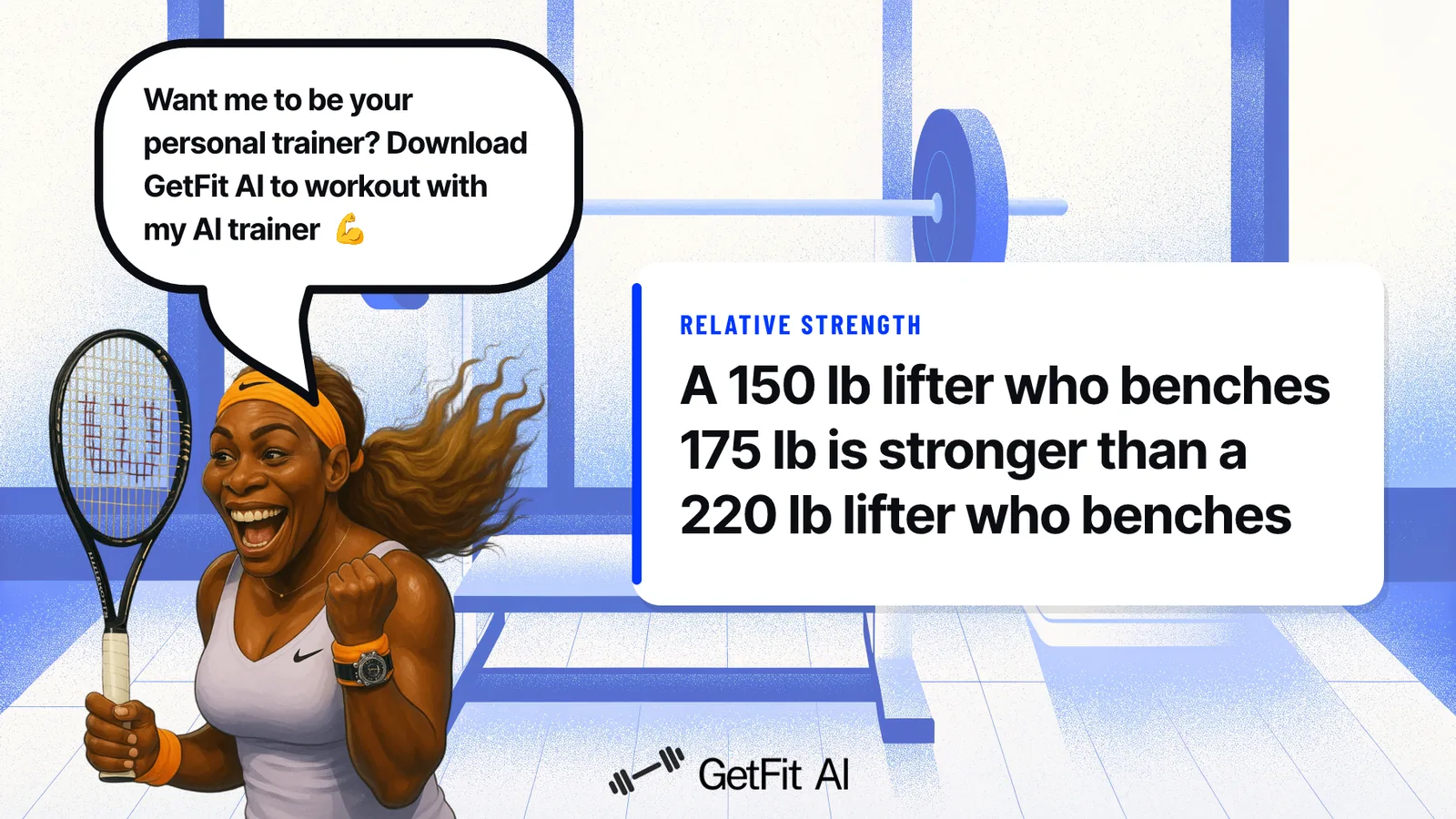
A 150 lb man and a 220 lb man are not playing the same game in absolute terms. As industry data shows, what counts as an “intermediate” bench press for a lighter lifter is a meaningfully different absolute number than for a heavier one, because relative strength scales with bodyweight, not total pounds on the bar. The tool uses your bodyweight as the denominator in that ratio, so the score reflects how strong you are for your size, not just how much weight you moved. Without that anchor, a 150 lb lifter who benches 175 lb looks weaker than a 220 lb lifter who benches 185 lb, when the opposite is true by every legitimate strength standard.
Why Sex and Age Adjustments Matter for Your Symmetric Strength Score
Sex is not a demographic checkbox here. Established bodyweight-relative strength standards differ meaningfully by sex: women are assessed against lower absolute ratios than men, so the same raw weight lifted represents a different tier of achievement depending on who is lifting it. This distinction is well-documented across resistance training research and reflected in the tool’s scoring model. Skipping this input doesn’t make the score neutral; it makes it wrong.
Age matters for the same reason. Peak strength shifts across decades in ways that are well-documented in resistance training research, so a 48-year-old intermediate lifter and a 28-year-old intermediate lifter are not identical populations. The adjustment is evidence-based, not an excuse.
How Relative Strength by Bodyweight Redefines a Good Bench
A lifter whose raw bench looks unimpressive in absolute terms may score solidly Intermediate once the tool normalizes for his size and age. The raw number lied. The normalized score told the truth, but only if the 1RM feeding into it was accurate in the first place. This is why the tool’s most important single instruction is also its simplest: enter the hardest set you have actually completed in recent training, keep it at ten reps or fewer, and let the formula do the rest.
Enter Your Lifts and Recent Sets: The Compound Lift Categories Symmetric Strength Uses
Symmetric Strength sorts compound lifts into five movement categories and scores each one independently, which means the quality of your imbalance report depends directly on which lifts you enter and how accurately you log them. Understanding how the categories are structured, why gaps in your lift profile leave blind spots, and how to record your recent sets correctly gives you the foundation to get a complete, accurate picture rather than a partial one. GetFit AI programs all five movement patterns from the start, so by the time you run the calculator you have real data to enter across every category.
The Five Movement Categories Symmetric Strength Actually Analyzes
Symmetric Strength organizes compound lifts into five movement categories:
-
Squat
-
Floor Pull (deadlift and its variations)
-
Horizontal Press (bench press and close variations)
-
Overhead Press
-
Pull-up/Row
These five patterns cover the foundational push-pull-hinge-squat structure that most strength research uses to assess full-body balance. Each category gets its own proficiency rating, so the tool scores five distinct movement patterns independently, then compares them against each other.
More Lift Categories, More Complete Imbalance Map
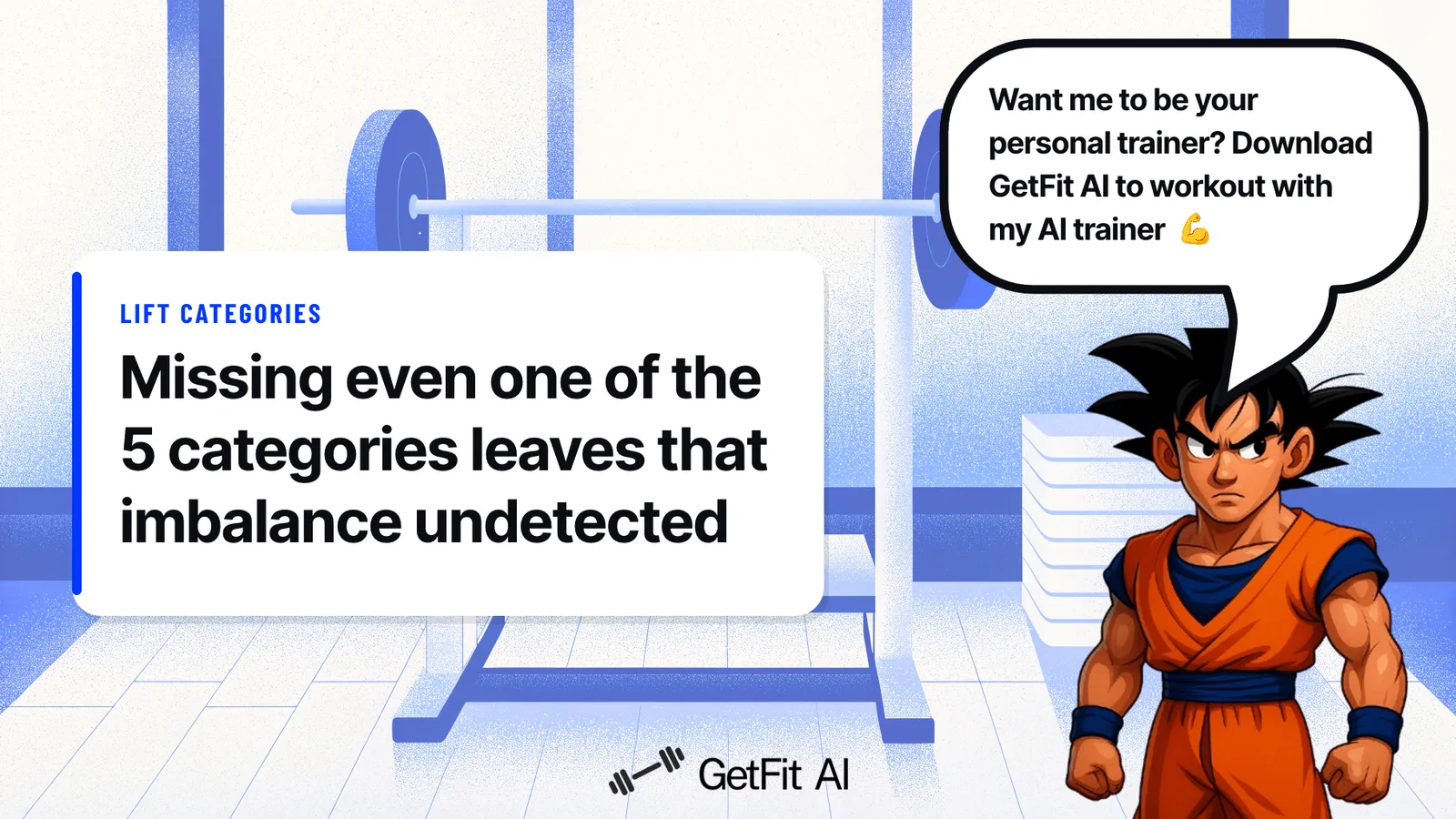
The tool lets you enter only the lifts you currently train, which is the right call. Entering a lift you have never done produces a meaningless data point. The trade-off, though, is real: if you skip a category entirely, that section of your imbalance map stays blank. A lifter who logs squat, bench, and deadlift but leaves out overhead press and pull-ups gets a partial picture. The two missing categories are often where the biggest gaps hide.
An incomplete lift profile means the tool cannot flag what it cannot see, and the imbalance sits undetected. A structured training plan that programs all five movement patterns from day one means the next time you run the calculator, every category is filled in and the picture is complete.
How the Most Difficult Recent Set Rule Works
Enter your hardest set from recent training, using 10 reps or fewer. This ceiling exists for accuracy reasons, not convenience. As noted on Physical Fitness Stack Exchange (2021), a set of 20 reps at 50 kg bench press produced an app-calculated 1RM of 150 kg that the lifter knew to be false. The Epley and Brzycki formulas that power most 1RM projection tools are calibrated for lower rep ranges. Error compounds quickly above 10 reps, making the projected max unreliable as a benchmark.
Each Category Has Its Own Proficiency Benchmark
A strong bench cannot mask a weak deadlift here. Each movement category is benchmarked independently against bodyweight-adjusted norms, so a lifter rated Intermediate on horizontal press and Novice on floor pull sees that gap clearly. This is the core value of the tool’s design, and also its core limitation. Symmetric Strength’s bodyweight-adjusted, sex-normalized scoring system makes five independent movement patterns visible in a single view, but identifying the gap is only the first step. Closing it requires a loading plan that is as specific as the diagnosis.
What the Proficiency Labels Actually Mean and Where They Come From
Symmetric Strength uses a tiered label system that runs from Untrained through Beginner, Novice, Intermediate, Advanced, and Elite. These labels are derived from population-level lifting data and scaled to bodyweight so that a 70 kg lifter and a 100 kg lifter are not being measured against the same absolute number. Industry research confirms that moving from one label to the next represents a meaningful and measurable jump in relative strength, not just a few added kilograms. A lifter sitting at Novice on overhead press and Intermediate on everything else can see at a glance that the gap is roughly one full tier, which translates to a specific and addressable training priority rather than a vague sense that pressing overhead feels harder than it should.
Related Reading
- Do Pull Ups Work Chest
- Grip Strength Norms
- Average Deadlift Weight
- 1 Rep Max Chart
- Average Male Deadlift
- Good Bench Press Weight
- Weightlifting Standards
- Average Bench Press Kg By Age
- Average Deadlift Weight Kg
Calculate Your Relative Strength Score and Compare Yourself Against Other Lifters
Symmetric Strength is a free web tool that takes your major lifts and bodyweight, then returns a classification and a visual profile that shows exactly where each movement stands relative to real lifters. Unlike a simple total or a personal record log, it surfaces imbalances you might be explaining away, because a weak overhead press drags your composite score down regardless of how strong your squat and deadlift look. GetFit AI can help you act on what the tool reveals, but first you need to understand how it classifies you, what the color-coded output is actually showing, and why that single lagging lift matters more than you might expect.
How Symmetric Strength Classifies You: Untrained to Elite
The tool places every lift into one of five proficiency tiers: Untrained, Novice, Intermediate, Advanced, and Elite. Each tier is anchored to bodyweight-relative strength standards drawn from strength research and competition data, so the benchmark shifts as your bodyweight changes. A squat that earns an Intermediate classification at 160 lbs earns a different label at 220 lbs. The tiers are population-referenced thresholds that tell you, precisely, where your lift sits against a field of real lifters.
The Color-Coded Lift Profile: Making Your Weakest Link Impossible to Ignore
Symmetric Strength produces a color-coded visual output across all entered lifts, flagging which movements fall below your overall proficiency level. The visual design is deliberate. When your squat and deadlift bars run long and your overhead press bar barely registers, you cannot rationalize the gap away. A lifter who is Advanced on squat and deadlift but Novice on overhead press sees that contrast immediately. That is the tool’s sharpest feature: it converts abstract numbers into a picture your brain processes in seconds.
Your Composite Score Is Only as Strong as Its Lowest Bar
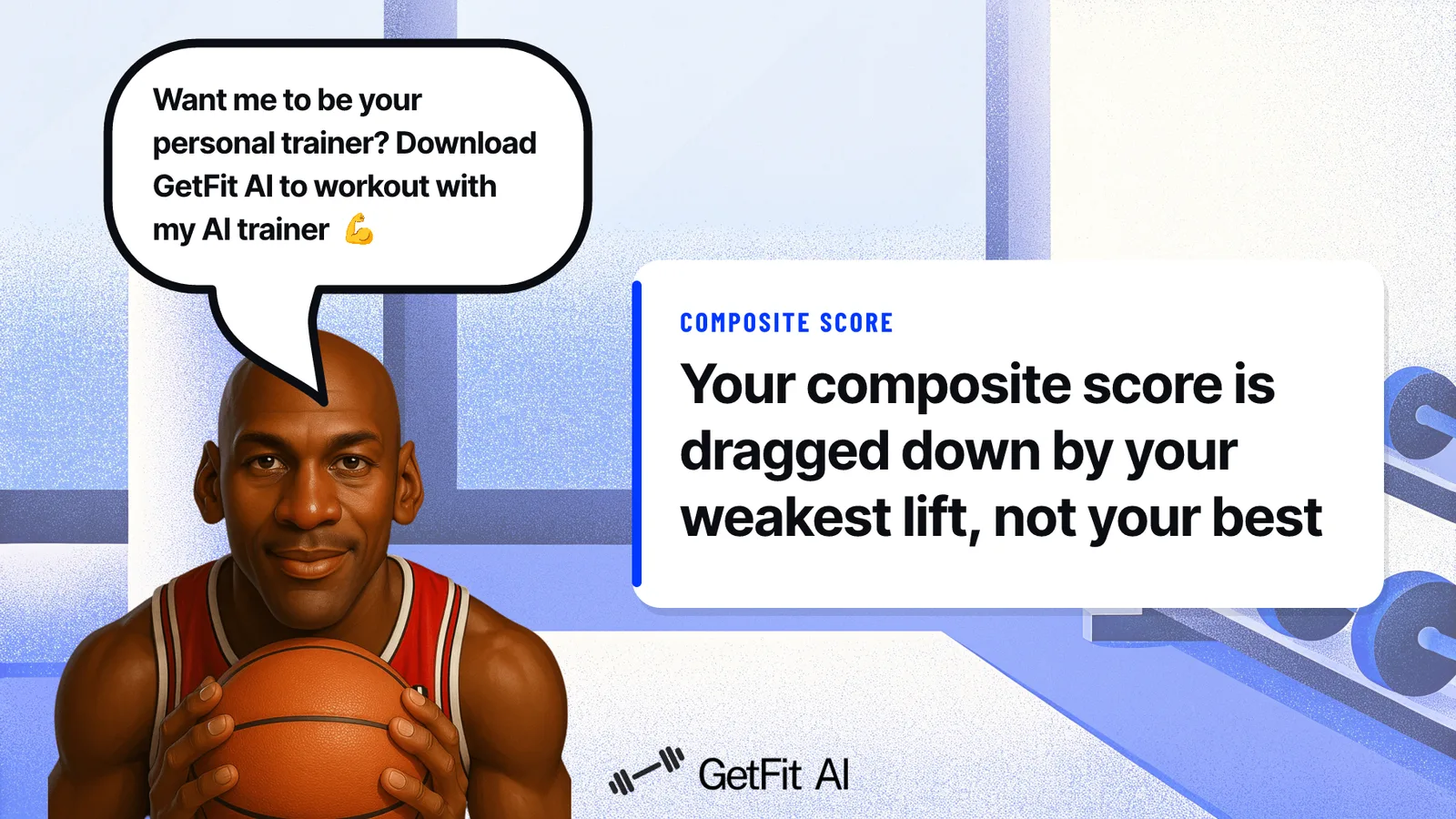
One lagging lift suppresses the entire profile. Symmetric Strength calculates a single composite score, and that score is dragged down by the weakest movement in the profile, not averaged across the strong ones. Research on strength imbalances consistently links disproportionate weakness in a single lift to elevated injury risk and stalled overall performance, because the body’s kinetic chain relies on balanced force production across movement patterns. A lopsided build is a structural liability that the composite score makes impossible to hide.
Using Your Score to Pinpoint Your Single Biggest Fix
The score leaves one gap open. The single most common experience among beginners we work with is having a clear diagnosis and no structured path to act on it. That mismatch kills consistency. Lifters fall behind on a generic program that was never built around their specific weak link, and once they fall behind, they quit. The gap between awareness and action is a structure problem.
Knowing you are Novice on overhead press while Intermediate on squat, as Symmetric Strength clearly surfaces, is real, actionable data. It becomes useful behavior only when matched to a specific corrective loading strategy sustained over time. The score closes the awareness gap entirely. It leaves the plan gap open.
That is where most lifters stall: they have the diagnosis, they lack the day-by-day structure to act on it, and without that structure, the score ages out before a single corrective adaptation takes hold.
GetFit AI is built to close that plan gap. The Athlete-Style Custom Workout Plans generate from the first workout session, not after a lengthy onboarding, and adapt continuously across the overall training program arc, so the plan moves with you rather than becoming something you fall behind on and quit. For lifters whose history includes exactly that pattern, inconsistency driven by lack of program structure, Structured Training within GetFit AI is most beneficial precisely because the adaptation is ongoing, not a static PDF you’re handed once.
The retention layer matters too. Friends, challenges, and leaderboards inside the app give the corrective plan social gravity, and the feature is most beneficial once you have connected with at least one friend or workout partner also using GetFit AI. That accountability layer is what keeps users training past week three, the window where most self-directed programs collapse. GetFit AI’s Premium plans let you enter that structure at whatever commitment level fits your situation: Premium Weekly at $1.99, Premium Monthly at $4.99, or Premium Yearly at $49.99 for lifters ready to commit to the full corrective arc their Symmetric Strength profile demands.
Your Symmetric Strength Score Without a Plan Is Just a Number: Here’s What Comes Next
A referral letter from your doctor tells you exactly what’s wrong. It does not treat you. Your Symmetric Strength score works the same way: it identifies the problem with precision, then hands the responsibility back to you.
The Diagnosis-to-Gym Gap: Why Knowing Your Weak Lift Doesn’t Automatically Fix It
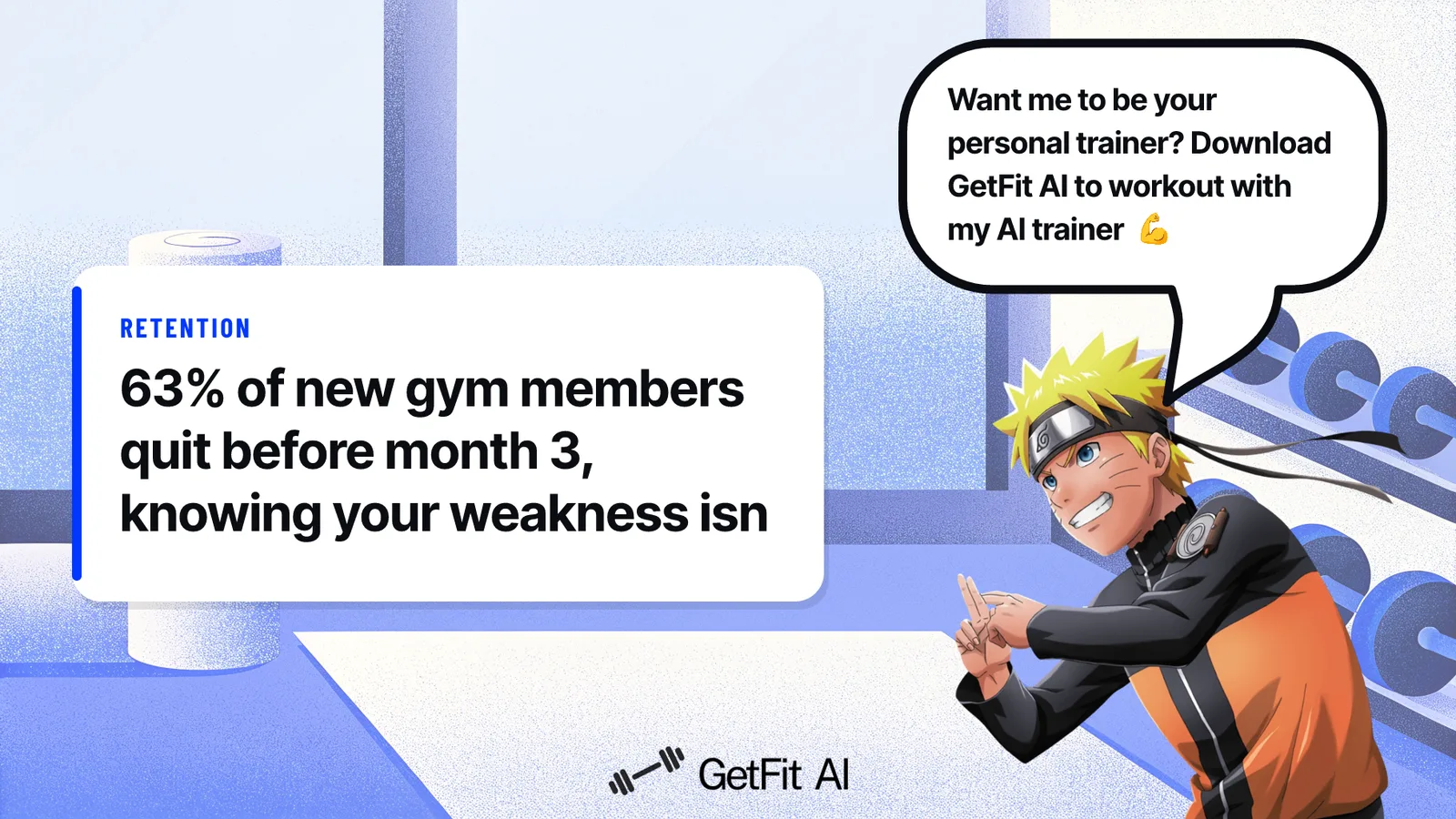
The score appears, you see “Novice” next to overhead press, and something clicks. You feel informed. But research found that 63% of new fitness-center members abandoned their activities before the third month, and fewer than 4% were still training continuously after 12 months. Most of those people knew something was off. Knowing did not save them.
The problem is structural. A weakness diagnosis tells you what is lagging. It tells you nothing about which deficit to prioritize first, what rep range matches that type of strength gap, or how to load the movement across the next eight weeks. Without those three answers, most lifters walk back in and hit the same cable machine routine they did last Tuesday. This is one of the most consistent patterns among beginners who genuinely want to improve: the insight exists, but the bridge from insight to action does not, so effort gets poured into familiar movements rather than the corrective ones that would actually change the score.
Three Friction Points That Keep Imbalances Locked In After the Score
First: no prioritization rule. When two lifts score poorly, there is no obvious place to start. Second: no loading prescription. “Train it harder” is not a plan; a specific rep range tied to your actual numbers is. Third: decision paralysis inside the gym itself, with reps lost and momentum killed before a single corrective set lands.
These are not motivation problems. They are decision-framework gaps, and awareness alone cannot close them. The deeper issue beginners face is that they cannot tell whether they are actually getting stronger or just showing up, and without visible, measurable forward movement, consistency collapses well before week three.
How a Structured Training Plan Closes the Gap the Calculator Leaves Open
Structured programs consistently outperform self-directed training on strength outcomes, a well-established finding across resistance training research, because the plan removes the decision from inside the gym and puts it on paper before you arrive. Further supporting this, industry research confirmed that digitally delivered structured programming meaningfully supports exercise adherence outcomes. A lifter who scores Novice on overhead press but has no day-by-day corrective structure will default to familiar movements, because familiar is always easier than uncertain.
This is where GetFit AI closes the loop. At the moment of onboarding, immediately upon setup, GetFit AI generates a custom plan built around your specific proficiency gaps. There is no lag between diagnosis and prescription. The Athlete-Style Custom Workout Plans GetFit AI produces are day-by-day corrective training structures, most beneficial for lifters who have previously struggled with consistency due to lack of program structure. Guidance is present from the first workout session and recalibrates across the overall training program arc, so the plan evolves as you do rather than expiring after week one.
Critically, GetFit AI is also built to answer the questions beginners are too self-conscious to ask a coach: rep-range logic, load selection, and exercise substitution, surfacing answers inside the app rather than leaving the lifter to search for them mid-session. Because the platform shows you measurable strength progress over time, not just attendance, you can confirm you are actually getting stronger. That feedback loop, seeing real numbers move, is what the calculator alone cannot provide, and what industry adherence data makes clear is the missing variable for most lifters who quit before month three.
GetFit AI is available on a Premium Weekly Subscription at $1.99, a Premium Monthly Subscription at $4.99, or a Premium Yearly Subscription at $49.99, so the structured framework that keeps imbalances from staying locked in is accessible at whichever commitment level matches where you are right now.
Related Reading
- Average Deadlift Weight For Male
- Best Calisthenics Workout App
- Best Hiit Workout App
- Best Gym Workout App
- Best Workout Apps
- Best Free Workout Apps
Next steps
If your Symmetric Strength score gave you a clear picture of what’s lagging but nothing changed the next time you walked into the gym, the path forward starts with replacing the diagnosis with a day-by-day corrective plan built around your specific numbers. Start with our AI fitness app.
The composite score is dragged down by your single weakest lift, and 1RM estimates above 10 reps are mathematically unreliable, meaning the number anchoring your tier classification may already be noisier than it looks. At the same time, gym retention data puts 80% of lifters out the door within 90 days, and the strongest predictor of staying is a structured, goal-aligned program, not awareness of a problem. Together, those two facts point to the same next step: getting a corrective loading prescription that is as specific as the score, and that adapts week-to-week as your weak lifts close the gap and new ones emerge.
Start with GetFit AI. From the first workout session, it generates an athlete-style custom plan built around your proficiency gaps, recalibrates continuously across your full training arc, and removes the in-gym decision burden that causes most self-directed corrective attempts to collapse before the 66-day threshold where exercise becomes automatic.
Frequently Asked Questions
What does Symmetric Strength actually mean?
Symmetric Strength refers to proportional strength across all major movement patterns, squat, floor pull, horizontal press, overhead press, and pull-up/row, rather than just overall lifting ability. The tool at symmetricstrength.com benchmarks your lifts against each other so you can see whether your strength is balanced or lopsided across those five categories.
How does the one-rep max calculator work on Symmetric Strength?
You enter the hardest set you have actually completed in recent training, keeping the rep count at ten or fewer, and the tool uses formulas like Epley and Brzycki to project a one-rep max. The ten-rep ceiling exists for accuracy, because error compounds quickly above that range and can produce wildly inflated estimates, the post cites an example where a 20-rep set at 50 kg produced a calculated 1RM of 150 kg that the lifter knew to be false.
Why does my bodyweight matter so much when I enter my lifts?
Bodyweight is the denominator that makes two lifters actually comparable, because relative strength scales with bodyweight rather than total pounds on the bar. Without that normalization, a 150 lb lifter who benches 175 lb looks weaker than a 220 lb lifter who benches 185 lb, when by every legitimate strength standard the opposite is true.
Is a strength imbalance really a big deal, or is it just an aesthetic issue?
It carries two real costs: stalled progress and elevated injury risk. Research cited in the post identified body asymmetry as a significant independent predictor of sports injury risk, and separate research notes that even after an injury heals, the underlying imbalance often goes unaddressed, setting the stage for re-injury through the same compromised movement pattern.
What should I actually do after I get my Symmetric Strength results?
The post is direct that the score closes the awareness gap but leaves the plan gap open, knowing you are Novice on overhead press while Intermediate on squat is only useful when matched to a specific corrective loading strategy sustained over time. Without a structured plan that adapts continuously to your weak points, the score ages out before a single corrective adaptation takes hold.