15 Best Free Workout Apps to Try in 2026
Most free workout apps hand you a library and call it a plan. Here is how to find the rare ones that actually tell you what to do today.
Most beginner lifters, ages 25-30, with no structured plan and no idea what to eat, think: “I just need to track my workouts consistently and the results will come.” So they download a free workout app, maybe two, possibly three. They go through the setup, enter their goals, and feel briefly optimistic. Then they walk into the gym, scroll through AI fitness app, pick a few that look familiar, and quietly repeat that same loop for six weeks until they stop going entirely. That experience is a design failure baked into an entire category of apps.
The average top-tier free fitness app offers hundreds of exercises, neatly filtered by muscle group, equipment, and difficulty. Impressive on paper. Useless in practice. According to Lucid’s 2024 retention research, up to 90% of fitness app users disengage within 30 days, and the structural culprit is clear: no personalized plan, no daily directive, no reason to return tomorrow that is any different from today.
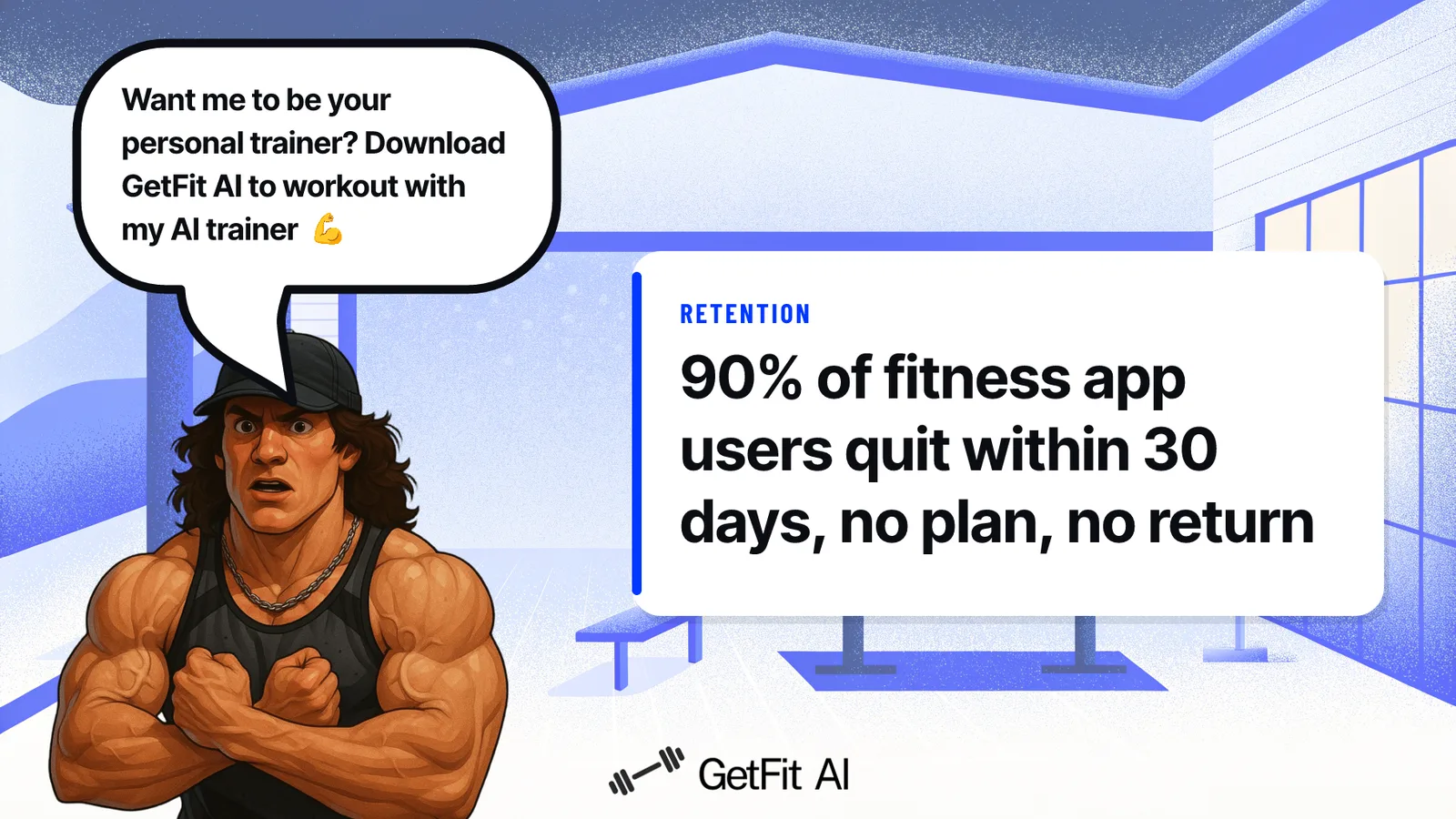
: A library cannot adapt in real time. An exercise database tells you what a Romanian deadlift is; it cannot tell you what to do right now when the rack is taken and you have 20 minutes left.
Key takeaways
- A free workout app that hands you an exercise library without telling you what to do today is a logging tool, not a training plan, and logging random workouts produces random results.
- Fewer than 4% of new gym members were still training consistently after twelve months, and most fitness apps lose the majority of users within the first three weeks of download.
- Most 'free' workout apps are not fully free, structured, progressive plans are almost always paywalled, and discovering that after setup kills the motivation it took weeks to build.
- The only filter that matters when choosing a free app: does it tell you exactly what to do today, progress that plan as you get stronger, and require zero payment to do both?
- Exercise demos, rep logging, and session history all reduce friction, but none of them replace the single daily directive that keeps a beginner from staring at a rack of dumbbells with no idea what to grab.
- GetFit AI's Athlete-Style Custom Workout Plans close that gap with two routes: build a custom AI plan around your own goals and equipment, or train in the style of an AI athlete or trainer, and the plan adapts automatically as you get stronger, at no cost to start.
What Makes a Free Workout App Actually Free, and Actually Worth Using
The four-point filter matters for another reason beyond planning versus archiving: most free workout apps are not actually free, and the moment a beginner discovers that, the motivation that took weeks to build collapses overnight.
The common assumption is: “I just need to track my workouts consistently and the results will come.” Most beginners open a fitness app expecting that if they show up and log their sessions, the app will handle the rest. Most freemium fitness apps are built around a single design decision: give you just enough during onboarding to feel invested, then surface the paywall the moment you need something real.
The feature that disappears is almost always the same one: a structured daily plan. You finish setup, you feel motivated, and then the app asks for a subscription before you’ve done a single rep. According to industry research, hard paywalls in fitness apps function as a demo disguised as an app, eroding trust before the user has experienced any real value.
That pattern is frustrating precisely because it’s invisible until you’re already hooked. No expiration date shown. No warning. Just a locked screen where your workout plan used to be.
Four Criteria That Separate a Genuine Free Tier From a Disguised Demo
These four questions determine whether an app’s free tier is real or a disguised demo:
-
Does the free tier include a structured daily plan, or just a library? A library is not a plan. Hundreds of exercises with no directive means you’ll default to the same three moves every session and wonder why nothing changes after six weeks.
-
Does the plan apply progressive overload automatically, or do you have to figure that out yourself? If you’re manually deciding when to add weight, you’re doing the coach’s job without the coach’s knowledge.
-
Can you ask a question mid-workout and get a real answer? A workout app that leaves you stranded when a machine is taken or a movement feels wrong is not a training tool. It’s a logbook.
-
Is the free tier actually free after onboarding, or does it quietly narrow until only a paid upgrade makes it functional?
Free vs. Freemium: What an Honest Free Tier Looks Like
| Criteria | Genuine Free Tier | Disguised Demo (Freemium) |
|---|---|---|
| Structured daily plan included? | ✅ Yes, on day one | ❌ Locked behind paywall |
| Progressive overload automatic? | ✅ App handles it | ❌ You decide manually |
| Mid-workout coaching or Q&A? | ✅ Available in-app | ❌ Absent or paywalled |
| Plan narrows after onboarding? | ❌ Stays fully functional | ✅ Quietly degrades |
Use this table before downloading: if an app can’t confirm all four ✅ rows on its own app-store listing, treat it as a demo until proven otherwise.
Related Reading
- Best Fitness Apps
- How Many Pull Ups Should I Be Able To Do
- Average Grip Strength Male
- Average Bench Press
- How Much Does A Bench Press Bar Weigh
- Average Male Bench Press
- How Much Can The Average Man Bench Press
- Grip Strength Chart
- Symmetric Strength
- Bench Press Standards
The 15 Best Free Workout Apps to Try in 2026: Ranked and Reviewed
That standard cuts the list down quickly, but passing it does not guarantee an app actually keeps anyone training. Three weeks in, most people who downloaded a free workout app have already deleted it. Industry research found that fewer than 4% of new gym members were still training consistently after twelve months, and abandonment hits hardest in the first sixty days. The reason is almost never a lack of motivation. It is a lack of direction. A library of hundreds of exercises is not a plan. It is a menu at a restaurant where nobody takes your order.
There is a second problem that does not get named often enough: many apps marketed as free require users to input extensive personal data, goals, measurements, and training history, before revealing that the features they actually came for sit behind a paywall. That bait-and-switch experience is one of the most common reasons beginners give up before they even start. It is worth knowing before you hand over your information.
The fifteen apps below are ranked through one lens: does this app tell you what to do today, or does it hand you a blank screen and wish you luck? That question separates the apps that produce real change from the ones that produce a very organized log of stalled progress.
1. GetFit AI: Best for Beginners Who Want a Full Structured Plan
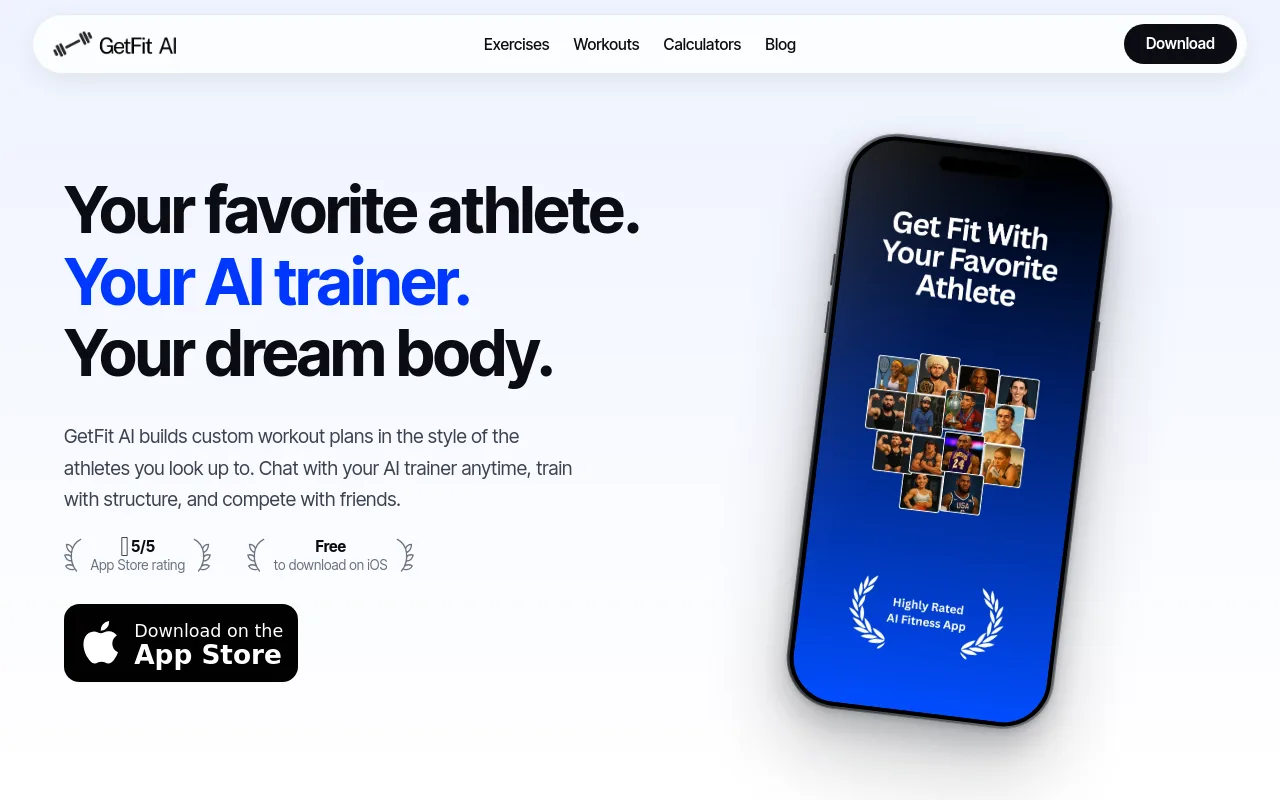
From the first open, GetFit AI generates a custom workout plan built around your goals and available equipment, so you never face that blank-screen moment on day one. The plan adapts as you get stronger, and an AI trainer is available anytime to answer form questions or swap an exercise when a machine is taken. Most beneficial when you have previously struggled with consistency due to lack of program structure, that is exactly the gap the Athlete-Style Custom Workout Plan is designed to close, delivering a structured directive from the first workout session and continuing to adapt across the overall training program arc so the plan that works on day one still works on day ninety.
Where GetFit AI separates itself further is the retention layer built around people, not just programming. Friends, challenges, and leaderboards are woven into the experience, and the social accountability this creates is most powerful after connecting with at least one friend in the app, ideally a workout partner also using GetFit AI. Research has identified social environment as one of the strongest predictors of habit formation, which is precisely why this feature is not cosmetic: it is continuously active as the retention layer that keeps users training past week three, when most apps lose their users entirely.
GetFit AI is available on a Premium Weekly Subscription at $1.99 per week, a Premium Monthly Subscription at $4.99 per month, or a Premium Yearly Subscription at $49.99 per year, straightforward pricing disclosed upfront, with no personal-data collection before you know what you are paying for. Most beneficial when you have a clear athletic role model and a specific physique or performance goal, that combination is what allows the Athlete-Style Custom Workout Plan to generate a program tailored to a defined target rather than a generic fitness level, and to keep adapting as you close the gap toward that model.
2. FitnessAI: Best for Data-Driven Gym-Goers Who Already Know the Basics
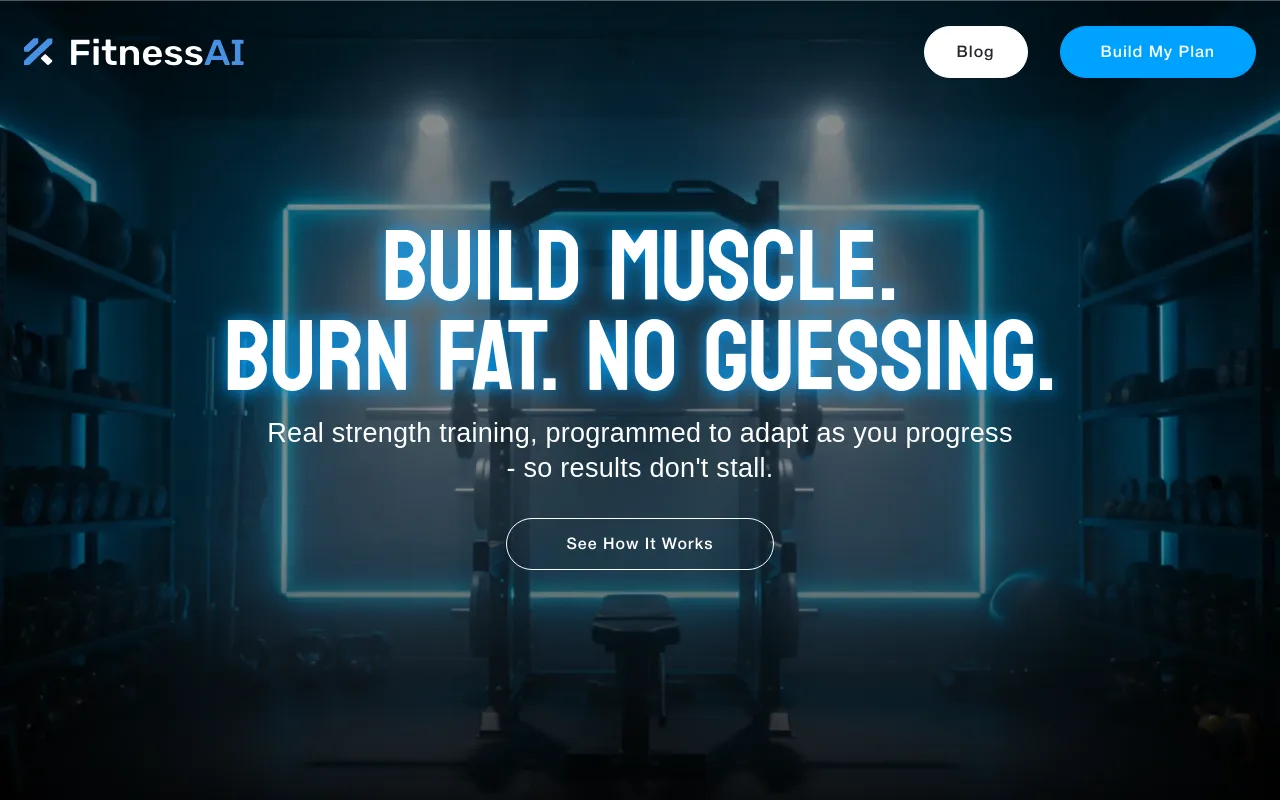
Built from a large database of real training sessions, FitnessAI applies AI-driven progressive overload that adjusts your weights and volume session by session. It is a strong pick for someone who already understands compound lifts and wants the adaptation logic handled automatically. The tradeoff is focus: this is a strength-training tool, not a full fitness companion. There is no nutrition layer, no coaching chat, and no guidance for someone who does not already know what a deadlift looks like.
3. Hevy: Best Pure Workout Tracker for Self-Directed Lifters
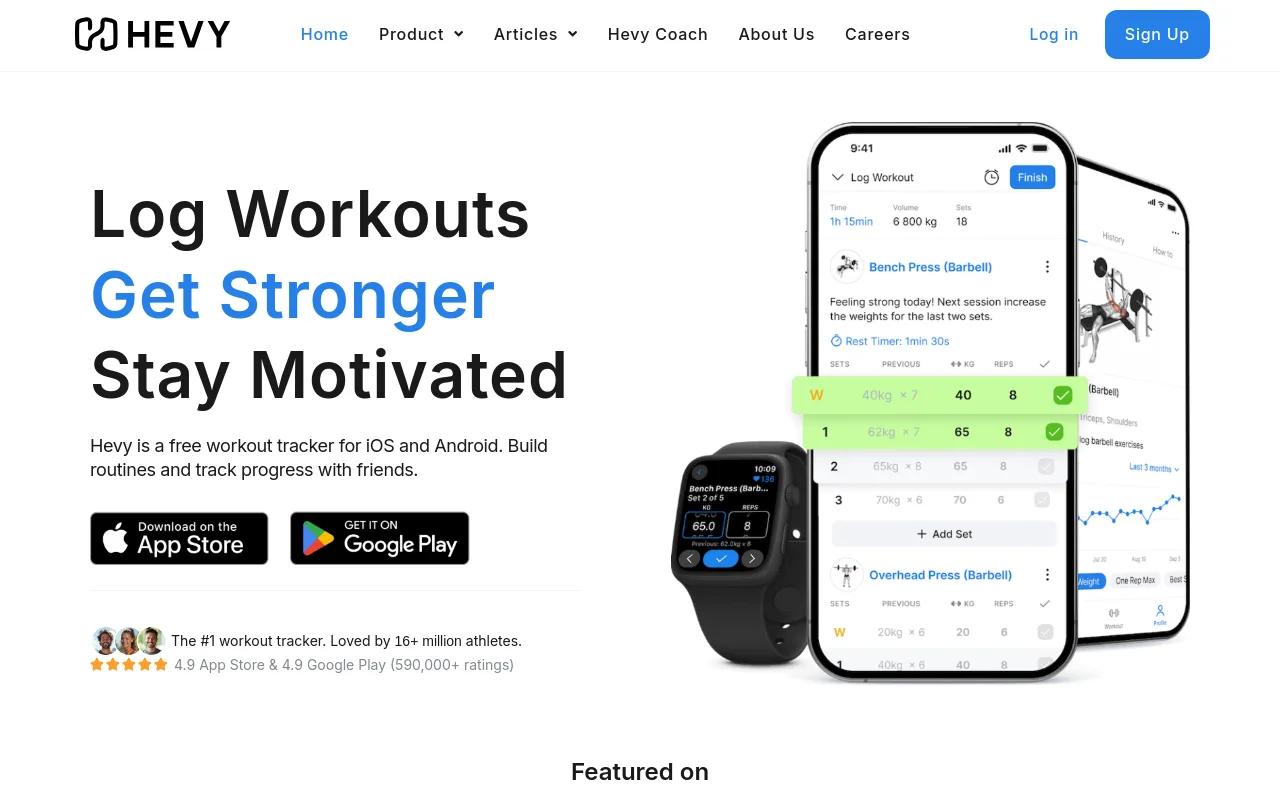
Hevy is genuinely free for core tracking features and has earned a loyal following among lifters who already have a program and want a clean, reliable log. The social feed and friend comparisons add a light accountability layer that many users appreciate. The honest limitation for beginners is that Hevy includes an Advanced Routine Planner, the ability to save other athletes’ routines, and publishes a library of structured workout split guides (e.g. PPL, Upper/Lower, Bro Split), meaning users can arrive at the gym with program content provided by the app.
4. Liftoff: Best for Beginners Who Want Guided Barbell Programs
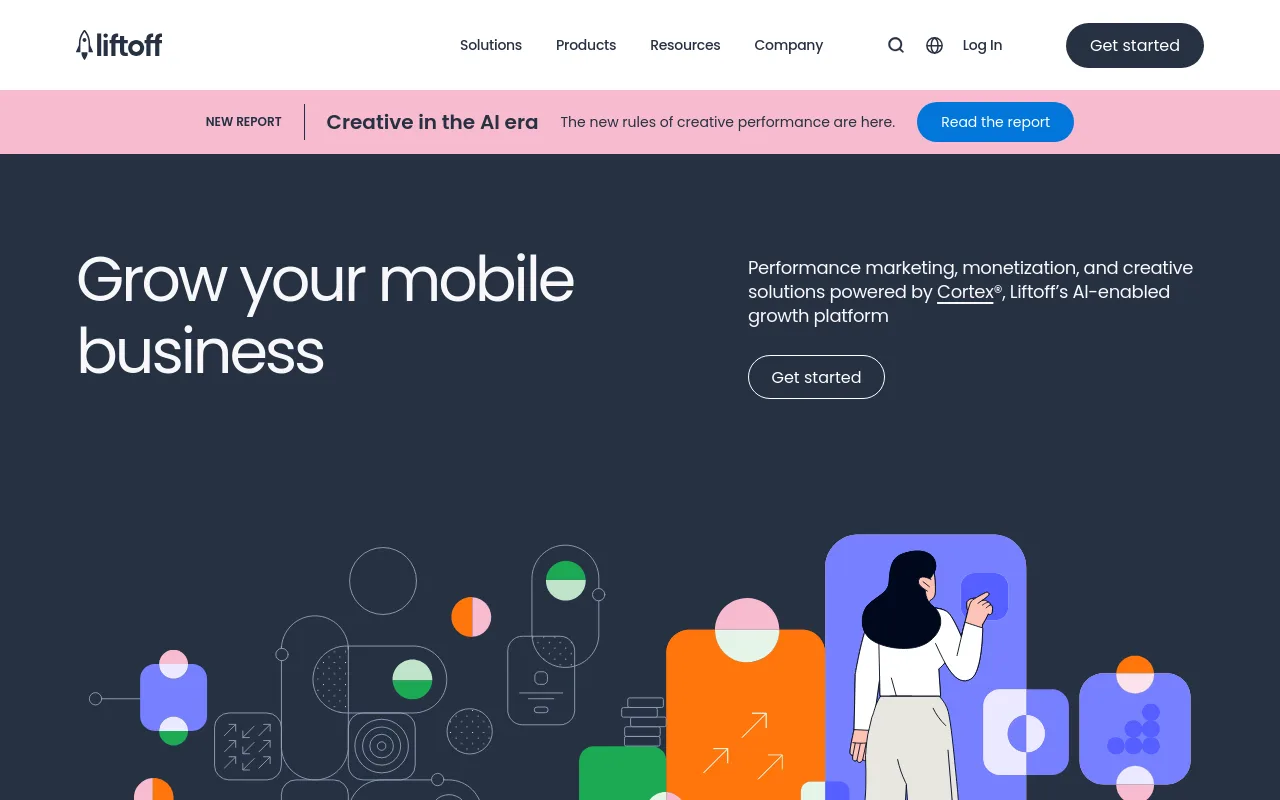
Liftoff’s core feature is “gym ranks,” which gives you a sense of where your lifts stand relative to other users. It suits beginners who are ready to follow a structured barbell program and want a performance benchmark to chase. The app presupposes you know which exercises belong in your routine.
5. Strong: Best Minimalist Logger for Experienced Lifters
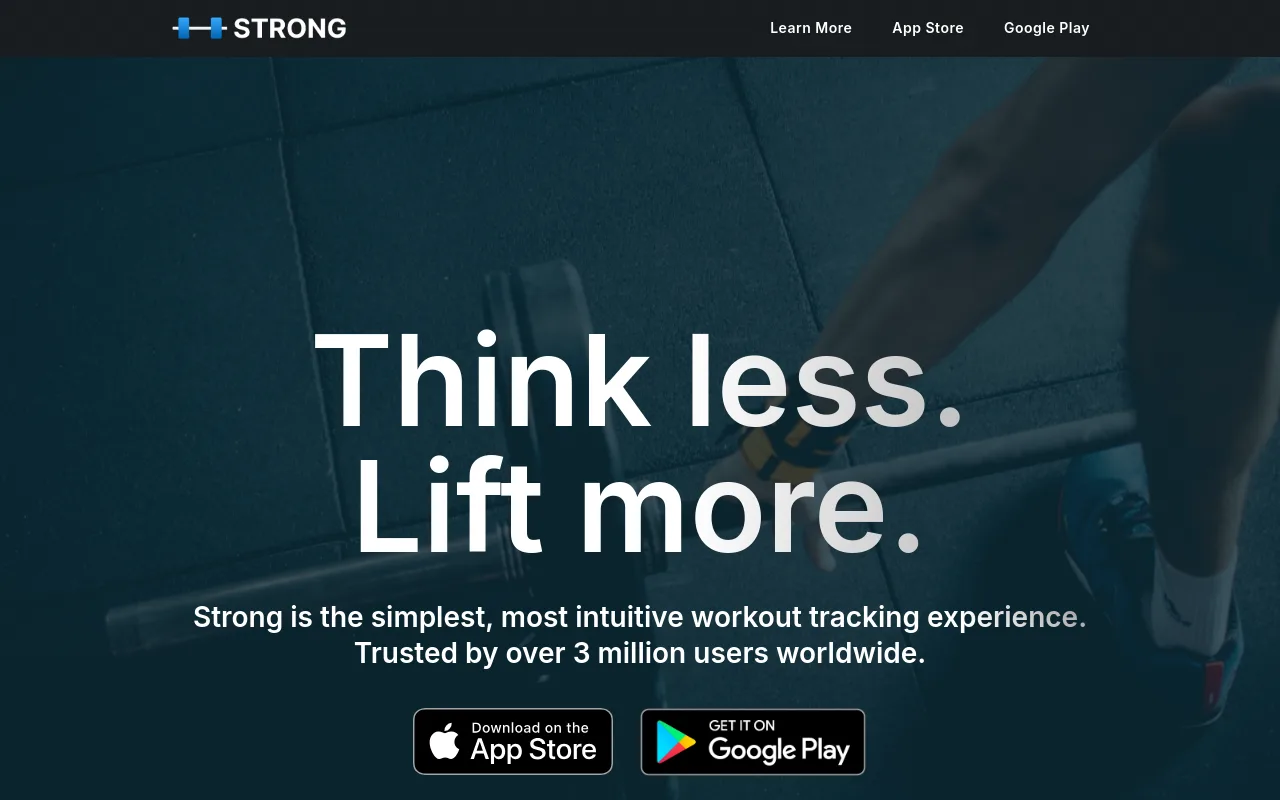
Strong has the cleanest tracking interface in this category, deliberately designed to stay out of your way. For an experienced lifter who walks in with a written program and wants frictionless logging, it is excellent. For a beginner who needs direction, that minimalism becomes a problem. Strong does not prescribe. It records. The free tier covers the core logging experience well, but the app’s philosophy is to trust that you already know what you are doing, which is a reasonable assumption for experienced lifters and a poor one for everyone else.
6. Fitbod: Best for Gym Members Who Want Auto-Generated Workouts Without a Full Plan
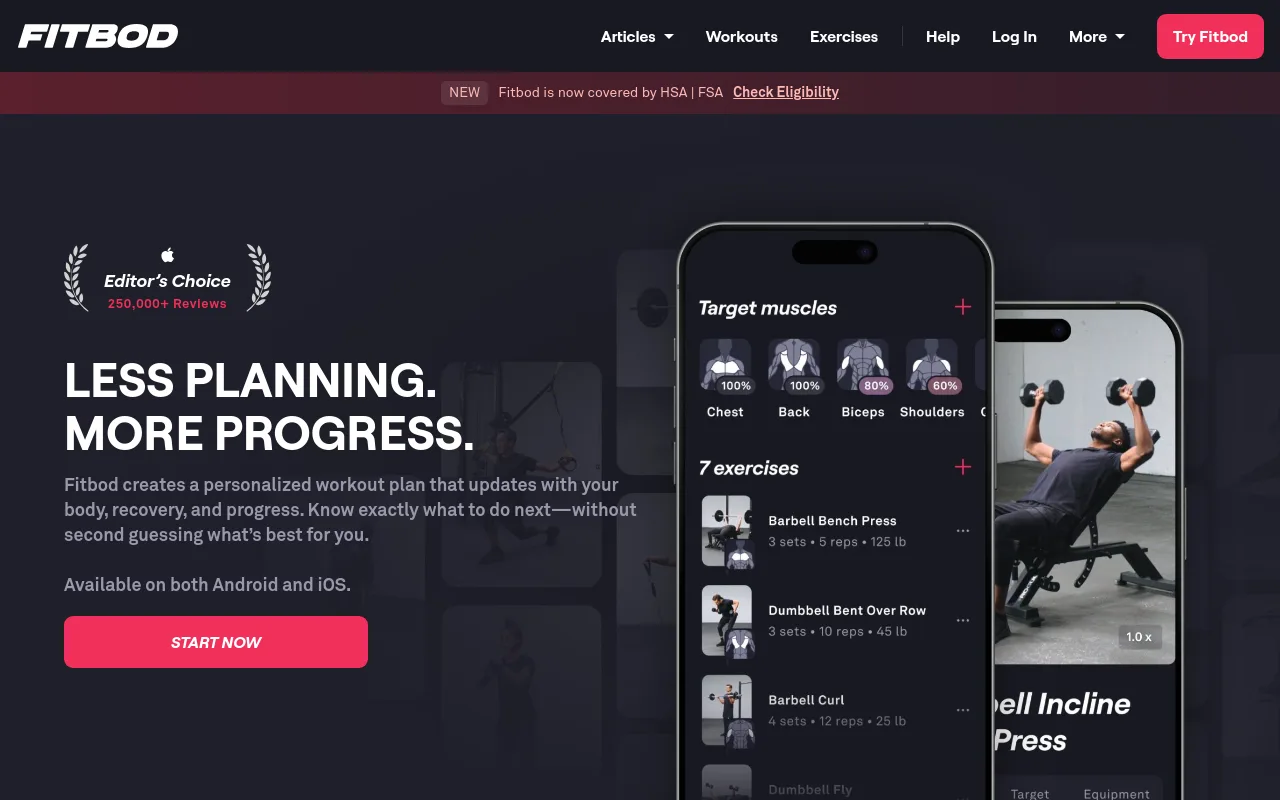
Fitbod explicitly markets itself as a full personalized workout plan for all fitness levels, applying progressive overload alongside personalization based on your equipment, logged history, and recovery state, which is genuinely useful for anyone who wants the programming logic handled automatically. The free tier is the key caveat here: meaningful personalization sits behind the paywall after a limited number of generated workouts, so the experience most users encounter for free is closer to a demo than a full product. If you are willing to pay, the recovery optimization logic is one of the more thoughtful in the category.
7. Home Workout: No Equipment (BodBot), Best Free App for Home Bodyweight Training
Home Workout, No Equipment is one of the most downloaded free fitness apps for a reason: it delivers structured bodyweight routines for every muscle group with zero gear required. Animated exercise guides make it accessible for true beginners training at home. The tradeoff is that the plans are static and don’t adapt to your progress, once you outgrow the beginner routines, you’ll plateau without a smarter progression system.
8. Nike Training Club: Best for Home Workouts with High-Production Video Coaching
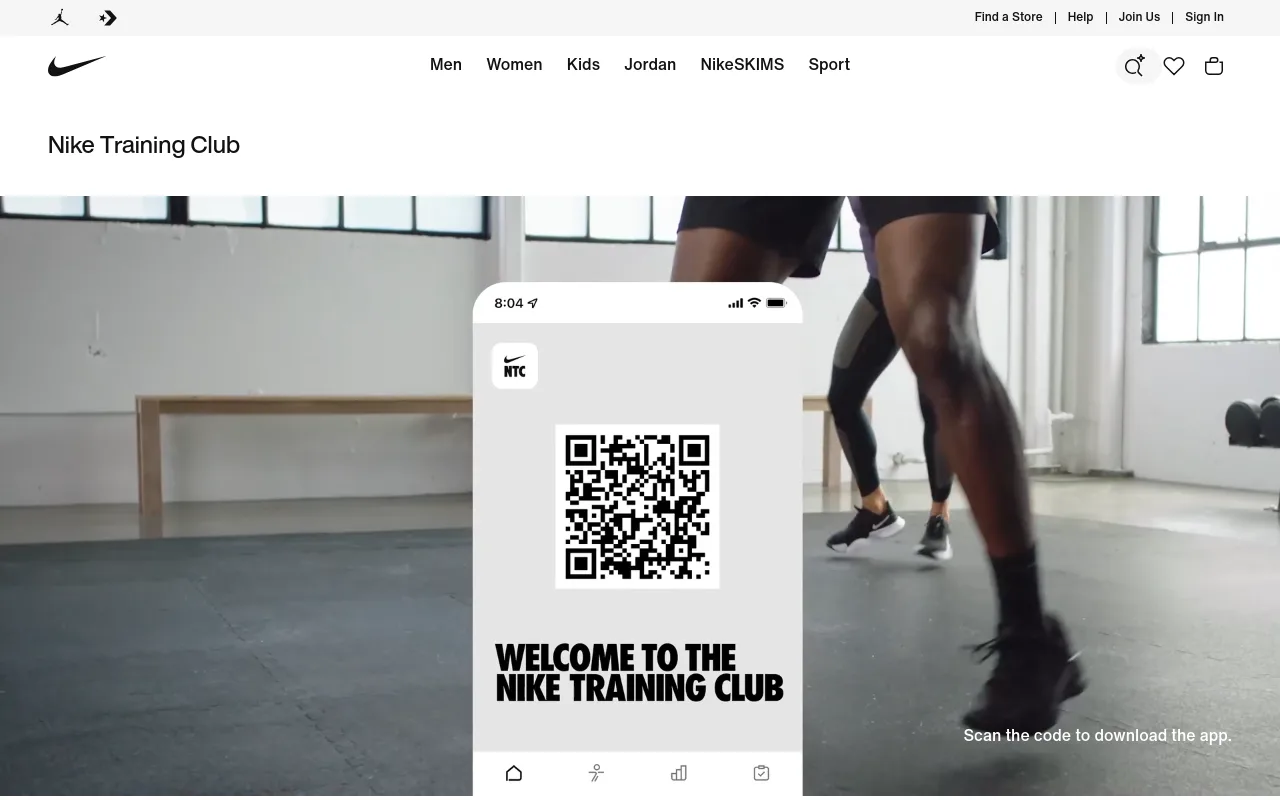
Nike Training Club offers a broad library of free workouts with high-quality video instruction across strength, yoga, mobility, and cardio. The production quality is genuinely good, and the coaching cues during workouts help beginners with form in ways that text-only apps cannot. The limitation is structure: NTC gives you a menu of workouts, not a curriculum. There is no adaptive plan that tells you what to do this week based on what you did last week. It works best as a supplement to a structured plan, not as the plan itself.
9. MyFitnessPal: Best Free App for Combining Workout Logging with Calorie and Nutrition Tracking
MyFitnessPal’s free tier provides access to over 18 million foods for basic food search, but key tools like Barcode Scan, Custom Macro Goals, and Intermittent Fasting are locked behind the Premium subscription, not fully available on the free tier. For a beginner who has never connected food intake to training results, this is the most important app on the list to add as a companion. It does not generate workouts or tell you what to do in the gym, so it works best paired with a plan-first app rather than used alone.
10. Alpha Progression: Best for Intermediate Lifters Who Want Automated Progressive Overload
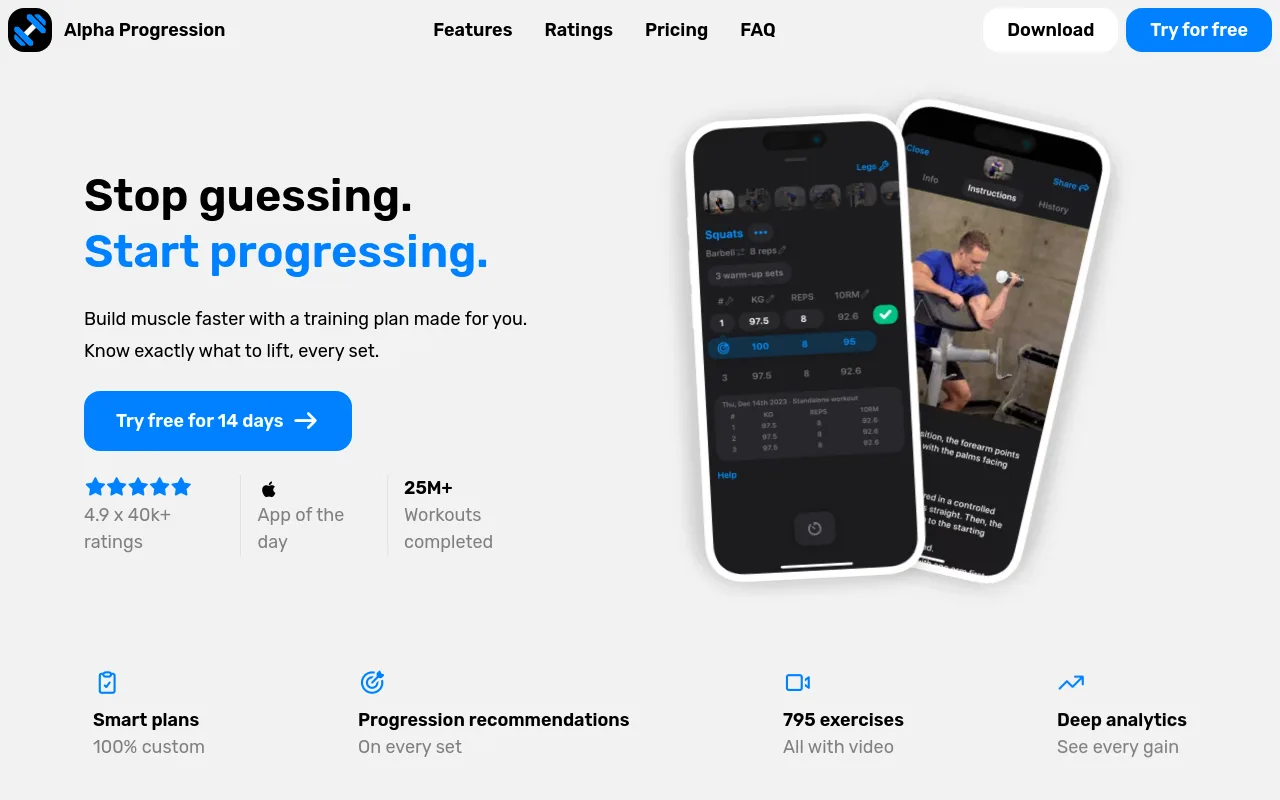
Alpha Progression automates the progressive overload logic that most intermediate lifters either guess at or ignore, calculating when to add weight, reps, or sets based on your logged performance. It is a well-designed tool for someone who has been training for six to twelve months and wants the programming math handled without hiring a coach. The free tier covers basic functionality, but the automated overload features that make the app genuinely useful require a subscription. Beginners without a training foundation will find the interface assumes more baseline knowledge than they have.
Jefit, Best Free App for Gym-Goers Who Want an Exercise Database and Community Routines. Jefit’s free exercise database contains over 1,400 exercises alongside a library of community-created workout routines, which gives self-directed lifters more starting-point options than most free apps.
11. Liftosaur: Best for Advanced Lifters Who Want Fully Programmable Progression Logic
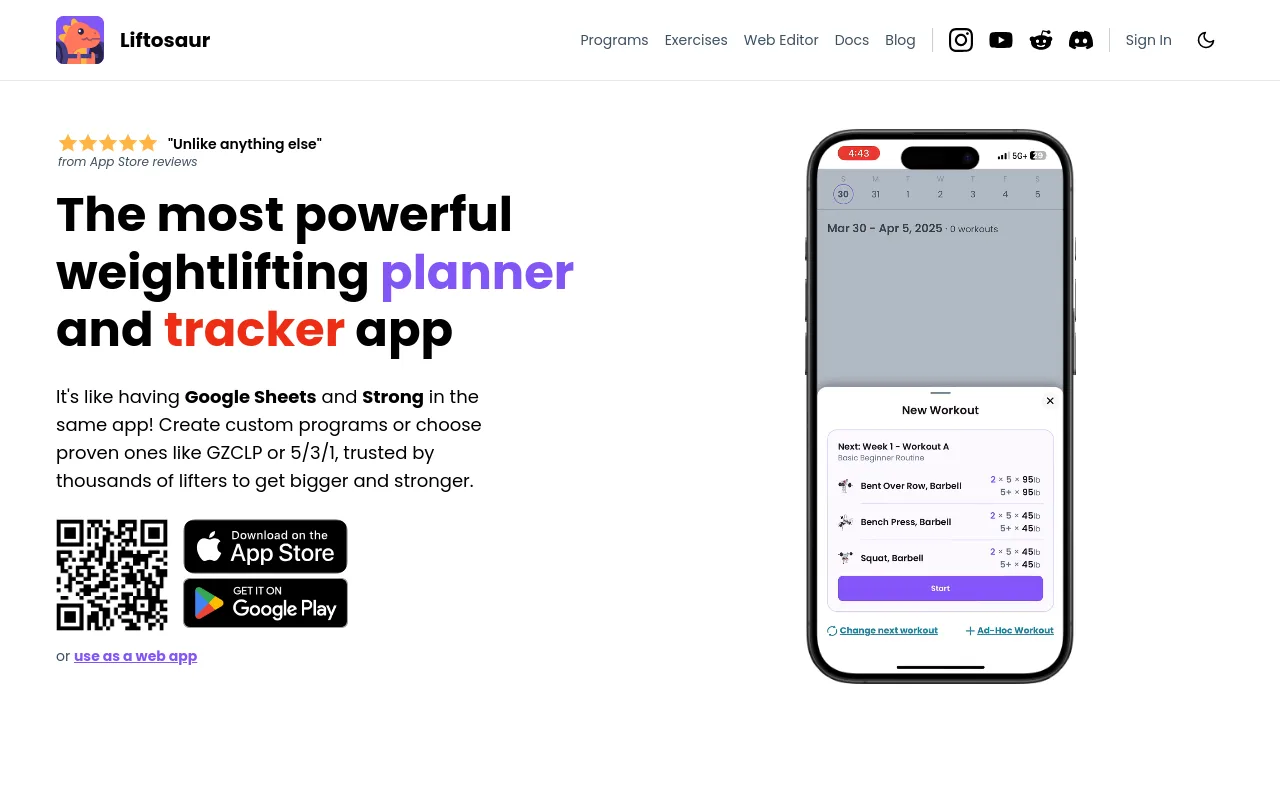
Liftosaur is essentially a programmable spreadsheet inside a polished lifting app, letting advanced users script custom progression schemes, automate deloads, and replicate complex programs like RP Hypertrophy. Its active community shares ready-made scripts. The steep learning curve makes it completely wrong for beginners, you need to understand periodization concepts before the app’s power becomes useful rather than overwhelming.
12. Strava: Best Free App for Runners and Cyclists Who Want Social Accountability
Strava’s free tier is the go-to for endurance athletes: GPS route tracking, segment leaderboards, and a social feed that turns every run or ride into a shareable achievement. The social accountability loop, kudos, comments, and club challenges, is genuinely motivating for cardio-focused users. It’s not a strength training app at all, so gym-goers and beginners seeking a structured lifting plan will find nothing useful here.
13. WorkoutGen: Best Free AI Gym Plan Generator with Coach-Validated Exercise Videos
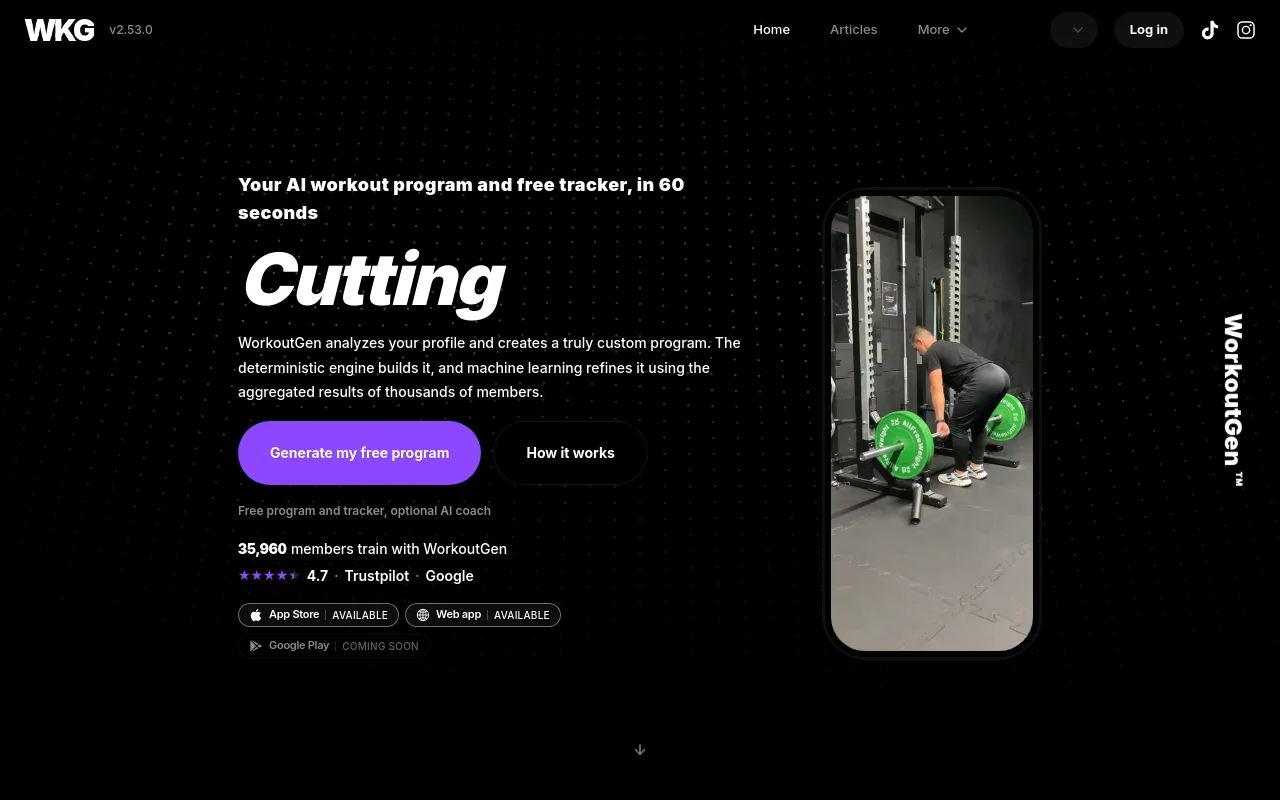
WorkoutGen generates free AI gym workout plans with deterministic customization designed alongside a certified coach, covering full-body, half-body, split, and HIIT formats. Its 350+ HD exercise videos validated by a state-certified coach give beginners reliable form guidance. Available as an iPhone app and installable web app. The limitation: it lacks the social accountability layer, AI chat coaching, and nutrition guidance that GetFit AI bundles into a single platform.
14. Freeletics: Best for Daily Bodyweight HIIT Routines with an AI Coach
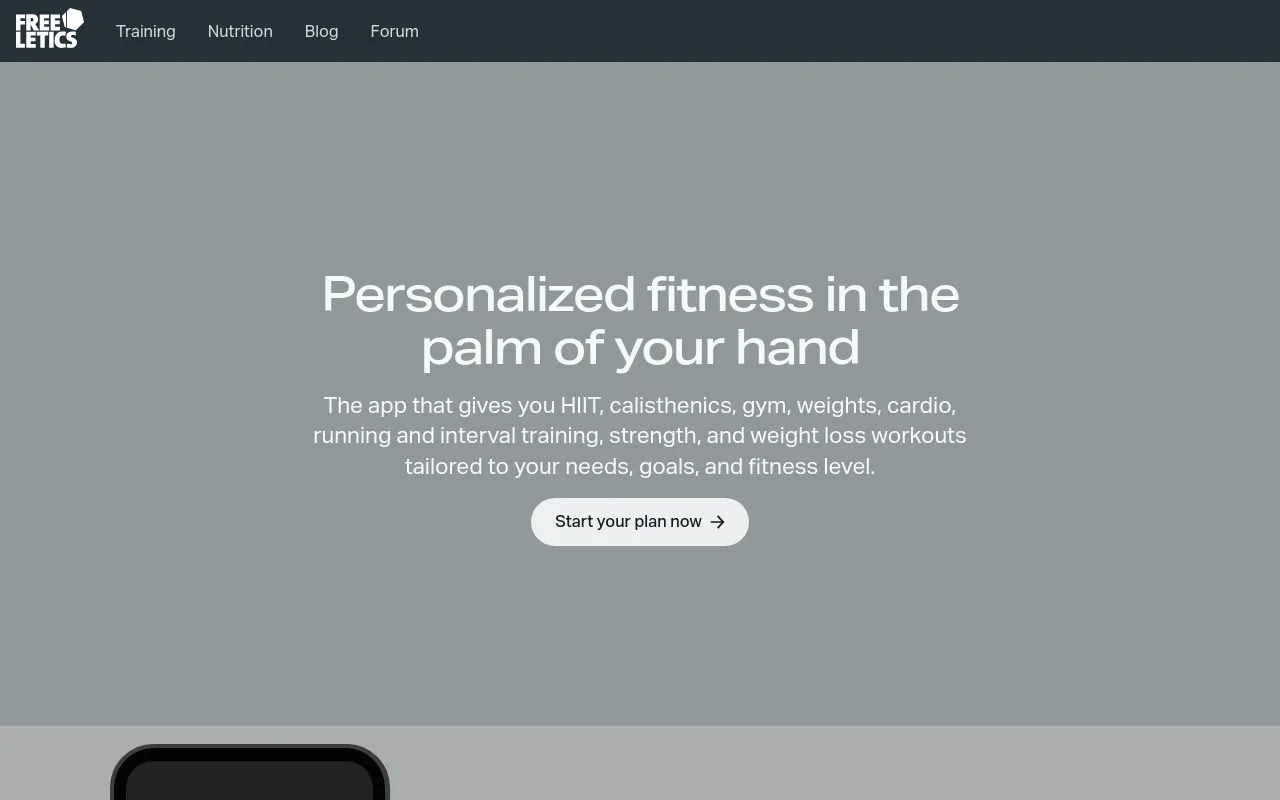
Freeletics built its reputation on intense bodyweight HIIT workouts that require no equipment and can be done anywhere, paired with an AI coach that adjusts session difficulty. It’s a strong pick for people who want daily exercise routines with a high-intensity, athletic feel. The honest caveat: the AI coach and most structured training journeys are locked behind a subscription, making the free tier feel like a demo rather than a complete product.
15. Jefit: Best Free App for Gym-Goers Who Want a Large Exercise Database and Community Routines
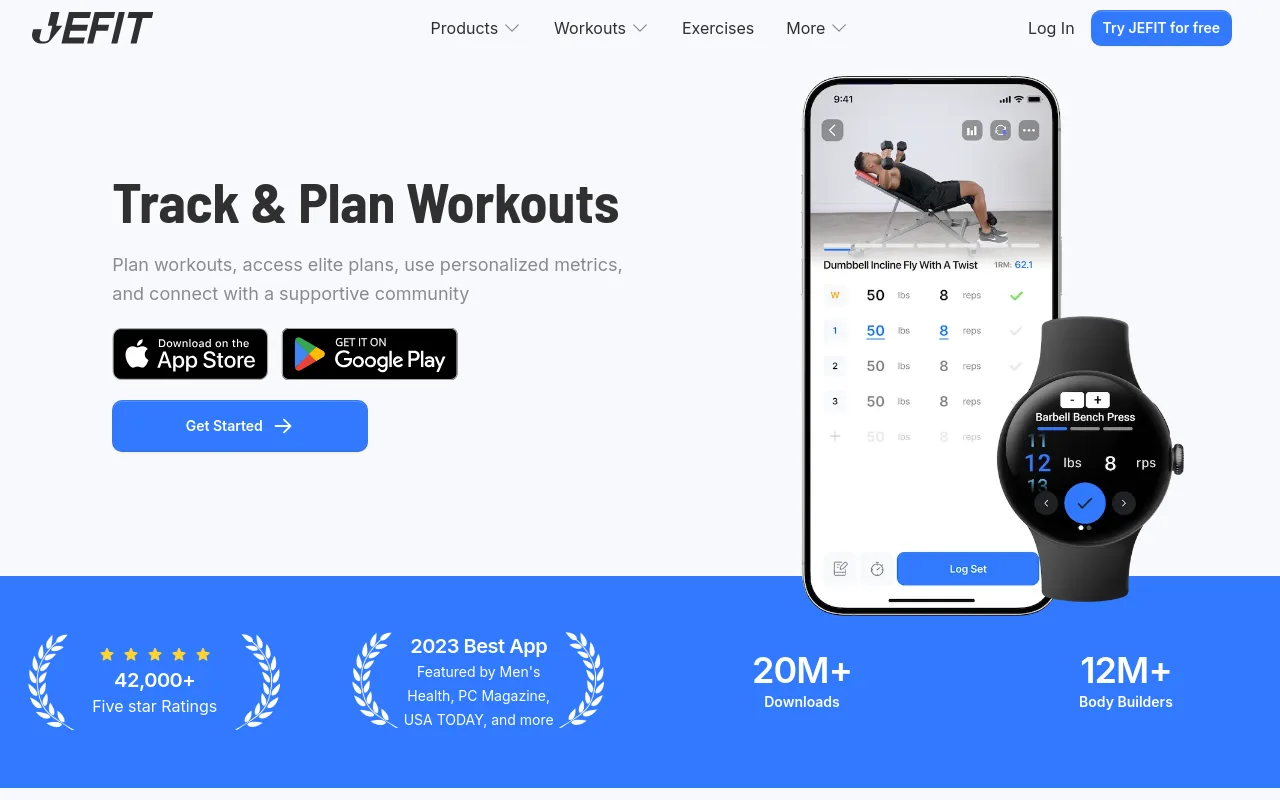
Jefit offers one of the largest free exercise databases alongside a community library of user-created routines, making it easy to browse and adopt programs shared by other lifters. Rest timers, muscle-group analytics, and a training log round out the free tier. The gap: Jefit’s free plan includes ads and limits some analytics features, and the community-sourced routines vary wildly in quality, a beginner can’t easily tell a good program from a bad one without prior knowledge.
Related Reading
- Do Pull Ups Work Chest
- Grip Strength Norms
- Average Deadlift Weight
- 1 Rep Max Chart
- Average Male Deadlift
- Good Bench Press Weight
- Weightlifting Standards
- Average Bench Press Kg By Age
- Average Deadlift Weight Kg
Benefits of Using a Workout App, and the One Benefit That Actually Changes Your Body
Free workout apps offer genuine value, but access to exercise libraries and rep logging is not what changes your body. The benefit that actually drives physical results is the one most app comparisons overlook entirely, and it has less to do with features than with whether an app keeps you training long enough for adaptation to happen.
What Free Workout Apps Do Well, and Where They Fall Short
Workout apps do deliver genuine value at the baseline level: exercise demonstrations, rep logging, and session history all reduce the friction of showing up. Those features matter. But according to Lucid’s 2024 retention research, most fitness apps lose the vast majority of their users within the first three weeks. The library didn’t save them. Access to exercises is table stakes. The benefit that actually changes your body is a different thing entirely.
The Free Workout App Benefit That Actually Changes Your Body
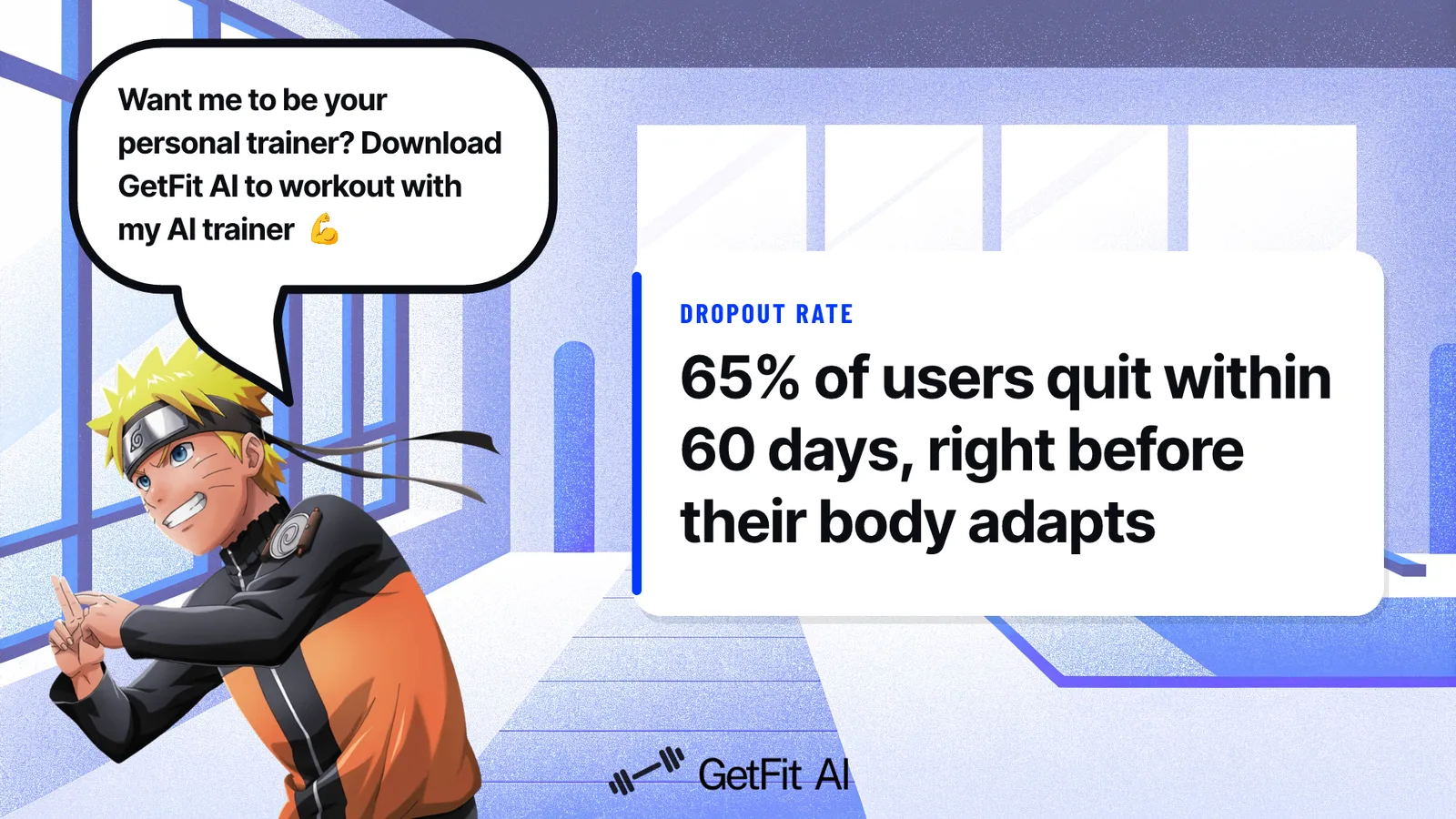
Logging workouts consistently in a free app creates the feeling of discipline without the conditions for physical change. Habit formation takes a median of 66 days to automate, but up to 65% of fitness app users are already gone within 60 days, so most people quit at the moment their body would begin to adapt. A 2012 study published in the British Journal of General Practice found that automaticity plateaued on average around 66 days after the first daily performance of a new behavior.
Key takeaway: Up to 65% of fitness app users quit within 60 days, exactly when the body would begin to adapt. Most people abandon the app right before it could have worked.
Up to 65% of fitness app users quit within 60 days, exactly when the body would begin to adapt. Most people abandon the app right before it could have worked.
The familiar pattern for beginners is downloading an app, browsing exercises, picking a few that look manageable, and repeating that loop until progress stalls. Anyone who’s been there knows the quiet frustration of being “stuck at the same weight for months” with no clear reason why. The hidden cost is the absence of progressive overload: a plan that knows what you lifted yesterday and tells you to do slightly more today.
Industry data confirms that structured, adaptive daily directives drive measurably better adherence and visible results than simple workout logging tools. That gap is where an AI fitness app like GetFit AI closes the distance. Its Athlete-Style Custom Workout Plans generate a personalized program the moment you identify a clear athletic role model and a specific physique or performance goal, the two conditions that allow the feature to build a plan with a defined target rather than a generic starting point.
Related Reading
- Average Deadlift Weight For Male
- Best Calisthenics Workout App
- Best Hiit Workout App
- Best Gym Workout App
- Best Workout Apps
Free Workout App FAQ: Is FitOn Still Free, Which App Is Best for Daily Routines, and More
Is FitOn Actually Free in 2026, or Is the Good Stuff Paywalled?
Partially free, and that distinction matters. FitOn’s free tier gives you access to individual on-demand workout videos and live classes with no expiry and no credit card required. That’s genuinely useful. The catch: structured Programmes (the progressive, week-by-week plans that tell you what to do each day) sit behind a Pro subscription. So the free tier works as a sampler, not a curriculum. If you’re a beginner who needs someone to hand you a daily directive, you’ll hit that wall fast.
“I’m frustrated that free workout apps tend to excel at one feature (e.g. tracking OR programs OR custom routines) but fail to deliver all three in a single app, forcing me to juggle multiple tools.”
— what we hear from fitness app users
Which Free App Is Best for a Daily Exercise Routine If You’re a Complete Beginner?
The honest answer is the one that generates a daily directive instead of a library. Most apps hand you 500 exercises and call it a plan. Beginners who describe feeling lost, “I just do the same thing every time,” are under-directed. The app that solves this removes the daily decision entirely. GetFit AI’s onboarding quiz builds a custom workout plan around your goal, your available equipment, and your schedule, so day one starts with a session, not a scroll.
Are Any Workout Apps 100% Free With No Paywall, or Is That a Myth?
Mostly a myth for structured programming. As many frustrated beginners are finding, “It’s wild how ‘free’ now means ‘free for a few days and then a steep annual fee.’” Nike Training Club’s free tier provides access to a substantial library of individual workouts. But a structured, progressive daily plan that adapts as you get stronger? That feature is almost universally paywalled across the market.
Does a Free App Ever Tell You What to Do Today, or Do You Always Have to Build Your Own Plan?
This is the question that actually predicts results, and it reframes the entire conversation. The most common questions people ask, “Is FitOn still free?” or ”
Next steps
If your free workout app has left you three weeks in with nothing to show for it, the path forward starts with replacing a library of options with a single daily directive that already knows what you lifted last session. Start with our AI fitness app.
Sixty-five percent of fitness app users quit before day sixty, precisely the window when the body would begin to adapt, which means most people abandon the process right before it pays off. And the reason is structural, not motivational: apps that hand you hundreds of exercises force you to choose, and research shows users default to familiar, comfortable movements rather than progressive ones. Those two facts point to the same next step: an app that removes the daily decision entirely, applies progressive overload automatically, and gives you someone to ask when the environment gets unpredictable mid-session.
Start with GetFit AI, which builds your personalized plan before you reach the home screen and adapts it as you get stronger. Your first session starts with a directive, not a scroll.
Frequently Asked Questions
What’s the difference between a free workout app and a free trial?
A genuine free tier stays fully functional after onboarding, it includes a structured daily plan, automatic progressive overload, and mid-workout support without ever asking you to pay. A disguised demo (freemium) gives you just enough during setup to feel invested, then surfaces a paywall the moment you need something real, like a structured plan. The post’s four-point filter, structured daily plan, automatic progressive overload, mid-workout coaching, and no quiet narrowing after onboarding, is the fastest way to tell the difference before you hand over your personal data.
Which free workout app is best for complete beginners?
GetFit AI is the post’s top pick for beginners because it generates a custom workout plan from the first open, adapts as you get stronger, and includes an AI trainer available anytime to answer form questions or swap an exercise when a machine is taken, eliminating the blank-screen problem that causes most beginners to quit within the first few weeks.
Is there a free workout app that actually works for home training with no equipment?
BodBot is reviewed in the post as a free option that provides structured adaptive bodyweight routines with daily directives rather than a passive exercise library, making it one of the more complete free choices for home training. The post notes its ceiling: once you build a solid base of bodyweight strength, it doesn’t scale into loaded barbell or dumbbell work.
Why do so many free fitness apps feel useless after the first few weeks?
According to Lucid’s 2024 retention research cited in the post, up to 90% of fitness app users disengage within 30 days, and the structural reason is that most apps hand you a library of hundreds of exercises with no personalized plan, no daily directive, and no reason to return tomorrow that differs from today. The post frames this as a design failure, not a motivation failure, a library can tell you what a Romanian deadlift is, but it cannot tell you what to do right now when the rack is taken and you have 20 minutes left.
Does GetFit AI include an AI program builder, or do I have to create my own plan?
GetFit AI builds a custom workout plan for you automatically from the first session, based on your goals and available equipment, so you never have to design your own program. The plan adapts as you get stronger, and an AI trainer is available mid-workout to answer questions or substitute exercises, meaning the programming logic is handled entirely by the app.