8 Best Calisthenics Workout Apps for 2026
Most calisthenics apps sell you a library and leave you to figure out the rest. Here is how to spot the rare ones that actually tell you what to do today.
Training consistently while body composition refuses to change is one of the most demoralizing experiences in fitness. The common assumption among beginner lifters, typically in their mid-to-late twenties, juggling a dozen downloaded apps and no structured plan, is that “if I just have access to enough exercises, I can assemble my own plan and results will come.” In reality, the cause of stalled progress is almost always the same: training and nutrition exist in completely separate apps, with no connection between them. Lucid’s 2024 research identifies this as a structural blind spot, where movement performance improves while caloric and macronutrient data never informs the training prescription. The reps get better. The mirror doesn’t move. See our AI fitness app for how this works in practice.
The fitness app market has quietly built a category around the wrong metric: exercise count. Top calisthenics apps routinely advertise 450 or 700-plus exercises as a headline feature, but quantity of exercises is the wrong metric entirely. According to Lucid’s 2024 retention research, the dominant failure mode in exercise-library apps is decision paralysis: users get hundreds of movements but no daily directive, no prescribed sequence, and no progression guidance, leaving them to self-program with no qualification to do so.
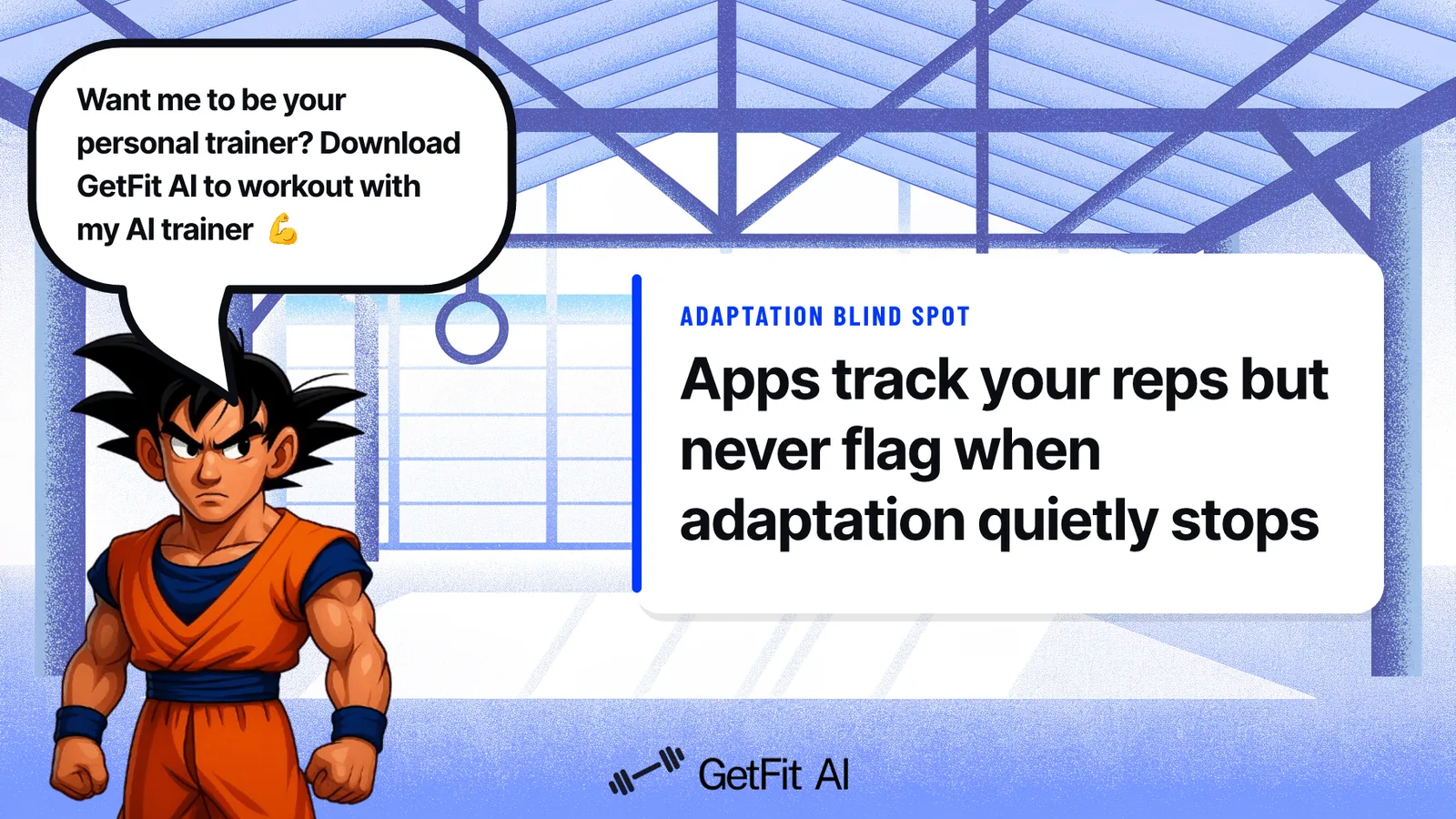
Here is the part no app marketing mentions: stalling is predictable, not personal. Without adaptive overload tracking built into the design, users default to repeating the same exercise variations at the same difficulty indefinitely. Lucid’s 2024 analysis confirms that logged activity continues while physiological adaptation quietly stops, a plateau the app never flags and the user never sees coming.
Key takeaways
- A large exercise library is not a training plan, knowing 200 bodyweight movements still won't tell you what to do today, in what order, or how to progress next week.
- Most calisthenics apps stall beginners at the same point: a screen full of exercises and no decision made for them, which is why retention data shows the majority of fitness apps get uninstalled within the first few weeks.
- The features that actually drive results in a calisthenics app are progressive overload tracking and adaptive programming, not video count or UI polish.
- Free tiers from apps like Nike Training Club are genuinely useful for movement education, but they hit a hard wall the moment you need a plan that adjusts to how you're actually progressing.
- A calisthenics app can replace a trainer's exercise prescription, but only if it does more than log reps, it has to respond when your performance changes.
- GetFit AI's Athlete-Style Custom Workout Plans close that gap with two routes: build a fully custom AI plan around your goals and equipment, or train inside an AI athlete's or trainer's plan and inherit their style, either way, the plan adapts as you get stronger.
What Features Should a Good Calisthenics App Have for Tracking Progressive Overload?
Most beginners in that 25-30 range have no structured plan and no clear idea of what to eat, and they operate on a quiet assumption: that access to enough exercises is the missing piece, and that results will follow once they start assembling their own routine. The table below maps the features that actually matter for tracking calisthenics progressive overload against what real apps offer, so you can filter by what drives results rather than what looks impressive on a screenshot.
Variation Ladder vs. Movement Library
A good calisthenics app must include a variation ladder: a mapped sequence from beginner movements (wall push-up, knee push-up) through intermediate and advanced variations (archer push-up, pseudo planche), with clear criteria for when to advance. Without it, you’re browsing a menu with no waiter. According to Lucid’s retention research, users who engage with progress-tracking features retain at far higher rates than those who use apps purely as exercise catalogues, because passive browsing creates no feedback loop.
Session-to-Session Adaptation
Static plans don’t adapt. An app that logs “3x10 push-ups” but never signals readiness to advance is a glorified spreadsheet. The criterion here is whether the app reads your logged performance and adjusts the next session automatically. Lucid’s data confirms that apps with adaptive programming see significantly higher Day-30 retention than those serving fixed workout plans.
Integrated Calorie and Macro Tracking
Training reps can improve for months while body composition stays flat. The reason is almost always nutrition, tracked separately or not at all. An app that links your training output to a daily calorie target removes that blind spot entirely.
On-Demand Coaching Access
Getting stuck mid-set on a movement you can’t hit yet is where most people quietly quit. Real-time coaching access, the ability to ask a form question or request a regression at the exact moment confusion strikes, is what separates apps that retain users from those that don’t.
Quick-Reference Feature Scorecard: What to Look For in a Calisthenics App
| Feature | Why It Matters | Red Flag If Absent |
|---|---|---|
| Variation Ladder | Tells you when and how to progress each movement | You'll repeat the same exercises indefinitely |
| Session-to-Session Adaptation | Next workout updates based on what you logged | App is a glorified spreadsheet |
| Integrated Calorie & Macro Tracking | Connects training output to body-composition change | Progress stops at the mirror |
| On-Demand Coaching Access | Answers form questions at the moment of confusion | Mid-workout guessing leads to quiet quitting |
| Onboarding Personalization | Builds the plan for you from day one | You're self-programming with no qualification to do so |
Related Reading
- Best Fitness Apps
- How Many Pull Ups Should I Be Able To Do
- Average Grip Strength Male
- Average Bench Press
- How Much Does A Bench Press Bar Weigh
- Average Male Bench Press
- How Much Can The Average Man Bench Press
- Grip Strength Chart
- Symmetric Strength
- Bench Press Standards
The 8 Best Calisthenics Workout Apps for 2026: Ranked and Reviewed
That shelf of options is exactly where most beginners stall. The bodyweight fitness market has grown fast enough that the App Store now returns dozens of results for a single search, and that abundance creates its own problem. More options do not make the decision easier. They make it harder. A common pattern among beginners is opening an app, scrolling through hundreds of movements, feeling briefly impressed, and then defaulting to the five exercises they already know. The library never gets used. The plan never gets made. The results never arrive.
“Existing fitness apps are overwhelmingly built around barbell or running-based training, leaving calisthenics and street workout athletes underserved, a direct gap that a best-apps ranking should address.”
— what we hear from calisthenics and street workout athletes
That failure is a structural one. A large exercise library does not just fail to solve the planning problem; it actively makes consistency harder. When an app hands you 700 movements but no daily directive, you are expected to self-program, and most people are not qualified to do that. Research consistently shows that the vast majority of fitness app users abandon the app within the first 30 days, and the decision paralysis created by too many unstructured choices is a central driver of that dropout rate. The very feature marketed as the app’s value becomes the hidden engine of its own abandonment.
A second, quieter problem compounds that first one: most fitness apps are built around barbell training or running, leaving calisthenics athletes without programming that actually reflects how they train. The result is a category that is both overcrowded and underserving, too many apps returning search results, and too few that understand a pull-up progression or a planche lead-up. Cost is the third barrier. Beginners who have already been burned by high-ticket apps, some priced well beyond what a bodyweight-only training tool can justify, arrive skeptical, and rightly so.
The eight apps below are ranked not on exercise count alone, but on whether each one actually removes the daily decision: what to do today, in what order, at what intensity, and with what nutritional support. That is the standard that matters.
-
GetFit AI
-
Fitloop
-
Calisteniapp
-
GainStrong
-
Boostcamp
-
Hybrid Calisthenics
-
Caliverse
-
Madbarz
1. GetFit AI: Best Overall Calisthenics App for 2026
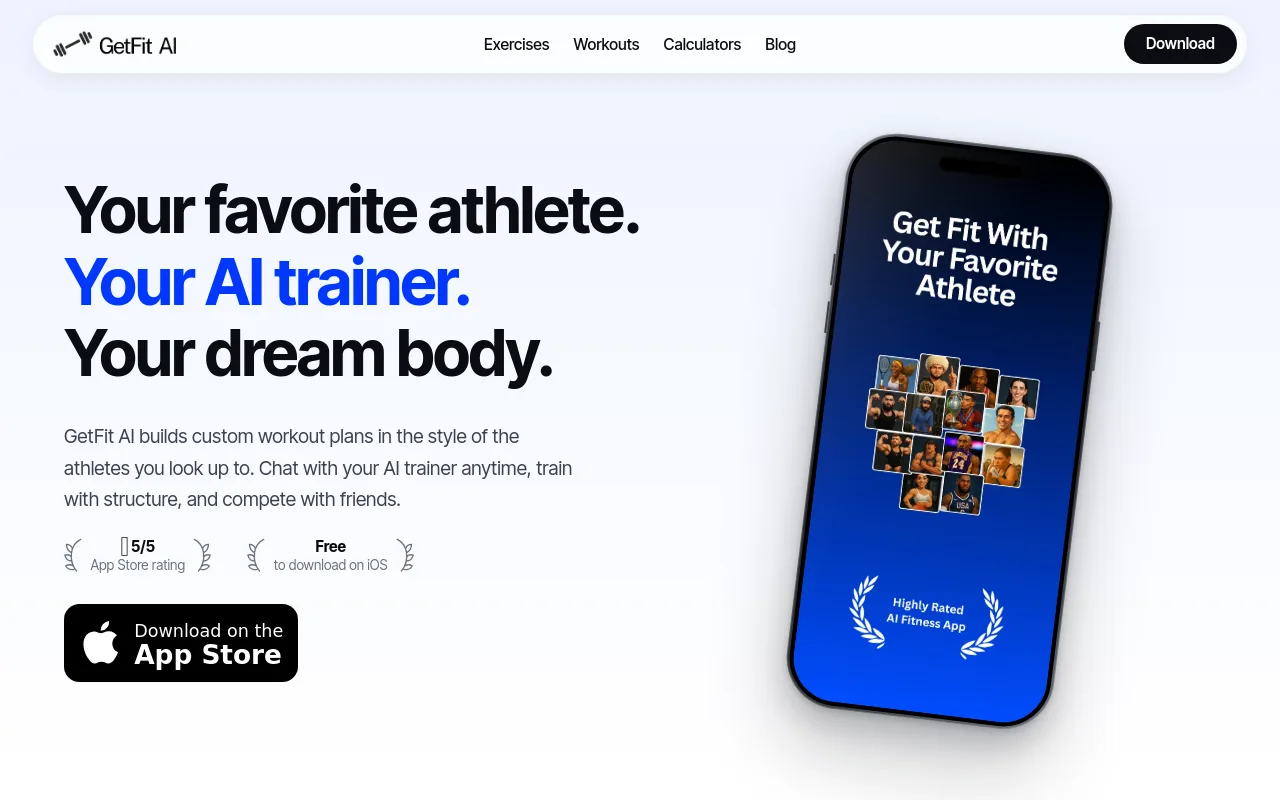
The best AI calisthenics training app for 2026 earns that position because it is the only app among the eight reviewed here that combines athlete-style custom workout plans, 24/7 AI coach chat, integrated calorie tracking, and social streak competitions under a single login, a combination verified by the feature-by-feature comparison in Section 1, where each app’s capabilities are mapped individually. At setup, the app generates a fully personalized calisthenics program around your goals and available equipment, with no self-assembly required. The structured training begins from the first workout session, which matters for users who have previously struggled with consistency because they lacked a program framework to follow.
The most meaningful feature for this audience is the AI trainer chat: available immediately after download, it answers form questions, suggests progressions, and explains substitutions mid-workout, which is the exact moment most beginners give up and guess wrong. That coaching access runs through each individual session and across the full training arc, so the feedback loop does not disappear once the novelty fades.
The social layer, friends, challenges, and leaderboards, functions as the retention mechanism that keeps users training past week three, the window where dropout rates peak. It is most beneficial when at least one friend or workout partner is also using the app; once that connection is made, the competitive and accountability dynamics activate in a way that solo tracking cannot replicate. Solo users still receive the full plan and coaching benefits; the leaderboard side simply stays quieter until the social graph fills in.
On price, GetFit AI is available at multiple affordable tiers, tiers that sit well below the high subscription costs that frustrate beginners shopping this category. The yearly plan in particular works out to $49.99 for athlete-style custom programming, AI coaching, and nutrition tracking in a single product. For users who want to test before committing, the weekly entry point removes the risk of a large upfront outlay on an app that might not fit.
Most beneficial when you have a clear athletic role model and a specific physique or performance goal, that combination gives the AI enough signal to generate a program that actually resembles the training style you’re chasing, rather than a generic beginner template.
2. Fitloop: Best Free Calisthenics App with Zero Ads
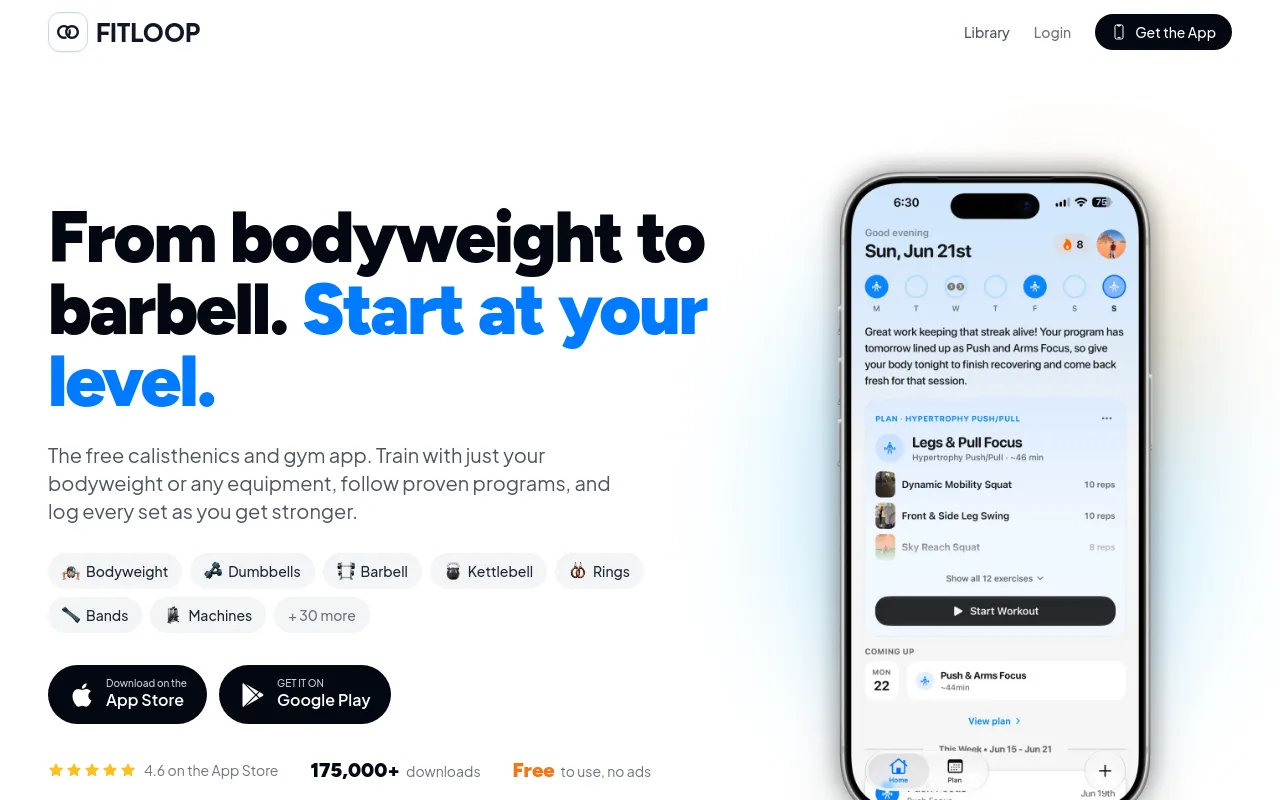
Fitloop is a strong option for anyone following a structured bodyweight fitness routine, with progression videos, form guides, and a custom routine builder available at no cost. The honest boundary is that users who want adaptive programming that updates based on last session’s logged performance, or any nutrition integration, will find it outside what Fitloop is designed to do.
3. Calisteniapp: Best for Exercise Library Depth and Structured Programs
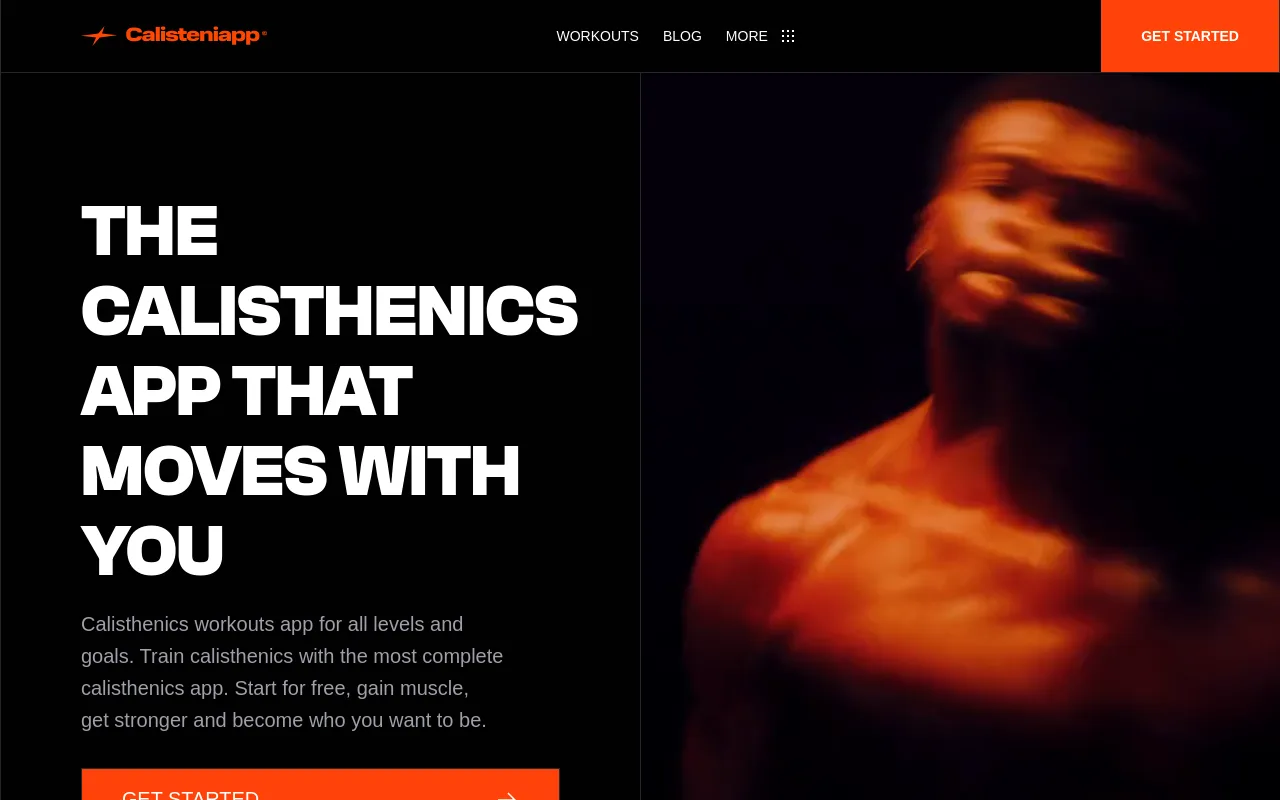
Calisteniapp holds an extensive library of exercises and a wide range of structured programs, with EVO adaptive routines that scale to your current level, making it one of the most comprehensive bodyweight workout apps available. The volume of five-star reviews signals that the depth is real and the community finds genuine value in it. The tradeoff is the one this entire category faces: a library of 700 exercises does not tell you what to do today. Users who arrive without a training background will still face meaningful sequencing decisions, and without integrated nutrition tracking, the training and eating remain in separate worlds. Best for intermediate trainees who already understand programming logic and want the widest possible movement selection to draw from.
4. GainStrong: Best Offline-First Calisthenics App with No Paywalls

GainStrong uses a local-first design that works completely offline, with personalized plans and workout tracking that require no subscription and no internet connection. For anyone training in a gym with poor signal, traveling frequently, or simply unwilling to pay a recurring fee for a bodyweight workout app, GainStrong removes every practical barrier. The honest limitation is that offline-first architecture makes adaptive programming harder: the app cannot pull in performance data from external sources or update dynamically the way cloud-connected apps can. A solid free calisthenics app for privacy-conscious users and frequent travelers, but not the right tool if real-time plan adaptation is the priority.
5. Boostcamp: Best for Coach-Led Programs and Workout Tracking UI
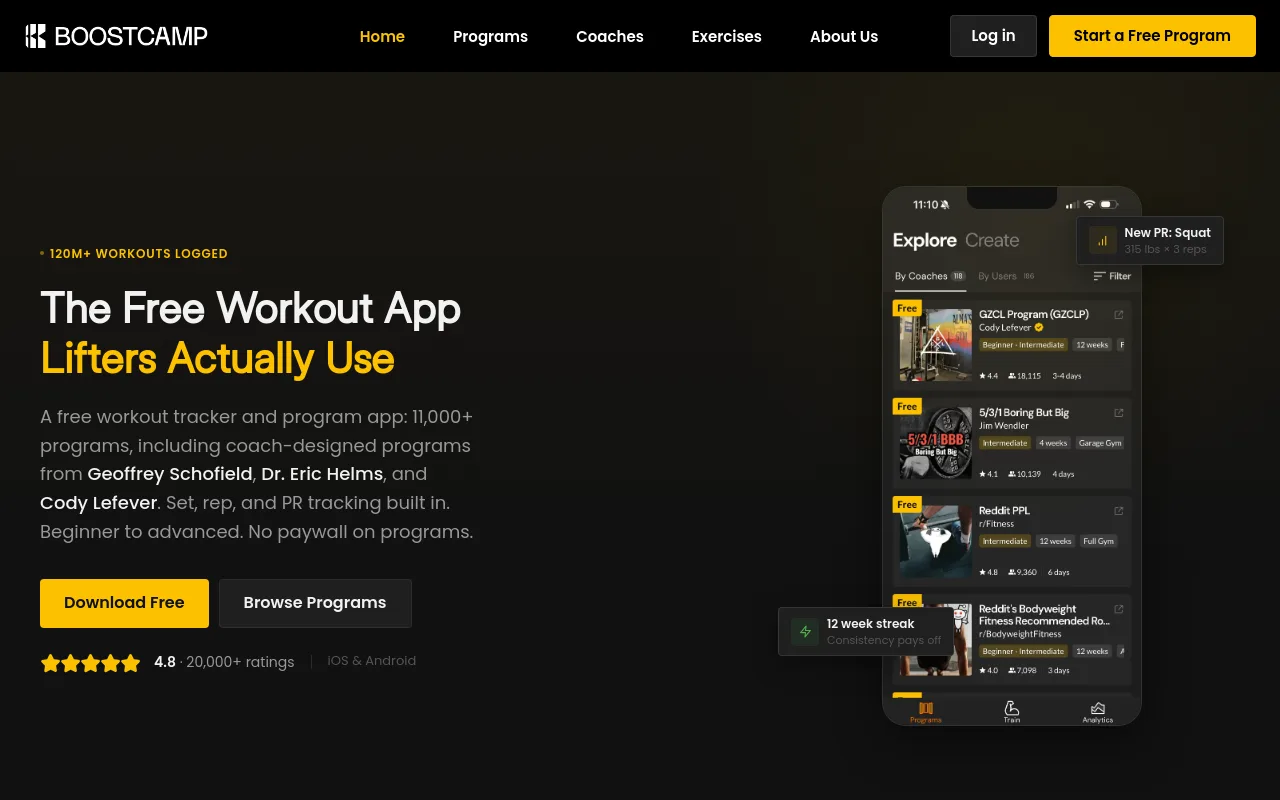
Boostcamp holds a wide selection of coach-led programs alongside popular community routines, and its workout tracking interface is frequently cited by users as one of the cleanest in the category. For a beginner who wants a structured, coach-designed calisthenics plan without paying for it, the free tier is worth exploring, though Boostcamp’s roots are in barbell and strength programming, and its calisthenics-specific coaching on the free tier is not a defined feature of the product. The recurring complaint among users is that the calisthenics catalog feels thinner than the strength-training catalog, which reflects the app’s roots in barbell programming.
The subscription pricing also draws pushback from users who feel the free tier covers most of what they actually need; upgrading makes more sense once you have exhausted the free coach programs and want deeper analytics.
6. Hybrid Calisthenics: Best for Absolute Beginners Starting from Zero
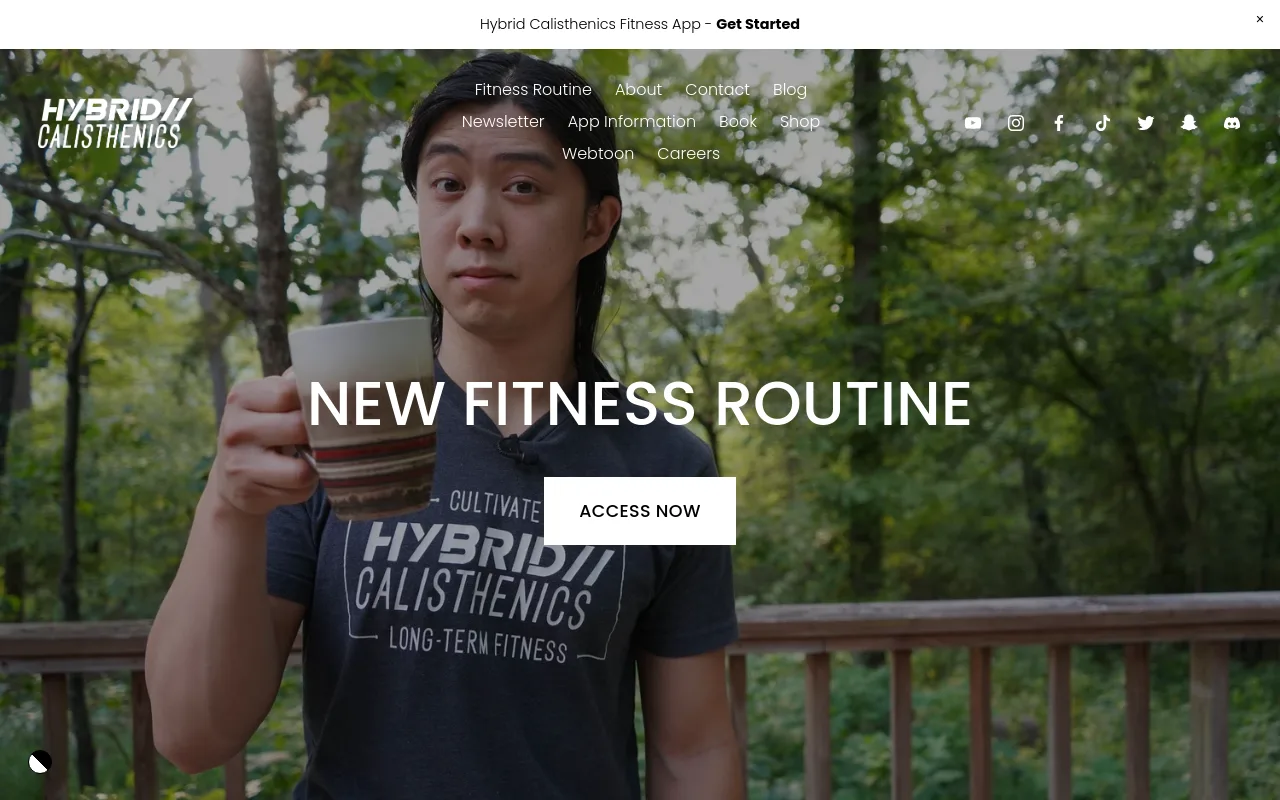
Hybrid Calisthenics is created by Hampton Liu and is the most accessible entry point for anyone who cannot yet do a single push-up or pull-up. The app is built around Hampton’s signature approach: positive tone, zero intimidation, and progressions that start from wall variations and move through master steps at whatever pace the user can sustain. The download volume and community size around Hampton’s content signal genuine real-world adoption, not just editorial goodwill. The tradeoff is ceiling: advanced athletes will outgrow the programming relatively quickly, and the app does not include nutrition tracking or adaptive plan updates based on logged performance.
7. Caliverse: Best for Clean UI and Equipment-Adaptive Routine Building
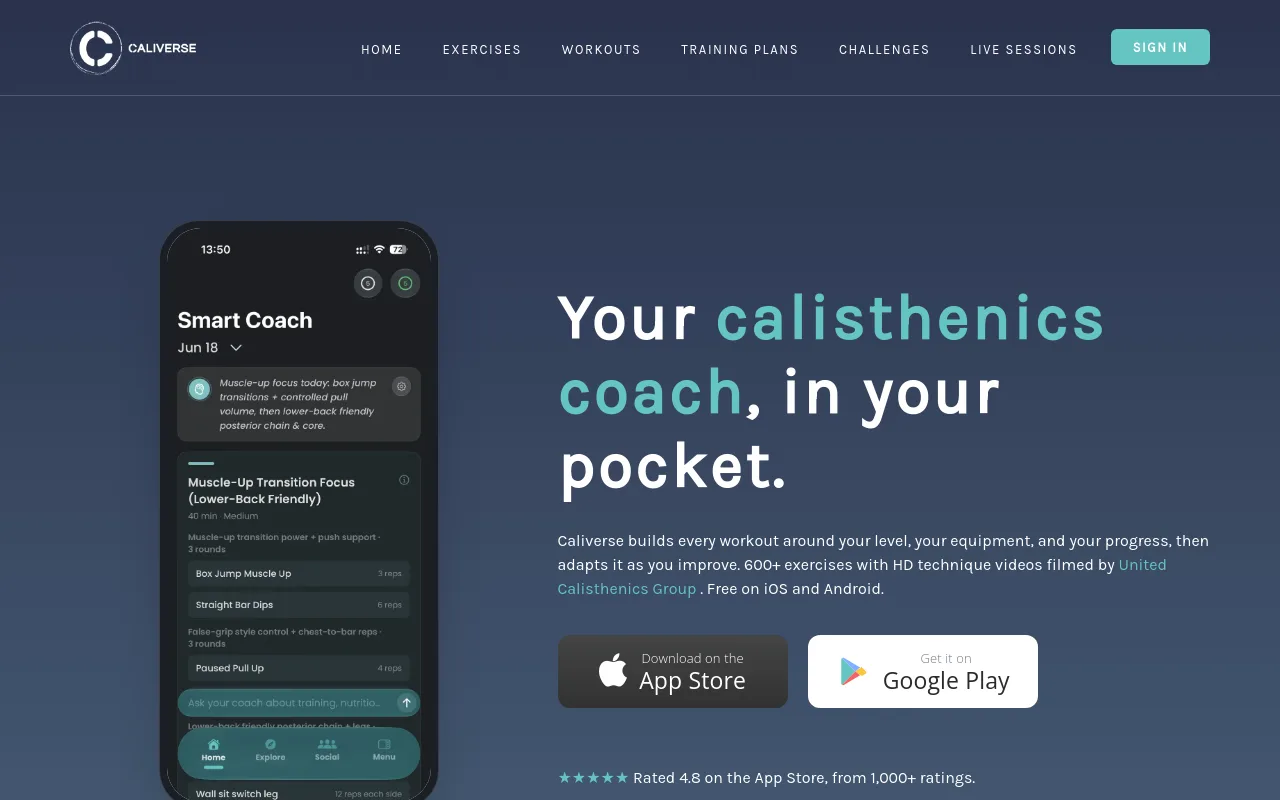
Caliverse features a clean, modern interface with HD video instructions and a Smart Coach that builds bodyweight routines around whatever equipment is actually available. For users who train across different environments, including home, park, and gym, the equipment-adaptive logic is a practical differentiator. The UI is frequently cited in App Store reviews as one of the most polished in the category, a signal that matters for long-term consistency, given industry research finding that friction in the daily-use experience is a primary driver of app abandonment before Day 30. The limitation is that Smart Coach, while useful for routine building, does not replace on-demand coaching access for mid-workout questions, and nutrition integration is not a core feature.
8. Cali Move: Best for Adaptive Programming from a Trusted YouTube Brand
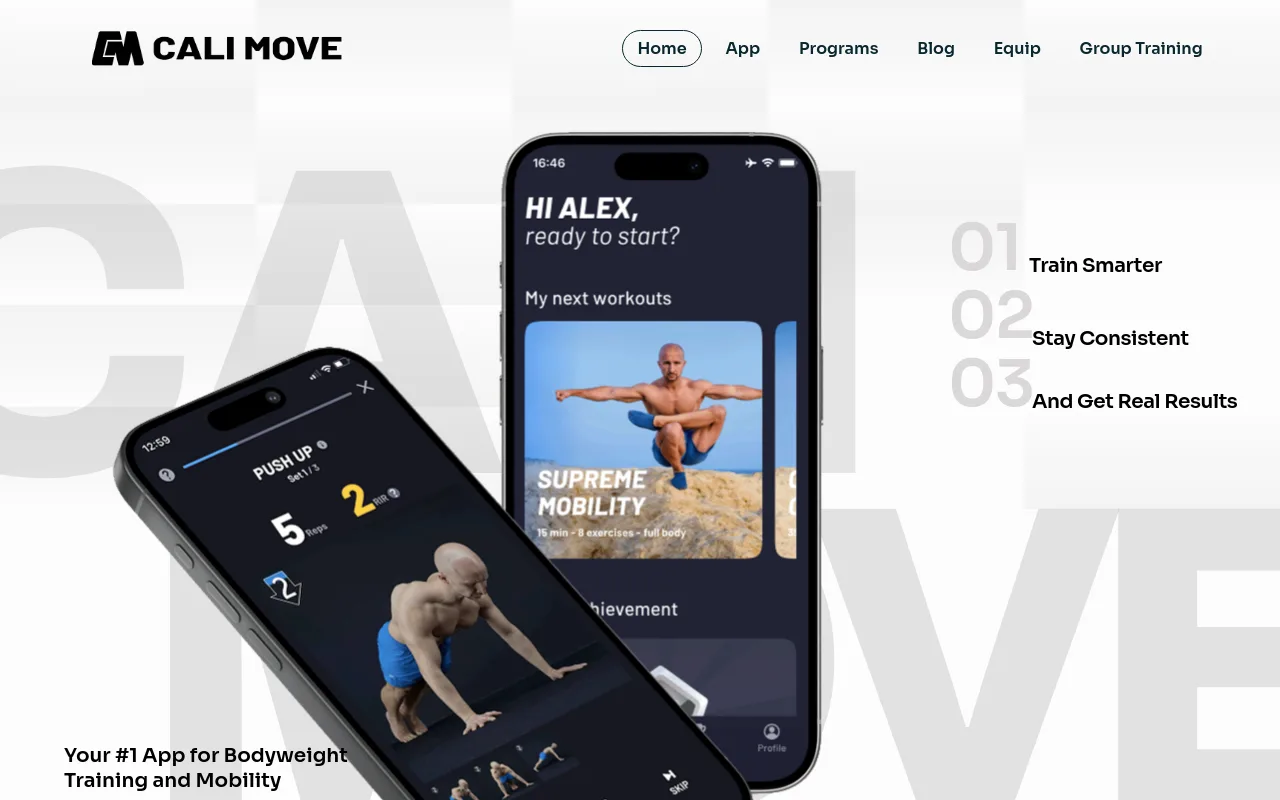
Developed by the popular Cali Move YouTube duo, this app brings their proven methodology into an adaptive digital format with programs including Calisthenics Complete, Aesthetic Calisthenics, and dedicated mobility training. The brand’s credibility and video production quality translate well into the app experience. The tradeoff is that as a newer adaptive app, its long-term progression tracking data and AI coaching features are still maturing compared to more established competitors like GetFit AI or Calisteniapp.
Related Reading
- Do Pull Ups Work Chest
- Grip Strength Norms
- Average Deadlift Weight
- 1 Rep Max Chart
- Average Male Deadlift
- Good Bench Press Weight
- Weightlifting Standards
- Average Bench Press Kg By Age
- Average Deadlift Weight Kg
Free vs Paid Calisthenics Apps: Is Upgrading Actually Worth It?
Most calisthenics apps offer a free tier, and most of those free tiers are genuinely useful up to a point. The real question is where that point is, and whether what sits behind the paywall actually moves the needle or just adds more exercise videos you didn’t need. What follows breaks down exactly where free tiers run out of road, and which paid features represent a structural upgrade rather than a marketing one.
What Free Tiers Actually Give You (and Where They Hit a Wall)
Free tiers are genuinely good. A well-built free calisthenics app gives you a large exercise library, demonstration videos, and basic logging. Nike Training Club’s free tier, for example, offers hundreds of guided workouts with no paywall, making it a credible benchmark for what “free” can deliver. The wall appears the moment you ask: “What should I do today?” The library stays silent. You’re left assembling your own sequence, guessing at volume, and repeating the same movements because nothing flags that you’re ready to progress.
Paid Calisthenics App Features Worth the Upgrade (and One That Isn’t)
The unlock that doesn’t justify the price: more exercise videos. That content gap between free and paid is nearly zero. The three that do matter are adaptive programming (your next session updates based on what you actually logged), integrated nutrition tracking so the reps show up in the mirror, and on-demand coaching access for the mid-session moments when you’re stuck on form with nobody to ask.
A personal trainer’s value comes from accountability, adaptive programming, and removing the cognitive burden of self-assembly, not from exercise knowledge, which is freely available. A paid app tier that replicates those three functions is a structural upgrade. Industry research on personal training costs supports this framing: the primary value delivered by trainers is accountability and adaptive programming, not exercise knowledge, and a paid app that delivers those same outputs at a fraction of the cost is economically comparable.
The Real Cost of Staying Free: Decision Fatigue as a Progress Tax
Every session you spend deciding what to do is a session where you’re spending energy before your first rep. Six weeks of “I’ll just do what I did last time” is six weeks of invisible stagnation. Most beginners who stall on free tiers aren’t lazy; they’re exhausted by the invisible overhead of self-programming before a single rep is done. The decision fatigue accumulates session by session, and the easiest way to relieve it is to stop making the decision at all, which is exactly what a well-built adaptive paid tier does.
Related Reading
- Average Deadlift Weight For Male
- Best Hiit Workout App
- Best Gym Workout App
- Best Workout Apps
- Best Free Workout Apps
Next steps
If your training sessions keep starting with ten minutes of scrolling before your first rep, the path forward starts with removing that decision entirely. An exercise library hands you 450 words and asks you to write the sentence. What actually drives results is a structured, adaptive plan that tells you exactly what to do today, in what order, and how to eat to make those reps show up in the mirror. Start with our AI fitness app.
The retention data behind the dropout problem makes the next step obvious. Decision paralysis from unstructured exercise libraries is a central driver of the 77 to 90 percent abandonment rate inside the first 30 days, meaning the library itself becomes the friction point that ends most attempts before habits can form. Separately, training and nutrition existing in separate, uncommunicating apps is the structural reason body composition stays frozen while fitness improves. Combine those two findings and the logical conclusion is the same: you need one system that removes the daily planning decision and closes the loop between what you train and what you eat.
Start with GetFit AI. The custom plan generates at onboarding, integrated calorie tracking connects your training to daily nutrition targets from day one, and the AI trainer chat is available mid-session the moment a form cue stops making sense. No library to browse. No sequence to assemble. Just the next workout, waiting when you open the app.
Frequently Asked Questions
How were the apps in this list actually evaluated and ranked?
The eight apps were ranked not on exercise count alone, but on whether each one removes the daily decision of what to do, in what order, at what intensity, and with what nutritional support. Each app’s capabilities were mapped feature-by-feature against criteria like variation ladders, session-to-session adaptation, integrated calorie and macro tracking, on-demand coaching access, and onboarding personalization.
Why doesn’t having a huge exercise library lead to results?
A large exercise library doesn’t tell you what to do today, it creates decision paralysis. Lucid’s 2024 retention research confirms that users given hundreds of movements but no daily directive, no prescribed sequence, and no progression guidance are expected to self-program, and most people aren’t qualified to do that, which is a central driver of abandonment within the first 30 days.
Which app actually combines adaptive programming, coaching, and nutrition tracking in one place?
GetFit AI is the only app among the eight reviewed that combines athlete-style custom workout plans, 24/7 AI coach chat, integrated calorie tracking, and social streak competitions under a single login. It generates a fully personalized calisthenics program at setup with no self-assembly required, and the AI trainer chat answers form questions and suggests progressions mid-workout.
Is there a good calisthenics app that works offline without a subscription?
GainStrong uses a local-first design that works completely offline, with personalized plans and workout tracking that require no subscription and no internet connection. The honest limitation is that its offline-first architecture makes adaptive programming harder, since the app cannot update dynamically the way cloud-connected apps can.
Is it worth paying for a calisthenics app, or is a free tier good enough?
Free tiers are genuinely useful for exercise libraries, demonstration videos, and basic logging, but they hit a wall the moment you ask what you should do today, nothing flags when you’re ready to progress or adapts your next session based on performance. The upgrades that justify paying are adaptive programming, integrated nutrition tracking, and on-demand coaching access; more exercise videos alone do not justify the cost.