Average Bench Press by Age, Weight, and Sex (2026)

The average bench press number gets quoted constantly, but it comes from a self-selected pool of dedicated trackers. Here is what that means for how you should actually read your own lifts.
You already know the number. The average bench press is 212 lbs for men and 112 lbs for women (1RM), based on over 48 million logged lifts. That figure gets quoted everywhere. The common assumption is that consistent gym attendance alone will eventually close the gap between a lifter’s current number and the average benchmark. The problem is what it quietly leaves out.
If you looked it up, felt a knot in your stomach, and thought “I’m nowhere near that,” you’re not alone. But you may also be comparing yourself to the wrong group entirely.
The 212-220 lb figure for men and 104-112 lb figure for women comes from a specific population: people who actively track their lifts. As Stronger’s analysis makes clear, these averages represent a self-selected, more dedicated subset of lifters. They log sessions. They show up with intent. They are not the person wandering in three times a week with no clear plan. See our AI fitness app for how this works in practice.
Consider who bothers to log every lift in a tracking app. Casual gym-goers rarely do. Neither does the person who does a few sets between scrolling their phone. The data skews toward people who are already invested enough in their training to measure it consistently. That’s a fundamentally different population from the broader gym-going public, and treating their average as a universal benchmark is like using marathon finisher times to judge whether a recreational jogger is “normal.”
The result is a systematic inflation. A 30-year-old who trains three days a week without a program will almost certainly press well below that figure. That is the predictable outcome of unstructured effort. The real cost is a planning deficit. If you’ve been training without a structured program and find your numbers stalling despite consistent attendance, a periodized plan makes the most difference at that inflection point, when effort is already there but progress has flatlined.
Key takeaways
- The average bench press is 212 lbs for men and 112 lbs for women (1RM), drawn from over 48 million logged lifts, but that number shifts dramatically once bodyweight, age, and training experience enter the picture.
- Bench press strength peaks between the mid-20s and mid-30s, then declines measurably as hormonal output drops and recovery slows, meaning the benchmark you're chasing isn't static.
- Heavier lifters produce more absolute force by default, so comparing raw pound totals across bodyweights tells you almost nothing useful about where someone actually stands.
- 63% of new gym members abandon training before accumulating enough volume to move past the novice tier, consistent attendance without progressive structure is the most common reason lifters stall between novice and intermediate.
- A 225 lb bench press lands in elite territory for most bodyweight brackets, it's not a gym myth, but it's also not a reasonable short-term target without a plan built around deliberate progression.
- GetFit AI's Structured Training closes the gap by delivering workouts as a coherent program, not random exercises, so the progression that moves your bench number is built in from session one.
Average Bench Press by Age: How Strength Peaks and Declines Across Decades
Bench press strength does not decline on a fixed schedule, but it does follow a pattern that most lifters misread. Understanding when strength typically peaks, how it shifts across each decade, and what the actual averages look like for men and women gives you a realistic baseline to measure against rather than an inflated one. GetFit AI uses that same kind of honest benchmarking to set targets that reflect where you are now, not where a different age group or a dubious viral claim suggests you should be.
When Bench Press Strength Peaks
Bench press strength peaks between the mid-20s and mid-30s, then begins a measurable decline. This window reflects the convergence of peak testosterone output, accumulated training experience, and full neuromuscular maturity. After the mid-30s, hormonal shifts and reduced recovery capacity begin to pull the ceiling down, slowly at first, then faster if training becomes inconsistent.
The critical word there is “if.” The decline is real, though not inevitable at the rate most people experience it.
Age-by-Decade Bench Press Averages for Men and Women
The table below draws on Strength Level’s 2024 standards, derived from nearly 49 million logged lifts. These reflect intermediate-level active lifters at average bodyweight, not the general population.
A 45-year-old comparing his current number to the 20s column is comparing himself to a different cohort, at a different hormonal peak, often at a different bodyweight. That gap is partly a math problem, not a training failure.
One additional reality worth naming: extraordinary strength claims at advanced ages, an 84-year-old benching elite loads, a retired athlete allegedly pressing 450 lbs for sets of ten in his mid-50s, circulate constantly and are almost universally implausible. They distort what “good” looks like at 50 or 60. The Strength Level data above is a far more honest benchmark precisely because it is aggregated from tens of millions of real, logged lifts rather than unverifiable anecdotes. Use those numbers to orient yourself, not viral outliers.
Why the Decline in Your 40s and 50s Is a Training Problem
The measurable strength drop seen across the 40s and 50s in population data looks biological, but in structured lifters it shrinks considerably. Research comparing trained and sedentary adults consistently shows that resistance-trained individuals retain significantly more lean mass and contractile strength per decade than untrained peers, with some longitudinal studies showing that lifters who maintain progressive programming through their 50s retain strength far closer to their peak than untrained peers.
The common thread behind stalled numbers in older lifters is the same pattern that shows up at every age: the same weights, the same exercises, week after week, with no structured progression to force adaptation. The hidden cost of unstructured training compounds with every passing year, and it is the single biggest factor separating lifters who plateau in their 40s from those who keep moving the bar.
This is exactly where GetFit AI’s 1,480 exercises, each with a video guide, step-by-step instructions, form tips and common mistakes, plus muscle maps and free calculators on the website, do their most important work. The plan adjusts across the overall program arc so that each session builds on the last, removing the guesswork that causes most intermediate lifters to stall. For anyone who has previously struggled with consistency due to a lack of program structure, the benefit is immediate, starting from the very first workout session. There is no ambiguous ramp-up period where you wonder whether you are doing the right things in the right order.
The second layer is access. One of the most persistent frustrations older lifters face is not knowing whether a tweak in their numbers signals normal fluctuation or something that needs to change in their program. GetFit AI gives you someone to ask the second you are confused, instead of guessing or leaving the question unanswered. That alone keeps training moving forward through the minor setbacks that derail uncoached lifters.
Accountability compounds this further. The app’s Friends, challenges, and leaderboards feature is most powerful once you have connected with at least one friend, a training partner, a gym peer, someone who will notice if you go quiet for two weeks. That social layer becomes the retention mechanism that keeps users training past the critical third week, which is where unstructured programs typically lose people.
If you want to get started, GetFit AI Premium is available at $1.99/week, $4.99/month, or $49.99/year, structured access to a program that actually adjusts, an expert layer available the moment you need it, and the social infrastructure to keep showing up. The Strength Level data makes clear what is achievable at every decade. The question is whether your program is built to get you there.
Related Reading
- Best Fitness Apps
- How Many Pull Ups Should I Be Able To Do
- Average Grip Strength Male
- How Much Does A Bench Press Bar Weigh
- Average Male Bench Press
- How Much Can The Average Man Bench Press
- Grip Strength Chart
- Symmetric Strength
- Bench Press Standards
Average Bench Press by Bodyweight: Why a 135 lb Bench Means Completely Different Things
Walk into any gym and you will hear someone celebrating a bench press milestone for the first time. That person and the lifter next to them chasing the same number are not at the same place in their training. The number is identical. What it means is not.
Why Heavier Bodies Produce More Absolute Force and Why That Makes Raw Pound Comparisons Misleading
According to industry data, heavier individuals naturally possess more muscle mass and are therefore capable of producing greater absolute force, which makes raw pound-for-pound bench press comparisons between lifters of different bodyweights misleading. This is the entire frame.
A 250 lb man carries more contractile tissue, more bone density, and more structural leverage than a 130 lb man before either of them touches a barbell. Comparing their bench press totals without accounting for that is like comparing two people’s rent without mentioning that one lives in rural Ohio and the other lives in Manhattan. The dollar figure is real. The meaning is inverted.
The Same 135 lb Bar: Advanced for a 114 lb Lifter, Untrained Baseline for a 220 lb Lifter
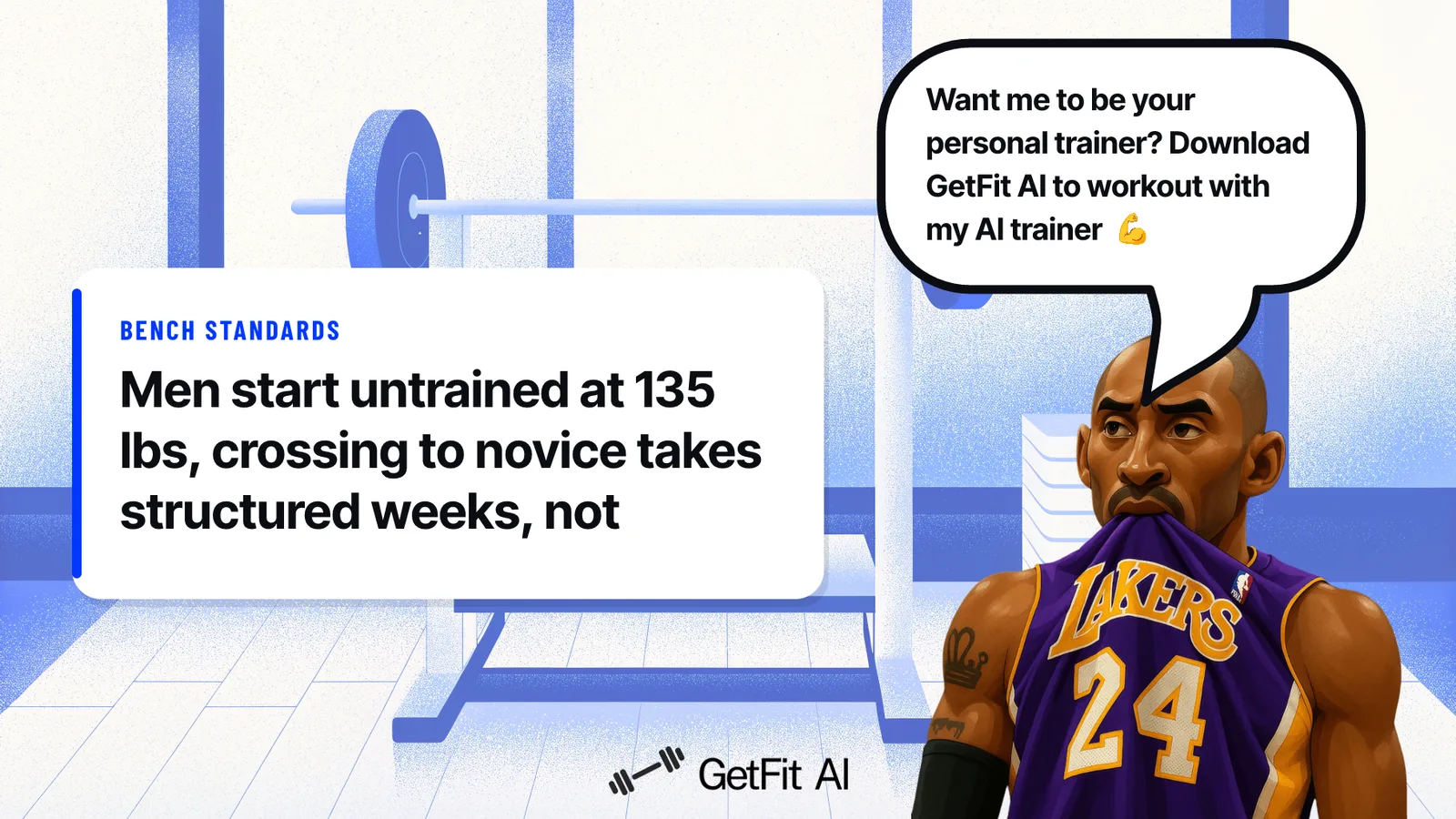
According to Strength Level’s bench press standards, sourced from roughly 49 million logged lifts, a 135 lb bench press places a 114 lb lifter in the advanced category. That same 135 lb bar is the untrained baseline for a 220 lb lifter. One number. Two opposite signals. The same source also notes that an untrained adult male of average bodyweight (approximately 198 lbs) typically benches around 135 lbs for a one-rep max, which means the number most beginners treat as a milestone is the floor for a lifter of average size.
One confusion that trips up even motivated beginners: hitting a bodyweight bench press, say, 185 lb at 185 lb bodyweight, feels like a clear landmark, but then it doesn’t line up neatly with where they stand on overhead press or incline press standards printed on the same chart. That mismatch is real. A single bodyweight bench number doesn’t capture overall pressing ability or balance across movements.
It’s a snapshot of one lift, not a verdict on your upper-body strength. When that confusion hits mid-program, the instinct is to guess, second-guess your training, or quietly drop the goal. GetFit AI is built to remove that moment of guessing entirely. The Athlete-Style Custom Workout Plans are structured around your actual numbers and bodyweight from the first session, so the program reflects what the standards mean for you, not for a generic lifter.
And if you’re still uncertain, GetFit AI puts someone in your corner the second confusion surfaces, rather than leaving you to interpret charts alone.
Bodyweight Bench Standards Table: What Good Actually Looks Like at 135 lb, 165 lb, 185 lb, and 220 lb Body Weights
The table below draws from Strength Level’s 2024 dataset. Figures are approximate one-rep max values for adult men at each experience tier.
Knowing which row you belong in changes everything about how you read your own progress. GetFit AI’s Structured Training is most useful precisely here, not just at the start, but across the full program arc, where lifters who previously struggled with consistency due to lack of structure get a clear path from their current tier toward the next. For lifters who train alongside a partner or group, the Friends, Challenges, and Leaderboards feature adds the social accountability layer that keeps training consistent past week three, most beneficial once you’ve connected with at least one friend inside the app.
99/year for lifters ready to commit to the full arc.
Bench Press Standards by Experience Level: Untrained to Advanced (Men and Women)
Most lifters have no reliable reference point for where their bench press actually stands, which makes it nearly impossible to train toward a meaningful target. ExRx.net’s five-tier classification system changes that by anchoring each level to real population data, with distinct thresholds that reflect genuine adaptation rather than rough estimates. What follows breaks down those tiers for both men and women, explains what the gaps between them actually demand, and gives you the context to locate yourself accurately and train accordingly.
What ExRx.net’s Experience-Level Classifications Actually Mean and Where the Numbers Come From
According to ExRx.net’s Bench Press Strength Standards (2024), the five-tier classification system (Untrained, Novice, Intermediate, Advanced, and Elite) is built from population-level performance records aggregated across thousands of lifters over many years. Each tier reflects a distinct adaptation threshold, not just a loose range. The critical detail: strength gains between tiers are not linear. Moving up requires deliberate progressive overload, not simply more time under the bar. That distinction is what most recreational lifters miss entirely.
“Lifters get confused when they can meet a higher-level bench press standard (e.g. bodyweight bench press) but fail a lower-ranked one. Mixed-modality strength charts create inconsistent and frustrating benchmarks.”
— what we hear from strength training enthusiasts
Untrained vs. Novice: The First Benchmark Gap
The untrained baseline, per ExRx.net, sits at approximately 135 lbs for men and 40 lbs for women (ages 18-39). These figures represent someone with no prior structured training history. The novice tier jumps to roughly 160-175 lbs for men and 65-75 lbs for women.
That gap of 25-40 lbs sounds manageable. In practice, crossing it consistently takes structured programming applied over weeks, not casual attendance applied over months. A 27-year-old who has been going to the gym for a year and benches 165 lbs is technically novice, close to intermediate, but if he has been stuck at that weight for six months, he is not progressing through the tier.
He is just visiting it.
Intermediate and Advanced Standards Side by Side
ExRx.net places the intermediate standard at approximately 215 lbs for men and 115 lbs for women. Advanced sits at 290 lbs or more for men and 165 lbs or more for women. The jump from intermediate to advanced is steep by design: it reflects the point where gains require periodized programming, not just consistent effort. These standards assume full range of motion with acceptable form. Lifters dealing with structural asymmetries, like uneven scapular positioning during heavy sets, often find their real-world numbers diverge from chart predictions, making tier placement feel inconsistent and frustrating even when effort is genuine.
Why the Average Active Lifter Number Is Skewed by the Minority Who Actually Progress
ExRx.net notes that most recreational lifters plateau in the novice-to-intermediate range without a structured progressive program. The minority who train with deliberate progression pull the reported “average” bench press number upward. This means the widely cited average for active male lifters functions less like a population midpoint and more like a tracker-filtered ceiling: a number produced by the subset of lifters disciplined enough to log workouts and follow programs.
Why Most Lifters Stay Stuck Between Novice and Intermediate, and What the Data Reveals
Most lifters who stall between novice and intermediate aren’t failing because they lack effort or consistency. They’re failing because the habits keeping them stuck look almost identical to the habits that should be working. What follows breaks down exactly where that gap opens and why it persists.
The Attendance Illusion: Why Showing Up Doesn’t Move the Bar
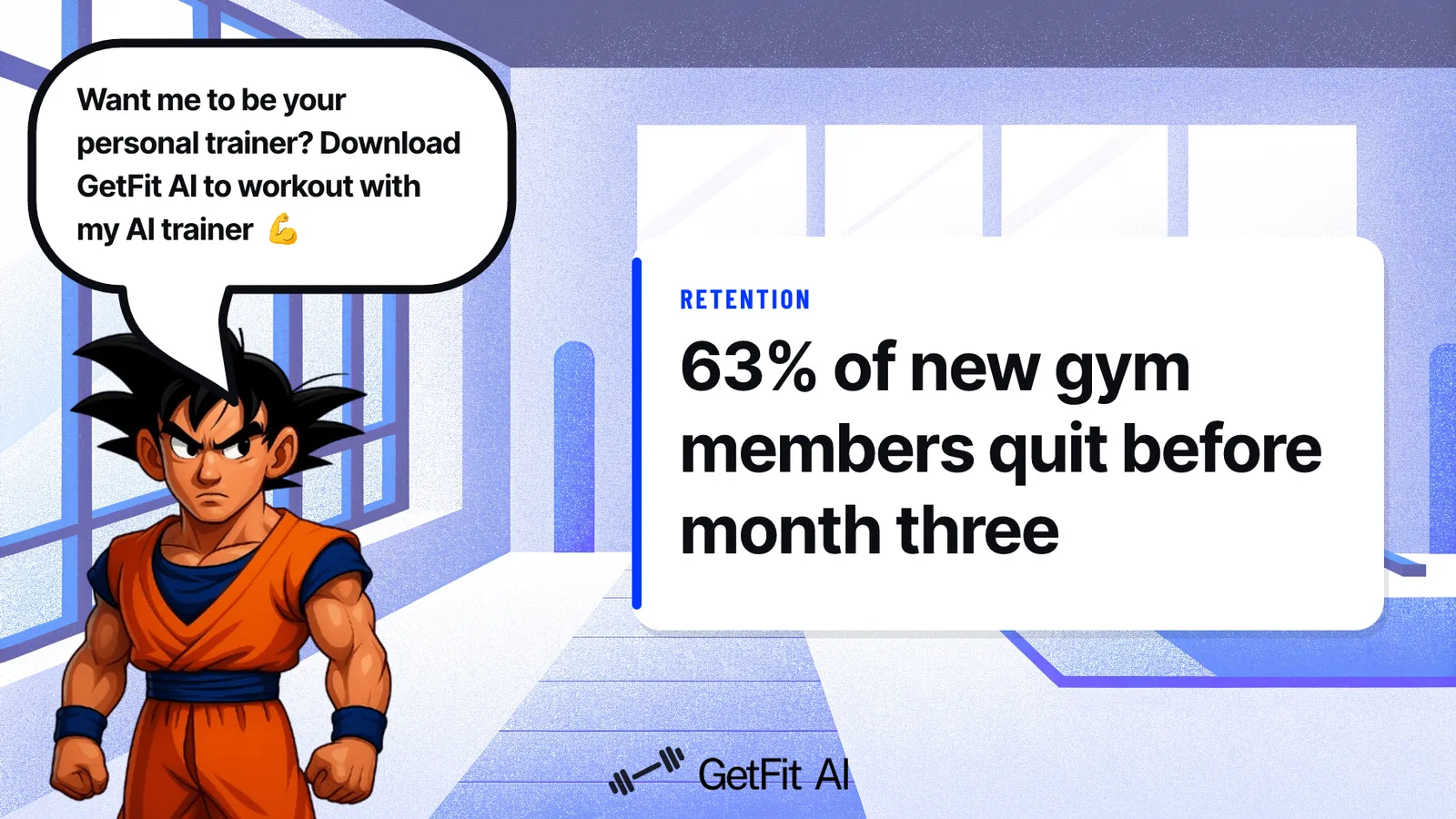
The common assumption among beginner lifters aged 25-30, with no structured plan and no clear idea of what to eat, is that consistent gym attendance alone will eventually close the gap between their current number and the average benchmark. In the Journal of Science and Medicine in Sport (Sperandei et al.) (2016), 63% of new gym members abandoned training before the third month, and fewer than 4% were still training continuously after twelve months. This aligns with broader research findings: a 2023 study confirms that membership withdrawal and exercise dropout rates are 40-65% in the first six months. That means the majority of people who believe attendance will eventually move the bar quit before they ever find out whether they were right.
Anyone who has shown up four days a week for months, moved through the same chest routine, and still benched the same 155 lbs knows the feeling: the effort is real, the results are not. What feels like training is rehearsal. The body adapts to a stimulus once, then stops. Repeating the same weights, sets, and rep ranges week after week gives the body nothing new to respond to, so it does nothing new. Attendance without progressive overload is the primary mechanism of the bench press plateau.
Attendance without progressive overload is the primary mechanism of the bench press plateau, not a lack of effort.
Three Friction Points That Lock Lifters in the Novice-to-Intermediate No-Man’s-Land
Three specific patterns explain why the bench press plateau is so persistent. First, no structured program. “I just do the same thing every time” is not a training plan; it is a habit with no progression logic built in.
Second, no external frame of reference. Without knowing what a realistic target looks like at their bodyweight and experience level, lifters either chase numbers that are too ambitious or settle for numbers that are too low, losing motivation either way. Third, getting derailed mid-session by bad reps, grip uncertainty, or the absence of a spotter cuts workouts short before any meaningful overload is applied.
The Plateau Is a Planning Problem, Not a Strength Problem
The body retains the capacity to adapt long after progress stalls. What it lacks is a clear signal. Unstructured training delivers an inconsistent stimulus: some sessions push harder, most repeat the familiar, and the body never receives a coherent reason to grow stronger.
Related Reading
- Do Pull Ups Work Chest
- Grip Strength Norms
- Average Deadlift Weight
- 1 Rep Max Chart
- Average Male Deadlift
- Good Bench Press Weight
- Weightlifting Standards
- Average Bench Press Kg By Age
- Average Deadlift Weight Kg
How to Improve Your Bench Press: From Estimating Your 1RM to Building a Progression Plan
Showing up consistently is the price of admission, not the path to progress. The lifters who feel most stuck are often the most committed ones: they never miss a session, they push hard every set, and the bar still reads the same number it did four months ago. This points to a structural irony hiding in plain sight: the large majority of gym-goers who quit within the first few months never accumulate enough training volume to plateau, while the lifters who stay consistently, the ones most likely to feel stuck, are the exact population most harmed by the absence of a structured plan.
Consistent attendance without systematic overload produces the worst outcome: enough stimulus to prevent detraining, but not enough progressive signal to drive adaptation, leaving committed gym-goers frozen at the same weight indefinitely while believing effort alone should be working.
Estimate Your 1RM Without Ever Maxing Out
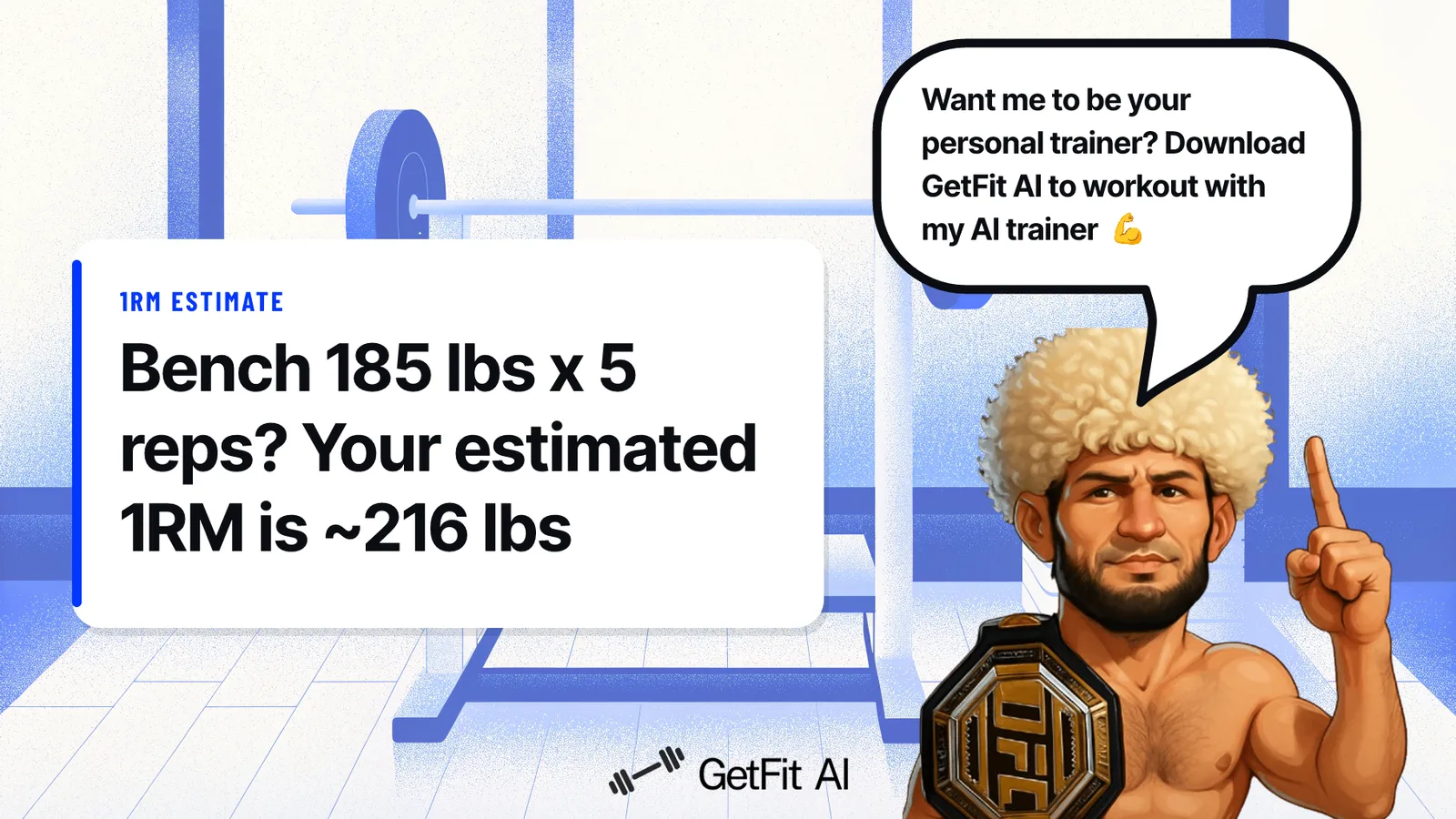
You can calculate your one-rep max from a submaximal set, and the math is simpler than most people expect. The Epley formula works like this: take the weight you lifted, multiply it by the number of reps, divide by 30, then add the original weight back. So if you bench 185 lbs for 5 reps, that gives you 185 x 5 / 30 + 185, which equals roughly 216 lbs.
The Brzycki formula offers a slightly different route: divide the weight by (1.0278 minus 0.0278 times the reps). Both formulas perform well at lower rep ranges (under 10 reps), but Brzycki tends to be more conservative at higher rep counts, which is worth knowing if you typically work in the 8-12 range.
Submaximal protocols produce reliable 1RM estimates without requiring a true maximal effort, reducing both injury risk and fatigue. The honest caveat: both formulas assume consistent technique. If your form breaks down at rep 4, the estimate drifts.
The Three Form Variables That Cap Your Bench
Grip width changes everything. A wider grip shortens the range of motion and shifts load toward the pecs; a narrower grip transfers more demand to the triceps. EMG data indicates that a grip roughly 1.5 times shoulder width produces the highest pectoral activation, but it also increases shear force at the shoulder joint. Lifters who bench with a grip that is too wide for their shoulder mobility often hit a strength ceiling that has nothing to do with muscle capacity.
Bar path, arch position, and foot contact are the other variables worth addressing. A bar that travels straight up and down instead of tracing a slight diagonal toward the lower chest creates unnecessary shoulder stress.
Bar Path, Arch, and Foot Contact
A bar that travels straight up and down instead of tracing a slight diagonal toward the lower chest creates unnecessary shoulder stress and removes the mechanical advantage your lats can provide. The correct path touches the chest at roughly nipple height and presses back toward the face on the way up, forming a shallow J-curve. Arch position is frequently misunderstood: a moderate arch is a spinal position that depresses the shoulder blades, shortens the stroke, and protects the rotator cuff by keeping the humerus in a safer angle relative to the torso. Excessive flattening of the back, often cued as “keep it natural,” can actually increase impingement risk for lifters with limited shoulder external rotation.
Foot contact is the variable most casually abandoned. When the feet leave the floor or drift forward onto the toes, leg drive disappears entirely. Leg drive does not mean bridging the hips off the bench; it means creating full-body tension by driving the feet into the floor, which transfers through the hips and into a stable upper back, giving the pressing muscles a rigid platform to push against. Measured force transfer in the bench press confirms that lower-body tension meaningfully increases the load a lifter can handle at the top of the movement. Correcting all four variables simultaneously is rarely realistic, so prioritize the one causing the most obvious energy leak, fix it across several sessions, then move to the next.
Related Reading
- Average Deadlift Weight For Male
- Best Calisthenics Workout App
- Best Hiit Workout App
- Best Gym Workout App
- Best Workout Apps
- Best Free Workout Apps
Where Do You Actually Stand? Find Your Bench Press Level by Sex, Weight, and Age
Find Your Bench Press Level by Sex, Weight, and Age
Three variables sit between you and an honest answer: your sex, your bodyweight, and your training age. Get all three right, and the tier you land in stops feeling like a judgment and starts functioning like a coordinate on a map.

Cross-Reference Your Sex, Bodyweight, and Age Into a Single Tier
Start with ExRx.net’s tiered standards, which sort lifters by bodyweight and experience level across both sexes. A 28-year-old male who benches 175 lbs lands in the novice tier, not because he is weak, but because the intermediate threshold at that bodyweight sits closer to 215 lbs. That single lookup takes under a minute and replaces months of vague self-comparison.
The confusion many beginners carry into the gym, clearing one chart’s standard while failing another, almost always traces back to mixing metrics from different classification systems. A lifter can hit a bodyweight bench press, a milestone that reads as intermediate or even advanced on certain tables, and then open a different chart and read “novice.” Both numbers are correct; the system is inconsistent.
The fix is not to find a more flattering chart. It is to lock onto one framework, apply it consistently, and use a tool that shows you movement over time, not a snapshot that shifts every time you change sources. That is precisely where GetFit AI’s Structured Training earns its place: from your first workout session it tracks progress across the overall training arc, so the question stops being “which chart am I on today?”
And starts being “am I actually getting stronger?”, the question that matters.
The deeper synthesis here is that most lifters are calibrating their self-assessment against a fictional average, one manufactured by survivorship bias on social media and a comparison pool of elite, self-selected performers. When community data showing fewer than 1% of the global population can bench 225 lbs is cross-referenced against ExRx’s tiered standards, which place 225 lbs well into the Advanced classification for most bodyweights, the practical implication is that the frustration a 185 lb lifter feels about benching their bodyweight is a perception problem, not a reflection of their actual standing among everyone who has ever touched a barbell.
Knowing your tier is the starting point. Acting on it consistently past week three is where most lifters stall. GetFit AI’s friends, challenges, and leaderboards layer is built specifically for that gap, and it is most powerful once you have connected with at least one friend in the app, turning an abstract classification into a live competition that keeps training from going quiet.
The Daily Workout Motivation Facebook Group captures exactly how much external accountability shifts training behavior; GetFit AI builds that mechanism directly into the product rather than leaving it to chance. The accountability layer is there from day one, because a tier on a chart only changes if you keep showing up.
Next steps
If your bench press hasn’t moved despite months of consistent attendance, the path forward starts with recognizing that repeated same-weight effort generates no new adaptive signal for the body to act on. Start with our AI fitness app.
The tracker-filtered ceiling problem means the 212 lb average you measured yourself against was never a population midpoint. It was produced by a self-selected minority who log workouts and follow programs, making the gap you feel partly a perception artifact, not a true strength deficit. At the same time, the structural irony of consistent training without progressive overload means the lifters most harmed by the absence of a plan are exactly the committed ones who never miss a session. These two realities together point to one corrective action: replacing unstructured attendance with a plan that tells you precisely when to add a rep, increase load, or recover, starting from your actual current tier.
Start with the AI fitness app to generate a custom plan built around your bodyweight, experience level, and goal from the first session. The guesswork about what to do next, and whether your numbers are improving, gets replaced by a progressive structure that keeps moving the bar.
Frequently Asked Questions
Is 135 lbs a respectable bench press?
It depends entirely on your bodyweight. According to Strength Level’s 2024 dataset, 135 lbs places a 114 lb lifter in the advanced category, while that same weight is the untrained baseline for a 220 lb lifter. One number can mean two completely opposite things depending on who is lifting it.
How much can the average untrained man bench press?
According to Strength Level’s bench press standards, an untrained adult male of average bodyweight (approximately 198 lbs) typically benches around 135 lbs for a one-rep max. ExRx.net’s 2024 standards place the untrained baseline at approximately 135 lbs for men aged 18-39.
Why is my bench press so far below the ‘average’ I keep seeing online?
The widely cited average of 212 lbs for men comes from people who actively track their lifts in apps, a self-selected, more dedicated subset of lifters, not the general gym-going public. If you train without a structured program, pressing well below that figure is the predictable outcome of unstructured effort, not a sign of failure.
Does bench press strength decline as you get older, and is it avoidable?
Bench press strength peaks between the mid-20s and mid-30s and does decline after that, but the rate is not fixed. Research consistently shows that resistance-trained individuals who maintain progressive programming through their 50s retain strength far closer to their peak than untrained peers, the decline is real, but it is not inevitable at the rate most people experience it.
Why do I keep plateauing even though I go to the gym consistently?
Attendance alone does not move the bar. Moving between experience tiers requires deliberate progressive overload, not simply more time under the bar, and most recreational lifters plateau in the novice-to-intermediate range without a structured progressive program. The post also notes that 63% of new gym members abandon training before the third month, meaning most people quit before finding out whether consistency alone would have worked.







