13 Best Fitness Apps to Transform Your Workouts in 2026
Most fitness apps don’t fail because of missing features. They fail because a library is not a plan. Here is how to pick one that actually tells you what to do.
The common assumption among beginner lifters, typically 25-30, with no structured plan and no idea what to eat, is that “the problem is that I haven’t found the right app yet; once I find the one with the best content library, I’ll finally have a plan.” The problem is the criteria most people use to pick one.
A larger exercise library looks like more value, but it functions more like a coach. What most teams in the space consistently report is that the majority of fitness app users download multiple apps and still fail to follow a structured program, producing inconsistent workouts and no measurable progress. More options, same result.
See our AI fitness app for how this works in practice.
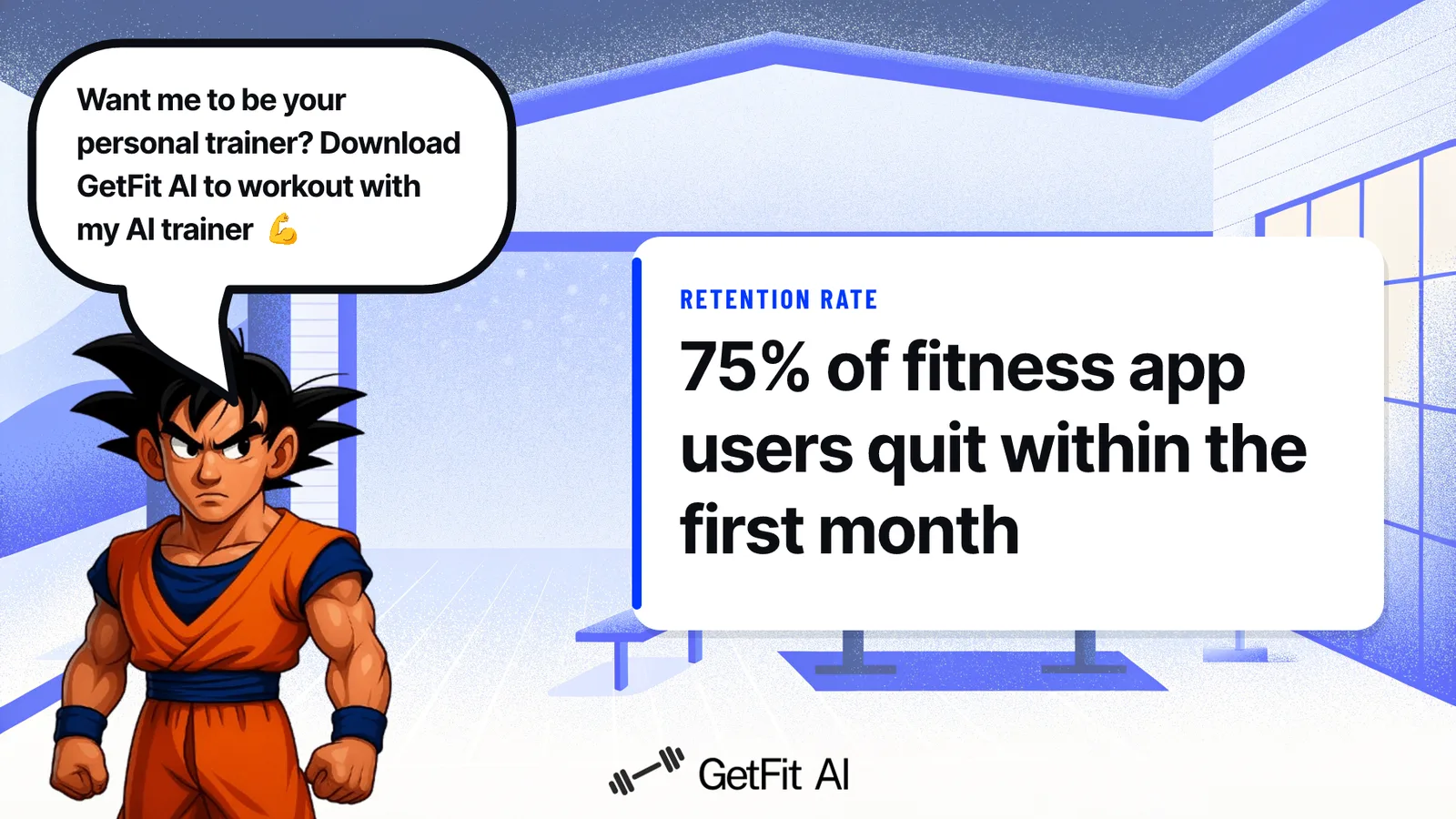
According to Lucid (2024), 75% of fitness app users are gone within the first month. The sharpest drop happens in the first two weeks, which is exactly when confusion peaks and confidence is lowest. Without a custom workout plan telling you what to do, in what order, and at what weight, most sessions default to the same three machines the user already knows. Weeks pass. Nothing changes. The app gets deleted.
An AI fitness app built around structured daily programming removes that decision entirely, and this matters most for beginners who have previously struggled with consistency because they lacked any program structure to follow. The plan is waiting before you walk through the door.
What you eat determines whether training shows up in the mirror. Across the market, most fitness apps focus on content libraries and workout videos while neglecting nutrition guidance, leaving users without a plan that connects training to visible results. A beginner lifts three days a week, has no idea what their protein target is, and wonders after two months why nothing looks different, because the training and the nutrition were never connected by a plan that addressed both.
Key takeaways
- A bigger exercise library isn't a plan, it's a menu, and browsing a menu doesn't build muscle.
- The criteria most beginners use to pick a fitness app (feature count, content variety, star rating) are the exact criteria that predict failure.
- 80% of gym-goers quit within 90 days, not because they lacked motivation, but because they never had a clear next step.
- The one question that separates every app on this list: does it tell you what to do today, or does it hand you options and wait?
- Nutrition guidance matters as much as the workout itself, an app that programs your training but ignores your diet solves half the problem.
- GetFit AI closes the gap with structured training programs, not a library of random exercises, so every session fits a coherent progression and you walk into the gym knowing exactly what you're doing and why.
How to Choose the Best Fitness App for Your Goals: Before You Download Anything
Before you download anything, understand that the real problem is knowing which criteria actually predict results before you hand over your time, your money, or both. The common assumption among beginner lifters with no structured plan and no clear idea of what to eat is: “The problem is that I haven’t found the right app yet, once I find the one with the best content library, I’ll finally have a plan.” Walk into any app store and search “fitness,” and you will find hundreds of options, each promising to be the last app you will ever need.
The Three Non-Negotiables That Separate a Working App From a Fancy Procrastination Tool
Three things determine whether a fitness app moves you forward or just keeps you busy:
-
Does it tell you exactly what to do today, not just show you a library to browse?
-
Does it address nutrition, or does it quietly ignore the variable that controls the majority of visible results?
-
Can you get a real answer when you are stuck mid-workout, or are you left guessing?
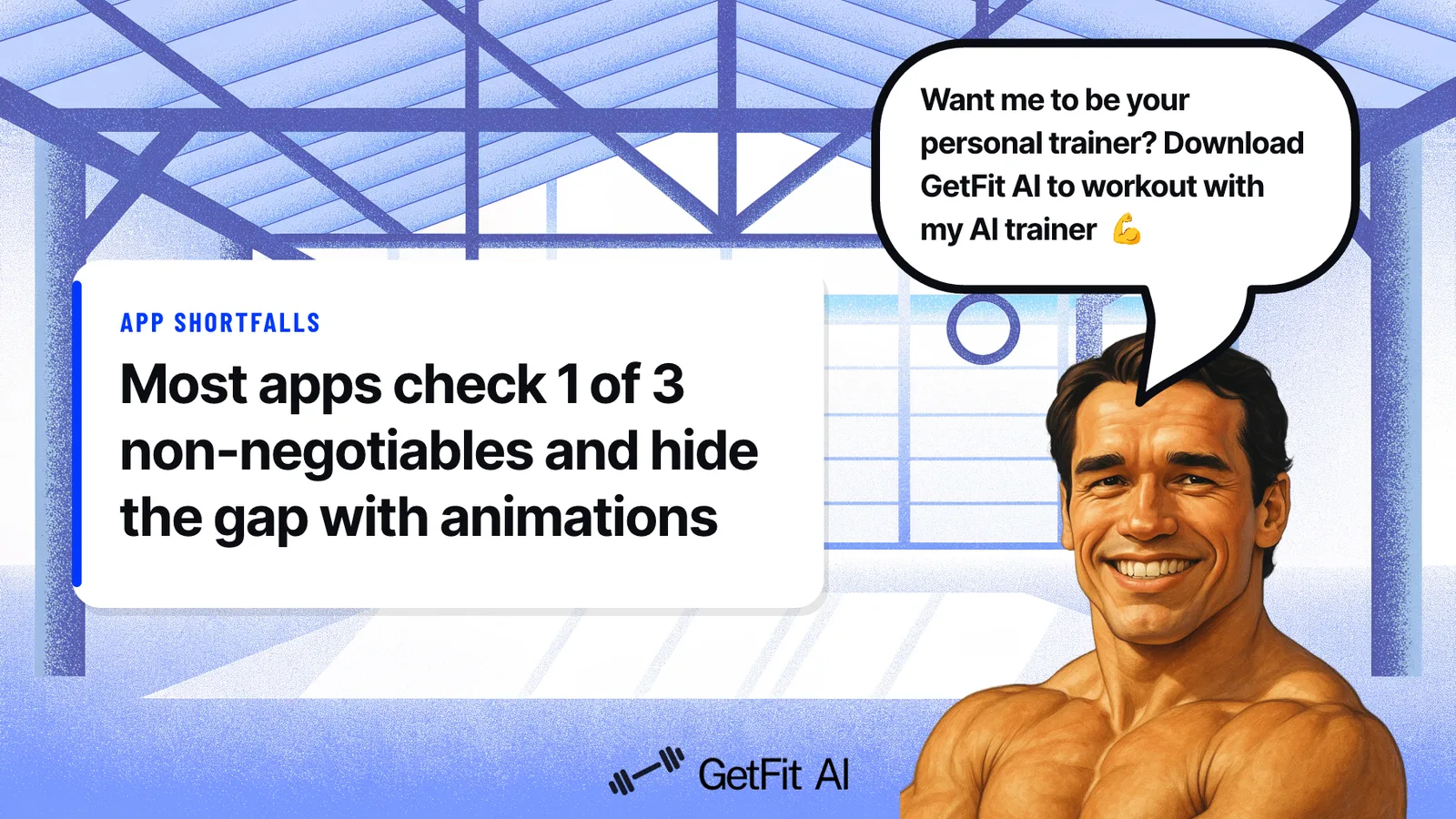
Every other feature is secondary. An app that checks all three non-negotiables from session one is genuinely rare. Most check one, maybe two, and dress up the gap with filters, animations, and star ratings.
GetFit AI is designed to address all three. Its GetFit AI Nutrition feature tells you what to eat, then lets you track it, so the app does not hand you a workout and then silently ignore the variable that determines whether that workout shows up in the mirror. Chat support is available immediately, as soon as the app is downloaded, so you can get a real answer when you are stuck mid-workout rather than being left to guess. These are not future roadmap items. They are available from session one.
Structured Daily Programming vs. Exercise Libraries: Why the 3-3-3 Rule Exposes the Difference
The 3-3-3 workout rule (three sets, three exercises, three days per week) is a common beginner framework precisely because it answers the question most apps never answer: what do I actually do today? Browsing a library of 500 exercises does not answer that question. A structured custom workout plan does.
Key takeaway: Health and fitness apps lose the majority of their users within the first month of install, with 30-day active rates often reported in the single digits. That is a structure problem.
Beginners do not quit because they ran out of exercises to look at; they quit because nobody told them what to do next.
There is a second, equally real dropout driver that gets less attention: when an app does nothing but surface raw metrics, step counts, calories burned, streaks, with no meaningful goal or journey attached, motivation collapses quietly. Beginners in this market genuinely struggle to sustain engagement when the app cannot answer why any of this matters for me, specifically, right now. A number on a screen is not a program. It is not accountability. And it is not enough to keep someone training past week three.
GetFit AI’s Athlete-Style Custom Workout Plans address the structure problem directly, most beneficial for users who have previously struggled with consistency due to a lack of program structure, delivering structured programming from the first workout session and carrying it across the entire training program arc. The Friends, Challenges, and Leaderboards layer addresses the motivation problem: this social retention feature is most beneficial when a user has at least one friend also using GetFit AI, because the ENGAGE trial and related adherence research consistently show that social accountability is among the strongest predictors of whether someone keeps training past the point where most beginners stop. GetFit AI’s social features activate after connecting with at least one friend in the app and are designed to function as the retention layer that keeps users training past week three, the window when dropout rates peak.
The cost of entry to all of this is low by design. GetFit AI Premium is available at $1.99 per week, $4.99 per month, or $49.99 per year, removing price as an excuse to stay on the wrong app or no app at all.
The honest filter, then, is which app gives you a real plan on day one, tells you what to eat, answers your questions the moment you have them, and has a built-in mechanism to keep you accountable past the week where most people quietly uninstall.
Related Reading
- How Many Pull Ups Should I Be Able To Do
- Average Grip Strength Male
- Average Bench Press
- How Much Does A Bench Press Bar Weigh
- Average Male Bench Press
- How Much Can The Average Man Bench Press
- Grip Strength Chart
- Symmetric Strength
- Bench Press Standards
13 Best Fitness Apps Ranked and Reviewed for 2026
Thirteen apps. One list. Zero excuses for walking into the gym without a plan.
“I feel overwhelmed by the sheer number of fitness apps available, making it hard to choose the right one. A ranked and reviewed list like ‘13 Best Fitness Apps Ranked and Reviewed for 2026’ directly addresses this decision fatigue.”
— what we hear from fitness app users
That is the promise every fitness app makes. The reality, for most beginners, looks more like this: you download something with a five-star rating, spend twenty minutes browsing workout categories, feel vaguely overwhelmed, and close the app before you have done a single rep. The problem is motivation less often than it is structure. A library is not a plan. Browsing is not training. For someone who genuinely does not know what to do at the gym today, five hundred workout options produce the same outcome as zero.
A library is not a plan. Browsing is not training.
A large content library actively predicts faster abandonment among beginners. When an app hands you a menu instead of a mission, you are left with only abstract goals like weight loss to drive the choice. That is the motivational profile that dropout data identifies as the strongest predictor of quitting before month three. The apps that move the needle remove decisions rather than multiply them.
This list is built on one filter: which app solves a specific problem and what it leaves unsolved. Every entry below answers both questions, so you can self-select in thirty seconds instead of downloading five apps to find out.
Price and Feature Snapshot
| App | Free Tier | Paid Tier | Best For |
|---|---|---|---|
| GetFit AI | Yes | Premium Weekly $1.99/wk · Premium Monthly $4.99/mo · Premium Yearly $49.99/yr | Beginners: structured plan, nutrition targets, AI chat |
| Nike Training Club | Yes, fully free | No subscription required | Free library of expert-led classes |
| Boostcamp | Yes | Pro version available (see app for current pricing) | Elite-coach programs, structured lifting plans |
| Caliber | Yes | Paid 1-on-1 coaching from $6/month or $72/year | Science-based strength with zero ads |
| Hevy | Yes | Pro from $2.99/month (as of 2025) | Clean gym logging, Apple Watch sync |
| Strava | Yes | Premium subscription available | Runners, cyclists, segment leaderboards |
| FitOn | Yes | Pro at $99.99/year (as of 2025) | Celebrity-led group class variety |
| Future | No free tier | From $199/month (as of 2025, according to industry data) | 1-on-1 human personal trainer via app |
| FitnessAI | Yes | Paid subscription | AI-generated gym workouts that adapt |
| Fitbod | Limited | From approximately $8/month | Adaptive strength, muscle recovery logic |
| MyFitnessPal | Limited (5 log entries/day on free tier) | $79.99/year or $19.99/month | Nutrition and calorie tracking |
| Strong | Yes | Paid upgrade available | Minimalist barbell and powerlifting log |
| Liftoff | Yes | Paid upgrade available | Gym-based strength training with a ranks progression system |
Now, the full breakdown.
1. GetFit AI: Best Overall Fitness App for Beginners Who Want Structure, Nutrition, and AI Coaching
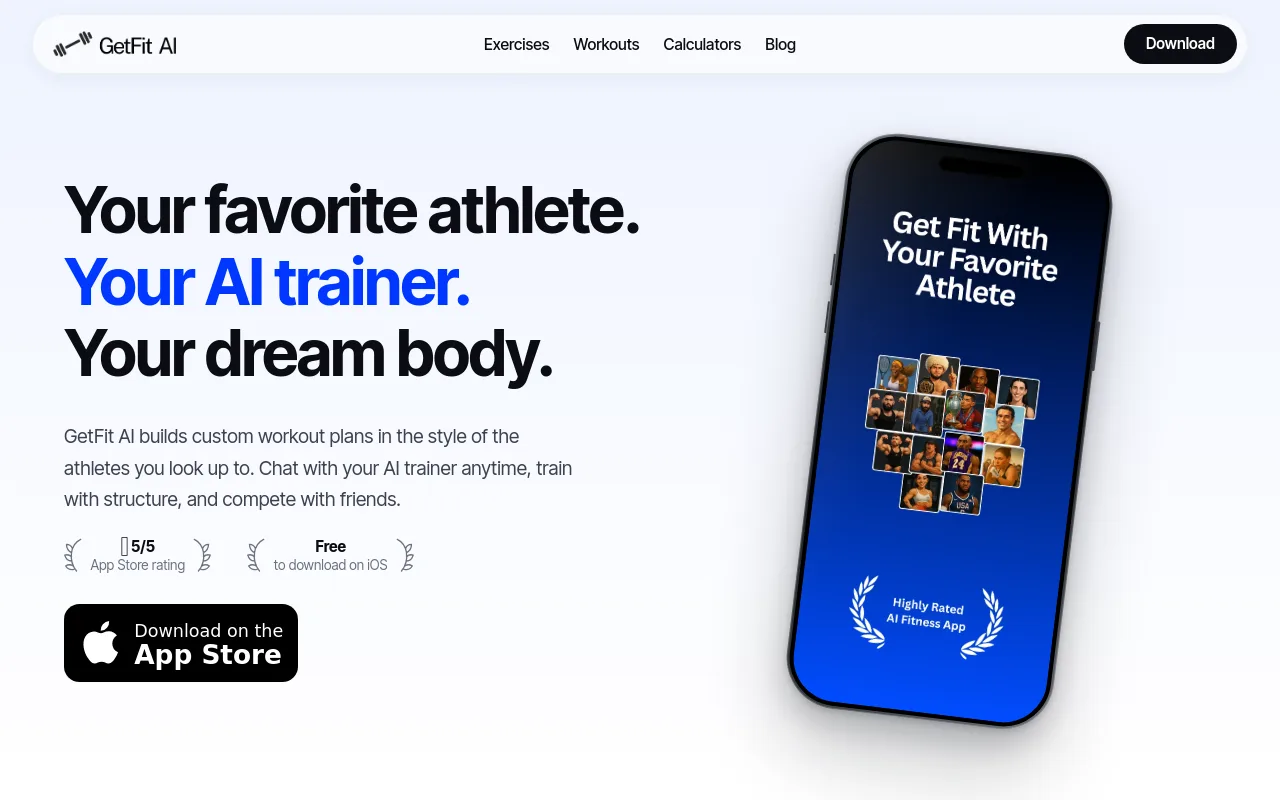
GetFit AI is the best overall fitness app for beginners who want structure, nutrition, and AI coaching because it solves the three problems most beginners face: no program, no meal targets, and nobody to ask when something goes wrong mid-session. Few apps on this list combine all three in a single onboarding flow:
-
Structured daily plan generation
-
Built-in nutrition targets
-
Real-time AI trainer chat
Each is available from first launch. The app generates a custom workout plan at onboarding, so today’s session is waiting before you reach the gym floor. What separates it from every other app on this list is the AI trainer chat, available the moment you download, so “the cable machine is taken, what do I do?” gets an answer in real time instead of a shrug.
Most beneficial for anyone who has previously quit an app because they felt lost after week one. The one honest trade-off: the social and leaderboard side is still growing, so if competing against a large existing friend network is your primary motivator, that feature is thinner here than on Strava or FitOn. For a beginner who wants a structured plan, daily nutrition targets, and an AI fitness app that answers questions the moment they surface, GetFit AI is the clearest starting point on this list.
2. Nike Training Club: Best Free Fitness App Overall
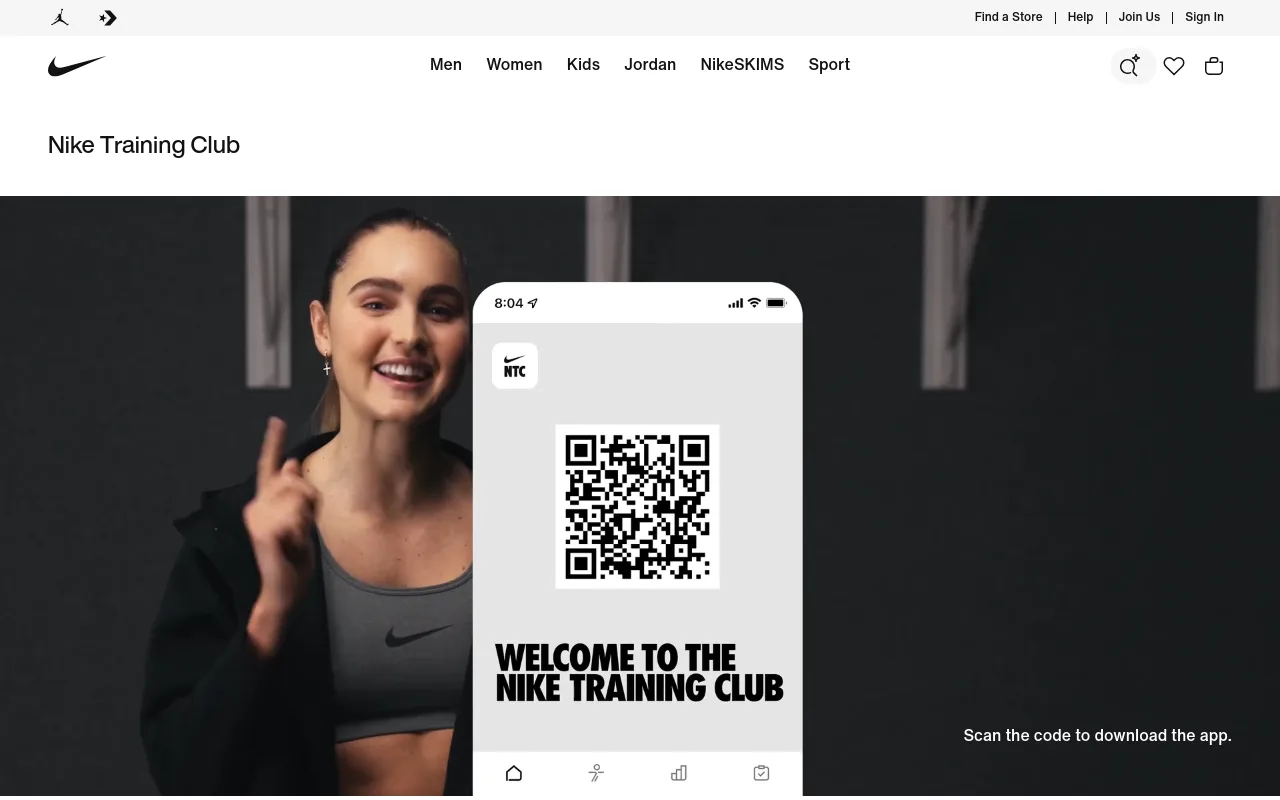
Nike Training Club is the best free fitness app overall in 2026, according to The Independent’s 2024 review, which cited its fully unlocked library, zero subscription requirement, and breadth of expert-led formats spanning strength, cardio, HIIT, mobility, core, and yoga in sessions ranging from five to thirty minutes. Goal-setting filters let you sort by intensity, time, and location (gym or home).
The real limitation for beginners is structural: Nike Training Club hands you a library, not a daily assignment. If you already know what kind of training you want, it is an outstanding free resource. If you are standing in the gym with no idea what to do today, the library will feel like a menu at a restaurant where you don’t recognize any of the dishes.
3. Boostcamp: Best for Structured Plans Designed by Elite Coaches and Athletes
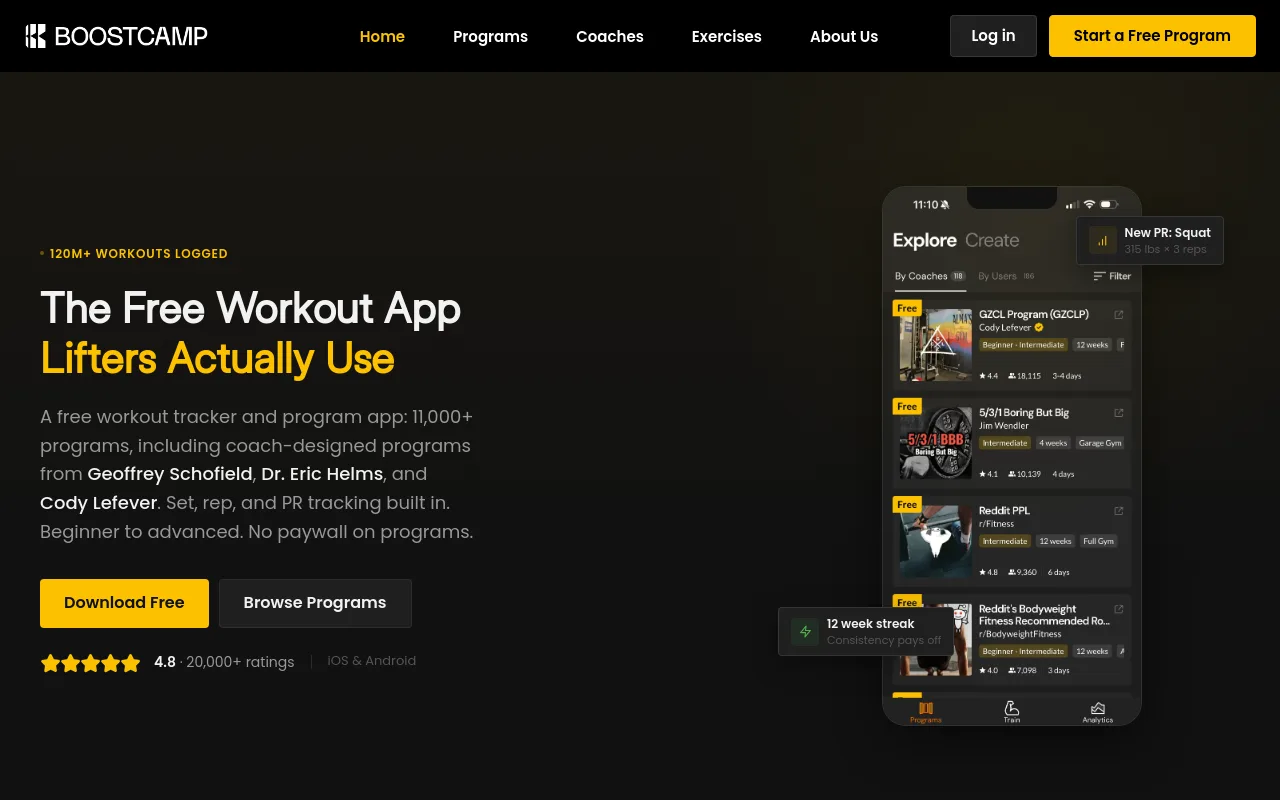
Boostcamp is the right pick for lifters who want a proven, structured program rather than a self-assembled routine. The programs are built by elite coaches and world-class athletes, which means the periodization logic is already done for you. It is free to download, with a Pro version available for users who want additional features (check the app store for current Pro pricing, as tiers are updated periodically).
The one thing Boostcamp will not do is answer questions. It delivers the program and tracks your progress, but if you are a beginner who hits a confusing exercise or needs a form cue mid-set, the app goes quiet. It is an excellent tool for someone who already has enough training literacy to follow a program independently.
4. Caliber: Best for Science-Based Strength Training With a Zero-Ad Free Tier
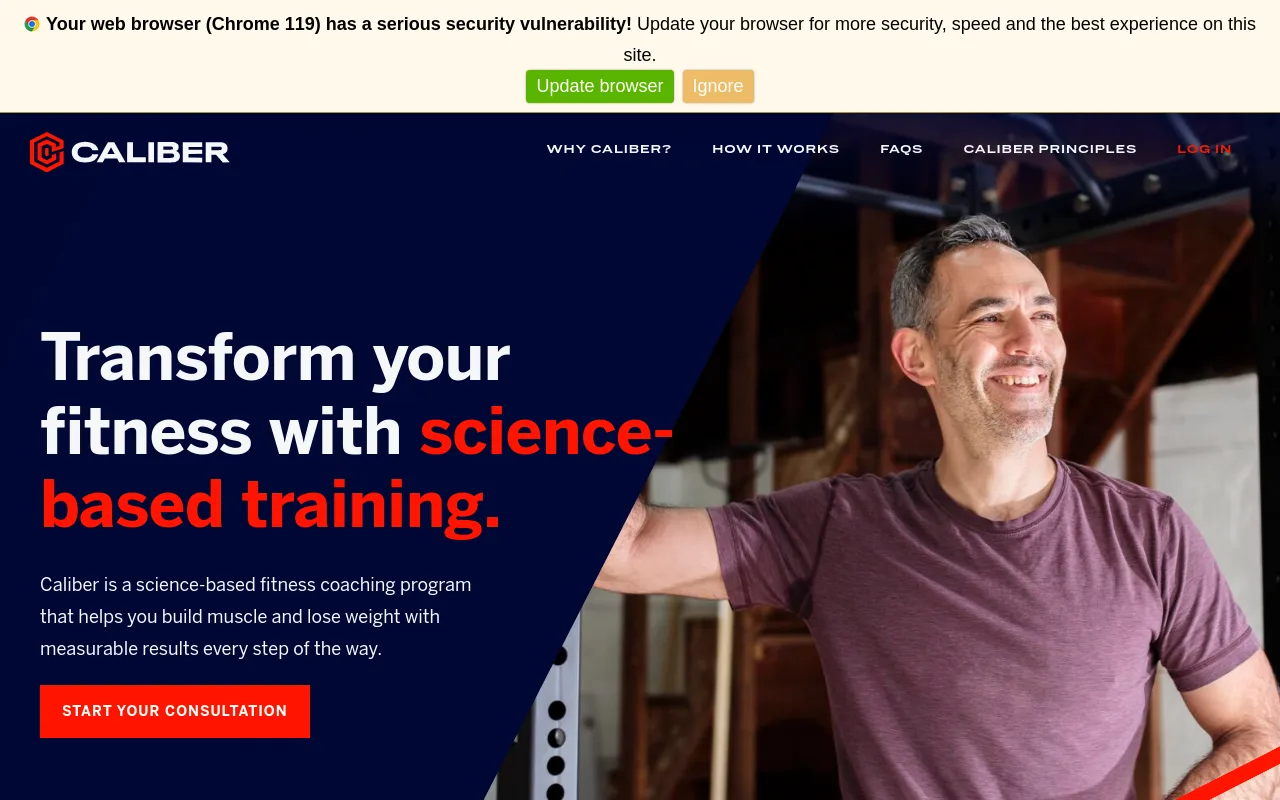
Caliber offers science-based strength programming with a genuinely ad-free free tier. Paid 1-on-1 coaching is available at an affordable rate, making it one of the more accessible coached options available. The structural trade-off is that the free version lacks the human accountability layer. If you need someone checking in on you, the coaching upgrade is worth the cost.
5. Hevy: Best Gym Logger With Clean UI and Apple Watch Integration
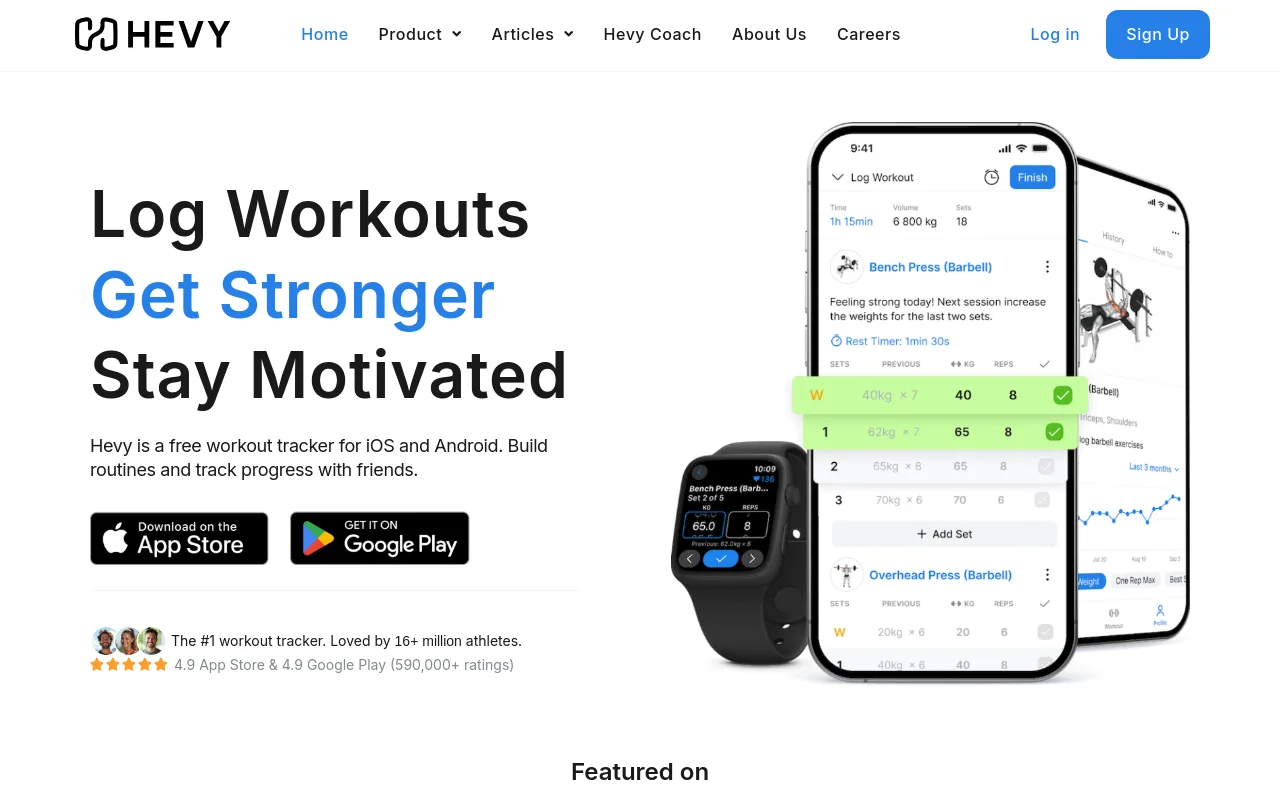
Hevy is the gym logger that experienced lifters consistently recommend for its clean interface, customizable workout templates, and reliable Apple Watch integration. It tracks what you lift, surfaces your history, and stays out of your way. A Pro version is available for users who want additional features (check the app store for current Pro pricing).
Hevy records your training beautifully but does not tell you what to train. Lifters who already follow a program and want the cleanest possible tracking experience will love it.
Hevy offers an Advanced Routine Planner, structured workout split guides, and beginner onboarding resources, so beginners are guided toward organized programs from the start.
6. Strava: Best for Runners and Cyclists Who Live for Leaderboards and Community
Strava is the leading fitness app for runners and cyclists in 2026. Its segment leaderboard and social layer are consistently cited in runner-focused app roundups as among the most engaging community features available for endurance athletes. The social layer, segment leaderboards, heatmaps, and community kudos system create a level of external accountability and friendly competition that no other app on this list replicates. It is free with a premium subscription available for deeper analytics.
The limitation is scope: Strava is built for endurance sport. If your goal is to build muscle, track sets and reps, or follow a strength program, Strava is the wrong tool. Pick it when your primary metric is miles, not kilos.
7. FitOn: Best for Group Class Variety With Celebrity-Led Workouts
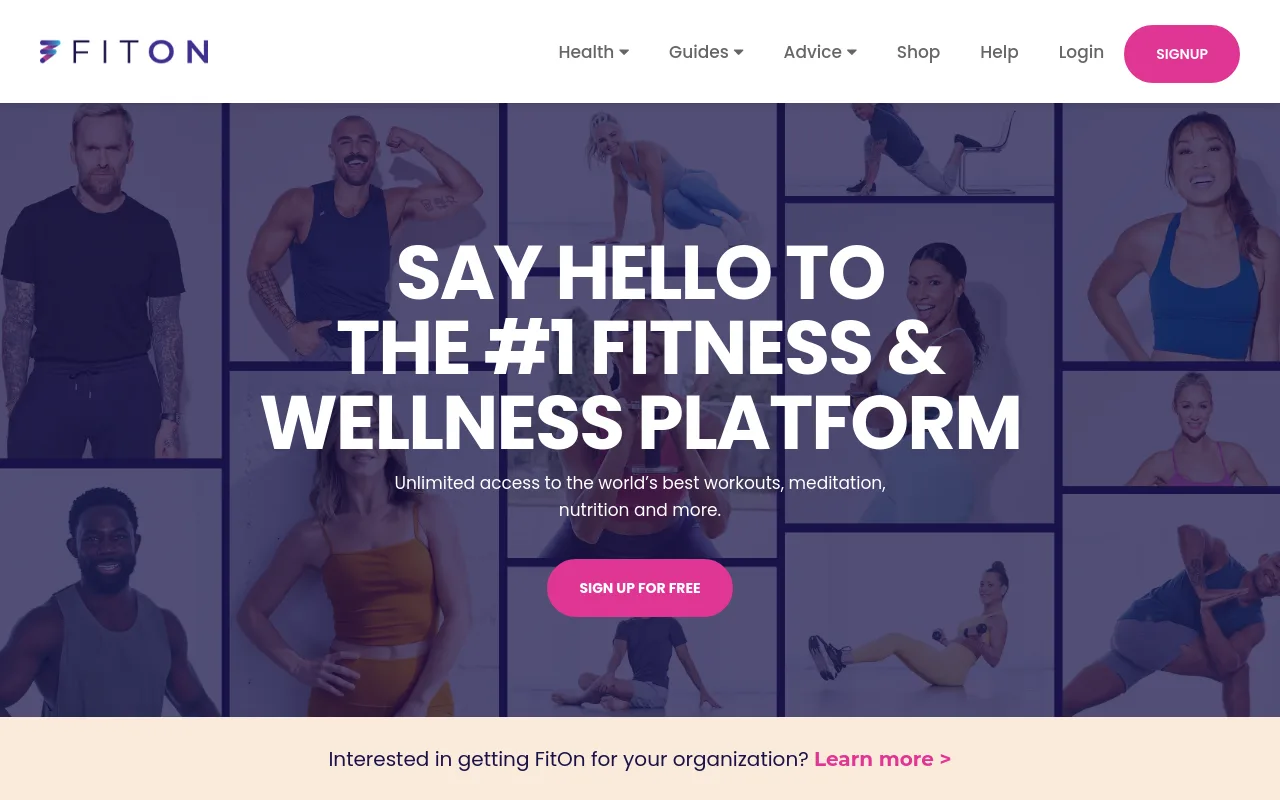
FitOn offers the widest class variety on this list, with cardio, yoga, Pilates, HIIT, and dance sessions led by celebrity trainers, all on a free base tier. A Pro version is available (check the app store for current pricing).
8. Future: Best for 1-on-1 Human Personal Training via App
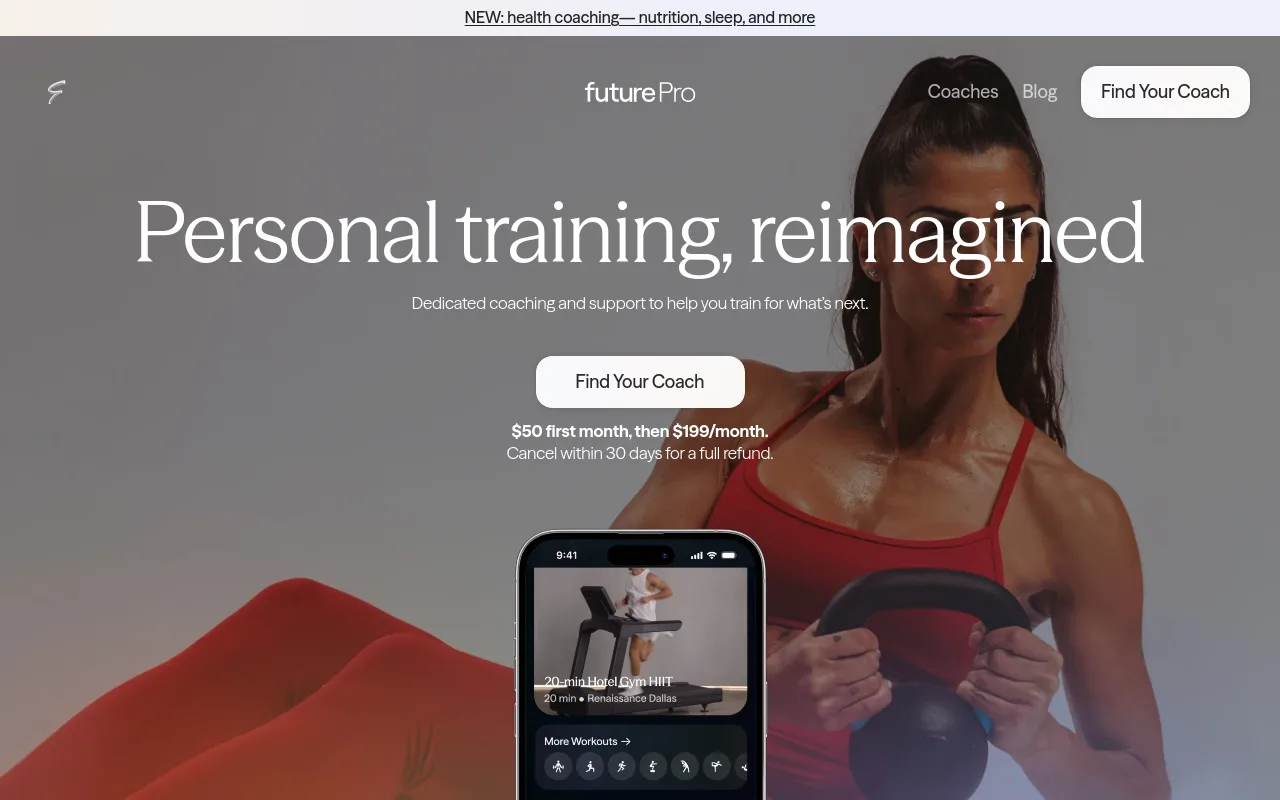
Future pairs you with a real, certified personal trainer who builds custom daily plans, checks in on your progress, and adjusts programming based on your feedback, all through an app interface. Starting at $199/month, it’s the most expensive option on this list by a significant margin, but it’s the only one that delivers genuine human accountability and expertise. The limitation: the price makes it inaccessible for most casual fitness app users.
9. FitnessAI: Best for AI-Generated Gym Workouts That Adapt Each Session
FitnessAI uses a dataset of millions of logged workouts to automatically adjust your sets, reps, and weight each session, making it a strong pick for gym-goers who want progressive overload without manually planning their own programming. It’s particularly well-suited to intermediate lifters who’ve outgrown beginner programs but don’t want to hire a coach. The tradeoff: its AI recommendations can feel rigid, and it lacks the community and social features that motivate many users.
10. Fitbod: Best for Adaptive Strength Workouts That Account for Muscle Recovery
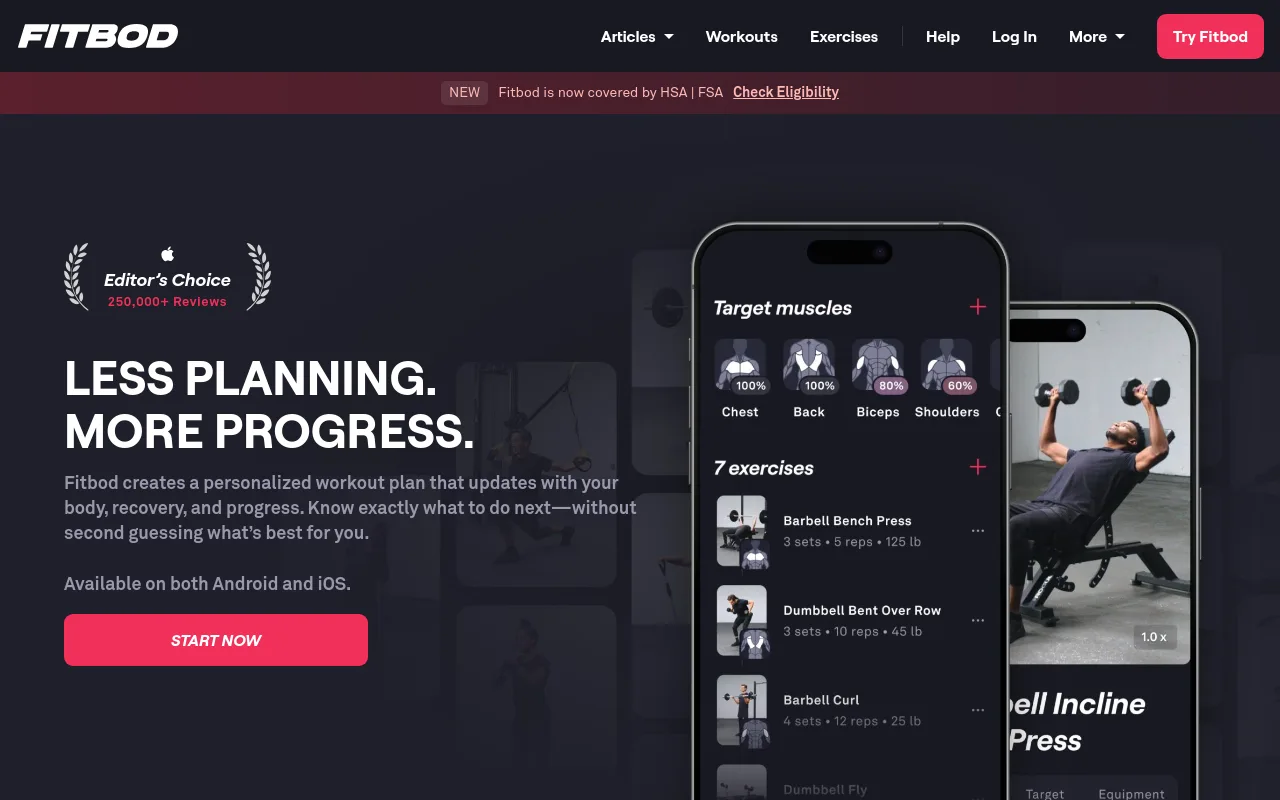
Fitbod’s defining edge is its muscle recovery model, it tracks which muscles you’ve recently trained and builds each new workout around what’s actually recovered, reducing overtraining risk intelligently. It’s the right pick for gym regulars who train four or more days per week and want smart auto-rotation across muscle groups. The limitation: it’s subscription-only with no meaningful free tier, and its nutrition and cardio tracking are essentially nonexistent.
11. MyFitnessPal: Best for Nutrition and Calorie Tracking With the Largest Food Database
MyFitnessPal remains the gold standard for nutrition and diet tracking, with a food database exceeding 14 million items, barcode scanning, macro breakdowns, and integrations with virtually every fitness wearable and app on this list. It’s the essential companion for anyone whose primary goal is weight management or body recomposition through dietary control. The tradeoff: the free tier has been significantly stripped back in recent years, and the premium price has climbed to $19.99/month.
12. Strong: Best Minimalist Gym Logger for Powerlifters and Barbell Athletes
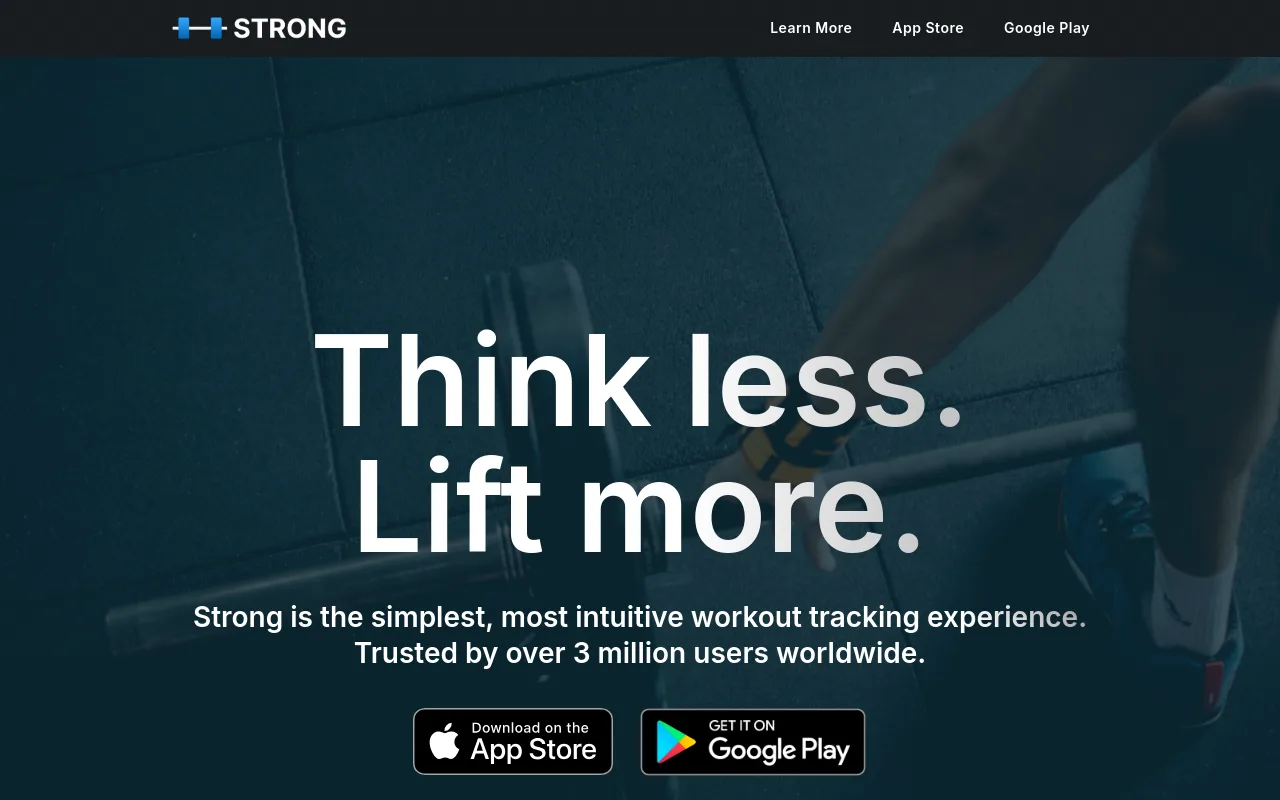
Strong is the no-frills gym logging app that powerlifters and barbell-focused athletes have trusted for years, offering one-rep max calculations, plate math, and a distraction-free logging interface that gets out of your way mid-session. It’s the right pick for experienced lifters who know exactly what they want to log and don’t need guided workouts or AI suggestions. The limitation: its UI feels dated compared to Hevy, and its Apple Watch app is more limited.
13. Liftoff: Best Home Workout App for Beginners Using Bodyweight and Minimal Equipment
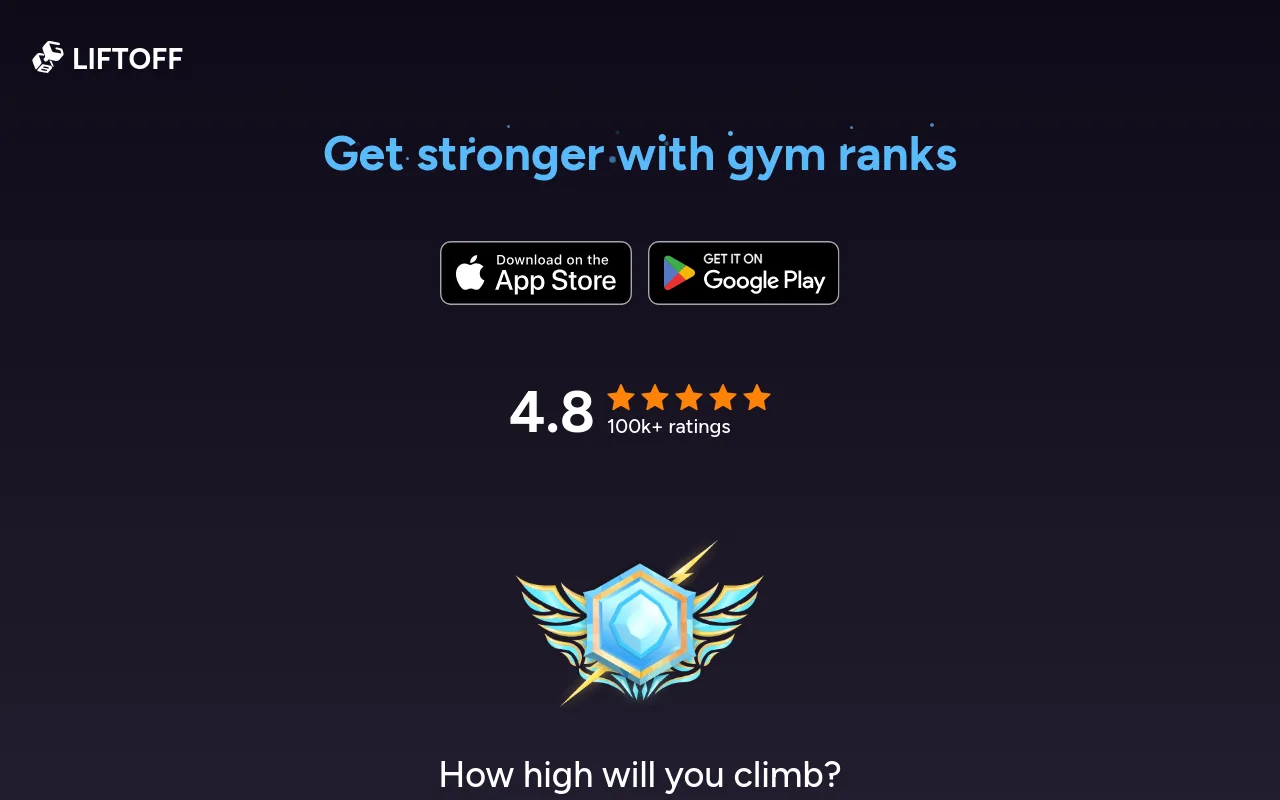
Liftoff is purpose-built for home workouts, offering structured bodyweight and minimal-equipment programs that scale from absolute beginner to intermediate without requiring a gym membership. It covers the SERP’s most-searched home workout use case with clean onboarding, video demonstrations, and progressive difficulty. The tradeoff: once you advance beyond bodyweight training and start adding significant load, Liftoff’s programming depth doesn’t keep pace with gym-focused alternatives like Boostcamp or Caliber.
Related Reading
- Do Pull Ups Work Chest
- Grip Strength Norms
- Average Deadlift Weight
- 1 Rep Max Chart
- Average Male Deadlift
- Good Bench Press Weight
- Weightlifting Standards
- Average Bench Press Kg By Age
- Average Deadlift Weight Kg
Which Fitness App Is Actually Right for You? A Plain-English Decision Guide
That single question, does the app tell you what to do today, or does it hand you a menu and wait, separates every app on this list more cleanly than price, platform, or feature count ever could.
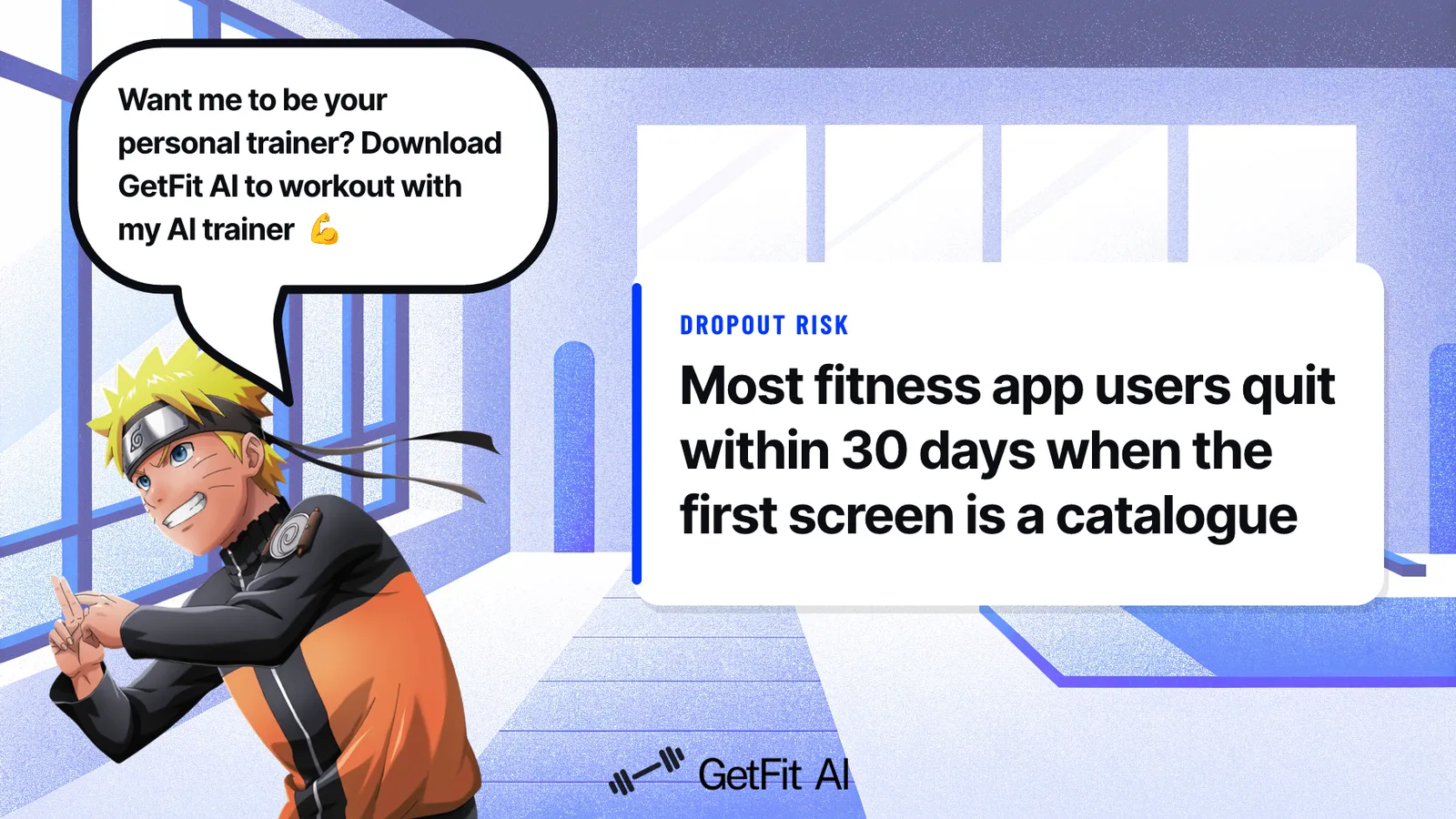
Stop counting features. The only question worth asking is this: does the app hand you a plan, or does it hand you a library?
A library feels like progress. You browse, you bookmark, you download. Then you walk into the gym and still have no idea where to start. Across the market, most fitness app users quit within the first thirty days, and the apps with the highest churn tend to be the ones where the first screen is a catalogue, not a calendar. That tracks with what teams studying dropout consistently report: lack of program structure is one of the primary drivers of early dropout, not lack of motivation, not lack of equipment, but the simple absence of being told what to do next.
If You’re a Runner, a Logger, or a High-Budget Buyer: Your Honest Match
The thirteen apps reviewed above do serve real needs, just not all the same one. Be honest about which of these describes you right now:
-
If you already train consistently and want to track splits or compete on segments, a running-focused app is the right call.
-
If you have a coach or a program you trust and only need a clean logging tool, a tracker-first app fits that role well.
-
If your budget runs to $199 a month and you want a human trainer texting you daily plans, that option exists too.
No Program, No Meal Plan, No Coach?
If none of those profiles fit, if you’re a beginner with no plan, no idea what to eat, and nobody to ask, the challenge is more specific than it first appears. Complete beginners face two compounding problems when evaluating fitness apps: first, they genuinely cannot tell which apps are built for them versus built for experienced athletes who already know the language; second, even when they pick an app and open it, they are handed a database instead of a direction. That combination, wrong tool, zero guidance, is what kills momentum in week one.
Key takeaway: A 2019 study found 27% of crowdsourced nutrition entries contain errors, and beginners have no training literacy to catch a wrong entry before it corrupts their feedback loop entirely.
The single most disqualifying feature to look for is an uncurated food database with user-submitted entries. This is uniquely dangerous at the start, and apps that also cap free logging at five entries per day compound the problem further. You end up with data that is simultaneously incomplete and inaccurate, producing no reliable signal about whether your diet is working. The correct filter is not database size; it is whether the app tells you what to eat before asking you to log what you ate.
This is the gap GetFit AI is built around. The expertise it delivers is not a library to browse; it is the two answers beginners actually need: tell me exactly what to do in the gym today (which exercises, how many sets, in what order), and tell me what to eat to actually put on size or lean out. Both answers are delivered from the first workout session, not gated behind a learning curve. The Athlete-Style Custom Workout Plans reflect that philosophy structurally: they are not templates you adapt; they are programs that adapt to you, giving you a clear next action at every session across the full training arc.
For users who have previously struggled with consistency because they lacked program structure, Structured Training inside GetFit AI addresses that failure mode directly, starting from session one and running continuously through the point where habit is established. And because broader adherence trends show dropout accelerates around week three, GetFit AI layers in social accountability, friends, challenges, and leaderboards, that activates after you connect with at least one friend in the app, functioning as the retention mechanism that keeps users training past that inflection point.
On price, the app removes the cost barrier that pushes beginners toward under-built free tools:
-
Premium Weekly Subscription: $1.99/week
-
Premium Monthly Subscription: $4.99/month
-
Premium Yearly Subscription: $49.99/year, less than a single session with a personal trainer, for a structured program that runs as long as you do.
The filter, then, is simple: if you need a plan from day one, for the gym and for the plate, look for an app that delivers exactly that before it asks you to log a single thing.
Related Reading
- Average Deadlift Weight For Male
- Best Calisthenics Workout App
- Best Hiit Workout App
- Best Gym Workout App
- Best Workout Apps
- Best Free Workout Apps
Next steps
If you have downloaded two or three apps, browsed their libraries, and still walked into the gym without knowing what to do first, the path forward starts with recognizing that content volume was never the missing piece. A program is. Start with our AI fitness app.
The research on early dropout shows that apps handing you a catalogue instead of a daily assignment leave you with only abstract goals like weight loss to drive your choices, and that motivational profile is the single strongest predictor of quitting before month three. Separately, the gap between when a beginner needs an answer mid-workout and when the app can actually deliver one determines whether the streak survives that session. A coaching response that arrives 24 hours later cannot interrupt a dropout that happens in the next ten minutes. Together, these two realities point to the same next step: an app that assigns today’s workout before you arrive and answers your questions the moment you have them.
Start with the AI fitness app that delivers a structured plan, daily nutrition targets, and real-time chat support from the first session. Your workout is waiting before you walk through the door.
Frequently Asked Questions
Why do I keep downloading fitness apps and never actually sticking with them?
The problem is structure, not motivation. Most fitness apps hand you a library of exercises to browse instead of telling you exactly what to do today, and 75% of fitness app users are gone within the first month, with the sharpest drop happening in the first two weeks when confusion peaks and confidence is lowest. Without a structured daily plan telling you what to do, in what order, and at what weight, most sessions default to the same few machines you already know.
What should I actually look for in a fitness app before I download it?
Three things matter above everything else: does the app tell you exactly what to do today (not just show you a library), does it address nutrition, and can you get a real answer when you’re stuck mid-workout? Every other feature, filters, animations, star ratings, is secondary to those three non-negotiables.
Does it matter which fitness app I use if I’m also trying to lose weight or change how I look?
Yes, because what you eat determines whether your training shows up in the mirror. Most fitness apps focus on workout content while ignoring nutrition entirely, leaving users without a plan that connects training to visible results, which is why a beginner can lift for two months and see nothing change.
What is the 3-3-3 workout rule and does it actually work for beginners?
The 3-3-3 rule is a beginner framework built around three sets, three exercises, and three days per week. It works precisely because it answers the question most apps never answer: what do I actually do today? Browsing a library of 500 exercises doesn’t answer that question, a structured custom workout plan does.
How much does GetFit AI cost?
GetFit AI Premium is available at $1.99 per week, $4.99 per month, or $49.99 per year, with a free tier also available.







