Average Male Bench Press by Age, Weight, and Level

The average male bench press is 212 lbs, but that number will mislead you more than it helps. Here is what it actually means for your bodyweight, your age, and what to do next.
The average bench press for an adult man with training experience sits at 212 to 217 pounds (1RM), according to Strength Level’s 2024 aggregated lift data, which draws from millions of logged sessions across real gym-goers. The common assumption is that knowing this number is the missing piece, but once you have the benchmark, you’ll know what to chase and results will follow. That number answers the question most men type into Google at midnight. It does not answer what to do next. See our AI fitness app for how this works in practice.
Strength Level’s 2024 data places the average trained adult male at roughly 212 pounds for a one-rep max. “Trained” is doing a lot of work in that sentence. This figure comes from men who lift regularly, not from the full adult male population. Only about 20 to 25 percent of American men strength train consistently, which means the 212 lb benchmark reflects a self-selected group, not the guy who occasionally wanders into the gym. If you have been showing up even semi-regularly, you are already comparing yourself to a narrower, stronger pool than you probably realize.
A 150 lb man and a 220 lb man are not playing the same game. Strength Level’s 2024 standards confirm that expected bench press numbers scale significantly with bodyweight, age, and training experience, so a single figure flattens variation that actually matters. A 25-year-old at 180 lbs with two years of consistent training should expect a very different number than a 45-year-old at the same weight who just returned to lifting.
Treating a single figure as a universal pass-or-fail mark is like judging a sprint time without knowing the distance. This is where most men stall. Someone Googles the average, sees that number, feels behind, and walks into the gym doing the exact same three sets of ten they have always done.
Key takeaways
- The average bench press for a trained adult man lands at 212-217 lbs (1RM), based on Strength Level's 2024 dataset aggregated from over 48 million logged lifts, not gym lore, real numbers.
- Bodyweight changes the benchmark entirely: a 150 lb man pressing 185 lbs is outperforming a 220 lb man pressing the same weight on every honest strength standard.
- Peak biological strength for men runs through the 20s and 30s, the age column in bench press charts is not just a filter, it's a closing window.
- Most men who stall below average are not undertrained in effort, they're undertrained in structure. Showing up without progressive overload is repetition, not progress.
- A benchmark tells you where you stand; it has no mechanism to move you forward. Research confirms progressive overload requires deliberate load or rep progression, neither happens by accident.
- GetFit AI closes the gap by building a custom, progressively structured workout plan in your favorite athlete's style, with an AI trainer available anytime to adjust when the weights stop moving.
Average Bench Press by Strength Level: What the Numbers Actually Mean for a 198 lb Man
Knowing you can bench press “a lot” means nothing without a reference point tied to your actual bodyweight. For a 198 lb man, two of the most widely cited datasets in strength training converge on a clear five-tier framework that maps your one-rep max to a real percentile, so you can see exactly where you stand relative to other lifters rather than guessing. GetFit AI uses this same structure to turn your logged lifts into honest, actionable feedback.
The Tiered Standards Table Every 198 lb Man Should Benchmark Against
For a man weighing 198 lbs (90 kg), both Strength Level’s aggregated dataset (built from over 48 million logged lifts) and ExRx.net’s NSCA-approved classification tables converge on the same five-tier structure. The table below uses only those sourced figures.
| Tier | 1RM Benchmark | Bodyweight Ratio | Percentile (Strength Level) |
|---|---|---|---|
| Untrained | ~135 lb | 0.70x | Bottom 5% |
| Novice | ~175 lb | 0.90x | ~20th |
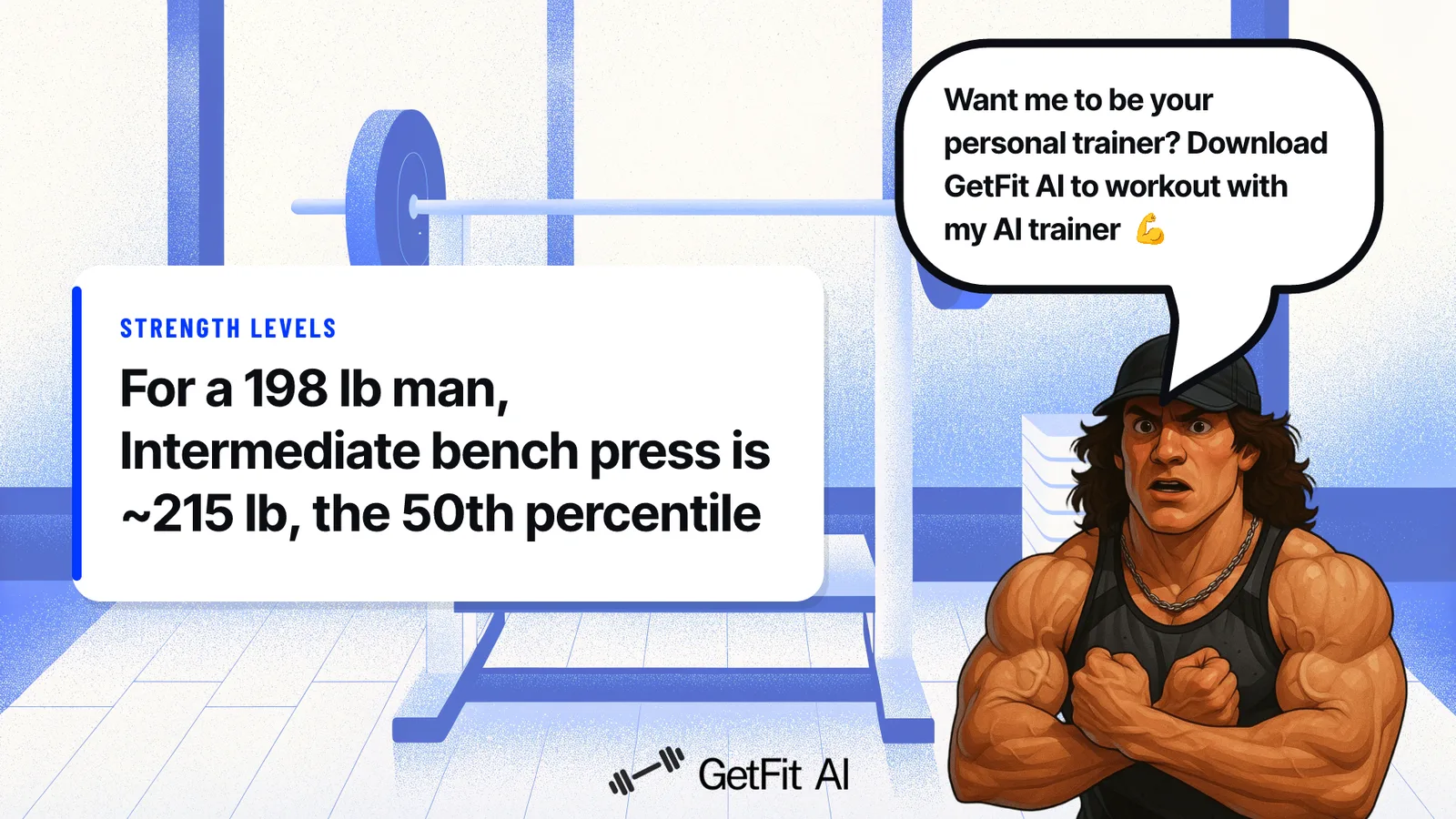
| Intermediate | ~215 lb | 1.10-1.25x | ~50th |
| Advanced | ~290 lb | 1.50x | ~80th |
| Elite | ~360+ lb | 1.80x+ | Top 5% |
These numbers are not arbitrary. According to Strength Level’s classification data, Intermediate sits at roughly the 50th percentile of all men who log their lifts. The NSCA-approved ExRx.net standards corroborate every row: an untrained 198 lb man has a baseline max of approximately 135 pounds, and the climb to Elite at 360+ lbs represents a genuinely rare physical achievement.
Intermediate at ~215 lb: The Most Crowded and Most Misunderstood Tier
Intermediate sits at approximately ~215 lbs for a 198 lb man, representing a 1.10-1.25x bodyweight ratio. According to Strength Level’s classification data, this is the 50th percentile, both the most common destination and the most common ceiling.
The NSCA-approved framework places Intermediate at one to two years of consistent, structured programming. That word “structured” is doing enormous work in that definition. The tier labels attached to bench press numbers are descriptions of how organized your training has been. A man who has spent two years showing up without a progression plan will stall at the same Novice-to-Intermediate boundary as someone six months in who followed a structured program. Most men who feel stuck between 175 and 215 lbs are not undertrained. They are under-programmed.
Is 225 a Respectable Bench? Yes, Here Is Exactly Where It Lands
225 lbs on a 198 lb frame is high-intermediate. According to the ExRx.net NSCA-approved standards and Strength Level’s 2024 aggregated data, it sits above the 50th percentile of all logging male lifters. Estimates suggest fewer than 20-25% of adult men who train regularly ever reach a 225 lb bench press, making it a real achievement. For a 198 lb man, it signals high-intermediate status on every credible classification system.
Related Reading
- Best Fitness Apps
- How Many Pull Ups Should I Be Able To Do
- Average Grip Strength Male
- Average Bench Press
- How Much Does A Bench Press Bar Weigh
- How Much Can The Average Man Bench Press
- Grip Strength Chart
- Symmetric Strength
- Bench Press Standards
Average Bench Press by Bodyweight: How Much Should a 150 lb Man Bench vs. a 220 lb Man?
Raw bench press numbers mislead more lifters than they motivate, because a 150 lb man and a 220 lb man are not playing the same game. The only comparison that holds up is your bench press expressed as a multiple of your own bodyweight, and that single shift in perspective changes where most men actually stand. The table and breakdown below show you exactly where you fall across the full bodyweight spectrum, so GetFit AI can set targets that reflect your build rather than someone else’s.
Why Absolute Pounds Lie: The Bodyweight-Ratio Fix That Makes Comparisons Honest
Comparing raw bench press pounds across different body sizes is like comparing sprint times without noting that one runner had a 10-meter head start. The number looks objective. It isn’t. Bench press standards are properly evaluated relative to bodyweight, because heavier lifters carry more muscle mass and move the bar through a shorter effective range of motion. That geometry is an advantage, not a training achievement.
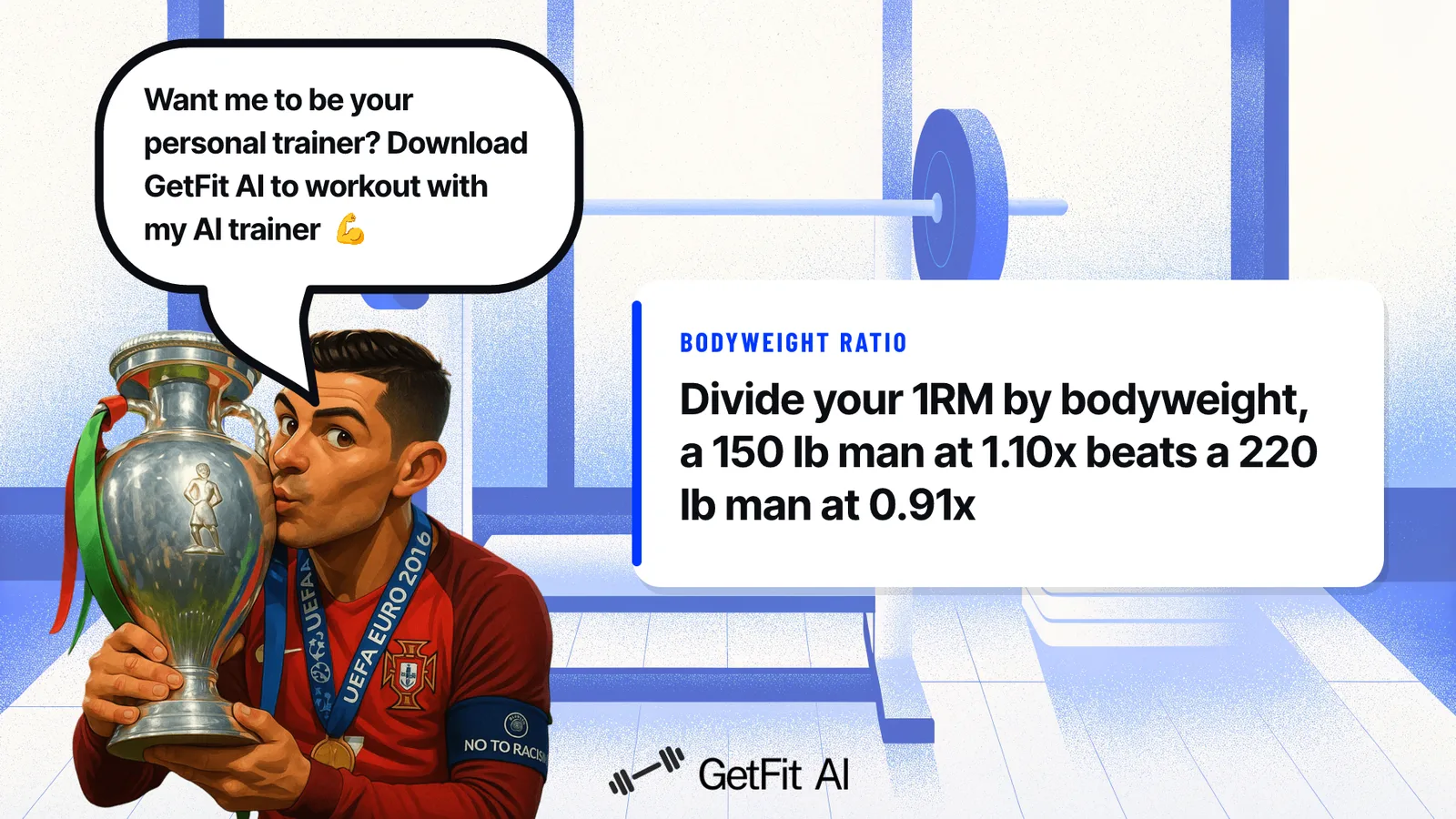
The ratio math is simple: divide your 1RM by your bodyweight. The 220 lb man pressing 200 lbs scores 0.91x bodyweight. The 150 lb man pressing 165 lbs scores 1.10x bodyweight. By every meaningful strength metric, the lighter lifter is ahead. Most men who feel behind after a quick online search are comparing themselves to a population that likely outweighs them. The gap they’re worried about is partly anatomical, not a training deficit.
The actionable number is always a bodyweight ratio, never a raw pound total.
The Bodyweight-Scaled Bench Press Table: Expected 1RM Ranges from 132 lb to 242 lb+. The table below uses ratio-based tier standards drawn from Strength Level, 2024. Absolute targets shift with bodyweight; the ratios that define each tier stay consistent.
Average Bench Press by Age: How Your Peak Strength Window Changes Everything
Age and bodyweight together form the two coordinates that locate your true strength potential, and most lifters are only tracking one of them.

The age column in bench press charts is not just a filter for finding your number. For men in their 20s and 30s, it marks a biological deadline. Peak biological strength potential and peak behavioral dropout overlap almost perfectly in the 18-39 window, and men who train through it without structure waste the only years when their absolute strength ceiling is highest. Training through this window without structure is expensive.
peak biological strength potential and peak behavioral dropout overlap almost perfectly in the 18-39 window, meaning men systematically waste the only years when their absolute strength ceiling is highest.
Strength Peaks Between the Mid-20s and Late 30s
Physiological research places peak male muscle mass and absolute strength output between roughly the mid-20s and late 30s. This is when testosterone, motor unit recruitment, and recovery capacity align at their highest combined level. According to industry research, men in the 18-39 age band are expected to post the highest absolute numbers within every bodyweight category, with standards stepping downward for the 40s and 50-plus bands. That step reflects a real shift in what the body can produce.
The implication is concrete. A 28-year-old who benches 155 lbs is below the Novice standard for his age group during the single decade when his ceiling is highest. The chart doesn’t say that plainly, but that’s exactly what it means. Gym attendance data compounds this: most men in this window either drop off entirely or train without a structured plan, producing sessions that feel productive but generate no measurable tier progression.
One struggle we see repeatedly among beginners is the inability to tell whether they’re actually getting stronger or just showing up. Without measurable tier progression anchored to age- and bodyweight-specific standards, effort and progress become decoupled, and that decoupling is what kills long-term consistency. GetFit AI’s Athlete-Style Custom Workout Plans are built to close that gap. From the first workout session, each plan generates visible, trackable movement up the strength tiers defined by sources like ExRx.net Bench Press Strength Standards, so you’re not just logging sessions, you’re confirming forward motion.
Age-Segmented Average Bench Press Ranges
Strength Level’s aggregated data, drawn from over 48 million recorded lifts, puts the overall male average at around 212 to 217 lbs for a 1RM. By the 40s, ExRx.net Bench Press Strength Standards show a measurable drop in tier thresholds across bodyweight classes. The 50-plus band drops further still. The same tier label requires fewer pounds as age increases, which sounds like a relief until you realize it reflects declining biological capacity, not a more forgiving standard.
For women, the same age-decay pattern applies across all tiers, just at lower absolute loads. ExRx.net Bench Press Strength Standards document the same downward trajectory with age for female lifters, scaled to female bodyweight norms.
A credibility problem also makes realistic benchmarking harder than it should be. Extraordinary strength claims, an 84-year-old supposedly hitting elite-level numbers, or a famous athlete allegedly benching 450 lbs for multiple sets in his mid-50s, circulate widely and warp people’s sense of what’s normal. When the reference points are unverified or almost certainly inflated, average lifters either set delusional targets or, more commonly, give up on tracking standards altogether. The standardized, peer-aggregated data from ExRx.net and Strength Level cuts through that noise. These are the benchmarks GetFit AI’s plans are calibrated against: real numbers from real populations, segmented by age and bodyweight.
Age-Decay and Your Bench Press Peak Window
The window is finite, and unstructured training is the most common way to waste it. The lifters who make the most of the 18-39 peak share one consistent behavior: they train to a plan that progresses deliberately, and they have accountability that extends past the first few weeks.
GetFit AI’s Structured Training is most beneficial for people who have previously struggled with consistency due to a lack of program structure, which describes the majority of lifters in the peak biological window. The plan runs from the first workout session and tracks progress across the full training arc, not just individual sessions. That means the tier movement is visible over time, answering the question every serious beginner eventually asks: am I actually getting stronger, or just showing up?
The social layer compounds this. Friends, challenges, and leaderboards inside GetFit AI function as a retention mechanism that keeps users training past week three, the drop-off point where most unstructured programs lose people. The feature is most effective once you’ve connected with at least one friend in the app, and it’s most powerful when a workout partner is also using GetFit AI, because accountability becomes mutual rather than self-imposed.
If you’re in the 18-39 window and currently training without a structured plan, the cost is the compounding gap between where your tier sits now and where your biological ceiling allows it to go, a ceiling that ExRx.net’s standards confirm begins to lower in your 40s regardless of effort. GetFit AI Premium starts at $1.99 per week, $4.99 per month, or $49.99 per year. The variable is how much of the peak window you use before the decay arrives.
Why Most Men Never Reach the Average Bench Press: Even After Months of Showing Up
Effort is not the enemy. The common assumption is that knowing where I stand is the missing piece; once I have the benchmark number, I’ll know what to chase and results will follow. The real problem is that effort without structure is just repetition, and repetition without progression is the definition of a plateau.
Most men who stall below the average bench press are not lazy. They show up. They sweat.
They load the bar. But a guy who has been pressing 185 lbs for seven months straight is not hitting a genetic ceiling. He never added weight systematically, never adjusted his calories upward to support muscle growth, and never had anyone watching when his elbows started flaring on rep four.
Attendance kept happening. Adaptation stopped. The same pattern shows up in bodyweight training: men can train consistently for ten months and still be stuck at ten push-up reps, unable to convert genuine effort into forward progress.
Effort without structure produces exactly that: a ceiling that feels genetic but is actually programmatic.
1. No Progressive Overload Plan: Lifting the Same Weights Every Single Session
The single most common reason the bar stops moving is simple: the lifter never tells it to move. Progressive overload means adding a stimulus the body has not yet adapted to, whether that is five more pounds, one more rep, or a tighter rest window. Without a defined scheme for when and how to increase load, the body has no reason to build new muscle. You need some method of increasing intensity and tracking volume per body part, or stalling is inevitable, regardless of effort. The same 3×10 at 185 lbs, week after week, is maintenance at best.
This is precisely where structure stops being optional. GetFit AI’s Athlete-Style Custom Workout Plans are built around this principle, delivered from the first workout session and recalibrated across the overall training arc so that the progression trigger is never left to guesswork. The platform is most beneficial for men who have previously struggled with consistency due to lack of program structure: they had the will, but no one ever handed them a Tuesday with a load written on it.
2. Benchmark Data With No Conversion Into Actionable Sets, Reps, or Progression
Knowing the average bench press is around 212 to 217 lbs gives a man context. It does not give him a Tuesday. A number without a corresponding set-and-rep structure, a load prescription, and a weekly progression trigger is trivia. Gjestvang et al. (Frontiers in Psychology, 2021) tracked novice exercisers across a full year and found that structured support, not motivation alone, was the defining factor separating those who kept progressing from those who dropped off. Most recreational gym-goers never follow a structured program. That gap is where months of effort disappear.
GetFit AI closes that gap by converting benchmark context into a living plan: sets, reps, load, and a progression trigger built in from session one and adjusted during each workout and across the broader training arc. For men who lack access to or budget for a human personal trainer, this is where the platform does its most valuable work, functioning as the structured coaching layer that turns a number into a next step.
3. Training Hard While Eating Blind: The Invisible Ceiling on Bench Growth
Muscle does not grow in a caloric vacuum. One of the most overlooked reasons men plateau on bench press, even after months of consistent training, is that their nutrition never moves with their training load. They add weight to the bar but not fuel to the body. GetFit AI addresses this directly, aligning caloric and nutritional guidance with the demands of the program so that the work in the gym has the raw material it needs to produce adaptation. Without that alignment, the ceiling is invisible, and it is made of untracked macros, not genetics.
4. ‘Showing Up’ Is Not a Plan: The Structural Gap That Stalls Motivated Men
Men who plateau on the bench press are not lazy, they are structurally unequipped. They show up consistently, they work hard, and they still don’t move the number. The problem is not motivation; it is the absence of a conversion framework that turns effort into directed adaptation. Attendance is a prerequisite, not a strategy. Without a system that tells a lifter exactly what to change when progress stalls, effort alone becomes a loop with no exit.
5. Form Breakdown Under Load: The Silent Plateau Multiplier Nobody Catches Mid-Set
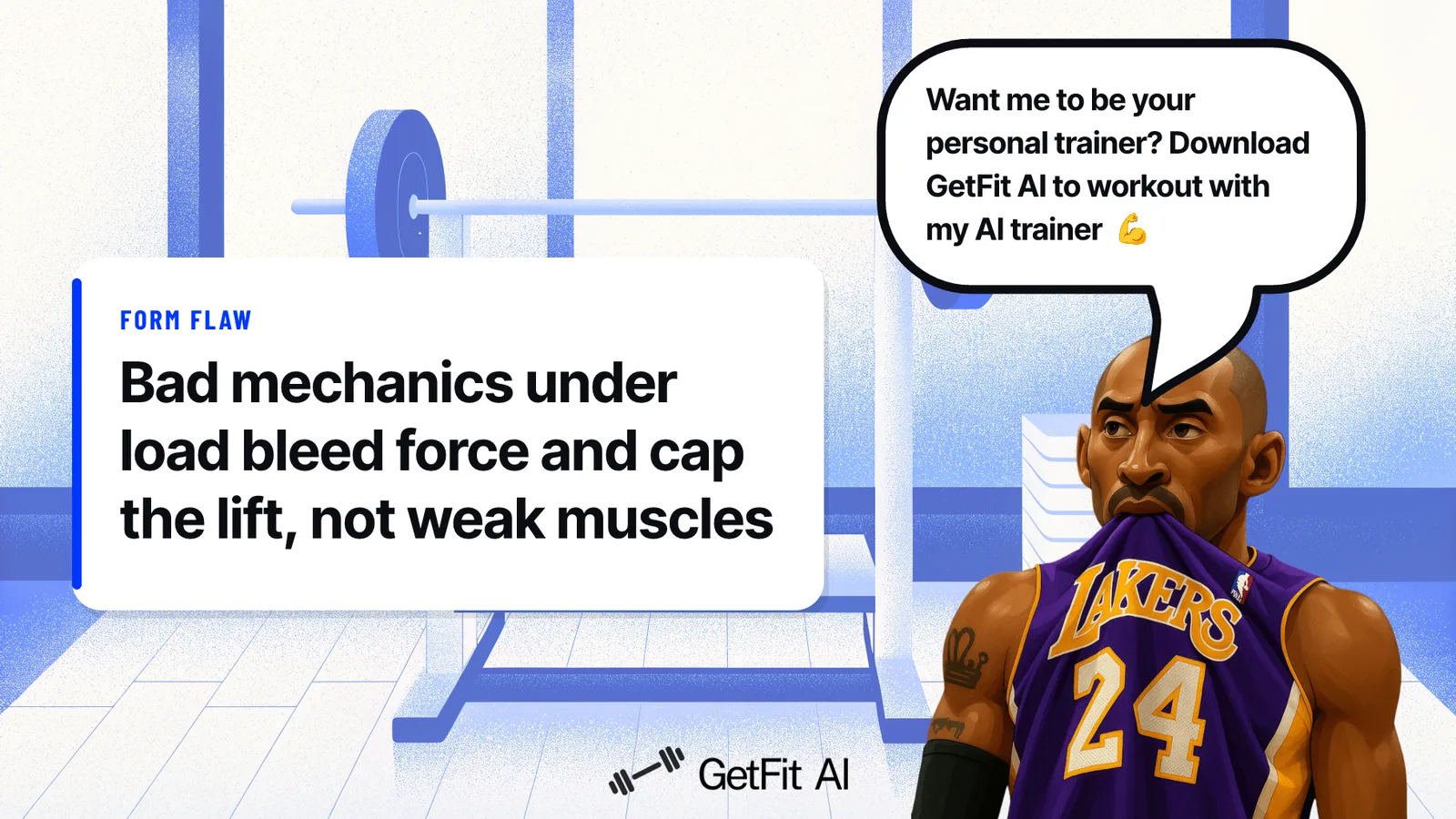
As weight increases toward and beyond the average male bench press, subtle form errors compound, bar path drifts, scapulae lose tension, leg drive disappears. Each flaw bleeds force and caps the lift. The critical problem is that nobody is watching mid-set to catch the one cue that would unlock the next 10 lbs. Lifters feel the struggle but misattribute it to weakness rather than mechanics, so they add more volume into a broken pattern instead of fixing the root error.
Related Reading
- Do Pull Ups Work Chest
- Grip Strength Norms
- Average Deadlift Weight
- 1 Rep Max Chart
- Average Male Deadlift
- Good Bench Press Weight
- Weightlifting Standards
- Average Bench Press Kg By Age
- Average Deadlift Weight Kg
How to Improve Your Bench Press, the Structured Path from Your Current Number to the Next Tier
Showing up three times a week and grinding through the same session is not a training plan. It is a habit without a mechanism. The men who move from one bench press tier to the next are not necessarily working harder; they are working inside a structure that forces the bar upward by design.
“I can feel stuck or behind after 11 months of training and only reaching 70lbs on bench press. Slow or stalled progress is a common frustration on the path to the next tier.”
— what we hear from beginner weightlifters
1. GetFit AI: Adaptive Programming and On-Demand Coaching That Closes the Structural Gap Most Men Never Address
Most men never reach the average male bench press not because they lack a number to chase, but because they lack structured progression, real-time form feedback, and accountability between sessions. GetFit AI’s adaptive plans auto-adjust load and volume based on logged performance, while its on-demand AI coach answers form and programming questions in the moment, replacing the guesswork that derails self-directed lifters. The tradeoff is that the app works best for those who log consistently.
2. Progressive Overload: The Non-Negotiable Engine Behind Every Average Male Bench Press Gain
Progress on the bench press requires one thing above all else: a deliberate, trackable system for adding either load or reps each week. Without a written plan, most lifters unconsciously repeat the same weights session after session, then wonder why nothing changes in the mirror. This is one of the most common and quietly demoralizing patterns we see: a beginner can train for nearly a year, putting in genuine effort every session, and still find themselves stuck at 70 lbs on the bench press, no closer to the next tier than they were in month one.
The problem is almost never effort. It is the absence of mechanism. Attempting to lift heavier each session without a structured progression model is guesswork, and guesswork compounds into stagnation.
Social media distorts this further, making a 225 lb bench press look routine when the vast majority of men who train consistently never reach it. Chasing an inflated number without a progression structure increases the temptation to ego-load, which raises injury risk while slowing actual adaptation.
This is exactly the problem GetFit AI’s Athlete-Style Custom Workout Plans are built to solve, from the first workout session. Rather than handing you a generic template, the structured training model tracks where you are, enforces progression rules automatically, and evolves the plan as you move from beginner to intermediate. For lifters who have previously struggled with consistency due to lack of program structure, that scaffolding is the difference between a year of effort and a year of results.
3. The Beginner Bench Press Blueprint: 3-4 Sets of 5-8 Reps at 75-80% of 1RM, Add 5 lbs When Clean
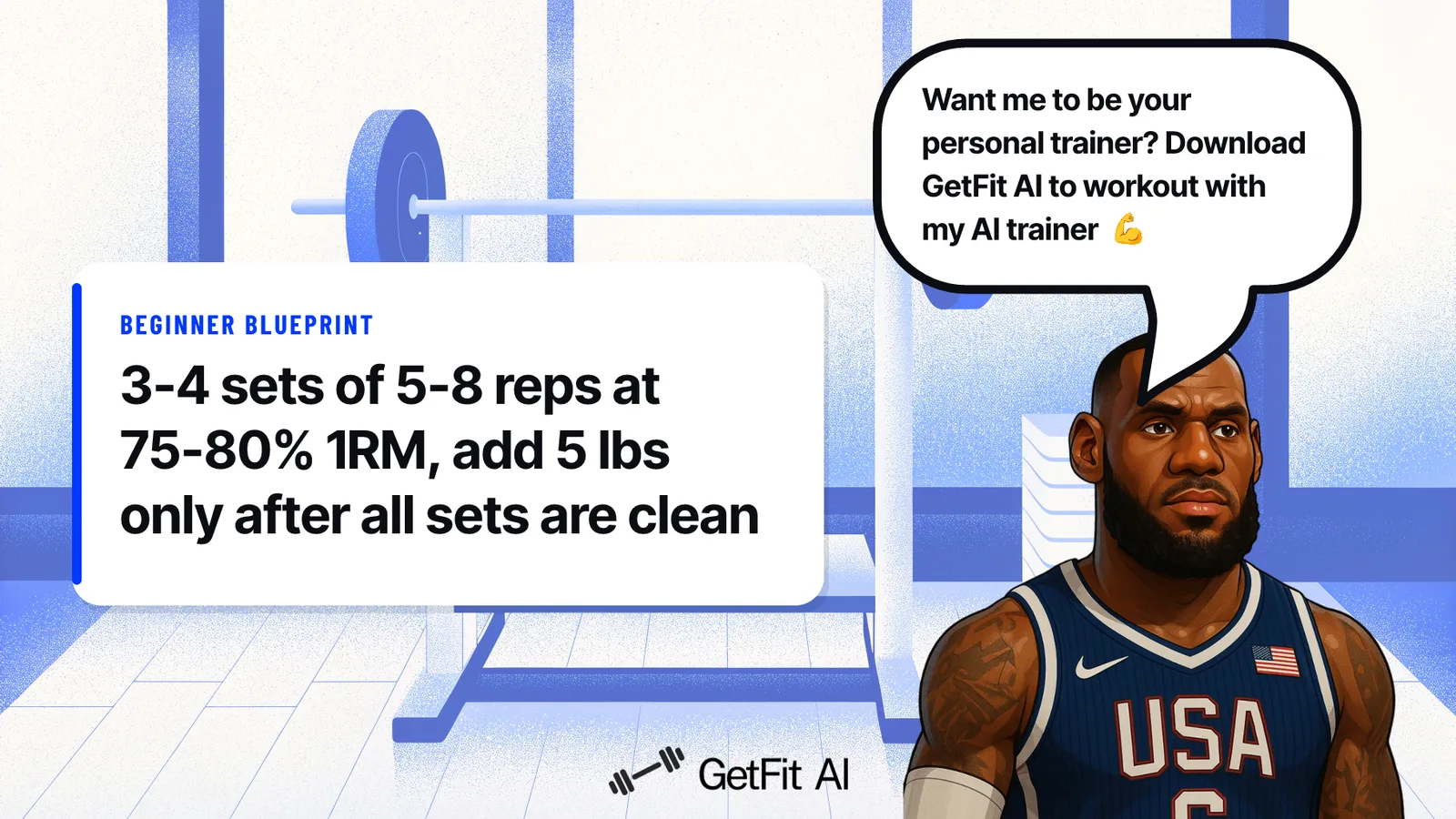
For men starting below the average male bench press, the most effective protocol is 3-4 sets of 5-8 reps at 75-80% of estimated 1RM, with a 5 lb increase only after all sets are completed with clean form. This rep range sits in the optimal strength-and-hypertrophy overlap zone. The limitation: it requires an honest 1RM estimate upfront, which most beginners skip and then wonder why they stall.
4. Training Frequency: Why Benching Once a Week Keeps Most Men Permanently Below Average
A 2016 meta-analysis by Schoenfeld, Ogborn, and Krieger in Sports Medicine found that training a muscle group twice per week produces superior hypertrophic outcomes compared to once per week, even when total weekly volume is held equal. Frequency itself drives adaptation. Benching once a week is the single most common structural mistake among men stuck below average, yet it is also the easiest fix: split your weekly bench volume across two sessions and the stimulus doubles without adding a single extra set.
Knowing this intellectually and actually executing it week after week are two different things. Consistency past the first few weeks is where most self-directed programs collapse, because accountability evaporates. GetFit AI addresses this directly through its friends, challenges, and leaderboards layer, which is most effective once you have connected with at least one friend or workout partner also using the app. That social structure becomes the retention mechanism that keeps training sessions from getting skipped past week three, which is precisely when frequency-dependent adaptations either compound or get abandoned.
5. Nutrition Misalignment: The Silent Reason Most Men’s Bench Press Stalls Despite Consistent Training
A lifter can execute a perfect progression plan and still stall if calories do not support muscle protein synthesis. Research consistently points to a minimum surplus of calories above maintenance being required to drive meaningful hypertrophy alongside strength work. Without adequate caloric and protein intake, the training signal lands but the recovery substrate is not there to complete the adaptation, and the bar stops moving regardless of how sound the program is.
Related Reading
- Average Deadlift Weight For Male
- Best Calisthenics Workout App
- Best Hiit Workout App
- Best Gym Workout App
- Best Workout Apps
- Best Free Workout Apps
Next steps
If your bench press has stalled despite months of genuine effort, the path forward starts with accepting that the 212 lb average is context, not a plan. A number without a set-by-set progression trigger attached to it is just trivia. Start with our AI fitness app.
The tier labels attached to bench press numbers describe how structured your training has been, not how hard you have worked. That means crossing from Novice to Intermediate is an architecture problem, not a willpower problem. Social media survivorship bias simultaneously inflates what normal progress looks like, making lifters chase a number while skipping the rep-progression ramp that evidence confirms is equally valid as adding load. Together, these two facts point to the same corrective action: stop selecting a weight based on what feels ambitious and start following a plan that decides load and reps for you, in advance, every session.
Start with the AI fitness app that generates an athlete-style custom workout plan from your first session, built around your current tier, bodyweight, and training history. The progression triggers are built in, the load and rep decisions are made in advance, and the structure moves with you rather than waiting for you to catch up to a rigid template you will eventually abandon.
Frequently Asked Questions
Is 225 lbs a respectable bench press?
Yes, 225 lbs is a real achievement. For a 198 lb man, it sits above the 50th percentile of all male lifters who log their lifts, and estimates suggest fewer than 20-25% of men who train regularly ever reach it. Every credible classification system places it at high-intermediate status.
Is 135 lbs a respectable bench press?
It depends on your bodyweight and training history. According to NSCA-approved ExRx.net standards, 135 lbs represents the baseline untrained benchmark for a 198 lb man, meaning it’s the expected starting point before structured training begins, not a tier milestone. For a lighter lifter, the same number may land at a higher relative tier when evaluated as a bodyweight ratio.
How much should a 150 lb man bench press?
For a man around 154 lbs, the post’s bodyweight-scaled table puts the beginner range at roughly 77 lbs, novice at 115 lbs, intermediate at 154-170 lbs, and advanced at 231 lbs. The actionable number is always a bodyweight ratio, a 150 lb man pressing 165 lbs scores 1.10x bodyweight, which lands at intermediate on every credible classification system.
Why do so many men stall below the average bench press even after months of training?
The most common cause is the absence of progressive overload, doing the same weight, reps, and sets week after week gives the body no reason to build new muscle. The post is direct about this: the same 3×10 at 185 lbs indefinitely is maintenance at best, not training. Men who stall are typically under-programmed, not undertrained.
Does age actually affect how much you should expect to bench press?
Yes, significantly. Peak male strength falls between the mid-20s and late 30s, when testosterone, motor unit recruitment, and recovery capacity are at their highest combined level. By the 40s, tier thresholds measurably drop across bodyweight classes, and the 50-plus band drops further, meaning the same tier label requires fewer pounds as age increases, reflecting real biological decline rather than a more forgiving standard.







