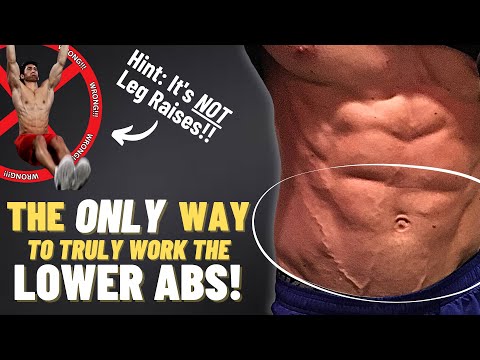
Twisting Hanging Knee Raise Overview
The twisting hanging knee raise builds strong abs and a firm waist. It works your abs, the muscles on the front of your belly. It also hits your obliques, hip flexors, and forearms. Your obliques are the muscles on the sides of your waist. You need only a pull-up bar to hang from. Adding a twist works the sides of your core hard. The hang also builds your grip. This is an advanced move. You need a solid grip and strong abs first. Do the twisting hanging knee raise early in your core work. It builds a strong, athletic middle.
What Is The Point of the Twisting Hanging Knee Raise?
The twisting hanging knee raise builds a rock-solid core while hitting your obliques hard. This move creates serious ab strength and helps you build that defined midsection.
How To Do The Twisting Hanging Knee Raise
- Reach up and grab a pull-up bar with an overhand grip, hands about shoulder-width apart. Hang with your arms fully extended.
- Engage your shoulders by pulling them down slightly away from your ears, so you are not just dead hanging from your joints. This protects your shoulders and gives you a stable base.
- Brace your core and squeeze your grip. Take a breath and get your body under control so you are not swinging on the bar.
- Keeping your core tight, slowly lift your knees up toward your chest by curling your pelvis and flexing your abs. Lead with your hips, not just your legs.
- As your knees reach around hip level, twist them to one side by rotating your pelvis and firing your obliques. Bring your knees across toward one hip.
- Control the twist rather than throwing your legs. The rotation should come from your obliques working, not from momentum swinging your lower body.
- Pause briefly at the twisted top position and squeeze the obliques on that side. Own the contraction for a beat and keep your legs from swinging while you hold there.
- Slowly untwist and lower your knees back down to the hanging start under control. Do not let your legs drop and swing.
- Repeat to the opposite side on the next rep, alternating so both obliques get equal work. Keep your body from swinging throughout and your shoulders packed down, and aim for controlled reps, around 8 to 12 per side.
Twisting Hanging Knee Raise Form Tips
- Keep your shoulders down and back. Do not hang loose from your joints.
- Lift your knees with your abs, not a swing. Move slow.
- Twist from your waist, not your legs. Turn your hips over.
- Keep control the whole time. Do not let your body sway.
- Squeeze your abs at the top. Feel your belly and sides work.
- Grip the bar firm. A strong grip holds you steady.
- Breathe out as you lift. Breathe in as you lower.
- Lower slow to a full hang. Do not just drop.
- Keep your legs together. Move them as one.
Common Mistakes to Avoid for the Twisting Hanging Knee Raise
- Swinging your body to throw your legs up. Using momentum turns this into a kipping mess and takes the work off your abs and obliques. Kill the swing, keep your torso quiet, and lift your knees with muscular control.
- Twisting from momentum instead of your obliques. Flinging your legs across with a swing bypasses the very muscles you are trying to train. Rotate your pelvis deliberately using your obliques so the twist is driven by muscle.
- Only raising your legs, not curling your pelvis. If you just lift at the hips without tucking your pelvis, your hip flexors do most of the work and your abs barely fire. Think about curling your tailbone up toward your ribs to engage the abs.
- Not lifting your knees high enough. Stopping with your thighs well below parallel gives you a short, weak range. Bring your knees up to at least hip level before you twist.
- Rushing through the reps. Fast reps rely on swing and cheat the contraction. Slow everything down so your abs and obliques stay under tension the whole time.
- Skipping the squeeze at the top. Bouncing straight out of the twisted position misses the peak oblique contraction. Pause and squeeze the working side before you lower.
- Letting your legs drop and swing on the way down. A fast, uncontrolled descent wastes the eccentric and sets up a swing on the next rep. Lower your knees slowly back to the hang under control.
- Dead hanging with loose, disengaged shoulders. Hanging fully relaxed stresses your shoulder joints and gives you an unstable base. Pull your shoulders down slightly to stay packed and protected.
- Doing uneven reps on each side. Favoring your stronger side builds an oblique imbalance over time. Alternate evenly and give both sides the same number of controlled reps.
- Holding your breath through the movement. A locked breath makes it hard to fully flex your trunk and can leave you lightheaded. Exhale as you raise and twist to help your abs contract.
- Trying this before you can do a strict hanging knee raise. Adding rotation before you own the basic move leads to swinging and poor control. Master the straight knee raise first, then add the twist.
Twisting Hanging Knee Raise Workout Tips
- Kill any swing before you start each rep. A quiet, controlled hang is what forces your abs and obliques to do the work instead of momentum.
- Curl your pelvis, do not just lift your legs. Tucking your tailbone toward your ribs is the difference between training your abs and just hammering your hip flexors.
- Drive the twist with your obliques. Rotating your pelvis deliberately with muscle, not a fling, is what makes this hit the sides of your waist.
- Squeeze the working oblique at the top. Pausing at the twisted position nails the peak contraction where the muscle works hardest.
- Lower slowly under control. A controlled descent uses the eccentric for growth and keeps you from building a swing.
- Keep your shoulders packed down throughout. Engaging your shoulders protects the joints and gives you a stable base to move from.
- Alternate sides evenly. Balanced reps keep both obliques developing equally and prevent a lopsided waist.
- Master the strict hanging knee raise first. This twisting version is advanced, so earn it by owning the basic move without swinging.
- Program it as core work at the end of a session. A few sets of 8 to 12 controlled reps per side is plenty alongside your bigger lifts.
- Use straps if your grip fails before your abs do. On a long set you want your core to be the limit, not your hands.
- Exhale as you raise and twist. Blowing air out helps you flex your trunk fully and get a deeper contraction.
- Chase the mind-muscle connection with your obliques. Really feeling the sides of your waist work turns a mindless rep into targeted training.
- Try a brief pause at the top for extra difficulty. Holding the twisted position removes momentum and forces the obliques to hold tension.
- Progress to straight-leg twisting raises over time. Straightening the legs lengthens the lever and makes the movement much harder as you get stronger.
- Keep the rest of your body still while your lower half works. The stiller your torso and upper body stay, the more the abs and obliques have to do.
- Be consistent and patient. A strong, defined waist comes from steady core work, though seeing the definition also depends on keeping your body fat in check with diet.








Questions & Comments
Be the first to ask a question about this exercise.