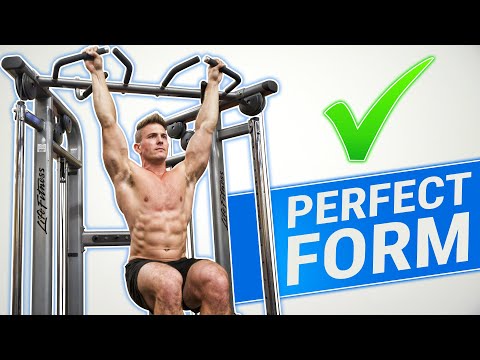
Weighted Hanging Knee Raise Overview
The weighted hanging knee raise builds powerful abs. It works your abs, the muscles on the front of your belly. It also uses your hip flexors and forearms. You need a pull-up bar and a weight to hold. You squeeze a dumbbell or plate between your feet and lift your knees. The added weight makes your abs work much harder. The hang also builds a strong grip. This is an advanced move. You need strong abs and a solid grip first. Do the weighted hanging knee raise early in your core work. It builds serious core strength.
What Is The Point of the Weighted Hanging Knee Raise?
The weighted hanging knee raise exercise builds serious core strength and carves out rock-solid abs. It adds resistance to make your abs work harder than regular knee raises.
How To Do The Weighted Hanging Knee Raise
- Reach up and grab a pull-up bar with an overhand grip, hands about shoulder-width apart. Hang with your arms fully extended.
- Before you lift, secure a dumbbell or weight plate between your feet or ankles. Pinch it firmly so it stays locked in place through the set.
- Engage your shoulders by pulling them down slightly away from your ears. This packs your shoulders, protects the joints, and gives you a stable base.
- Brace your core and squeeze your grip hard, since the added weight makes both grip and core work tougher. Take a breath and get your body under control so you are not swinging.
- Keeping your core tight, slowly lift your knees up toward your chest by curling your pelvis and flexing your abs. Lead with your hips, not just your legs.
- Bring your knees up until your thighs are about parallel to the ground or a touch higher. Drive the movement with your abs, not a swing.
- Pause at the top when your thighs reach parallel and squeeze your abs hard. The added weight makes this contraction especially demanding, so own it.
- Lower your legs slowly and under control back to the hanging start, resisting the weight the whole way. Do not let your legs drop and swing.
- Keep your body from swinging throughout and your shoulders packed down, and repeat for controlled reps, usually 8 to 12. Because of the load, treat this as a strength move for your abs and keep every single rep strict and controlled.
Weighted Hanging Knee Raise Form Tips
- Squeeze the weight tight between your feet. Do not let it slip.
- Keep your shoulders down and back. Do not hang loose from your joints.
- Lift with your abs, not a swing. Move slow.
- Pause at the top with your thighs level. Squeeze hard.
- Grip the bar firm. A strong grip holds you steady.
- Lower slow to a full hang. Do not just drop.
- Breathe out as you lift. Breathe in as you lower.
- Keep your legs together around the weight. Move them as one.
- Stay still and controlled. Do not sway.
Common Mistakes to Avoid for the Weighted Hanging Knee Raise
- Swinging your body to hoist the weight up. Using momentum with a load between your feet takes the work off your abs and can set up a dangerous swing. Kill the swing, keep your torso quiet, and lift your knees with muscular control.
- Not securing the weight firmly. A loosely held dumbbell or plate can slip and drop, which is a hazard to you and anyone nearby. Pinch it hard between your feet or ankles and stop the set if your grip on it starts to fail.
- Only lifting your legs without curling your pelvis. If you just hinge at the hips, your hip flexors do most of the work and your abs barely fire. Curl your tailbone up toward your ribs so your abs actually contract against the load.
- Dropping your legs fast on the way down. A quick, uncontrolled descent wastes the eccentric and can jerk your lower back, especially with added weight. Lower your knees slowly and stay in control the whole way.
- Going too heavy too soon. Adding a load you cannot control forces you to swing and breaks your form down. Master the bodyweight version first, then add small amounts of weight gradually.
- Not lifting your knees high enough. Stopping with your thighs well below parallel gives you a short, weak range that the added weight cannot fix. Bring your knees up to at least parallel on every rep.
- Dead hanging with loose, disengaged shoulders. Hanging fully relaxed with extra weight stresses your shoulder joints. Pull your shoulders down and stay packed to protect them.
- Skipping the squeeze at the top. Bouncing straight out of the top misses the peak contraction that the added load makes so valuable. Pause and squeeze your abs hard before lowering.
- Letting your grip fail before your abs do. When your hands give out, you lose control of both your body and the weight. Use straps for your bar grip so your abs can be the limit, but keep the weight itself secure.
- Holding your breath through the reps. A locked breath makes it hard to brace and can leave you lightheaded while loaded and hanging. Exhale as you raise and keep your core engaged.
- Rushing the reps to hit a number. Speeding through with a load trains momentum and risks losing the weight. Slow every rep down and treat this as a strict strength movement.
Weighted Hanging Knee Raise Workout Tips
- Earn this move by mastering the bodyweight hanging knee raise first. Adding weight before you can do strict, swing-free reps only builds bad habits and risks dropping the load.
- Add weight in small increments. The abs get strong quickly with load, but jumping up too fast wrecks your form, so progress a little at a time.
- Curl your pelvis, do not just lift your legs. Tucking your tailbone toward your ribs is what makes your abs, rather than your hip flexors, drive the movement.
- Secure the weight firmly and check it each set. A pinched dumbbell or plate that slips is a real hazard, so make safety part of your setup.
- Kill any swing before each rep. A quiet, controlled hang forces your abs to do the work and keeps the loaded movement safe.
- Squeeze your abs hard at the top. The added weight makes the peak contraction especially productive, so pause and own it.
- Lower slowly under control. A controlled eccentric with load is a powerful growth driver and keeps your lower back safe.
- Use straps for your bar grip. On a loaded set you want your abs to be the limit, not your hands, so straps let you push the core harder.
- Keep your shoulders packed down throughout. Engaging your shoulders protects the joints under the extra load and gives you a stable base.
- Program this as strength-focused ab work. Because of the load, treat it like a heavy lift with lower reps, around 8 to 12, rather than an endless burnout set.
- Exhale as you raise your knees. Blowing air out helps you brace your core and get a deeper contraction.
- Chase the mind-muscle connection with your abs. Really feeling your abs work against the weight turns a mindless rep into targeted, growth-focused training.
- Progress to weighted straight-leg raises over time. Straightening the legs lengthens the lever and dramatically increases the difficulty as you get stronger.
- Keep your body still while your lower half works. The stiller your torso stays, the more your abs have to do to move the load.
- Do not train to failure with a heavy load hanging. Leaving a rep in the tank keeps you in control of the weight and your body.
- Stay consistent and patient. Loaded ab training builds real core strength over months, and remember that seeing your abs also depends on your diet and body fat.








Questions & Comments
Be the first to ask a question about this exercise.