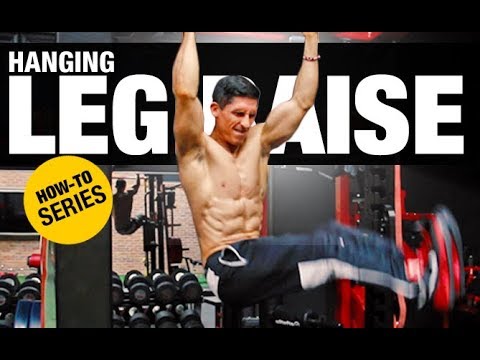
Weighted Hanging Leg Raise to Knee Tuck Overview
The weighted hanging leg raise to knee tuck builds strong abs. It also works your hip flexors and forearms. You hang from a bar with a weight held between your feet. Then you pull your knees up to your chest. This is a hard, advanced move. You need a pull-up bar and a weight. The added weight makes your abs and grip work very hard. Hanging trains your whole middle. This move fits strong, experienced lifters. Use the weighted hanging leg raise to knee tuck on core day. It builds a powerful core and a strong grip. Only try it once your form is solid.
What Is The Point of the Weighted Hanging Leg Raise to Knee Tuck?
The weighted hanging leg raise to knee tuck builds serious core strength and grip power. It targets your abs harder than bodyweight versions while improving functional strength.
How To Do The Weighted Hanging Leg Raise to Knee Tuck
- Secure a dumbbell or weight plate between your feet or ankles, squeezing your legs together to hold it firmly. Stand under a sturdy pull-up bar.
- Reach up and grab the bar with an overhand grip, hands about shoulder width apart. Lift your feet so you hang with arms fully extended and legs straight.
- Set your shoulders down and back into an active hang, and brace your core. Keep a firm grip on the bar so the added weight stays secure between your feet.
- Without swinging, pull your knees up toward your chest in a controlled motion. Lead the movement by curling your pelvis up, not just bending at the hips.
- Bring your knees all the way up until they reach chest level, keeping the weighted tuck smooth and controlled. Fight any urge to kip or swing.
- Squeeze your abs hard at the top when your knees are at your chest, and hold for about one second. This peak contraction is where the abs work hardest.
- Lower your legs slowly back to a straight, fully extended hang under control. Resist the weight on the way down rather than letting your legs drop.
- Keep your upper body still and your grip tight throughout so the abs, not momentum, do the work. Aim for about 8 to 12 controlled reps for 3 to 4 sets, adding weight as you get stronger.
Weighted Hanging Leg Raise to Knee Tuck Form Tips
- Keep your grip firm on the bar.
- Move your legs slowly, not with a swing.
- Curl your knees up using your abs.
- Keep your body from swinging.
- Squeeze your abs at the top.
- Lower your legs slow and controlled.
- Breathe out as you lift your knees.
- Keep your shoulders pulled down, not shrugged.
- Hold the weight tight between your feet.
Common Mistakes to Avoid for the Weighted Hanging Leg Raise to Knee Tuck
- Swinging or kipping to raise the legs. Using momentum to fling the weighted legs up takes the work off the abs and stresses the shoulders and lower back. Pull your knees up under control and keep your upper body still.
- Only bending at the hips without curling the pelvis. Just lifting the knees while the pelvis stays put makes the hip flexors do most of the work. Curl your pelvis up toward your ribs at the top so the abs fully contract.
- Adding too much weight too soon. Overloading before you own the bodyweight version brings back swinging and cuts your range short. Master strict hanging tucks first, then add weight in small steps.
- Dropping the legs fast on the way down. Letting your legs fall wastes the eccentric and can jar your lower back with the added load. Lower slowly and under control to keep tension on the abs.
- Losing the active shoulder position. Hanging slack from loose shoulders stresses the joint, especially under weight. Keep your shoulders packed down and back in an active hang throughout.
- Cutting the range short at the top. Stopping before your knees reach your chest shortchanges the contraction. Bring the knees all the way up and squeeze hard at chest level.
- Holding a weak grip. A loose grip risks the weight slipping and cuts your set short. Crush the bar and keep your grip active so you can finish your reps securely.
- Holding your breath through the reps. Clamping your air on a hard ab set spikes pressure and gasses you out. Exhale as you curl the knees up and inhale on the way down.
- Insecurely holding the weight. Pinching the dumbbell loosely between your feet risks dropping it mid-rep. Squeeze your legs together hard or use ankle weights so the load stays put.
- Letting the body sway between reps. Any residual swing pulls you out of position and brings in momentum. Come to a controlled dead hang and start each rep from a still body.
- Skipping a proper warm-up. Loading cold abs and shoulders into a hanging raise can strain them. Do some easy hanging raises first so everything is ready for the weight.
Weighted Hanging Leg Raise to Knee Tuck Workout Tips
- Curl your pelvis up at the top. Tucking your pelvis toward your ribs is what fully contracts the abs, rather than just bending at the hips.
- Master strict bodyweight hanging raises first. This is an advanced move, so own the unweighted version before you start adding load.
- Add weight in small steps. Progressive overload a little at a time keeps the abs growing without bringing back swinging and sloppy form.
- Keep an active shoulder position. Packing your shoulders down and back protects the joint and gives you a stable base under the weight.
- Control the lowering phase. A slow, resisted descent adds serious muscle-building tension and protects your lower back.
- Squeeze hard at the top. A firm one-second hold with the knees at your chest hammers the abs where they work hardest.
- Crush the bar for a secure grip. A strong grip keeps the weight safe and stabilizes your whole hang.
- Keep your upper body still. Eliminating the swing forces the abs, not momentum, to do the work.
- Program it as an advanced ab builder on core day. The added load makes it one of the best exercises for building serious lower-ab strength.
- Squeeze your legs to hold the weight securely. A firm hold on the dumbbell keeps it from slipping mid-set.
- Exhale as you curl the knees up. Blowing the air out helps your abs contract harder at the top.
- Build your grip alongside your abs. Long weighted sets train your grip too, which carries over to your pulling lifts.
- Try a pause at the top for some sets. Holding the contraction longer kills momentum and makes the abs work even harder.
- Warm up your abs and shoulders first. A few easy hanging raises prime everything before you load it.
- Progress toward straight-leg raises over time. Once weighted tucks feel easy, straightening the legs raises the difficulty for the next challenge.
- Be patient and consistent. Advanced core strength builds over months of controlled, progressive work, so keep showing up and adding a little at a time.








Questions & Comments
Be the first to ask a question about this exercise.