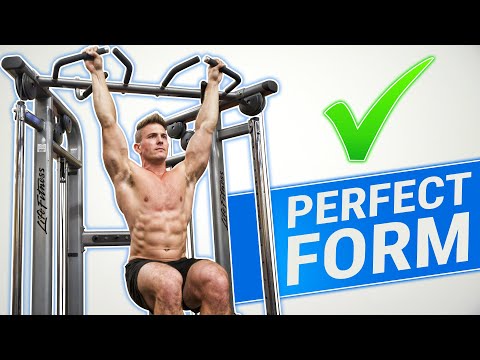
Weighted Chair Knee Raise Overview
The weighted chair knee raise works your abs. These are the muscles on the front of your belly. You sit on the edge of a chair. You hold a weight plate or dumbbell against your chest. You lift both knees toward your chest. It also works your hip flexors and forearms. You need a sturdy chair and one weight. This move builds a strong lower belly. The extra weight makes your abs work harder. The chair setup makes it easy to learn. Use the weighted chair knee raise on core day or at the end of any workout. You can do it at home with a firm chair. It is a simple way to build a solid middle.
What Is The Point of the Weighted Chair Knee Raise?
The weighted chair knee raise builds serious core strength by adding resistance to the knee raise movement. It targets your abs harder than bodyweight versions.
How To Do The Weighted Chair Knee Raise
- Sit on the edge of a sturdy chair and hold a weight plate or dumbbell against your chest with both hands. Make sure the chair is stable and will not tip. This added load turns a simple knee raise into real ab training.
- Grip the sides of the chair seat lightly for stability if you need it, or keep both hands on the weight. Plant your feet on the floor to start.
- Lean back slightly from the hips until you feel your abs engage and take the tension. This lean is what shifts the work onto your abs instead of just your hip flexors.
- Brace your core and set your posture. Keep your chest up and the weight pressed firmly against you so it does not shift during the movement.
- Slowly lift both knees up toward your chest by contracting your abs. Think about curling your pelvis up slightly rather than just swinging your legs.
- Raise your knees as high as you can while keeping tension on the abs, taking about two seconds on the way up. Exhale as you lift to help the abs fully contract.
- Squeeze your abs hard at the top and hold that peak contraction for a full second. This is where the abs work hardest, so do not rush past it.
- Lower your feet back down slowly over two to three seconds, resisting the way down. The eccentric builds just as much as the lift, so control it.
- Keep the weight against your chest and your torso steady the whole time. Do not let momentum swing your legs or rock your body.
- Stop just short of resting your feet fully to keep tension, then begin the next rep. Aim for 12 to 20 controlled reps per set.
Weighted Chair Knee Raise Form Tips
- Keep the weight pressed to your chest the whole time.
- Lean back a little to keep your abs working.
- Lift your knees slowly with control.
- Squeeze your abs hard at the top of each rep.
- Lower your feet slowly. Do not let them drop.
- Keep your back straight, not rounded hard.
- Breathe out as you lift. Breathe in as you lower.
- Keep tension in your abs between reps.
- Keep your movement smooth, not jerky.
Common Mistakes to Avoid for the Weighted Chair Knee Raise
- Swinging your legs with momentum. Kicking your knees up fast lets momentum do the work and takes the load off the abs. Slow the movement down and lift with a deliberate ab contraction so the muscle earns every rep.
- Sitting bolt upright instead of leaning back. Staying perfectly vertical shifts almost all the work to your hip flexors and off your abs. Lean back slightly until you feel your abs pick up the tension, then keep that angle.
- Using a weight that is too heavy. Too much load forces you to swing and lets the hip flexors and momentum take over. Start light enough that your abs can control the raise, then add weight slowly.
- Only lifting the legs, never curling the pelvis. Raising just the knees works the hip flexors more than the abs. Think about tilting your pelvis up toward your ribs so the abs actually shorten.
- Rushing the lowering phase. Dropping your feet fast wastes the eccentric that builds strong abs. Lower over two to three seconds and resist gravity the whole way down.
- Letting the weight shift off your chest. If the plate or dumbbell slides around it throws off your balance and your brace. Press it firmly against your chest and keep it locked there throughout the set.
- Skipping the peak contraction. Flying past the top means you miss the point where the abs work hardest. Squeeze and hold for a second at the top of each rep.
- Cutting the range of motion short. Tiny partial raises keep the abs from fully contracting and stretching. Raise your knees as high as you can under control and lower with a full stretch.
- Rocking your whole torso to help. Throwing your upper body back and forth turns an ab move into a full-body swing. Keep your torso steady at its slight lean and let only your legs move.
- Holding your breath. Locking your breath keeps the abs from fully contracting and can make you lightheaded. Exhale forcefully as you raise your knees to pull the abs tighter.
- Sitting on an unstable chair. A wobbly or light chair can tip and cause a fall, especially with added weight. Use a sturdy, stable chair and check it before you load up.
- Relaxing fully at the bottom. Letting your feet rest and your abs go slack between reps kills the constant tension. Stop just short of full rest and go straight into the next rep.
Weighted Chair Knee Raise Workout Tips
- Lean back slightly to load the abs. This small change is the whole secret to the exercise, shifting the work from your hip flexors to your abs where you want it.
- Add weight to apply progressive overload. Holding a plate or dumbbell turns an easy knee raise into a real muscle-building move, and you can slowly increase the load like any other lift.
- Curl your pelvis, do not just lift your legs. Thinking about tilting your pelvis toward your ribs makes the abs shorten and contract far more than simply raising your knees.
- Use a slow, controlled tempo both ways. Two seconds up and two to three seconds down keeps the abs under tension and stops momentum from stealing the work.
- Squeeze and pause at the top of each rep. A one-second hold at peak contraction teaches the abs to fire hard and makes every rep count.
- Keep the reps moderate, around 12 to 20. The abs grow well in this range, so you do not need to grind out endless bodyweight reps once you add load.
- Exhale forcefully as you raise your knees. Breathing out hard naturally pulls the abs tighter and helps you reach a fuller contraction.
- Use a sturdy, stable chair. Safety comes first with added weight, so pick a solid chair that will not tip or slide during your set.
- Program it at the end of your training day. Abs recover quickly, so a few focused sets after your main work fits easily and needs almost no equipment.
- Chase the mind-muscle connection. Really feeling the abs work as you lift is one of the most reliable ways to develop a muscle many people struggle to activate.
- Keep constant tension by not resting at the bottom. Stopping just short of a full rest keeps the abs loaded and turns up the burn.
- Progress by adding weight, reps, or slowing the tempo. Any of these overloads the abs over time and keeps you moving forward instead of plateauing.
- Remember visible abs also need low body fat. This move builds the muscle, but your diet is what uncovers it, so pair training with sensible eating.
- Keep your torso steady at its lean. A quiet upper body forces the abs to do the lifting instead of your momentum.
- Pair it with a rotational or plank move. Combining knee raises with oblique and stability work builds a complete, functional core.
- Be patient and consistent. Ab muscle grows slowly like any other, so steady weighted work over months is what builds a thick, developed midsection.








Questions & Comments
Be the first to ask a question about this exercise.