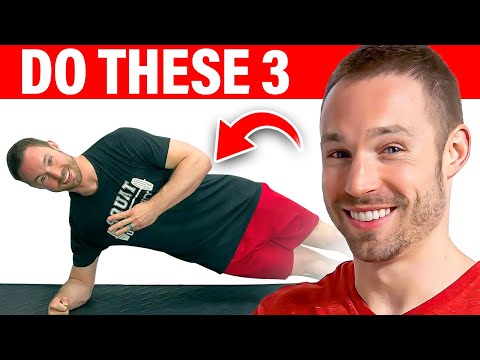
Side Plank Overview
The side plank is a hold that builds your obliques. Your obliques are the muscles on the sides of your belly. It also works your abs and your shoulders. You hold your body up on one forearm. You keep a straight line from your head to your feet. You do not need any gear. You just need your body and some floor space. The side plank is great for beginners. It builds a strong, steady core. A strong core helps you stand tall and lift safely. It also guards your lower back. You can do the side plank at home. It works well in a core routine or a warm-up. Both sides get their turn.
What Is The Point of the Side Plank?
The side plank exercise builds strong obliques and core stability. It helps create a powerful midsection and better balance for everyday movements.
How To Do The Side Plank
- Lie on your side with your legs straight and your feet stacked one on top of the other. Line your whole body up so your ankles, hips, and shoulders are in one straight line before you lift anything.
- Place your bottom elbow directly under your shoulder and press your forearm flat into the floor. Stacking the elbow under the shoulder keeps the load on your muscles rather than hanging it on the joint.
- Set your top hand on your hip or reach it straight up toward the ceiling. Keep your neck long and your head in line with your spine rather than letting it drop.
- Brace your core and squeeze your glutes, then lift your hips off the floor. Drive up until your body forms one straight line from your head to your feet. This is your side plank position.
- Keep your hips high and stacked. The most common failure is letting the bottom hip sag toward the floor, so think about pushing your bottom hip up toward the ceiling the whole time.
- Hold this position while breathing normally and evenly. Do not hold your breath. Keep your obliques and abs tight so your midsection stays rigid like a plank of wood.
- Keep your shoulder blade on the working side set down and back rather than letting it collapse. Press the forearm firmly into the floor to stay supported and stable.
- Hold for your target time, usually 20 to 45 seconds depending on your level, keeping the line clean the entire time. Stop the moment your hips start to sag, since a shorter clean hold beats a long sloppy one.
- Lower your hips down slowly with control, then roll over and repeat on the other side. Always work both sides evenly to keep your core balanced left to right.
Side Plank Form Tips
- Stack your elbow right under your shoulder. This keeps your shoulder safe.
- Lift your hips high. Make one straight line head to feet.
- Keep your core tight the whole hold. Do not let it sag.
- Squeeze your glutes a little. This helps you stay stiff.
- Keep your neck long and still. Look straight ahead.
- Press your forearm into the floor. This locks your shoulder in.
- Stack your feet or stagger them for balance. Keep your legs straight.
- Breathe slow and steady. Do not hold your breath.
- Keep your body in one line. Do not roll forward or back.
Common Mistakes to Avoid for the Side Plank
- Letting your hips sag toward the floor. A drooping hip is the single most common side plank fault, and it takes the tension right off your obliques while stressing your lower back. Push your bottom hip up toward the ceiling and hold one straight line from head to feet.
- Placing your elbow ahead of or behind your shoulder. If the elbow is not stacked directly under the shoulder, you hang the load on the joint and lose stability. Line the elbow up right under the shoulder and press the forearm firmly into the floor.
- Rotating your torso so you roll forward or back. Twisting out of a true side position turns the exercise into something else and takes the obliques out of it. Keep your shoulders, hips, and ankles stacked in one vertical plane facing straight ahead.
- Holding your breath to stay tight. Bracing is good, but locking your breath spikes pressure and cuts the hold short. Keep breathing slow and even while your core stays rigid the whole time.
- Letting your head drop toward the floor. Dropping the head strains your neck and breaks your straight line. Keep your neck long and your head stacked in line with your spine.
- Chasing a long time with sloppy form. Grinding out a two minute hold with sagging hips builds bad habits, not a strong core. Stop the moment your form breaks and build up clean holds instead.
- Forgetting to squeeze your glutes. If your glutes are switched off, your hips sag and your lower back takes the strain. Squeeze your glutes to help lock your hips high and keep the whole line solid.
- Letting the bottom shoulder collapse. If you sink into the joint and let the shoulder blade cave, you lose support and stress the shoulder. Set the shoulder blade down and back and press the forearm into the ground.
- Working one side much harder than the other. People often favor their stronger side and let the weaker one lag. Match your hold time on both sides and let your weaker side set the target.
- Bending at the waist so your butt sticks back. Piking your hips back is a way to cheat and unload the obliques. Keep your body in one clean straight line rather than folding at the middle.
- Bracing only the front abs and ignoring the sides. The side plank is meant to hit your obliques, the muscles on the sides of your waist. Think about squeezing those side muscles to hold the position, not just your six-pack.
Side Plank Workout Tips
- Think about pushing your bottom hip up toward the ceiling the whole time. This single cue fixes the sagging hip that ruins most side planks and keeps the tension right on your obliques.
- Squeeze your glutes hard along with your core. Firing the glutes locks your hips high and takes the strain off your lower back, making the whole line more stable.
- Stack your elbow directly under your shoulder every time. This keeps the load on your muscles instead of your joint and gives you a solid base to hold from.
- Quality beats duration, so stop when your form breaks. A clean 30 second hold builds more real core strength than a sloppy 90 second sag.
- Keep breathing slow and even throughout the hold. Steady breathing lets you brace hard without spiking pressure or getting lightheaded.
- Work both sides equally and let your weaker side lead. Most people have a stronger side that quietly takes over, so match your times to keep your core balanced.
- Make it easier by dropping to your bottom knee. A knee-down side plank shortens the lever and lets beginners build the strength to progress to the full version.
- Make it harder by raising your top leg or adding a reach-through. Lifting the top leg or threading your top arm under your body adds a real challenge once basic holds feel easy.
- Program side planks on core days or as a finisher. They train the obliques and the deep stabilizers that protect your spine during heavy lifts like squats and deadlifts.
- Progress by adding time in small steps. Add five or ten seconds to your holds each week, which is simple progressive overload for your core.
- Keep your head and neck long and neutral. A stacked neck protects the small muscles there and keeps your whole body in one clean line.
- Try a side plank with hip dips for an active variation. Lowering your hip toward the floor and lifting it back up adds dynamic oblique work while keeping the same setup.
- Use side planks to bulletproof your lower back. A strong set of obliques resists unwanted twisting and bending, which is exactly what keeps your spine safe under load.
- Film yourself from the front now and then. A quick video shows whether your body is truly in one straight line far better than how the hold feels.
- Do not rush through your sets. Set your position carefully, brace fully, and hold with intent rather than throwing yourself up and hanging on.
- Be consistent and patient. Core endurance builds steadily, so a few focused side plank sessions a week over time are what finally give you a strong, stable midsection.








Questions & Comments
Be the first to ask a question about this exercise.