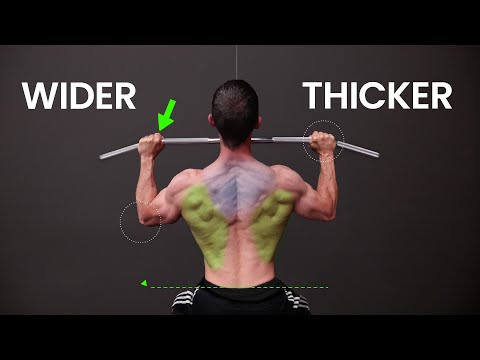
Overhand Close Grip Lat Pull Down Overview
The overhand close grip lat pull down builds a strong back. It works your lats, the big wing muscles on the sides of your back. It also uses your biceps and middle back. Your biceps are on the front of your upper arms. You sit at a cable machine and grab a bar. Your hands go closer than shoulder-width, palms facing away. You need a cable machine with a bar. This move is great for building back width and pull strength. The close grip helps you feel your lats work. It is a good choice for beginners learning to pull. Use the overhand close grip lat pull down early in a back workout. It builds the pulling power you need for chin-ups. It gives you a wide, strong back over time.
What Is The Point of the Overhand Close Grip Lat Pull Down?
The overhand close grip lat pull down builds a wide, strong back by targeting your lats with focused pulling power. It's perfect for beginners to master the lat pulldown movement.
How To Do The Overhand Close Grip Lat Pull Down
- Sit at the lat pulldown station and set the thigh pad snug so your legs stay anchored and you do not lift off the seat during a pull. A fixed base lets you pull hard.
- Grab the bar with your hands closer than shoulder width, palms facing away from you in an overhand grip. Squeeze the bar firmly before you start the first rep.
- Sit tall, then lean your torso back just slightly and set your shoulder blades down and back, away from your ears. This puts the lats in position to pull.
- Take a breath and brace your core so your torso stays solid and you do not swing to move the weight. The lean should stay slight and steady.
- Start the pull by driving your elbows down and back toward your body, thinking about leading with the elbows rather than the hands.
- Pull the bar down to your upper chest, keeping your chest up and your elbows tracking close to your sides the whole way down.
- Squeeze your lats hard at the bottom for a beat, feeling the muscles under your armpits contract fully before you reverse.
- Return the bar slowly over 2 to 3 seconds until your arms are straight and your shoulder blades rise for a full stretch at the top.
- Keep tension the whole way and avoid slamming the stack between reps. Aim for 8 to 15 controlled reps per set.
Overhand Close Grip Lat Pull Down Form Tips
- Sit tall with your chest up the whole set.
- Lean back just slightly, not far.
- Pull the bar to your upper chest, not your belly.
- Drive your elbows down and back to lead the pull.
- Squeeze your lats hard at the bottom.
- Let the bar rise slowly for a full stretch.
- Keep your shoulders down, not shrugged to your ears.
- Keep your core tight so you do not swing.
- Move at a smooth, steady pace on each rep.
Common Mistakes to Avoid for the Overhand Close Grip Lat Pull Down
- Pulling with your arms instead of your back. Yanking with the hands and biceps leaves the lats barely working at all. Lead with your elbows driving down and back so the lats do the real pulling.
- Using momentum and swinging. Rocking your torso to heave the bar down turns a lat exercise into a full-body swing. Keep your torso mostly still and let a slight, controlled lean be the only movement.
- Pulling the bar behind your neck. Dragging it behind the head forces the shoulders into a risky position and does not train the lats any better. Pull to your upper chest in front on every rep.
- Letting the shoulders shrug up. If your shoulders ride up toward your ears you lose lat engagement and stress the neck. Set the blades down first and keep them down through the whole pull.
- Cutting the range short at the top. Stopping before the arms straighten skips the stretch that lat growth depends on. Let the bar rise fully and feel the lats lengthen on every rep.
- Slamming the weight back up. Letting the stack yank your arms up fast throws away the eccentric phase. Control the return for a full 2 to 3 seconds to keep tension on the lats.
- Leaning way too far back. Reclining like a heavy row turns it into a different exercise and lets you cheat with bodyweight. Keep the lean slight and consistent from rep to rep.
- Going too heavy. Overloading the stack forces swinging and arm-dominant pulls that miss the target. Pick a weight your lats can move with your elbows leading and your torso still.
- Not anchoring under the thigh pad. Loose legs let your whole body lift off the seat, killing the tension. Set the pad snug so you can pull against a fixed, stable base.
- Gripping too wide by mistake. This is the close grip version, so a wide grip changes the whole exercise. Keep your hands closer than shoulder width to bias a longer stretch on the lats.
- Rushing the reps. Fast, sloppy reps skip both the squeeze and the stretch that build the back. Slow down, pause at the bottom, and control the top to actually train the muscle.
Overhand Close Grip Lat Pull Down Workout Tips
- Warm up with a light set to groove the pull and wake up the lats before you load up your heavier working weight.
- Think elbows, not hands. Driving your elbows down and toward your hips is the single best cue for feeling your lats do the pulling.
- Set your shoulder blades down and back before every rep. That depression and retraction is what puts the lats in position to pull hard.
- The close overhand grip gives a long stretch and hits the lats through a big range. Enjoy that top stretch on every single rep of the set.
- Use a slow 2 to 3 second return to keep tension on the lats and get the most out of the eccentric part of the pull each rep.
- Pause and squeeze at the bottom for a beat to nail the peak contraction and build a real mind-muscle connection with the lats.
- Chase the mind-muscle connection. If you cannot feel your lats working, drop the weight and slow down until you can.
- Aim for 8 to 15 reps for 3 to 4 sets. Higher reps often help beginners feel the lats better than heavy low-rep sets do.
- Keep a slight, consistent lean rather than swinging. Your torso is a stable base here, not part of the pull itself.
- Progress by adding small increments, adding reps, or slowing the tempo. That steady overload builds a wider back over time.
- Program pulldowns early in a back or pull day while you are fresh and can focus fully on real lat contact.
- Squeeze the bar hard. A firm grip improves your connection to the bar and helps stabilize the whole pull.
- Film from the front or side to check that your elbows are driving down and your shoulders are not shrugging up.
- Once you get strong, this is a great stepping stone toward full pull-ups, which train the same muscles with your bodyweight.
- Do not slam the stack between reps. Controlling the weight in both directions is where most of the growth actually happens.
- Be consistent. A wide, thick back is built with weeks and months of steady lat work, not one heavy session.
- Rotate between wide and close grips across your training blocks, since hitting the lats from different angles keeps your back growing over time.
- If your biceps give out before your lats, use lifting straps so your back stays the limiting factor on every heavy pulldown set you do.








Questions & Comments
Be the first to ask a question about this exercise.