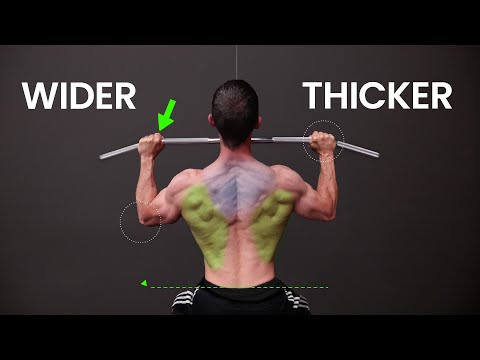
Reverse Grip Lat Pull Down Overview
The reverse grip lat pull down builds a strong, wide back. You do it on a cable machine with a bar. Your palms face you in an underhand grip. This grip hits your lats hard. Your lats are the big wing muscles on the sides of your back. It also works your biceps and middle back. Your forearms get some work too. This move is great for beginners. The underhand grip lets you pull with power. It helps you feel your lats better than a wide grip. Add the reverse grip lat pull down on back day. It builds pulling strength for chin-ups and rows. A strong back also helps your posture.
What Is The Point of the Reverse Grip Lat Pull Down?
The reverse grip lat pull down builds a wider, stronger back while hitting your biceps harder than regular pull downs. It's perfect for creating that V-shape.
How To Do The Reverse Grip Lat Pull Down
- Attach a straight bar to the cable and set the thigh pad so your legs are locked snugly under it. This keeps you anchored so you can pull hard without your body lifting off the seat.
- Grab the bar with an underhand grip, palms facing you, hands about shoulder-width apart. This supinated grip pulls your elbows in tight to your sides and puts your lats in a strong line of pull.
- Sit down, let the weight stretch your lats at the top, and set your shoulder blades. Pull them down and slightly back before the arms do anything, so you start from your back and not your biceps.
- Lift your chest toward the bar and lean back just slightly, maybe 10 to 20 degrees. Keep that torso angle fixed rather than rocking to build momentum.
- Take a breath, brace your core, and drive your elbows down toward your hip pockets. Think about pulling with your elbows rather than curling with your hands.
- Bring the bar to your upper chest, just below the collarbone, and squeeze your shoulder blades together at the bottom. This is where the lats fully shorten, so own that squeeze for a beat.
- Control the bar back up over two to three seconds, letting your shoulder blades rotate up and your lats stretch long at the top. Do not just release and let it yank you up.
- Keep your wrists straight and your elbows tracking down and slightly in front of your body the whole way. A stacked wrist keeps the effort in your back instead of your forearms.
- Repeat for smooth, controlled reps, usually in the 8 to 15 range, stopping when your form starts to break rather than grinding sloppy reps.
Reverse Grip Lat Pull Down Form Tips
- Keep your chest up and tall the whole time. A slumped chest hides your lats.
- Pull with your elbows, not your hands. Think about driving your elbows down.
- Squeeze your shoulder blades at the bottom. This turns on your back.
- Lower the bar in front of your face. Never pull it behind your neck.
- Keep a small lean back, not a big swing. Stay mostly upright.
- Breathe out as you pull down. Breathe in as the bar rises.
- Let your arms fully straighten at the top. Get a real stretch each rep.
- Keep your thighs locked under the pad. This stops you from lifting off.
- Move slow on the way up. Do not let the weight yank your arms.
Common Mistakes to Avoid for the Reverse Grip Lat Pull Down
- Pulling with your arms instead of your back. When you yank with the biceps and hands, the lats barely fire and your arms fatigue long before your back does. Cue your elbows to drive down toward your hips and let the hands just be hooks on the bar.
- Leaning way back and heaving the weight. Turning it into a rocking row with your whole torso uses momentum instead of muscle and hammers your lower back. Keep a slight fixed lean and let your lats, not your body swing, move the bar.
- Not setting your shoulder blades first. If you start the pull with shrugged, unset shoulders, you never get the lats into a strong position and the traps take over. Depress and slightly retract your blades before your elbows bend on every rep.
- Cutting the range short at the top. Stopping halfway up robs your lats of the deep stretch that drives growth and strength. Let the bar rise until your arms are long and your shoulder blades rotate up before you pull again.
- Dropping the weight fast on the way up. Letting the stack rip you upward wastes the eccentric, which is a huge part of building a bigger back. Control the return over two to three seconds and stay in charge of the bar.
- Bringing the bar behind your neck. There is no reason to pull an underhand bar behind the head, and it forces the shoulders into a cranky, risky position. Always bring the bar to your upper chest in front.
- Letting your wrists curl back. A bent, flexed wrist turns this into a forearm and biceps exercise and can strain the joint. Keep your wrists stacked straight so the load travels through to your back.
- Flaring your elbows out wide. With an underhand grip your elbows should stay close to your ribs, and letting them wing out shifts work off the lats. Keep them tucked and driving down along your sides.
- Going too heavy and using body English. Ego loading forces you to jerk and swing, which trades lat tension for momentum. Pick a weight you can pull cleanly and feel in your back for every rep.
- Shrugging your shoulders up during the pull. Letting the traps rise toward your ears crowds out the lats and jams the neck. Keep your shoulders pulled down away from your ears the whole set.
- Forgetting to brace your core. A loose midsection lets your ribs flare and your lower back arch, leaking power and stability. Take a breath and tighten your abs so you pull from a solid base.
Reverse Grip Lat Pull Down Workout Tips
- Chase the mind-muscle connection with your lats. Before your sets, do a couple of light reps just feeling your back squeeze, because feeling the target muscle work is one of the most reliable ways to build it.
- The underhand grip naturally tucks your elbows and hits the lats hard while giving the biceps more involvement. Use it to bring up back thickness when a standard wide grip feels all shoulders.
- Lead every rep with your elbows, not your hands. Imagine your forearms are just chains and your elbows are pulling down to your hip pockets, and the lats will do the work.
- Pause for a full second at the bottom with the bar at your chest. That squeeze at peak contraction wakes up the lats and teaches you where the tension should live.
- Use a slow, controlled eccentric of two to three seconds. Fighting the weight on the way up builds muscle and keeps you from bouncing into the next rep.
- Program this after heavier rows or pull-ups when your back is warm. It works great as a controlled, higher-rep finisher in the 10 to 15 range for 3 to 4 sets.
- Keep a slight chest-up lean and hold it. A fixed torso angle isolates the lats far better than rocking back and forth to move more weight.
- Set the thigh pads snug every time. When your lower body is locked down, you can pull harder without your body lifting, which means cleaner reps and better tension.
- If you feel it mostly in your biceps, lighten the load and slow down. The arms give out first when you rush, so control exposes and fixes the issue.
- Squeeze the bar and think about bending it toward you. A tight grip creates full-arm tension that helps stabilize the shoulder and connect the pull to your back.
- Progress with small weight jumps or an extra rep or two per session. Steady, controlled overload beats big leaps that wreck your form.
- Try a brief single-arm cable pulldown on off days to hammer each lat evenly. Most people have a stronger side, and unilateral work keeps it from taking over.
- Keep your neck relaxed and your shoulders down. Craning or shrugging shifts the work to the traps and neck and blunts the lat stimulus.
- Do not train every set to failure. Leaving a rep in the tank on most sets keeps your form crisp and your shoulders healthy for the long haul.
- Film a set from the side now and then. Video reveals swinging, short range, and elbow flare far better than the lift feels in the moment.
- Be patient with back width and thickness. The lats respond to consistent, well-executed volume over months, so trust clean reps and keep showing up.








Questions & Comments
Be the first to ask a question about this exercise.