Renegade Row Overview
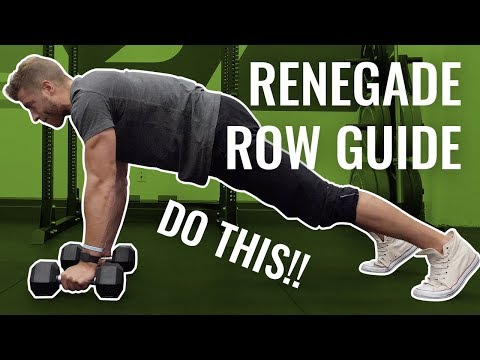
The renegade row is a plank and row move. You hold a plank on two dumbbells. Then you row one weight up to your ribs. It works your lats, the big wing muscles on your back. It also works your abs and shoulders. You need two dumbbells and floor space. The renegade row builds a strong back and core at once. It teaches your body to stay tight and steady. This is a smart move for athletes. It fits on a pull day or a core day. It takes some skill, so start light. Use it after your big lifts.
What Is The Point of the Renegade Row?
The renegade row exercise builds back strength while working your core. It combines a plank hold with rowing motion for total body power.
How To Do The Renegade Row
- Set two dumbbells on the floor about shoulder-width apart, ideally hex dumbbells so they sit flat and stable. Grip the handles and set up in a strong push-up position with your hands stacked directly under your shoulders.
- Spread your feet wider than your hips. A wide base is your anti-roll insurance, because a narrow stance makes the whole exercise wobble when you lift one hand.
- Brace your core hard, squeeze your glutes, and set your body in a straight line from head to heels. This is the plank you must protect the entire set.
- Shift your weight subtly toward the planted arm and grip the floor with that hand. Keep your hips as square to the ground as you can.
- Row one dumbbell up toward your ribs by driving your elbow back and up, keeping it close to your body. Pull with your lat and mid-back, not just your arm.
- Squeeze your shoulder blade toward your spine at the top, then lower the dumbbell with control back to the floor. Do not let it crash down.
- The real work is resisting rotation, so fight to keep your hips level the whole time your hand is off the ground. Your torso should barely twist.
- Reset briefly with both hands down, then row the other side. Alternate sides for your reps.
- Because this move demands so much stability, keep the load moderate and aim for 6 to 10 reps per side for 3 to 4 sets.
Renegade Row Form Tips
- Hold a strong plank the whole time. Your body stays in one line.
- Set your feet wide apart. A wide base stops you from tipping.
- Keep your hips square and level. Do not let them twist.
- Row the dumbbell to your ribs. Drive your elbow up and back.
- Squeeze your back at the top of each row.
- Lower the weight slowly. Do not drop it down.
- Keep your belly and glutes tight. This holds you steady.
- Breathe out as you row. Breathe in as you lower.
- Keep your neck long. Look at the floor, not forward.
Common Mistakes to Avoid for the Renegade Row
- Setting your feet too narrow. A tight stance gives you a tiny base and your body rocks side to side every time you lift a hand. Spread your feet wide so you have the stability to row without twisting.
- Letting your hips rotate open. When your hip hikes toward the ceiling as you row, you lose the anti-rotation benefit that makes this exercise worth doing. Keep both hips pointing straight at the floor and level throughout.
- Going too heavy. Ego weight forces your torso to swing and turns a controlled row into a full-body cheat. Pick a load light enough that you can row and lower with a rock-solid plank underneath you.
- Sagging or piking the hips. If your lower back droops or your butt shoots up, your core has quit and your spine takes the strain. Squeeze your glutes and brace so your body stays a straight, rigid line.
- Rowing with just the arm. Yanking the dumbbell with your biceps skips the back muscles you came to train. Drive the elbow back and squeeze the shoulder blade so the lat and mid-back do the pulling.
- Placing hands too far forward. When your hands are ahead of your shoulders your wrists and shoulders take a beating and you lose pressing stability. Stack your hands directly under your shoulders.
- Flaring the elbow wide on the pull. A chicken-wing row rolls the shoulder and pulls tension off the back. Keep the elbow tracking close to your ribs as you lift.
- Dropping the dumbbell instead of lowering it. Letting the weight bang down wastes the eccentric and jars your shoulder. Lower it under control and set it softly on the floor.
- Holding your breath the whole set. With this much bracing it is tempting to lock your air, but that spikes blood pressure and saps stability. Breathe in a steady rhythm while keeping the core tight.
- Using round dumbbells on a slick floor. Round weights roll and wobble, which turns a stability drill into a balance disaster. Use flat hex dumbbells or a stable surface so your base stays solid.
- Rushing the tempo to get reps done. Fast, sloppy rows destroy the anti-rotation training and invite your hips to twist. Slow down and own each side before switching.
Renegade Row Workout Tips
- Widen your stance to kill the wobble. The more space between your feet, the easier it is to keep your hips square and row cleanly.
- Think of it as a moving plank first and a row second. The main skill here is resisting rotation, so protect that rigid line before you worry about pulling weight.
- Squeeze your glutes and brace your abs the whole time. A tight core stops your hips from sagging or twisting and keeps your spine safe.
- Use hex dumbbells whenever you can. Their flat sides sit stable on the floor and stop the weights from rolling out from under you.
- Start lighter than your usual row weight. This move is limited by stability, not back strength, so you rarely need heavy dumbbells to get a great effect.
- Row the elbow back and in toward your hip. Keeping it close loads the lat and mid-back and keeps your shoulder healthy.
- Pause for a beat at the top of each row. A short squeeze reinforces the mind-muscle connection with your back and steadies your whole body.
- Program it on push, pull, or core days. It pulls double duty as a back builder and an anti-rotation core exercise, so it fits in lots of places.
- Keep your neck long and gaze slightly ahead of your hands. Cranking your head up strains the neck and breaks your straight-line position.
- Aim for 6 to 10 controlled reps per side for 3 to 4 sets. Quality plank position matters more than chasing high reps here.
- Add reps or small load jumps to progress. Because balance is the limiter, tiny increases keep your form solid as you get stronger.
- Try it without the row first if you are new. Master a wide-stance plank with a shoulder tap, then add the dumbbell pull once you can stay square.
- Film yourself from the front. Video quickly reveals if your hips are twisting, which is hard to feel while you are grinding through reps.
- Do not let fatigue wreck your form on the last reps. When your hips start rotating hard, end the set, because sloppy anti-rotation training is worse than none.
- Pair it with a heavier bilateral row in your program. Renegade rows build stability and detail while a barbell or machine row loads the back for raw size.
- Keep your hips level like you are balancing a glass of water on your lower back. That mental image locks in the anti-rotation the exercise is built around.








Questions & Comments
Be the first to ask a question about this exercise.