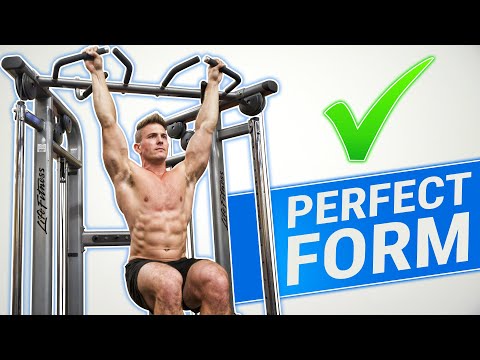
Hanging Knee Raise Overview
The hanging knee raise is a core move. You hang from a bar and lift your knees. Then you lower them with control. It works your abs, the muscles on the front of your belly. Your hip flexors and forearms help too. The hip flexors are at the top of your thighs. You need a pull-up bar. The hanging knee raise is for people with some grip strength. It builds a strong lower belly. It also trains your grip as you hang. Do it in your core work. Move slow so your abs do the work, not a swing. It is a great move for a firm middle.
What Is The Point of the Hanging Knee Raise?
The hanging knee raise builds serious core strength and carves out your abs. It targets your entire midsection while improving grip strength.
How To Do The Hanging Knee Raise
- Grab a pull-up bar with both hands about shoulder-width apart, using an overhand grip. Let yourself hang with your arms fully extended and your feet off the ground.
- Pull your shoulders down and back, away from your ears, to engage your lats and stabilize your body. This active hang protects your shoulders and stops you from swinging.
- Brace your core and think about tilting your pelvis slightly under. This posterior tilt is what turns the movement into a real abs exercise rather than just a hip flexor one.
- Take a breath and lift your knees toward your chest by contracting your abs, not by swinging your legs. Curl your pelvis up as your knees rise.
- Raise your knees to at least hip height or higher, feeling your lower abs do the work. Keep the movement controlled and deliberate.
- Hold the top position for one to two seconds and squeeze your abs hard. This pause kills momentum and forces the abs to do the job.
- Lower your knees back down slowly and under control, resisting the descent rather than dropping. Keep tension on your abs the whole way.
- Return to a controlled hang without swinging, then begin the next rep. Do not let your body start pendulum-swinging between reps.
- Breathe out as you lift and in as you lower. Work in the 8 to 15 rep range for 3 to 4 sets, and progress toward straight-leg raises as you get stronger.
Hanging Knee Raise Form Tips
- Keep your shoulders pulled down and back.
- Keep your body still. Do not swing.
- Lift your knees with your abs, not momentum.
- Curl your hips up a little at the top.
- Hold the top for one to two seconds.
- Lower slow. Do not just drop your legs.
- Breathe out as you lift. Breathe in as you lower.
- Keep a firm grip on the bar.
- Brace your belly the whole time.
Common Mistakes to Avoid for the Hanging Knee Raise
- Swinging your legs up with momentum. Kipping and swinging turns an abs exercise into a whole-body heave and takes the load off the muscle you want to work. Keep your torso still and lift with a deliberate ab contraction, curling your pelvis up.
- Only raising your knees with your hip flexors. If you just lift your thighs without curling your pelvis, the hip flexors do most of the work and your abs barely fire. Tilt your pelvis under and think about crunching your abs to bring your knees up.
- Not lifting the knees high enough. Stopping with your thighs below parallel keeps the abs from a strong contraction. Raise your knees to at least hip height or higher to make the abs work fully.
- Dropping your legs fast on the way down. Letting your legs fall wastes the eccentric, which builds muscle and control. Lower your knees slowly and resist the descent every rep.
- Letting your body pendulum-swing between reps. A swinging body uses momentum on the next rep and makes the movement sloppy. Return to a controlled, still hang before you lift again.
- Hanging passively with loose shoulders. A dead hang with shrugged, relaxed shoulders puts strain on the joint and gives you no stable base. Pull your shoulders down and back into an active hang to protect them and control your body.
- Holding your breath through the set. No breathing rhythm means a weaker brace and faster fatigue. Breathe out as you lift your knees and in as you lower.
- Rushing the reps to hit a number. Speed removes the control that makes the exercise effective and lets momentum take over. Slow down and make each rep a deliberate ab contraction.
- Letting your grip fail before your abs. If your hands give out first, your abs never get fully worked. Use straps or build your grip so your abs are the limiting factor.
- Arching your lower back at the bottom. Letting your back overextend in the hang takes tension off the abs and can strain the spine. Keep a slight brace and a hint of pelvic tuck even at the bottom.
- Trying straight-leg raises before you are ready. Jumping to straight legs before your abs and control are strong leads to swinging and hip-flexor dominance. Master the knee raise first, then progress the leverage over time.
Hanging Knee Raise Workout Tips
- The hanging knee raise is one of the best lower-ab builders because it makes you lift against gravity from a hanging position. Focus on curling your pelvis to make it a true abs exercise, not a hip-flexor one.
- Curl your pelvis up as you lift your knees. That posterior tilt is the difference between hitting your abs and just working your hip flexors.
- Keep your shoulders down and back in an active hang. A packed, active shoulder protects the joint and gives you a stable base to lift from.
- Control the descent as much as the lift. The lowering phase builds ab strength and control, so resist your knees down rather than dropping them.
- Add a one to two second squeeze at the top. Pausing kills momentum and forces your abs to hold the hardest position.
- Use straps if your grip gives out first. Straps let you push your abs to their limit without your hands failing early.
- Program knee raises early in a core session when you are fresh. This demanding movement deserves your best effort before fatigue sets in.
- Progress toward straight-leg raises over time. Straightening your legs lengthens the lever and makes the movement harder, which is a natural way to overload the abs.
- Keep your body still and avoid swinging. A controlled, still hang keeps the tension on your abs and out of momentum.
- Try raising your knees to one side for oblique work. Twisting slightly as you lift brings the obliques into play for more complete core training.
- Pair hanging raises with anti-extension work like rollouts and planks. Training the core in different ways builds a strong, well-rounded midsection.
- Breathe out hard as you crunch your knees up. A strong exhale helps you contract your abs and keep intra-abdominal pressure.
- Build grip and lat strength to support the movement. A strong hang lets you focus fully on your abs instead of worrying about holding on.
- Do not swing to grind out extra reps. Stop the set when you can no longer lift cleanly, because sloppy swinging reps do little for your abs.
- Warm up your core and shoulders first. A primed core and stable shoulders make the hanging position safer and stronger.
- Add ankle weights or hold a dumbbell between your feet as you advance. Extra load increases the challenge once bodyweight raises get easy.
- Be patient and consistent. Hanging ab strength builds steadily, so keep progressing the leverage and load over weeks and months.








Questions & Comments
Be the first to ask a question about this exercise.