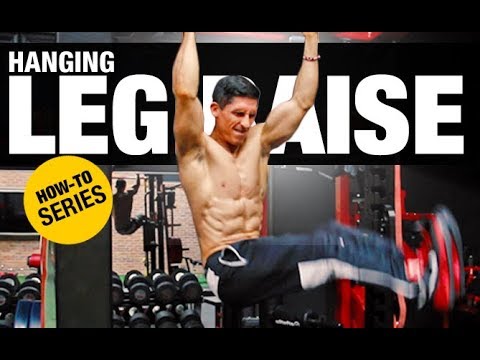
Hanging Straight Leg Raise Overview
The hanging straight leg raise is a hard core move on a bar. You hang from a pull-up bar and lift your straight legs up. It works your abs, the muscles on the front of your stomach. It also works your hip flexors and forearms. All you need is a pull-up bar. Your grip works hard to hold you. This move builds strong, powerful abs. Lifting straight legs is much harder than bent knees. It also tests your grip and control. It fits well at the end of a core or back workout. The hanging straight leg raise is an advanced move. Build up to it with bent-knee raises first.
What Is The Point of the Hanging Straight Leg Raise?
The hanging straight leg raise builds rock-solid abs and serious core strength. It hits your entire midsection while improving grip strength and body control.
How To Do The Hanging Straight Leg Raise
- Reach up and hang from a pull-up bar with your arms fully extended and your shoulders active rather than loose. A firm grip and engaged shoulders give you a stable base for this advanced ab move.
- Keep your legs completely straight and together with your toes pointed slightly. The straight leg lever makes this much harder than a bent knee raise, which is why it is an advanced exercise.
- Before you lift, set your core and slightly tilt your pelvis so your lower back does not overarch. Fight the urge to swing, since a still body is essential here.
- Lift your legs up by contracting your abs, curling your pelvis slightly under as you raise. Think about using your abs to lift, not just your hip flexors.
- Raise your legs until they are at least parallel to the ground, keeping them dead straight the whole way. Do not use momentum or a backswing to kick them up.
- Hold the top position for a second while squeezing your abs tight. Keep your shoulders engaged and your body from swinging out of position.
- Lower your legs slowly and under control back to the hanging start, resisting the urge to just let them drop. The controlled eccentric hammers the abs and keeps you from swinging.
- Keep every rep strict and swing free, letting the abs do the work. This is a demanding core move, so aim for 6 to 12 controlled reps for 3 to 4 sets, building volume as you get stronger.
Hanging Straight Leg Raise Form Tips
- Hang with your shoulders pulled down, not loose.
- Keep your legs straight and together.
- Lift with your abs, not a swing.
- Raise your legs to about level with the floor.
- Squeeze your core at the top.
- Lower your legs slow and controlled.
- Breathe out as you lift.
- Grip the bar hard to stay steady.
- Do not let your body swing.
Common Mistakes to Avoid for the Hanging Straight Leg Raise
- Swinging and using momentum. Kicking the legs up with a backswing and body swing turns a strict ab exercise into a momentum drill and can strain your back. Keep your torso still and lift the legs with your abs alone.
- Relying only on the hip flexors. If you feel this mostly in the front of your hips and not your abs, you are just hip flexing and not curling the pelvis. Tilt your pelvis under and consciously contract your abs to lift, not just your hip flexors.
- Bending the knees to cheat. Letting the knees bend shortens the lever and makes the movement much easier, so you end up doing an easier exercise than you think. Keep the legs dead straight to earn the full difficulty and benefit.
- Not lifting high enough. Stopping well below parallel trains only a small range and limits the ab work. Raise your legs to at least parallel, and higher toward the bar as you get stronger, for a fuller contraction.
- Dropping the legs fast. Letting the legs fall after the top wastes the eccentric, which is a big part of the ab stimulus, and encourages swinging. Lower them slowly under control every rep.
- Letting the lower back overarch. Failing to control the pelvis lets the lower back arch and take on load it should not. Slightly tuck the pelvis and brace the core to keep the spine in a safe position.
- Hanging with loose shoulders. Dangling with relaxed, shrugged up shoulders puts the joint in a weak spot and makes you unstable. Keep your shoulders active and engaged to create a solid base.
- Attempting it before you are ready. This is an advanced move, so jumping to straight legs before your core is strong leads to swinging and cheating. Build up with hanging knee raises and bent leg raises first.
- Gripping poorly and losing the bar. A weak grip fails before your abs do and cuts sets short. Build your grip or use straps for high rep sets so your core is the limiter, not your hands.
- Rushing the reps. Speeding through the movement lets momentum take over and takes the abs out of it. Slow down and control both the lift and the lower for maximum tension.
- Holding your breath. Grinding without breathing spikes your pressure and tires you faster. Exhale as you lift your legs and inhale as you lower them under control.
Hanging Straight Leg Raise Workout Tips
- Curl your pelvis to hit the abs. The key to feeling this in your abs rather than just your hip flexors is to tilt your pelvis under as you lift, which shifts the work onto the abs where you want it.
- Keep your legs dead straight. The straight leg lever is what makes this so challenging and effective, so resist bending the knees, which would make the movement much easier.
- Build up to it with progressions. Since this is advanced, master hanging knee raises and bent leg raises first to build the core strength and control you need for clean straight leg reps.
- Own the eccentric. Lowering your legs slowly under control hammers the abs and stops the swinging that ruins the exercise, so never just let them drop.
- Eliminate the swing. Keeping your torso still and your body from swinging forces your abs to do all the work, which is the whole point, so slow down and stay rigid.
- Keep your shoulders active. Engaging your shoulders in the hang gives you a stable base and protects the joints, which lets you focus your energy on the abs.
- Use straps for high rep sets. If your grip fails before your abs, lifting straps let your core be the true limiter so you can train the abs to fatigue.
- Program it as a core centerpiece. This is one of the best bodyweight ab builders, so put it early in your core work when you are fresh enough to keep every rep strict.
- Aim for at least parallel, then higher. Raising the legs to parallel is the baseline, and lifting them toward the bar as you get stronger increases the range and ab contraction.
- Add difficulty as you progress. Once bodyweight reps are easy, hold a light dumbbell between your feet or add toes to bar for a tougher challenge and continued overload.
- Pause and squeeze at the top. Holding the top for a beat and contracting the abs hard removes momentum and deepens the mind muscle connection with your core.
- Brace to protect your back. Slightly tucking the pelvis and bracing the core keeps your lower back from overarching, which protects your spine under the long lever.
- Keep the reps strict over chasing numbers. A few clean, swing free reps build far more real core strength than many sloppy swinging ones, so prioritize quality.
- Use the mind muscle connection. Think about your abs curling your pelvis and lifting your legs rather than just kicking them up, and you will feel it far more.
- Film from the side. A quick video quickly reveals swinging, bent knees, and short range that are hard to feel during the set.
- Combine with anti-swing holds. Practicing a controlled hollow hang teaches you to stay rigid, which carries directly over to strict leg raises.
- Be patient with this advanced move. Straight leg raises take time to build, so keep progressing steadily and your core strength and control will catch up.








Questions & Comments
Be the first to ask a question about this exercise.