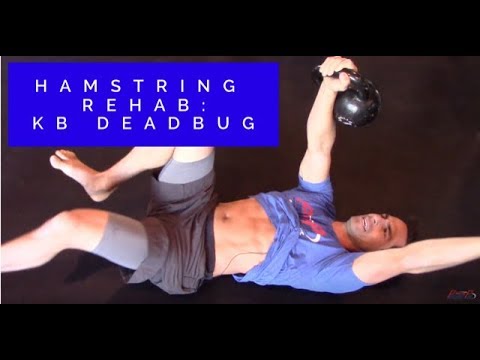
Kettlebell Dead Bug Overview
The kettlebell dead bug is a core move you do on your back. It works your abs, the muscles across your belly. It also uses your forearms to hold the weight. You lie down and hold a kettlebell above your chest. Then you lower one arm and the other leg at the same time. Your core keeps you steady. The kettlebell dead bug teaches your core to stay strong and still. The weight adds a real challenge. This move builds a stable, tight core. It is good for people who want better core control. Use it in the core part of your workout. It also fits well in a warm-up. Move slow and keep your lower back flat.
What Is The Point of the Kettlebell Dead Bug?
The kettlebell dead bug exercise builds core strength while teaching your body to stay stable. It trains your abs to resist movement while your limbs move.
How To Do The Kettlebell Dead Bug
- Lie flat on your back and hold a kettlebell with both hands pressed straight up over your chest. Bend your knees to 90 degrees and lift your feet so your shins are parallel to the floor, the classic tabletop position.
- Before anything moves, flatten your lower back into the ground by gently tilting your pelvis and bracing your abs. Removing that gap under your spine is the whole foundation of the drill.
- Press the kettlebell up and pull your shoulders down and back to create full-body tension. The weight overhead makes your core fight harder to keep your ribs from flaring.
- Take a breath, brace, and slowly lower your right arm back overhead while extending your left leg straight out. Move both limbs at the same steady speed.
- Reach your opposite limbs long, but only as far as you can go while keeping your lower back glued to the floor. The instant your back starts to arch, you have gone too far.
- Pause for a beat at full extension and keep breathing. This is an anti-extension exercise, so the goal is to resist your spine arching, not to rush the reps.
- Return your arm and leg to the start under full control, keeping the kettlebell steady above your chest the whole time. Do not let the weight drift or wobble.
- Switch to the other arm and leg and repeat, alternating sides. Because this is a slow control drill, aim for 6 to 10 quality reps per side for 2 to 3 sets.
Kettlebell Dead Bug Form Tips
- Keep your lower back pressed flat. This is the most important cue.
- Move your arm and leg slowly. No fast drops.
- Keep the kettlebell steady over you. Do not let it wobble.
- Pull your shoulders down and back. This makes your core tight.
- Move the opposite arm and leg together. Right arm with left leg.
- Breathe out as you extend. Breathe in as you return.
- Keep your core braced the whole time. Do not relax it.
- Stop before your limbs touch the floor. Keep tension.
- Keep your neck relaxed. Do not lift your head.
Common Mistakes to Avoid for the Kettlebell Dead Bug
- Letting the lower back arch off the floor. The whole purpose of the dead bug is to resist that arch, so if your back peels up you have lost the exercise and put your spine at risk. Reduce your range and only extend as far as you can while keeping your back flat.
- Rushing the reps. Speeding through turns a precise anti-extension drill into a sloppy flail that trains nothing. Slow every rep down and move your arm and leg like you are controlling something fragile.
- Holding your breath the whole time. Bearing down and freezing your breath makes it hard to keep a steady brace across the set. Breathe out slowly as you extend and keep breathing so your core stays honest.
- Letting the kettlebell drift off center. If the weight wanders away from over your chest, your shoulders and abs fight in the wrong direction and you lose control. Keep the kettlebell stacked directly above your shoulders throughout.
- Going too heavy. A kettlebell that is too big forces your form to break just to hold it up. Start light, since even a modest weight makes this deceptively hard, and add load only when your control is perfect.
- Extending the arm and leg too far. Reaching past what your core can control is what makes the back arch in the first place. Shorten the range and gradually reach farther as your anti-extension strength improves.
- Moving the arm and leg out of sync. Letting one limb race ahead of the other breaks the coordinated pattern the drill is meant to build. Move both at the same slow, matched speed.
- Flaring the ribs upward. When your ribcage lifts and pops open, your abs disengage and your low back takes over. Think about pulling your ribs down toward your hips and keeping them stitched to your pelvis.
- Tensing the neck and shoulders. Craning your head or shrugging under the weight feeds tension into the wrong places. Keep your head resting down and your shoulders pulled away from your ears.
- Treating it as a high-rep burnout. Grinding out endless fast reps defeats a drill built on control and quality. Keep the reps low and deliberate, and stop the moment your back cannot stay flat.
- Neglecting the return phase. Snapping the limbs back to the start skips half the control work. Bring your arm and leg home just as slowly as you sent them out.
Kettlebell Dead Bug Workout Tips
- Make keeping your lower back flat the number one rule. This is an anti-extension drill, so the entire benefit comes from your core resisting the arch as your limbs move.
- Start with a light kettlebell or even none at all. The overhead weight ramps up the difficulty fast, so earn heavier loads by mastering control first.
- Only extend as far as you can hold good form. A shorter, cleaner range builds more real core strength than a long, sloppy one.
- Move your arm and leg slowly and in sync. Matching their speed teaches the coordinated, braced control that carries over to heavy lifts.
- Exhale as you reach out and feel your abs engage. Blowing the air out helps you flatten your ribs and lock your brace.
- Keep the kettlebell stacked over your chest. A steady weight overhead forces your core to stabilize in every direction at once.
- Use this as a warm-up before squats or deadlifts. Teaching your core to resist extension primes your spine for the heavy lifts to come.
- Think about pulling your ribs down toward your hips. That cue kills the rib flare that lets the low back take over.
- Keep the reps low and the quality high, roughly 6 to 10 per side. This is a control drill, not a burnout.
- Progress by extending farther or adding a little weight. Slowly increasing range or load is how you keep challenging your anti-extension strength over time.
- Pause briefly at full extension on each rep. Holding the toughest position under control builds the stability you are after.
- Keep your neck and shoulders relaxed. Wasting tension there just makes it harder to feel and control your core.
- Try tapping your heel to the floor at full reach for a regression. A light tap gives you a target and helps you find your safe range.
- Film yourself from the side. Video is the fastest way to catch a lower back that is quietly lifting off the floor.
- Pair dead bugs with a rotation drill like a Pallof press. Training your core to resist both extension and twisting builds a complete, resilient midsection.
- Stay consistent a few times a week. Core control improves with frequent, quality practice, so keep these in your routine.








Questions & Comments
Be the first to ask a question about this exercise.