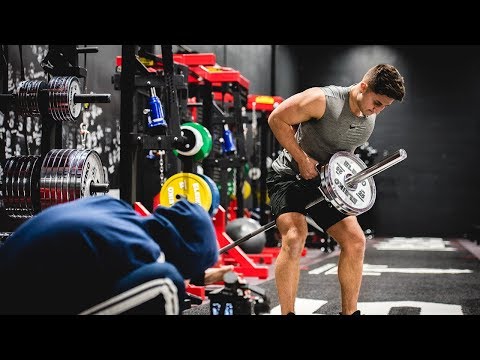
T Bar Row Overview
The t bar row works your lats. Your lats are the big wing muscles on your back. You stand over a bar and pull it to your chest. It also works your middle back, biceps, and forearms. You need a t bar row machine with handles. It is a strong move for a thick back. The t bar row is great for building back thickness. It lets you pull heavy with a safe path. It fits well on a pull day or a back day. Start with a light plate and learn the hinge. Put it early in your back work. Both new and skilled lifters can use it.
What Is The Point of the T Bar Row?
The t bar row builds a thick, strong back by targeting your lats and middle back. It creates that wide V-shape while improving your pulling power for daily activities.
How To Do The T Bar Row
- Load the T-bar and set up with your feet shoulder-width apart, straddling the bar. Position yourself so the weight sits roughly under your chest when you hinge.
- Bend at your hips and knees to reach the handles, gripping them with a neutral grip so your palms face each other. Take a firm hold and set your hands evenly.
- Set your back flat with your chest up and a natural arch in your lower spine. Pull your shoulders down and back to lock your posture before you lift.
- Brace your core hard and take a breath. Your torso angle should stay put through the whole rep, so build a strong hinge position now.
- Pull the weight up toward your lower chest by driving your elbows back and up. Lead with your elbows and think about squeezing your shoulder blades together.
- Bring the handles close to your torso and hold the top for a beat, feeling the contraction in your lats and mid-back. Do not let your torso pop up to meet the weight.
- Lower the weight slowly under control, taking 2 to 3 seconds. Let your shoulder blades spread and your lats stretch at the bottom, but keep your back flat.
- Keep the same braced hinge the entire set rather than bobbing up and down with each rep. Only your arms and shoulder blades should move much.
- Repeat for your reps. The T-bar row builds thickness well in the 8 to 12 rep range for 3 to 4 sets.
T Bar Row Form Tips
- Keep your back flat and firm. Never let it round.
- Hinge at your hips with a small knee bend.
- Grab the handles with a neutral grip. Palms face each other.
- Pull the weight to your chest. Drive your elbows back.
- Squeeze your shoulder blades at the top.
- Lower the weight slowly. Feel your lats stretch at the bottom.
- Keep your chest up and your core tight.
- Breathe out as you pull. Breathe in as you lower.
- Keep your head in line with your spine.
Common Mistakes to Avoid for the T Bar Row
- Rounding your lower back. A hunched spine under load is the fastest way to hurt yourself on any row, and the T-bar is no exception. Set a flat back with your chest up and brace hard so your spine stays neutral the whole set.
- Standing up with the weight on every rep. Using your legs and back to heave the bar upright turns the row into a cheat and pulls tension off your lats. Keep your torso angle locked and move the weight with your arms and shoulder blades.
- Going too heavy. Ego loading forces you to jerk, swing, and cut the range, and it puts your back at risk. Choose a weight you can row to your chest under control with a steady torso.
- Not squeezing the shoulder blades. If you only bend your arms, your biceps take over and your mid-back barely works. Drive the elbows back and pinch the shoulder blades together to load the target muscles.
- Cutting the range short at the top. Stopping before the handles reach your torso leaves the peak contraction unused. Pull all the way in until the weight touches or nearly touches you.
- Dropping the weight fast on the way down. A quick negative wastes the eccentric and can jerk your shoulders. Lower over 2 to 3 seconds and control the stretch at the bottom.
- Setting your feet too narrow. A tight stance makes the hinge unstable and can let you drift forward. Plant your feet shoulder-width apart for a solid base.
- Letting the head crane up. Yanking your neck to look forward strains the cervical spine and breaks your flat-back line. Keep your neck in line with your spine and your gaze down and slightly ahead.
- Bouncing the weight off the floor or bottom. Using a bounce to start each rep steals the muscle work and adds momentum. Control the bottom and start each pull from a stable stretch.
- Flaring the elbows way out. A wide elbow path rolls the shoulders and shifts work off the lats. Keep the elbows tracking back toward your hips along your ribs.
- Holding your breath the whole set. Locking your air on a bent-over lift spikes blood pressure and can leave you dizzy. Brace, then exhale through the hardest part and reset your breath between reps.
T Bar Row Workout Tips
- Set a flat, braced back before you touch the weight. A solid neutral spine is non-negotiable on any bent-over row and keeps you rowing for years to come.
- Lead the pull with your elbows. Driving the elbows back and up loads the lats and mid-back and keeps the biceps from stealing the show.
- Lock your torso angle and hold it. If your chest keeps popping up, you are using momentum, so keep the hinge steady and let your arms do the moving.
- Squeeze your shoulder blades together at the top. That hard pinch is where mid-back thickness is built, so pause and feel it each rep.
- Control the lowering phase for 2 to 3 seconds. A slow negative keeps tension on the back and adds a growth-boosting stretch at the bottom.
- Use the neutral grip for a strong, joint-friendly pull. Palms facing each other lets you handle good weight while keeping the shoulders happy.
- Program it as a main back builder on pull day. The T-bar is a thickness machine, so give it a spot early when you are fresh.
- Aim for 8 to 12 reps for 3 to 4 sets. This range balances enough load for growth with enough control to protect your spine.
- Add weight in small steps over time. Progressive overload drives back growth, but only if your flat-back form survives the jump.
- Try a chest-supported row variation on some days. Bracing your chest on a pad removes the lower-back demand and lets you chase pure mid-back work.
- Use straps if your grip fails before your back. Straps let you overload the lats without your forearms quitting early, especially on heavy sets.
- Keep your neck neutral, not craned up. Looking slightly ahead and down protects your neck and keeps your spine aligned.
- Feel the stretch at the bottom of each rep. Letting the shoulder blades spread under control builds the lats and reinforces the mind-muscle connection.
- Do not ego load at the cost of your range. A weight you can pull fully to your chest builds far more back than a heavier one you can only half-move.
- Film your set from the side occasionally. Video quickly shows if you are standing up with the weight or cutting the range short.
- Pair it with a vertical pull like pulldowns. Horizontal thickness plus vertical width gives you a complete, powerful-looking back.








Questions & Comments
Be the first to ask a question about this exercise.