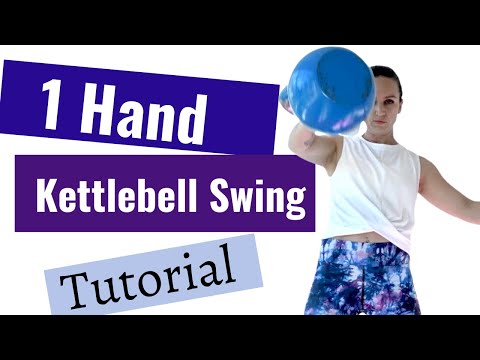
One Arm Kettlebell Swing Overview
The one arm kettlebell swing is a fast hinge move. It works your glutes and hamstrings the most. The glutes are your butt muscles. The hamstrings are the muscles on the back of your thighs. It also works your shoulders and abs. You swing one kettlebell with one hand. The power comes from a hard hip snap. The one arm kettlebell swing builds power and strong hips. Using one arm makes your core work harder to stay square. It also builds grip strength. This is an intermediate move. You should learn the two hand swing first. It fits well early in a workout. It is a great tool for fat loss and conditioning.
What Is The Point of the One Arm Kettlebell Swing?
The one arm kettlebell swing builds explosive hip power and torch calories fast. It hits your glutes, hamstrings, and core while improving your grip strength.
How To Do The One Arm Kettlebell Swing
- Set the kettlebell on the floor about a foot in front of you, with your feet a little wider than shoulder-width. Turn your toes out slightly so your hips can move freely.
- Hinge at the hips and reach down to grab the handle with one hand, arm long. Keep your back flat, chest up, and set your shoulders back so the working shoulder is packed, not loose.
- Take a breath and brace your core. Tilt the kettlebell slightly toward you and hike it back hard between your legs, like snapping a football, so the bell travels high up between your thighs.
- As the bell reaches the back of the hike, reverse fast by driving your hips forward explosively. The power comes from the hip snap, not from lifting with your arm or shoulder.
- Let that hip drive launch the kettlebell up to about chest height. Your arm stays fairly relaxed and just guides the bell, which should feel weightless at the top of the arc.
- Squeeze your glutes and brace hard at the top so your body forms a tall, stacked plank. Do not lean back or overarch, and keep the working shoulder pulled down away from your ear.
- Let the kettlebell fall back down and ride the arc, hinging your hips back again as it passes your thighs. Load the hamstrings on the way down rather than catching the weight with your arm.
- Flow straight into the next rep with a fresh hip snap, keeping a smooth rhythm. Work in sets of about 10 to 15 explosive reps per arm, then switch hands and repeat.
One Arm Kettlebell Swing Form Tips
- Power comes from your hips, not your arm. Snap your hips to drive the swing.
- Hinge at your hips, not your waist. Push your butt back each rep.
- Keep your back flat the whole time. A rounded back can hurt you.
- Squeeze your glutes hard at the top. Stand up tall and firm.
- Keep your arm relaxed. Let it ride the wave of the swing.
- Brace your core hard. This stops your body from twisting.
- Keep the kettlebell high between your legs on the down swing. Do not let it drop too low.
- Breathe out with the hip snap. Breathe in as it falls.
- Keep your shoulder pulled down, away from your ear.
- Keep your neck in line with your back.
Common Mistakes to Avoid for the One Arm Kettlebell Swing
- Squatting the swing instead of hinging. Bending the knees deep and lifting with the legs turns a powerful hip hinge into an awkward front raise. Push your hips back to load the hamstrings and keep the knee bend shallow so the hip snap drives the bell.
- Lifting the kettlebell with your arm and shoulder. Muscling the bell up with the arm strains the shoulder and kills the explosive purpose of the swing. Keep the arm relaxed and let the hips do the work, letting the bell float up on the hip drive.
- Rounding your lower back on the backswing. Letting the spine curl as you hike the bell back loads the discs and invites a strain. Keep a flat, braced back and hinge from the hips so the bell passes high between your thighs, not down near your knees.
- Overarching or leaning back at the top. Cranking into a big backbend at lockout to feel the finish crushes the lower spine. Stand tall with glutes and abs squeezed into a straight plank, not a leaning-back arch.
- Letting the working shoulder ride up toward the ear. When the shoulder shrugs up under the single-arm load, the joint gets unstable and cranky. Pack the shoulder down and back and keep it there, especially through the top and bottom of the arc.
- Swinging the bell too high overhead. Heaving it past chest or eye level with a single arm strains the shoulder and wrecks your rhythm. Let the hips project the bell to about chest height and no higher for the standard swing.
- Losing your core brace between reps. A soft trunk during a ballistic move leaves your spine exposed rep after rep. Brace hard at the top and keep tension through the trunk the whole set as the bell changes direction.
- Using a bell that is too heavy to control. Too much weight forces you to muscle it with the arm and rounds your back on the backswing. Pick a load you can snap explosively with clean hips, then progress as your hinge gets stronger.
- Catching the bell too low on the way down. Letting the bell drop toward your knees before hinging strains the lower back and shoulder. Wait until the bell is near your hips, then hinge so it passes high between your legs.
- Neglecting to grip and stabilize as the bell rotates. In a one-arm swing the bell wants to twist your torso, and a loose core lets it. Squeeze the handle and brace your obliques so your torso stays square through every rep.
- Doing uneven work between arms. Favoring your strong side builds a lopsided pattern and can pull your posture crooked. Match reps and effort on both arms and let the weaker side set the count.
One Arm Kettlebell Swing Workout Tips
- Drive the whole movement from an explosive hip snap. The swing is a ballistic hinge, so power comes from your hips firing forward, not from lifting with the arm, which is the single most important thing to get right.
- Keep the working arm relaxed and let the bell float. When your hip drive projects the bell up, it should feel almost weightless at the top, and your arm just guides it rather than lifting it.
- Pack the working shoulder down and back. Keeping the shoulder blade set and away from your ear protects the joint under the offset load and gives you a stable base to swing from.
- Snap your glutes hard at the top of every rep. A firm glute squeeze finishes the hip extension and turns the top of the swing into a tall, stacked plank rather than a lean-back.
- Brace your obliques against the rotation. A one-arm swing tries to twist you, so bracing the sides of your trunk keeps your torso square and turns this into great anti-rotation core work.
- Program swings for power and conditioning. They build explosive hip drive and elevate your heart rate fast, so they work well in circuits, finishers, or as a dynamic warm-up.
- Work in short, crisp sets of 10 to 15 per arm. Because the swing is explosive, quality reps matter more than long grinding sets, so stop when the snap loses its pop.
- Match reps and effort between arms, weaker side first. Most people favor a dominant arm, so letting the weak side set the count evens out your power and your posture over time.
- Think hike pass, not lift. Cue yourself to hike the bell back like a football snap and let the arc happen, which keeps you hinging instead of squatting or arm-lifting.
- Keep the bell high on the backswing. Letting the handle pass up near the crease of your hips protects your lower back and keeps the hinge powerful, so never let it drop toward your knees.
- Start lighter than you think for the single-arm version. The offset load and rotation demand control, so groove the pattern with a manageable bell before you chase heavier weights.
- Use it to build a stronger two-hand swing and deadlift. The hip snap you train here carries straight over to your bigger hinge lifts, making it a great pattern to sharpen.
- Breathe in a sharp rhythm with the reps. A quick exhale as the hips snap forward helps you brace and time each rep, keeping your trunk tight through the ballistic movement.
- Keep your neck neutral and gaze forward. Cranking your head up strains the neck during a fast movement, so let your eyes settle a few feet ahead and keep your head in line with your spine.
- Do not chase failure on a ballistic lift. Stop the set while your reps are still crisp and powerful, since sloppy swings under fatigue are how the lower back and shoulder get tweaked.
- Warm up your hips and hamstrings first. A few bodyweight hinges and some light swings prime the pattern so your first working set fires with clean, explosive power.








Questions & Comments
Be the first to ask a question about this exercise.