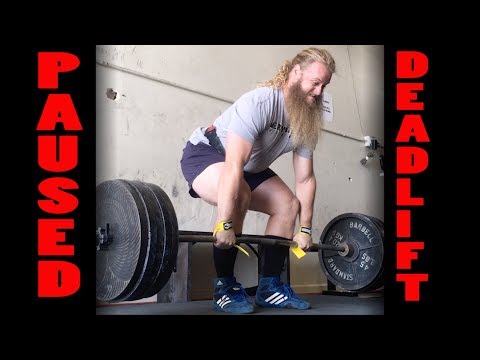
Paused Sumo Deadlift Overview
The paused sumo deadlift works your glutes. These are your butt muscles. You stand with a wide stance and toes pointed out. You grab the barbell with your hands inside your legs. You lift the bar to just below your knees and pause. Then you drive it up. It also works your hamstrings, quads, and lower back. You need a barbell. This move builds strong glutes and a powerful hip drive. The pause makes your muscles work harder. It also teaches you a steady, controlled lift. The wide stance is easier on your back than a normal deadlift. Use the paused sumo deadlift on leg or pull day. It is a great move to build strength and clean form.
What Is The Point of the Paused Sumo Deadlift?
The paused sumo deadlift builds serious glute strength and power by adding a pause at the bottom. It also improves your lockout strength and helps break through deadlift plateaus.
How To Do The Paused Sumo Deadlift
- Set up with your feet wider than shoulder width and your toes pointed out about 30 to 45 degrees. Position the barbell over your mid-foot so it sits close to your shins. The wide stance shortens the range and emphasizes the hips and glutes.
- Hinge at your hips and bend your knees to reach down and grab the bar with your hands inside your legs. Use a double overhand or mixed grip, whichever lets you hold on securely.
- Drop your hips, lift your chest, and pull the slack out of the bar so you feel tension before you move. Point your knees out in line with your toes and set your back flat.
- Take a big breath into your belly and brace your core hard, as if bracing for a punch. This intra-abdominal pressure protects your spine under load.
- Begin the pull by driving your feet into the floor and spreading the ground apart with your legs. Keep the bar dragging close to your shins as it rises.
- Pull the bar up to just below your knees, then stop and hold the paused position for a full 2 to 3 seconds. Stay tight and do not let your back round or your hips shoot up during the pause.
- This pause kills momentum and builds strength right where sumo pullers often get stuck. Keep the tension everywhere while you hold.
- Once the pause is done, continue driving through your heels and squeeze your glutes hard to finish standing the bar up. Keep it close to your body the whole way.
- Lock out standing tall with your shoulders back and your hips fully extended, without leaning back past neutral. That completes the rep.
- Lower the bar back down with control, hinging your hips and bending your knees, and reset your breath and brace before the next rep. Keep the reps lower here, around 3 to 6, since the pause makes each one demanding.
Paused Sumo Deadlift Form Tips
- Point your toes out and set your feet wide.
- Keep your back flat the whole lift. Do not round it.
- Grab the bar with your hands inside your legs.
- Keep the bar close to your body as it moves.
- Drive through your heels to stand up.
- Squeeze your glutes hard at the top.
- Hold the pause tight below your knees.
- Brace your core before every rep.
- Stand tall at the top with your shoulders back.
Common Mistakes to Avoid for the Paused Sumo Deadlift
- Rounding your lower back under the load. A rounded spine during a heavy deadlift is one of the fastest ways to get hurt. Set your back flat, brace hard, and if you cannot hold that position through the pause, lighten the bar.
- Letting your hips shoot up first. When your hips rise before the bar you turn a leg-driven pull into a stiff-legged one and stress your back. Keep your hips and chest rising together so the bar comes up in one piece.
- Losing tension during the pause. Relaxing while you hold below the knee is exactly what this variation is meant to prevent. Stay braced and tight everywhere through the full 2 to 3 second pause so you build strength in that position.
- Rushing or skipping the pause. Bouncing straight through the sticking point defeats the whole point of the paused sumo deadlift. Hold the position for the full count so you eliminate momentum and force the muscles to work.
- Letting the bar drift away from your body. A bar that swings out in front dramatically increases the load on your lower back. Keep it dragging close to your shins and thighs the entire pull.
- Not spreading the floor with your feet. Just yanking the bar without pushing your knees out wastes the power of the wide stance. Drive your feet down and out, keeping your knees tracking over your toes.
- Setting the toes and knees out of line. If your knees cave in while your toes point out you stress the joints and lose power. Keep your knees tracking in the same direction as your toes throughout.
- Jerking the bar off the floor. Yanking with slack still in the bar jars your spine and can miss the lift. Pull the slack out and build tension first, then drive smoothly off the floor.
- Hyperextending at lockout. Leaning back hard and jamming your hips through at the top stresses your lower back for no benefit. Stand tall to a neutral finish and stop there.
- Going too heavy for the paused version. The pause makes every rep far harder than a normal pull, so your regular weight will crush your form here. Drop the load so you can hold a clean pause and still finish strong.
- Holding your breath wrong or not bracing. Failing to brace before you pull leaves your spine unprotected under a heavy load. Take a big belly breath and brace hard before every rep, holding it through the pause.
- Letting the grip fail and rounding the upper back. If your hands are slipping you often compensate by rounding forward. Use a mixed grip, straps, or chalk so your grip does not force your back out of position.
Paused Sumo Deadlift Workout Tips
- Use the pause to crush your sticking point. Holding just below the knee builds strength right where sumo pullers often stall, so the pause carries over directly to a stronger regular deadlift.
- Keep the reps low, around 3 to 6. The pause makes every rep intensely demanding, so heavy, low-rep sets are where this variation shines for building strength.
- Spread the floor with your feet. Driving your feet down and out engages the glutes and adductors that power the sumo pull and keeps your knees tracking safely.
- Brace hard before every single rep. A big belly breath and a tight core create the pressure that protects your spine, which matters even more when you pause under load.
- Keep the bar dragging close to your body. A close bar path keeps the load over your mid-foot and off your lower back, making the lift both stronger and safer.
- Stay tight everywhere during the pause. Fighting to hold position without relaxing is the whole training effect, so treat the pause as active, not a rest.
- Use it to clean up a bouncy deadlift. If you tend to use momentum off the floor, the paused sumo forces you to build genuine strength through the whole pull.
- Drop the weight from your normal deadlift. Because the pause is so demanding, using a lighter load than your regular pull lets you keep clean form and still get strong.
- Point your toes and knees the same way. Keeping them aligned around 30 to 45 degrees protects the joints and puts you in the strongest position to pull.
- Program it as a strength-focused main lift. Its low-rep, heavy nature makes it a great primary movement on a lower-body or pull day.
- Use straps or a mixed grip for heavy sets. Securing your grip lets you focus on your legs and back rather than losing the bar and rounding forward.
- Reset your brace between every rep. Rather than touch-and-go, take a fresh breath and brace before each pull so every rep starts from a safe, tight position.
- Film your sets from the side. A video quickly shows whether your hips are shooting up or your back is rounding during the pause.
- Warm up your hips and hamstrings first. The wide stance demands hip mobility, so some dynamic warm-up helps you get into a strong, deep start position.
- Progress with small weight jumps over time. Adding a little load while holding a clean pause is disciplined progressive overload that builds real strength.
- Be patient and respect the difficulty. The paused sumo is humbling, but weeks of consistent work build the positional strength that makes your regular deadlift feel easy.








Questions & Comments
Be the first to ask a question about this exercise.