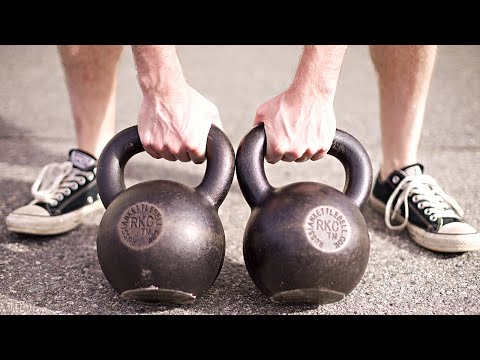
Double Kettlebell Swing Overview
The double kettlebell swing works your glutes and hamstrings. Your glutes are your butt muscles. Your hamstrings are the back of your thighs. It also uses your shoulders, abs, and forearms. You hold one kettlebell in each hand. Then you swing them up with a hard hip drive. The swing is a power move. It teaches your hips to snap fast and strong. Two kettlebells add more load than one. This is a step up for lifters who know the single swing. It fits early in a workout while you are fresh. It builds strong hips and a strong grip.
What Is The Point of the Double Kettlebell Swing?
The double kettlebell swing exercise builds explosive power through your hips while hitting your glutes and hamstrings hard. It torches calories and builds real strength.
How To Do The Double Kettlebell Swing
- Set two kettlebells on the floor a bit in front of you. Stand with your feet slightly wider than hip-width so both bells can pass between your legs.
- Hinge at your hips and grab one kettlebell in each hand, hiking them back and between your legs. Keep your back flat and your chest up.
- Set your shoulders down and back and brace your core hard. Take a breath and pull the bells back high between your legs, above your knees, loading your hamstrings.
- Snap your hips forward explosively to drive the kettlebells up. The power comes from your hips, not your arms, so think of it as a hard hip thrust while standing.
- Let the bells float up to about chest height as your hips fully extend and your glutes lock out. Your arms just guide the bells, they do not lift them.
- Stand tall at the top with your glutes and abs squeezed hard, but do not lean back or overextend your lower back. Keep a neutral, stacked spine.
- Let the kettlebells fall back down and let their weight pull you into the next hinge. Load your hips again by pushing them back as the bells swing between your legs.
- Keep your back flat and your core braced through the bottom of the swing. The bells should stay above your knees at the bottom, not down by your feet.
- Repeat with a strong, rhythmic hip snap. Aim for sets of 8 to 15 powerful reps, prioritizing hip drive and crisp technique over grinding.
Double Kettlebell Swing Form Tips
- Keep your back flat the whole time. Do not round it.
- Push your hips back to hinge, not squat down.
- Drive your hips forward hard to swing the bells.
- Let your hips do the work, not your arms.
- Keep your arms loose and straight.
- Snap your glutes tight at the top of each swing.
- Keep your core tight to guard your back.
- Breathe out as you drive up. Breathe in as they drop.
- Keep the bells swinging to about shoulder height, not overhead.
- Keep your head in line with your back.
Common Mistakes to Avoid for the Double Kettlebell Swing
- Squatting the swing instead of hinging. When you bend your knees too much and dip down, you turn the swing into a squat and lose the hip power. Push your hips back into a hinge and keep the knees only softly bent so the hamstrings and glutes drive the movement.
- Lifting the kettlebells with your arms. Using your arms to raise the bells robs the swing of its explosive hip drive and burns out your shoulders. Snap your hips hard and let the arms just guide the bells up.
- Rounding the lower back at the bottom. A rounded spine under a fast, loaded swing is a real injury risk. Keep your back flat and your core braced hard, and stop the hips from dropping too low.
- Overextending the lower back at the top. Leaning back and cranking the spine at lockout stresses the lower back for no benefit. Finish tall with a hard glute and ab squeeze and a neutral, stacked spine.
- Letting the bells drop too low between the legs. Swinging the kettlebells down near your feet loads the lower back and forces a squat. Keep the bells above your knees at the bottom so the hinge stays powerful and safe.
- Not bracing the core. A loose trunk lets your spine move under the fast load and leaks power. Brace your abs hard on every rep so your midsection transfers the hip drive to the bells.
- Using kettlebells that are too heavy. Overloading a double swing wrecks your hip snap and turns it into an ugly grind. Pick a weight you can move explosively with a crisp hinge for all your reps.
- Failing to fully extend the hips. Cutting the hip drive short leaves the glutes under-worked and the swing weak. Snap your hips all the way to a tall, locked-out finish every rep.
- Craning the neck to look up. Cranking your head back at the top strains the neck and breaks your neutral spine. Keep your neck in line with your torso and let your gaze follow naturally.
- Turning the swing into a slow grind. Moving the bells slowly kills the whole point, which is explosive power. Swing with a sharp, rhythmic hip snap rather than muscling the weight up slowly.
- Losing the rhythm and timing. Fighting the natural swing of the bells makes the movement choppy and tiring. Let the kettlebells fall and use their momentum to load the next hinge in a smooth rhythm.
Double Kettlebell Swing Workout Tips
- Drive the swing from your hips, not your arms. The swing is a hip hinge, so think of a hard, explosive hip snap and let your arms simply guide the bells up.
- Keep the kettlebells high between your legs at the bottom. Loading the hinge with the bells above your knees keeps the hamstrings and glutes doing the work and protects your lower back.
- Snap your hips to a tall, locked finish. Fully extending the hips with a hard glute squeeze is what powers the bells up and builds explosive posterior chain strength.
- Brace your core hard on every rep. A tight trunk transfers your hip power into the bells and keeps your spine safe under the fast load.
- Run swings in short, powerful sets. Sets of 8 to 15 crisp reps build power better than long grinding sets, since quality hip drive is the goal.
- Program swings for power, conditioning, or as a finisher. They train the glutes and hamstrings explosively and spike your heart rate, so they fit both strength and conditioning days.
- Let the bells fall and use their momentum. Riding the natural swing of the kettlebells down into the next hinge keeps the movement smooth and rhythmic.
- Progress by adding weight only when your snap stays crisp. If the hip drive gets slow, the load is too heavy, so build power first and add weight gradually.
- Keep your spine neutral top to bottom. Avoid both rounding at the bottom and overextending at the top, and let your neck stay in line with your torso.
- Use the double version once single swings feel easy. Two bells add load and a bigger stability demand, so earn it with solid single-arm and two-hand swings first.
- Think hike pass, then snap. Hiking the bells back aggressively loads the hips like a football snap, and that tight backswing powers a stronger drive.
- Squeeze your glutes and abs at lockout. A hard squeeze at the top reinforces the hip extension and keeps you from leaning back into your lower back.
- Keep your shoulders packed down. Pulling the shoulders away from your ears protects the joints and keeps the arms relaxed so the hips do the work.
- Do not swing to sloppy failure. Stop the set when your hip snap loses its pop, since fast lifts done tired get dangerous fast.
- Film a set from the side to check your hinge. It shows whether you are hinging with power or squatting the bells and whether your back stays flat.
- Be consistent and build power over time. The swing develops hip drive that carries over to jumps, sprints, and every big lift, so keep the technique sharp and progress steadily.








Questions & Comments
Be the first to ask a question about this exercise.