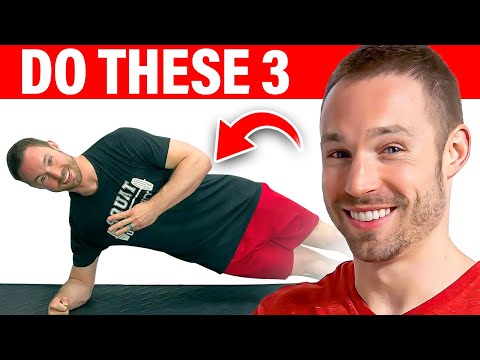
Push Up to Side Plank Overview
The push up to side plank works your chest. It also trains your core and shoulders. The chest is the muscle on the front of your upper body. You do a push up, then rotate into a side plank. Your obliques, triceps, and shoulders help too. The obliques are the muscles on the sides of your belly. You need no equipment, just floor space. The push up to side plank is for lifters with some practice. It mixes a push with a twist. That builds your chest and your core at once. It also trains your balance. Strong obliques help you rotate and stay steady. Do it on push day or core day. Use it in the middle of your workout.
What Is The Point of the Push Up to Side Plank?
The push up to side plank exercise builds chest strength while hitting your core hard. It combines two classic moves for maximum upper body and core power.
How To Do The Push Up to Side Plank
- Start in a standard push up position with your hands under your shoulders and your body in a straight line from head to heels. Spread your fingers wide and grip the floor for a stable base.
- Brace your core, squeeze your glutes, and set your shoulder blades so your torso stays rigid like a plank. This tension is what keeps your hips from sagging.
- Take a breath and lower your chest toward the floor by bending your elbows. Keep your elbows tucked to about a 45 degree angle rather than flaring them straight out.
- Descend under control until your chest is just above the floor. Keep your whole body in one straight line, without letting your hips dip or pike up.
- Push back up to the top by driving your hands into the floor and extending your arms. Squeeze your chest and triceps as you press to full extension.
- From the top, shift your weight onto your left hand and rotate your body open to the right. Stack your feet or stagger them and reach your right arm toward the ceiling.
- Hold the side plank for a second with your body in a straight line and your hips lifted. Squeeze your obliques and glutes to keep your torso from sagging toward the floor.
- Rotate back to the push up position, do another push up, and rotate to the other side. Alternate sides each round, aiming for 8 to 12 total reps for 3 sets.
Push Up to Side Plank Form Tips
- Keep your body in a straight line the whole time.
- Keep your belly tight to hold your body steady.
- Keep your elbows at about 45 degrees on the push up.
- Lower your chest with control. Do not drop fast.
- Stack your shoulders as you turn into the side plank.
- Reach your top arm straight up to the ceiling.
- Keep your hips up. Do not let them sag.
- Breathe out as you push and rotate.
- Move slow and steady on every rep.
Common Mistakes to Avoid for the Push Up to Side Plank
- Letting your hips sag during the push up. A sagging middle puts the load on your lower back and means your core is not bracing. Squeeze your glutes and abs to hold a straight line from head to heels through every push up.
- Piking your hips up toward the ceiling. Lifting your butt makes the push up easier by shortening the range and taking the chest out of it. Keep your body flat and level so the chest and triceps do the real work.
- Flaring your elbows straight out to the sides. Wide elbows stress the shoulder joint and weaken your press. Tuck them to about 45 degrees so the load stays on your chest and triceps and your shoulders stay safe.
- Rushing the rotation into the side plank. Whipping your body around throws you off balance and can tweak the shoulder you are landing on. Rotate under control and set your supporting shoulder before you shift your full weight onto it.
- Letting your hips drop in the side plank. A sagging side plank loses all the oblique tension that makes the move worthwhile. Lift your hips and squeeze your obliques and glutes to hold a straight line from head to feet.
- Collapsing into the supporting shoulder. Sinking your weight into a loose shoulder stresses the joint and the rotator cuff. Press the floor away and keep your supporting shoulder packed down and stable during the plank.
- Rotating from your arm instead of your whole torso. Just reaching your arm up without turning your body means your core never really works. Rotate through your whole trunk and stack your hips so the obliques drive the movement.
- Holding your breath through the sequence. Locking your breath under this much full-body tension raises pressure and tires you fast. Breathe steadily, exhaling as you press and as you rotate up.
- Cutting the push up short with tiny reps. Half push ups train only a slice of the chest and cheat the movement. Lower your chest nearly to the floor and press to full extension on every rep.
- Losing core tension between the push up and the plank. Relaxing your midsection as you transition lets your form fall apart and your hips drop. Keep your core braced continuously from the push up straight through the rotation.
- Staggering into a sloppy, unbalanced side plank. A wobbly, twisted plank position stresses the spine and shoulder. Stack or neatly stagger your feet and hold a clean, straight-line position before rotating back.
Push Up to Side Plank Workout Tips
- Keep your body rigid like a plank the entire time. Bracing your core and squeezing your glutes turns your torso into one stiff unit, which is what protects your spine and makes both halves of the move work.
- Rotate under control, not with a whip. Setting your supporting shoulder and turning your whole body smoothly keeps you balanced and protects the joint you are loading.
- Tuck your elbows to about 45 degrees on the push up. That elbow position keeps the load on your chest and triceps while sparing your shoulders from the strain of a wide flare.
- Use this as a combined strength and core builder. The push up trains your chest and triceps while the rotation hammers your obliques, so it is an efficient move when time is short.
- Scale it down by dropping to your knees for the push up. Regressing the push up lets beginners keep good form and still practice the rotation and side plank.
- Stack your hips and squeeze your obliques in the side plank. Consciously firing the obliques and lifting the hips is what makes the rotation build real rotational and lateral core strength.
- Add a slow tempo to increase the challenge. Lowering the push up over two to three seconds and holding each side plank longer piles on time under tension without any equipment.
- Alternate sides evenly every round. Rotating to each side the same number of times keeps your obliques and shoulders developing symmetrically.
- Program this in a circuit or as a finisher. It raises your heart rate and works the whole body, so it fits well at the end of a session or in a conditioning block.
- Keep your neck long and gaze slightly ahead. A neutral neck keeps your whole spine in line and stops you from cranking your head during the rotation.
- Progress by elevating your feet or adding a reach. Raising the feet loads the chest more, and reaching the top arm further increases the demand on your obliques.
- Reach your top arm tall in the side plank. Extending the arm toward the ceiling opens your chest and increases the rotational demand on your core.
- Film a set from the side occasionally. A quick video shows whether your hips are sagging or piking far better than how the reps feel in the moment.
- Keep your glutes squeezed throughout. Firing the glutes supports your lower back and helps hold the straight line in both the push up and the plank.
- Do not sacrifice form for speed. Clean, controlled reps build more strength and core control than rushing through a sloppy, wobbly sequence.
- Be consistent and build gradually. As your chest and core get stronger, add reps, tempo, or elevation over the weeks so the movement keeps challenging you.








Questions & Comments
Be the first to ask a question about this exercise.