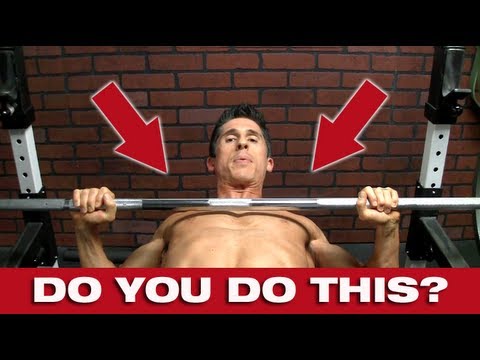
Reverse Grip Bench Press Overview
The reverse grip bench press is a pressing move. You lie on a bench and hold the bar with your palms facing you. Then you press it up. It works your chest, the big muscles on the front of your torso. Your triceps and shoulders help too. You need a barbell and a bench. The reverse grip bench press is for people with some pressing skill. It hits the upper chest well. The flipped grip changes the angle of work. Use a light bar and a spotter while you learn it. Do it on your push day. Build the weight up slowly and safely.
What Is The Point of the Reverse Grip Bench Press?
The reverse grip bench press targets your upper chest and triceps more than regular bench press. It helps build a fuller chest and stronger triceps.
How To Do The Reverse Grip Bench Press
- Lie back on a flat bench and set your shoulder blades down and back, pinching them together and pressing them into the bench. This stable shelf protects your shoulders and gives you a base to press from.
- Grip the barbell with an underhand grip, palms facing you, hands about shoulder-width apart. The reverse grip shifts more work onto the upper chest and takes some strain off the shoulders.
- Plant your feet flat and hard into the floor and take a big breath into your belly. Brace your core so your whole body is tight.
- Have a spotter help you unrack the bar, since the reverse grip makes handling awkward. Bring the bar out until it sits over your lower chest with your arms straight.
- Lower the bar slowly and under control toward your lower chest, keeping your elbows tucked fairly close to your body. Aim for a two to three second descent.
- Touch the bar lightly to your lower chest without bouncing. Keep your upper back tight and your wrists stacked over your elbows the whole way down.
- Drive the bar back up in a fairly straight line over your chest, breathing out through the hardest part. Focus on squeezing your chest and pushing yourself into the bench.
- Keep your elbows tucked and your shoulder blades set for every rep. Do not let the bar drift toward your face on the way up.
- Stop just short of a hard lockout to keep tension on the chest, then begin the next rep. Because grip and stability are the limiters, use a moderate load and a spotter, working in the 6 to 12 rep range.
Reverse Grip Bench Press Form Tips
- Grip the bar firm with your palms facing you.
- Wrap your thumbs around the bar for safety.
- Keep your elbows close to your body.
- Lower slow to your lower chest.
- Press the bar up in a straight line.
- Keep your shoulder blades pulled back and down.
- Keep your feet flat on the floor.
- Breathe in as you lower. Breathe out as you press.
- Squeeze your chest at the top of each rep.
Common Mistakes to Avoid for the Reverse Grip Bench Press
- Trying it without a spotter. The reverse grip makes the bar awkward to unrack and control, and a slip can drop the bar on you. Always use a spotter or safety pins, especially while you learn the movement and grip.
- Gripping the bar without a secure hold. An underhand grip can feel unstable, and a loose grip risks the bar rolling out of your hands. Grip the bar firmly and consider having your spotter hand it off so your hands are set before you press.
- Flaring your elbows out wide. Wide elbows stress the shoulder and reduce the upper-chest benefit that makes the reverse grip worthwhile. Keep your elbows tucked fairly close to your body as you lower.
- Losing your shoulder blade set mid-set. If your shoulders round forward as you press, you lose your stable base and expose the joint. Re-set your blades down and back before every rep and hold that position hard.
- Going too heavy too soon. Ego loading on an already awkward lift wrecks your bar path and puts your shoulders and wrists at risk. Start light, master the groove, and add small jumps over time.
- Bouncing the bar off your chest. A bounce steals reps from your muscles and can bruise your sternum. Touch the bar lightly to your lower chest and press with control.
- Lowering the bar to the wrong spot. Bringing the bar too high toward your upper chest or neck changes the mechanics and strains the shoulders. Aim for your lower chest, which suits the reverse grip.
- Letting your wrists bend back under the load. The underhand grip can put the wrists in a tricky spot, and a cocked-back wrist leaks power and strains the joint. Keep the bar low in your palm with your wrists stacked over your elbows.
- Rushing the lowering phase. Dropping the bar fast wastes the eccentric and makes an awkward lift even harder to control. Own a slow, controlled two to three second descent.
- Lifting your hips off the bench. Driving your hips up to grind a rep turns it into a cheat and risks your lower back. Keep your glutes down and your feet driving into the floor.
- Pressing before your shoulders and wrists are ready. This is an intermediate variation, and forcing it with cranky joints leads to injury. Build up your pressing base and wrist comfort with lighter work first.
Reverse Grip Bench Press Workout Tips
- The reverse grip bench press biases the upper chest and can be easier on the shoulders than a standard grip for some lifters. Use it as a smart variation when your upper chest is a weak point.
- Always press with a spotter or safety pins. The awkward grip makes bailing on a rep tricky, so never go heavy without a plan to escape a missed lift.
- Keep your elbows tucked close to your body. Tucked elbows load the upper chest and protect the shoulder joint under the reverse grip.
- Set your shoulder blades down and back on every rep. A firm, retracted upper back builds a stable shelf to press from and keeps your shoulders safe.
- Start lighter than you expect. The grip and stability demands mean you cannot handle your usual bench weight at first, so ease in and build up.
- Use a controlled two to three second descent. Slowing the eccentric keeps tension on the upper chest and builds more muscle.
- Aim the bar for your lower chest. That bar path suits the reverse grip and keeps the mechanics sound.
- Program it after your main pressing on push day. It works well as an upper-chest accessory once your heavier bench or overhead work is done.
- Grip the bar firmly and keep your wrists stacked. A strong grip and neutral wrists keep the bar secure and protect the joint.
- Progress with small, steady jumps. Because this lift is stability-limited, tiny increases over time are the way to overload it safely.
- Try it with dumbbells or a Smith machine if the barbell feels too unstable. These options let you learn the reverse-grip feel with less risk while you build confidence.
- Add a brief pause on your chest for a few sets. Pausing kills the bounce and forces your muscles to press from a dead stop.
- Keep your feet planted and use leg drive. Screwing your feet into the floor keeps you tight and helps you press harder without lifting your hips.
- Warm up your shoulders and wrists thoroughly. The reverse grip loads these joints in a new way, so prime them well before your working sets.
- Film your sets from the side. Video shows your bar path and elbow position far better than the lift feels in the moment.
- Do not train to failure on this awkward lift. Leaving a rep in the tank keeps you safe and your form clean.
- Be patient as you learn the groove. The reverse grip feels strange at first, so give it a few sessions before you judge it, and build strength steadily over time.








Questions & Comments
Be the first to ask a question about this exercise.