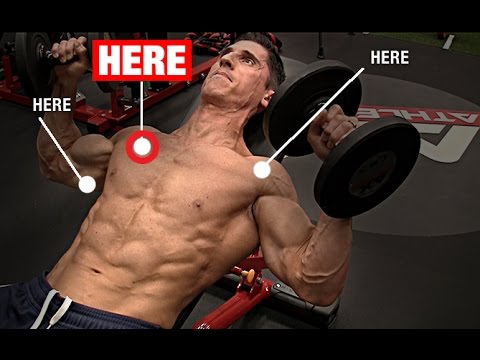
Reverse Dumbbell Bench Press Overview
The reverse dumbbell bench press is a chest push with a twist. You lie on a slight decline and hold the dumbbells with a reverse grip. Your palms face down toward your feet. It works your chest, the big muscles on the front of your torso. It also works your shoulders and triceps. You need two dumbbells and a bench. The reverse grip hits your upper chest in a new way. It can also feel easier on your shoulders. The reverse dumbbell bench press is good for most lifters. It fits well on push days or chest days. Use it to add size and shape to your chest. Start light and get used to the odd grip.
What Is The Point of the Reverse Dumbbell Bench Press?
The reverse dumbbell bench press works your chest from a different angle than regular bench press. It hits your upper chest harder and gives you better muscle balance.
How To Do The Reverse Dumbbell Bench Press
- Set an adjustable bench to a slight decline of about 15 to 30 degrees and lie back with a dumbbell in each hand. The reverse grip changes the angle of pull on your chest, and the light decline pairs well with it to target the lower and inner chest.
- Take a reverse grip, meaning your palms face down toward your feet rather than out toward your head. Keep your wrists firm, since this grip can feel unusual at first, so start lighter than your normal dumbbell press.
- Set your shoulder blades down and back into the bench to build a stable base. Plant your feet and stay tight through your whole body before you press.
- Bring the dumbbells up so your arms are extended above your chest with the weights lightly touching. This is your starting position, and the reverse grip should feel like your knuckles are pointing back toward your head.
- Take a big breath and brace your core. Keep your elbows moderately tucked rather than flared straight out, which the reverse grip naturally encourages.
- Lower the dumbbells slowly toward your lower chest, keeping control and a 2 to 3 second descent. Feel the stretch across your chest and keep your wrists stacked so the weights do not tip.
- Bring the dumbbells to a comfortable depth at your chest without letting your shoulders roll forward. The reverse grip tends to keep the elbows in, which shifts the emphasis onto the upper and inner chest fibers.
- Press the dumbbells back up and slightly together, breathing out through the hardest part and squeezing your chest at the top. Keep the reverse grip solid the whole way.
- Stop just short of locking out to keep tension on the chest, then start the next rep. Work in the 8 to 12 rep range, keep the weight controlled given the awkward grip, and set the dumbbells down safely when you finish.
Reverse Dumbbell Bench Press Form Tips
- Keep your palms facing your feet the whole set.
- Lower the dumbbells slow to your chest.
- Press up and slightly together over your chest.
- Squeeze your chest hard at the top.
- Keep your wrists straight and strong.
- Keep your feet flat and your hips on the bench.
- Keep your shoulder blades pulled back and down.
- Breathe in as you lower. Breathe out as you press.
- Move both dumbbells at the same speed.
Common Mistakes to Avoid for the Reverse Dumbbell Bench Press
- Going too heavy for the reverse grip. The palms-toward-feet grip is less stable and less strong than a normal press, so loading it like your regular dumbbell press invites the weights to tip and your wrists to strain. Start noticeably lighter and build up slowly as the grip becomes familiar.
- Letting your wrists bend back under the dumbbells. The reverse grip already puts your wrists in an unusual position, and letting them cock back adds real strain. Keep your wrists firm and stacked under the weights so your forearms stay solid and the load stays safe.
- Losing your shoulder blade set. If your shoulders round forward as you press, you lose your stable base and put the joint at risk, which matters even more with this grip. Set your blades down and back into the bench and hold that position for every rep.
- Flaring your elbows straight out. Even though the reverse grip encourages a tuck, forcing the elbows wide stresses your shoulders and takes tension off the chest. Let your elbows stay moderately tucked, which is the natural and safer path for this grip.
- Dropping the dumbbells fast on the way down. Rushing the eccentric wastes one of the best muscle-building parts of the rep and, with an unstable grip, risks losing control. Lower under control for a full 2 to 3 seconds on every rep.
- Setting the decline too steep. A big decline combined with the reverse grip can put you in an awkward, shoulder-stressing position. Keep the decline slight, around 15 to 30 degrees, so the angle stays comfortable and the chest stays targeted.
- Letting the dumbbells drift apart or tip. Because each arm works alone with an unfamiliar grip, the weights can wander and destabilize the rep. Keep the dumbbells tracking evenly and lightly toward each other so the path stays controlled.
- Bouncing the weights at the bottom. Using a bounce off the chest to rebound steals reps from your muscles and risks your shoulders with this grip. Lower to a controlled depth, pause if needed, and press with intent.
- Cutting the range of motion short. Stopping the dumbbells high above your chest only trains a small slice of the movement. Lower to a full but comfortable stretch on every rep so the chest works through its range.
- Trying it without ever practicing the grip light first. Jumping straight into working weight with an unfamiliar reverse grip is how wrists get tweaked and dumbbells get dropped. Groove the pattern with light weights until the grip feels natural.
- Forgetting to brace your core. A loose trunk on a decline with an odd grip leaves you unstable and leaking power. Take a big breath and brace hard so you press from a solid base.
- Pressing without a safe way to bail. Getting stuck with dumbbells in a reverse grip on a decline can be awkward. Keep the weight manageable and know how to lower the dumbbells safely to your sides if a rep fails.
Reverse Dumbbell Bench Press Workout Tips
- Start light and learn the grip. The reverse grip feels strange at first, so groove it with light dumbbells before you chase any real weight, which protects your wrists and builds confidence.
- Use it to target the upper and inner chest. The reverse grip changes the angle of pull and tends to hit chest fibers a normal press misses, which makes it a smart variation to fill out your chest.
- Keep your wrists firm and stacked. A solid, straight wrist under each dumbbell keeps the load safe and lets you press with more control in this unusual position.
- Control the eccentric on every rep. A 2 to 3 second lowering keeps tension on the chest and builds more muscle than dropping the weights fast.
- Chase the mind-muscle connection. Focus on squeezing your chest to press the dumbbells rather than just moving them, since feeling the target muscle work helps build it.
- Program it as a chest accessory. Use it after your main pressing to add variety and hit the chest from a fresh angle, rather than as your heaviest lift of the day.
- Live in the 8 to 12 rep range. Moderate reps suit this controlled variation well, so aim for 3 to 4 sets with a weight you can handle cleanly.
- Keep the decline slight. A modest 15 to 30 degree angle pairs well with the reverse grip and keeps your shoulders comfortable.
- Let your elbows stay tucked. The reverse grip naturally keeps the elbows in, which protects your shoulders and keeps the tension on your chest, so go with it rather than fighting it.
- Progress with small, steady jumps. Because the grip is less stable, add weight in small increments you can fully control rather than big leaps.
- Squeeze at the top of each rep. Bringing the dumbbells slightly together and flexing your chest at the top adds a strong peak contraction to the movement.
- Use dumbbells for the extra range and independent arms. Unlike a barbell reverse press, dumbbells let each arm work on its own and give a bigger stretch at the bottom.
- Film a set from the side. Video shows whether your wrists are bending or the dumbbells are tipping far better than it feels while you press.
- Keep your shoulder blades set and feet planted. A stable base lets you press safely and powerfully even with the awkward grip.
- Do not train to failure with this grip. The unstable reverse grip makes grinding risky, so leave a rep or two in the tank and keep control on every set.
- Try it when your regular press bothers your shoulders. Some lifters find the reverse grip feels friendlier on the shoulder joint, so it can be a useful swap on cranky days.
- Warm up your wrists and shoulders. The unusual grip loads your wrists differently, so a few light sets and some wrist mobility prepare the joints before you load up.








Questions & Comments
Be the first to ask a question about this exercise.