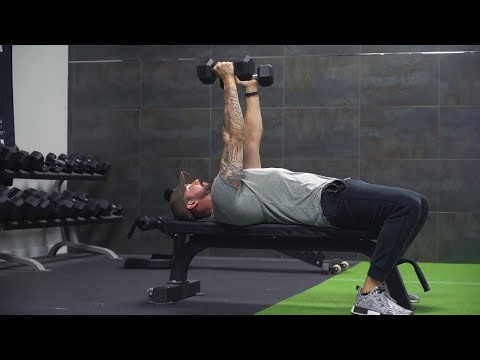
One Arm Dumbbell Fly Overview
The one arm dumbbell fly builds your chest. It also works your shoulders and abs. You lie on a bench and hold one dumbbell over your chest. You lower the weight out to the side in a wide arc. Then you bring it back up. You work one arm at a time. The one arm dumbbell fly gives your chest a big stretch. Working one arm lets you focus hard on each side. It also makes your core work to keep you steady. This helps you fix a weak side. This move suits intermediate lifters. Use it on a chest day after your presses.
What Is The Point of the One Arm Dumbbell Fly?
The one arm dumbbell fly builds chest strength and size while improving stability. It targets each side separately to fix muscle imbalances and create better chest definition.
How To Do The One Arm Dumbbell Fly
- Lie back on a flat bench holding a single dumbbell above your chest with a neutral grip, palm facing inward. Keep a slight, fixed bend in your elbow that you will maintain the whole set.
- Plant your feet flat on the floor and set your shoulder blades down and back into the bench, building a stable base. Brace your core so your torso stays anchored while one side is loaded.
- With that soft bend locked in, lower the dumbbell out to your side in a wide arc, feeling your chest stretch as the weight travels away from your body. Keep the elbow angle constant, opening at the shoulder, not the elbow.
- Lower until you feel a strong, comfortable stretch across your chest, roughly when your upper arm is about level with the bench. Do not drop below a point your shoulder can handle.
- Keep your free hand relaxed or place it on your working chest to feel the muscle, and resist the pull of the weight so your torso does not roll toward the loaded side.
- Reverse the motion by squeezing your chest to bring the dumbbell back up in the same wide arc. Think of hugging a big tree, driving with the pec, not the arm.
- Squeeze your chest hard at the top, stopping just short of the dumbbell being straight up so you keep tension on the muscle. Then begin the next rep.
- Complete all your reps on one arm before switching to the other side. Because one-arm work challenges stability, keep the load moderate and the reps in the 10 to 15 range for 3 to 4 sets per side.
One Arm Dumbbell Fly Form Tips
- Keep a slight bend in your elbow the whole time.
- Lower the weight in a wide arc, not straight down.
- Feel a stretch in your chest at the bottom.
- Bring the weight back up in the same arc.
- Squeeze your chest at the top.
- Keep your back and hips flat on the bench.
- Move slowly with control both ways.
- Keep your core tight to stay steady.
- Breathe in as you lower. Breathe out as you lift.
- Keep your wrist straight and firm.
Common Mistakes to Avoid for the One Arm Dumbbell Fly
- Turning the fly into a press. Bending and straightening your elbow to push the weight up recruits your triceps and front delts and takes the stretch off your chest. Keep a fixed slight bend in the elbow and open only at the shoulder so it stays a true fly.
- Letting the torso roll toward the loaded side. Because only one arm holds a weight, your body wants to twist toward it, which stresses your spine and cheats the chest. Brace your core and press your opposite side into the bench to stay square.
- Using too much weight. A fly is a long-lever stretch on the chest, and heavy dumbbells force you to bend the arm and cut the range. Go lighter than you think and control the full arc.
- Lowering too far and stressing the shoulder. Dropping the dumbbell well below the bench overstretches the shoulder joint in a vulnerable position. Lower to a strong stretch at about bench level and no further.
- Rushing the eccentric. Letting the weight fall out to the side fast wastes the stretch-loaded lowering, which is where the fly builds a lot of muscle, and risks the shoulder. Control the descent over two to three seconds.
- Losing the shoulder blade set. If your shoulders round forward off the bench, you lose your stable base and expose the joint. Keep your blades pulled down and back and pressed into the bench throughout.
- Not squeezing the chest at the top. Bringing the dumbbell up without a deliberate pec contraction wastes the best part of the rep. Squeeze your chest hard at the top and stop just short of lockout to keep tension.
- Flaring the elbow open too wide at the bottom. Letting the arm straighten out fully at the bottom turns the stretch into a shoulder strain. Maintain the fixed elbow bend so the load stays on the pec, not the joint.
- Bouncing out of the bottom stretch. Using the stretch reflex to rebound the weight up can strain the shoulder and skips real chest work. Control the stretch, pause if needed, and drive up with the muscle.
- Doing uneven work between sides. Favoring your stronger side over time builds a chest imbalance you can see. Match the reps and effort on both arms, letting the weaker side set the count.
- Losing core tension between reps. Relaxing your brace while one side is loaded lets your torso shift and your back arch. Keep your core tight from the first rep to the last on each side.
One Arm Dumbbell Fly Workout Tips
- Keep a fixed slight bend in your elbow. Locking that angle and opening only at the shoulder is what keeps this a true fly rather than a press, so it stays on your chest.
- Train one arm at a time for a bigger stretch and better focus. The single-arm setup lets you chase a full range and a strong mind-muscle connection on each side of your chest.
- Brace your core to resist the twist. Because only one side is loaded, keeping your torso square is part of the exercise and builds anti-rotation stability as a bonus.
- Go lighter than you expect. A fly is a long-lever stretch, so a moderate dumbbell controlled through a full arc beats a heavy one you have to bend and shove.
- Lower to a strong but safe stretch. Reaching a good chest stretch at about bench level builds muscle, but going deeper than your shoulder likes invites injury.
- Control the eccentric over two to three seconds. The stretch-loaded lowering is where the fly does much of its work, so never let the weight drop.
- Squeeze your chest hard at the top. Think of hugging a tree and driving the dumbbell up with your pec, stopping just short of lockout to keep tension.
- Set your shoulder blades down and back. A stable, retracted upper back gives you a solid base and protects the shoulder through the stretch.
- Place your free hand on the working pec. Feeling the muscle stretch and contract sharpens your mind-muscle connection and improves the quality of each rep.
- Program it as a chest-isolation move. Flies pair well after a heavy press when you want to hammer the chest through a stretch without the triceps stealing the show.
- Match your reps and effort on both arms. Let your weaker side set the rep count so you build an even chest instead of feeding an imbalance.
- Progress with small load increases or extra reps. On an isolation stretch move, overload comes from a bit more weight, more reps, or a slower tempo when your form stays clean.
- Work in a moderate to higher rep range. Around 10 to 15 reps suits the fly's stretch and squeeze style and gives you a strong pump.
- Keep your feet planted and your body anchored. A stable base lets you focus your effort on the chest rather than fighting to stay on the bench.
- Try it on an incline for the upper chest. Shifting the bench angle changes which part of the pec gets the most stretch and work.
- Never sacrifice the shoulder for depth. If you feel a pinch at the bottom, shorten the range, since a healthy shoulder is worth more than an extra inch of stretch.








Questions & Comments
Be the first to ask a question about this exercise.