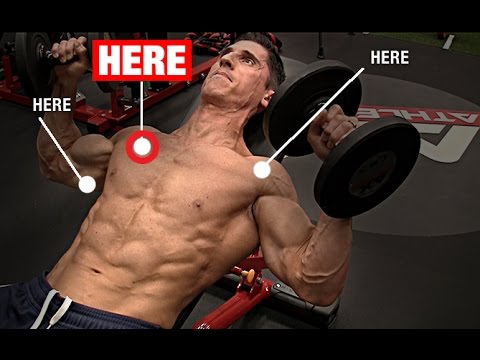
Palms in Incline Dumbbell Bench Press Overview
The palms in incline dumbbell bench press builds a strong chest. It works your chest, the big muscles across the front of your ribs. It hits the upper chest most of all. It also works your shoulders and triceps. Your triceps are on the back of your upper arms. You lie on an incline bench and press two dumbbells up. Your palms face in toward each other. You need two dumbbells and an incline bench. This move is great for building the upper chest. The palms in grip is kind to your shoulders. It also helps you feel your chest stretch and squeeze. Use the palms in incline dumbbell bench press early on chest day. It helps fill out the top of your chest. It builds a full, strong look over time.
What Is The Point of the Palms in Incline Dumbbell Bench Press?
The palms in incline dumbbell bench press targets your upper chest while hitting shoulders and triceps. This neutral grip reduces wrist strain and builds balanced strength.
How To Do The Palms in Incline Dumbbell Bench Press
- Set an adjustable bench to an incline of about 30 to 45 degrees and grab a dumbbell in each hand with a neutral grip, palms facing each other.
- Sit back against the bench and bring the dumbbells to chest level, positioned slightly wider than your shoulders with elbows bent.
- Plant your feet flat and hard into the floor and set your shoulder blades down and back into the bench. This gives you a stable shelf to press from.
- Take a big breath, brace your core, and keep your palms facing each other as your starting position. Hold that neutral grip through the whole set.
- Press the dumbbells straight up over your upper chest, keeping the neutral grip the whole way and stopping just short of locking out.
- Squeeze your upper chest hard at the top for a beat, keeping the dumbbells stable and roughly over your shoulders. Do not bang them together hard.
- Lower the weights slowly over 2 to 3 seconds until they reach chest level and you feel a real stretch across the upper chest.
- Keep your elbows tucked to around 45 degrees rather than flaring them straight out to the sides. That protects the shoulder and loads the chest.
- Drive back up under control and repeat. Aim for 8 to 12 reps with a weight you can fully control.
Palms in Incline Dumbbell Bench Press Form Tips
- Keep your back flat on the bench the whole set.
- Keep your palms facing in toward each other.
- Press the dumbbells straight up over your chest.
- Squeeze your chest at the top.
- Lower slowly to chest level for a full stretch.
- Keep your wrists straight and strong.
- Keep your feet flat on the floor for balance.
- Breathe out as you press up.
- Move at a smooth, controlled pace on each rep.
Common Mistakes to Avoid for the Palms in Incline Dumbbell Bench Press
- Setting the incline too steep. Past about 45 degrees the movement turns into a shoulder press and your front delts take over the work. Keep the bench in the 30 to 45 range if the upper chest is the goal.
- Flaring your elbows straight out. A wide flare stresses the shoulder and pulls tension off the chest. Keep the elbows tucked to about 45 degrees so the load stays on the pecs.
- Losing your shoulder blade set. If your shoulders round forward as you press, you lose your base and risk the joint. Set the blades down and back and hold that position on every rep.
- Cutting the range short. Stopping the dumbbells high skips the deep stretch that builds the upper chest. Lower until you feel a real stretch across the pecs each and every rep.
- Bouncing off the bottom. Dropping fast and rebounding steals reps from the chest and stresses the shoulders. Control the descent and press smoothly out of the bottom.
- Losing the neutral grip. Rotating the palms mid-press changes the exercise entirely. Keep the palms facing each other throughout, which is the whole point of the palms in version.
- Going too heavy too soon. Ego loading wrecks your control and beats up your shoulders over time. Pick a weight you own for all your reps, then add small jumps as you progress.
- Rushing the eccentric. Dropping the weights fast wastes the lowering phase, one of the best muscle builders you have. Own a controlled 2 to 3 second descent every rep.
- Letting the wrists bend back. Cocked-back wrists leak power and strain the joint under load. Keep the wrists stacked over the elbows and grip the handles hard.
- Lifting your hips or feet. Driving your hips up to grind out a rep turns it into a cheat and risks your back. Keep your glutes down and your feet planted firmly.
- Clashing the dumbbells at the top. Banging them together throws off your control and rhythm. Bring them close and squeeze, but keep them steady and in line.
Palms in Incline Dumbbell Bench Press Workout Tips
- Warm up with a lighter set to groove the path and wake up the upper chest and shoulders before your top sets.
- The incline angle biases the upper chest, and the neutral grip is often gentler on the shoulders than palms-forward pressing.
- Chase the mind-muscle connection. Think about squeezing your upper chest to drive the dumbbells up, not just moving the weight upward.
- Use a slow 2 to 3 second eccentric to keep tension on the chest and build more muscle than a fast, careless drop ever will.
- Keep your elbows around 45 degrees. That angle protects the shoulder joint and keeps the chest and triceps loaded through the whole rep.
- Dumbbells let each arm work on its own, which helps even out side to side differences and gives a bigger stretch at the bottom.
- Try a one second pause at the bottom for some sets to kill the bounce and load the upper chest from a dead stop.
- Program the incline press early on push day when you are fresh, especially if the upper chest is a weak point to bring up.
- For size, aim for 8 to 12 reps for 3 to 4 sets. Drop the reps and add weight if you are after more raw strength.
- Add weight slowly over time. Small, controlled jumps beat ego leaps, and that is progressive overload in action.
- The neutral grip and free-moving dumbbells give the upper chest a deep stretch many lifters grow well from.
- Squeeze the handles hard. A tight grip stabilizes the shoulder and can quietly add a bit to your press by giving you a firmer base.
- Film from the side to check your incline angle, your elbow tuck, and your range of motion on each rep of the set.
- Have a spotter help you set the dumbbells at the start and hand them off at the finish when you go heavy.
- Do not train to failure every set. Leaving a rep in the tank keeps your form clean and your shoulders healthy.
- Be patient. The upper chest is stubborn for most people, so consistent work over months is what finally moves it.
- Set the bench a notch lower if your front delts take over, since even a small angle change can shift the work back onto the upper chest.
- Control the dumbbells at the bottom rather than letting them drift apart, since a runaway stretch under heavy load is where shoulders get tweaked.








Questions & Comments
Be the first to ask a question about this exercise.