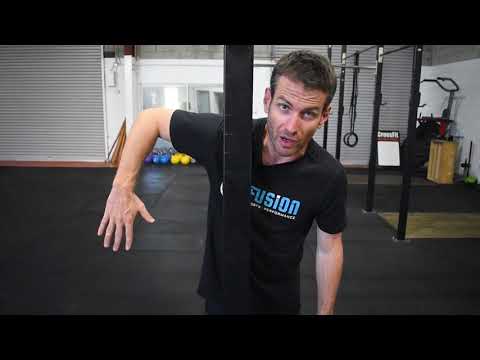
Pec Lacrosse Ball Overview
The pec lacrosse ball move loosens up your chest. It works your chest, the muscles across the front of your ribs. It also reaches your shoulders. You press a lacrosse ball into your chest near your armpit. Then you lean into a wall to add pressure. This is a self-massage move, not a lifting move. You only need a lacrosse ball and a wall. This move is great for tight, sore chest muscles. Tight chest muscles can pull your shoulders forward. Rolling them out can help you stand taller. Use the pec lacrosse ball move before a workout or after. It takes just a few minutes. It can help your chest and shoulders feel loose.
What Is The Point of the Pec Lacrosse Ball?
The pec lacrosse ball exercise releases tight chest muscles and improves shoulder mobility. It breaks up knots and tension from sitting hunched over all day.
How To Do The Pec Lacrosse Ball
- Stand facing a wall or an open doorway and place a lacrosse ball against your chest muscle, up near the front of your armpit. This is where the pec tends to tighten the most.
- Lean into the wall so your bodyweight presses the ball into the pec, controlling the pressure by how hard you lean. Start light and build from there.
- Start with gentle pressure and let the muscle settle onto the ball for a few seconds before you move it. Rushing in hard just makes the tissue guard up.
- Hold on a tight spot for about 30 seconds, breathing slowly and letting the muscle relax into the pressure. Give the knot real time to release.
- Slowly roll the ball around the pec, searching out tight or tender areas across the whole muscle. Move at a crawl, not a fast scrub.
- Move the ball to different parts of the chest, from near the shoulder to lower on the pec, covering it fully. Keep it on the muscle, not the joint.
- When you find a knot, pause and hold steady pressure until it starts to ease, keeping your breathing slow and even.
- Keep the pressure firm but tolerable, never sharp, and back off if it gets too intense. Sharp pain is a clear signal to ease up.
- Work one side for about a minute or two, then switch and repeat on the other pec so both sides stay even.
Pec Lacrosse Ball Form Tips
- Press gently at first. Add pressure slowly.
- Hold on tight spots for about 30 seconds.
- Roll slowly around the sore areas.
- Keep your breathing slow and calm.
- Try to relax your chest and shoulder.
- Work near your armpit and across your chest.
- Use pressure you can handle, not sharp pain.
- Keep your shoulder loose as you roll.
- Do both sides to stay even.
Common Mistakes to Avoid for the Pec Lacrosse Ball
- Pressing far too hard. Crushing the pec into the ball can bruise the tissue and make it guard up even tighter. Lean in only to a firm, tolerable pressure and ease off the moment it turns sharp.
- Rolling too fast. Whipping the ball around skips right over the tight spots and does little for the muscle. Move slowly so the tissue actually has time to respond and release.
- Rolling onto the shoulder joint. Grinding the ball onto the bony front of the shoulder can irritate the joint. Keep the ball on the meaty pec, not on the joint or the bone itself.
- Holding your breath. Tensing up against the pressure fights the very release you are chasing. Breathe slowly and let the chest go soft and relax onto the ball.
- Ignoring the tender spots. Rolling straight past a knot wastes your single best target. Pause and hold steady pressure on it until it noticeably softens under the ball.
- Rushing the whole thing. A quick few seconds does nothing to change tight, stubborn tissue. Give each side a full one to two minutes of slow, steady work.
- Only working the center of the pec. Missing the area near the armpit skips the spot that tightens most from pressing. Cover the whole muscle up toward the shoulder as well.
- Using a ball that is too soft. A squishy massage ball cannot reach deep enough into the pec. A firm lacrosse ball gives the focused pressure this kind of work needs.
- Doing deep work right before pressing. Fully releasing the pec can briefly change how it fires on a heavy set. Save the deep work for after training or rest days if you are about to bench heavy.
- Forcing through sharp pain. Sharp or nervy pain is a clear warning, not a target to chase. Ease off and move to a nearby spot instead of grinding on it.
- Only working one side. Tight pecs are usually a two-sided story, especially from desk posture. Give both sides equal time and attention every session.
Pec Lacrosse Ball Workout Tips
- Warm up with a few gentle arm circles first so the chest and shoulder are ready before you dig into the tissue with the ball.
- This is simple self-massage for the chest, and it can ease tightness that builds from heavy pressing and hours of hunching at a desk.
- Control the pressure by how hard you lean into the wall, which lets you dial it from gentle to firm on the fly as you work.
- Move slowly and pause on tender spots for about 30 seconds to give each one real time to release under the ball.
- Focus on the area near the front of the armpit, since the upper pec tightens most from pressing and rounded, slumped posture.
- Keep the ball on the muscle, not the shoulder joint, so you release the pec without irritating the sensitive joint underneath.
- Breathe slowly and let the chest relax onto the ball so the tissue can actually let go instead of tensing and guarding.
- Use a firm lacrosse ball rather than a soft massage ball so the pressure reaches deep into the pec where it counts.
- Tight pecs can pull your shoulders forward, so releasing them may help your posture and your overhead reach over time.
- Spend about one to two minutes per side and do it a few times a week or right after your pressing sessions.
- Do the deep work after training rather than right before a heavy bench, since it can briefly change how the pec fires.
- Pair this with some doorway chest stretches for a fuller release across the whole front of the shoulder and chest.
- Give both sides equal time, since desk posture and daily habits usually tighten both pecs fairly evenly over the years.
- Never push through sharp pain. Firm and tolerable is the goal, and sharp pain always means back off the pressure now.
- Keep the ball handy in your gym bag so it is easy to make this a regular, low-effort part of your recovery routine.
- Be consistent. Soft-tissue work pays off with regular short sessions, not one long occasional grind every few weeks.
- Try rolling the pec both before an upper-body warm-up and after training, since a quick pass can improve how freely the shoulder moves.
- If a spot feels especially stubborn, add small arm movements while you hold pressure, letting the muscle glide under the ball to release faster.








Questions & Comments
Be the first to ask a question about this exercise.