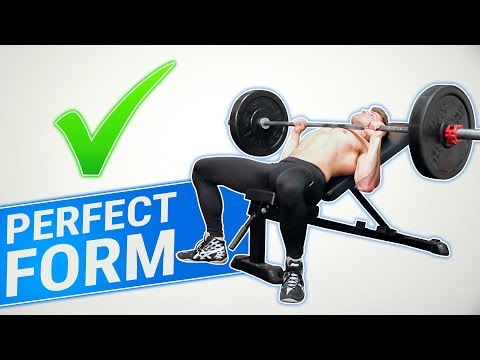
Incline Bench Overview
The incline bench is a chest press on a slanted bench. It works your upper chest most. Your chest is the big muscle on the front of your ribs. It also works your triceps and shoulders. You need a barbell and an incline bench. You press the bar up from your upper chest. The incline bench builds a full, strong upper chest. This gives your chest a complete look. It also builds pressing power. It suits lifters with some bench practice. Put it early on your push or chest day. Use a spotter for heavy sets. It is a top move for upper chest size.
What Is The Point of the Incline Bench?
The incline bench exercise targets your upper chest muscles more than flat bench. It builds a fuller, stronger chest while hitting your front delts and triceps too.
How To Do The Incline Bench
- Set an adjustable bench to about 30 to 45 degrees and lie back with your feet planted flat on the floor. A lower angle keeps more work on your upper chest, while a steeper angle shifts it toward the front delts.
- Set your shoulder blades down and back before you touch the bar and press them into the bench. This builds a stable shelf to press from and keeps your shoulders safe.
- Grip the barbell a little wider than shoulder-width, stack your wrists over your elbows, and squeeze the bar hard. Take a big breath into your belly and brace your core.
- Unrack the bar, ideally with a spotter, and bring it out until it sits directly over your upper chest with your arms straight. This is your starting position.
- Lower the bar under control toward your upper chest, just below the collarbone. Aim for a 2 to 3 second descent and let your elbows tuck to about 45 degrees rather than flaring wide.
- Touch the bar lightly to your upper chest without bouncing it. Keep your upper back tight and your wrists stacked the whole way down.
- Drive your feet into the floor and press the bar up and slightly back over your chest, breathing out through the hardest part of the rep. Think about pushing yourself into the bench.
- Stop just short of locking out if you want to keep tension on the chest, then start the next rep. Rack the bar safely when done, working in the 6 to 12 rep range for 3 to 4 sets.
Incline Bench Form Tips
- Set the bench to about 30 to 45 degrees. Do not go too steep.
- Grip the bar a bit wider than your shoulders.
- Pull your shoulder blades down and back for a solid base.
- Lower the bar to your upper chest. Keep the path steady.
- Keep your elbows at about a 45 degree angle.
- Move slowly on the way down.
- Press up in a straight line. Lock your arms at the top.
- Keep your feet flat and your hips on the bench.
- Breathe out as you press. Breathe in as you lower.
Common Mistakes to Avoid for the Incline Bench
- Setting the bench too steep. Past about 45 degrees the movement turns into an overhead press and your front delts take over the work. Keep the incline in the 30 to 45 degree range if your real goal is upper chest.
- Losing your shoulder blade set mid-set. If your shoulders round forward as you press, you lose your stable base and put the joint at risk. Reset your blades down and back before every rep and hold that position hard.
- Flaring your elbows straight out to the sides. A 90 degree flare stresses the shoulder joint and actually weakens your press. Keep the elbows tucked to around 45 degrees so the load stays on your chest and triceps.
- Bouncing the bar off your chest. The bounce steals reps from your muscles and can bruise your sternum. Touch lightly, pause if you need to, and press with control.
- Pressing in a straight vertical line. On an incline the bar should travel up and slightly back toward your face. A purely vertical path leaves you weak and off balance at the bottom.
- Lifting your hips off the bench. Driving your hips up to grind out a rep turns it into a cheat and risks your lower back. Keep your glutes down and get your power from your legs pushing the floor.
- Going too heavy too soon. Ego loading wrecks your bar path and beats up your shoulders. Pick a weight you can control for all your reps, then add small jumps over time as progressive overload.
- Cutting the range of motion short. Stopping the bar a few inches above your chest only builds strength in that short range. Touch the chest on every rep unless an injury tells you otherwise.
- Letting your wrists bend back. A floppy, cocked-back wrist leaks power and can strain the joint. Keep the bar low in your palm with your knuckles pointing at the ceiling.
- Rushing the lowering phase. Dropping the bar fast wastes the eccentric, which is one of the best muscle-building parts of the rep. Own a slow, controlled 2 to 3 second descent.
- Forgetting leg drive. Lazy legs leave power on the table. Screw your feet into the floor and use that tension to stay tight and press harder.
Incline Bench Workout Tips
- Warm up with lighter sets before your working weight. This grooves your bar path and wakes up the shoulders and chest so your top sets feel smooth.
- Chase the mind-muscle connection. Instead of just moving the bar, think about squeezing your chest to drive it, since feeling the target muscle work is one of the oldest ways to build it.
- Use a controlled eccentric of 2 to 3 seconds. A slow lowering phase keeps tension on the upper chest and builds more than dropping the bar.
- Try a one to two second pause on the chest for some sets. Pausing kills the bounce and forces your muscles to do all the work off the bottom.
- Keep your elbows around 45 degrees. This is the sweet spot that protects the shoulder and keeps the chest and triceps loaded.
- Program the incline press early on your push day when you are fresh, especially if upper chest is a weak point you want to bring up.
- For size, most lifters do best in the 6 to 12 rep range for 3 to 4 sets. For pure strength, drop the reps and add weight.
- Add weight slowly over time. Small, steady jumps you can control beat big ego leaps, since progressive overload drives long-term gains.
- Use the flare and push cue if you struggle off the chest. Keep the elbows tucked on the way down, then let them travel naturally as you drive up.
- Squeeze the bar as hard as you can. A tight grip stabilizes the shoulder and can instantly add pounds to your press.
- Keep your arch coming from your mid and upper back, not your lower back. A cramping lower back means you are out of position.
- Swap in dumbbells now and then. The incline dumbbell press lets each arm work on its own and gives you a bigger stretch at the bottom.
- Film your sets from the side. Video shows bar path and elbow flare far better than how the lift feels.
- Do not train to failure on every set. Leaving a rep or two in the tank keeps your form clean and helps you recover.
- Always use a spotter or safety pins for heavy work. Being brave without a plan is how people get pinned under the bar.
- Adjust the bench angle to target different parts of the upper chest. A lower angle hits more chest, while a higher one brings in the shoulders.
- Be patient. Upper chest is stubborn for most people, so consistency over months is what finally moves the needle.








Questions & Comments
Be the first to ask a question about this exercise.