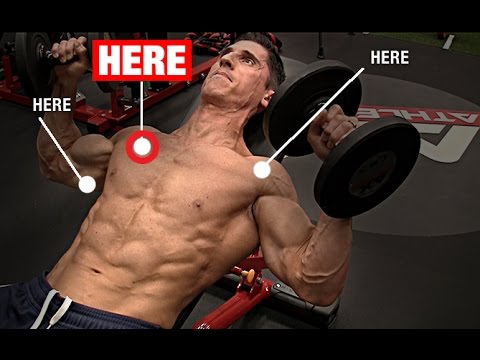
Incline Dumbbell Bench Press Overview
The incline dumbbell bench press builds a strong upper chest. It works your chest most of all. It also works your triceps and shoulders. Your triceps are the backs of your upper arms. You sit on a bench set at an incline. Then you press two dumbbells up over your chest. The incline dumbbell bench press is great for beginners. The dumbbells let each arm work on its own. This helps fix a weak side. The incline angle hits the top of your chest. This makes your chest look full and strong. Use the incline dumbbell bench press on chest day or push day. Start with a weight you can control.
What Is The Point of the Incline Dumbbell Bench Press?
The incline dumbbell bench press targets your upper chest better than flat bench. It builds a fuller, more defined chest while working your shoulders and triceps too.
How To Do The Incline Dumbbell Bench Press
- Set an adjustable bench to a moderate incline, between 30 and 45 degrees. This angle shifts the work onto your upper chest, and dumbbells give each arm freedom to move naturally.
- Grab a dumbbell in each hand and sit on the bench with the weights resting on your thighs. Use your legs to help kick the dumbbells up as you lie back so you do not strain your shoulders.
- Lie back and press the dumbbells to shoulder height with your palms facing forward. Set your shoulder blades down and back into the bench to build a stable, safe shelf to press from.
- Plant your feet flat on the floor and brace your core. Take a big breath and keep your upper back tight so your shoulders stay protected throughout.
- Press the dumbbells up and slightly together until your arms are almost fully extended. Do not lock your elbows completely, since keeping a soft bend keeps tension on the chest.
- Lower the dumbbells slowly under control until they reach about chest level, taking two to three seconds. Let your elbows tuck to around 45 degrees rather than flaring straight out.
- Feel a good stretch across your upper chest at the bottom without letting your shoulders roll forward. The dumbbells allow a deeper stretch than a barbell, so use that range.
- Drive the dumbbells back up in a smooth arc, breathing out through the hardest part, and squeeze your chest at the top. Keep the movement controlled and aim for 8 to 12 reps.
Incline Dumbbell Bench Press Form Tips
- Keep your back flat on the bench. A small arch is fine.
- Keep your feet planted for a strong base.
- Press up and slightly together. Meet at the top.
- Do not lock your elbows hard. Stop just short.
- Squeeze your chest at the top. Hold for a beat.
- Lower the dumbbells slowly. Feel your chest stretch.
- Keep your shoulders down and back.
- Keep your wrists straight over your elbows.
- Breathe out as you press. Breathe in as you lower.
Common Mistakes to Avoid for the Incline Dumbbell Bench Press
- Setting the incline too steep. Past about 45 degrees the press turns into a shoulder movement and your front delts take over. Keep the bench between 30 and 45 degrees so your upper chest stays the main mover.
- Losing your shoulder blade set. If your shoulders round forward as you press, you lose your stable base and put the joint at risk. Pin your blades down and back into the bench and hold that position for every rep.
- Flaring the elbows straight out to the sides. A 90 degree flare stresses the shoulders and weakens your press. Let your elbows tuck to around 45 degrees so the load stays on your chest and triceps.
- Locking the elbows hard at the top. Snapping into full lockout dumps tension off the chest and onto the joints. Stop just short of straight arms so the pecs stay loaded the whole set.
- Clanging the dumbbells together at the top. Banging the weights together to feel a contraction removes tension and can throw off your control. Bring them close but not crashing, and squeeze the chest instead.
- Rushing the lowering phase. Dropping the dumbbells fast wastes the eccentric, which is one of the best muscle building parts of a rep. Lower over two to three seconds and stay in control the whole way.
- Cutting the range short. Pressing only the top few inches skips the stretch that makes dumbbells so valuable. Lower until you feel your upper chest stretch, then press to near full extension.
- Going too heavy too soon. Ego loading wrecks your control and beats up your shoulders, especially with independent dumbbells. Pick a weight you can press cleanly for all your reps, then add small increments over time.
- Lifting your hips off the bench. Driving your hips up to grind out a rep turns it into a cheat and stresses your lower back. Keep your glutes down and press from a stable base.
- Pressing without feeling the chest. If you only feel your shoulders and triceps, you are not driving through the pecs. Think about squeezing your chest to move the dumbbells and keep the mind-muscle connection.
- Struggling to get the dumbbells into position. Muscling heavy dumbbells up from your sides can tweak a shoulder before you even start. Rest them on your thighs and kick them up with your legs as you lie back.
Incline Dumbbell Bench Press Workout Tips
- Use the incline dumbbell press to build the upper chest with a deep, natural range. The dumbbells let each arm move freely and stretch further than a barbell allows.
- Keep the incline between 30 and 45 degrees. That range biases the upper chest without turning the press into a shoulder movement.
- Set your shoulder blades down and back before every set. That retracted base protects your shoulders and puts the chest in the strongest position to press.
- Chase the mind-muscle connection with your upper chest. Think about squeezing the pecs to drive the dumbbells rather than just moving the weight, since feeling the muscle work helps build it.
- Use a controlled two to three second eccentric. Lowering slowly keeps tension on the chest and builds more muscle than dropping the dumbbells back down.
- Take advantage of the deeper stretch at the bottom. Dumbbells let your chest lengthen more than a barbell, so use that range while keeping your shoulders safe.
- Keep your elbows around 45 degrees. That angle protects the shoulders and keeps the chest and triceps loaded through the press.
- Program the incline dumbbell press early on push day if upper chest is a weak point. It works well as a main pressing movement when you are fresh.
- Keep the reps in the 8 to 12 range for size. Dumbbells reward control, and this range lets you keep tension and a full range on every rep.
- Add weight in small, steady jumps. Progressive overload drives long term chest growth, so nudge the dumbbells up only when you can keep full range and control.
- Match effort on both arms. Independent dumbbells expose a stronger side, so keep the tempo and range identical so one arm does not carry the set.
- Use dumbbells to iron out imbalances a barbell hides. Because each arm works on its own, a weaker side has to pull its own weight and catch up.
- Kick the dumbbells up with your legs to get into position. Using your thighs and a smooth roll back saves your shoulders from muscling heavy weights up from your sides.
- Squeeze your chest hard at the top of each rep. A deliberate contraction where the pecs are shortened reinforces the connection and gets more from every rep.
- Do not train every set to grinding failure. Balancing dumbbells while your form breaks down is risky, so leave a rep in the tank on most sets.
- Be patient with the upper chest. It is stubborn for most people, so consistent pressing and steady progression over months is what finally fills it in.








Questions & Comments
Be the first to ask a question about this exercise.