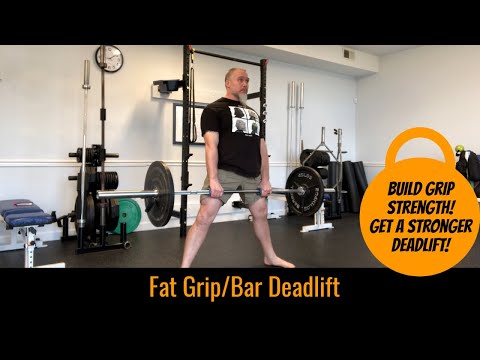
Fat Bar Deadlift Overview
The fat bar deadlift is a full-body pull with a thick bar. You lift the bar from the floor by standing up tall. It works your hamstrings, the muscles on the back of your thighs. It also works your glutes, lower back, and forearms. The thick bar is harder to grip. That makes your hands and forearms work more. This move builds strong legs, back, and grip. The wide bar tests your hold on every rep. It teaches you to hinge at your hips the right way. It fits well on pull days or leg days. The fat bar deadlift is great for real-world strength. Keep your form strict here.
What Is The Point of the Fat Bar Deadlift?
The fat bar deadlift builds stronger hamstrings while challenging your grip strength. The thicker bar forces your forearms to work harder than regular deadlifts.
How To Do The Fat Bar Deadlift
- Stand with your feet about hip width apart and the fat bar over the middle of your feet, close to your shins. The thicker bar diameter makes this as much a grip challenge as a posterior chain lift.
- Push your hips back and hinge down to grip the bar with both hands just outside your legs. Take a firm double overhand grip and squeeze hard, since the thick bar demands more from your hands than a standard bar.
- Set your chest up, pull your shoulders back, and flatten your back into a strong neutral position. Take a big breath into your belly and brace your core hard before you pull.
- Take the slack out of the bar by pulling up gently until you feel it engage. Your hips should be higher than your knees and your shoulders slightly ahead of the bar.
- Drive the floor away by pushing through your heels and midfoot. Keep the fat bar dragging close to your body, since any drift forward puts strain on your lower back.
- As the bar passes your knees, drive your hips forward to stand tall. Squeeze your glutes at the top and stand fully upright without leaning back or hyperextending.
- Lower the fat bar by pushing your hips back first, then bending your knees once the bar clears them. Keep your back flat and the bar close throughout the descent.
- Reset your breath and brace between reps, especially since your grip fatigues faster on a thick bar. Work in the 3 to 6 rep range for strength or 6 to 8 for a grip and back building blend, for 3 to 5 sets.
Fat Bar Deadlift Form Tips
- Keep the bar close to your body the whole lift.
- Hinge at your hips to start the movement.
- Keep your back flat, not rounded.
- Keep your chest up and shoulders back.
- Drive through your heels, not your toes.
- Squeeze your glutes at the top.
- Brace your core before each pull.
- Keep your neck in line with your back.
- Grip the bar hard to hold on.
Common Mistakes to Avoid for the Fat Bar Deadlift
- Letting the bar drift away from your body. When the fat bar swings out in front, it puts a huge lever on your lower back and makes the lift far harder and riskier. Keep the bar dragging against your shins and thighs the whole way up.
- Rounding your lower back. Pulling with a rounded spine loads the discs in a dangerous position and is the fastest way to hurt your back. Set a flat, neutral back, brace hard, and keep your chest up before you pull.
- Letting the grip fail your form. The thick bar taxes your grip so much that people often round their back or jerk the bar as their hands slip. Build the grip with lighter sets and stop the set when your grip goes rather than sacrificing your back.
- Yanking the bar off the floor. Jerking the weight up before taking out the slack shocks your spine and throws off your position. Pull gently until the bar engages, then drive smoothly from a braced position.
- Squatting the weight up instead of hinging. Dropping your hips too low turns the deadlift into a squat and puts the bar in a weak path. Keep your hips higher than your knees and treat this as a hip hinge, not a squat.
- Hyperextending at the top. Leaning back and cranking your spine at lockout stresses the lower back for no benefit. Stand tall, squeeze your glutes, and stop at a neutral upright position.
- Not bracing before the pull. Lifting without a big breath and a tight core leaves your spine unsupported under heavy load. Brace your belly hard on every rep to create the pressure that protects your back.
- Bending the knees too early on the way down. Dropping straight down instead of hinging the hips back first drives the bar into your knees and shifts load off your posterior chain. Push your hips back first, then bend the knees once the bar clears them.
- Bouncing reps off the floor. Slamming and rebounding the bar wastes tension and encourages sloppy positioning. Reset each rep with a fresh brace and a controlled setup for the thick bar.
- Using straps too soon. Reaching for straps right away robs you of the grip development that a fat bar deadlift is uniquely good at. Train the raw double overhand grip first and only strap up when grip is truly the limiter on your heaviest work.
- Looking up hard through the lift. Cranking your neck up to stare at the ceiling puts your cervical spine in extension. Keep a neutral neck by looking at a spot on the floor a few feet ahead.
Fat Bar Deadlift Workout Tips
- Respect the grip challenge. The fat bar's thick diameter is what makes this special, forcing your hands and forearms to work overtime, so treat it as one of the best grip and forearm builders you can do.
- Keep the bar close the entire lift. Dragging the bar against your shins and thighs keeps the load over your midfoot and off your lower back, which makes the lift both stronger and safer.
- Brace hard before every rep. A big breath into the belly and a tight core create the intra-abdominal pressure that protects your spine under heavy load, so reset that brace on each pull.
- Treat it as a hip hinge. Sitting your hips back and keeping them higher than your knees loads your hamstrings and glutes properly, which is what a deadlift is built to train.
- Train the double overhand grip raw. Skipping straps builds serious grip strength that carries over to every pull, so only strap up on your heaviest sets once grip is the true limiter.
- Drive the floor away with your legs. Thinking about pushing the ground down rather than pulling the bar up helps you use your legs and keep your back flat off the floor.
- Use lower reps for strength. Because grip fatigues fast and the posterior chain loves heavy work, 3 to 6 reps for 3 to 5 sets is a great range for building strength on the fat bar.
- Squeeze your glutes at lockout. Finishing with a firm glute contraction completes hip extension safely and stops you from hyperextending your lower back at the top.
- Program it as a main pull. This is a big compound lift, so put it early in your session when you are fresh and your grip and back can handle the load.
- Add weight in small jumps. Progressive overload drives strength, but on a thick bar your grip may set the pace, so climb steadily and let your hands catch up.
- Use chalk for a better grip. Chalk cuts down slipping on the wide bar and lets you focus on the lift rather than fighting to hold on, which makes every set more productive.
- Reset each rep for heavy work. Coming to a full stop and re-bracing between reps keeps your position sharp and protects your spine, especially as fatigue sets in.
- Keep a neutral neck. Looking at a spot on the floor a few feet ahead keeps your spine aligned from head to hips through the whole pull.
- Film from the side. A quick video reveals bar drift, back rounding, and hip position far better than how the lift feels, keeping your technique honest.
- Build your grip with holds and carries. Timed holds at lockout and heavy carries strengthen the same grip that limits your fat bar deadlift, so they pair well in a program.
- Do not grind ugly reps. If your back rounds or your grip fails, the set is over. A clean, powerful rep beats a dangerous grind every time.
- Be patient with the loading. Thick bar strength builds steadily as your grip and posterior chain adapt together, so stay consistent and trust the progress over months.








Questions & Comments
Be the first to ask a question about this exercise.