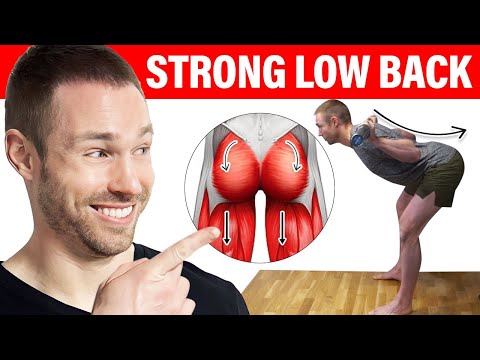
Good Mornings Overview
The good morning is a hip hinge with a barbell on your back. It works your hamstrings most. Your hamstrings are the back of your thighs. It also works your glutes and lower back. You rest a barbell on your upper back. Then you bend forward at your hips. The good morning builds strong hamstrings and glutes. It teaches you to hinge with load. This helps your deadlift and your posture. It suits lifters with some practice. Use light weight and learn the hinge first. Put good mornings on leg or pull days. Move slow and keep your back flat.
What Is The Point of the Good Mornings?
The good mornings exercise builds strong hamstrings and teaches proper hip hinge movement. It makes your entire back chain stronger for better lifts and daily movement.
How To Do The Good Mornings
- Set a barbell across your upper back like a low-bar squat, resting on the meat of your traps, not your neck. Set your feet about hip-width apart and grip the bar firmly.
- Unrack the bar and step back into a stable stance. Take a big breath into your belly and brace your core hard, since a strong brace is what protects your spine here.
- Set your back flat and your chest up. Put a soft, slight bend in your knees that you will hold for the whole rep rather than squatting down.
- Begin the movement by pushing your hips back like you are closing a door with your butt. Let your torso tip forward as a unit while keeping your back flat.
- Continue hinging forward until you feel a strong stretch in your hamstrings, usually with your torso somewhere near parallel to the floor. Only go as far as you can keep a flat back.
- Keep your knees in that same slight bend the whole way down. The bend in your hips, not your knees, should create the movement.
- Drive your hips forward to return to standing, squeezing your glutes hard at the top. Think about pushing your hips back toward the bar, not lifting the bar with your lower back.
- Stand tall without leaning back, then reset your brace for the next rep. Good mornings are a hinge you should build carefully, working in the 8 to 12 rep range for 3 to 4 sets.
Good Mornings Form Tips
- Rest the bar on your upper back muscles, not your neck.
- Push your hips back to hinge. Do not bend your waist.
- Keep a slight bend in your knees the whole time.
- Keep your back flat and chest up.
- Brace your core hard before each rep.
- Lower until you feel a hamstring stretch. Stop there.
- Squeeze your glutes to stand back up.
- Keep your neck in line with your back.
- Breathe in as you lower. Breathe out as you rise.
Common Mistakes to Avoid for the Good Mornings
- Rounding your lower back. A rounded spine under a bar on your back is exactly how good mornings earn their scary reputation. Keep a flat, braced back and only hinge as far as you can hold that position.
- Going too heavy. This lift loads your lower back at a long lever, so a heavy bar quickly becomes dangerous. Use much less weight than you squat and build it up slowly and carefully.
- Turning it into a squat. Bending your knees a lot and dropping down takes the stretch off your hamstrings. Keep your knees in a fixed slight bend and drive the movement from your hips.
- Not pushing the hips back. If you just bend forward without sending your hips back, you fold at the waist and load your spine. Reach your butt back to start the hinge every rep.
- Chasing depth you cannot control. Trying to go parallel when your hamstrings run out of stretch forces your back to round. Stop at the end of your clean range and build depth over time.
- Not bracing hard enough. A soft trunk lets your spine move under the load and puts your back at risk. Take a big breath and brace your whole midsection before every rep.
- Placing the bar on your neck. Resting the bar too high digs into your spine and is plain uncomfortable. Set it on the muscle of your upper back like a squat.
- Bending the knees more as you descend. Sneaking into a deeper knee bend at the bottom kills the hamstring tension. Lock the knee angle at the start and keep it there.
- Rushing the reps. Speeding through a good morning is asking for a form breakdown on a lift that punishes bad position. Move slowly and control both the descent and the rise.
- Hyperextending at the top. Leaning back past straight to finish stresses your lower back. Stand tall with a hard glute squeeze and stop there.
- Losing your neutral neck. Cranking your head up to look forward kinks your neck and can pull your spine out of line. Let your gaze follow the floor as you hinge.
Good Mornings Workout Tips
- Treat good mornings as a hinge that builds strong hamstrings, glutes, and a resilient lower back. Pushing your hips back is the whole move, so master that before adding weight.
- Start very light and add weight slowly. This lift loads your back at a long lever, so respect it and let progressive overload happen gradually.
- Keep your knees in a fixed slight bend. Locking the knee angle is what keeps the tension on your hamstrings instead of turning it into a squat.
- Feel for the hamstring stretch and use it as your depth guide. When the stretch runs out and your back would round, that is your bottom.
- Brace your core hard before every rep. A big belly breath and a tight trunk build a natural belt that protects your spine.
- Squeeze your glutes to finish each rep. Driving your hips forward with your glutes trains the lift properly and protects your back.
- Program good mornings as an accessory on a leg or posterior chain day. They build the muscles that support your squat and deadlift.
- For hypertrophy, work in the 8 to 12 rep range for 3 to 4 sets. Higher reps with lighter weight suit this lift and keep it safe.
- Use a slow, controlled tempo throughout. There is no place for bouncing or speed on a good morning.
- Keep the bar on the meat of your upper back. A comfortable bar position lets you focus on the hinge, not the discomfort.
- Try a seated good morning or a variation with a lighter load if the standing version feels risky. There are gentler ways to train the pattern.
- Film a set from the side. Video shows whether your back stays flat and your hips truly move back, which is hard to feel.
- Keep your ribs down and neck neutral. A stacked spine from head to hips keeps the hinge honest.
- Do not train good mornings to failure. This is a lift where you always leave a rep or two in the tank for safety.
- Warm up your hamstrings and hips first. A few light hinges groove the pattern and ready the tissue.
- Use good mornings to bulletproof your lower back for bigger lifts. Strong hinge muscles carry over to your deadlift and squat.
- Be patient and consistent. Built carefully over months, good mornings pay off with a stronger, more durable back.








Questions & Comments
Be the first to ask a question about this exercise.